Car battle
Ford Puma vs. Opel Mokka: Complete comparison 2026
Ford Puma vs Opel Mokka: City SUV comparison. Read a detailed evaluation of engines, space, and driving characteristics and choose your ideal used car.
Apr 14, 2026
Articles
Car battle
Detailed comparison of the Audi Q3 and DS 7 (Crossback). We evaluated real-world driving characteristics, spaciousness, and engines. Find out in our verdict which SUV to choose.
April 25, 2026
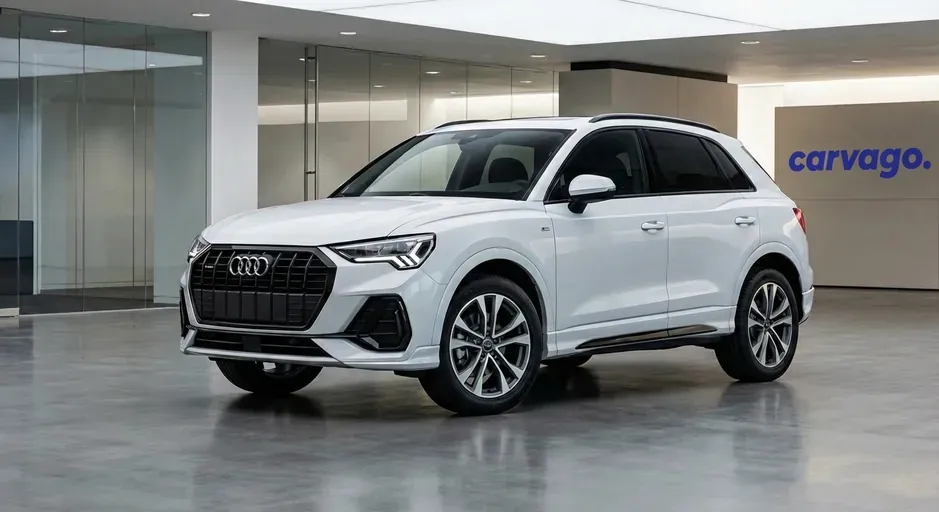
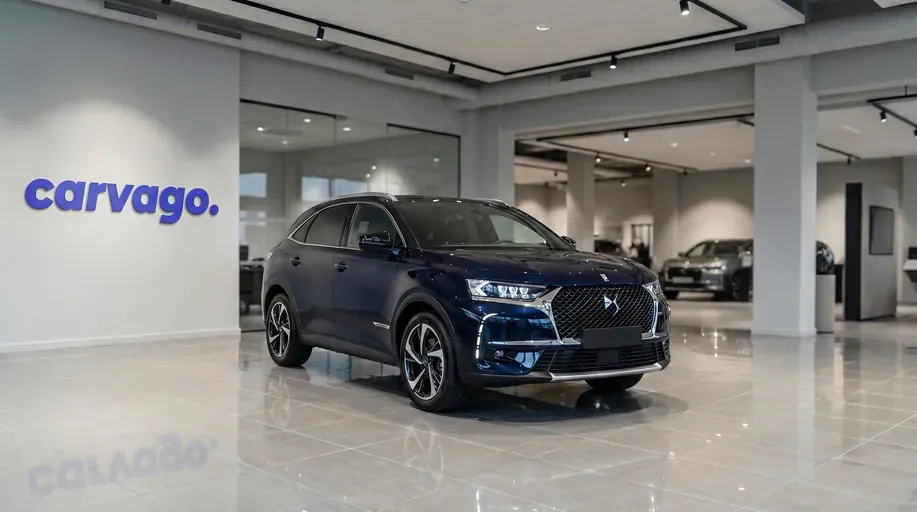
The Audi Q3 is a popular premium compact SUV from Ingolstadt that wins over customers with its technological sophistication, precise craftsmanship, and unmistakable design. Standing against it is the French competitor DS 7, often known and sought after on the used car market under its original name DS 7 Crossback, which brings fresh avant-garde luxury, attention to detail, and extraordinary driving comfort to the segment. The following comparison will reveal whether rational German precision or charming French flair is the better choice in the luxury family car class, making your decision easier.
When you place the Audi Q3 and DS 7 side by side, you will immediately notice the different approach to size within the premium SUV segment. While the German representative sticks to the traditional proportions of the compact class, the French model deliberately balances on its upper limit and its dimensions peek into the segment above. This difference suggests at first glance that each of the cars will have a slightly different character on the road and offer different spatial possibilities.
In terms of specific numbers, the DS 7, with its length of 4,573 mm, is 73 to 89 mm longer than the Audi Q3 (depending on whether we are measuring the classic body or the slightly longer Sportback variant). We see a similar trend in width, where the DS 7, with a value of 1,895 mm, surpasses the Audi by a noticeable 46 to 52 mm. The difference in wheelbase is also fundamental, which is 2,738 mm long for the French car, which is 58 mm more than its competitor from Ingolstadt. These extra millimetres give the DS 7 a significantly more robust and representative appearance.
What does this mean for everyday life? Thanks to its larger external dimensions and longer wheelbase, the DS 7 naturally offers a more airy interior and more legroom for rear-seat passengers, which you will appreciate especially on longer family trips. On the other hand, the Audi Q3 can capitalise on its more compact build in the city. The smaller width and slightly shorter body make it easier to manoeuvre in narrow streets and park in tight underground garages, where the more expansive DS 7 can sometimes be a nuisance. In terms of external dimensions, the DS 7 plays the card of maximum space and majesty, while the Audi Q3 represents a more agile and nimble choice for urban traffic.
| Parameter | Audi Q3 SUV | DS 7 SUV |
|---|---|---|
| Width (mm) | 1843 - 1849 | 1895 |
| Length (mm) | 4484 - 4500 | 4573 |
| Height (mm) | 1567 - 1585 | 1618 |
| Wheelbase (mm) | 2680 | 2738 |
For families and active individuals, luggage space is often a deciding factor when choosing a premium compact SUV. Whether you are planning a regular weekend shop, transporting sports equipment, or a longer family holiday with several extra suitcases, every litre of volume and layout flexibility counts. Both compared SUVs, which are currently sought after on the used car market as roughly four-year-old vehicles, offer above-standard capacities in this regard, but with a slightly different approach to the overall use of interior space.
The Audi Q3 F3 generation (produced since 2018) offers a very solid basic volume of 530 litres in its standard SUV body version. Furthermore, the car features sliding rear seats, allowing the boot to be flexibly adapted to the current needs of the passengers. After fully folding the backrests, you get a maximum transport capacity of up to 1,525 litres. If you opt for the more stylish Audi Q3 Sportback variant with a sloping roof, the basic volume remains pleasantly preserved at 530 litres, but the maximum capacity after folding the rear row naturally drops to 1,400 litres due to the car's silhouette. It is also important to note that if you are looking for a plug-in hybrid version (TFSI e), you will have to accept a significant reduction in the boot – the stored batteries reduce the basic volume to a more modest 380 litres.
In contrast, the French DS 7 Crossback (1st generation, 2018–2022) confidently dominates in the discipline of practicality and makes full use of its slightly larger dimensions. In the basic configuration, it offers a generous volume of 555 litres, a space that comfortably accommodates packing for even bulkier family trips. A fundamental and very clever advantage of this French car is the fact that its plug-in hybrid versions (E-Tense) have exactly the same boot volume as models with a conventional internal combustion engine, thanks to the clever placement of the battery in the floor. After folding the rear seats, the capacity of the DS 7 increases to a respectable 1,752 litres and offers an almost flat loading surface, making it a great companion even for moving larger items.
| Parameter | Audi Q3 SUV | Audi Q3 Sportback SUV | DS 7 SUV |
|---|---|---|---|
| Basic volume (litres) | 530 l | 530 l | 555 l |
| Max. volume with seats folded (litres) | 1525 l | 1400 l | 1752 l |
While the Audi Q3 offers a highly variable and sufficiently large boot for everyday life, the DS 7 surpasses it both in total volume and in the exceptional ability to maintain a full-sized luggage compartment even in its popular plug-in hybrid versions.
When choosing a premium compact SUV, towing capacity plays an important role for many buyers – whether it's for installing a bike rack, transporting materials to a cottage, or towing a heavy family caravan. When comparing the Audi Q3 (F3 generation) and DS 7 Crossback, focusing on used cars roughly 4 years old (i.e., model years around 2021 to 2022), we encounter quite significant differences. The German car offers a generally more robust construction for heavier loads, while the French representative is more reserved in this regard.
The Audi Q3 is exceptionally well-prepared for towing trailers. Even the standard braked trailer weight starts at a respectable 1800 kg for common petrol engines (e.g., 35 TFSI). If you opt for more powerful diesel versions, such as the 40 TDI, the maximum towing capacity climbs to an excellent 2200 kg. In contrast, the DS 7 Crossback offers a braked weight of only between 1290 and 1315 kg for the base PureTech 130 petrol engine. The maximum possible value for this model is 1850 kg, which you can only get with the more powerful BlueHDi 180 diesel engine.
Particular attention should be paid to the increasingly popular plug-in hybrid versions, which significantly limit towing capacity due to the heavy traction battery. The Audi Q3 in the 45 TFSI e version has its towing capacity reduced to 1400 kg. For the DS 7 Crossback in the E-Tense 225 and 300 versions, this value drops even lower, to between 1200 and 1250 kg. In practice, this means that while a conventional Audi Q3 can easily tow a large caravan or even a car transporter trailer, the hybrid DS 7 is more suitable for a bit of extra luggage space in the form of a rear box or will suffice for a weekend trip to buy building materials with a small trailer.
Final Summary: If you plan to regularly tow heavy trailers or go on holiday with a large caravan, the Audi Q3 is clearly the more capable and versatile choice. On the other hand, the DS 7 is perfectly adequate for drivers who use a tow bar more for recreation, such as transporting e-bikes, or only occasionally for attaching a light unbraked trailer.
| Model and Engine | Braked Trailer Weight (kg) | Unbraked Trailer Weight (kg) |
|---|---|---|
| Audi Q3 35 TFSI (110 kW) | 1800 | 750 |
| Audi Q3 40 TDI (147 kW) | 2200 | 750 |
| Audi Q3 45 TFSI e (110 kW) | 1400 | 750 |
| DS 7 Crossback PureTech 130 (96 kW) | 1290 - 1315 | 750 |
| DS 7 Crossback BlueHDi 180 (130 kW) | 1850 | 750 |
| DS 7 Crossback E-Tense 225 (133 kW) | 1250 | 750 |
A comparison of powertrains between the Audi Q3 and DS 7 reveals two distinct approaches to premium compact SUVs, which is key to making the right choice in the market for roughly four-year-old used cars. While Audi plays it safe with a proven wide range of petrol (TFSI) and diesel (TDI) four-cylinder engines, emphasizing the sophisticated quattro all-wheel drive on more powerful versions, the French DS 7 Crossback focuses on a highly comfortable setup. For the French car, the primary roles are played not only by traditional diesel units for relaxed travel but especially by the advanced E-Tense plug-in hybrid (PHEV) systems with high performance and top-tier paper emission values. For buyers, this means that with Audi, they can easily find a classic diesel highway cruiser or a purist petrol with all-wheel drive. Conversely, the DS 7 will appeal to drivers who want to enter the world of electromobility through a hybrid powertrain or are looking for economical smaller diesel engines for everyday use.
The core of the engine lineup for the Audi Q3 (current F3 generation) consists of the popular 1.5-liter 35 TFSI turbocharged petrol four-cylinder with cylinder deactivation technology, providing 110 kW. It commonly appears on the used car market with both a six-speed manual and a seven-speed S tronic dual-clutch automatic. For drivers preferring a more spirited ride and higher dynamics, there are the more powerful 2.0-liter 40 TFSI (140 kW) and the top-of-the-line 45 TFSI (180 kW), which were sold exclusively with quattro all-wheel drive. Diesel specifications built on the robust 2.0 TDI are highly sought after in the used car market. These can be found under the 35 TDI (110 kW) designation and the more powerful 40 TDI variant (147 kW, or 140 kW in earlier model years). The 40 TDI with all-wheel drive, in particular, is a phenomenal choice for long-distance travelers. For those interested in eco-friendly operation, Audi satisfied demand with the 45 TFSI e version, which is a plug-in hybrid combining a 1.4 TFSI four-cylinder and an electric motor with a total output of 180 kW.
| Engine type | Fuel type | Power (kW) | Torque (Nm) | Transmission |
|---|---|---|---|---|
| 35 TFSI (1.5) | Petrol | 110 | 250 | 6-speed manual / 7-speed S tronic |
| 40 TFSI (2.0) | Petrol | 140 | 320 | 7-speed S tronic |
| 45 TFSI (2.0) | Petrol | 180 | 370 | 7-speed S tronic |
| 35 TDI (2.0) | Diesel | 110 | 340 | 6-speed manual / 7-speed S tronic |
| 40 TDI (2.0) | Diesel | 140 / 147 | 400 | 7-speed S tronic |
| 45 TFSI e (1.4 PHEV) | Plug-in Hybrid | 180 | 400 | 6-speed S tronic |
The French DS 7 Crossback SUV (produced in its first generation since late 2017) covers a very wide power spectrum from 96 kW up to a thrilling 220 kW. The petrol entry level is represented by the 1.2 PureTech turbocharged three-cylinder with 96 kW, but for this heavier vehicle, the more powerful 1.6 PureTech four-cylinder units (in 133 kW and 165 kW versions) appeared more frequently on the market. Diesels play a crucial role for used car buyers here: the smaller 1.5 BlueHDi (96 kW) impresses with low fuel consumption, while the full-blooded 2.0 BlueHDi (130 kW) delivers effortless pull in every situation. As production data shows, more powerful conventional engines such as the PureTech 225 petrol or the BlueHDi 180 diesel were withdrawn from the range during 2020 and 2021. The manufacturer fully replaced them with innovative plug-in hybrids. E-Tense technology is the main asset of used DS 7s today. The lower-powered E-Tense 225 version drives the front axle, while the flagship E-Tense 300 adds a second electric motor at the rear – giving the car all-wheel drive, an enormous 520 Nm of torque, and a peak output of 220 kW.
| Engine type | Fuel type | Power (kW) | Torque (Nm) | Transmission |
|---|---|---|---|---|
| PureTech 130 (1.2) | Petrol | 96 | 230 | 6-speed manual / 8-speed EAT8 |
| PureTech 180 (1.6) | Petrol | 133 | 250 | 8-speed EAT8 |
| PureTech 225 (1.6) | Petrol | 165 | 300 | 8-speed EAT8 |
| BlueHDi 130 (1.5) | Diesel | 96 | 300 | 6-speed manual / 8-speed EAT8 |
| BlueHDi 180 (2.0) | Diesel | 130 | 400 | 8-speed EAT8 |
| E-Tense 225 (PHEV) | Plug-in Hybrid | 165 | 360 | 8-speed EAT8 |
| E-Tense 300 4x4 | Plug-in Hybrid | 220 | 520 | 8-speed EAT8 |
While the Audi Q3 bets on the reliability of classic powerful four-cylinder engines and the excellent quattro drive, the DS 7 Crossback enchants with the most advanced plug-in hybrids featuring high performance and exceptional efficiency for suburban driving.
Choosing the right engine is crucial for long-term satisfaction with a used car. The chosen unit determines not only daily dynamics and fuel consumption but, above all, future service costs and overall reliability. While Audi relies on continuously improved and proven Group technology for both petrol and diesel engines in the Q3, the DS 7 has undergone a more complex evolution on the market – from exceptionally durable large-displacement diesels to the more recent dominance of complex plug-in hybrids. Our recommendation for roughly four-year-old used cars thus takes into account real-world reliability, balanced performance, and ease of service without unnecessary risks.
This 1.5-liter turbocharged four-cylinder petrol engine represents the absolutely ideal and most rational choice for the vast majority of those interested in this premium SUV. Within the F3 generation, it is an exceptionally sophisticated and reliable unit that stands out in the range for its unrivaled ratio of purchase price, operating costs, and performance. Thanks to the Active Cylinder Technology (ACT), which shuts down two cylinders under low load, it can achieve real-world fuel consumption of around 6.5 liters per 100 km, while offering very quiet and refined operation. The engine is mechanically robust, does not suffer from oil dilution, and warms up quickly. It is an ideal companion for drivers looking for a versatile family car for daily short trips around town and the surrounding area, supplemented by weekend trips, where diesel engines (TDI) would face risks of diesel particulate filter (DPF) clogging.
What to watch out for:
Although this top-of-the-line diesel engine was phased out of production at the end of 2020 and replaced by plug-in hybrids, it can still be found on the market for four- to five-year-old used cars, and we strongly recommend seeking it out specifically. For the heavy and luxuriously tuned DS 7, the full-fat two-liter diesel is an absolutely perfect choice that outclasses the rest of the range. Its main technical advantage is the massive 400 Nm of torque, which guarantees effortless flexibility in every situation. The unit is standardly paired with the excellent and reliable eight-speed Aisin automatic (EAT8), which shifts silky smooth. Unlike newer complex hybrids (E-Tense), there is no risk of expensive battery degradation issues, and compared to the smaller and riskier 1.5 BlueHDi diesel, it possesses indestructible mechanics. In terms of purpose, it is a perfect highway cruiser for drivers covering long distances, rewarding them with real-world fuel consumption reliably under 6.5 liters.
What to watch out for:
In the automotive world, it is an open secret that official fuel consumption figures provided by manufacturers often differ significantly from the reality of everyday driving. Although the modern WLTP measurement methodology has narrowed these gaps somewhat, for a true picture of fuel costs, it is always better to look at real-world data from drivers themselves. For this comparison of premium compact SUVs – considering models roughly four years old, i.e., the Audi Q3 generation F3 and the DS 7 Crossback 1st generation from 2018–2022 – we relied on aggregated user data from independent portals such as the German Spritmonitor.de. Here, it is clearly shown how much "on-paper" assumptions diverge from owners' experiences.
| Model and Engine | Average Consumption (l/100 km) |
|---|---|
| Audi Q3 35 TFSI 110 kW | 7.1 |
| Audi Q3 35 TDI 110 kW | 5.9 |
| Audi Q3 40 TDI 147 kW | 6.7 |
| Audi Q3 45 TFSI e 180 kW | 5.2 |
| DS 7 Crossback PureTech 130 96 kW | 7.4 |
| DS 7 Crossback PureTech 180 133 kW | 8.2 |
| DS 7 Crossback BlueHDi 130 96 kW | 6.0 |
| DS 7 Crossback E-Tense 225 165 kW | 5.4 |
The interpretation of the data reveals several interesting trends. In both cases, diesel units (TDI for Audi and BlueHDi for DS) remain the most economical choice, with real-world consumption settling around a pleasant 6 liters per 100 kilometers. However, the data also reveals a typical weakness of small-displacement gasoline engines when powering relatively heavy and aerodynamically robust SUVs – the 1.2 PureTech three-cylinder gasoline engine in the DS 7 fails to save fuel in reality despite its smaller displacement and often hovers above 7.4 liters. With the more powerful 1.6 PureTech 180 version, expect consumption to safely exceed 8 l/100 km. Similarly, the plug-in hybrid versions of both models show a massive gap compared to laboratory promises; instead of the standardized 1.5 liters, their long-term real-world average without diligent daily charging is closer to just over 5 liters per hundred kilometers.
For a typical buyer of these used cars, clear recommendations follow. If you spend a lot of time on highways or regularly cover long distances, the 35 TDI and BlueHDi 130 diesel engines clearly make the most sense in terms of operating costs. Drivers who spend most of the week commuting in the city and its surroundings should consider plug-in hybrid alternatives. However, there is one crucial condition: you must have the ability to charge the vehicle regularly at home or at work. As soon as you stop recharging the battery, you are just carrying the dead weight of heavy batteries, and fuel consumption rises sharply. For more relaxed drivers looking for an uncomplicated gasoline compromise, the advanced 35 TFSI four-cylinder (1.5 TSI with cylinder deactivation) in the Audi appears to be a more balanced choice overall.
In conclusion, fuel consumption can play a fairly important role in the final choice between these two cars. While the used models of both brands are very close in cost for diesel and hybrid versions, the German Audi Q3 wins in terms of overall efficiency for classic gasoline engines. While the avant-garde DS 7 Crossback can charm the occupants with its extraordinary interior comfort and design, you will pay significantly more at the gas stations for choosing its purely gasoline engines.
In the used car market, specifically when looking at models approximately four years old (2021–2022), the different approaches of both automakers and the perception of the brands by European customers are fully evident. While the Audi Q3 benefits from a strong German premium image and holds its value excellently, the French DS 7 (previously sold as DS 7 Crossback) on the other hand struggles with faster depreciation. However, this is exactly what makes it a hidden gem for used car buyers.
Here is an indicative overview of prices for approximately four-year-old vehicles with average mileage:
| Model | Starting price of a used car (base version) | Price of better-equipped versions (e.g., 4x4, PHEV) |
|---|---|---|
| Audi Q3 | from €23,000 | €31,000 – €37,000 |
| DS 7 Crossback | from €16,000 | €23,000 – €29,000 |
The difference in depreciation (loss of value) is fundamental for these two luxury SUVs and clearly defines which used car is more suitable for which type of buyer.
Audi Q3 and investment stability:
Cars from Ingolstadt are known for their very stable residual value. Even after several years of operation, the Q3 model maintains a confident premium price tag. From the perspective of future resale, this is a huge advantage – the car does not lose value as quickly. For you as a current used car buyer, however, this means a higher initial investment and the need to accept that you will pay significantly extra for certain optional equipment features.
DS 7 as the used car king of equipment:
The DS brand faces slight caution from buyers in the European used car market, who often conservatively prefer established German models. The result is a disproportionately steeper price drop in the first years after production. For those interested in a used car, however, this is fantastic news. For an amount that often only covers the absolute basics for an Audi Q3, you get a top-spec DS 7 full of premium leather, massage seats, top-tier audio, and an advanced suspension with camera road scanning.
If protecting your investment before resale in a few years is key for you, the Audi Q3 represents a safe bet. However, if you are looking for maximum luxury, avant-garde design, and full equipment for a fraction of the original purchase price, a slightly used DS 7 is hard to beat on the market.
The Audi Q3 is a market certainty that holds its residual value excellently, while the faster price drop of the DS 7 makes it a fantastically equipped and exceptionally affordable alternative for used car buyers.
Both models, the Audi Q3 and the DS 7 (originally sold as the DS 7 Crossback), achieved the maximum five-star rating in independent Euro NCAP crash tests. However, when assessing safety in the used car market, it is necessary to view these results in the correct context and take into account the specific year of testing. Euro NCAP methodology is constantly evolving and becoming stricter. Percentage results from different years cannot always be directly compared, as newer tests place significantly more emphasis on the sophistication of active safety assistants, cyclist detection, or handling crisis scenarios at intersections.
The DS 7 model was evaluated in 2017, while the Audi Q3 underwent testing a year later, in 2018, when slightly stricter criteria were already in place. In these tests, Audi demonstrated exceptionally strong adult protection and benefited from standard modern assistants, including autonomous emergency braking (AEB) with pedestrian and cyclist response. In the case of the DS 7, passive occupant protection also received a high score. However, it is important to realize that Euro NCAP certifications have limited validity – for the French model, the validity officially expired in January 2024, as the 2017 standards no longer meet the latest, radically stricter requirements (a similar situation gradually applies to all cars tested in 2018).
| Parameter | Audi Q3 | DS 7 |
|---|---|---|
| Year of testing | 2018 | 2017 |
| Adult occupant protection | 95 % | 91 % |
| Child occupant protection | 86 % | 87 % |
| Vulnerable road user protection | 76 % | 73 % |
| Safety assist systems | 85 % | 76 % |
This detailed data shows that the structural rigidity and passive safety of both cabins are at an excellent level. The main difference is found in the evaluation of safety assistance systems, where the Audi Q3 has a clear lead (85% compared to 76% for the DS 7). This result reflects the richer and more advanced integration of active safety in the standard equipment of the German SUV. Systems like Audi Pre Sense can reliably respond to impending collisions with pedestrians and other vehicles. Conversely, the DS 7 performs one percent better in child passenger protection, making it a very secure and attractive choice for families with small children even today.
In conclusion, both used SUVs offer a very safe environment for their occupants with a solid construction. However, thanks to the newer certification date and noticeably better results in the electronic assistants category, the Audi Q3 represents a slightly more modern and comprehensive safety package that better meets today's demands for active accident prevention.
Although both cars guarantee excellent passive safety and the five-star standard of their time, the Audi Q3 wins thanks to more advanced and broader equipment of active assistants that more effectively prevent accidents.
In addition to standard equipment, each of the models offers something extra and brings a completely different approach to defining added value, practicality, and luxury for everyday use.
Premium interior craftsmanship with high-quality and well-fitted materials
Intuitive, fast, and user-friendly MMI infotainment system
Very good residual value on the used car market, ensuring slower depreciation
Confident driving characteristics with excellent availability of the mechanical quattro all-wheel drive
Wide range of reliable and proven engines (petrol TFSI and diesel TDI)
Significantly higher purchase price on the used car market compared to non-premium competitors
Less legroom for rear-seat passengers, especially for taller individuals
Stiffer suspension tuning, which reduces comfort in sportier versions (S line)
More expensive servicing and costlier genuine spare parts
The Audi Q3 is an ideal choice for those looking for a premium, well-crafted, and technologically advanced compact SUV with a slightly sporty spirit. It excels in value retention and offers a wide range of engines, appealing to buyers who prefer security, prestige, and the traditional quality of the German brand.
Unique and extravagant French design with luxury equipment features and premium materials
Exceptional ride comfort, especially in versions equipped with camera-controlled suspension (Active Scan Suspension)
More favorable purchase price on the 4-year-old used car market, offering an excellent price-to-value ratio
More spacious and airy cabin with an above-standard luggage compartment (555 liters)
Rich standard equipment in most used cars, which would cost significantly more as optional extras with German competitors
Slower and less intuitive multimedia system with more complicated climate control operation
Faster depreciation, which pleases used car buyers but means a lower resale value
Absence of classic mechanical all-wheel drive (4WD is only available on expensive E-Tense plug-in hybrids)
Detached and over-assisted steering, which is not suitable for dynamic driving at all
The DS 7 will primarily appeal to individualists who prioritize maximum comfort, a luxurious interior, and original design over sporty driving characteristics. As a used car, it represents a very smart choice, offering French charm and a level of equipment for a favorable price that would cost significantly more with the competition.
Based on our own CarAudit inspections, breakdown statistics, and long-term user experience, we have compiled an overview of the most common problems that buyers of roughly four-year-old used cars should watch out for.
The second-generation Audi Q3 is generally considered an above-average reliable premium SUV; however, with increasing mileage, specific faults may appear, especially in the area of electronics and dual-clutch transmissions.
The Audi Q3 is a mechanically very durable car, whose life is occasionally made unpleasant by infotainment software bugs and faster brake wear. However, with honest adherence to S tronic transmission service intervals, no major technical surprises await you with four-year-old used cars.
The French avant-garde DS 7 model (formerly sold as DS 7 Crossback) offers top-tier travel comfort, but its more complex electronics and some used diesel engines require maximum caution before buying.
While the interior craftsmanship and chassis comfort of the DS 7 are impressive, the 1.5 BlueHDi diesel engine with risky timing and the prone AdBlue system represent an unnecessary risk. The safest choice on the used market are E-Tense plug-in hybrids with a proven and flawless service history.
When buying a used car, a thorough inspection is crucial, and for these two sophisticated models, there are specific points to focus on in detail before purchasing. To ensure that any hidden defects do not escape your attention, an independent physical car inspection is always recommended before buying.
In its basic configuration, the DS 7 offers a volume of 555 litres, while the Audi Q3 provides 530 litres. However, the German car features practical sliding rear seats, which allow the basic boot to be expanded up to 675 litres. For maximum luggage space flexibility, the Audi is therefore a slightly better choice.
The French car excels in top-tier comfort, especially when equipped with the Active Scan Suspension camera system, which proactively adjusts the dampers to upcoming bumps. In contrast, Audi uses a traditionally stiffer and sportier chassis tuning, which ensures greater confidence and more precise response in corners. For an exceptionally smooth and relaxing ride, the DS is clearly the better candidate.
Both vehicles are considered reliable, with Audi benefiting from very durable group engines (especially the 2.0 TDI) and a widely available and more affordable independent service network. For the DS 7, the E-Tense plug-in hybrids are very popular, as they can minimize regular fuel bills with regular home charging. However, the German representative has an advantage in the used car market, as it holds its residual value much better and more stably.
The Audi cabin is a benchmark for perfect ergonomics and modern technology, dominated by a perfectly clear virtual cockpit with fast response. DS, on the other hand, has taken the path of extravagant elegance and delights with premium materials such as rich Nappa leather stitching, Alcantara, or exclusive BRM rotating watches. Your final choice will therefore depend primarily on whether you prefer strictly logical German functionality or original Parisian charm.
The DS 7 is a larger car in terms of dimensions, which is positively reflected in more generous legroom and shoulder room for adult passengers in the rear seats. While the Audi Q3 loses out slightly in overall interior width, thanks to its excellent cabin modularity, it can vary the available space very cleverly according to the family's current needs. For frequent and maximally comfortable motorway journeys with a full load, the French SUV is a more airy and overall more pleasant companion.
Sources: ADAC, idnes.cz, svetmotoru.cz, emobility.cz, autoweb.cz, transport.cz
This article was prepared using artificial intelligence tools. The section guarantor is Petr Dušek.
Ford Puma vs Opel Mokka: City SUV comparison. Read a detailed evaluation of engines, space, and driving characteristics and choose your ideal used car.
Apr 14, 2026
Kia Stonic or Seat Arona? We compare their engines, reliability, and practicality. Find out which used SUV is a better fit for you.
Apr 8, 2026
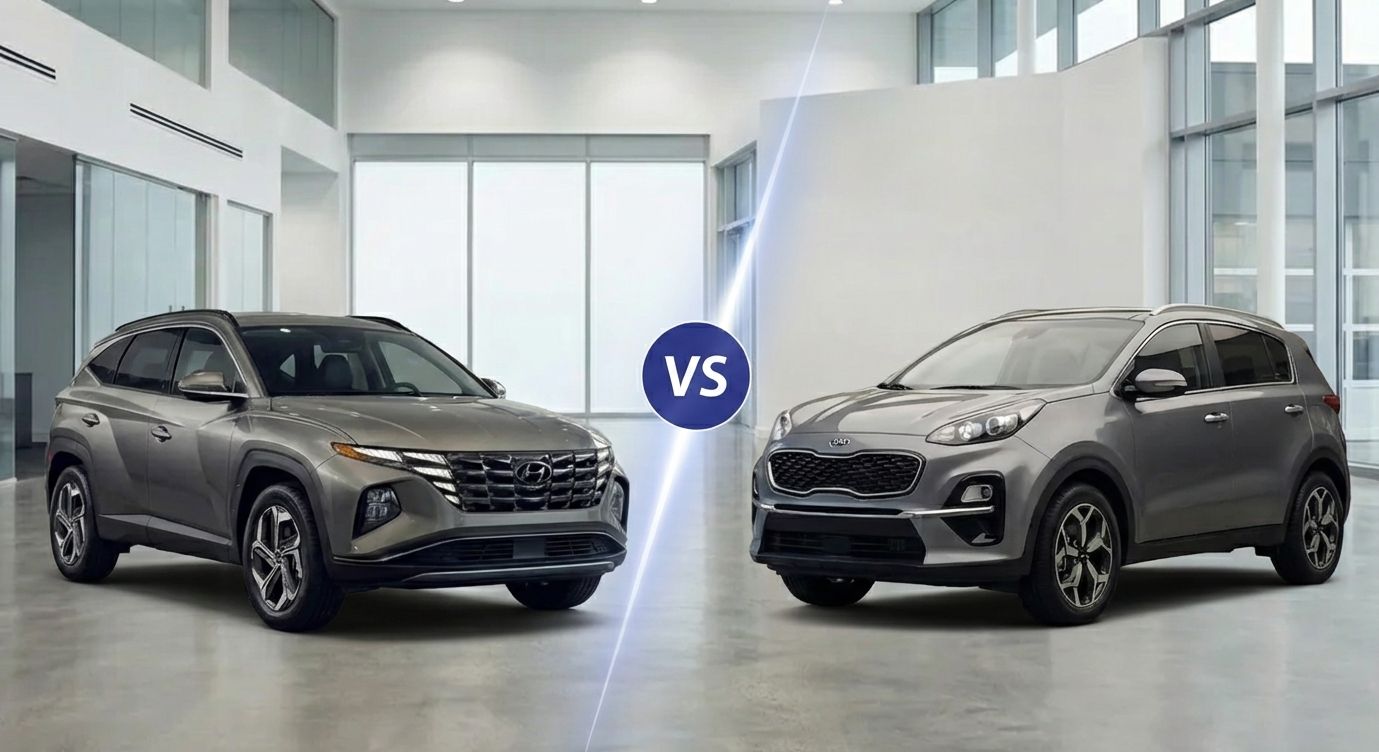
Hyundai Tucson vs. Kia Sportage: A detailed comparison of design, engines, and practicality to help you choose. Read our final verdict.
Apr 13, 2026