Car battle
Nissan Qashqai vs. Seat Ateca: Complete comparison 2026
Deciding between the Nissan Qashqai and the Seat Ateca? Our detailed comparison of engines, equipment, and prices will help you choose the right SUV for you.
Oct 16, 2026
Articles
Car battle
Ford Puma vs Opel Mokka: City SUV comparison. Read a detailed evaluation of engines, space, and driving characteristics and choose your ideal used car.
April 14, 2026
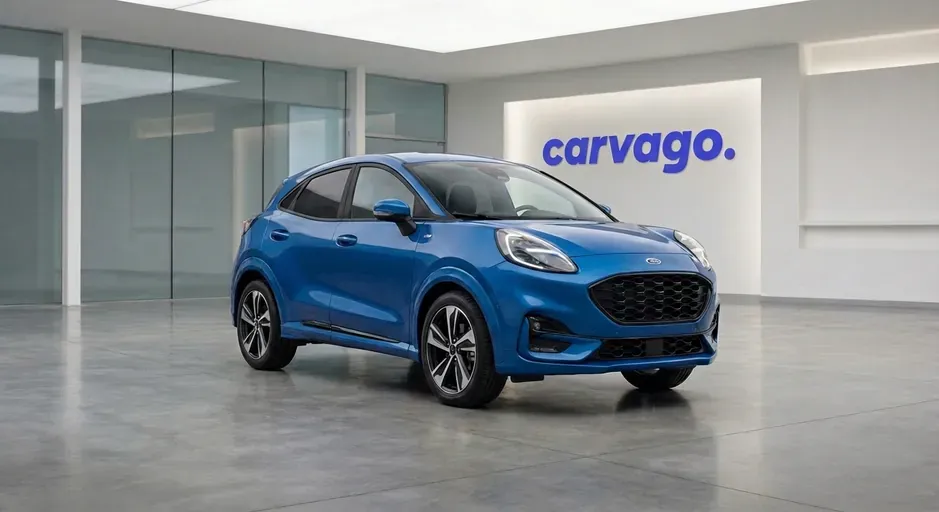
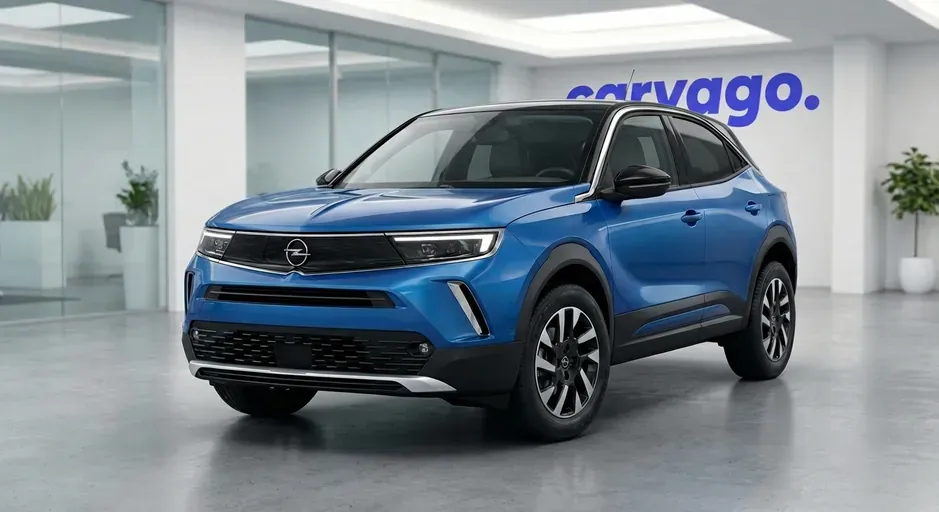
Ford Puma is an agile compact SUV that brings a sporty look combined with a surprisingly practical interior to the market. Standing against it is the confident Opel Mokka, also known as the Vauxhall Mokka in some markets, which attracts drivers with its bold futuristic design and modern technology. Let's take a detailed look at which of these stylish city crossovers ultimately offers a better driving experience, everyday utility, and overall reliability.
Looking at the exterior dimensions, it is clear that both models target customers looking for a compact city crossover, yet they approach the use of space slightly differently. The current generations of these vehicles (produced roughly since 2020 for Ford and 2021 for Opel) show subtle differences. The Ford Puma measures 4186 mm in length in its standard version (up to 4266 mm for the sporty ST versions), while the Opel Mokka maintains slightly more compact proportions with a length of 4150 to 4151 mm. The Ford is therefore 35 mm longer in its standard version and also roughly 20 mm wider (1805 mm vs. 1785–1787 mm for the Mokka). In practice, this means that the Opel Mokka, thanks to its shorter and narrower proportions, weaves through tight city streets slightly better and makes parallel parking easier. The Ford Puma, on the other hand, gives a slightly more robust impression on the road.
A very important parameter for the overall cabin spaciousness is the wheelbase. The Ford Puma offers a value of 2588 mm, while the Opel Mokka has a wheelbase of 2561 mm. This difference of 27 mm in favor of the Ford, together with a slightly taller body structure (the Puma's height ranges between 1520 and 1555 mm compared to 1515 to 1534 mm for the Mokka), provides a slightly airier interior. A longer wheelbase generally means more legroom for rear-seat passengers and better directional stability at highway speeds. In terms of daily use, Opel bets on visual dynamics with shorter overhangs, while Ford tries to maximize internal space within the footprint of the given class.
In conclusion, the exterior dimensions can be summarized such that for customers primarily looking for agility and easy parking in heavy traffic, the Opel Mokka will be a bit more user-friendly. The Ford Puma, on the other hand, benefits from its slightly larger exterior proportions, which directly affect practicality and provide families or rear passengers with a slightly more comfortable living space.
| Parameter | Ford Puma SUV | Opel Mokka SUV |
|---|---|---|
| Length (mm) | 4186 - 4266 | 4150 - 4151 |
| Width (mm) | 1805 | 1785 - 1787 |
| Height (mm) | 1520 - 1555 | 1515 - 1534 |
| Wheelbase (mm) | 2588 | 2561 |
If you are choosing a roughly four-year-old used car and care about family utility and overall practicality, the difference in luggage compartment volume between these two models might surprise you. Although both cars fall into the popular segment of small city SUVs and their external dimensions are very similar, their internal layout differs significantly.
Ford Puma of the second generation (produced since 2020) is the clear king in this discipline. It offers an excellent basic volume of 456 liters, with its main trump card being the so-called MegaBox – an additional 80-liter compartment hidden under the floor, which features a washable surface and a practical drain plug. After folding the rear backrests, you get a maximum space of 1126 liters. In earlier mild-hybrid versions from the start of production, the battery slightly reduced the volume to a still very respectable 402 liters, while the modern fully electric Gen-E version even boasts a rear space of 574 liters complemented by a smaller front trunk.
Opel Mokka generation B (launched in 2021), on the other hand, plays primarily on emotional and clean design, which inevitably resulted in a more modest transport capacity. The basic trunk volume for standard internal combustion versions is a rather average 350 liters, and after folding the seats, you reach 1105 liters. Furthermore, if you decide on a used electric version of the Opel Mokka (often referred to as Mokka Electric or Mokka-e), expect that the placement of the traction batteries will reduce the basic trunk volume to 310 liters.
In practice, these values mean a substantial difference in daily use. While the Mokka's smaller trunk is perfectly sufficient for a regular weekend shopping trip or storing two sports bags, the Puma easily offers space for several extra suitcases. Thanks to the clever deep MegaBox solution, the Ford can easily handle the role of a car for longer vacations or the safe transport of taller items, making it a much more practical choice for families with children.
| Parameter | Ford Puma SUV | Opel Mokka SUV |
|---|---|---|
| Basic volume (liters) | 456 | 350 |
| Max. volume with seats folded (liters) | 1126 | 1105 |
While the Opel Mokka focuses more on urban style and is mostly sufficient for routine shopping, the Ford Puma excels as a surprisingly practical car suitable even for family vacations, thanks to its giant trunk and unique MegaBox solution.
When choosing a compact crossover, towing capacity may not always be the top priority, but for many buyers of a roughly four-year-old used car, it is a key parameter that fundamentally affects overall practicality. In a comparison of the current generations, we encounter relatively fundamental differences between the Ford Puma (Generation II) and Opel Mokka (Generation B) models. The basic braked towing capacity for conventional versions of the Ford Puma is around 900 kg for the standard 1.0 EcoBoost, while mild-hybrid variants and the 1.5 EcoBlue diesel reach a maximum of 1100 kg (unbraked trailer is usually 640 kg). In contrast, the competing Opel Mokka can tow a braked trailer weighing up to 1200 kg and an unbraked one around 620 kg with its internal combustion engines. In practice, these values represent valuable extra cargo space – they are perfectly sufficient for a weekend trip to a DIY store, transporting garden equipment, or a longer holiday with a smaller caravan.
However, significant deviations exist for niche and electrified powertrains. For structural reasons, the sporty Puma ST and the newer all-electric Puma Gen-E have a reduced braked trailer capacity of 750 kg. The situation is even more specific for the Opel: the popular all-electric Mokka Electric version (which is the only one representing Generation B in the data records) is not homologated for towing a trailer at all, and its listed capacity is 0 kg. The conclusion in this discipline is therefore quite clear – if you rely on traditional internal combustion engines and are looking for the highest possible towing capacity, a used Opel Mokka offers a slight advantage. But if you are looking for an electric vehicle or a sharper drive and still need to maintain the ability to occasionally attach a trailer with cargo, the Ford Puma becomes the more versatile and safer choice.
(Since the database for the corresponding age of the Opel Mokka model does not contain homologation data for the towing equipment of all-electric versions, only the available specifications for the Ford Puma are shown in the table below. Details for the Mokka model are elaborated in the text above.)
| Model and engine | Braked trailer (kg) | Unbraked trailer (kg) |
|---|---|---|
| Ford Puma 1.0 EcoBoost | 900 - 1100 | 640 |
| Ford Puma 1.0 EcoBoost Hybrid | 900 - 1100 | 640 |
| Ford Puma 1.5 EcoBlue | 1100 | 640 |
| Ford Puma 1.5 EcoBoost ST | 750 | 640 |
| Ford Puma Gen-E | 750 | 640 |
When comparing the powertrains of roughly four-year-old Ford Puma (second generation, from 2020) and Opel Mokka (generation B, from 2021) models, a completely different approach by both manufacturers is evident. The Ford Puma is strongly oriented towards sporty performance and maximum utilization of mild-hybrid technology (mHEV), which not only reduces fuel consumption but also gives the car flexibility and vigor even at low revs. In contrast, the Opel Mokka offers a more relaxed, yet more diverse range including traditional internal combustion engines and, in addition, an advanced fully electric version, which is ideal for daily city driving. Interestingly, both models initially featured very efficient diesel engines (1.5 EcoBlue for Ford and 1.5 Diesel for Opel), which impressed with high torque and combined consumption well below five liters. However, due to stricter emission standards and declining customer interest in diesel in small SUVs, they disappeared from the offerings relatively quickly, so today they represent sought-after but rare "scarce commodities" on the used car market.
Under the hood of the Ford Puma, the award-winning 1.0 EcoBoost three-cylinder takes center stage, most commonly found on the nearly new car market in dynamic mild-hybrid versions (mHEV) with 92 kW (125 hp) or 114 kW (155 hp). A small electric motor helps compensate for initial turbo lag and adds a smoother acceleration curve to the vehicle. Customers could choose between a precise six-speed manual transmission or, from 2021, a fast seven-speed dual-clutch automatic (PowerShift). For occasional and regular highway trips, Ford briefly offered the reliable 1.5 EcoBlue four-cylinder diesel with a massive torque punch of 285 Nm. However, as evident from available database records, its production for the Puma ended as early as late December 2021. A chapter in itself for demanding drivers is the sharp top-of-the-line 1.5 EcoBoost ST version. This extracts a peak 147 kW (200 hp) from the robust three-cylinder and sends a massive 320 Nm to the front wheels exclusively through a manual gearbox. Unfortunately, production of this purist engine option was phased out in the first half of 2024.
| Engine type | Fuel type | Power (kW) | Torque (Nm) | Transmission |
|---|---|---|---|---|
| 1.0 EcoBoost | Petrol | 70 | 170 | 6MT |
| 1.0 EcoBoost mHEV | Petrol (Mild-hybrid) | 92 | 210 | 6MT / 7AT |
| 1.0 EcoBoost mHEV | Petrol (Mild-hybrid) | 114 | 240 | 6MT / 7AT |
| 1.5 EcoBlue | Diesel | 88 | 285 | 6MT |
| 1.5 EcoBoost ST | Petrol | 147 | 320 | 6MT |
The Opel Mokka relies primarily on simplicity and comfort without unnecessary complications. The petrol foundation of the entire portfolio is the refined all-aluminum 1.2 Turbo three-cylinder. It is available in a more modest variant with 74 kW (100 hp), which is paired only with a manual transmission but is fully sufficient for country roads and city commuting. If you require a bit more confidence on the highway, the 96 kW (130 hp) version with 230 Nm of torque makes more sense; in addition to the manual, it could also be equipped with a very smooth eight-speed torque converter automatic. Like the Puma, the Mokka initially catered to long-distance travelers with the 1.5 Diesel four-cylinder unit (81 kW / 110 hp). Although it was an exceptionally efficient engine, it was dropped from the range at the end of 2023. The real technological highlight of used cars of this age, however, is the zero-emission Mokka Electric. Thanks to a solid 50 kWh battery (net) and an electric motor providing 100 kW (136 hp), it offers a fantastic 260 Nm of torque available immediately from zero, making it a perfectly agile urban predator with impressive silence on board.
| Engine type | Fuel type | Power (kW) | Torque (Nm) | Transmission |
|---|---|---|---|---|
| 1.2 Turbo | Petrol | 74 | 205 | 6MT |
| 1.2 Turbo | Petrol | 96 | 230 | 6MT / 8AT |
| 1.5 Diesel | Diesel | 81 | 250 | 6MT |
| Mokka Electric (50 kWh) | Electric | 100 | 260 | 1AT |
While the Ford Puma attracts with dynamically oriented mild-hybrid three-cylinders and a fantastic manual ST version for true driving enthusiasts, the Opel Mokka offers a comfort-tuned internal combustion portfolio, topped by the popular and quiet electric variant created for the city.
Choosing the right powertrain is absolutely critical for your long-term satisfaction with the car, which is why our recommendations are carefully backed by real-world dynamics, actual fuel consumption, owner feedback, and mechanical reliability from practice. When comparing these two crossovers, we find completely different technological approaches given by the generational development of both brands. With the second-generation Puma, Ford bet primarily on its long-refined 1.0 EcoBoost three-cylinder, which it effectively enhanced with mild-hybrid technology (mHEV). In contrast, the second-generation Opel Mokka (B), launched in 2021, underwent a complete platform transformation after moving under the Stellantis umbrella, and the original engines were replaced. In both cases, an interesting fact remains: the market for roughly four-year-old used cars is completely dominated by turbocharged three-cylinder petrol engines, as the once-popular diesels in these small cars have definitively receded into the background.
| Model | Typical engine | Market availability | Crucial note for used cars |
|---|---|---|---|
| Ford Puma (Gen II) | 1.5 EcoBlue (Diesel) | 2020 - 2021 | Production discontinued, almost non-existent on the market for roughly 4-year-old cars. |
| Opel Mokka (Gen A) | 1.4 Turbo / 1.6 CDTI | 2012 - 2016 | Original generation engines (GM), completely irrelevant for 4-year-old used cars. |
| Ford Puma (Gen II) | 1.0 EcoBoost Hybrid | 2020 - present | The most widespread and best-rated powertrain for this vehicle age. |
| Opel Mokka (Gen B) | 1.2 Turbo | 2021 - present | New Stellantis base making up the vast majority of the newer used car market. |
As is clearly evident from the availability data, older engines (especially diesels like the 1.5 EcoBlue for the Puma or the old 1.4 Turbo units in the original Mokka generation) are no longer suitable or even offered for the market of modern, approximately 4-year-old used cars. In the following selection, we therefore clearly recommend the best from the relevant generations of both models.
This mild-hybrid three-cylinder petrol engine represents an absolutely ideal choice in the Puma model range and a great compromise between purchase price, flexibility, and efficiency. The strongest technical aspect of this unit is the presence of a 48V starter-generator, which delivers torque instantly from the lowest RPMs, completely smoothing out typical turbo lag and ensuring unexpectedly smooth acceleration. In the real world, it can be driven with an excellent fuel consumption of 5.5 to 6 liters of petrol per 100 km. From a mechanical standpoint, the biggest risk with direct-injection engines is carbon buildup on the intake valves and faster oil degradation if the car is used mainly for short city trips. You can identify an emerging problem during a test drive by rough idling or slight hesitation at low RPMs. As a preventive measure, we clearly advise checking the service book thoroughly and shortening the oil change interval to a maximum of 15,000 km or 1 year, and regularly "stretching" the engine with more spirited highway driving. This engine will be most appreciated by dynamic drivers who combine city trips with weekend outings and are looking for a car with a sporty spirit.
In the case of the current generation Mokka (B), we highly recommend opting for the more powerful 130 hp specification of the 1.2 Turbo petrol engine. This powertrain represents the best of the offering for the average motorist in the four-year-old used car market, especially when paired with the smooth-shifting eight-speed automatic transmission. Its main advantages are low weight and a generous 230 Nm of torque available from just 1750 RPM, making the Mokka nimble, ready for overtaking, and capable of handling highway climbs without issue. The engine comes from the PureTech family, which carries one very specific and well-known risk: the timing belt runs in an oil bath. If the previous owner exceeded service intervals, the belt begins to fray, its particles clog the oil pump pickup screen, and there is a risk of fatal damage due to loss of lubrication. This threat can often be checked relatively easily by unscrewing the oil filler cap. Shine a light inside and carefully inspect the visible belt – it must not show any cracks, fraying at the edges, or obvious swelling. To ensure a long, trouble-free life for the engine, it is absolutely critical to change the precisely specified oil every 10,000 km, or once a year. With proper and careful service, it is an excellent, lively, and economical companion for drivers who love stylish design and require calm travel in suburban settings.
When choosing a roughly four-year-old used car, which ideally includes the Ford Puma 2nd generation (produced since 2020) and the Opel Mokka B (since 2021), it is important to remember that official fuel consumption figures provided by manufacturers often differ from reality. While the paper figures look tempting, for a true picture, it is always better to look at databases that collect data from drivers themselves. For our comparison, we have therefore used the popular German portal Spritmonitor.de, which offers a relatively accurate look at how much fuel these urban SUVs actually consume in everyday operation.
| Model and engine | Average consumption (l/100 km) | Data source |
|---|---|---|
| Diesel engines | ||
| Ford Puma 1.5 EcoBlue (88 kW) | 4.8 | Spritmonitor.de |
| Opel Mokka 1.5 Diesel (81 kW) | 4.9 | Spritmonitor.de |
| Petrol engines | ||
| Ford Puma 1.0 EcoBoost mHEV (92/114 kW) | 6.0 | Spritmonitor.de |
| Opel Mokka 1.2 Turbo (74/96 kW) | 6.3 | Spritmonitor.de |
| Ford Puma 1.5 EcoBoost ST (147 kW) | 7.4 | Spritmonitor.de |
Looking at the table reveals several interesting trends. Diesel engines, although no longer nearly as common in this category, still maintain a dominant position in terms of absolute efficiency. Both the 1.5 EcoBlue from Ford and the 1.5 Diesel from Opel easily stay below the five-liter mark on long journeys. For petrol units, on the other hand, we see the classic ailment of small turbo engines – they promise miracles, but real average consumption in practice always settles around the six-liter mark. However, the Ford Puma gains a slight lead here thanks to its sophisticated mild-hybrid system (mHEV) in the 1.0 EcoBoost engine, being on average about three deciliters more efficient than the purely internal combustion 1.2 Turbo in the Opel Mokka. It is also no surprise that the logically higher appetite of the sport-tuned Puma ST version means you simply have to pay extra at the filling station for that 200 hp portion.
What do these values mean for the average user? If you move mainly in the city and in suburban traffic, petrol versions are a much more sensible choice. Thanks to smart electric assistance, the Ford Puma can save you a bit of money during constant stop-and-go in traffic jams. If, on the other hand, you devour hundreds of highway kilometers a week and often drive out of town, it makes sense to look for diesel variants. These are not as widely represented on the used car market, but they will reward you with great range and low operating costs. Furthermore, one universal rule applies to all three-cylinder petrol engines: these engines are extremely sensitive to driving style. As soon as you exceed the speed limits on the highway or start driving in a brake-gas style, consumption shoots up steeply and the advantage of "downsizing" immediately disappears.
In conclusion, it can be said with a clear conscience that fuel consumption will probably not be the main and only argument that would decide the victory of one of these cars. While the Ford Puma offers a slightly more efficient petrol powertrain thanks to mild-hybrid technology, in the real world, the differences between comparable engines of both cars are so slight that you are more likely to appreciate the different design, interior layout, or driving characteristics of a specific model.
Looking at the used car market for vehicles around four years old (2021 to 2022 models), you will find that both the Ford Puma and Opel Mokka (current Mokka B generation) hold their value very well. Both models belong to the highly sought-after small city crossover segment (B-SUV), which is directly reflected in their stable and strong prices. While the Ford Puma tends to attract driving-oriented customers with a preference for mild-hybrid technologies, the Opel Mokka scores with its exceptionally extravagant design and the option of a purely electric powertrain.
When comparing prices, we focused on cars that currently make the most sense on the used market – namely, roughly four-year-old models corresponding to the current generations.
The following table provides a quick comparison of average prices for four-year-old used cars:
| Model | Base version (higher mileage) | Mid-range (better equipment, lower mileage) | Sport / Electric versions |
|---|---|---|---|
| Ford Puma (2021–2022) | €13,000 – €14,000 | €15,000 – €17,000 (ST-Line) | €18,000 and more (Puma ST) |
| Opel Mokka (2021–2022) | €14,000 – €15,000 | €16,000 – €18,000 (GS Line) | €18,000 and more (Mokka-e) |
In terms of total acquisition costs, both cars are extremely close and represent direct competitors. Thanks to its earlier market launch, the Ford Puma has a slightly more diverse and broader range of used units, giving buyers with a tight budget a better chance of finding a good deal. On the other hand, the second-generation Opel Mokka still carries the aura of a hot new release, even several years after its introduction, which helps it protect its price more confidently.
Both crossovers offer attractive design and modern equipment for similar money; the Ford Puma scores with a wider selection of used cars and a slightly lower starting price, while the Opel Mokka holds its value thanks to its fresh look and modern platform.
Although both models are often mentioned as having achieved the maximum five-star Euro NCAP rating during their sales history, it is very important to know the exact context and year of testing. Safety crash test protocols are constantly becoming stricter and evolving over time – in recent years, for example, much more demanding frontal collision simulations, more sensitive cyclist detection, or emergency scenarios at modern intersections have been added. For this reason, percentage scores from different years are not directly comparable. Older certifications are slowly losing their validity, and what once automatically meant five stars for older generations might no longer hold up under the latest standards.
Ford Puma
While the Ford Puma received a full five stars upon its initial market launch in 2019, the independent organization Euro NCAP re-examined this model in 2022 according to newer, significantly stricter protocols. In this updated assessment, the car received four stars from the perspective of today's standards. The biggest loss of points stems from the missing center airbag, which would prevent a serious collision between both front-seat passengers in a severe side impact. Despite this, however, the Puma maintained an excellent level of protection for both children and adults, and its active safety features continue to reliably assist in critical moments.
Opel Mokka
The second generation of the small SUV Opel Mokka headed for the Euro NCAP laboratory walls in 2021 and also took home four stars from the current tests. Although the car's structure and cabin remain exemplarily stable during an impact, the overall result is significantly undermined by shortcomings in modern active and passive protection features. Compared to the strictest standards, the Mokka lacks a modern center airbag and does not have advanced automatic emergency braking (AEB) systems for cyclist detection. This was unfortunately strongly reflected in lower percentages for assistance systems and the protection of vulnerable road users.
| Parameter | Ford Puma | Opel Mokka |
|---|---|---|
| Year of testing | 2022 | 2021 |
| Adult occupant protection | 75 % | 73 % |
| Child occupant protection | 84 % | 75 % |
| Vulnerable road user protection | 70 % | 58 % |
| Safety assist systems | 69 % | 64 % |
From the final safety comparison, the Ford Puma emerges as a significantly better-prepared car. Although both competitors on the used car market currently share four stars after re-evaluation in stricter tests, the Puma clearly outperforms its German rival in all monitored percentage categories, thus representing a more comprehensive and modern safety package for both the crew itself and for pedestrians and cyclists.
Thanks to overall better percentage results across all measured categories and significantly more sophisticated protection for pedestrians and cyclists, the Ford Puma is a somewhat more certain and safer choice for those interested in a used car.
In addition to standard equipment, each of the models offers several unique features and innovations that highlight their different approaches to the small crossover class and can be decisive for the customer during the final selection.
Great driving characteristics and a fun driving experience that is among the best in its segment
Innovative and easy-to-clean "Megabox" under the boot floor, providing an additional 80 liters of space
Economical and very flexible 1.0 EcoBoost mild-hybrid engines
Excellent driver's cockpit ergonomics with physical buttons for climate control preserved
Quick, precise, and communicative steering
Stiffer chassis tuning, which reduces comfort on poorer roads in the sportier ST-Line versions
Limited legroom and headroom for adult passengers in the rear seats
More dated dashboard concept, with a design completely carried over from the previous generation Fiesta
Poorer rear-quarter visibility due to the significantly sloping roofline
The Ford Puma is an ideal choice for drivers who don't want to lose the joy of driving when switching to a crossover. Thanks to its agile chassis and cleverly designed boot with the Megabox, it is a surprisingly practical and fun car for small families or couples, despite its sporty cut.
Bold and very attractive exterior design with a distinctive front grille called the Opel Vizor
Highly modern and minimalist Pure Panel dashboard concept with two displays
Option of a fully electric Mokka-e version with locally emission-free operation
Comfortable chassis tuning that filters out common city bumps very well
Availability of advanced IntelliLux matrix LED headlights, which is not a given in this class
Below-average boot capacity of just 350 liters (even only 310 l for the electric version)
More difficult entry to the rear seats due to the narrow door opening and more cramped space in the back
Less precise steering and a generally more detached driving experience compared to the dynamically tuned Puma
Increased risk of issues with "wet" timing belt wear in older 1.2 Turbo turbocharged three-cylinder engines
The Opel Mokka will primarily appeal to drivers looking for a modern, technologically advanced, and eye-catching crossover. It is a great alternative for those who prefer a quiet and comfortable ride, avant-garde style, and don't mind less emphasis on maximum cargo capacity.
Based on our long-term experience from used car inspections, breakdown statistics, service bulletins, and user feedback, we have compiled an overview of the most common problems you should watch out for when choosing a used car of either model.
The current generation Ford Puma is generally ranked among mechanically durable crossovers, yet typical faults can occur, primarily related to on-board electronics and specific engine maintenance.
The Ford Puma enjoys relatively solid reliability, but its 1.0 EcoBoost petrol engines require absolutely uncompromising and timely maintenance. If a used car lacks a clear oil change history, the purchase becomes an unnecessary risk.
The second generation Opel Mokka (produced since 2020) completely changed its technical foundation and uses the Stellantis Group platform. This brings a range of modern technologies, but also known service weaknesses associated with the power units used.
The key to satisfaction with a petrol Mokka is the careful selection of a unit with a proven service history and a checked timing belt. If the previous owner did not follow the service plan, the popular 1.2 Turbo three-cylinder is at risk of fatal failures.
When buying a used car, a thorough inspection is key. Here are some specific points to focus on for these two models, which should always undergo a thorough physical car inspection by an experienced mechanic.
Ford Puma offers a significantly larger and more practical luggage space with a volume of 456 liters, while the Opel Mokka has a volume of only 350 liters. A huge advantage of the Puma is also the innovative washable compartment called MegaBox under the trunk floor. The Mokka is overall designed more for effect and feels more cramped in the rear of the cabin and in the trunk.
The Ford Puma is considered by many automotive journalists to be the best-driving small SUV on the market thanks to its precise steering and perfectly tuned chassis. The Opel Mokka, on the other hand, is focused primarily on a comfortable, quiet, and calm ride in an urban environment. If you are looking for everyday fun behind the wheel on country roads, the Puma is the clear winner.
The Opel Mokka is commonly available on the used car market as the fully electric Mokka-e model, which offers a 50 kWh battery and a real-world range of around 300 kilometers. In roughly four-year-old used Ford Pumas, you will only find internal combustion engines, most of which use fuel-efficient mild-hybrid technology. The fully electric version of the Puma arrived on the market much later.
The Opel Mokka impresses at first glance with the so-called Pure Panel, which is a minimalist arrangement of two large driver-oriented displays. The Ford Puma's interior is directly based on the Fiesta model and feels significantly more traditional and older, although its excellent button ergonomics cannot be denied. However, in both four-year-old used cars, you can count on reliable support for Apple CarPlay and Android Auto systems.
In the Ford Puma, the absolute foundation is the very reliable and award-winning 1.0 EcoBoost three-cylinder, which, in combination with the mild-hybrid, shows minimal failure rates. The 1.2 Turbo gasoline engine in the Opel Mokka (originally from the PSA Group) requires increased attention because it has a timing belt immersed in oil. For trouble-free operation of the Mokka, it is therefore absolutely crucial to follow shortened engine oil change intervals and use only the lubricant prescribed by the manufacturer.
Sources: ADAC, lidovky.cz, e15.cz, autoexpress.cz, autoservis.cz, autoperiskop.cz
This article was prepared using artificial intelligence tools. The section guarantor is Petr Dušek.
Deciding between the Nissan Qashqai and the Seat Ateca? Our detailed comparison of engines, equipment, and prices will help you choose the right SUV for you.
Oct 16, 2026
Hesitating between the Citroën C5 Aircross and the Škoda Karoq? Our detailed comparison and verdict will help you choose the right SUV for your needs.
Oct 16, 2026
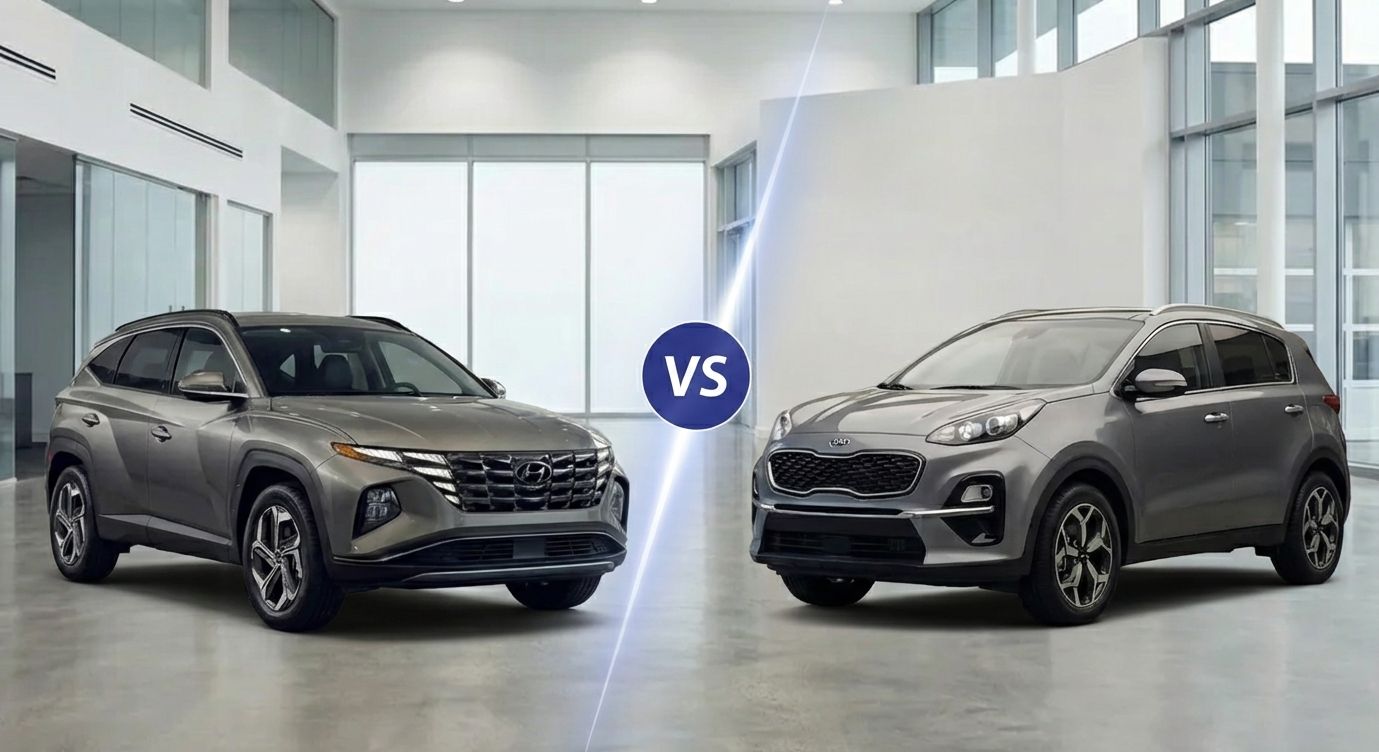
Hyundai Tucson vs. Kia Sportage: A detailed comparison of design, engines, and practicality to help you choose. Read our final verdict.
Oct 16, 2026