Car battle
Nissan Qashqai vs. Renault Austral: Complete comparison 2026
Nissan Qashqai vs. Renault Austral: A detailed comparison to help you choose. We compare design, engines, prices, and deliver a clear verdict.
Oct 16, 2026
Detailed comparison: BMW X1 vs Jaguar E-Pace. Find out which premium SUV offers better equipment, space, and reliability. Read our final verdict!
November 12, 2026
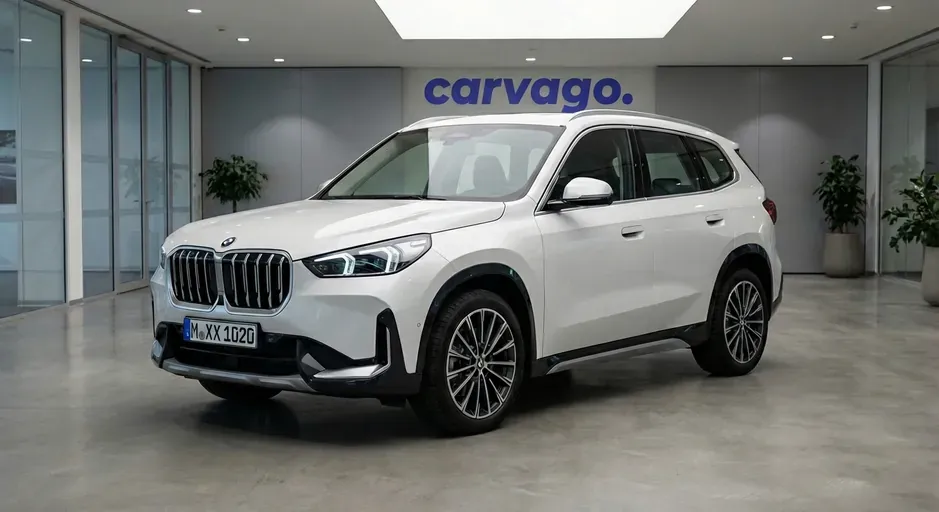
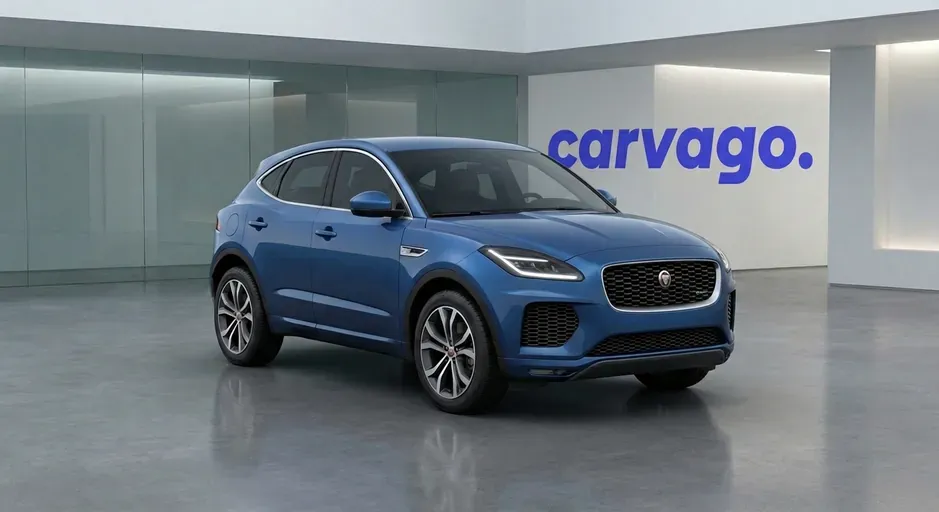
BMW X1 is a popular and versatile compact premium SUV that has long attracted drivers with its German precision, practical interior, and excellent driving dynamics. Standing against it is the Jaguar E-Pace, a stylish British crossover that relies primarily on emotive design, luxurious cabin materials, and the sporting prowess characteristic of this traditional island brand. Let's take a detailed look at how these two attractive representatives of the luxury compact segment fare in a head-to-head battle and which one will better suit your daily needs.
BMW X1 and Jaguar E-Pace approach the premium compact SUV segment with different bodywork philosophies, which is most evident when comparing models that are currently around four years old on the used car market (the transition between the popular F48 and U11 generations for BMW versus the British X540 architecture). While the Munich SUV stretches in length, measuring from 4,447 mm (F48) to 4,500 mm (U11), the Jaguar is noticeably shorter with a length of just 4,395 mm. In practice, this means the BMW is up to 105 mm longer, which brings a tangible advantage in terms of interior space and a more voluminous trunk. In contrast, the Jaguar shocks with its overall width. With a value of 1,984 mm, the E-Pace is a staggering 139 to 163 mm wider than its Bavarian rival. While this muscular stance gives the car a more aggressive look and generous shoulder room for the occupants, in the real world, it can significantly complicate parking in narrow underground garages for drivers.
Looking at the wheelbase, there is a rare consensus between the two cars. Jaguar offers 2,681 mm, a value that lies exactly between the older (2,670 mm) and newer (2,692 mm) generations of the BMW X1. As a result, both models provide very similar directional stability on the highway and comparable basic legroom for rear passengers. In terms of height, the British beast stands at 1,648 mm, exceeding its German competitor by a few millimeters (max height 1,642 mm). The slightly taller build of the Jaguar contributes to a sense of safety and provides a slightly better view, but the overall wider and bulkier silhouette takes its toll in higher aerodynamic drag and weight.
Ultimately, the exterior dimensions quite clearly define the target group for both models. If your priority is maximizing utility space and you are looking for a family SUV that, despite its spaciousness, does not suffer in narrow city lanes, the longer and narrower BMW X1 represents a rational and highly practical choice. Conversely, the Jaguar E-Pace will appeal to drivers who choose with their eyes and prefer a shorter but extremely wide-stanced car. The unmistakable predatory character of the British car is excellent, but it requires a willingness to tolerate minor compromises when maneuvering in tight spaces every day.
| Parameter | BMW X1 SUV | Jaguar E-Pace SUV |
|---|---|---|
| Width (mm) | 1,821 - 1,845 | 1,984 |
| Length (mm) | 4,447 - 4,500 | 4,395 |
| Height (mm) | 1,582 - 1,642 | 1,648 |
| Wheelbase (mm) | 2,670 - 2,692 | 2,681 |
When choosing a premium compact SUV, trunk capacity plays a key role, especially if you are looking for a practical vehicle for family use. An interesting comparison arises here, as the BMW X1 and Jaguar E-Pace approach spaciousness slightly differently. While Jaguar relies on dynamic shapes and a sloping coupe-like roofline, BMW – especially with the U11 generation, which seamlessly followed the previous F48 model in 2022 – took the path of maximizing the use of enclosed space. These differences mean that while one car offers excellent versatility for everyday family life, the other may require slightly more careful packing and compromises from you.
In terms of numbers, the BMW X1 (U11 generation) offers a generous standard trunk capacity of 540 liters (the previous F48 generation, also widely represented on the used car market, offers a solid 505 liters), which increases to an impressive 1600 liters after folding the rear seats. In contrast, the Jaguar E-Pace actually has a standard trunk capacity of 494 liters. Although some Jaguar materials state up to 577 liters, this figure is achieved when measuring the volume up to the roof of the vehicle. After folding the seats, you get a maximum cargo space of 1234 liters in the British SUV. Both automakers also offer popular plug-in hybrid (PHEV) and mild-hybrid variants, where a slight reduction in capacity must be expected due to the installation of battery modules. In the case of the BMW X1 xDrive25e and xDrive30e, the basic volume is reduced to 490 liters (with a maximum of 1495 liters), while for the Jaguar E-Pace P300e, the total usable space decreases similarly, taking away valuable centimeters, especially in height.
In practical life, these parameters mean a noticeable advantage for the German representative. A standard capacity exceeding five hundred liters in the X1 is perfectly sufficient for weekend shopping and longer vacations for a family of four. Thanks to the regular square shape of the trunk and a lower loading sill, you get space for several extra suitcases in the BMW. While the Jaguar E-Pace can handle common daily transport needs without major hitches, you will feel the limits more quickly when loading bulkier items or large strollers due to the design-led rear and narrower trunk opening. In terms of overall transport capacity and variability, the BMW is therefore a more rational and practical choice, while with the Jaguar, you have to sacrifice some liter capacity for the sake of an attractive exterior appearance.
| Parameter | BMW X1 SUV | Jaguar E-Pace SUV |
|---|---|---|
| Standard capacity (liters) | 540 l | 494 l |
| Max. capacity with seats folded (liters) | 1600 l | 1234 l |
BMW X1 offers a significantly larger and better-shaped luggage compartment, making it the clear choice for families and practical-minded drivers, while the Jaguar E-Pace loses out slightly in terms of cargo capacity due to its dynamic design.
Towing capacity is a key parameter for drivers planning to tow a caravan on holiday, a horse trailer, or a heavier utility trailer behind their premium compact SUV. Both the BMW X1 (represented primarily by the popular F48 generation and the newer U11) and the Jaguar E-Pace (X540) offer very solid towing capabilities for their class. Both models thus become not only stylish but also highly practical companions, capable of handling everything from a standard weekend shopping trip with a small trailer to much more demanding transport tasks.
For standard versions, braked trailer weights are very similar. Basic and mid-range BMW X1 engines (e.g., sDrive18i or sDrive18d) can handle a trailer weighing 1,700 to 1,800 kg. If you opt for more powerful all-wheel-drive variants (e.g., xDrive20d or xDrive25i), you reach a maximum value of 2,000 kg. The Jaguar E-Pace offers very similar flexibility – most common engines (such as the D180 or petrol P200 and P250) have a permitted load of 1,800 kg, while the more powerful D200 diesel versions fully match their Munich rival with a maximum of 2,000 kg.
A fundamental and very important difference for those interested in approximately four-year-old used cars occurs with plug-in hybrid versions, where electrification has a direct impact on structural limits. While the Jaguar E-Pace in the P300e variant can still tow a very respectable 1,600 kg, the older generation BMW X1 (F48) xDrive25e is limited to just 750 kg. In practice, this means the hybrid Jaguar can easily handle a smaller caravan, while the older hybrid BMW is suitable at most for a small unbraked trailer for hauling garden waste. Only the newer generation BMW X1 (U11) removes this compromise, allowing its plug-in hybrids to tow 1,700 to 1,800 kg.
If you are looking for a versatile SUV and a tow bar is more than just an ornament for you, both vehicles with conventional internal combustion engines will do a great job, offering enough space for a few extra suitcases and a trouble-free tow for a summer holiday. However, those interested in an older and more eco-friendly plug-in hybrid should take note: if you need to tow heavier loads, you should rather choose the British beast or look for the latest generation from BMW.
| Model and engine | Braked trailer (kg) | Unbraked trailer (kg) |
|---|---|---|
| BMW X1 sDrive18i (gen. F48/U11) | 1700 | 750 |
| BMW X1 xDrive20d (gen. F48/U11) | 2000 | 750 |
| BMW X1 xDrive25e (gen. F48) | 750 | 750 |
| Jaguar E-Pace D165 | 1600 - 1800 | 750 |
| Jaguar E-Pace D200 | 2000 | 750 |
| Jaguar E-Pace P300e (PHEV) | 1600 | 750 |
Both models, the BMW X1 and Jaguar E-Pace, in the market for roughly four-year-old used cars (primarily around production years 2021 and 2022), boast a very modern and sophisticated range of engines that strongly emphasizes electrification. While BMW focused on the evolution of extremely efficient diesel and petrol four-cylinders with an emphasis on advanced plug-in hybrids during the generational change of the X1 from the popular F48 series to the succeeding U11 generation (from 2022), Jaguar decided to integrate mild-hybrid technology (MHEV) into almost all internal combustion engines as part of a significant facelift of the E-Pace model (from early 2021). In terms of choice, BMW offers a more diverse range for pragmatically minded buyers – from economical front-wheel-drive versions (sDrive) to powerful diesels (xDrive20d) that score points for excellent reliability and fuel consumption at high mileages. Jaguar, on the other hand, sticks to a slightly more premium strategy with its refreshed lineup: it supplies most of its four-cylinders on the market exclusively with all-wheel drive (AWD) and a precise nine-speed automatic, while its powerful petrol versions are primarily intended for sport-oriented drivers who don't mind slightly higher fuel consumption.
The range of powertrains for used BMW X1s (from roughly 2020 to 2023) covers both the outgoing F48 generation and the more advanced U11 generation, which brought a redesigned architecture. The absolute entry point is the proven sDrive18i three-cylinder with 100 kW, which is perfectly suited for daily suburban driving. Drivers seeking higher dynamics often choose the four-cylinder petrol 20i versions, which have outputs around 131 to 141 kW, or the updated 23i version available in the U11 generation. However, the biggest draw on the used car market for BMW is traditionally its excellent diesel engines. The more modest 110 kW 18d version stands out for its exceptional reliability and efficiency, while the more powerful xDrive20d model gives the car the necessary confidence on highway inclines thanks to a generous 400 Nm of torque. An important part of the offering from these years are also the powerful plug-in hybrids (PHEV). The older xDrive25e and the newer, even more powerful xDrive30e (up to 240 kW in the U11 generation) combine a petrol three-cylinder with an electric motor, and thanks to a higher-capacity battery in the newer generation, they make great sense for drivers who charge at home during the week and travel longer distances on weekends.
| Engine type | Fuel type | Power (kW) | Torque (Nm) | Transmission |
|---|---|---|---|---|
| sDrive18i | Petrol | 100 | 220 / 230 | 6MT / 7DSG |
| sDrive20i / xDrive20i | Petrol / MHEV | 125 – 141 | 280 / 300 | 7DSG / 8AT |
| sDrive18d / xDrive18d | Diesel | 110 | 350 / 360 | 6MT / 7DSG / 8AT |
| xDrive20d | Diesel / MHEV | 120 / 140 | 400 | 7DSG / 8AT |
| xDrive25e | Plug-in Hybrid | 162 / 180 | 385 / 477 | 6AT / 7DSG |
| xDrive30e (from 2022) | Plug-in Hybrid | 240 | 477 | 7DSG |
For finding the ideal four-year-old used car, the facelift from early 2021 (updated X540 series) is key for the Jaguar E-Pace. With this update, the British brand switched to a heavily electrified family of modern Ingenium engines. The role of the entry point into the world of this premium predator is played by the P160 petrol three-cylinder with 118 kW. This is the only petrol choice paired with pure front-wheel drive (FWD) and an eight-speed automatic. More demanding clients, on the other hand, choose from the sophisticated P200, P250 petrol four-cylinders and the sharp P300 model (with up to 221 kW). All of these utilize full AWD and a nine-speed automatic transmission, although one must expect higher average fuel consumption given the car's weight approaching 1.9 tons. If you are looking for a mile-muncher, the D165 and D200 diesel versions, supported by a mild-hybrid (MHEV) system for smoother power delivery, come into play. The more powerful 150 kW diesel variant seems to be the ideal choice across the entire range. The flagship of efficiency and power also clearly deserves attention – the P300e plug-in hybrid with an impressive 227 kW and high torque of 540 Nm, which makes the E-Pace a truly brisk premium SUV capable of driving up to dozens of kilometers in the city on pure electric power.
| Engine type | Fuel type | Power (kW) | Torque (Nm) | Transmission |
|---|---|---|---|---|
| P160 | Petrol / MHEV | 118 | 260 | 8AT |
| P200 | Petrol / MHEV | 147 | 320 | 9AT |
| P250 | Petrol / MHEV | 184 | 365 | 9AT |
| P300 | Petrol / MHEV | 221 | 400 | 9AT |
| D165 | Diesel / MHEV | 120 | 380 | 6MT / 9AT |
| D200 | Diesel / MHEV | 150 | 430 | 9AT |
| P300e | Plug-in Hybrid | 227 | 540 | 8AT |
While the BMW X1 scores on the used car market with flawlessly functioning and economical diesels for long distances and a wider choice of transmissions, the Jaguar E-Pace appeals to drivers craving superior performance and the luxury of nine-speed automatics as standard on most four-cylinders.
Choosing the right engine is absolutely crucial for long-term satisfaction with a used car, and our recommendations are based on real-world reliability, driving dynamics, and feedback from mechanics. When comparing both models on the market for roughly four-year-old used cars, we encounter an interesting contrast. While the BMW X1 benefits from years of experience in tuning power units and offers fantastic efficiency, the Jaguar E-Pace suffers from its above-average weight (often approaching two tons), which places a significantly higher load on its engines. In terms of availability on the used market, for BMW we are mostly talking about the time-tested F48 generation (production ended in 2022), while for the Jaguar E-Pace, an important change occurred at the turn of 2020 and 2021, when older units were replaced by improved mild-hybrid engines, which are worth focusing on when choosing.
For the F48 generation (whose production in this specification ended in August 2022), the two-liter diesel four-cylinder from the B47 family represents the absolute technical pinnacle of the compact class and is the most rational choice in the entire range.
Given the weight of the Jaguar E-Pace and the history of its power units, we strongly recommend looking for the improved D200 AWD mild-hybrid variant on the used market, which replaced the older and less efficient D180 version in early 2021.
As is often the case in the automotive world, the paper fuel consumption figures provided by manufacturers often differ significantly from everyday reality. Despite the stricter WLTP measurement methodology, it is always better to rely on real-world data from drivers themselves. For this comparison, we have therefore used average values from the independent community platform Spritmonitor.de, which much better reflect real-world operation in various conditions, loads, and seasons. To make the comparison as relevant as possible for the used car market, we focused exclusively on cars approximately four years old – in the case of the BMW X1, this is the popular F48 generation after the facelift, and for the Jaguar E-Pace, the X540 generation from around 2021 and 2022.
| Model and engine | Average consumption (l/100 km) |
|---|---|
| BMW X1 sDrive18d (110 kW) | 5.8 |
| Jaguar E-Pace D165 (120 kW) | 6.8 |
| BMW X1 xDrive20d (140 kW) | 6.4 |
| Jaguar E-Pace D200 (150 kW) | 7.5 |
| BMW X1 sDrive18i (100–103 kW) | 7.4 |
| Jaguar E-Pace P160 (118 kW) | 8.3 |
| BMW X1 xDrive20i (131 kW) | 7.9 |
| Jaguar E-Pace P200 (147 kW) | 9.2 |
Looking at the real numbers, the trend is perfectly clear: the BMW X1 is the clear winner in terms of efficiency across all comparable engines. Munich's engines, especially the 18d and 20d two-litre diesels, are considered among the most economical in their class and, even with all-wheel drive (xDrive), can run with a surprisingly low appetite. On the other hand, the Jaguar E-Pace hits its biggest technical handicap – high kerb weight. The British cat is often more than 200 kilograms heavier than its German competitor in comparable equipment. This has a significant impact on fuel consumption. While you can drive a diesel BMW sDrive18d well below six litres without much trouble, the entry-level diesel Jaguar D165 struggles to get below the seven-litre mark in the real world. The difference is even more gaping for petrol engines. Many buyers mistakenly believe that small three-cylinder or weaker four-cylinder turbo engines (such as the 18i or P160) will bring significant savings, but in practice, they work quite hard with heavy SUV bodies and the difference compared to more powerful versions is minimal. The more powerful petrol Jaguar P200 then commonly exceeds the nine-litre mark in real city and highway traffic.
For the average user, these data lead to fairly clear recommendations. If you are a driver who spends a lot of time on the motorway or commutes longer distances daily, a diesel BMW X1 will be an incomparably more advantageous choice for you in terms of fuel costs. From an economic point of view, the Jaguar E-Pace only makes sense for very low annual mileage, where the differences in consumption won't make such a dent in the family budget, or if you choose the plug-in hybrid version (P300e) and charge it diligently every day.
Fuel consumption should therefore play a crucial role when deciding between these two models. While with the BMW X1 you get a full-fledged premium SUV with operating costs comparable to a standard compact hatchback, with the Jaguar E-Pace you have to accept that you will pay regularly and significantly more at the filling station for its exclusive, original British design and overall robustness.
When looking at the used car market for roughly four-year-old vehicles (2021–2022 models), you encounter two quite different worlds. While the BMW X1 (end of the popular F48 generation) benefits from extraordinary popularity and maintains a high value, the Jaguar E-Pace (facelifted version) struggles with faster depreciation. For a used car buyer, this presents a classic dilemma: play it safe or take advantage of a better price-to-equipment ratio?
The BMW X1 is one of the most sought-after premium compact SUVs on the market, which means a relatively wide selection but also consistently higher purchase costs for used examples.
The Jaguar E-Pace is a significantly more exclusive and rarer sight on the used car market. However, the British brand traditionally suffers from faster depreciation, which plays significantly into the hands of those interested in a used car.
| Feature | BMW X1 (F48 LCI) | Jaguar E-Pace |
|---|---|---|
| Basic used models (from) | ~ €19,000 | ~ €18,000 |
| Typical price for an equipped car | €25,000 – €31,000 | €21,000 – €25,000 |
| Market supply | Wide and diverse | Very limited |
| Value loss (Depreciation) | Slow | Fast |
While the BMW X1 is a safe choice with great value retention and easy resale, the Jaguar E-Pace offers more exclusive equipment as a used car at a surprisingly attractive price, albeit with the risk of poorer future liquidity.
Both vehicles boast a maximum five-star rating in crash tests by the independent Euro NCAP organization, but it is crucial to put these results into the correct context. Testing protocols have become increasingly strict over the years, placing more emphasis not only on passive occupant protection but primarily on active safety and accident prevention. Percentage results from different years cannot be directly compared because today's strict standards require much more advanced technologies for early collision avoidance.
The Jaguar E-Pace underwent crash tests in 2017, where it comfortably earned the full number of stars. For its time, it offered very solid Adult Occupant protection (86%) and Child Occupant protection (87%). However, these tests were conducted according to what is now an outdated and significantly more lenient methodology. The 72% result in the Safety Assist category reflects the level of technology at the time, which did not yet require such complex detection of cyclists or advanced automatic braking at complex intersections. Furthermore, the five-star certification of this model officially expired in 2024 in terms of Euro NCAP protocol validity.
In contrast, the BMW X1 (U11 generation) underwent testing in 2022, according to significantly tougher and more modern rules. Despite the more demanding methodology, which includes new frontal impact scenarios and very strict assessment of reactions to vulnerable road users, the car achieved an excellent 86% for Adult Occupant protection and 89% for Child Occupant protection. However, the real proof of the intergenerational technological lead is the 92% score in the Safety Assist category. Modern radar and camera systems in the BMW react faster and in a much wider range of critical situations.
While both cars will reliably protect you in an actual impact thanks to their rigid bodies in terms of passive safety, the BMW X1 has a significant edge. Thanks to its more modern architecture and comprehensive assistance systems that meet the strictest criteria of recent years, it represents a safer choice that can actively and timely prevent many dangerous situations.
| Parameter | BMW X1 | Jaguar E-Pace |
|---|---|---|
| Year of testing | 2022 | 2017 |
| Adult Occupant protection | 86 % | 86 % |
| Child Occupant protection | 89 % | 87 % |
| Vulnerable Road Users protection | 76 % | 77 % |
| Safety Assist | 92 % | 72 % |
Although both cars protect the occupants very well, the more recently tested BMW X1 from 2022 offers a disproportionately more advanced and smarter set of safety assistants compared to the aging Jaguar.
In addition to standard equipment, each of the models offers more than just basic functions, with both cars having their own distinctive approach to offering the customer maximum added value.
The German representative relies primarily on the flawless harmony of functionality, practicality, and premium technologies that make every kilometer easier for the driver.
Jaguar approaches the family SUV with a dose of typical British playfulness and brings innovations to the segment that are not only useful but also highly original.
Exceptionally spacious interior and a large luggage compartment (up to 505 liters) for the compact SUV class
Intuitive and fast iDrive multimedia system, which ranks among the best on the market
Economical and reliable engines (especially the 18d and 20d diesel versions)
Excellent ergonomics and an outstanding driving position
High residual value and good liquidity on the used car market
Stiffer chassis tuning, which can be less comfortable with the M Sport package and larger wheels
The dashboard architecture of models prior to 2022 feels slightly dated compared to more modern vehicles
Poorer cabin insulation from tire noise at highway speeds
Sparse standard equipment, which means vast differences in comfort between individual used units
BMW X1 is a pragmatic choice for those looking for a premium compact SUV with an emphasis on space, top-tier ergonomics, and low operating costs. It serves smaller families well, who will appreciate the reliable technology and excellent multimedia system, albeit at the cost of slightly stiffer suspension comfort.
Attractive and unmistakable exterior design with elements borrowed from the F-Type sports model
Premium interior craftsmanship with luxury materials, which improved significantly after the 2021 facelift
Confident and sportily tuned driving characteristics supported by sharp and precise steering
Modern, graphically pleasing, and smooth Pivi Pro infotainment in newer used cars
Unexpectedly high curb weight, which negatively affects fuel consumption and dynamics
Less space in the rear seats and an overall more cramped feel in the cabin compared to its German rival
The nine-speed automatic transmission can sometimes hesitate to downshift when sudden acceleration is needed
Historically poorer brand reputation regarding long-term reliability and generally higher costs for authorized service
The Jaguar E-Pace is ideal for drivers who choose with their heart and prioritize style, a luxurious onboard atmosphere, and driving feel over absolute practicality. Although it loses points for higher weight and less interior space, it rewards with exclusivity and charisma that are hard to find in its more sober German competitors.
Based on long-term owner experience, service reports, and data from our inspections, including the comprehensive car inspection (CarAudit), we have compiled an overview of the most common problems that buyers of roughly four-year-old used cars should watch out for.
For the BMW X1 (especially the outgoing F48 generation and the incoming U11), reliability is at a relatively high level, yet several typical weak points appear in used cars, mainly associated with the chassis and cooling system.
BMW X1 is considered an above-average reliable SUV, where defects are mostly limited to chassis wear-and-tear items and minor fluid leaks. With careful selection and adherence to service intervals, it represents a safe choice.
The Jaguar E-Pace largely pays the price for its very high weight and the more sensitive technology of the Ingenium diesel engine family, which is reflected in more frequent and financially demanding service interventions.
Jaguar E-Pace is a beautiful car, but especially with the popular diesel engines, it requires maximum caution due to the risk of expensive timing chain and DPF failures. A thorough check of the service history is an absolute necessity for this car.
When buying a used car, a thorough inspection is key, and both models have their specifics that are worth focusing on. The reliability of four-year-old used cars largely depends on the care of the previous owner, so an independent technical inspection should take place before any purchase.
BMW X1 offers significantly more practicality and a larger luggage compartment in this comparison, with standard versions reaching a capacity of around 505 liters. The Jaguar E-Pace has a volume of approximately 425 liters and a less regular trunk shape. Furthermore, the German representative pleases with a lower loading sill and better utilization of overall interior space.
Although both brands target dynamically minded drivers, the British model feels more ponderous behind the wheel due to its unexpectedly high curb weight. The BMW X1 is structurally much lighter, which has a positive effect on agility, turn-in, and better acceleration. Jaguar, on the other hand, counters with a very stiff chassis and precise steering that benefits from the brand's sporting genes.
Thanks to its lower overall weight and excellently optimized engines, the BMW representative is noticeably more economical than its competitor. Especially with diesel and plug-in hybrid powertrains, the German car achieves excellent real-world consumption figures. Due to its higher weight and different aerodynamics, the rival E-Pace consumes an average of 1 to 1.5 liters more fuel per 100 km.
BMW models from recent years are considered above-average reliable SUVs with a predictable maintenance schedule and widely available service. Jaguar more frequently struggles with minor electronic infotainment glitches, and its maintenance and original spare parts are generally more expensive. In terms of long-term operating costs, the German model is therefore a more rational choice.
Jaguar attracts with a very stylish interior inspired by the F-Type sports car, playing on emotions and the British sense of design. BMW, by contrast, relies on precise ergonomics, an exceptionally intuitive iDrive infotainment system, and overall sturdier build quality. While the E-Pace charms with its appearance, the X1 wins in everyday practicality and a seamless user interface.
Sources: ADAC, garaz.cz, denik.cz, chytreauto.cz, smartmania.cz, autickari.cz
This article was prepared using artificial intelligence tools. The section guarantor is Petr Dušek.
Nissan Qashqai vs. Renault Austral: A detailed comparison to help you choose. We compare design, engines, prices, and deliver a clear verdict.
Oct 16, 2026
Detailed comparison of Hyundai Tucson vs. Toyota RAV4. Read real-world experiences, a comparison of reliability, fuel consumption, and equipment, and find out our final verdict.
Apr 17, 2026
Hyundai Tucson vs Peugeot 3008: A detailed comparison of design, engines, and features. Find out which SUV is the better choice for you in our big test.
Oct 23, 2026