Review
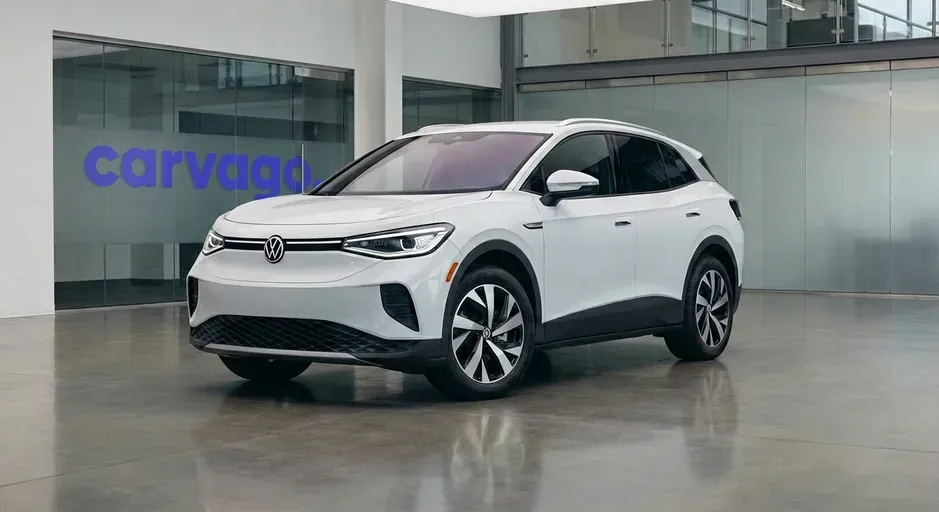
Review Volkswagen ID.4: What do owners and experts really say?
Volkswagen ID.4 review: real owner experience, common faults, real-world range and used prices — everything you need before you buy.
Oct 18, 2026
Articles
Review
BMW iX3 review: real owner feedback, real-world range, boot capacity, running costs, and pricing — everything you need before you buy.
October 27, 2026
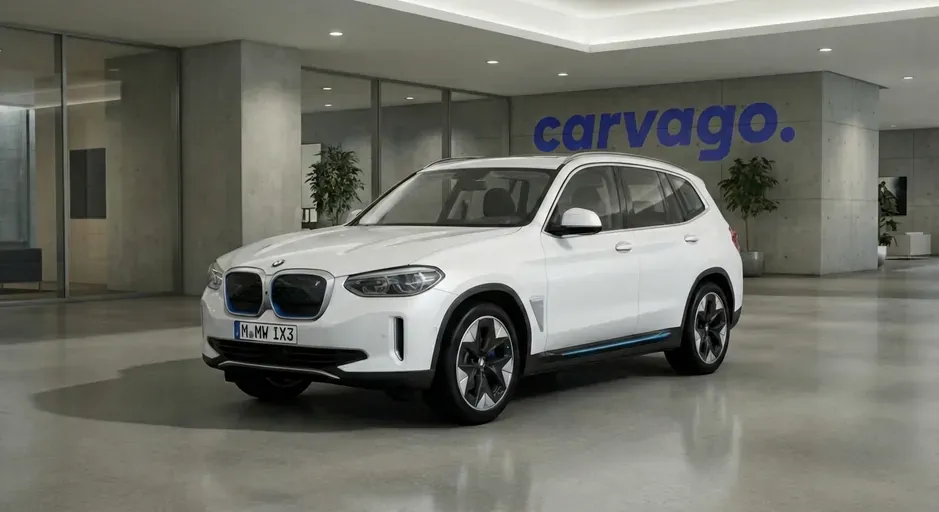
The second-generation BMW iX3 represents the manufacturer's transition to a dedicated electric vehicle architecture, competing directly in the premium mid-size crossover segment. Offered as a five-door SUV, it is aimed at family buyers and business drivers seeking an electric alternative positioned alongside the brand's conventional combustion-powered models.
European order books opened on 5 September 2025, followed by the start of series production in October 2025 at the Debrecen manufacturing facility in Hungary. First European customer deliveries commenced on 7 March 2026 with the all-wheel-drive 50 xDrive derivative. The line-up expanded on 28 May 2026, when the single-motor rear-wheel-drive BMW iX3 40 was officially added to the European offering for summer 2026.
As a recent arrival for the 2026 model year, this generation has undergone no facelift to date. This review focuses on standard European-specification vehicles delivered to customers from early 2026 onwards.
Because European customer deliveries of the second-generation BMW iX3 only began in March 2026, multi-year durability records and high-mileage fatigue patterns are not yet established. Real-world ownership feedback reflects vehicles in service for roughly seven months. Within this timeframe, the model has demonstrated stable mechanical hardware, though early production batches required two official workshop safety campaigns and initial software revisions.
Both European safety recalls were initiated in May and June 2026 to resolve early manufacturing discrepancies.
| Affected Component | Production Window | Scope | Stated Defect and Workshop Remedy |
|---|---|---|---|
| Onboard charger | 25 November 2025 – 20 February 2026 | 145 vehicles worldwide (28 in Germany) | Faulty charging electronics could cause voltage to contact body panels during AC charging, posing a risk of electric shock. Authorised workshops replace the complete onboard charging electronics unit. |
| Head curtain airbags | 18 December 2025 – 8 May 2026 | 4,843 vehicles worldwide | Head airbags may not have been bolted according to specification, risking improper deployment or loose inflators striking occupants during a collision. Workshops inspect the mounting bolts on both sides and retighten them to specification. |
Beyond safety recalls, early owners report minor software integration glitches on cars delivered with initial release firmware. In early examples of both the single-motor derivative and the all-wheel drive BMW iX3, drivers observed that the passive walk-away locking function intermittently failed to lock the doors when leaving the car with a digital key or key fob. Some users also reported that regional voice assistant language packs stalled during over-the-air installation. These glitches were resolved through remote software updates distributed from July 2026 onward, or by workshop software installation prior to handover.
When evaluating a used electric BMW iX3 from the initial production months, buyers can verify vehicle history and inspect electronic health independently via CarAudit.
The second-generation BMW iX3 features an all-electric powertrain architecture, giving buyers a choice between single-motor rear-wheel drive and dual-motor all-wheel drive. Both versions come paired with a single-speed automatic transmission.
| Engine | Fuel | Power | Gearbox | Drivetrain | Model years |
|---|---|---|---|---|---|
| iX3 40 | Electric | 235 kW (320 hp) | Automatic | Rear-wheel drive | 2026–present |
| iX3 50 xDrive | Electric | 345 kW (469 hp) | Automatic | All-wheel drive | 2026–present |
Choosing between the two depends primarily on your driving patterns and traction needs. The rear-wheel-drive iX3 40 serves as the sensible pick for urban commuting and mixed everyday driving; shedding the front drive unit reduces mass and yields greater day-to-day energy efficiency.
For frequent long motorway journeys, regular towing, or driving in regions with severe winter road conditions, the dual-motor BMW iX3 4x4 (iX3 50 xDrive) is the recommended option. Its all-wheel-drive setup provides superior traction on low-grip surfaces and during rapid overtakes, while the front motor decouples completely during steady-state cruising to eliminate mechanical drag.
Owners and long-distance road tests note that cold ambient temperatures and sustained motorway cruising cause a noticeable drop in driving range, with reductions of roughly 15 to 25 percent observed before the thermal pre-conditioning system stabilizes battery temperature. Using integrated route navigation ensures the high-voltage battery pre-heats before arriving at ultra-rapid DC charging hubs, enabling typical 10 to 80 percent charging stops to conclude in around twenty minutes without throttling the charging curve.
| Dimension / Capacity | Measurement |
|---|---|
| Length | 4,782 mm |
| Width (excluding door mirrors) | 1,895 mm |
| Height (unladen) | 1,635 mm |
| Wheelbase | 2,897 mm |
| Boot capacity (seats upright) | 520 l |
| Boot capacity (seats folded flat) | 1,750 l |
| Front luggage compartment (frunk) | 58 l |
In the second-generation electric BMW iX3 SUV, the dedicated electric architecture provides a completely flat cabin floor without a central transmission tunnel. This packaging ensures adult legroom and foot space across all three rear seating positions, supported by rear backrests with reclining angle adjustments. Everyday utility benefits from a rear bench that splits into three independently folding sections, allowing long items to slide through while retaining usable outer passenger seats. Under the bonnet, an auxiliary front luggage compartment isolates charging cables from everyday cargo, although tests note that its shallow profile restricts the placement of bulkier items.
On the road, the electric SUV BMW iX3 exhibits neutral cornering stability and taut body control. Direct steering response and tight suppression of body roll help mask its substantial mass through rapid directional changes. In standard driving settings, the chassis responds with predictable stability, shifting to a rear-biased balance in sportier configurations. The transition between friction braking and energy recuperation operates smoothly, although the adaptive regeneration can decelerate prematurely when approaching road junctions. Ride compliance remains a compromise: relying on a passive suspension setup, the chassis feels noticeably firm over lateral road joints and broken tarmac.
Powertrain refinement is high during steady cruising, where the electric drive operates in near silence. The optional synthetic propulsion soundtrack divides opinion, while insulation against tyre roar over coarse asphalt falls behind class benchmarks.
Inside, the driving position provides clear forward visibility. The full-width lower windscreen display and central touchscreen offer sharp daylight legibility and structured main menus, though adjusting driver-assistance systems requires navigating software sub-menus without tactile buttons. Testers also note cost-conscious plastic surfaces low in the cabin, alongside exterior flush door handles that occasionally require heavy effort to operate.
Professional evaluations broadly agree on praising the BMW iX3 for its handling agility and high-speed stability, but they remain divided over its secondary ride firmness across degraded urban surfaces.
All charts in this section reflect listings across the entire BMW iX3 model family on Carvago, including other generations represented in the data, rather than isolating the reviewed generation alone. Consequently, this market data does not establish a separate price level specifically for the newest generation. Across the catalogued build periods, the median asking price sits at €35,900 for 2021 models, reaches €55,900 for 2024 models, and stands at €78,500 for 2026 listings.
The chart tracks the number of active BMW iX3 listings on the market from April 2026 to September 2026, starting at 1,430 advertised vehicles and climbing to 2,196 by the end of the period.
Active listings over time
| Month | BMW iX3 |
|---|---|
| 2026-04 | 1 430 |
| 2026-05 | 1 248 |
| 2026-06 | 1 341 |
| 2026-07 | 1 569 |
| 2026-08 | 1 816 |
| 2026-09 | 2 196 |
Source Carvago
Aside from a brief dip to 1,248 cars in May 2026, monthly listings have expanded steadily toward the end of the period, offering buyers a broad and increasing selection to browse.
Among used listings advertised today, the median asking price of cars built in 2021 is €35,900, while the median asking price of cars advertised today and built in 2025 is €78,700. The following chart outlines how these values compare across build years.
Median advertised price by year of manufacture
| Model year | BMW iX3 |
|---|---|
| 2021 | 35 900 |
| 2022 | 40 100 |
| 2023 | 47 900 |
| 2024 | 55 900 |
| 2025 | 78 700 |
| 2026 | 78 500 |
Source Carvago
Buyers considering earlier model years face a median asking price of €35,900 for 2021 cars or €40,100 for 2022 cars. At the top of the range, the median asking price reaches €78,700 for 2025 models and is slightly lower at €78,500 for 2026 models.
This depreciation curve illustrates how residual value for the BMW iX3 declines with vehicle age, shedding roughly 16% in its first year and 41% by age three. The chart below traces this progression across seven years of ownership.
Residual value by vehicle age
| Vehicle age | BMW iX3 |
|---|---|
| New | 82 200 |
| 1 yr | 69 000 |
| 2 yrs | 57 500 |
| 3 yrs | 48 700 |
| 4 yrs | 46 000 |
| 5 yrs | 38 200 |
| 6 yrs | 36 100 |
| 7 yrs | 32 300 |
Source Carvago
Across the seven-year span shown, the model loses approximately 61% of its baseline residual value. The sharpest drop occurs over the first three years, after which the rate of value loss slows noticeably.
Active listings show how available BMW iX3 stock is distributed by powertrain, moving from 1430 electric vehicles advertised in April 2026 to 2196 in September 2026. The monthly figures by fuel type are detailed below.
Supply composition by fuel type
| Month | Electric |
|---|---|
| 2026-04 | 1 430 |
| 2026-05 | 1 248 |
| 2026-06 | 1 341 |
| 2026-07 | 1 569 |
| 2026-08 | 1 816 |
| 2026-09 | 2 196 |
Source Carvago
In September 2026, electric power accounted for all 2196 advertised vehicles, with 0 listings recorded for petrol, diesel, or hybrid alternatives. Anyone shopping for this model will be choosing exclusively among all-electric cars.
The chart below tracks the average asking price for the BMW iX3 from April 2026 to September 2026, opening at €46,000.
Average price development over time
| Month | BMW iX3 |
|---|---|
| 2026-04 | 46 000 |
| 2026-05 | 48 200 |
| 2026-06 | 49 700 |
| 2026-07 | 51 700 |
| 2026-08 | 52 500 |
| 2026-09 | 54 900 |
Source Carvago
Across the six months shown, the average asking price climbed steadily each month, rising from €46,000 to €54,900, an overall increase of approximately 19%.
Agile handling with direct steering and tight body roll suppression
Practical rear passenger space with a completely flat cabin floor
Quiet electric powertrain and rapid DC fast-charging capability
Noticeably firm passive ride over broken tarmac and road joints
Tyre noise on coarse surfaces intrudes more than in rival models
Key driver assistance functions require navigating touchscreen sub-menus
Because European customer deliveries only began in early 2026, long-term durability is not yet established. Mechanical components have shown good initial stability, though early production batches required two official safety recalls and initial software updates.
The rear-wheel-drive iX3 40 is the sensible pick for urban commuting and mixed daily driving thanks to lower mass and greater efficiency. For frequent long-distance motorway driving, winter conditions, or towing, the all-wheel drive BMW iX3 provides superior traction and high-speed stability.
Verify by VIN that official safety recalls were completed by an authorised dealer. It is also wise to confirm that the walk-away locking function and central touchscreen operate reliably without software lag.
The BMW iX3 offers composed handling and tight body control, but its standard passive suspension feels noticeably firm over broken tarmac. Cabin insulation also allows noticeable tyre roar over coarse road surfaces.
Sources: press.bmwgroup.com, adac.de, autocar.co.uk, autoexpress.co.uk, whatcar.com
This article was prepared using artificial intelligence tools. The section guarantor is Petr Dušek.
Volkswagen ID.4 review: real owner experience, common faults, real-world range and used prices — everything you need before you buy.
Oct 18, 2026
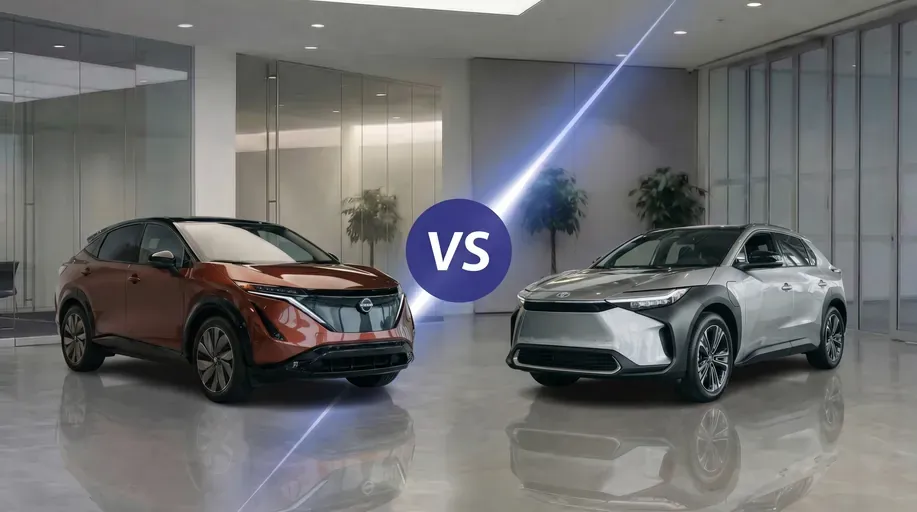
Detailed comparison of the Nissan Ariya vs. Toyota bZ4X electric SUVs. Discover the real-world range, equipment, and a clear verdict to help you with your choice.
Apr 14, 2026
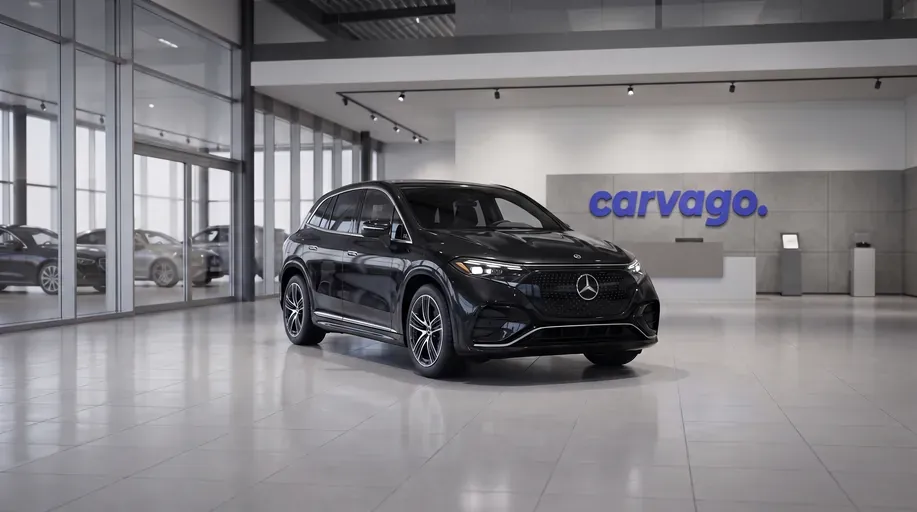
Mercedes-Benz EQS SUV review: real owner experience, battery range, 7-seat practicality, running costs, and our definitive buyer's verdict.
Oct 24, 2026