Car battle
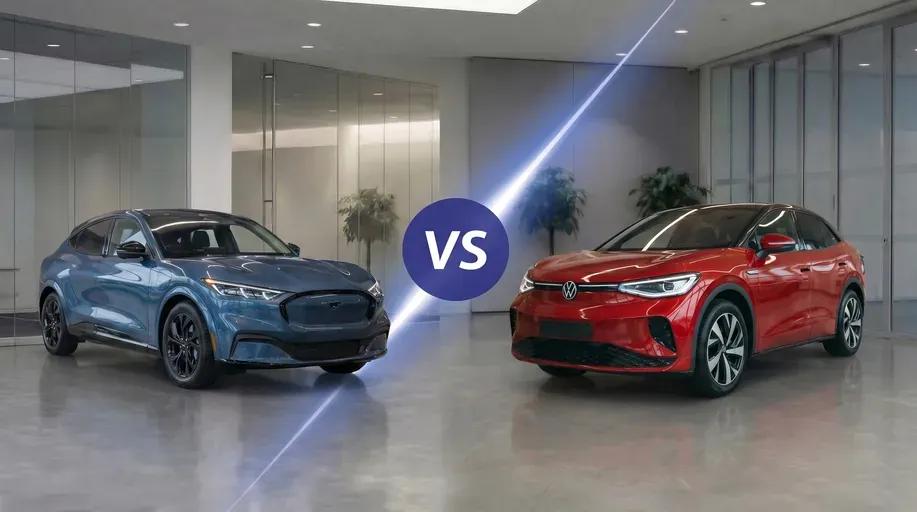
Ford Mustang Mach-E vs. Volkswagen ID.5: Complete comparison 2026
Detailed comparison of Ford Mustang Mach-E vs Volkswagen ID.5. Which electric SUV offers better range, performance, and spaciousness? Read our final verdict.
May 1, 2026
Articles
Review
Mercedes-Benz EQS SUV review: real owner experience, battery range, 7-seat practicality, running costs, and our definitive buyer's verdict.
October 24, 2026
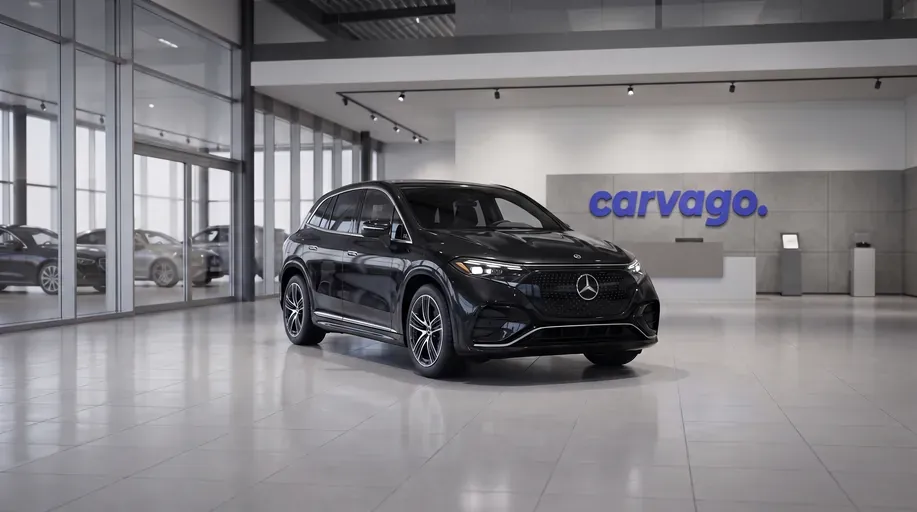
The Mercedes-Benz EQS SUV represents the manufacturer's flagship entry among high-riding electric vehicles, translating its dedicated electric platform into a full-size luxury utility format. Series production started in August 2022, following the opening of European order books on 9 August 2022. The first customer deliveries across Europe commenced in December 2022, alongside the opening of orders for the 2023 EQS 500 4MATIC.
This review covers the first-generation model (chassis code X296) produced from 2022 through 2026. The vehicle received a technical update in April 2024, which brought an expanded usable battery capacity, updated braking management software, and an automatic front-axle disconnect unit on all-wheel-drive variants, while leaving the exterior design unchanged.
Offered exclusively as an SUV with a choice between five seats and an optional seven-seat layout, the electric Mercedes-Benz EQS SUV is aimed primarily at executive buyers and families requiring three-row seating, elevated long-distance capability, and flexible cabin modularity.
Because European deliveries began in December 2022, long-term reliability data for the Mercedes-Benz EQS SUV is not yet fully established. Nonetheless, early owner experiences and official European safety registers highlight clear areas where software glitches, high vehicle mass, and complex electrical systems require close attention.
Several official safety recalls have been issued across Europe. In April 2024, a worldwide campaign covering 247,443 vehicles built between 25 January 2023 and 17 November 2023 addressed a defective 80-amp fuse element in the pre-fuse box. The defect could cause contact interruption, resulting in sudden drive power loss or impairment of restraint systems and the instrument cluster, which increases the risk of an accident, injuries, and fire. Authorised workshops replace the affected pre-fuse box free of charge. A related follow-up recall in June 2025 covered 4,652 vehicles globally, produced between 31 January 2023 and 17 October 2023, where improper rework on the pre-fuse box could cause contact breaks or incorrect fuse ratings. Dealers inspect and replace improperly reworked units.
Software and mechanical assembly recalls have also occurred. In June 2024, a worldwide recall covering 50,744 vehicles built from August 2022 to May 2024 was launched because non-specification battery management software could shut down the high-voltage system during driving. Continuous internal diagnostic requests can overwhelm the memory buffer, triggering an unprompted reset that opens the high-voltage contactors and causes a sudden loss of propulsion. Authorised dealers resolve this by updating the battery management software via a physical diagnostic connection. In May 2026, a worldwide campaign affecting 2,712 vehicles built between 17 November 2022 and 4 December 2025 was initiated because wheel bolts were not tightened to the intended torque and could work loose while driving. Technicians inspect and retighten all wheel bolts to factory specification.
Beyond official campaigns, owners report and tests describe occasional electronic quirks. Vehicles equipped with the optional three-display dashboard setup can suffer from intermittent central screen blackouts or reboot cycles. When this occurs, climate controls and camera views become temporarily inaccessible until the system restarts. Authorised dealer diagnostics and full operating system firmware reflashes generally resolve the issue, though rare hardware faults required replacing the central infotainment control unit. Some owners also report spurious low-voltage auxiliary battery warnings on the instrument display that prevent the vehicle from starting despite a charged traction battery, typically traced to networked communication modules failing to enter sleep mode during extended parking.
Mechanical wear is heavily influenced by the vehicle's substantial mass. Tests describe and owners report an inconsistent brake pedal action on vehicles built before the April 2024 technical update. The electromechanical system actively pulls the pedal downward during regenerative deceleration, producing a mushy initial travel followed by an abrupt bite from the friction pads. An updated brake booster and revised pedal-feel software were introduced from April 2024, whereas earlier builds rely on software reflashes for partial improvement. In addition, rapid tyre wear is widely documented; heavy kerb weight, immediate electric torque, and active rear-axle steering tend to accelerate inner-shoulder tyre wear on the rear axle, with factory sets on larger wheels often requiring replacement within 18,000 to 25,000 km.
The Mercedes-Benz EQS SUV relies exclusively on dedicated all-electric powertrains, combining high-voltage lithium-ion batteries with either a single permanent-magnet motor on the rear axle or a dual-motor all-wheel-drive system.
| Engine | Fuel | Power | Drivetrain | Gearbox | Model years |
|---|---|---|---|---|---|
| EQS SUV 450+ | Electric | 265 kW (360 hp) | Rear-wheel drive | Automatic (single-speed) | 2022 – present |
| EQS SUV 450 4MATIC | Electric | 265 kW (360 hp) | All-wheel drive | Automatic (single-speed) | 2022 – present |
| EQS SUV 500 4MATIC | Electric | 330 kW (449 hp) | All-wheel drive | Automatic (single-speed) | 2023 – present |
| EQS SUV 580 4MATIC | Electric | 400 kW (544 hp) | All-wheel drive | Automatic (single-speed) | 2022 – present |
| Mercedes-Maybach EQS SUV 680 | Electric | 484 kW (658 hp) | All-wheel drive | Automatic (single-speed) | 2024 – present |
For drivers prioritising range on long motorway routes, the rear-wheel-drive EQS 450+ is the most frugal choice, though its single driven axle provides lower towing limits and can occasionally slip on wet tarmac under heavy throttle.
Most used buyers will find the dual-motor Mercedes-Benz EQS SUV 4MATIC considerably more versatile. In EQS 450 4MATIC form, it provides secure traction in adverse weather, strong pulling capability for trailers, and undramatic, smooth acceleration for daily family duties. If you frequently carry heavy cargo or occupy all three seating rows, the EQS 500 4MATIC hits a practical middle ground, adding noticeable mid-range overtaking authority without the high price penalty of the top variants.
The EQS 580 4MATIC delivers forceful straight-line pace, though rapid acceleration causes pronounced body float unless the suspension is set to firmer damping modes. At the ultra-luxury end, the chauffeur-focused Mercedes-Maybach EQS 680 offers immense pulling power with tailored accelerator pedal mapping that smooths tip-in to protect passenger comfort.
For documented issues regarding the high-voltage battery management software and drive system shut-offs, see the owner experiences section.
Real-world efficiency fluctuates considerably depending on ambient temperatures and cruising speeds. During winter months, heating requirements and battery thermal conditioning cause an expected drop in driving distance, though updated models produced from April 2024 mitigate cold-weather consumption via an integrated heat pump and an automatic front-axle disconnect unit on all-wheel-drive variants that decouples the front motor under light cruising loads.
DC fast-charging capability enables rapid long-distance travel, but owner accounts and road tests note occasional software communication hiccups at third-party charging hubs and temporary charging-curve throttling on earlier production models.
| Dimension / Capacity | Standard (5 seats) | Optional 7-seater |
|---|---|---|
| Length (mm) | 5,125 | 5,125 |
| Width excl. mirrors (mm) | 1,959 | 1,959 |
| Height (mm) | 1,718 | 1,718 |
| Wheelbase (mm) | 3,210 | 3,210 |
| Boot volume – seats up (l) | 645 | 565 (195 behind row 3) |
| Boot volume – seats folded (l) | 2,100 | 2,020 |
Figures do not apply to the Maybach 680 variant.
The Mercedes-Benz EQS SUV features a modular passenger cabin anchored by a standard electrically sliding second-row bench. Adult passengers have accommodating knee room and headroom in the middle row, where the seatbacks recline for resting or tilt forward into a steeper cargo setting to expand luggage depth. The wide tailgate aperture and level load floor facilitate loading bulky cargo, though the vehicle offers no luggage compartment beneath its fixed bonnet. On versions fitted with optional third-row seating, space in the rearmost seats suits children; an elevated floor forces adult occupants into a knees-up posture unless the middle bench is shifted forward to balance legroom.
Professional evaluations consistently highlight the Mercedes-Benz EQS SUV as a relaxed long-distance cruiser. On motorways, the standard air suspension glides over large surface undulations, while acoustic suppression effectively mutes wind flutter and tyre roar. However, opinions diverge at urban speeds. Several road tests note that sharp ridges and sunken manhole covers can send abrupt vertical impacts through the chassis. Around town, standard rear-axle steering provides tight low-speed maneuverability, but the vehicle’s substantial mass curbs agility in fast corners, where pronounced body lean emerges unless the dampers are set to their firmer modes.
The cabin features supportive seating, responsive menu logic on the standard central touchscreen, and upscale upholstery. Yet testers observe that hard plastics on lower switchgear and centre consoles do not quite match the finish expected of a flagship electric vehicle. The optional full-width dashboard glass display also divides reviewers, with many judging it an expensive novelty that adds little ergonomic benefit over the standard portrait screen.
All the charts in this section are drawn from Carvago’s listings of the whole Mercedes-Benz EQS SUV model family, including other generations represented in the data, not only the reviewed generation. For 2022 models, the median asking price stands at €78,900, climbing to €88,900 for 2023 cars. Listings for 2024 show a median asking price of €93,600, while 2025 examples sit at €103,100.
Active advertisements for the Mercedes-Benz EQS SUV rose from 269 in April 2026 to a peak of 326 in August 2026, before finishing at 319 in September. The chart below shows how advertised inventory developed across this six-month span.
Active listings over time
| Month | Mercedes-Benz EQS SUV |
|---|---|
| 2026-04 | 269 |
| 2026-05 | 286 |
| 2026-06 | 312 |
| 2026-07 | 320 |
| 2026-08 | 326 |
| 2026-09 | 319 |
Source Carvago
With counts holding between 312 and 326 across the final four months and closing at 319 in September 2026, buyers can count on a broad and relatively steady selection of vehicles on offer.
Across used listings advertised today, the median asking price of cars built in 2022 is €78,900, whereas the median asking price of cars built in 2025 reaches €103,100, as shown in the breakdown below.
Median advertised price by year of manufacture
| Model year | Mercedes-Benz EQS SUV |
|---|---|
| 2022 | 78 900 |
| 2023 | 88 900 |
| 2024 | 93 600 |
| 2025 | 103 100 |
Source Carvago
Buyers considering earlier build years encounter a median asking price of €78,900 for 2022 models, while newer options require higher outlays, with median asking prices of €88,900 for 2023 models and €103,100 for 2025 models.
Active listings for the model show a purely electric supply, rising from 269 advertised cars in April 2026 to 319 in September 2026. The monthly figures below illustrate how the available inventory has developed over this timeframe.
Supply composition by fuel type
| Month | Electric |
|---|---|
| 2026-04 | 269 |
| 2026-05 | 286 |
| 2026-06 | 312 |
| 2026-07 | 320 |
| 2026-08 | 326 |
| 2026-09 | 319 |
Source Carvago
Electric drive completely dominates the market with 319 cars on offer in September 2026 and zero available across petrol, diesel, or hybrid options. Anyone searching for an EQS SUV will therefore be choosing exclusively among all-electric configurations.
The chart traces the average asking price for the Mercedes-Benz EQS SUV from April 2026 through September 2026, opening at €93,500.
Average price development over time
| Month | Mercedes-Benz EQS SUV |
|---|---|
| 2026-04 | 93 500 |
| 2026-05 | 92 200 |
| 2026-06 | 90 700 |
| 2026-07 | 89 600 |
| 2026-08 | 88 800 |
| 2026-09 | 86 400 |
Source Carvago
The average asking price declined in each consecutive month across the period, moving from €93,500 to €86,400, an overall decrease of roughly 8%.
Serene motorway ride comfort with effective acoustic insulation and standard air suspension
Flexible cabin modularity with an electrically sliding second row and optional seven-seat layout
Standard rear-axle steering provides agile low-speed manoeuvrability for a large SUV
Inconsistent brake pedal modulation on models produced before April 2024
Substantial vehicle mass causes body lean in bends and accelerates tyre wear
Third-row seating is cramped for adults and the fixed bonnet provides no front luggage space
Long-term reliability data for the Mercedes-Benz EQS SUV is not yet fully established, though major mechanical failures are rare. Early production vehicles require verifying that all official recalls and software updates have been completed.
The dual-motor Mercedes-Benz EQS SUV 4MATIC represents the most versatile choice thanks to confident all-weather traction and higher towing capability. The rear-wheel-drive EQS 450+ offers greater efficiency, but has lower towing limits and less wet-weather grip.
Verify with an authorised dealer that all safety recall campaigns have been performed on the vehicle. In addition, inspect the tyres for uneven inner-shoulder wear caused by the vehicle's substantial mass and rear-axle steering.
The optional rearmost seats are strictly suited for children. The elevated luggage floor forces adult passengers into an uncomfortable knees-up posture unless the sliding middle-row bench is moved forward to share legroom.
Sources: mercedes-benz-media.co.uk, ec.europa.eu, adac.de, autocar.co.uk, autoexpress.co.uk
This article was prepared using artificial intelligence tools. The section guarantor is Petr Dušek.
Detailed comparison of Ford Mustang Mach-E vs Volkswagen ID.5. Which electric SUV offers better range, performance, and spaciousness? Read our final verdict.
May 1, 2026
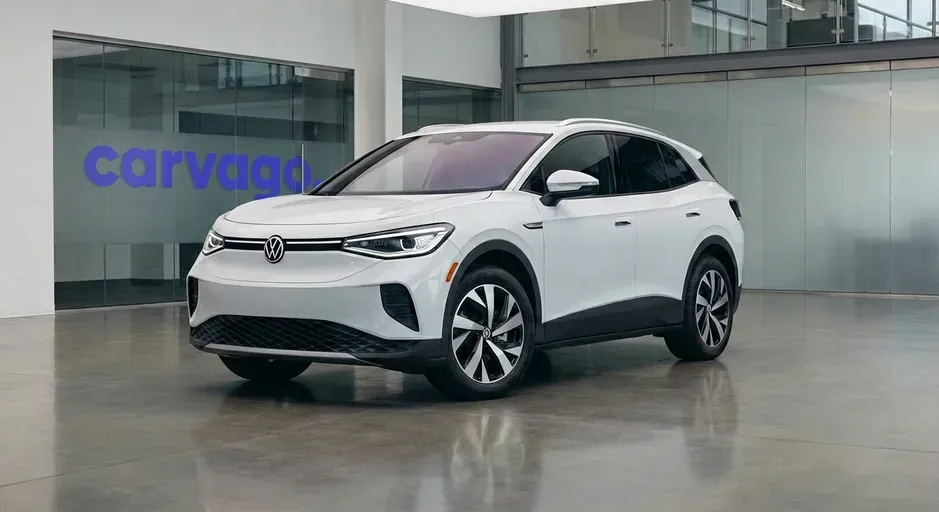
Volkswagen ID.4 review: real owner experience, common faults, real-world range and used prices — everything you need before you buy.
Oct 18, 2026
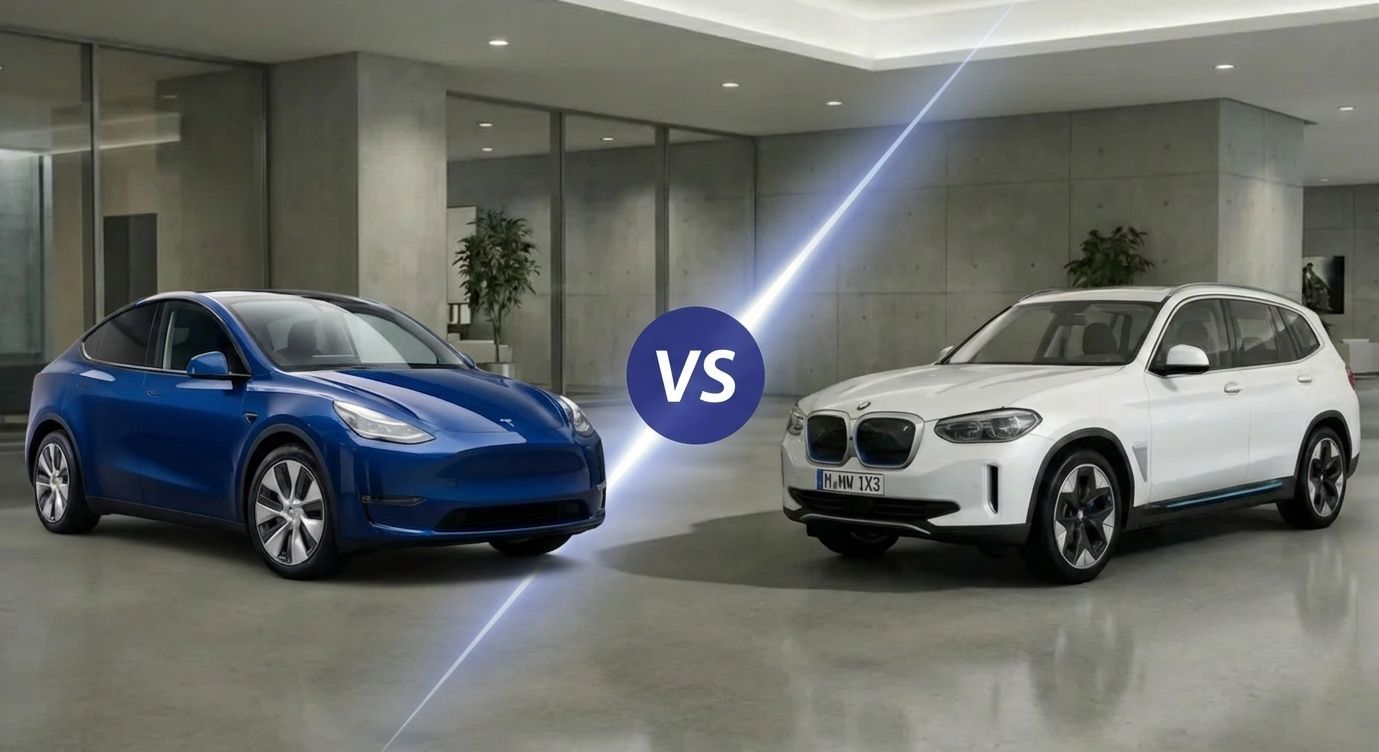
Tesla Model Y vs. BMW iX3: A detailed test of real-world range, features, and a verdict to help you choose the right electric SUV.
Oct 23, 2026