Car battle
BMW iX3 vs. Tesla Model Y: Complete comparison 2026
BMW iX3 vs Tesla Model Y: A detailed comparison of electric SUVs. Discover real-world range, differences in equipment, and read our verdict for an easier choice.
Apr 14, 2026
Articles
Car battle
Detailed comparison of the Nissan Ariya vs. Toyota bZ4X electric SUVs. Discover the real-world range, equipment, and a clear verdict to help you with your choice.
April 14, 2026
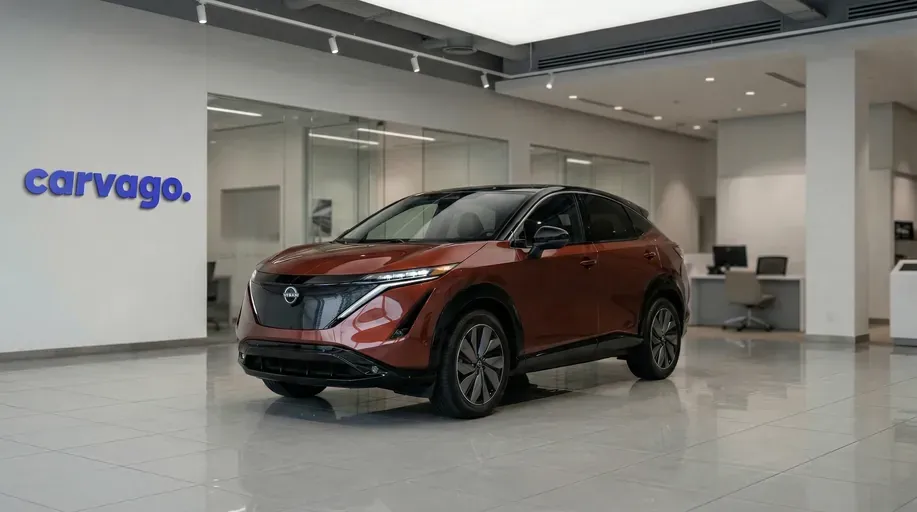
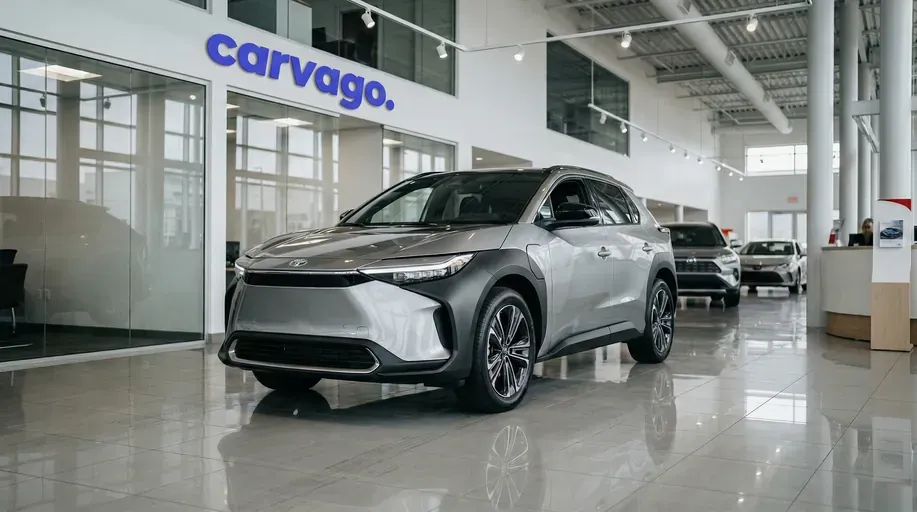
Nissan Ariya is an elegant fully electric SUV that impresses primarily with its premium interior craftsmanship, innovative technologies, and a strong emphasis on travel comfort. Its rival today is the Toyota bZ4X, also known simply as the Toyota bZ in some markets or sold as its sister model, the Subaru Solterra, which instead bets on a sharp-edged futuristic design and the robust capabilities of its optional all-wheel drive. Let's take a detailed look at how these two Japanese rivals stand in a direct comparison on the market for lightly used cars and which of them represents a more attractive and smarter choice for buyers.
Looking at the external dimensions of both electric crossovers, it is clear that although they target the same customer category, each approaches it with slightly different proportions. The Toyota bZ4X is, with a length of 4690 mm, a noticeable 95 mm longer than the Nissan Ariya (4595 mm). In width, both cars differ only minimally; the Toyota measures 1860 mm, while the Nissan is 1850 mm. In practice, this means that although you will deal with narrow parking spaces very similarly with both cars, the slightly shorter body of the Nissan will offer slightly better maneuverability in crowded city streets and facilitate parallel parking.
The different design philosophy is fully revealed by the height of both models. While the Nissan Ariya, with a height of 1650 mm, maintains a more traditional, taller silhouette typical of family SUVs, the Toyota bZ4X (in its most common model years from roughly 2022 onwards) bets on a more aerodynamic and dynamic profile with a height of only 1600 mm. The taller build of the Nissan brings the advantage of more comfortable entry and more generous headroom for passengers, while the Toyota benefits from a lower center of gravity, which is positively reflected in more confident driving stability in corners and better airflow efficiency.
The most fundamental parameter that directly affects the interior spaciousness of the cabin, however, is the wheelbase. Here, the Toyota bZ4X, with its 2850 mm, has a clear advantage over the Nissan Ariya, which offers a wheelbase of 2775 mm. The 75 mm difference in favor of the Toyota is mainly evident in the longitudinal space in the rear seats, where the bZ4X provides noticeably more legroom for passengers. Furthermore, a longer wheelbase physically aids a smoother and more stable ride on the highway, as the car filters long bumps better.
In the final decision, your daily use of the car plays the main role. If you are looking for a more agile car with a higher seating position and easy entry, from which there will be a slightly better view of the curbs, the Nissan Ariya makes more sense. However, if your priority is maximum space in the rear seats for older children or adult passengers and you more often set out on long highway trips, the longer and lower Toyota bZ4X proves to be a more practical choice.
| Parameter | Nissan Ariya SUV | Toyota bZ4X SUV |
|---|---|---|
| Width (mm) | 1850 | 1860 |
| Length (mm) | 4595 | 4690 |
| Height (mm) | 1650 | 1600 |
| Wheelbase (mm) | 2775 | 2850 |
When choosing a used family electric car, luggage capacity plays an absolutely crucial role. For many buyers currently choosing roughly four-year-old vehicles on the used car market, an electric SUV represents the primary family car. It must easily handle daily logistics with children, large weekend shopping trips, and packing for a longer summer holiday. The Nissan Ariya and Toyota bZ4X models approach interior space solutions slightly differently, and each offers different advantages depending on your vehicle requirements.
In the basic five-seat configuration, the Nissan Ariya offers a boot capacity of 468 litres, which is slightly more than the Toyota bZ4X, which has a standard space of 452 litres. However, there is one very important detail – this value applies to the Nissan only in the front-wheel-drive version. If you choose the more powerful all-wheel-drive version labeled e-4ORCE on the used market, the rear electric motor will take about 50 litres from the boot, and its capacity will drop to 415 litres. In contrast, the competing Toyota bZ4X maintains the same 452-litre capacity for both front-wheel-drive and all-wheel-drive versions. It is also worth mentioning that unfortunately, neither of these cars has a front trunk (so-called frunk), so any charging cables must find their safe place at the back under the double floor of the luggage compartment.
The biggest gap between the two models opens up when you need to transport longer and bulkier cargo and fold down the rear backrests. At that point, the Toyota bZ4X clearly dominates, offering an excellent total capacity of up to 1,611 litres. This is space fully sufficient not only for the trouble-free transport of several mountain bikes but also for more complex moving or camping equipment. After folding the seats, the Nissan Ariya provides a maximum capacity of only 1,350 litres, which is a rather below-average value within the given class of electric SUVs. For families, this means that while the Ariya will serve perfectly for regular shopping, for more frequent transport of oversized items, the bZ4X will be a noticeably more practical choice with space for several extra large suitcases.
| Parameter | Nissan Ariya SUV | Toyota bZ4X SUV |
|---|---|---|
| Basic capacity (litres) | 468 | 452 |
| Maximum capacity with seats folded (litres) | 1350 | 1611 |
While the Nissan Ariya scores with a slightly larger basic boot in the front-wheel-drive version, the Toyota bZ4X clearly wins with its overall practicality and huge space after folding the rear seats.
Towing capacity is often a limiting factor for electric vehicles, and a comparison of the Nissan Ariya and Toyota bZ4X on the market for roughly four-year-old used cars shows significant differences that could influence your choice. Both Japanese SUVs offer the same basic towing capacity, but if you have higher transport requirements, one of the models provides much greater flexibility.
The base versions of both cars from the first years of production (FE0E generation for Nissan and EAM1 for Toyota, available from approximately 2022) can tow both braked and unbraked trailers with a maximum weight of 750 kg. This standard value can be found in the Nissan Ariya model with the smaller 63kWh battery as well as in all versions of the Toyota bZ4X from 2022 to 2024. In practice, this means that both models will easily serve for hauling garden waste, transporting lighter materials from a DIY store, or as a solid base for a multi-bike carrier.
However, a major change comes with the more powerful versions. While older Toyota bZ4X models max out at 750 kg for a braked trailer, the Nissan Ariya equipped with the larger 87kWh battery offers much higher limits. For this variant, the permitted weight for a braked trailer rises to 1,500 kg, while the unbraked standard remains at 750 kg. This capacity is already quite sufficient for a smaller caravan for summer holidays or for the safe transport of heavier loads and building materials.
From a practicality standpoint, the conclusion for more demanding users is clear. While a roughly four-year-old Toyota bZ4X and the base Nissan Ariya will primarily suffice for small weekend tasks, the Nissan Ariya with the larger battery capacity takes on the role of a much more versatile family workhorse where you won't have to make compromises.
| Model and powertrain | Braked trailer weight (kg) | Unbraked trailer weight (kg) |
|---|---|---|
| Nissan Ariya (63 kWh) | 750 | 750 |
| Nissan Ariya (87 kWh) | 750 - 1500 | 750 |
| Toyota bZ4X | 750 | 750 |
Both models, the Nissan Ariya and Toyota bZ4X, enter the market as representatives of pure electric SUVs. However, the differences in their concepts are apparent at first glance when looking at the range of powertrains. The Toyota bZ4X is built around a single standard battery and two drive options, appealing primarily to practically-minded families and drivers for whom efficiency, smoothness, and the proven X-MODE all-wheel drive for tougher traction conditions are key. The Nissan Ariya, on the other hand, plays a significantly bolder game. It aims to cover the needs of a much wider audience by offering both standard front-wheel-drive models for economical city commuting and premium e-4ORCE all-wheel-drive variants with high performance for lovers of brisk acceleration. There is also greater freedom of choice with the Nissan regarding battery options, where you can choose between a 63 kWh capacity and a larger 87 kWh one. This makes the Ariya a more flexible option for those who spend a lot of time on long highway journeys.
The range of powertrains for the Nissan Ariya is designed to provide the ideal configuration for versatile driving needs. On the secondary market for roughly four-year-old used cars, you will most often come across front-wheel-drive models, where the base consists of a 63 kWh battery paired with a 160 kW electric motor. If you desire a longer range, the optimal choice is the large 87 kWh front-wheel-drive model with power slightly increased to 178 kW. However, the e-4ORCE all-wheel-drive variants bring significantly more traction and power. These feature two electric motors, where the standard 87 kWh specification produces 225 kW of power and a massive 600 Nm of torque. If you were looking for even higher dynamics in the all-wheel-drive models, Nissan also produced the extremely powerful Evolve+ edition tuned to 290 kW until October 2024. However, its production has already ended, so it will be a relatively rare find on the used car market. The real icing on the cake for driving enthusiasts became the top-tier Ariya Nismo specification from January 2025, which offers a full 320 kW and thoroughbred sports suspension.
| Engine type | Fuel type | Power (kW) | Torque (Nm) | Transmission |
|---|---|---|---|---|
| 63 kWh (FWD) | Electricity | 160 | 300 | 1-speed automatic |
| 87 kWh (FWD) | Electricity | 178 | 300 | 1-speed automatic |
| 87 kWh e-4ORCE (AWD) | Electricity | 225 | 600 | 1-speed automatic |
| 87 kWh e-4ORCE Evolve+ (AWD) | Electricity | 290 | 600 | 1-speed automatic |
| Nismo e-4ORCE (AWD) | Electricity | 320 | 600 | 1-speed automatic |
Compared to its rival, Toyota has chosen a considerably more conservative, yet for many, safer path. Although the bZ4X range does not overflow with dizzying performance figures, it rewards you with smooth, reliable, and very quiet operation in every situation. Both cars from the start of production in 2022 and newer models are built around a 71.4 kWh battery and limit the choice to front-wheel (FWD) or all-wheel (AWD) drive. The base version relies on a single electric motor with 150 kW of power and 266 Nm of torque, which is fully sufficient for city and highway travel. The all-wheel-drive version, using two 80 kW motors, adds slightly to the power (160 kW) and significantly to the torque (336 Nm). The advantage of the AWD configuration in the Toyota is primarily the sophisticated system of light off-road capabilities, on which the Subaru brand collaborated. Mechanical parameters remain consistent even for new models produced from the spring of 2026, which refreshed the market with the introduction of Touring trim levels.
| Engine type | Fuel type | Power (kW) | Torque (Nm) | Transmission |
|---|---|---|---|---|
| FWD | Electricity | 150 | 266 | 1-speed automatic |
| AWD | Electricity | 160 | 336 | 1-speed automatic |
The Toyota bZ4X represents a reliable and practical electric car with an efficient drivetrain for everyday tasks and mountain trips, while the Nissan Ariya dominates with a wide range of powertrains and batteries, which you will appreciate especially if you are looking for a longer range and more dynamic driving performance.
Choosing the right electric motor and battery capacity is absolutely critical for used electric vehicles, not only for daily comfort but primarily for long-term reliability and real-world range. Both compared SUVs entered the market in 2022, which means that from a used car market perspective, we are talking about vehicles roughly four years old, where their technical maturity can already be objectively evaluated. While Nissan effectively utilized its long-standing experience with the pioneering Leaf model and focused on large batteries and travel comfort, Toyota approached the development of its first dedicated electric vehicle very cautiously. Its overly conservative battery management significantly changes the way you should use this car.
From the relatively wide range of the Nissan Ariya model, sold since 2022, the version with the large battery (87 kWh) and front-wheel drive makes the most sense in terms of used car value.
Also for the Toyota bZ4X model (EAM1 generation, since 2022), betting on simplicity is the way to the best user experience. Here, your choice should clearly be the front-wheel-drive version.
For electric vehicles, the difference between official consumption figures (according to the WLTP standard) and real-world operation is often an even more discussed topic than for conventional internal combustion engine vehicles. The influence of weather, heating or air conditioning, and the proportion of highway driving can significantly impact real-world range and consumption. To get an objective picture of the actual consumption of these cars on the used car market (we focused primarily on models from the start of production around 2022), we rely on long-term user data from the independent portal Spritmonitor.de.
Data source: Spritmonitor.de
| Model and powertrain | Average consumption (kWh/100 km) |
|---|---|
| Toyota bZ4X (FWD) | 14.4 |
| Toyota bZ4X (AWD) | 16.2 |
| Nissan Ariya 63 kWh (2WD) | 17.7 |
| Nissan Ariya 87 kWh (2WD) | 18.2 |
| Nissan Ariya 87 kWh e-4ORCE (AWD) | 20.4 |
A look at the real-world data reveals a fairly clear trend and significant differences in the efficiency of both Japanese models. The Toyota bZ4X proves to be a surprisingly more economical car. The front-wheel-drive version can achieve consumption just above 14 kWh per 100 km in real-world operation, while the optional all-wheel drive adds roughly 1.8 kWh to the average. Conversely, the Nissan Ariya, which is overall bulkier, taller, and heavier, shows noticeably higher energy demands. The base version with the smaller 63kWh battery averages around 17.7 kWh/100 km. For the version with the larger 87kWh battery, the front-wheel-drive model requires an average of 18.2 kWh/100 km, while the top-of-the-line dual-motor e-4ORCE all-wheel-drive version exceeds the 20 kWh/100 km mark in real-world combined driving.
What does this mean for the average driver? If your priority is the lowest possible energy consumption and you are looking for a reliable car primarily for daily commuting or driving in the city and on country roads, the Toyota bZ4X is a significantly better choice in terms of absolute operating efficiency. On the other hand, while the Nissan Ariya consumes more electricity, thanks to the availability of a massive 87kWh battery (compared to the single 71.4kWh available for the Toyota), it can offer the security of a longer total range on a single charge. People who spend more time on long routes and highways will likely prefer the Nissan with the larger battery, despite the higher consumption, to minimize the number of charging stops.
In conclusion, energy consumption and powertrain efficiency should play a key role in the decision-making process in this particular duel. Toyota excels in exemplary efficiency and overall low operating costs, while Nissan scores primarily with battery size options and higher performance, albeit at the cost of a higher energy appetite.
Buying nearly-new electric vehicles from 2022 and 2023 makes great sense in the current 2026 market. Both models, the Nissan Ariya and Toyota bZ4X, have already undergone their initial steep depreciation, making them price-attractive alternatives to new cars. As the first vehicles are now entering the market in larger numbers following the end of three- to four-year leases, the selection for those interested in a used EV is expanding nicely.
Approximate price range (2022–2023 models):
| Model | Starting price (base version) | Typical price (higher trims / 4x4) |
|---|---|---|
| Nissan Ariya | from €23,000 | €33,000 – €39,000 |
| Toyota bZ4X | from €27,000 | €31,000 – €37,000 |
Note: Prices depend on battery capacity, drivetrain (FWD vs. 4x4), trim level, and current mileage.
The Ariya offers a slightly more diverse price range on the secondary market, primarily due to the two available battery sizes.
The Toyota bZ4X has a price floor set slightly higher than the Nissan. Toyota's strong reputation for overall reliability is evident on the secondary market, even though this is its first purely electric SUV model.
From the perspective of initial investment, the Nissan Ariya offers a slightly cheaper entry point into the world of electric SUVs if you can accept the shorter range of the base version. Toyota, on the other hand, offers a more balanced price profile across the market with a slightly higher residual value for base models.
The Nissan Ariya attracts with a lower starting price for models with the smaller battery, but if you are looking for a reliable middle ground with a more balanced depreciation, the Toyota bZ4X represents a very safe choice on the used market.
Both electric vehicles earned the maximum possible rating of five stars in independent Euro NCAP tests. However, when assessing the safety of used cars, it is always necessary to consider the broader context and, above all, the specific year of testing. Euro NCAP methodologies and protocols are constantly evolving and becoming stricter over time, which means that percentage scores from different years cannot be simply and directly compared. In the case of this comparison, however, we have an ideal starting position – both models underwent rigorous European certification in the same year (2022). The tests were conducted according to the very strict standards of the time, which already fully included new frontal impact simulations, advanced cyclist detection, and handling of crisis scenarios at complex intersections. Certification from this period is therefore still highly relevant in the four-year-old used car market and testifies to an exceptionally modern architecture.
Nissan Ariya completed the tests with excellent results across all measured categories. In the area of adult occupant protection, it scored a strong 86%, to which the innovative center airbag contributed significantly. This is designed to effectively prevent the heads of the driver and front passenger from colliding in a side impact. Child occupant protection was rated at a very above-average 89%. In the case of vulnerable road user protection, the Ariya reached 74%. Where this model absolutely dominated, however, was in safety assistance systems. Thanks to the advanced ProPILOT package, which perfectly handled intelligent emergency braking, lane keeping, and detection of moving objects behind the vehicle, the Nissan earned an extraordinary 93%.
Toyota bZ4X proved to be a very balanced and equally safe competitor. The brand's engineers traditionally focused on extreme body rigidity, which resulted in a score of 88% for adult occupant protection. Child protection was also rated at an excellent 87%. However, Toyota slightly outperformed its rival in terms of consideration for its surroundings – it received 79% for pedestrian and cyclist protection. The assistance systems, grouped in the latest generation of the comprehensive Toyota Safety Sense package, worked perfectly reliably and secured a great 91% for the car. The package includes, among other things, advanced adaptive cruise control and prompt autonomous collision prevention.
The overall comparison shows that both electric vehicles offer, even from today's perspective, above-standard modern equipment in terms of active and passive safety. The Nissan Ariya stands out slightly thanks to its top-tier electronic assistants and slightly better protection for children in car seats, while the Toyota bZ4X closes this gap with a slightly better result in adult and vulnerable road user protection. In the context of the used car market, you are not making any compromises in either case, and both models represent an excellently safe choice for family use.
| Parameter | Nissan Ariya | Toyota bZ4X |
|---|---|---|
| Year of testing | 2022 | 2022 |
| Adult protection | 86 % | 88 % |
| Child protection | 89 % | 87 % |
| Vulnerable road user protection | 74 % | 79 % |
| Safety assistance systems | 93 % | 91 % |
In terms of safety, both the Nissan Ariya and Toyota bZ4X offer top-tier five-star protection, backed by rigorous Euro NCAP tests. The differences in percentage ratings are minimal, so both models represent exceptionally safe and reliable family cars on the used car market.
In addition to standard equipment, each of the models offers several unique features and technological solutions that go beyond the usual basics and approach added value and daily comfort in their own way.
Nissan conceived its key electric model as a technological showcase with an emphasis on premium craftsmanship and maximum passenger comfort.
Toyota's first purely electric SUV builds on the brand's reputation for durability, but adds very specific equipment focused on efficiency and extraordinary capabilities off paved roads.
Premium-crafted and very spacious interior creating a luxury lounge feel
High ride comfort and excellent acoustic insulation of the cabin
Decent real-world range for versions with the larger 87kWh battery (up to 530 km according to WLTP)
Original design and very good quality of materials used
Intuitive climate control with elegant haptic buttons integrated directly into the dashboard
Lower maximum fast-charging power (130 kW), lagging behind today's class standard
Smaller luggage compartment volume (466 liters for the front-wheel drive, only 415 liters for the e-4ORCE version)
Higher curb weight, which negatively affects agility in sharper corners
The Nissan Ariya represents an ideal choice for drivers looking primarily for excellent comfort, quietness on board, and a premium interior finish. It is perfectly suited for longer, calm journeys where the occupants will appreciate the relaxed atmosphere and luxury materials rather than outright sporty driving characteristics.
Brand reputation with an exceptional extended battery warranty program (up to 10 years / 1 million km with regular servicing)
Surprisingly good capability in light terrain and on snow thanks to the advanced X-MODE system (on AWD versions)
Very spacious cabin with plenty of legroom for rear-seat passengers
Compliant and comfortable chassis tuning that brilliantly filters out city bumps
Lower efficiency and shorter real-world range, which drops significantly in cold winter months for older model years
Conservative battery temperature management in models from the first years of production meant slower charging at fast chargers
The specific position of the instrument cluster above the steering wheel may obstruct the view of the gauges for shorter drivers
Minor ergonomic flaws, such as the absence of a traditional glove box in front of the passenger and the lack of a rear window wiper
The Toyota bZ4X will particularly appeal to pragmatic buyers and loyal brand customers for whom the main priority is the unrivaled security of a long warranty, expected reliability, and better off-road capabilities. It is a robust and exceptionally spacious electric SUV, though one must account for compromises regarding winter range and more specific interior ergonomics.
Based on long-term feedback from owners, service bulletins, and data regularly provided by our independent car condition check, we have compiled an overview of the most common faults in these electric vehicles, with an emphasis on models from the first years of production (roughly four years old).
In terms of the main electric drive components and the high-voltage battery, the Nissan Ariya proves to be a robust vehicle; however, early model years are most often plagued by shortcomings in onboard electronics and power supply.
While the drive and battery themselves function exemplarily, unpleasant issues with the standard 12V car battery and the stability of the onboard software require a careful check of the electronics' condition in four-year-old used cars.
The Toyota bZ4X experienced an exceptionally complicated period during its market launch, accompanied by major recalls, and over time it has become clear that the Japanese electric car faces significant problems, especially in harsher winter conditions.
When buying older used examples of this electric Toyota, it is essential to thoroughly check the service history regarding key recalls and to expect significantly limited comfort during fast charging during freezing months.
When buying a used car, a thorough inspection is key. Although electric vehicles do not have traditional internal combustion engines or complex multi-speed transmissions, both of these models from 2022–2023 have their specific teething troubles that are worth focusing on before signing the contract. A professional comprehensive car inspection is always worthwhile, as it can reveal hidden defects. Here are the areas you should specifically focus on when choosing:
The Nissan Ariya with the larger 87kWh battery offers a range of up to 533 kilometres according to the WLTP standard. The Toyota bZ4X relies on a battery with a capacity of 71.4 kWh, which provides a maximum range of around 516 kilometres for the front-wheel drive version. For more frequent long-distance travel, the Nissan is therefore a slight favourite thanks to its larger total battery capacity.
The luggage compartments of both cars are very comparable and fully sufficient for normal family needs. The Nissan provides a volume of 468 litres in its basic configuration, while the all-wheel drive version reduces the boot to 415 litres. Toyota offers a very similar value of 452 litres regardless of the drive type, however, neither car has an additional front trunk (frunk).
Toyota supports DC fast charging at up to 150 kW, allowing for an 80% charge in about 30 minutes. Nissan has a slightly lower maximum charging power (130 kW), but thanks to excellent battery thermal management, it maintains this peak value for longer. In real-world conditions and during normal travel, you will spend almost the same amount of time at a fast-charging station with both cars.
Toyota uses the X-MODE system developed in cooperation with Subaru, which provides excellent traction and advanced assistants for driving in more demanding terrain. In contrast, Nissan has deployed the e-4ORCE system with two electric motors, which focuses primarily on suppressing body roll and ensuring maximum comfort on the road. The decision thus depends on whether you prefer more frequent trips off the asphalt or perfect stability and comfort during dynamic driving.
Nissan bets on a luxurious and minimalist design reminiscent of a premium living room, dominated by connected displays and elegant touch buttons integrated into the wood decor. The competing Toyota has a more conventional and robust approach with a uniquely raised instrument cluster that the driver views over the small steering wheel rim. While the Ariya will dazzle lovers of premium and unconventional materials, the bZ4X will please drivers looking primarily for durable and solid craftsmanship.
Choosing between these four-year-old Japanese electric cars depends primarily on your daily priorities and how you use the vehicle. Nissan Ariya represents a more luxuriously conceived choice, which, thanks to its premium interior, optional larger battery, and excellent sound insulation, will please drivers looking for maximum travel comfort for longer journeys. The Toyota bZ4X, on the other hand, is a more pragmatic and efficient alternative, scoring points with more generous rear-seat space, the promise of exceptional long-term reliability, and more confident driving characteristics in light terrain. So, if you desire an elegant design with a longer range and higher towing capacity, the Nissan will be a smarter investment for you, while the Toyota will serve much better as an exceptionally spacious, safe, and economical family workhorse.
Sources: ADAC, e15.cz, denik.cz, motorvize.cz, elektromobil.cz, autosystem.cz
This article was prepared using artificial intelligence tools. The section guarantor is Petr Dušek.
BMW iX3 vs Tesla Model Y: A detailed comparison of electric SUVs. Discover real-world range, differences in equipment, and read our verdict for an easier choice.
Apr 14, 2026
Detailed comparison of the Hyundai Ioniq 5 and Volkswagen ID.4 electric cars. Find out the real range, equipment details, and our verdict to help you make your choice.
Apr 13, 2026
Mercedes-Benz EQA vs. Volvo C40 Recharge. Which premium electric SUV is better? A detailed comparison of range, performance, and price will help you decide.
Apr 14, 2026