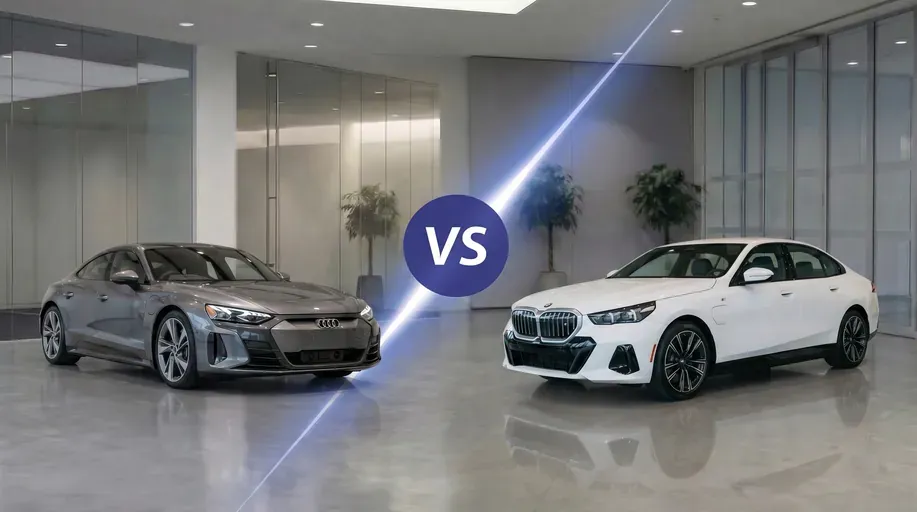
Car battle
Audi e-tron GT vs. BMW i5: Complete comparison 2026
Detailed comparison of Audi e-tron GT vs. BMW i5. Discover the differences in performance, range, and equipment. Read our verdict and choose the best electric car.
May 20, 2026
BMW i7 review: real owner experience, electric range, common faults, used prices, and our expert verdict on BMW's luxury electric saloon.
November 3, 2026
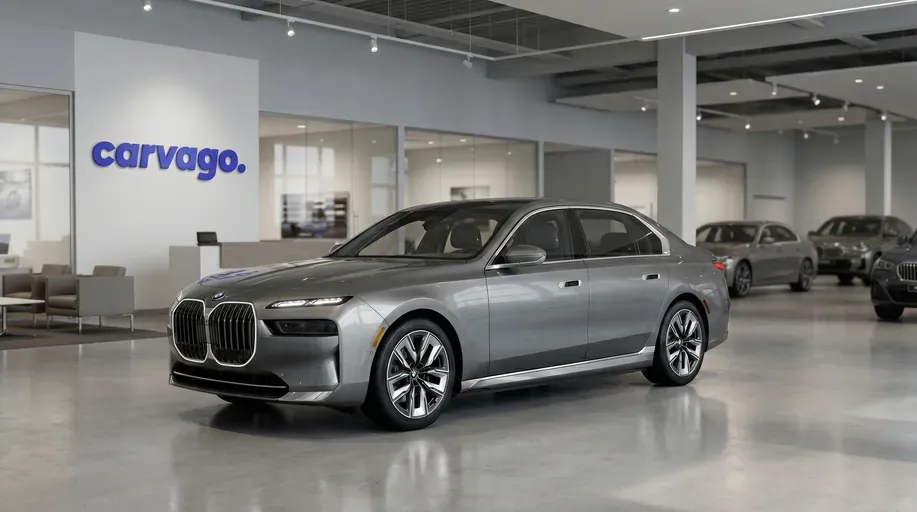
The BMW i7 serves as the all-electric flagship within the seventh-generation 7 Series family. Offered exclusively as a full-size four-door saloon, it competes at the top of the executive class against full-size luxury electric vehicles, appealing primarily to chauffeur operators, corporate fleets, and private buyers who require an expansive rear passenger compartment alongside long-distance travel capabilities.
This review covers the complete seventh-generation production run. European customer deliveries began in November 2022, initially launching in all-wheel-drive xDrive60 form following the start of series production in July 2022. The model line expanded in July 2023 with the arrival of the flagship M70 xDrive and the single-motor, rear-wheel-drive eDrive50.
A mid-cycle update premiered on 22 April 2026, with production ramping up in July 2026 and European customer deliveries following in September 2026. The revised generation introduced exterior restyling to the front and rear aprons, next-generation battery cell hardware, and updated onboard operating software, keeping the BMW i7 saloon current across European secondary markets.
The BMW i7 entered series production in July 2022, with European customer deliveries commencing in November 2022. A cosmetic and technical facelift arrived with customer deliveries starting in September 2026. Because vehicles from this update have been on European roads only since late 2026, long-term durability data for their revised electronics and updated battery cells is not yet established. Across the earlier production years, core electric drive motors have shown steady mechanical reliability, though several significant European safety recalls and digital infotainment glitches warrant close attention.
Several official safety campaigns have affected European models. In February 2026, a worldwide recall covering 337,374 vehicles built between 9 June 2022 and 5 December 2025 (including 29,441 in Germany) was issued regarding the cockpit wiring harness. The notice states that defective routing of the harness can damage cables when replacing the cabin microfilter, leading to a short circuit with smoke development and consequential fire. Workshops inspect cable insulation, repair damaged wiring, and retrofit protective edge clips. Owners are advised that if a cabin filter has already been replaced during service, the vehicle must be presented immediately; until inspected, remote pre-conditioning and app-based climate controls should not be operated. Earlier, in February 2023, an alert covering 6,074 vehicles worldwide built across 2022 and 2023 addressed a software error where the passenger airbag control unit could lose its initialisation, deactivating the front and knee airbags as well as the active head restraint. Authorised workshops resolve this via control module reprogramming.
The Integrated Braking System has been the subject of two separate European safety campaigns. In December 2024, a recall affecting 2,252 vehicles produced between 6 July 2022 and 13 November 2024 identified that the servomotor hollow shaft was not welded correctly. The weld may break under high braking pressure, reducing assistance, requiring greater pedal effort, and disabling ABS and stability control. Dealers replace the entire hydraulic brake assembly. In July 2026, a follow-up campaign was announced for vehicles built between 6 July 2022 and 16 October 2024 because signal disturbances in the motor position sensor could also cause hydraulic assistance to fail, leaving ABS and DSC unavailable and lengthening stopping distances. Workshops run diagnostic evaluations and replace defective hydraulic modules.
| Defect Description | Production Window | Scope | Workshop Remedy |
|---|---|---|---|
| Front passenger airbag initialisation failure | 2022 – 2023 | 6,074 vehicles worldwide | Reprogramming of airbag control unit |
| Integrated Braking System servomotor weld fracture | 06/07/2022 – 13/11/2024 | 2,252 vehicles worldwide | Replacement of hydraulic braking unit |
| Cockpit wiring harness damaged during microfilter service | 09/06/2022 – 05/12/2025 | 337,374 vehicles worldwide | Inspection, wiring repair, and edge protection retrofit |
| Integrated Braking System motor position sensor signal fault | 06/07/2022 – 16/10/2024 | Expanded platform-wide | Diagnostic evaluation and hydraulic module replacement |
Beyond official recalls, owner reports and professional tests highlight recurring digital glitches with the optional 31.3-inch ceiling-mounted Theatre Screen. Reported symptoms include the display failing to wake from the rear door touchscreens, pausing mid-deployment, or losing its streaming data connection. Software updates resolve logical lockups in most reported instances, though persistent connectivity drops have in some cases required telematics resets by a dealer. In addition, professional tests describe rapid wear on the inner shoulders of the rear tyres, with tread depth dropping substantially between 18,000 and 28,000 km. This inner shoulder wear stems from dynamic camber angles under substantial vehicle weight and immediate electric torque; because the electric BMW i7 uses staggered front and rear tyre widths, tyre rotation is impossible. Before choosing an all-wheel-drive BMW i7, you can have its physical running gear, electronics, and documentation checked through CarAudit.
The BMW i7 relies exclusively on electrically excited synchronous motors, avoiding permanent magnets and rare-earth materials. The line-up includes single-motor rear-wheel-drive and dual-motor all-wheel-drive configurations across pre-facelift and facelift production runs.
| Engine | Fuel | Power | Gearbox | Drivetrain | Model years |
|---|---|---|---|---|---|
| i7 eDrive50 | Electric | 335 kW (455 hp) | Automatic | Rear-wheel drive | 2023–2026 |
| i7 xDrive60 | Electric | 400 kW (544 hp) | Automatic | All-wheel drive | 2022–2026 |
| i7 M70 xDrive | Electric | 485 kW (660 hp) | Automatic | All-wheel drive | 2023–2026 |
| i7 50 xDrive | Electric | 335 kW (455 hp) | Automatic | All-wheel drive | 2026–present |
| i7 60 xDrive | Electric | 400 kW (544 hp) | Automatic | All-wheel drive | 2026–present |
| i7 M70 xDrive | Electric | 500 kW (680 hp) | Automatic | All-wheel drive | 2026–present |
For city driving and mixed daily commutes, the rear-wheel-drive i7 eDrive50 serves as a sensible choice as a used car, benefiting from reduced drivetrain drag and lighter steering response over the front axle.
For frequent long motorway journeys, an all-wheel-drive electric BMW i7—represented by the pre-facelift i7 xDrive60 on the used market or the updated i7 60 xDrive—represents the most balanced configuration, delivering secure high-speed stability and calm cruising.
Buyers requiring a towbar must pay close attention to variant choices. Both the i7 xDrive60 and the post-update i7 50 xDrive carry a factory rating for braked trailers up to 2,000 kg, whereas the performance flagship M70 xDrive is not homologated for trailer operation. The M70 xDrive caters primarily to buyers seeking rapid straight-line acceleration, though sustained high speeds noticeably accelerate energy draw. Drivetrain mechanical reliability has proven dependable across all configurations.
Long-distance testing shows that preconditioning is crucial for maintaining rapid DC fast-charging speeds. When high-power charging stations are set within the on-board navigation, the battery manages thermal conditioning automatically to accept optimal charging currents. During freezing winter conditions, motorway driving range decreases primarily because of cabin heating requirements and dense cold air, although the standard heat pump limits consumption increases in moderate cold. The facelift revisions brought updated battery cell integration, which delivers a more sustained charging curve during extended highway travel.
| Parameter | Pre-facelift (2022–2026) | Facelift (from 2026) |
|---|---|---|
| Length (mm) | 5,391 | 5,395 |
| Width (mm) | 1,950 | 1,950 |
| Height (mm) | 1,544 | 1,550 |
| Wheelbase (mm) | 3,215 | 3,215 |
| Boot volume (standard / seats folded, l) | 500 / – | 500 / – |
The BMW i7 saloon is built exclusively on a single long-wheelbase platform, providing rear passengers with extensive legroom and headroom to travel comfortably on extended journeys. Seating accommodates five passengers as standard, or four when specified with optional individual rear lounge seating. Everyday cargo flexibility reflects its traditional chauffeur-limousine layout: the rear seatbacks are permanently fixed and cannot fold flat to expand the luggage area, though standard seating includes a central pass-through hatch behind the armrest for longer items. That pass-through feature is deleted when cars are equipped with the optional executive rear console. Because there is no storage compartment under the bonnet, charging cables must be stored directly in the boot compartment.
Professional road tests praise the all-electric BMW i7 for its chassis composure and quiet cabin. The standard two-axle air suspension with adaptive dampers absorbs transverse joints, broken tarmac, and road imperfections smoothly, avoiding secondary float or wallowing. Cornering posture remains flat, assisted on equipped models by active anti-roll stabilization. Standard rear-wheel steering helps disguise the car's substantial weight, providing accurate turn-in and stable directional tracking. Testers disagree on low-speed agility, however: while some find the rear steering reduces parking effort, others note that sudden lane changes still expose the vehicle's bulk and its large turning circle complicates tight urban manoeuvres.
Cabin noise suppression earns consistent praise, with tyre hiss, wind buffeting, and electric drive frequencies effectively isolated at motorway speeds. Interior assembly tolerances and materials reflect genuine luxury standards, yet ergonomics receive mixed marks. Moving climate functions into nested touchscreen menus draws recurring criticism from testers for complicating simple adjustments on the move. Rearward visibility is also compromised by thick rear roof pillars and becomes restricted when the optional drop-down ceiling screen is deployed.
Facelifted versions of the BMW i7 retain this controlled ride and hushed cruising environment. Professional evaluations report that updated infotainment software streamlines menu navigation and improves everyday digital usability, though the car's exterior footprint remains just as demanding in tight city spaces.
Current market offerings for the BMW i7 reflect its positioning in the full-size electric executive class. All the charts in this section are drawn from Carvago's listings of the whole model family, including other generations represented in the data, not only the reviewed generation, so this chart does not establish a separate price level for the reviewed generation. Within this snapshot, the median asking price is 104,900 EUR for 2022, 99,900 EUR for 2023, and 125,000 EUR for 2026 models.
Between May and October 2026, the count of advertised BMW i7 cars shifted from 465 to 566 listings, reaching a high of 584 in September. The chart below details how active listings tracked across these months.
Active listings over time
| Month | BMW i7 |
|---|---|
| 2026-05 | 465 |
| 2026-06 | 451 |
| 2026-07 | 481 |
| 2026-08 | 507 |
| 2026-09 | 584 |
| 2026-10 | 566 |
Source Carvago
Buyers can expect a broad pool of vehicles to choose from, with monthly availability staying above 450 cars throughout the period despite some month-to-month fluctuations.
Among listings advertised today, the median asking price of cars built in 2022 is 104,900 EUR, but cars built in 2023 are cheaper, with a median asking price of cars advertised today of 99,900 EUR. The chart below illustrates how these median asking prices compare across build years.
Median advertised price by year of manufacture
| Model year | BMW i7 |
|---|---|
| 2022 | 104 900 |
| 2023 | 99 900 |
| 2024 | 104 900 |
| 2025 | 105 000 |
| 2026 | 125 000 |
Source Carvago
For buyers considering 2025 models, the median asking price of cars advertised today is 105,000 EUR. Securing a 2026 model requires a higher budget, where the median asking price of cars advertised today is 125,000 EUR.
This depreciation curve tracks how the model's residual value falls with vehicle age, led by a sharp 24% loss in the first year alone. By age three, cumulative value loss reaches 36% as the annual rate of decline moderates.
Residual value by vehicle age
| Vehicle age | BMW i7 |
|---|---|
| New | 128 600 |
| 1 yr | 98 200 |
| 2 yrs | 86 700 |
| 3 yrs | 82 200 |
| 4 yrs | 74 400 |
| 5 yrs | 64 000 |
| 6 yrs | 64 000 |
| 7 yrs | 55 700 |
Source Carvago
Across the seven-year span shown, the car sheds 57% of its initial value, retaining 43% at age seven. The steepest decline occurs across the first two years, with residual value holding completely level between age five and six.
Active listings for the model across the six months from May 2026 to October 2026 feature exclusively electric powertrains, starting at 465 advertised cars and concluding at 566. The chart below tracks how advertised numbers developed across every recorded fuel type.
Supply composition by fuel type
| Month | Electric |
|---|---|
| 2026-05 | 465 |
| 2026-06 | 451 |
| 2026-07 | 481 |
| 2026-08 | 507 |
| 2026-09 | 584 |
| 2026-10 | 566 |
Source Carvago
In October 2026, all 566 available listings were electric, with 0 cars advertised for petrol, diesel, or hybrid options. Buyers will find solely all-electric models on the market, meaning selection is entirely down to trim, motor, and equipment specifications.
The chart below shows the average asking price for the BMW i7 from May 2026 to October 2026, where listings started at 93,700 EUR.
Average price development over time
| Month | BMW i7 |
|---|---|
| 2026-05 | 93 700 |
| 2026-06 | 91 000 |
| 2026-07 | 92 000 |
| 2026-08 | 96 300 |
| 2026-09 | 97 900 |
| 2026-10 | 99 000 |
Source Carvago
After dipping to 91,000 EUR in June 2026, the average rose through the remainder of the period to finish at 99,000 EUR in October 2026, an overall increase of roughly 6%.
Adaptive air suspension delivers smooth bump absorption and composed cruising
Effective acoustic insulation keeps the cabin quiet at motorway speeds
Expansive rear passenger compartment with ample legroom and headroom
Fixed rear seatbacks and the lack of a front boot limit cargo versatility
Climate controls nested in touchscreen menus complicate adjustments on the move
Safety recalls affecting the integrated braking system and wiring harness require verification by VIN
Core electric drive motors show dependable mechanical reliability, though pre-facelift vehicles require verification by VIN that official safety recalls have been completed. Durability data for facelifted models delivered since late 2026 is not yet established.
The rear-wheel-drive i7 eDrive50 is well suited to daily commuting, whereas dual-motor all-wheel-drive variants provide greater stability on motorways. Buyers intending to tow must avoid the M70 xDrive, which carries no trailer homologation.
Inspect inner rear tyre wear and verify through an authorised dealer that all safety recalls have been completed by VIN. Check the operation of all motorised doors and the optional drop-down Theatre Screen before purchase.
No, the rear seatbacks are fixed and cannot fold down. A central through-loading hatch is standard, though it is deleted when the optional executive rear console is fitted.
Sources: newsroom.bmwgroup.com, adac.de, ec.europa.eu, autocar.co.uk, autoexpress.co.uk
This article was prepared using artificial intelligence tools. The section guarantor is Petr Dušek.
Detailed comparison of Audi e-tron GT vs. BMW i5. Discover the differences in performance, range, and equipment. Read our verdict and choose the best electric car.
May 20, 2026
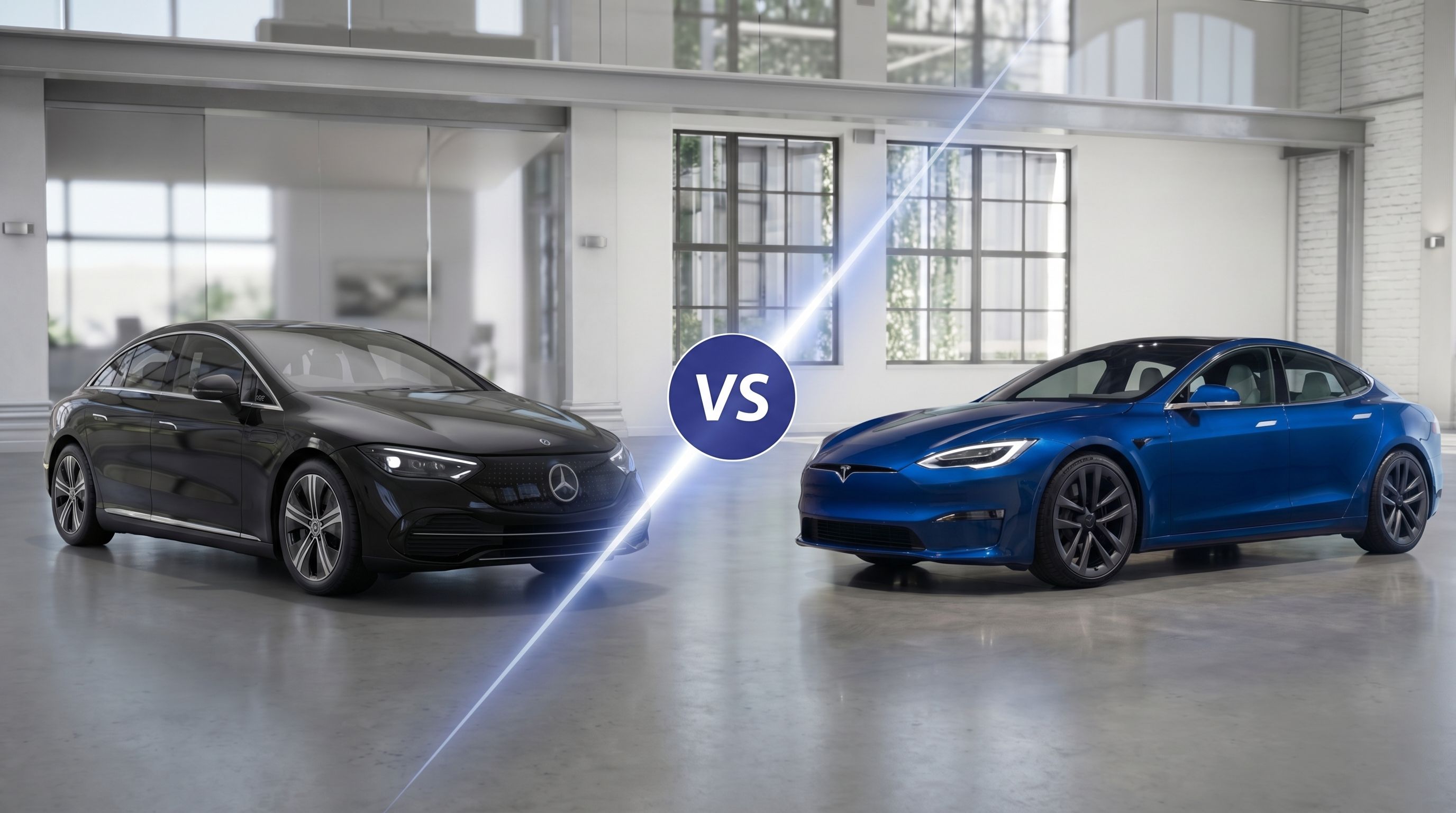
Mercedes-Benz EQE vs Tesla Model S: A detailed comparison of range, technology, and comfort. Our final verdict will help you choose the best electric car.
Oct 16, 2026
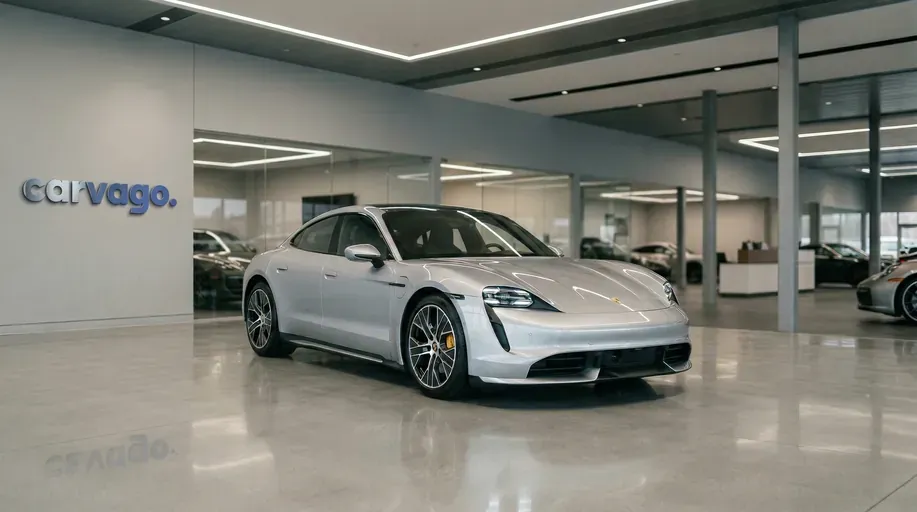
Porsche Taycan review: real owner experiences, charging performance, common faults, and used values. Everything you need before buying.
Oct 24, 2026