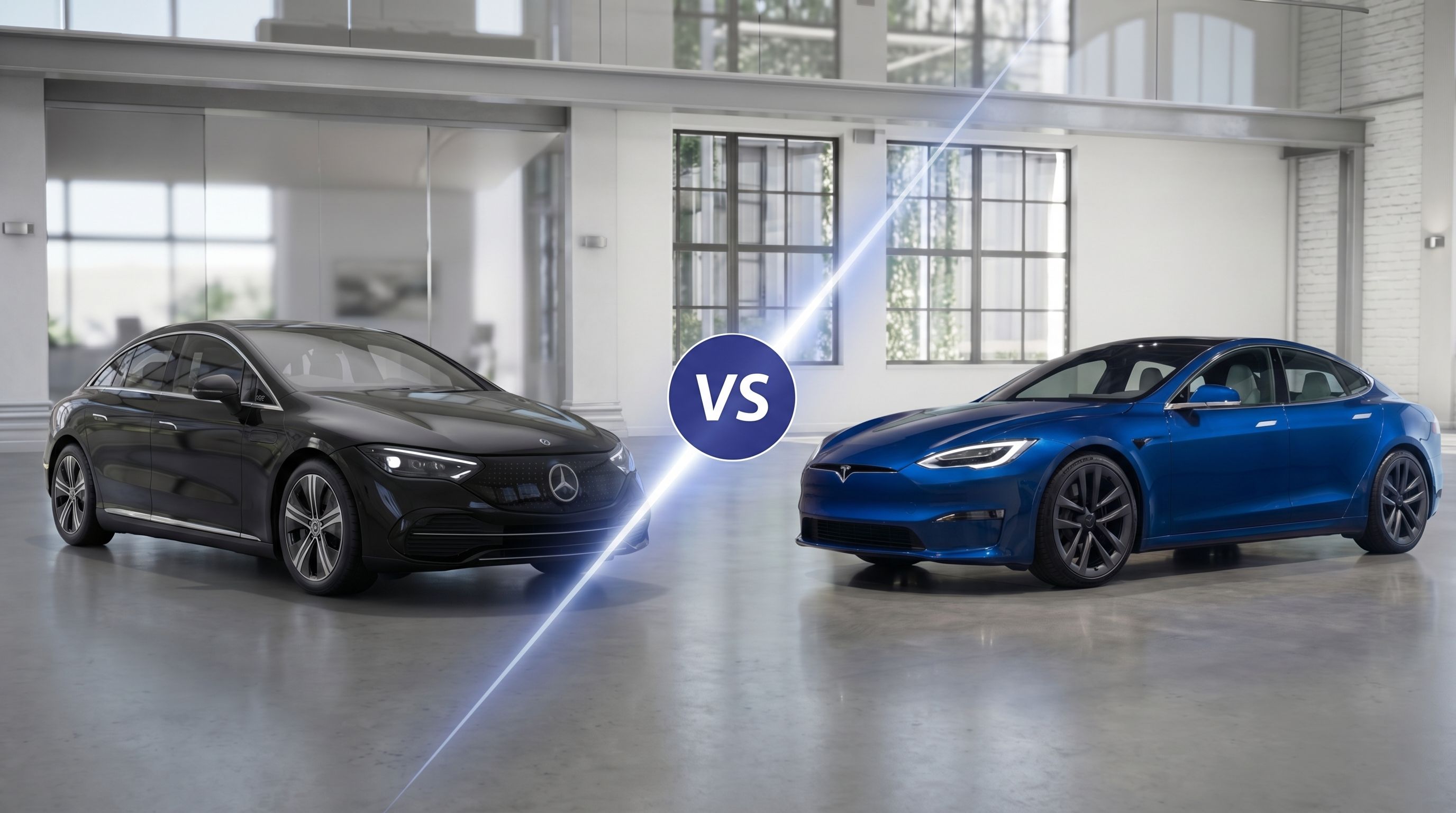
Car battle
Mercedes-Benz EQE vs. Tesla Model S: Complete comparison 2026
Mercedes-Benz EQE vs Tesla Model S: A detailed comparison of range, technology, and comfort. Our final verdict will help you choose the best electric car.
Oct 16, 2026
Porsche Taycan review: real owner experiences, charging performance, common faults, and used values. Everything you need before buying.
October 24, 2026
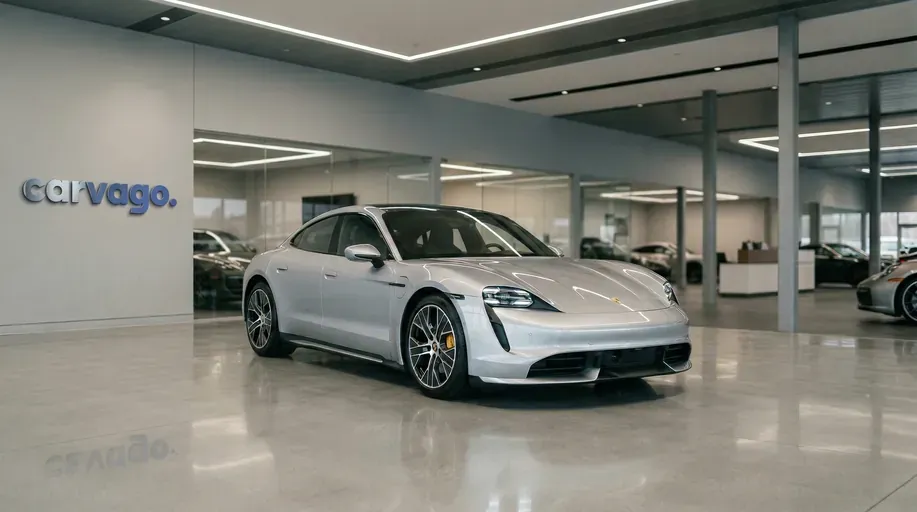
The Porsche Taycan represents the Zuffenhausen brand’s entry into series-production electric vehicles, positioned in the luxury performance segment. This review covers the first generation, which entered production in late 2019, with the first European customer deliveries taking place in January 2020. Production and European deliveries remain ongoing in 2026.
Over its production run, the lineup expanded across three distinct body formats: the four-door Porsche Taycan Sports Saloon, the higher-riding Cross Turismo launched in March 2021 with deliveries from summer 2021, and the Porsche Taycan Sport Turismo estate, which opened for orders in November 2021 ahead of spring 2022 deliveries. On 7 February 2024, an extensive mid-cycle facelift premiered across the range, bringing technical updates to battery capacity, charging speeds, and suspension systems, with European deliveries commencing in spring 2024.
The Taycan primarily attracts buyers seeking sports-car chassis dynamics combined with daily four-door usability and electric grand-touring capability. It appeals largely to business drivers and driving enthusiasts moving from traditional high-performance combustion saloons to battery-electric mobility.
The first-generation electric Porsche Taycan represents Porsche’s entry into modern battery-electric sports cars. Long-term reliability data shows a vehicle with sound mechanical assembly, but one that has required factory intervention for high-voltage battery modules, chassis safety components, and early electronic glitches. Used buyers should distinguish between mandatory factory safety campaigns and known recurring equipment faults.
European safety authorities have recorded several significant safety recalls covering the model's production run. A worldwide recall announced in July 2024 covered vehicles built between 21 October 2019 and 14 June 2024. Dynamic bending stresses at tight bend radii could cause cracks in the front brake hoses, resulting in brake fluid loss and failure of the front brake circuit; workshops replace both front flexible hoses with redesigned parts featuring an increased bending radius. Between 2024 and 2025, cumulative worldwide campaigns addressed vehicles built between 21 October 2019 and 4 March 2024 due to potential cell defects in high-voltage battery modules that could lead to an internal short circuit and fire. Dealers evaluate cell health via diagnostics, replace defective modules, and install software to monitor cell performance, with Porsche advising owners to cap charging at 80% pending inspection.
More recent recalls have affected later build runs. A worldwide safety recall announced in September 2025 for vehicles built between 19 December 2024 and 22 May 2025 addressed a manufacturing defect in the retaining ring of the front air suspension struts that could cause air to escape and the vehicle to sink on one side. In January 2026, a worldwide recall covering vehicles built from 15 April 2024 to 3 December 2025 addressed front seat adjustment mechanisms that could damage the occupant restraint wiring harness, potentially causing improper side airbag deployment or unintended deployment.
| Verified Recall Subject | Affected Production Window | European / Worldwide Reach | Workshop Remedy |
|---|---|---|---|
| Front brake hoses | 21 Oct 2019 – 14 Jun 2024 | Worldwide | Replacement of front flexible hoses with redesigned routing |
| High-voltage battery cells | 21 Oct 2019 – 4 Mar 2024 | Worldwide | Battery diagnostic check, cell replacement if defective, monitoring software |
| Air suspension retaining ring | 19 Dec 2024 – 22 May 2025 | Worldwide | Inspection and replacement of affected front pneumatic struts |
| Front seat wiring harness | 15 Apr 2024 – 3 Dec 2025 | Worldwide | Inspection and repair of occupant restraint wiring under front seats |
Beyond safety campaigns, owners report recurring technical faults that are specific to early production runs. On 2020 to 2023 models, the high-voltage cabin heater is prone to internal circuit board failure, which cuts off interior heating and windscreen demisting during cold weather; Porsche addressed this through revised heater hardware. On pre-facelift 2020 and 2021 models, owners frequently described auxiliary 12-volt battery drain when cars were parked for several days. Because low-voltage power is needed to trigger the high-voltage battery contactors, an exhausted 12-volt battery prevented the car from opening or starting; this parasitic drain was primarily resolved through central gateway control software updates.
Tyre wear is another verified ownership characteristic. Due to substantial unladen kerb weight and aggressive negative camber when the adaptive air suspension lowers at highway speeds, models running on 20- or 21-inch wheels often scrub the extreme inside shoulder of the rear tyres down to the cords while the centre tread still appears legal.
The electric Porsche Taycan relies on an 800-volt electrical architecture pairing either a rear-mounted motor or dual-motor all-wheel drive with an unusual two-speed transmission on the rear axle. Available with standard or extended-range battery packs across pre-facelift and updated lineups, the powertrain range spans daily commuters to track-focused derivatives.
| Engine | Fuel | Power | Drivetrain | Gearbox | Model years |
|---|---|---|---|---|---|
| Taycan (Performance Battery) | Electric | 300 kW (408 hp) | RWD | 2-speed automatic | 2021–2024 |
| Taycan (Performance Battery Plus) | Electric | 350 kW (476 hp) | RWD | 2-speed automatic | 2021–2024 |
| Taycan 4 (Performance Battery Plus) | Electric | 350 kW (476 hp) | AWD | 2-speed automatic | 2021–2024 |
| Taycan 4S (Performance Battery) | Electric | 390 kW (530 hp) | AWD | 2-speed automatic | 2020–2024 |
| Taycan 4S (Performance Battery Plus) | Electric | 420 kW (571 hp) | AWD | 2-speed automatic | 2020–2024 |
| Taycan GTS | Electric | 440 kW (598 hp) | AWD | 2-speed automatic | 2022–2024 |
| Taycan Turbo | Electric | 500 kW (680 hp) | AWD | 2-speed automatic | 2020–2024 |
| Taycan Turbo S | Electric | 560 kW (761 hp) | AWD | 2-speed automatic | 2020–2024 |
| Taycan (Performance Battery) | Electric | 300 kW (408 hp) | RWD | 2-speed automatic | 2024–present |
| Taycan (Performance Battery Plus) | Electric | 320 kW (435 hp) | RWD | 2-speed automatic | 2024–present |
| Taycan 4 (Performance Battery) | Electric | 300 kW (408 hp) | AWD | 2-speed automatic | 2024–present |
| Taycan 4 (Performance Battery Plus) | Electric | 320 kW (435 hp) | AWD | 2-speed automatic | 2024–present |
| Taycan 4S (Performance Battery) | Electric | 400 kW (544 hp) | AWD | 2-speed automatic | 2024–present |
| Taycan 4S (Performance Battery Plus) | Electric | 440 kW (598 hp) | AWD | 2-speed automatic | 2024–present |
| Taycan GTS | Electric | 515 kW (700 hp) | AWD | 2-speed automatic | 2025–present |
| Taycan Turbo | Electric | 650 kW (884 hp) | AWD | 2-speed automatic | 2024–present |
| Taycan Turbo S | Electric | 700 kW (952 hp) | AWD | 2-speed automatic | 2024–present |
| Taycan Turbo GT | Electric | 760 kW (1,034 hp) | AWD | 2-speed automatic | 2024–present |
For city driving and short daily commutes, the base rear-wheel-drive Porsche Taycan is the most agile configuration due to its lighter front end. As a used car, a pre-facelift base model with the standard battery provides ample pace for urban duties while keeping purchase costs lower.
For mixed everyday use across changing seasons, the all-wheel-drive Porsche Taycan 4S strikes the most practical balance, combining four-wheel traction with manageable running demands. Regular motorway commuters should prioritize variants equipped with the Performance Battery Plus, such as the Taycan 4S, Taycan GTS, or Taycan Turbo, where extended pack capacity reduces charging stops at sustained highway speeds.
Trailer towing is not approved on any variant of the model, which carries an official towing rating of zero kilograms, although the Porsche Taycan Sport Turismo and Cross Turismo body styles support an optional factory preparation for a rear bicycle carrier. Overall, the electric drive units and two-speed transmissions demonstrate dependable mechanical durability in regular service.
The 800-volt charging system allows the car to sustain high direct-current fast-charging speeds deep into the charging curve, provided the high-voltage pack is preheated through the navigation system before arrival. Owners report that winter temperatures cause a noticeable reduction in highway range, making pre-conditioning of the cabin and battery while plugged in essential to preserve driving radius in cold weather.
| Dimension / Capacity | Sports Saloon | Sport Turismo | Cross Turismo |
|---|---|---|---|
| Length (mm) | 4,963 | 4,963 | 4,974 |
| Width excluding mirrors (mm) | 1,966 | 1,966 | 1,967 |
| Height (mm) | 1,379 | 1,390 | 1,409 |
| Wheelbase (mm) | 2,900 | 2,900 | 2,904 |
| Rear luggage capacity (upright / folded, l) | 407 / not homologated | 446 / 1,212 | 446 / 1,212 |
| Front luggage compartment (l) | 84 | 84 | 84 |
Figures apply to standard configurations; Turbo and Turbo S versions have reduced rear luggage volume due to standard premium sound hardware, Turbo GT models have unique body measurements, and pre-facelift versions feature a slightly smaller front luggage compartment.
The Porsche Taycan adopts a low, driver-focused seating posture rather than the upright packaging of a conventional saloon. Rear passengers benefit from recesses carved directly into the battery pack under the floorboards, which allow comfortable foot placement and reasonable legroom, though thick sills and a low roof contour make climbing in and out awkward. Taller adults will experience restricted headroom in the Porsche Taycan Sports Saloon, whereas the extended roof profile of the Porsche Taycan Sport Turismo and Cross Turismo provides noticeable clearance above the head. A four-seat layout with deeply sculpted individual rear chairs is standard, with an optional middle perch suitable mainly for emergency use. The separate front luggage compartment conveniently isolates charging cables from regular cargo, and while all variants feature split-folding rear seatbacks, the estate bodies offer far easier loading thanks to their wide-opening tailgates.
Road tests consistently praise the chassis tuning across the lineup. When equipped with adaptive air suspension—which is standard on higher trims and was optional on early entry models—the Porsche Taycan maintains a pliant, settled ride that absorbs surface imperfections while keeping body motions strictly tied down. Steering is calm, natural, and precise, delivering agile directional changes and composed cornering that effectively mask the vehicle's substantial mass. Cabin isolation from mechanical and wind noise is thorough, though testers observe that wide, low-profile tyres generate noticeable rumble on coarse asphalt.
Inside, assembly and material quality earn high marks for enduring solidness, showing zero creaks or rattles even after prolonged endurance testing. The seating position is low and supportive. Ergonomics, however, draw unified criticism across reviews: the heavy reliance on touchscreens complicates simple adjustments on the move. Navigating digital menus just to redirect ventilation airflow or adjust climate settings distracts from driving, and glossy displays quickly accumulate fingerprint smudges. Outward visibility is also restricted by thick pillars and a low roofline.
Professional evaluations universally agree on the car's sports-car handling dynamics and long-distance touring comfort, while sharing reservations about fiddly secondary controls. Testers disagree slightly on urban compliance when fitted with larger wheels, where sharp transverse ridges can transmit audible thuds. For facelifted models, an optional active suspension system keeps the body remarkably level under cornering roll and hard acceleration, adding another layer of composure to an already settled chassis.
All the charts in this section are drawn from Carvago's listings of the whole Porsche Taycan model family, including other generations represented in the data, rather than only the reviewed generation, and this dataset does not establish a separate price level for the reviewed generation alone. Across available build years, the median asking price sits at €69,900 for 2021 models and reaches €132,600 for 2026 examples. Later manufacturing years such as 2024 record a median asking price of €103,100, reflecting factory updates and differing equipment specifications across advertised vehicles.
Between April 2026 and September 2026, the count of advertised Porsche Taycan models went from 2,943 to 2,633, as detailed in the chart below.
Active listings over time
| Month | Porsche Taycan |
|---|---|
| 2026-04 | 2 943 |
| 2026-05 | 2 887 |
| 2026-06 | 2 779 |
| 2026-07 | 2 814 |
| 2026-08 | 2 729 |
| 2026-09 | 2 633 |
Source Carvago
Even with the overall decrease over this six-month span, buyers have access to a deep selection of vehicles, with active listings staying above 2,600 throughout the period.
The median asking price of cars advertised today, built in 2021, is €69,900, which sits below the median asking price of cars advertised today, built in 2020, of €74,800. The chart outlines how median asking prices compare across build years, with subsequent model years commanding higher figures through 2026.
Median advertised price by year of manufacture
| Model year | Porsche Taycan |
|---|---|
| 2020 | 74 800 |
| 2021 | 69 900 |
| 2022 | 75 300 |
| 2023 | 83 900 |
| 2024 | 103 100 |
| 2025 | 118 900 |
| 2026 | 132 600 |
Source Carvago
Buyers focusing on earlier production find that the median asking price of cars advertised today, built in 2021, is €69,900. For those seeking newer vehicles, the median asking price of cars advertised today, built in 2024, is €103,100, while the median asking price of cars advertised today, built in 2026, is €132,600.
This depreciation curve tracks how the model's residual value declines with age, showing a loss of approximately 20% after the first year and 48% by age three. The chart below illustrates how these losses unfold from new up to seven years of age.
Residual value by vehicle age
| Vehicle age | Porsche Taycan |
|---|---|
| New | 135 500 |
| 1 yr | 107 800 |
| 2 yrs | 86 600 |
| 3 yrs | 69 900 |
| 4 yrs | 63 900 |
| 5 yrs | 59 200 |
| 6 yrs | 53 400 |
| 7 yrs | 48 200 |
Source Carvago
Over the seven years shown, the model sheds around 64% of its initial residual value. The steepest decline occurs over the first three years, after which the rate of value loss moderates to under 10% per year.
Across the six recorded months, electric cars accounted for all advertised inventory, shifting from 2943 cars in April 2026 to 2633 in September 2026. The chart below illustrates how active listings split by fuel type over this period.
Supply composition by fuel type
| Month | Electric |
|---|---|
| 2026-04 | 2 943 |
| 2026-05 | 2 887 |
| 2026-06 | 2 779 |
| 2026-07 | 2 814 |
| 2026-08 | 2 729 |
| 2026-09 | 2 633 |
Source Carvago
Because every listing belongs to the electric category, buyers will exclusively encounter battery-electric vehicles when browsing the market.
From April 2026 to September 2026, the average asking price for the Porsche Taycan started at €96,100, as tracked in the monthly figures below.
Average price development over time
| Month | Porsche Taycan |
|---|---|
| 2026-04 | 96 100 |
| 2026-05 | 97 600 |
| 2026-06 | 98 000 |
| 2026-07 | 98 400 |
| 2026-08 | 98 900 |
| 2026-09 | 98 200 |
Source Carvago
Across the six months, the average asking price shifted by just over two percent overall, rising from €96,100 to €98,900 in August 2026 before dipping to €98,200 in September. That narrow range represents very little net movement relative to the car's price level.
Precise steering and composed chassis dynamics that effectively mask vehicle weight
Sustained direct-current fast charging enabled by the 800-volt electrical architecture
Solid interior build quality and durable cabin materials free of squeaks and rattles
Heavy reliance on touchscreens complicates simple climate adjustments while driving
Restricted rear headroom in saloon models and awkward entry over wide sills
Multiple safety recalls and battery campaigns require thorough verification by VIN
The all-wheel-drive Porsche Taycan 4S strikes the most practical balance for mixed conditions, combining four-wheel traction with manageable everyday running demands. Drivers facing frequent long-distance motorway commutes should seek out examples equipped with the larger battery to reduce charging stops at sustained speeds.
Request an official printout from a brand centre to verify by VIN that all factory safety campaigns have been completed. Buyers should also inspect the inside shoulders of the rear tyres for severe hidden wear before purchasing.
The Porsche Taycan Sport Turismo and Cross Turismo estate bodies offer noticeably improved rear headroom and easier boot loading compared to the saloon. However, the low seating position, awkward rear entry, and lack of trailer towing approval limit outright family utility.
Mechanical components and interior assembly show durable build quality, though earlier cars required factory software updates and safety recall remedies. A pre-owned Porsche Taycan is dependable once verified to have all campaigns completed.
Sources: newsroom.porsche.com, adac.de, autocar.co.uk, autobild.de, autoexpress.co.uk
This article was prepared using artificial intelligence tools. The section guarantor is Petr Dušek.
Mercedes-Benz EQE vs Tesla Model S: A detailed comparison of range, technology, and comfort. Our final verdict will help you choose the best electric car.
Oct 16, 2026
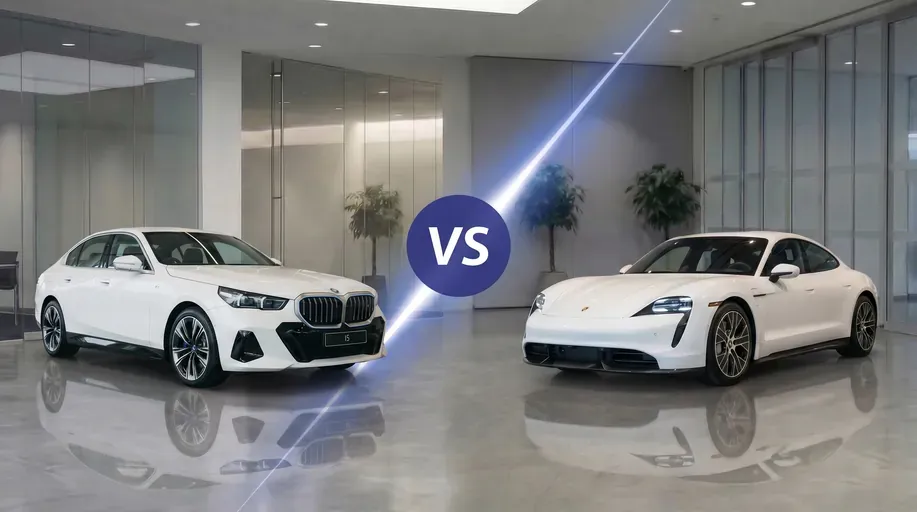
Detailed comparison of BMW i5 vs Porsche Taycan. A detailed look at real-world range, performance, equipment, and our verdict. Choose the right luxury electric car.
May 8, 2026
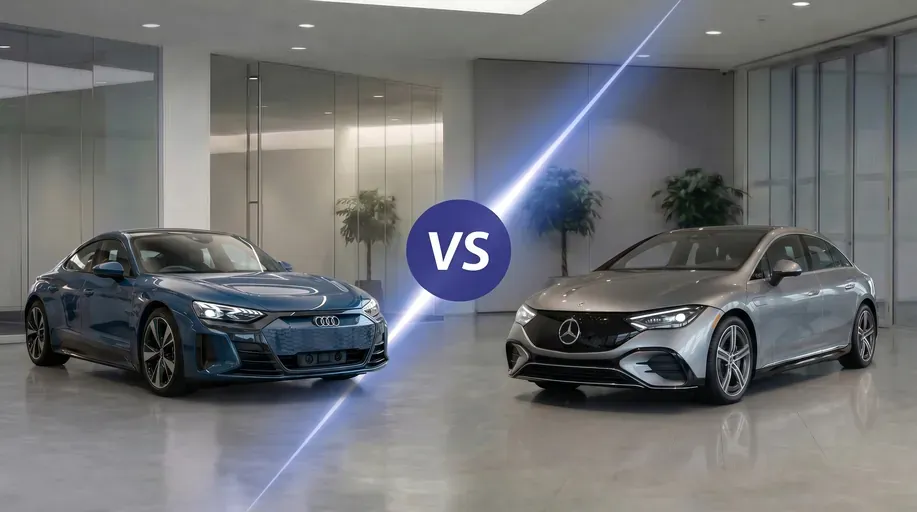
Detailed comparison of Audi e-tron GT vs Mercedes-Benz EQE. Compare real-world range, performance, and equipment. Our verdict will make it easier for you to choose a used electric car.
May 20, 2026