Audi e-tron GT vs. Porsche Taycan: Complete comparison 2026
Audi e-tron GT vs. Porsche Taycan Comparison: Which luxury electric car should you choose? Find out everything about performance, real-world range, and read our final verdict.
Apr 14, 2026
Articles
Car battle
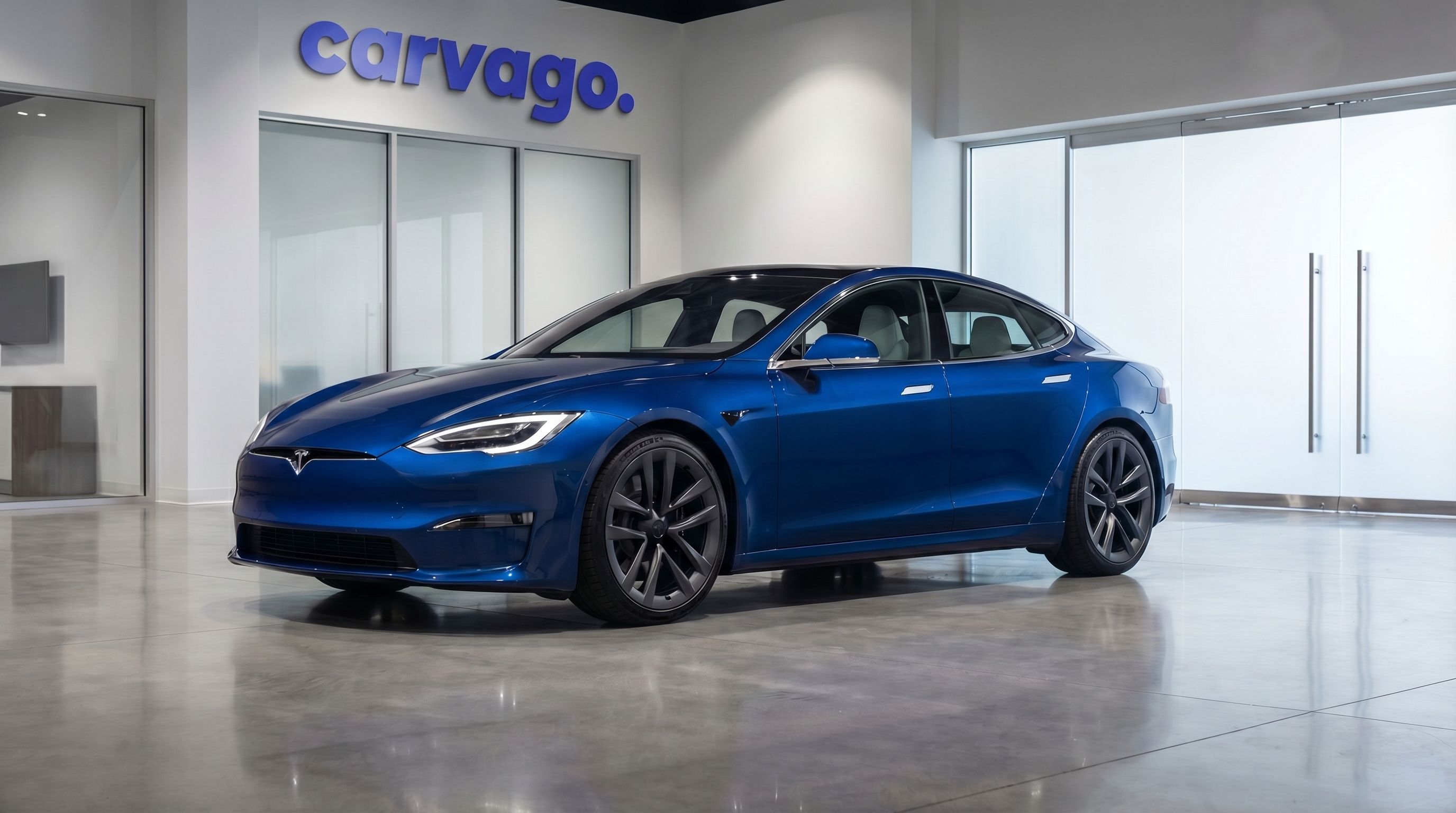
Mercedes-Benz EQE vs Tesla Model S: A detailed comparison of range, technology, and comfort. Our final verdict will help you choose the best electric car.
April 13, 2026


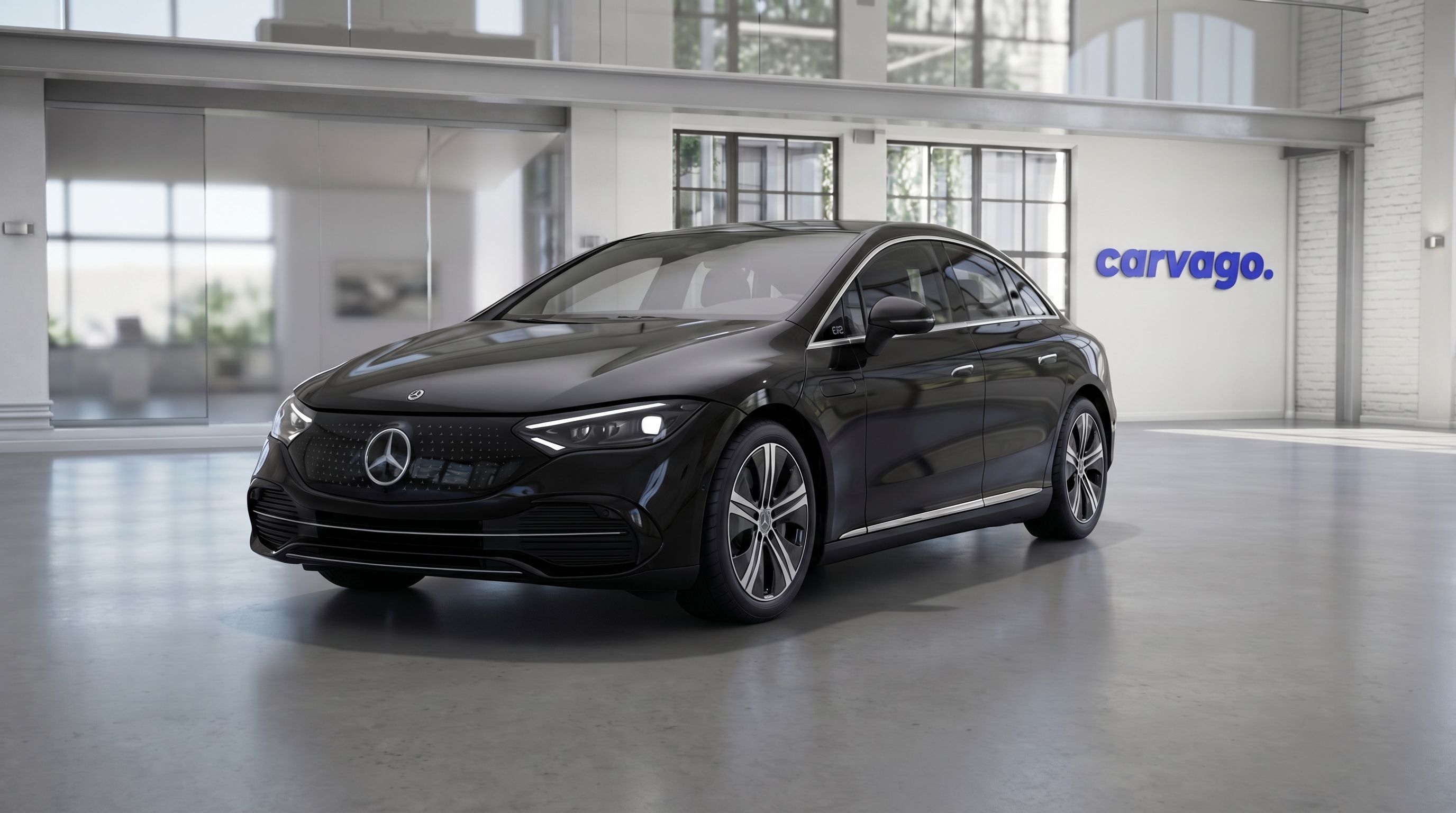
Mercedes-Benz EQE represents the embodiment of traditional German luxury transformed into a modern, fully electric form, with an emphasis on maximum comfort and top-tier interior craftsmanship. Standing against it is the innovative Tesla Model S, an American pioneer that has long defined the segment's standards thanks to its stunning performance, unrivaled range, and minimalist approach to technology. Let's take a detailed look together at which of these advanced electric sedans emerges from our direct comparison as the more appealing choice for your garage.
When comparing the exterior dimensions of the Mercedes-Benz EQE and the Tesla Model S, you will quickly find that both automakers have approached the design of a luxury electric vehicle quite differently. While Tesla bets on a more elongated and aerodynamic silhouette of a five-door liftback, Mercedes-Benz fully benefits from its dedicated electric platform (EVA2), which allows it to maximize interior space on a slightly shorter overall sedan body footprint.
Looking at the specific figures of modern versions on the used car market, the Tesla Model S is a significantly larger car in terms of overall exterior length and width. With a length of 5021 mm, the American representative surpasses its German competitor (4946–4964 mm) by 57 to 75 mm and, at 1987 mm, it is also 26 mm wider. This gives the Tesla a more dynamic and hunkered-down stance, further enhanced by its exceptionally low build with a height of just 1431 mm. The Mercedes-Benz EQE, on the other hand, is noticeably taller (1492–1510 mm), which not only aids easier entry but also ensures ample headroom for passengers.
However, the most significant difference that you will feel positively in daily use is the wheelbase. The Mercedes-Benz EQE boasts an impressive 3120 mm, surpassing the Tesla Model S (2960 mm) by a substantial 160 mm. In practice, this means that despite its shorter overall length, the EQE offers more generous longitudinal legroom for passengers, especially in the rear seats. Furthermore, shorter body overhangs promise slightly more confident maneuvering in tight European garages. Conversely, the Model S benefits from its more generous length in the luggage compartment, which, thanks to the wide-opening tailgate, offers incomparably better access than the classic small trunk lid of the EQE.
| Parameter | Mercedes-Benz EQE Sedan | Tesla Model S Liftback |
|---|---|---|
| Width (mm) | 1961 | 1987 |
| Length (mm) | 4946 - 4964 | 5021 |
| Height (mm) | 1492 - 1510 | 1431 |
| Wheelbase (mm) | 3120 | 2960 |
When choosing a used electric car, especially if the vehicle is to serve as the primary family car, the luggage compartment volume plays an absolutely crucial role. In this respect, the Mercedes-Benz EQE and Tesla Model S differ diametrically, which is primarily due to their different body concepts. While the German representative bets on a traditional sedan silhouette with a fixed trunk, the American pioneer utilizes a highly practical liftback body with a huge tailgate. This difference has a fundamental impact on everyday usability – from the convenience of loading weekend groceries to transporting bulkier cargo for a longer vacation.
The Mercedes-Benz EQE, which has featured on the used car market since 2022 as a typical representative of classic sedans, offers a basic trunk volume of 430 liters. Although this space is sufficient for normal daily needs and easily accommodates luggage for a long weekend, the narrower loading opening limits the transport of larger or awkwardly shaped items. After folding the rear backrests, the capacity can be increased to approximately 895 liters; however, the car's proportions are not built for more demanding moving tasks. A major advantage of this design, however, remains better soundproofing of the cabin from the rear sections, which perfectly suits the car's premium and silence-focused character.
The Tesla Model S (especially after the significant modernization from 2021/2022) is, by contrast, a benchmark for transport capacity and family versatility. Its rear trunk offers a confident 793 liters of basic volume, which represents space for several extra suitcases and easily serves even a family of four. Thanks to the liftgate, which rises along with the rear window, access to the luggage is completely barrier-free. After folding the rear seats, the space transforms into a huge loading area with a total volume of 1645 liters. Furthermore, the Tesla has another ace up its sleeve under the front hood in the form of a front trunk (the so-called "frunk"), which adds another 89 liters – an ideal and clean place for storing charging cables.
| Parameter | Mercedes-Benz EQE Sedan | Tesla Model S Liftback |
|---|---|---|
| Basic volume (liters) | 430 | 793 |
| Maximum volume with seats folded (liters) | 895 | 1645 |
While the Mercedes-Benz EQE with a volume of 430 liters serves excellently for daily commuting and executive purposes, the Tesla Model S, thanks to its confident 793 liters and barrier-free liftback access, represents a disproportionately more versatile and full-fledged family car.
When it comes to the ability to tow a trailer, the Mercedes-Benz EQE and Tesla Model S electric sedans offer different options that require careful consideration when choosing a used car. Towing capacity is key for many drivers, as it determines whether you will use the car only for transporting bicycles or if you can head out on a family holiday with a caravan without worry.
For older Mercedes EQE model years (2022–2023), the maximum braked trailer weight is limited to just 750 kg, regardless of the powertrain. This capacity is sufficient at most for a small utility trailer for a weekend trip to a DIY store or for installing a bike rack, which can be limiting in terms of practicality. It was only from the 2024 model year that this value increased to a much more useful 1700 kg for more powerful versions (such as the EQE 350, 500, and AMG sports models). With such a rating, the car can easily handle a medium-sized caravan or the transport of heavier loads. However, less powerful versions with a longer range, such as the EQE 300 or EQE 350+, continue to have a reduced capacity of 750 kg even in newer model years.
The competing Tesla Model S has a significantly more complicated history regarding the use of a tow bar. For older generations produced until 2021, trailer towing was not homologated from the factory at all. However, the situation changed radically with the arrival of modernized versions (including the extremely powerful Plaid variant) produced from 2022. These newer models consistently offer a solid braked trailer weight of 1600 kg. The unbraked trailer weight for both vehicles – where homologation allows – is limited by the standard European legislative limit to 750 kg.
Ultimately, if towing a caravan is a priority for you when choosing a used electric car, the modernized Tesla Model S (from 2022 onwards) represents a very capable and straightforward choice with its 1600 kg. With the Mercedes EQE, on the other hand, it is necessary to check the production year and specific powertrain in detail – older models will limit you to the basic 750 kg, and for the full 1700 kg, you must opt for more powerful specifications produced from 2024 onwards.
| Model and motorization | Braked weight of trailer (kg) | Unbraked weight of trailer (kg) |
|---|---|---|
| Mercedes-Benz EQE 300 / 350+ (2022+) | 750 | 750 |
| Mercedes-Benz EQE 350 / 500 / AMG (2022–2023) | 750 | 750 |
| Mercedes-Benz EQE 350 / 500 / AMG (2024+) | 1700 | 750 |
| Tesla Model S (until 2021) | 0 | 0 |
| Tesla Model S / Plaid (from 2022) | 1600 | 750 |
When comparing the powertrains (or rather, the electric drive units) of the Mercedes-Benz EQE and Tesla Model S, we encounter two diametrically opposed approaches to electromobility. Both vehicles belong to the premium battery electric vehicle (BEV) segment, yet their strategies for the target customer group differ significantly. While Mercedes-Benz relies on a traditional, widely graduated range of versions that offers a choice between efficient single-motor models (ideal for high-mileage motorway drivers) and high-performance all-wheel-drive versions, Tesla sticks to the philosophy of offering massive power right from the base model. For roughly four-year-old used cars, Tesla's entry-level model boasts power that would require paying extra for the top-tier AMG version in the EQE. For used car buyers, this means a fundamental decision based on the following priorities:
From a recommendation standpoint, a clear rule applies – a budget-conscious customer or a driver preferring a calm, infinitely smooth ride with the lowest possible consumption will appreciate the single-motor EQE models. Conversely, customers obsessed with technical specifications and unrivaled motorway acceleration will find a definitive answer in the American Model S.
The Mercedes-Benz EQE electric sedan (V295 generation, launched in mid-2022) will please those interested in approximately four-year-old used cars with its very logically conceived range. The entry point is the EQE 300 version, which features a single synchronous electric motor on the rear axle with 180 kW of power – fully sufficient for brisk driving, but with a primary focus on efficiency. The most popular powertrain for long-distance travelers is the efficient EQE 350+ version with 215 kW, which, thanks to the absence of a front motor, boasts the longest rated range. For users frequently operating in poor weather conditions, such as mountain trips, the manufacturer offers dual-motor versions with permanent 4MATIC all-wheel drive (for example, the powerful EQE 500 with exactly 300 kW). The top of the food chain is occupied by the AMG sports division. The range starts with the EQE 43 4MATIC and culminates in the purist EQE 53 4MATIC+ derivative, whose combined power can soar up to 505 kW with the active AMG Dynamic Plus package, delivering a devastating torque of up to 1,000 Nm. As available production data shows, some initial and highly equipped series labeled Edition 1 were phased out of production as early as April 2023, making them a rarer limited-edition used car today, while standard versions continue to be offered on the market. All models are equipped with a single-speed reduction gearbox as standard.
| Engine type | Fuel type | Power (kW) | Torque (Nm) | Transmission |
|---|---|---|---|---|
| 1x Electric motor (EQE 300) | Electricity | 180 | 550 | 1-speed automatic |
| 1x Electric motor (EQE 350 / 350+) | Electricity | 215 | 565 | 1-speed automatic |
| 2x Electric motor (EQE 350 4MATIC) | Electricity | 215 | 765 | 1-speed automatic |
| 2x Electric motor (EQE 500 4MATIC) | Electricity | 300 | 858 | 1-speed automatic |
| 2x Electric motor (EQE 43 AMG 4MATIC) | Electricity | 350 | 858 | 1-speed automatic |
| 2x Electric motor (EQE 53 AMG 4MATIC+) | Electricity | 460 / 505 | 950 / 1000 | 1-speed automatic |
The history of the Tesla Model S is exceptionally rich; however, a look at the generation availability database shows a very specific shift in the used car market. The legendary older powertrains, which the brand named according to battery capacity (e.g., variants like 60, 70, 75, 85 or the top-tier P100D), were phased out of production long before the period of four-year-old used cars (production ended gradually from 2014 to 2019) and practically no longer appear on the market for younger vehicles. Anyone looking for an approximately four-year-old Model S today will encounter models produced from 2020 to the present, where extremely powerful dual-motor (AWD) setups dominated. Models from 2019 to 2021 offered the Long Range version with power approaching the 400 kW mark and the Performance version reaching an incredible 580 kW. The most radical milestone was the facelift produced for the European market mainly from the turn of 2022/2023. Here, the range narrowed down to just two main versions: the "base" version referred to simply as the Model S (Dual Motor All-Wheel Drive), which delivers approximately 500 kW to all wheels, and the completely unprecedented Plaid version. This uses a brand-new architecture consisting of three innovative electric motors reinforced with carbon sleeves, giving the car an absurd 760 kW of power and a mammoth torque of over 1,400 Nm. Such thrust allows the car to accelerate from zero to one hundred kilometers per hour in a time only slightly exceeding two seconds, and all concerns about sufficient dynamics in the left lane are thus dispelled forever.
| Engine type | Fuel type | Power (kW) | Torque (Nm) | Transmission |
|---|---|---|---|---|
| 2x Electric motor (Long Range, '19-'21) | Electricity | 398 | 755 | 1-speed automatic |
| 2x Electric motor (Performance, '19-'21) | Electricity | 580 | 1140 | 1-speed automatic |
| 2x Electric motor (Model S Dual Motor, from '22) | Electricity | 500 | 755 | 1-speed automatic |
| 3x Electric motor (Model S Plaid, from '22) | Electricity | 760 | 1420 | 1-speed automatic |
While the Mercedes-Benz EQE offers a rational choice from a finely graduated range of efficient RWD models and sporty AMGs, the Tesla Model S has transformed for the four-year-old used car buyer exclusively into a machine delivering brutal and completely uncompromising performance in any specification.
Choosing the right motorization for electric vehicles is crucial not only for daily dynamics and comfort but primarily for overall efficiency, real-world range, and long-term reliability. While the Mercedes-Benz EQE relies on a wide range of power versions (from economical rear-wheel drives to extreme AMG models) with an emphasis on a smooth ride and top-tier battery management, the Tesla Model S, following its recent facelift, has reduced its offering to two brutally powerful all-wheel-drive models where massive performance is the standard. When buying roughly four-year-old used cars, the traditional German approach of gradual power levels meets the American "all or nothing" philosophy, which fundamentally affects not only real-world consumption but also the wear and tear of chassis components.
From the extensive range of motorizations available for the 295 generation on the used car market, the EQE 350 with rear-wheel drive emerges as the most sensible choice for a roughly four-year-old vehicle (2022–2023 models). This model offers an ideal compromise between purchase price, dynamics, and maximum range. The 215 kW electric motor provides more than enough power (565 Nm of torque) for smooth and safe overtaking, while the absence of a front electric motor – found in the more complex 4MATIC version – slightly reduces the car's weight and improves real-world consumption. This stays around a pleasant 17–19 kWh/100 km in combined driving. The advantage of this rear-wheel-drive configuration is long-term mechanical reliability and less load on the front axle. When choosing a used car, however, pay close attention to the condition of the brake pads and tires; the high curb weight (over 2.3 tons) leads to faster wear, especially if the car was driven frequently in city traffic with sharp starts. Also, check the history of the MBUX infotainment software – early models occasionally suffered from screen freezing, which is resolved by wireless OTA (Over-The-Air) updates that should be installed on a well-maintained vehicle. This motorization is the perfect companion for calmer drivers and long-distance commuters who appreciate top-tier silence, luxury, and maximum utilization of battery capacity for a long range on a single charge.
For the updated Tesla Model S from 2022 and 2023, the choice is much more straightforward, and despite the existence of the absurdly fast Plaid version, we clearly recommend going for the standard Dual Motor All-Wheel Drive (AWD) version with an impressive 500 kW of power. This specification represents the absolute technological peak in electric drive efficiency. Acceleration from zero to one hundred takes just over 3 seconds, leaving the vast majority of gasoline supercars behind, while maintaining one of the best real-world ranges on the market thanks to its 100 kWh battery and top-tier aerodynamics. The main technical advantage is the constantly optimized thermal management via software updates, which significantly limits battery degradation even with frequent use of fast chargers. However, the massive torque and power bring hidden risks in the form of enormous stress on chassis components. During a test drive of a used car, focus fundamentally on front axle vibrations under full throttle – frequent hard acceleration can very quickly destroy the front CV joints on the Model S, which is a relatively expensive repair. Also, pay attention to the air suspension and, for 2022/2023 models, check the condition of the optional "Yoke" steering wheel, whose synthetic leather surface tended to peel after a few tens of thousands of kilometers in early series. The Model S Dual Motor AWD is absolutely ideal for tech enthusiasts and demanding drivers who require ultimate performance combined with vast interior space and independence provided by the Supercharger network.
Official consumption figures provided by manufacturers often differ in real-world driving, which is doubly true for electric vehicles. Real-world range and electricity consumption depend on the route profile, weather conditions, and driving style. While figures look very optimistic on paper according to the current WLTP methodology, actual consumption is usually 10 to 20% higher. To get a more accurate picture, we used data from real users from the popular crowdsourcing platform Spritmonitor.de, which faithfully reflects the daily experiences of drivers with these approximately four-year-old cars on the used car market.
news_site: Spritmonitor.de
| Model and powertrain | Average consumption (kWh/100 km) |
|---|---|
| Mercedes-Benz EQE 300 (180 kW) | 18.5 |
| Mercedes-Benz EQE 350+ (215 kW) | 19.2 |
| Mercedes-Benz EQE 500 4MATIC (300 kW) | 21.0 |
| Mercedes-Benz AMG EQE 43 4MATIC (350 kW) | 23.4 |
| Tesla Model S Long Range / Dual Motor (2021+) | 18.8 |
| Tesla Model S 100D / Maximum Range (2019–2021) | 19.5 |
| Tesla Model S Plaid (760 kW) | 22.1 |
The collected data clearly shows that although the Mercedes-Benz EQE (V295 generation on the market since 2022) is the embodiment of extreme aerodynamic efficiency, its massive curb weight simply takes its toll. The base and most economical versions, EQE 300 and 350+, average around 18.5 to 19.2 kWh per 100 km in real-world driving, which is still a very solid result for such a heavy and comfortable executive sedan. What is particularly surprising, however, is how incredibly efficient the Tesla Model S can be. Roughly four-year-old Long Range variants (or the updated Dual Motor versions from the turn of 2021/2022) manage to benefit from the brand's years of experience in software optimization and battery temperature management, resulting in consumption below 19 kWh/100 km. Extremely powerful versions from both brands – such as the three-ton Mercedes-AMG EQE 43 or the brutal tri-motor Tesla Model S Plaid – require much more energy. Even during standard travel, expect an average exceeding 22 kWh/100 km for these, and even more on the highway.
For a typical buyer of a luxury electric vehicle on the used market, whether a businessperson spending their life on highways or a family preferring advanced technology, there is a clear conclusion. Both cars are at the absolute top of the executive class in terms of energy management. If range at high highway speeds is your absolute priority, the Tesla Model S maintains a slight engineering lead even after years. Conversely, the Mercedes-Benz EQE unerringly compensates for the loss of a few tenths of a kilowatt-hour with overall acoustic comfort and perfect filtration of bumps. Energy consumption itself should therefore not be a deciding factor in this luxury comparison – the real financial differences in annual charging costs are completely negligible at this vehicle price point.
The market for used premium electric vehicles offers very interesting buying opportunities after about four years of operation. The four-year mark is a turning point in the used car market – the first owners, who are often companies, sell the vehicles, and the steepest wave of depreciation is already in the past. When comparing used cars of this age, we encounter the first production years of the Mercedes EQE (produced since 2022) and the fundamentally modernized Tesla Model S (the facelifted version called Palladium, available since late 2021). Both cars had a price tag safely exceeding €82,000 when new, but today's reality of the secondary market is significantly friendlier to the wallets of interested buyers.
The German electric sedan is a prime example of a premium car with a rapid initial drop in value. While the first owners paid a premium amount for the EQE as a newcomer to the market, today these four-year-old cars are becoming an exceptionally rational choice.
While older Model S years can be purchased very cheaply, with four-year-old used cars we are already talking about the innovated generation with a horizontal display, a new powertrain, and often the controversial Yoke steering wheel.
The following table shows the estimated price range for vehicles approximately 4 years old with an average mileage of around 60,000 to 90,000 kilometers. In both cases, the selection is expanding, but the Tesla Model S benefits from its long-term position as a technological pioneer.
| Model (year of manufacture 2022) | Estimated price (base version) | Estimated price (top version) | Depreciation characteristics |
|---|---|---|---|
| Mercedes-Benz EQE | €45,000 – €55,000 | €66,000 – €78,000 (AMG) | Very steep in the first three years |
| Tesla Model S | €55,000 – €66,000 (Long Range) | €74,000 – €90,000 (Plaid) | Volatile, strongly dependent on manufacturer discounts |
While the four-year-old Mercedes-Benz EQE attracts with an uncompromising price drop, making it an exceptionally attractive choice for lovers of quiet comfort, the refreshed Tesla Model S holds its value slightly better despite price fluctuations and scores with unbeatable performance and efficiency.
Both of these premium electric vehicles earned the maximum five-star rating in Euro NCAP safety tests, which is not a major surprise for such advanced cars. However, when comparing safety in the used car market, it is always crucial to consider the context and the year the crash tests were performed. The Euro NCAP methodology is constantly evolving and becoming stricter, so percentage results from different years are not directly comparable. In this case, however, we have absolutely ideal conditions for analysis. Both the Mercedes-Benz EQE and the updated version of the Tesla Model S underwent certification in the same year (2022) and according to identical, extremely strict standards. These protocols already fully accounted for new advanced frontal collision simulations with a mobile barrier, improved cyclist detection, and complex crisis scenarios at intersections.
The Mercedes-Benz EQE (tested in 2022) fully confirmed the Stuttgart automaker's reputation as one of the main pioneers of passive safety. The car excels primarily in adult occupant protection, where it achieved an impressive 95%. The robust body structure and comprehensive airbag system provide top-tier protection for the crew in all types of impacts. Child occupant protection is also at an excellent level with a result of 91%. Regarding the protection of vulnerable road users, the EQE earned 83%, significantly aided by an active hood that mitigates the consequences of a collision with a pedestrian. Safety assistance systems were rated at a solid 81%, reflecting the very reliable functionality of the automatic emergency braking and active lane-keeping systems.
The Tesla Model S (also tested in 2022) showed absolutely phenomenal results in the tests, which historically ranks it among the safest cars ever subjected to these trials. Its rating for passive adult occupant protection (94%) and child occupant protection (91%) is practically identical to its German competitor – the heavy battery integrated into the floor forms an exceptionally rigid and durable platform structure. However, where the American pioneer truly dominates is in software security and active assistance. In the safety systems category, Tesla achieved an incredible 98%, which is one of the highest results in the entire history of Euro NCAP. It also achieved a slightly better score (85%) in the protection of vulnerable road users, thanks to an advanced array of cameras that can react to sudden obstacles instantly and with maximum precision.
In conclusion, both models represent the absolute pinnacle of safety and, as roughly four-year-old used cars, offer protection that rivals the latest vehicles of today. While the Mercedes-Benz EQE has a slight edge in passive adult occupant protection thanks to traditionally precise deformation engineering, the Tesla Model S noticeably surpasses it in the area of preventive assistants. If active accident prevention and the most technologically advanced collision recognition system are your main priorities when choosing a used electric vehicle, Tesla offers a more comprehensive and clearly more modern safety package.
| Parameter | Mercedes-Benz EQE | Tesla Model S |
|---|---|---|
| Year of testing | 2022 | 2022 |
| Adult occupant protection | 95 % | 94 % |
| Child occupant protection | 91 % | 91 % |
| Vulnerable road user protection | 83 % | 85 % |
| Safety assistance systems | 81 % | 98 % |
Although both cars provide first-class passive protection for the crew during the impact itself, the Tesla Model S wins overall thanks to its unrivaled software equipment and assistance systems, which can prevent an accident most effectively.
In addition to standard equipment, both models offer much more than just basic functions, with each approaching added value in its own way and betting on a different philosophy.
Top-tier ride comfort and excellent cabin soundproofing
Very luxurious interior craftsmanship with premium materials
Advanced driver assistance systems and sophisticated ambient lighting
Excellent city maneuverability thanks to rear-axle steering
Smooth and quiet electric drive operation with an emphasis on absolute relaxation
Smaller and less accessible luggage compartment (classic sedan body)
High curb weight limiting sporting agility
Distraction caused by touch-sensitive surfaces on the steering wheel and complex menus
Faster depreciation of residual value on the used car market
The Mercedes-Benz EQE is the perfect choice for those seeking maximum comfort, silence, and a traditional premium driving feel. It will primarily appeal to managers and long-distance drivers for whom comfort, precise craftsmanship, and a luxurious interior are more important than raw dynamics or trunk volume.
Unrivaled acceleration and dynamic parameters (especially in newer versions)
Above-average real-world range on a single charge and top-tier energy efficiency
Perfect integration with the extensive and reliable Supercharger network
Huge and easily accessible luggage compartment thanks to the liftback body (plus front "frunk")
Lightning-fast infotainment with excellent software and regular over-the-air (OTA) updates
Cheaper-feeling interior materials compared to German premium competitors
Occasional gaps in body panel alignment and build quality
Lack of support for phone mirroring via Apple CarPlay and Android Auto
Controversial Yoke steering wheel (on selected used cars from 2021+), which makes parking more difficult
The Tesla Model S targets tech enthusiasts and drivers requiring uncompromising performance, long range, and maximum practicality. It is an exceptionally versatile and spacious electric car, whose main advantage is completely worry-free travel thanks to the Tesla charger ecosystem, albeit at the cost of certain compromises in traditional luxury.
Based on our own CarAudit inspections, breakdown statistics, and long-term user experiences, we have compiled an overview of the most common problems that buyers of approximately four-year-old cars should watch out for. A thorough independent inspection of the car's technical condition is an absolutely essential step before the actual purchase of such complex, heavy, and powerful electric vehicles.
The Mercedes-Benz EQE is a technology-packed premium electric vehicle, where the first years of production were marked by specific software quirks and minor electronic faults.
Most EQE problems revolve around unrefined software and malfunctioning minor electronics, while the electric drive itself remains highly reliable. A thorough check of the operation of electronic equipment and software status is an absolute necessity when buying.
In the modernized generation of the Tesla Model S (versions produced roughly from 2021), the automaker focused on a radical increase in performance and interior innovation, but some traditional quality and mechanical ailments persisted in these model years.
The modernized Tesla Model S offers unmatched performance and top-tier range even after years, but owners must tolerate occasional shortcomings in workmanship and higher stress on chassis parts. A thorough check of the suspension arms and warranty repair history is key to acquiring a reliable unit.
When buying a used car, a thorough inspection is key. Electric vehicles have their own technological pitfalls, and in the premium segment, potential repairs can be very expensive, so an independent comprehensive car audit is always recommended. Here are some specific points to focus on for these two models.
Tesla Model S generally offers a higher battery capacity and excellent efficiency, which ensures a slightly longer real-world range. However, the Mercedes-Benz EQE still easily manages over 500 kilometers on a single charge thanks to its excellent aerodynamics. Tesla also has a significant advantage in the form of a reliable and extensive network of its own Supercharger fast chargers.
Tesla is known for its stunning performance, especially in the Plaid version, which accelerates from zero to one hundred in less than 2.5 seconds. While Mercedes-Benz can boast powerful top-of-the-line AMG versions, the chassis tuning focuses primarily on smooth and quiet pull. If you are looking for uncompromising sporty dynamics and crushing acceleration, the American car clearly dominates in this regard.
Mercedes clearly wins in overall material quality, perfect cabin soundproofing, and traditional luxury, which can be highlighted by the fantastic Hyperscreen dashboard. The competing Model S follows a path of extreme minimalism with a giant central display, but the fit and finish and the quality of plastics used sometimes lag behind. The German car is therefore a much better choice for lovers of maximum comfort on long journeys.
The American brand has long set the trend with its Autopilot system, which handles advanced assistance functions with great confidence. However, the German manufacturer has completely caught up with the competition in recent years and in many situations offers even smoother and more predictable reactions from the adaptive cruise control. Both carmakers are at the absolute top in this area, but Tesla offers a bolder approach to future fully autonomous driving.
The Model S is a large liftback with a huge rear trunk with a volume of almost 800 liters and also has a practical storage space under the front hood (the so-called frunk). The EQE model is designed as a traditional sedan with a narrower opening and a smaller luggage compartment with a volume of 430 liters. For family use and frequent transport of bulkier items, Tesla is therefore a much more versatile choice.
Choosing between a roughly four-year-old Mercedes-Benz EQE and the updated Tesla Model S represents a classic battle between traditional European luxury and uncompromising American innovation. While the German representative excels in perfect sound insulation, a smooth ride, and top-tier interior craftsmanship, making it an ideal choice for executives and lovers of absolute comfort, the American pioneer bets on diametrically different values. Thanks to its practical liftback body style, the Tesla Model S serves as an incomparably better family car, while also adding crushing dynamics, top-tier efficiency, and worry-free access to the Supercharger network. If your priority is silence and relaxation behind the wheel, go for the rapidly depreciating Mercedes; however, if you require maximum interior space, the latest software technologies, and brutal performance, the Tesla will be the clear winner for you, despite minor compromises in build quality.
Sources: ADAC, lidovky.cz, novinky.cz, chytreauto.cz, elektromobil.cz, autobox.cz
This article was prepared using artificial intelligence tools. The section guarantor is Petr Dušek.

Audi e-tron GT vs. Porsche Taycan Comparison: Which luxury electric car should you choose? Find out everything about performance, real-world range, and read our final verdict.
Apr 14, 2026

Detailed comparison of Mercedes-Benz EQE vs Porsche Taycan. A detailed look at real-world range, performance, and equipment. Read our verdict and choose your winner!
Apr 14, 2026

Porsche Taycan vs. Tesla Model S: Which electric car is better? We compared real-world range, performance, and equipment. Read our verdict and make your choice easier.
Apr 14, 2026