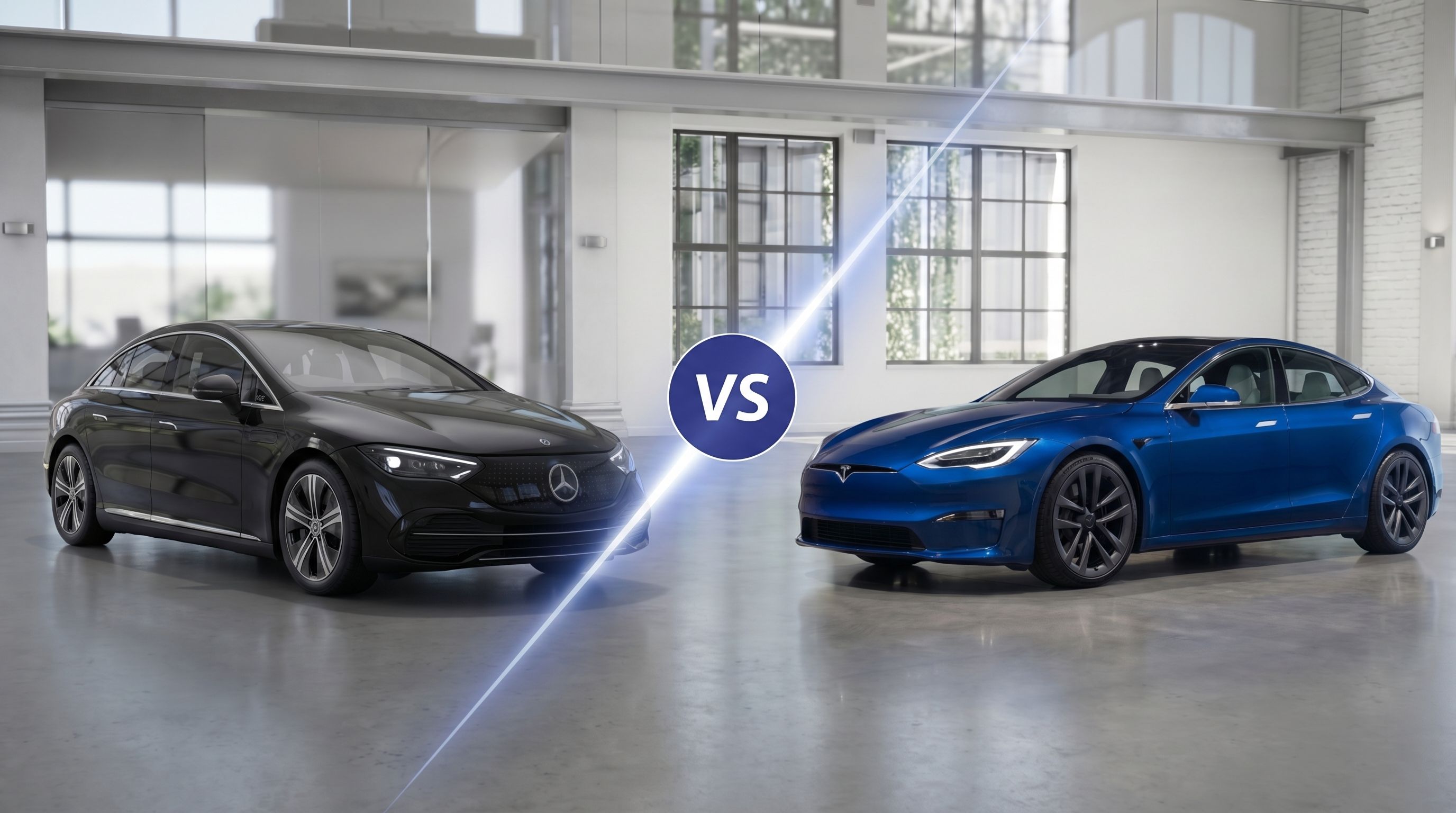
Car battle
Mercedes-Benz EQE vs. Tesla Model S: Complete comparison 2026
Mercedes-Benz EQE vs Tesla Model S: A detailed comparison of range, technology, and comfort. Our final verdict will help you choose the best electric car.
Apr 13, 2026
Articles
Car battle
Porsche Taycan vs. Tesla Model S: Which electric car is better? We compared real-world range, performance, and equipment. Read our verdict and make your choice easier.
April 14, 2026
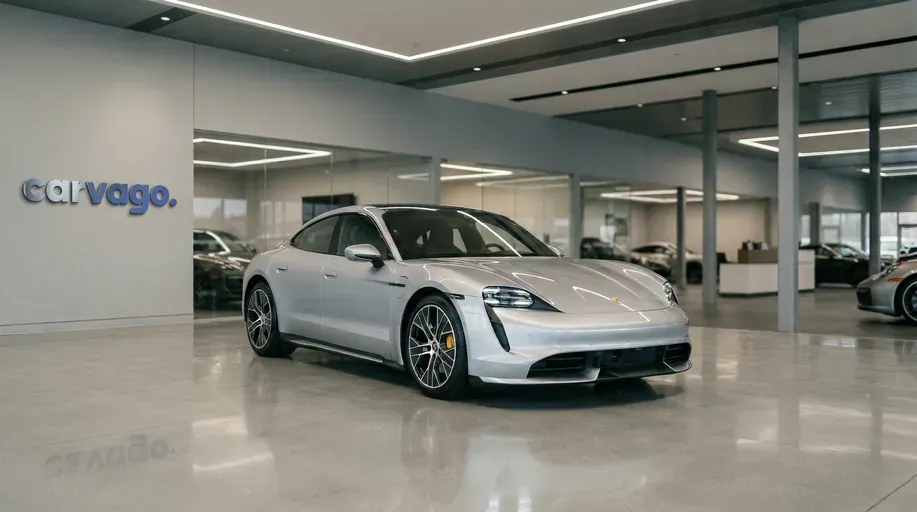
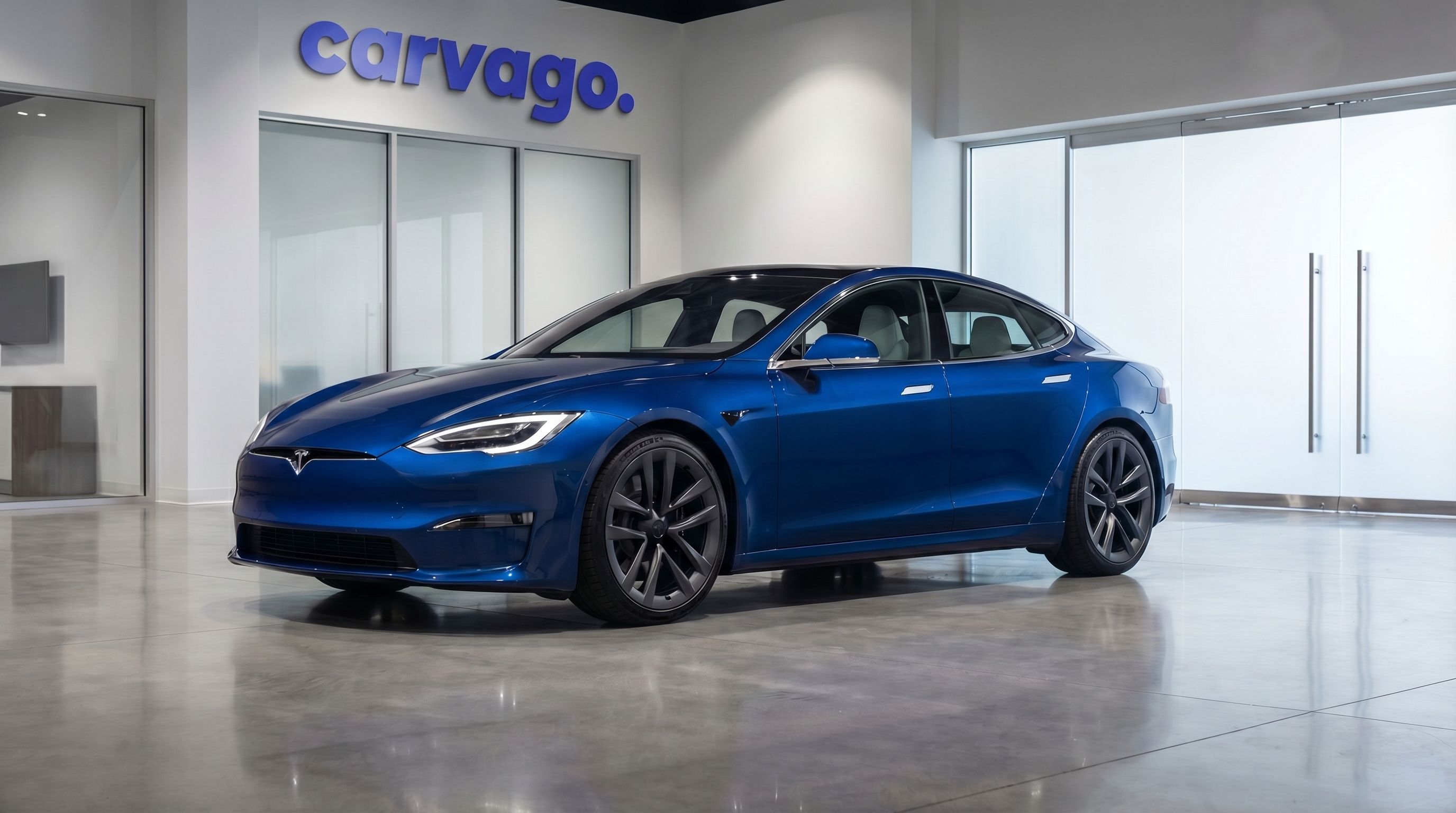
Porsche Taycan represents a pioneering fully electric sports car from Stuttgart, which successfully carries the brand's iconic driving dynamics and premium craftsmanship into the zero-emission era. Standing against it is the Tesla Model S, a legendary American pioneer that, with its constant innovation, stunning range, and brutal acceleration, essentially defined the modern high-performance electric vehicle market on its own. Let's take a detailed look at how these two top-tier electric machines fare in a head-to-head battle and which one will be the better choice for your needs.
When looking at the exterior dimensions, it is immediately apparent that although both the Porsche Taycan and the Tesla Model S target the large luxury electric vehicle segment, their development philosophies differ diametrically. The Tesla, especially in its updated versions sold since roughly 2021, is quite a substantial car. With a length of 5021 mm and a width of 1987 mm, it takes up slightly more space on the road and in parking lots than the Porsche Taycan. In its standard coupe version, the Taycan is 4963 mm long and 1966 mm wide (older Tesla generations were 4970 mm long). The Taycan is thus nearly 6 centimeters shorter in most cases, which, along with its sophisticated rear-axle steering, gives it better agility. In narrow European garages, you will experience slightly less stress with the German car than with the more opulent American sedan.
However, a fundamental visual and functional difference between the two models is the height. With a value starting as low as 1378 mm, the Porsche Taycan is a true sports car that stays as close to the asphalt as possible. This exceptionally low body construction significantly lowers the center of gravity, which plays a key role in its top-tier driving dynamics. On the other hand, the crew pays the price for this sporty stance with more demanding entry. With a height of up to 1445 mm, the Tesla Model S feels much more civil and more like a classic touring cruiser. The higher roof of the Tesla ensures more comfortable cabin access and a better view from the vehicle. The difference in height thus clearly defines what you can expect from the car – Porsche maximizes an uncompromising sporting experience, while Tesla bets on more relaxed everyday usability.
However, the wheelbase has the greatest impact on actual passenger space. Here, Tesla again shows its size with a value of 2960 mm, while the Porsche Taycan offers exactly 2900 mm (or 2904 mm for the more practical estate version, called Cross/Sport Turismo). These extra 60 millimeters in favor of the Model S translate in practice into significantly more knee room for rear-seat passengers. For family use and longer trips with four adults, the Tesla appears to be a more spacious and generous choice. The Taycan, on the other hand, will better suit those who prefer perfect driving performance and are willing to make a slight space compromise in the rear seats.
| Parameter | Porsche Taycan Coupé | Tesla Model S Sedan | Porsche Taycan Estate |
|---|---|---|---|
| Width (mm) | 1966 - 1998 | 1964 - 1987 | 1966 - 1967 |
| Length (mm) | 4962 - 4968 | 4970 - 5021 | 4962 - 4974 |
| Height (mm) | 1378 - 1395 | 1431 - 1445 | 1379 - 1412 |
| Wheelbase (mm) | 2900 | 2960 | 2900 - 2904 |
When choosing a premium electric vehicle, everyday practicality and family usability play a key role for many buyers. Especially in the used car market, where models from around the 2021 model year represent a very tempting choice, it is important to realize that the approach of both manufacturers to luggage space differs fundamentally. The difference in body concept means that while one car offers absolute volume and easy access via a liftgate, the other emphasizes traditional sporty design and a fixed trunk. This ultimately prompts many customers looking for more space to reach for the estate (wagon) variant. The practicality of the trunk is simply a parameter that can decide whether a car stands up only as a charming weekend car or as a full-fledged daily driver.
The Porsche Taycan with the base sedan body offers a basic rear trunk volume of 407 liters. This space is sufficient for weekend shopping and luggage for a shorter holiday, but the smaller loading opening can be limiting at times. It is also important to remember that the more powerful Turbo and Turbo S variants have this value reduced to just 366 liters due to the installation of a larger rear electric motor. A much better choice for active users on the used car market is the Cross Turismo or Sport Turismo (estate) version, which provides 446 liters in the base (or 405 liters for Turbo versions). After folding the rear backrests, the space increases to a very usable 1,212 liters. All Taycan body variants then add a useful front trunk (so-called frunk) with a volume of 84 liters, which is perfect for storing charging cables.
The Tesla Model S from around 2021 (and newer), on the other hand, clearly dominates the discipline of luggage transport. Its liftback body with a huge tailgate hides a massive basic space of 793 liters, which in practice means room for several extra suitcases and completely trouble-free packing even for a longer family holiday. Thanks to the trunk lid concept, the Tesla is overall much more accessible, and once you fold the rear seats, 1,645 liters open up before you. With a bit of exaggeration, you can even fit a small cabinet or an unassembled bicycle inside, a task in which a classic Taycan sedan would struggle significantly. Of course, the Tesla also has a front storage space (89 liters), and with its total transport capacities, the Model S boldly competes even with popular representatives of the SUV segment.
| Parameter | Porsche Taycan Sedan | Porsche Taycan Estate | Tesla Model S Liftback |
|---|---|---|---|
| Basic volume (liters) | 407 | 446 | 793 |
| Max. volume with seats folded (liters) | Not specified | 1212 | 1645 |
While a used Porsche Taycan in the estate version (Turismo) can handle most family tasks with honor, the huge and easily accessible liftback of the Tesla Model S represents an incomparably more practical choice for transporting a family and larger loads.
Towing capacity is not a common standard for high-performance electric sedans, yet it can be a deciding factor for many customers in terms of overall practicality. The option to attach a tow bar doesn't just solve the transport of bulky cargo, but often provides invaluable space for several extra suitcases or the possibility of easily attaching a bike rack. When comparing roughly four-year-old used cars, a huge difference in the approach of both brands is evident. The Tesla Model S (in the specification available since 2022, including the top-of-the-line Plaid version) boasts very solid values for a sports electric car. The maximum braked trailer weight here is exactly 1600 kg, while the standard unbraked trailer weight reaches the legislative maximum of 750 kg. This capacity is perfectly sufficient for weekend shopping of bulkier goods as well as longer holidays with a lighter caravan. In contrast, the Porsche Taycan clearly shows its purebred sporting genes and absolute focus on driving dynamics. The standard Taycan sedan version is not homologated for towing a trailer at all; its official towing capacity is therefore exactly 0 kg. Although some specific configurations of the more practical Cross Turismo body variant may offer a limited ability to tow light trailers, the vast majority of common Taycan models on the used car market lack this option. The conclusion in this regard is very simple: if you require your car to not only provide crushing acceleration but also the ability to act as a family workhorse, the Tesla Model S is the clear and more practical winner, while the Porsche Taycan remains an uncompromising car focused primarily on the driver.
| Model and motorization | Braked weight of trailer (kg) | Unbraked weight of trailer (kg) |
|---|---|---|
| Tesla Model S | 1600 | 750 |
| Tesla Model S Plaid | 1600 | 750 |
When choosing a premium electric car from the used market, focusing on models approximately four years old, the powertrains of the Porsche Taycan and Tesla Model S represent two completely different philosophies. While Porsche focuses on consistent sporting performance, advanced thermal management, and a pure driving experience, Tesla bets on absolute raw power, high powertrain efficiency, and uncompromising straight-line acceleration. Both manufacturers, of course, offer only purely electric power units (EV). A significant difference affecting the drive itself is the transmission concept – Porsche is one of the few manufacturers to deploy a two-speed transmission for better efficiency and pull at high speeds, while Tesla uses a traditional single-speed reduction gear and relies on the massive power of the electric motors.
The pre-facelift generation of the Porsche Taycan, which is ideally suited for purchase on the used car market today, features a wide range of powertrains with 800V architecture, allowing for repeated high loads and extremely fast charging. The base version (Taycan) relies on a single electric motor and rear-wheel drive; however, most used cars sold, including the 4S, GTS, Turbo, and Turbo S trims, already house two motors and all-wheel drive. A highly sought-after compromise is the Taycan 4S model, which offers a solid output of up to 420 kW and 650 Nm of torque. If you are looking for an uncompromising experience, the Taycan Turbo S stands at the absolute top. With Launch Control activated, it provides a brutal overboost power of 560 kW and 1050 Nm of torque, reaching 100 km/h in 2.8 seconds.
| Model | Fuel | Power (kW) | Torque (Nm) | Transmission |
|---|---|---|---|---|
| Taycan (RWD) | Electric | 300 / 350 | 345 / 357 | 2-speed automatic |
| Taycan 4S | Electric | 390 / 420 | 640 / 650 | 2-speed automatic |
| Taycan GTS | Electric | 440 | 850 | 2-speed automatic |
| Taycan Turbo | Electric | 500 | 850 | 2-speed automatic |
| Taycan Turbo S | Electric | 560 | 1050 | 2-speed automatic |
(Note: Stated maximum power outputs represent values in Overboost mode when using Launch Control and depend on the installed battery capacity)
Although the Tesla Model S has an exceptionally long history on the market and the database contains many older designations (such as 60, 70D, 85D, or 90D), from the perspective of the current market for nearly-new used cars, models produced from roughly 2019 onwards make the most sense. Specifically, these are the "Raven" powertrains (Maximum Range and Performance versions) and the revolutionary "Palladium" architecture (Long Range / base version and Plaid), all of which now rely exclusively on all-wheel drive. Even the "sensible" Maximum Range / Long Range choice boasts an incredible output of around 500 kW, outclassing the vast majority of road production. However, the real revolution is the Model S Plaid, which introduced a tri-motor layout to the range. A system output exceeding 750 kW (1020 hp) and a crushing 1420 Nm of torque make the Plaid a machine that breaks the 100 km/h barrier in less than 2.1 seconds.
| Model | Fuel | Power (kW) | Torque (Nm) | Transmission |
|---|---|---|---|---|
| Maximum Range (2019-2021) | Electric | 311 - 500 | 658 - 980 | 1-speed |
| Performance (2019-2021) | Electric | 562 - 580 | 931 - 1050 | 1-speed |
| Model S (Dual Motor, from 2023) | Electric | 500 | 980 | 1-speed |
| Model S Plaid (Tri Motor, from 2022) | Electric | 750+ | 1420 | 1-speed |
(Note: Historical and low-capacity models from the beginning of production are not included in the table, as they are no longer relevant for buyers in the context of an approximately four-year-old used car)
Overall Powertrain Evaluation:
While the Tesla will completely blow you away with raw straight-line power and technological efficiency on long-distance routes, the Porsche will win you over with phenomenal steering and engineering durability during repeated sporting use.
Choosing the right powertrain is key to long-term satisfaction, especially with premium electric vehicles, where the ideal balance between range, charging speed, and reliability is at stake. While the Porsche Taycan, as the first-ever production car, brought innovative 800V architecture and a unique two-speed gearbox on the rear axle for maximum dynamics even at high speeds, the Tesla Model S relies on phenomenal aerodynamic efficiency and ingenious battery management software. Both manufacturers approach electric drive differently, which is why we have selected versions for the used car market (roughly 4 years old) that, based on real owners' experiences, represent the most sensible choice in terms of operating costs and mechanical durability.
The 4S version with the Performance Battery Plus package (usable capacity 83.7 kWh), produced between 2020 and 2024, is the absolute pinnacle of common sense in the pre-facelift Taycan lineup. This model (now replaced in this form by the new generation) offers a breathtaking output of 420 kW (571 hp) in overboost mode.
For used cars around four years old (turn of 2020 and 2021), the best choice is the Maximum Range version (also known as Long Range with the "Raven" code name). It is important to mention that there was a delivery hiatus in Europe in 2022 due to the transition to an entirely new generation (Palladium), so cars from 2019–2021 from the Maximum Range generation are currently the most affordable and mechanically refined used cars from the previous era on the secondary market.
When comparing purely electric vehicles, such as the Porsche Taycan and Tesla Model S, it is essential to take into account the vast difference between official laboratory values (determined according to the WLTP standard) and actual consumption in real-world traffic. Automakers often provide very optimistic figures, but driving dynamics, weather effects, the resistance of wide tires, and highway speeds significantly increase these values. To get the most accurate picture possible, we analyzed user data from the well-known independent portal Spritmonitor.de. We focused primarily on generations and motorizations from roughly 2020 to 2024, which are currently the most sought-after on the market for approximately four-year-old used cars.
| Model and motorization | Average consumption (kWh/100 km) | Data source |
|---|---|---|
| Tesla Model S Dual Motor (2023–2025) | 18.5 | Spritmonitor.de |
| Tesla Model S Long Range (2019–2021) | 18.8 | Spritmonitor.de |
| Tesla Model S Plaid (2022–2025) | 21.0 | Spritmonitor.de |
| Porsche Taycan RWD (2021–2024) | 21.5 | Spritmonitor.de |
| Porsche Taycan 4S (2020–2024) | 22.5 | Spritmonitor.de |
| Porsche Taycan Turbo S (2020–2024) | 24.5 | Spritmonitor.de |
When interpreting this data, clear trends are evident, revealing the different approaches of the two automakers. The Tesla Model S clearly dominates in terms of overall energy efficiency. Its iconic teardrop-shaped aerodynamic profile and long-standing technological lead in electric motor efficiency mean that even older versions can drive with an average consumption below 19 kWh/100 km. In contrast, the Porsche Taycan was created with a completely different philosophy – the priority here was uncompromising sporty driving dynamics and the ability to repeatedly deliver extreme performance without the system overheating. This takes its toll. Even the base rear-wheel-drive (RWD) version of the Taycan shows higher consumption than the brutally powerful tri-motor Tesla Model S Plaid. For the top-of-the-line Porsche Taycan Turbo S, it is not uncommon for average consumption during more spirited driving to easily approach or exceed the 24.5 kWh/100 km mark.
For the average user, these facts result in quite fundamental differences in daily life with the car. If you are a driver who spends hours on long highway routes and uses the car primarily for comfortable long-distance travel, the Tesla Model S is the more rational choice from a consumption perspective. Lower consumption not only slightly reduces charging costs but, above all, guarantees a longer real-world range, which means fewer stops. On the other hand, for those interested in the Taycan, higher consumption may not necessarily be an obstacle. Porsche successfully compensates for this difference on long journeys with its advanced 800V architecture. If you find an adequately powerful charging station, the Taycan can replenish energy significantly faster than its Tesla competition.
While the Tesla Model S clearly takes the victory for maximum efficiency and technological sophistication of the powertrain, Porsche Taycan owners are more than happy to pay for a little extra energy if it means genuine sports DNA and the unrivaled driving experience typical of the Stuttgart brand.
When buying approximately four-year-old premium electric vehicles, such as the Porsche Taycan and Tesla Model S, depreciation plays a massive role. Both vehicles lost a significant portion of their original value in the first few years, making them very attractive choices today for those interested in a used luxury car without having to pay astronomical list prices.
The Porsche Taycan entered the market with a premium price tag that has dropped significantly after roughly four years of operation on the used car market. Depreciation is common for luxury German cars, and it applies doubly to pioneering electric vehicles.
For the Tesla Model S, the 2021 and 2022 model years are very specific because it was during this period that a major update (known as the "Palladium" refresh) hit the market, bringing a redesigned interior with a horizontal display and the revolutionary Plaid version.
| Model (2021–2022 Years) | Starting Price of Used Car (Base / Long Range) | Price of Top Versions (Turbo S / Plaid) |
|---|---|---|
| Porsche Taycan | from ~ €53,000 | ~ €74,000 – €115,000 |
| Tesla Model S | from ~ €41,000 | ~ €62,000 – €76,000 |
Note: The final price of a specific unit always strongly depends on the actual mileage, maintenance history (e.g., battery degradation rate), and the specific configuration of the vehicle.
While a used Tesla Model S will please the wallet with a lower purchase price and excellent paper range, the Porsche Taycan, thanks to the massive drop from its original value, represents a unique chance to get a premium driving experience for a fraction of the original price.
In terms of safety, both cars boast a maximum five-star rating in tests by the independent organization Euro NCAP. However, when comparing these results, it is crucial to take into account the context and the year of testing itself. Euro NCAP protocols are constantly evolving and becoming stricter over time, which means that percentage ratings from different years cannot be directly and equally compared. Newer tests place much greater emphasis on sophisticated active safety, more complex frontal impact simulations, advanced cyclist detection, and accident prevention at complex intersections.
The Porsche Taycan underwent crash tests in 2019, where it comfortably earned the full five stars. At the time of testing, the car demonstrated an extraordinary level of passive safety, thanks to its very rigid body structure and ideally distributed weight due to the low-mounted massive battery module. Although the Taycan's structural qualities are unquestionable, its rating was established before the introduction of today's much stricter standards. Modern scenarios such as crossing paths at intersections or the latest generation of collision avoidance assistants for pedestrians in poor visibility were not evaluated, which is reflected in a more modest percentage score for the protection of vulnerable road users and safety assistants.
The Tesla Model S (represented by the newer generation Long Range and Plaid variants), on the other hand, underwent evaluation in 2022, under significantly stricter and more comprehensive rules. The car achieved phenomenal results and received the prestigious "Best in Class" award (Best in the Executive Car class) that year. It recorded extraordinary values across all categories, but showed absolute dominance particularly in the evaluation of safety assistance systems, where it earned a staggering 98% thanks to its advanced camera system. Testing confirmed its excellent ability to detect cyclists, reliably prevent accidents at intersections, and effectively correct risky driving situations according to the latest and strictest benchmarks.
As a result, both electric vehicles offer an exceptionally safe construction comparable to the absolute automotive top tier. However, if as a used car buyer you are looking for the most modern and comprehensive safety system with perfect accident prevention, the Tesla Model S clearly comes out on top in this comparison. Its active safety systems have undergone a much more demanding and up-to-date approval process, giving it an undeniable technological advantage in the context of today's safety standards.
| Parameter | Porsche Taycan | Tesla Model S |
|---|---|---|
| Year of testing | 2019 | 2022 |
| Adult occupant protection | 85 % | 94 % |
| Child occupant protection | 83 % | 91 % |
| Vulnerable road users protection | 70 % | 85 % |
| Safety assist systems | 73 % | 98 % |
While both models provide top-tier structural protection, the Tesla Model S benefits from a more recent Euro NCAP evaluation and offers a more advanced level of assistance systems. For a used EV buyer, this means slightly more modern technological equipment for effective accident prevention.
In addition to standard equipment, each of the models offers much more than just basic electric mobility, with both cars taking their own very distinctive approach to added value. While Porsche focuses on a purist driving experience and mechanical perfection, Tesla bets on radical technological innovation and software dominance.
At Porsche, every element is designed so that even a purely electric model loses none of the brand's sporting DNA. The equipment and clever solutions here focus primarily on performance, handling, and driver ergonomics.
The Tesla Model S from 2021 and 2022 (i.e., after the extensive facelift referred to as "Palladium") represents a completely different approach. The interior resembles a minimalist living room packed with the latest computing technology.
Unrivaled driving characteristics, a low center of gravity, and precise steering typical of Porsche sports cars
Extremely high build quality and luxurious materials in the interior
800V architecture enabling ultra-fast charging with power up to 270 kW
Ability to repeat maximum acceleration consecutively without power reduction or battery overheating
Significantly better acoustic comfort and cabin soundproofing at high speeds
Noticeably shorter real-world range on a single charge compared to Tesla
Worse overall practicality, less headroom in the rear seats, and smaller luggage compartments
Very high purchase price on the used car market and extremely expensive optional equipment
More complex onboard system with slower response compared to Tesla's software
The Porsche Taycan is the perfect choice for enthusiastic drivers who demand top-tier cornering dynamics, uncompromising feedback, and a luxurious premium interior from an electric vehicle. It is primarily a purebred sports car for driving pleasure, where maximum range and everyday utility play a secondary role.
Top-tier powertrain efficiency providing one of the longest real-world ranges on the market
Seamless access to the reliable and extensive Tesla Supercharger fast-charging network
Crushing straight-line acceleration, especially in the top Performance and Plaid versions
Excellent practicality thanks to a huge rear trunk with a liftback body and a large front trunk (frunk)
The most advanced infotainment system on the market with constant over-the-air (OTA) updates and excellent Autopilot
Inconsistent build quality, imprecise body panel alignment, and occasional interior creaks
Materials used inside the car lag behind the standards of established European premium brands
More detached steering and less confident cornering performance that fails to mask the car's high weight
Controversial "Yoke" steering wheel (on post-2021 facelift models) requires significant getting used to when parking
The Tesla Model S will primarily appeal to tech enthusiasts and users looking for the ultimate electric vehicle for comfortably covering long distances with family and plenty of luggage. It is an unrivaled highway cruiser combining crushing performance with excellent range and worry-free charging, but without the precision and driver engagement offered by Porsche.
Based on owner feedback, service center reports, recalls, and data provided by our comprehensive car audit, we have compiled an overview of the most common problems of both electric models.
When buying a used Porsche Taycan, considering cars approximately four years old, you will mainly encounter software glitches and specific faults associated with thermal management, while the mechanics themselves tend to be above-average reliable.
The Porsche Taycan is a mechanically very robust electric car, where the main concern is the failure of the heating element and buggy software of earlier model years.
For the Tesla Model S (from 2020–2022, including the outgoing "Raven" version and the incoming "Palladium/Plaid"), typical problems do not concern the drive itself, but rather the build quality and several chronic design solutions.
The traction system and battery of the Model S are considered a benchmark of reliability, but owners must prepare for fluctuating build quality, failing door handles, and faster wear of the front axle.
When buying a used car, a thorough inspection is key. Although these are very advanced premium electric vehicles, both models have their specifics and potential weak points that need to be focused on when choosing a roughly four-year-old used car. To be safe, a complete physical inspection of the used car is always recommended to rule out hidden defects.
The Tesla Model S offers a significantly longer range, which commonly exceeds 600 kilometres on a single charge for versions like the Long Range. The Porsche Taycan is less efficient and covers approximately 400 to 450 kilometres in real-world driving, depending on the chosen battery capacity. For frequent long-distance trips without the need for stops, the American car is therefore the more practical choice.
Thanks to its precisely tuned chassis, steering, and lower centre of gravity, the Porsche is the absolute leader in handling and cornering stability. Tesla, on the other hand, dominates in brutal straight-line acceleration, especially in the top-tier Plaid specification. For a driver seeking an authentic sporty experience and perfect feedback, the German model is the clear winner.
The Taycan utilizes an advanced 800V architecture, which enables ultra-fast charging with a power output of up to 270 kW and reduces the 10 to 80% charging time to under 25 minutes. Tesla counters with a sophisticated ecosystem of reliable Supercharger stations with a power output of up to 250 kW. The overall travel speed is excellent for both cars; however, you will spend slightly less time at the fastest charging stations with the Porsche.
The Model S is a large liftback with a massive rear boot with a volume of nearly 800 litres and a very useful front trunk (frunk). As a traditional sports sedan, the Taycan has significantly less luggage space (around 400 litres) and more cramped headroom in the rear seats. In terms of family practicality and moving larger loads, Tesla is the clear winner.
Porsche clearly dominates in the quality of materials used and the precision of craftsmanship, offering a luxurious, excellently soundproofed interior free of rattles. Tesla focuses on technological minimalism with a giant central display, but poor panel fitment is more common in slightly used vehicles. For customers requiring a premium feel and traditional automotive luxury, the Taycan is a class above.
The decision between the Porsche Taycan and the Tesla Model S ultimately depends on whether you prefer a pure driving experience or uncompromising technological efficiency in a nearly new used car. The American pioneer represents the ideal choice for modern technology enthusiasts and families, offering them vast interior space, crushing straight-line acceleration, and carefree long-distance travel thanks to its excellent range. Conversely, despite its smaller trunk and shorter real-world range, the Porsche Taycan wins the hearts of demanding drivers, as it delivers top-tier build quality, phenomenal handling in corners, and the genuine dynamics of a purebred sports car. While Tesla clearly wins in everyday utility and versatility, Porsche remains the uncrowned king of emotion and mechanical perfection behind the wheel in the field of premium electric vehicles.
Sources: ADAC, svetmotoru.cz, lidovky.cz, autoweb.cz, elektromobil.cz, autosport.cz
This article was prepared using artificial intelligence tools. The section guarantor is Petr Dušek.
Mercedes-Benz EQE vs Tesla Model S: A detailed comparison of range, technology, and comfort. Our final verdict will help you choose the best electric car.
Apr 13, 2026
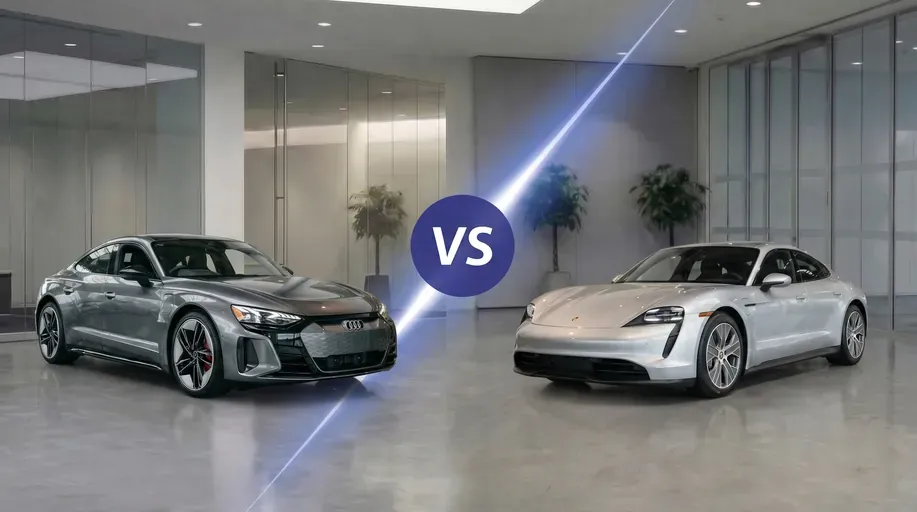
Audi e-tron GT vs. Porsche Taycan Comparison: Which luxury electric car should you choose? Find out everything about performance, real-world range, and read our final verdict.
Apr 14, 2026
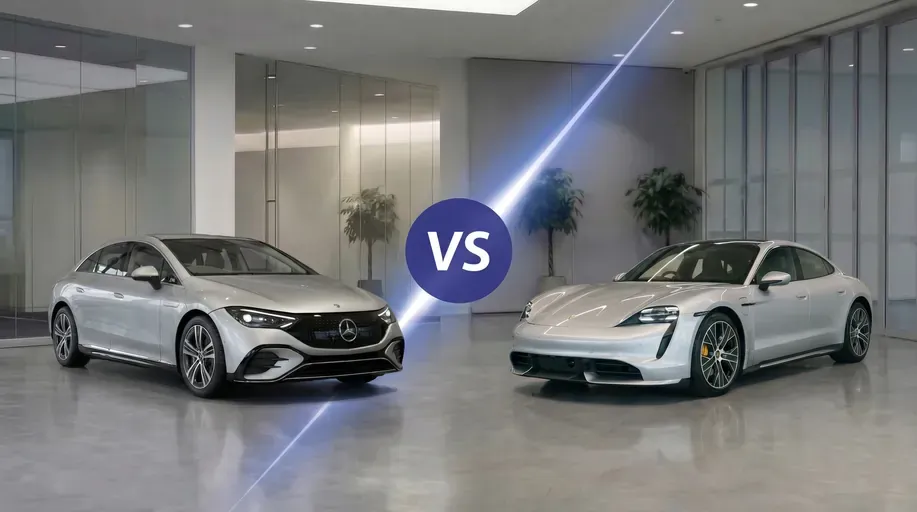
Detailed comparison of Mercedes-Benz EQE vs Porsche Taycan. A detailed look at real-world range, performance, and equipment. Read our verdict and choose your winner!
Apr 14, 2026