Car battle
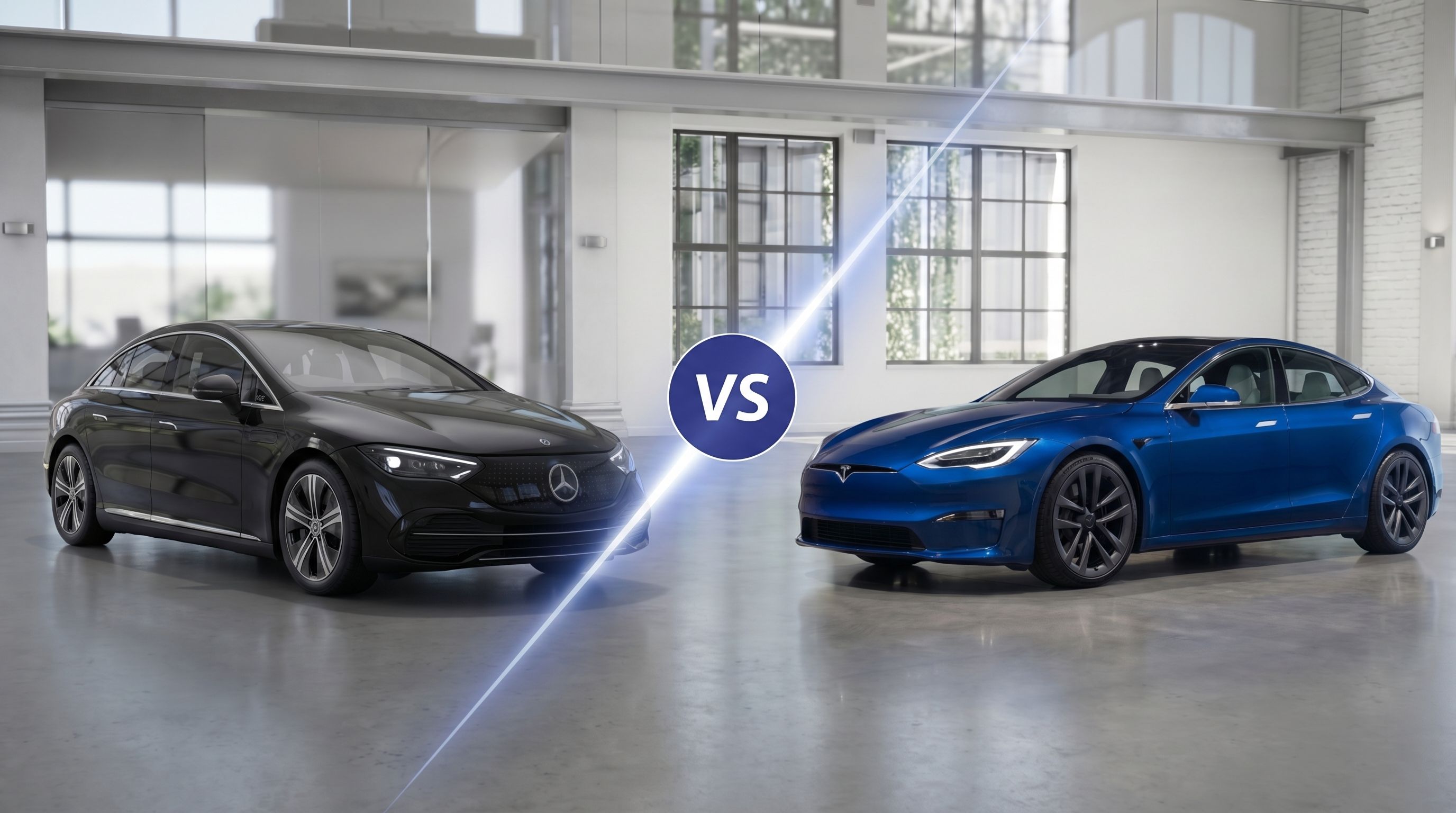
Mercedes-Benz EQE vs. Tesla Model S: Complete comparison 2026
Mercedes-Benz EQE vs Tesla Model S: A detailed comparison of range, technology, and comfort. Our final verdict will help you choose the best electric car.
Apr 13, 2026
Articles
Car battle
Detailed comparison of Mercedes-Benz EQE vs Porsche Taycan. A detailed look at real-world range, performance, and equipment. Read our verdict and choose your winner!
April 14, 2026
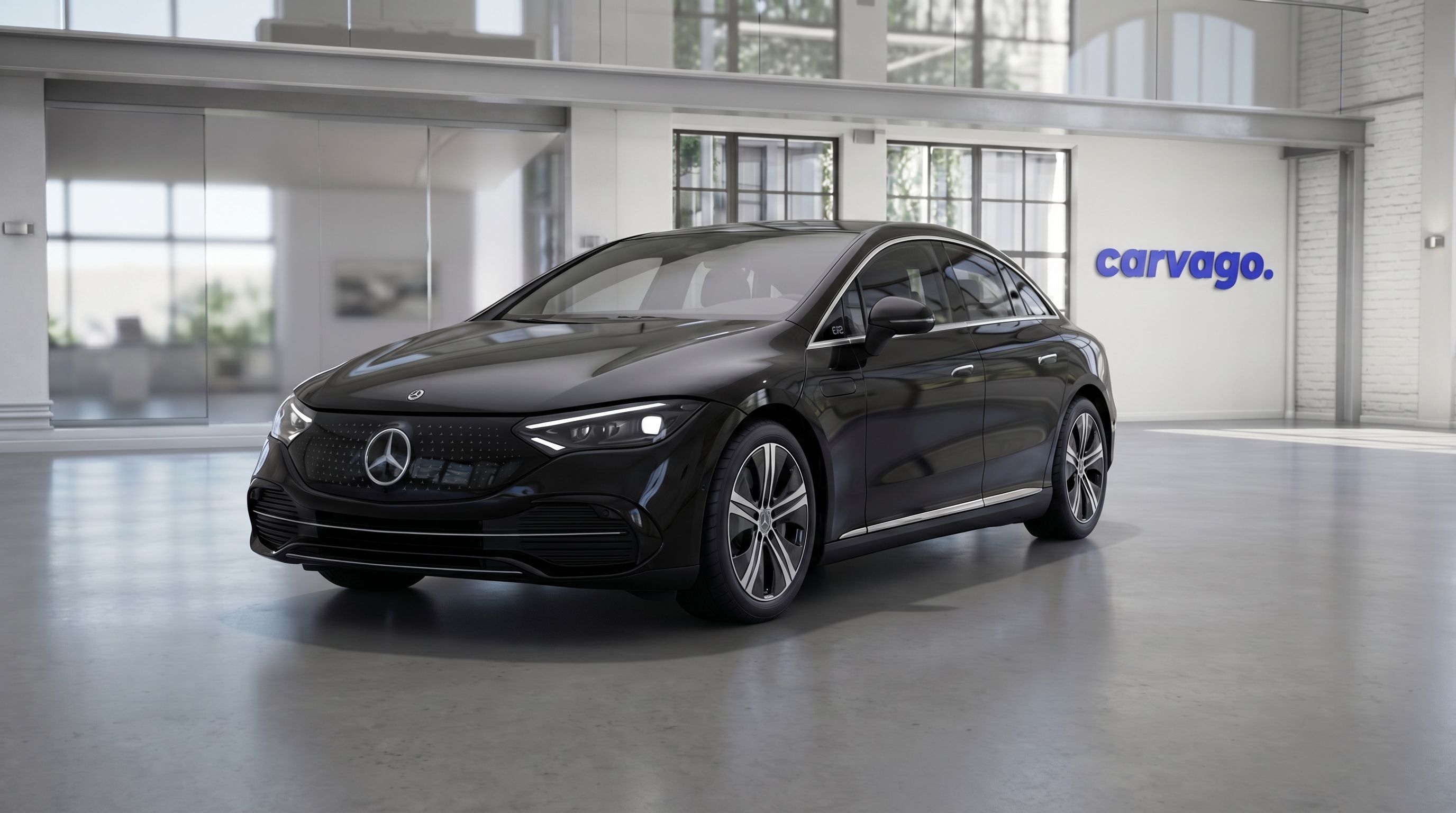
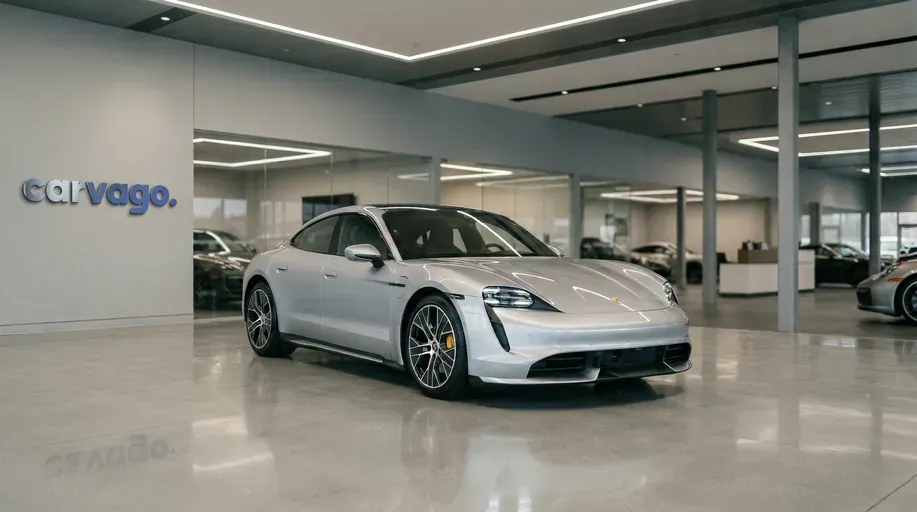
The Mercedes-Benz EQE, which is available on the market in both an elegant sedan body style and a taller SUV version, represents the epitome of aerodynamic luxury and cutting-edge digital technologies in the premium electric vehicle segment. The Porsche Taycan, also sold in the more practical Cross Turismo and Sport Turismo body variants, forms its more aggressive counterpart and brings uncompromising dynamics and the precise handling typical of this sports brand to the electric era. The following comparison will examine in detail the features and capabilities of both these roughly four-year-old German cars to help you decide whether to prioritize maximum travel comfort or pure driving pleasure on the used car market.
Mercedes-Benz EQE and Porsche Taycan represent two distinct approaches to premium electromobility, which is clearly evident when comparing their external dimensions. While both models show relatively similar values in terms of length and width, their overall concepts diverge. The Taycan measures 4962 to 4974 mm in length (depending on the body type), while the EQE ranges from 4946 to 4964 mm. The width of both cars is just under the two-meter mark, but Porsche is slightly wider in its sportiest variants, reaching up to 1998 mm, compared to the standard 1961 mm for the Mercedes. These similar footprint dimensions mean that both cars require a similar amount of caution when parking in urban environments or narrower garages.
The most significant visual and functional difference is the height of the cars itself. The Mercedes-Benz EQE has a profile oriented towards maximizing interior space using a strictly aerodynamic roof shape that reaches a height of 1510 mm. In contrast, the Porsche Taycan is designed as a purebred sports car. It crouches low to the asphalt with a height starting at just 1378 mm for the Coupé version (up to 1412 mm for the more practical estate body, known as Cross and Sport Turismo). In terms of use, for the Taycan, this means a significantly lower center of gravity and a sporty seating position low to the floor with brilliant driving characteristics. A customer choosing a Mercedes, on the other hand, can look forward to easier entry and an overall more comfortable position.
The wheelbase plays a key role for the interior, where Mercedes leaves no one in doubt about its luxury mission. A generous 3120 mm is a massive 220 mm more than in the case of the Porsche Taycan (2900 mm). In practice, the EQE provides rear-seat passengers with a luxurious surplus of legroom and a much airier cabin. Porsche, on the other hand, intentionally relies on more compact chassis proportions, which ensure the car's extreme agility in corners, although this inevitably loses points in the discipline of transporting adult passengers in the back.
| Parameter | Mercedes-Benz EQE Sedan | Porsche Taycan Coupé | Porsche Taycan Estate |
|---|---|---|---|
| Width (mm) | 1961 | 1966 - 1998 | 1966 - 1967 |
| Length (mm) | 4946 - 4964 | 4962 - 4968 | 4962 - 4974 |
| Height (mm) | 1492 - 1510 | 1378 - 1395 | 1379 - 1412 |
| Wheelbase (mm) | 3120 | 2900 | 2900 - 2904 |
When choosing a luxury electric car, practicality often plays a role, and the luggage compartment volume can be key for family use or weekend trips. The Mercedes-Benz EQE sedan offers a standard luggage capacity of 430 liters. Although the EQE has a fixed rear section and a classic trunk lid instead of a more practical tailgate, the space increases to a relatively generous 895 liters after folding down the rear seats. This volume is easily sufficient for weekend shopping or a longer holiday, but the disadvantage is the absence of a front trunk (so-called frunk) and a generally narrower loading opening.
On the other hand, the Porsche Taycan scores with greater variability in body styles, which is particularly appreciated by more active customers on the used car market. The standard four-door Taycan (classified as a coupé due to its sloping roofline) has a rear trunk with a capacity of 407 liters. While this lags slightly behind the EQE in its base configuration, an undeniable advantage is the presence of an additional front trunk with a capacity of 84 liters, which is ideal for storing charging cables. It is also important to remember that in some performance specifications (such as the Taycan Turbo and Turbo S), the rear trunk volume may be slightly reduced due to the more space-demanding technology of the rear electric motor.
For customers requiring true practicality, such as for transporting sports equipment or bulkier luggage, the ideal choice is the Taycan in the estate version (referred to as Cross Turismo or Sport Turismo). This model offers 446 liters as standard, which can be expanded to a generous 1,212 liters after easily folding down the rear seats. Combined with a more accessible luggage area, this model provides space for several extra suitcases and easily satisfies daily family needs, clearly outperforming the rival EQE Sedan.
| Parameter | Mercedes-Benz EQE Sedan | Porsche Taycan Coupé | Porsche Taycan Estate |
|---|---|---|---|
| Base volume (liters) | 430 | 407 | 446 |
| Max volume with seats folded down (liters) | 895 | - | 1212 |
While the Mercedes-Benz EQE offers a very decent standard luggage compartment with classic access, the Porsche Taycan in the Estate variant (Cross/Sport Turismo) is the clear favorite for families and active drivers thanks to its volume of up to 1,212 liters after folding the seats and its additional front trunk.
Towing capacity for electric vehicles is a key parameter for many potential buyers, defining the car's practical usability for family holidays, cottage trips, or transporting bulkier loads. In this regard, there is a vast difference between the two compared models on the used car market.
While the Mercedes-Benz EQE offers standard towing homologation, this option is completely absent for the sport-oriented Porsche Taycan. For EQE models up to model year 2023 and for base rear-wheel-drive versions (e.g., EQE 300 and 350+), the standard maximum weight for both braked and unbraked trailers is limited to 750 kg. A significant shift came with the all-wheel-drive EQE variants from model year 2024 (350, 500, and high-performance AMG models), where the maximum braked trailer weight increased to a very solid 1,700 kg.
In contrast, the Porsche Taycan (2020–2024 generation) provides no towing options – its official permitted trailer weight is exactly 0 kg. For the vast majority of standard versions, the manufacturer does not account for a classic tow bar at all, offering instead only preparation for a special original rear bicycle rack.
In practice, this means that the Mercedes-Benz EQE with its improved 1,700 kg capacity easily provides the capability to tow a medium-sized caravan or boat, which you will appreciate when planning a longer summer holiday. The variants with a 750 kg capacity are fully sufficient for weekend shopping of bulky materials or transporting a light trailer for garden waste. With the Porsche Taycan, on the other hand, you must rely solely on the interior luggage space and potentially roof boxes. While this is suitable for regular weekend sports activities, as a towing vehicle, this attractive sports car is completely unusable.
Conclusion: If the ability to tow a trailer of any type is essential for you, the Mercedes-Benz EQE is the only possible choice. The Taycan focuses purely on ultimate driving dynamics and completely ignores practicality in terms of towing loads. Since there are no official values available for the Porsche Taycan (the car is not homologated for towing), this model is not included in the following overview table.
| Model and motorization | Braked weight of trailer (kg) | Unbraked weight of trailer (kg) |
|---|---|---|
| Mercedes-Benz EQE 300 / 350+ | 750 | 750 |
| Mercedes-Benz EQE 350 / 500 / AMG (2022 - 2023) | 750 | 750 |
| Mercedes-Benz EQE 350 / 500 / AMG (2024 - 2025) | 1,700 | 750 |
When comparing the motorizations of the Mercedes-Benz EQE (generation V295, launched in 2022) and the Porsche Taycan (from the perspective of popular four-year-old used cars, we are talking about the pre-facelift Y1A generation from 2020–2024), the completely different technical approach of both manufacturers is obvious at first glance. While Mercedes-Benz focuses on maximum efficiency, comfortable smoothness, and long range with a traditional single-speed gearbox, Porsche brings a purebred sports experience to the world of electromobility. The Taycan utilizes a unique 800V architecture (the EQE has a 400V network) and an innovative two-speed automatic transmission on the rear axle, which ensures lightning-fast acceleration without losing efficiency at higher highway speeds. Both vehicles offer a wide range of variants – from standard rear-wheel-drive versions to extremely powerful all-wheel-drive specifications. Technological and structural differences thus make these two premium sedans an ideal choice for completely different types of drivers.
The range of power units for the Mercedes-Benz EQE starts with the rational and very efficient EQE 300 variant, which provides 180 kW of power and 550 Nm of torque, which is more than sufficient for normal travel. The golden middle ground is the EQE 350 and EQE 350+ versions with 215 kW, with the "plus" version tuned for maximum possible range. For customers requiring the security of all-wheel drive, 4MATIC models are available. Here, the EQE 500 version forms a strong standard with 300 kW and a hefty 858 Nm of torque. The top of the range is represented by models tuned by the AMG division – the EQE 43 4MATIC with 350 kW and the absolute peak in the form of the EQE 53 4MATIC+, which, with the optional AMG Dynamic Plus package, can reach a massive 505 kW and 1000 Nm. The entire model range relies on a smooth single-speed automatic transmission.
| Engine type | Fuel | Power (kW) | Torque (Nm) | Transmission |
|---|---|---|---|---|
| EQE 300 | Electricity | 180 | 550 | 1AT |
| EQE 350 / 350+ | Electricity | 215 | 565 | 1AT |
| EQE 350 4MATIC | Electricity | 215 | 765 | 1AT |
| EQE 500 4MATIC | Electricity | 300 | 858 | 1AT |
| EQE 43 AMG 4MATIC | Electricity | 350 | 858 | 1AT |
| EQE 53 AMG 4MATIC+ | Electricity | 460 - 505 | 950 - 1000 | 1AT |
Porsche Taycan offers motorizations that captivate primarily with their maximum power values when using the Launch Control function (overboost mode). The basic rear-wheel-drive Taycan version starts at a nominal power of 240 kW, which can be briefly increased to 300 kW (or up to 350 kW with the optional Performance Battery Plus). A popular and balanced middle ground is the Taycan 4S all-wheel-drive variant, which delivers up to 420 kW and 650 Nm. For drivers looking for perfect handling and an undiluted driving experience, the purist GTS variant (440 kW) was created. Real extremes are represented by the iconic models labeled Turbo. The Taycan Turbo generates an amazing 500 kW, while the top-of-the-line Taycan Turbo S literally defies the laws of physics with 560 kW (761 hp) and a mammoth 1050 Nm of torque. With this equipment, the car breaks the 100 km/h barrier in an incredible 2.8 seconds. Furthermore, every Taycan is equipped with an iconic two-speed gearbox on the rear axle.
| Engine type | Fuel | Power (kW)* | Torque (Nm) | Transmission |
|---|---|---|---|---|
| Taycan | Electricity | 240 - 300 | 345 | 2AT |
| Taycan Perf. Battery Plus | Electricity | 280 - 350 | 357 | 2AT |
| Taycan 4S | Electricity | 320 - 390 | 640 | 2AT |
| Taycan 4S Perf. Battery Plus | Electricity | 360 - 420 | 650 | 2AT |
| Taycan GTS | Electricity | 380 - 440 | 850 | 2AT |
| Taycan Turbo | Electricity | 460 - 500 | 850 | 2AT |
| Taycan Turbo S | Electricity | 460 - 560 | 1050 | 2AT |
*The stated power range shows nominal power and maximum power in overboost mode when Launch Control is activated.
In terms of overall evaluation, the Mercedes-Benz EQE has a clear advantage in excellent aerodynamics, lower real-world consumption, and absolute smoothness of operation, making it an unrivaled long-distance cruiser. Its compromise, however, is higher weight and a more isolated driving experience. The Porsche Taycan, on the other hand, dominates on backroads and tracks, providing top-tier feedback, emotions worthy of a true Porsche, and very fast charging thanks to its advanced 800V network. The disadvantage is usually a shorter overall range and a significantly higher purchase price. If you are a driver focused on daily comfort, silence, and swallowing highway kilometers, the Mercedes-Benz EQE (especially in the 350+ version) is the ideal choice on the used car market. For demanding drivers oriented towards performance, perfect handling, and technological innovation, the Porsche Taycan is the right choice.
While the Mercedes-Benz EQE scores with highway travelers thanks to its unbeatable efficiency and smooth comfort, the Porsche Taycan with its two-speed gearbox and lightning-fast 800V network remains an uncompromising dream for sports-oriented drivers.
Choosing the right powertrain is crucial for long-term satisfaction with premium electric vehicles, as it affects not only dynamics but, above all, real-world range and the rate of component degradation. While the Mercedes-Benz EQE focuses primarily on maximum energy efficiency, top-tier aerodynamics, and an absolutely silent ride, the Porsche Taycan utilizes its innovative 800V architecture and unique two-speed gearbox to deliver uncompromising sports performance. Both manufacturers approach electrification from opposite ends of the spectrum, which is also reflected in our recommended versions for the used car market, where we look for the ideal balance between mechanical reliability, everyday usability, and operating costs.
For those interested in an approximately four-year-old Mercedes-Benz EQE, the ideal powertrain choice is the EQE 350 with an output of 215 kW (292 hp) and rear-wheel drive. From an availability standpoint, it is important to mention that this specific configuration was produced between 2022 and 2023 and is no longer available in the current new car lineup in the exact same configuration. On the used car market, however, it represents an absolutely perfect compromise between purchase price, sufficient dynamics, and real-world range.
Thanks to an exceptionally smooth torque curve (565 Nm) and the absence of all-wheel drive (which always slightly increases mechanical losses and consumption in EVs), real-world combined consumption hovers around an excellent 18–20 kWh/100 km. The electric motor itself is very reliable by design; however, when buying a used one, pay close attention to the condition of the chassis and tires. The car weighs nearly 2.4 tons, which, especially when utilizing instant power and recuperation, leads to excessive wear on tires and suspension components. Also, check the software update history at an authorized service center, as early versions of the MBUX system suffered from occasional display freezing. This powertrain is tailor-made for calmer drivers and highway cruisers who appreciate smoothness, silence, and maximum efficiency on long journeys.
In the case of the Porsche Taycan, the most rational choice on the used car market is the 4S version with the optional Performance Battery Plus package, which provides up to 420 kW (571 hp) in overboost mode. This specification was available from 2020 until February 2024, when it was replaced by a modernized version, making it absolutely key for the roughly four-year-old used car market.
It combines a sophisticated all-wheel-drive system with an enlarged battery with a usable capacity of 83.7 kWh (93.4 kWh gross). In practice, it offers blistering acceleration from zero to 100 km/h in 4 seconds and excellent traction in all conditions, while the 800V architecture allows for lightning-fast charging at stations with an output of up to 270 kW. Real-world consumption ranges between 22 and 25 kWh/100 km depending on driving style. As an experienced mechanic, I strongly recommend carefully checking the functionality of the high-voltage heater (PTC module) in these vehicles, which was a known weakness in pre-facelift models and whose potential replacement is financially demanding (manifesting as weak or no heating in the cabin). Furthermore, it is necessary to verify the condition of the 12V onboard battery and the degradation of the main battery via diagnostics, especially if the previous owner charged the car exclusively at fast chargers. The Taycan 4S is ideal for dynamically-minded drivers looking for a full-fledged, emotive sports car for every day, but who want to avoid the extreme service and insurance costs associated with the top-tier Turbo versions.
When choosing a used electric car, one of the most important parameters is real-world energy consumption, which often differs significantly from the official, laboratory-measured values from the WLTP cycle. While automakers usually promise consumption from 16 to 22 kWh/100 km for models like the Mercedes-Benz EQE (V295 generation) and Porsche Taycan (Y1A generation before the facelift, manufactured until approximately 2024), in real-world conditions, physics and aerodynamics cannot be cheated. To determine the actual values, we used real data directly from drivers on the community server Spritmonitor.de and long-term statistics from the EV-Database platform. These values much more reliably reflect the daily operation of roughly four-year-old used cars, including highway travel, the influence of cold weather, and the use of onboard appliances.
| Model and powertrain | Average consumption (kWh/100 km) |
|---|---|
| Mercedes-Benz EQE 300 | 19,5 |
| Mercedes-Benz EQE 350 / 350+ | 21,5 |
| Mercedes-Benz EQE 500 | 22,0 |
| Mercedes-Benz EQE 43 AMG | 24,5 |
| Porsche Taycan | 22,5 |
| Porsche Taycan 4S | 23,6 |
| Porsche Taycan GTS | 24,3 |
| Porsche Taycan Turbo S | 26,5 |
Looking at the real-world data, several clear trends quickly emerge. The Mercedes-Benz EQE benefits massively from its purist, strictly aerodynamic body shape resembling a water droplet, which gives it a noticeable advantage, especially in the entry-level and mid-range specifications. Conversely, the Porsche Taycan, which by design bets on more muscular proportions and substantially wider sports tires, draws significantly more energy from the battery. A surprising finding is that the base rear-wheel-drive Taycan variant does not save nearly as much electricity in practice as one might expect compared to the very popular 4S all-wheel drive. For top-tier versions like the EQE 43 AMG or Taycan Turbo S, all considerations for efficiency naturally go out the window, and for both heavy vehicles, consumption easily rises above the 24 kWh/100 km mark.
For the average user, this difference brings completely different daily usage scenarios. If you are a highway mile-muncher or commute longer distances daily, the EQE in 300 or 350+ versions is an absolutely ideal tool. Its low appetite effectively erases any range anxiety, and the car handles long routes without trouble with a minimum of charging stops. On the other hand, owners of the more dynamic Taycans must accept a shorter highway range, which the sport-oriented automaker compensates for quite effectively with its fantastic 800V battery architecture – at modern fast-charging stations, the Taycan can replenish its power faster than its competitor with the three-pointed star on the hood.
In conclusion, you just need to ask yourself whether energy consumption is a decisive factor for you at all. For pragmatists and budget-conscious drivers, the significantly more economical Mercedes-Benz is a clear and logical choice. However, no one buys a Taycan with a calculator in hand. Its slightly higher electricity demands are a completely negligible price for the target group to pay for an unrivaled chassis and driving dynamics that you will hardly find in any other model on the four-year-old electric car market.
Depreciation in premium electric vehicles can be a nightmare for first owners, but for used car buyers, it represents a fantastic opportunity. If we focus on cars roughly four years old (around the 2022 model year), we find that both the Mercedes-Benz EQE and the Porsche Taycan have experienced a significant price drop. As a result, these showcases of modern technology have become much more accessible to a wider range of drivers.
As the brand's first purely electric model, the Porsche Taycan carried an extremely high initial price tag. However, the used car market has spoken, and today, four-year-old vehicles can be found for much more favorable amounts. Even so, the Taycan holds its value better than average for luxury electric vehicles (with a price drop of approximately 34% for three- and four-year-old used cars).
The electric variant embodying the traditional E-Class entered the market a bit later and bets on absolute comfort. However, used EQE units show a slightly faster depreciation (reaching up to 40% in the first nearly four years), making this model an excellent purchase in terms of value for money.
| Model | Version | Estimated price from (EUR) | Estimated price to (EUR) |
|---|---|---|---|
| Mercedes-Benz EQE | 300 / 350+ (Base) | 45,000 | 55,000 |
| Mercedes-Benz EQE | 500 4MATIC / AMG | 57,000 | 90,000 |
| Porsche Taycan | Base / 4S | 53,000 | 90,000 |
| Porsche Taycan | Turbo / Turbo S | 103,000 | 123,000 |
For those interested in maximum highway comfort and the latest assistance technologies, the Mercedes-Benz EQE offers an unbeatable value-for-money ratio thanks to its steeper depreciation, while the Porsche Taycan requires a slightly higher initial investment, which it generously balances with slower subsequent depreciation and a genuine sporty driving experience.
Both of these luxury electric vehicles earned a full five-star rating in the prestigious crash tests of the independent Euro NCAP organization, confirming their exceptionally high level of safety. However, when choosing a used car, it is essential to consider the context and the exact year the tests were conducted. Euro NCAP assessment protocols are constantly evolving, and their criteria become significantly stricter every year. While earlier tests focused primarily on passive protection during the impact itself, newer protocols place much greater emphasis on simulating complex intersection scenarios, protection in frontal collisions with a mobile obstacle, and the sensitivity of active assistants in the early detection of pedestrians or cyclists. For this reason, percentage results from different years cannot be simply and directly compared.
Mercedes-Benz EQE underwent Euro NCAP testing in 2022, meaning it faced substantially stricter test scenarios according to much more modern protocols. The car literally shined in them – achieving an excellent rating of 95% for adult occupant protection and 91% for child protection. The newer methodology also thoroughly tested the safety of vulnerable road users (83%) and the level of assistance systems (81%). These results clearly show that the modern technologies in the EQE, such as improved autonomous emergency braking, lane keeping, or the advanced center airbag to prevent occupants' bodies from colliding in a side impact, work absolutely excellently.
The Porsche Taycan was tested by Euro NCAP in 2019, i.e., according to older and slightly less complex standards. Adult occupant protection received a very respectable 85% and child protection 83%, clearly demonstrating the strength of the structural foundation and the reliability of passive safety. However, the 70% rating for vulnerable user protection and 73% for safety assistants reflect the time of its creation. Although the Taycan offers a high-quality active safety package including basic emergency braking and speed assistance, it no longer belongs at the absolute technological peak compared to the latest standards. Furthermore, it is important to mention that Euro NCAP certification typically has a limited validity of six years, which means that the Taycan's five-star rating from 2019 is now past its official expiration date.
Looking at the overall picture in terms of both passive and active safety, the Mercedes-Benz EQE benefits from its more recent development date and more modern testing standards. From the perspective of current criteria, it offers a more advanced, sensitive, and comprehensive safety package, making it a car with more advanced protection in complicated accidents.
| Parameter | Mercedes-Benz EQE | Porsche Taycan |
|---|---|---|
| Year of testing | 2022 | 2019 |
| Adult occupant protection | 95 % | 85 % |
| Child protection | 91 % | 83 % |
| Vulnerable road user protection | 83 % | 70 % |
| Safety assistance systems | 81 % | 73 % |
Thanks to newer technologies and excellent results in stricter tests, the Mercedes-Benz EQE wins in safety, although the structurally solid Porsche Taycan remains a very strong contender on the road.
In addition to standard equipment, each of these premium electric vehicles offers much more than just basic functions, with both models approaching added value and technological innovation in their own, completely different ways.
Extraordinary driving comfort, especially in combination with the optional air suspension
Top-tier cabin soundproofing even at highway speeds
Longer real-world range and overall higher consumption efficiency
More spacious interior in the longitudinal direction thanks to the "cab-forward" concept
Advanced technologies and assistance systems, option for the massive MBUX Hyperscreen display
More controversial "teardrop" exterior design, which may not suit everyone
More detached steering and often criticized insensitive brake pedal feel
High curb weight limiting agility in corners
Limited access to the luggage compartment due to the sedan body layout
Mercedes-Benz EQE is the perfect highway cruiser for drivers who prioritize uncompromising comfort, cabin silence, and the latest technology. It is an ideal choice for long journeys where you will appreciate a smooth ride and generous range rather than sporting ambitions in tight corners.
Unrivaled driving characteristics with extremely precise steering
800 V architecture allowing ultra-fast charging with power up to 270 kW
Low-slung, attractive, and aggressive sports design
Excellent ergonomics of the driving position oriented purely towards the driver
Tireless dynamics and repeatable brutal performance thanks to the two-speed gearbox
Shorter real-world range per charge compared to the EQE
More cramped space for rear-seat passengers and smaller trunk volume
Significantly higher purchase price on the used car market and higher potential service costs
Long list of expensive options – even for relatively common equipment, the first owner had to pay extra
The Porsche Taycan is a genuine electric sports car that will captivate enthusiasts looking for a perfect connection with the vehicle, maximum dynamics, and driving pleasure. It is built for drivers who are happy to sacrifice some daily practicality in exchange for precise handling and a design that reliably attracts attention.
Based on long-term user experience, service reports, recalls, and the results of used car inspections, we have compiled an overview of the most common problems that buyers of used cars of these two electric models should watch out for.
The Mercedes-Benz EQE electric sedan benefits from the brand's extensive experience, but it has not completely avoided some typical teething troubles of modern electric vehicles from early production.
The main weaknesses of the Mercedes EQE are mostly software imperfections of the MBUX system and occasional creaking of plastics in the interior. On the contrary, the electric drive itself and the high-voltage battery show high reliability in used cars.
While the Porsche Taycan is a stunning pioneer in the world of electric sports cars, it requires caution on the used car market due to several known and potentially very expensive technical defects.
When buying a used Taycan, it is absolutely essential to verify the repair history of the high-voltage heater and the status of software updates addressing issues with the 12V battery. If these teething troubles are resolved and the rear transmission shows no wear, you get a mechanically precise and durable sports car.
When buying a used car, a thorough inspection is crucial. Both of these premium electric vehicles represent the pinnacle of technology, but in cars roughly 3 to 4 years old, certain wear and tear and teething troubles may already be apparent. To avoid unpleasant and financially demanding surprises after your purchase, a professional comprehensive car audit is always a safe bet.
Mercedes-Benz focuses more on aerodynamics and efficiency, allowing it to offer a longer range on paper and in reality, often exceeding the 500 km mark. Porsche, on the other hand, prioritizes uncompromising sports performance, so expect a range roughly 50 to 100 kilometres shorter depending on the version and driving style. For regular and long motorway journeys, the Stuttgart representative with the star emblem is the more logical choice.
Porsche utilizes an advanced 800V architecture, which enables extremely fast charging at up to 270 kW, replenishing the battery capacity from 5 to 80% in less than 23 minutes. The competing model relies on a 400V system with a maximum output of 170 kW, so you will spend a bit longer at a fast-charging station, usually just over half an hour. If speed during charging stops is absolutely crucial for you, the sport-tuned model has a clear advantage.
The EQE model has a classic rear boot with a capacity of 430 litres, which is limited by a smaller loading opening due to its sedan body type. The Taycan offers a rear luggage compartment of approximately 407 litres but adds a very practical front boot (frunk) with a capacity of 84 litres, where you can easily store charging cables. If you need even more practicality and easier access for family use, the sportier of the two cars offers Cross Turismo or Sport Turismo body variants.
Mercedes-Benz is the absolute ruler in this regard thanks to its top-tier air suspension and exemplary cabin soundproofing, which perfectly isolates you from the outside world. Although Porsche also features very capable adaptive suspension and is surprisingly comfortable for a sports car, its tuning remains primarily stiffer. For a calm daily drive full of maximum luxury, the EQE is the better choice, while the other car will primarily thrill lovers of dynamic driving.
Both cars represent the absolute technological peak of the current automotive market, but their approach to ergonomics and control differs significantly. The Mercedes can be equipped with the giant MBUX Hyperscreen panel, which visually forms the entire dashboard and offers an immersive digital experience with excellent voice control. Porsche, by contrast, bets on a curved display in front of the driver and more separate screens, thus maintaining a purer concept focused on driving itself even in the digital era.
Choosing between a roughly four-year-old Mercedes-Benz EQE and a Porsche Taycan on the used car market primarily represents a choice between absolute travel comfort and pure sporting emotions. The elegant EQE excels with top-tier aerodynamics, an exceptionally quiet interior, and a long real-world range, making it the perfect highway cruiser for pragmatic drivers demanding smooth comfort. In contrast, the Taycan, thanks to its unique two-speed transmission, lightning-fast 800V charging, and precise low-slung chassis, fully satisfies even the most demanding automotive enthusiasts seeking genuine driving pleasure. If you regularly cover long highway distances and appreciate advanced digital technologies or the option to tow a trailer, the Mercedes is the clear favorite; however, for unrivaled driving dynamics enriched by the potential practicality of the more spacious Turismo body styles, reach for the Porsche without hesitation.
Sources: ADAC, forbes.cz, aktualne.cz, automagazin.cz, techfocus.cz, autosystem.cz
This article was prepared using artificial intelligence tools. The section guarantor is Petr Dušek.
Mercedes-Benz EQE vs Tesla Model S: A detailed comparison of range, technology, and comfort. Our final verdict will help you choose the best electric car.
Apr 13, 2026
Audi e-tron GT vs. Porsche Taycan Comparison: Which luxury electric car should you choose? Find out everything about performance, real-world range, and read our final verdict.
Apr 14, 2026
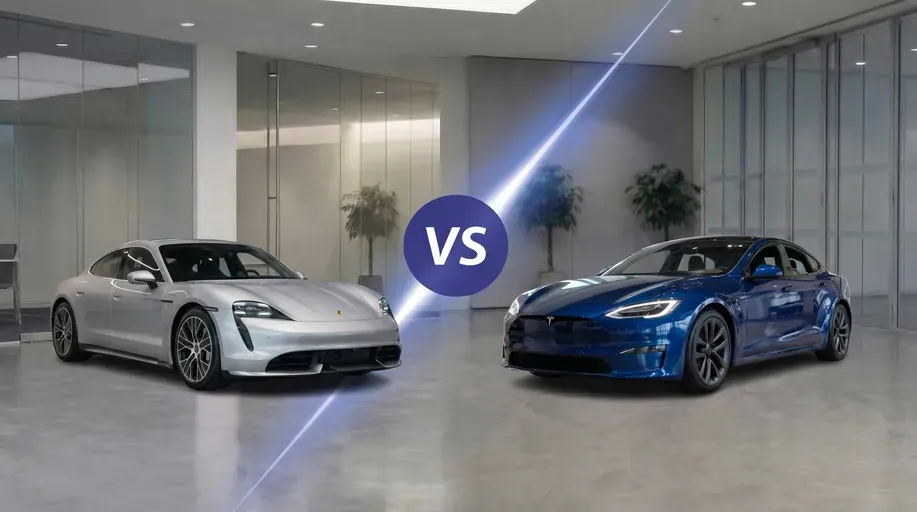
Porsche Taycan vs. Tesla Model S: Which electric car is better? We compared real-world range, performance, and equipment. Read our verdict and make your choice easier.
Apr 14, 2026