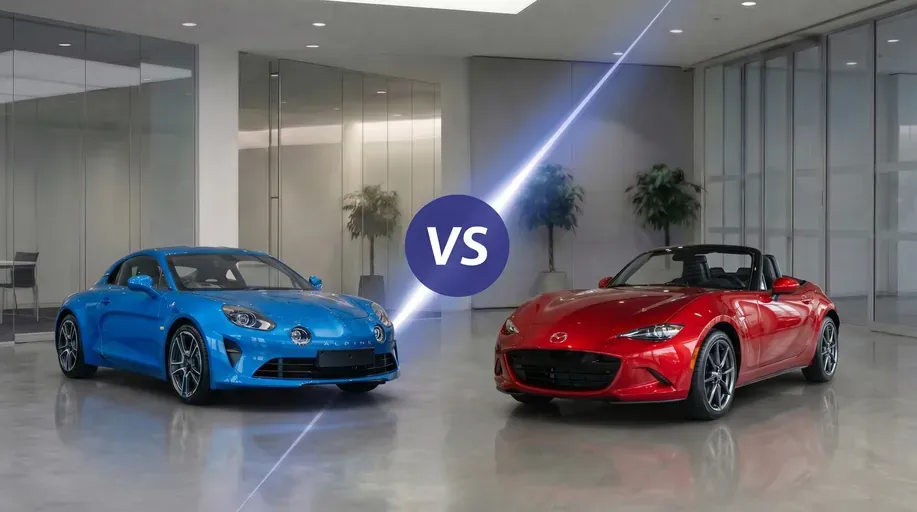
Car battle
Alpine A110 vs. Mazda MX-5: Complete comparison 2026
Alpine A110 vs Mazda MX-5 (Miata) comparison. Discover real-world experiences, a comparison of driving characteristics, and our detailed verdict before buying a used car.
Oct 16, 2026
Articles
Review
Audi RS 5 review: early owner feedback, plug-in hybrid performance, estate and sedan practicality, running costs, and expert verdict.
October 31, 2026
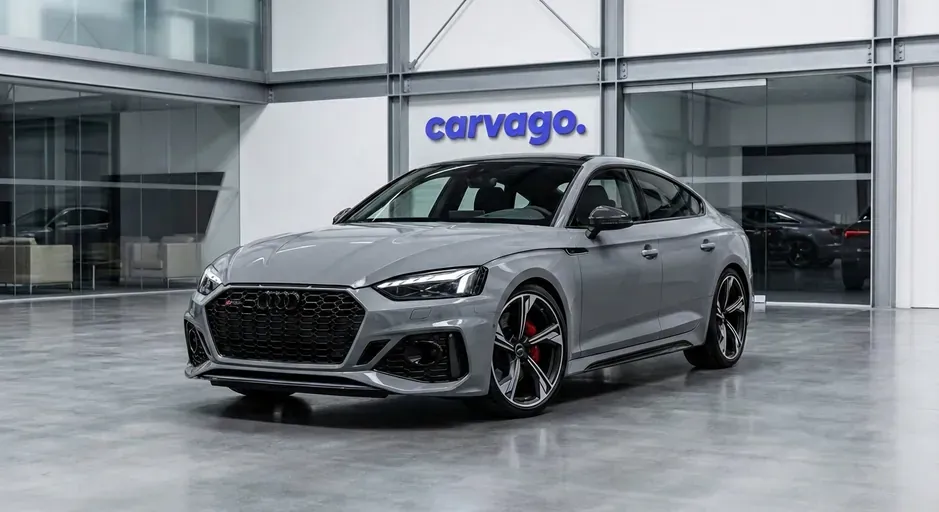
The B10-generation Audi RS 5 marks a transition for Audi Sport in the premium compact executive performance segment. Built on the Premium Platform Combustion architecture, this generation unifies the former RS 4 Avant and the previous RS 5 coupe and Sportback models under a single nameplate.
Following its world premiere on 20 February 2026, order books opened in March 2026, and production began in spring 2026 in Neckarsulm. First customer deliveries commenced in Germany on 30 June 2026, before expanding across wider European markets from July 2026. As an initial production model, this generation has received no mid-cycle facelift. It is sold in two distinct body styles: a five-door Audi RS 5 Sedan liftback and a five-door Audi RS 5 Avant estate.
The model targets drivers who need all-weather performance combined with day-to-day usability. With its standard plug-in hybrid configuration, it primarily appeals to private buyers wanting practical family transport without sacrificing pace, alongside professional commuters looking to leverage local taxation benefits for electrified vehicles across European markets.
Customer deliveries of the newest generation Audi RS 5 commenced in Germany on June 30, 2026, before reaching broader European markets in July 2026. Because customer cars have been on European roads for only about four months, long-term fleet durability is not yet established. Early ownership reports remain limited to initial driving impressions, with no high-mileage wear patterns recorded yet.
Under verified reporting standards, no statistically repeated mechanical or electrical defect patterns have emerged across the plug-in hybrid powertrain or chassis hardware. While some early owner reports across the wider model family describe occasional software hesitations or display freezes within the digital dashboard layout, tests describe these as intermittent electronic teething issues addressed through regular diagnostic software updates rather than permanent hardware failures.
As of October 2026, there are zero verified European safety recalls registered with safety authorities for this generation of the Audi RS 5. Earlier safety notices concerning related sister vehicles—including an early 2025 passenger airbag module inspection and a seat belt retractor torsion bar recall announced in April 2026—applied strictly to vehicles assembled between early 2025 and late 2025, completely predating the spring 2026 series production start of this model.
For buyers considering nearly new examples of the Audi RS 5 Avant or Audi RS 5 Sedan, physical pre-purchase checks centre primarily on running gear consumables and high-voltage charging hardware rather than typical age-related fatigue. The substantial kerb weight inherent to the plug-in hybrid architecture places elevated demands on tyres and braking components, making a physical inspection via CarAudit essential.
For the B10 generation, the Audi RS 5 streamlines its mechanical line-up into a single plug-in hybrid powertrain available across both liftback and estate body styles. A twin-turbo petrol V6 pairs with a transmission-integrated electric motor, distributing power continuously to all four wheels through an electromechanical rear torque-vectoring system.
| Engine | Fuel | Power | Gearbox | Model years |
|---|---|---|---|---|
| RS 5 2.9 TFSI e-hybrid quattro | Petrol plug-in hybrid | 470 kW (639 hp) | 8-speed automatic | 2026–present |
With only one mechanical configuration offered, choosing the hybrid Audi RS 5 depends primarily on whether your driving routine matches the operating characteristics of a performance plug-in hybrid.
For short trips in town, the powertrain operates in pure electric mode, allowing daily urban commuting without engaging the combustion engine, provided access to regular charging is available. In mixed daily driving, the electric motor eliminates initial turbo lag and provides immediate throttle response from low speeds, resulting in smooth transitions between electric propulsion and combustion power.
On long motorway journeys, the powertrain functions as a high-speed touring setup. Once the high-voltage battery reaches its minimum operational threshold, the petrol engine assumes primary propulsion, ensuring uninterrupted long-distance travel without recharging stops, though carrying the hybrid hardware naturally increases fuel consumption at sustained highway speeds. For towing duties, the low-end torque delivery and permanent all-wheel drive provide stable pulling power for heavy trailers, giving both the Audi RS 5 Sedan and the Audi RS 5 Avant broader utility than traditional combustion sports models.
| Dimension / Capacity | Sedan (Liftback) | Avant (Estate) |
|---|---|---|
| Length (mm) | 4,896 | 4,896 |
| Width (mm) | 1,952 | 1,952 |
| Height (mm) | 1,428–1,454 | 1,446–1,472 |
| Wheelbase (mm) | 2,906 | 2,906 |
| Boot volume, upright / folded (l) | 331 / 1,170 | 361 / 1,302 |
Note: Luggage capacities are reduced by the high-voltage traction battery packaged beneath the cargo floor.
Both body styles of the Audi RS 5 offer seating for five, with the extended wheelbase providing adult occupants with decent knee room in the outer rear positions. Headroom is sufficient for adults in the Audi RS 5 liftback, though taller passengers will find noticeably more clearance beneath the squarer roof of the Audi RS 5 Avant. The middle rear seat remains narrow and best kept for occasional short journeys due to the tall transmission tunnel and firm outer cushion bolsters. Day-to-day usability benefits from a wide-opening tailgate on both body variants, easing the stowage of awkward items. However, the hybrid hardware positioned beneath the cargo floor eliminates hidden underfloor storage and noticeably limits vertical packing depth. Split-folding rear seat backrests drop forward to yield a flat extended load surface, and a central folding armrest allows longer cargo to pass through without displacing both outer passengers.
Professional road tests praise the Audi RS 5 for its composed daily ride and seamless powertrain refinement. With adaptive dampers set to comfort, both the Audi RS 5 Sedan and the Audi RS 5 Avant absorb uneven tarmac with greater compliance than firmer rivals, keeping cabin noise low and running silently in electric mode. On flowing roads the suspension effectively disguises the car’s substantial mass. However, stiff underlying springing paired with large alloy wheels causes noticeable coarseness over sharp, broken surfaces, and the exhaust note remains relatively subdued.
Handling displays direct, accurate turn-in and massive mechanical grip from the all-wheel-drive system on corner exit. Even so, testers broadly note that the steering rack feels overly light and filters out road feedback, isolating the driver from the front tyres. Circuit evaluations also revealed thermal strain that forced the transmission to curtail output during sustained fast laps.
Inside, the standard sports seats offer supportive bolstering, but ergonomics and material choices draw criticism. Testers agree that the cabin feels less distinctive than earlier generations, with some plastic surfaces and panel finishes lacking tactile prestige. The digital interface also proves cumbersome, as dense menus and screen-heavy controls require too much attention on the move. Overall, tests agree that the Audi RS 5 works well as a relaxed, rapid long-distance tourer, but falls short of delivering the visceral feedback demanded by track-focused drivers.
The market charts across this section reflect Carvago listings for the entire Audi RS 5 model family, including earlier generations represented in the data, rather than filtering exclusively for the latest generation. Because listings are categorized by year of manufacture, these figures do not establish a separate price level solely for the reviewed generation. On the current market, the median asking price spans from €54,800 for 2019 models up to €84,200 for 2024 models. For 2026 models, the median asking price reaches €129,900.
Advertised Audi RS 5 listings grew from 539 in April 2026 to a peak of 1,138 by September 2026, as tracked in the monthly totals below.
Active listings over time
| Month | Audi RS 5 |
|---|---|
| 2026-04 | 539 |
| 2026-05 | 602 |
| 2026-06 | 863 |
| 2026-07 | 1 119 |
| 2026-08 | 1 008 |
| 2026-09 | 1 138 |
Source Carvago
Buyers have seen selection expand considerably over these six months, with inventory fluctuating between 1,008 and 1,138 vehicles toward the end of the period to provide a broad range of options.
Among used listings advertised today, the median asking price for cars built in 2019 is €54,800, while the median asking price for those built in 2026 is €129,900.
Median advertised price by year of manufacture
| Model year | Audi RS 5 |
|---|---|
| 2019 | 54 800 |
| 2020 | 59 900 |
| 2021 | 62 800 |
| 2022 | 65 900 |
| 2023 | 77 900 |
| 2024 | 84 200 |
| 2025 | 95 000 |
| 2026 | 129 900 |
Source Carvago
Buyers considering 2020 models see a median asking price of €59,900, whereas budgets for 2023 models reach €77,900 and 2026 models require €129,900.
This depreciation curve tracks how the model's residual value falls with vehicle age, showing an initial loss of 26% in the first year and a cumulative drop of 45% by age three.
Residual value by vehicle age
| Vehicle age | Audi RS 5 |
|---|---|
| New | 128 200 |
| 1 yr | 95 200 |
| 2 yrs | 78 900 |
| 3 yrs | 70 000 |
| 4 yrs | 65 200 |
| 5 yrs | 62 200 |
| 6 yrs | 55 900 |
| 7 yrs | 49 100 |
Source Carvago
Over the seven-year span shown, the model sheds roughly 62% of its initial residual value. The steepest decline occurs across the first two years, after which the annual rate of depreciation moderates.
Between April and September 2026, advertised inventory was divided exclusively between petrol and hybrid options, starting in April with 459 petrol cars and 79 hybrids on offer. The chart below tracks how the volume of listings for each powertrain developed over this six-month period.
Supply composition by fuel type
Petrol
Hybrid
| Month | Petrol | Hybrid |
|---|---|---|
| 2026-04 | 459 | 79 |
| 2026-05 | 467 | 135 |
| 2026-06 | 452 | 411 |
| 2026-07 | 480 | 638 |
| 2026-08 | 431 | 576 |
| 2026-09 | 493 | 644 |
Source Carvago
By September 2026, the available selection stood at 644 hybrid and 493 petrol listings, while diesel and electric counts remained at zero throughout. Anyone shopping the model family will find realistic choices limited entirely to petrol and hybrid variants.
The chart below tracks the average asking price for the Audi RS 5 from April 2026 to September 2026, starting at €71,000 in the first month and reaching €93,900 by June.
Average price development over time
| Month | Audi RS 5 |
|---|---|
| 2026-04 | 71 000 |
| 2026-05 | 75 400 |
| 2026-06 | 93 900 |
| 2026-07 | 101 000 |
| 2026-08 | 102 900 |
| 2026-09 | 102 600 |
Source Carvago
Across the full six-month period, the average asking price rose from €71,000 to €102,600, peaking at €102,900 in August 2026 before a slight dip in the final month.
Composed daily ride comfort with low cabin noise and quiet electric operation
Immediate low-speed throttle response and secure all-weather traction
Practical wide-opening tailgate and ample rear knee room for outer passengers
Traction battery packaging compromises luggage volume and eliminates underfloor storage
Steering filters out road feedback while heavy kerb weight accelerates tyre wear
Screen-heavy dashboard controls and dense infotainment menus distract on the move
Because European deliveries of the Audi RS 5 began in June 2026, long-term durability is not yet established. Early production models show no recurring mechanical faults or safety recalls, though some owner reports note minor digital dashboard hesitations resolved through software updates.
The Audi RS 5 Avant provides superior day-to-day usability, offering noticeably more rear headroom and cargo capacity beneath its squarer roofline. The liftback offers a sleeker profile with sufficient room for adults, though both body styles lose underfloor boot depth to the traction battery packaging.
Inspect the brake discs and tyre shoulders closely, as the heavy plug-in hybrid chassis accelerates wear on consumables during spirited driving. Additionally, verify that high-voltage charging operates properly and that all factory software updates are documented.
While all-wheel drive delivers massive road grip, the car is engineered as a rapid, refined long-distance tourer rather than a circuit weapon. The steering filters out tyre feedback, and sustained fast laps subject the transmission to thermal strain that eventually curtails power output.
Sources: audi.com, adac.de, kba.de, autocar.co.uk, topgear.com
This article was prepared using artificial intelligence tools. The section guarantor is Petr Dušek.
Alpine A110 vs Mazda MX-5 (Miata) comparison. Discover real-world experiences, a comparison of driving characteristics, and our detailed verdict before buying a used car.
Oct 16, 2026
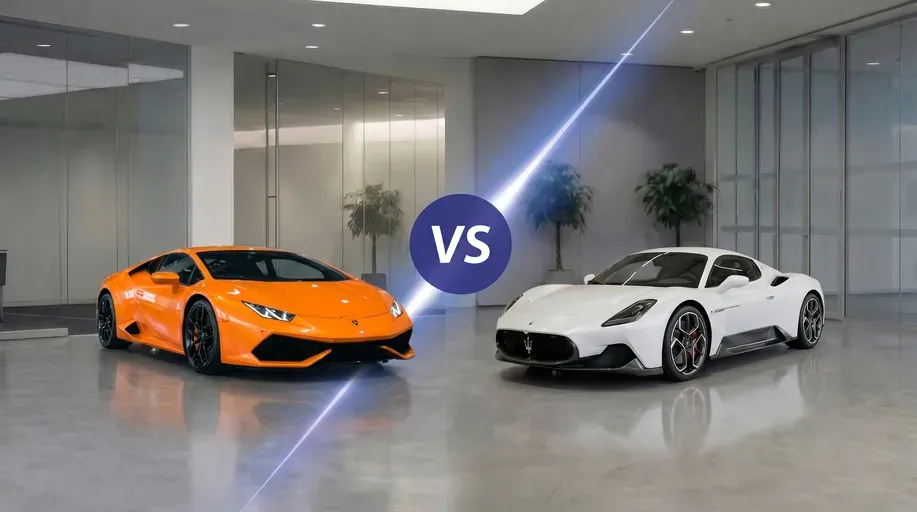
Detailed comparison of the Lamborghini Huracán and Maserati MC20. We compared real-world performance, driving characteristics, and reliability. Read our verdict before you buy!
Oct 16, 2026
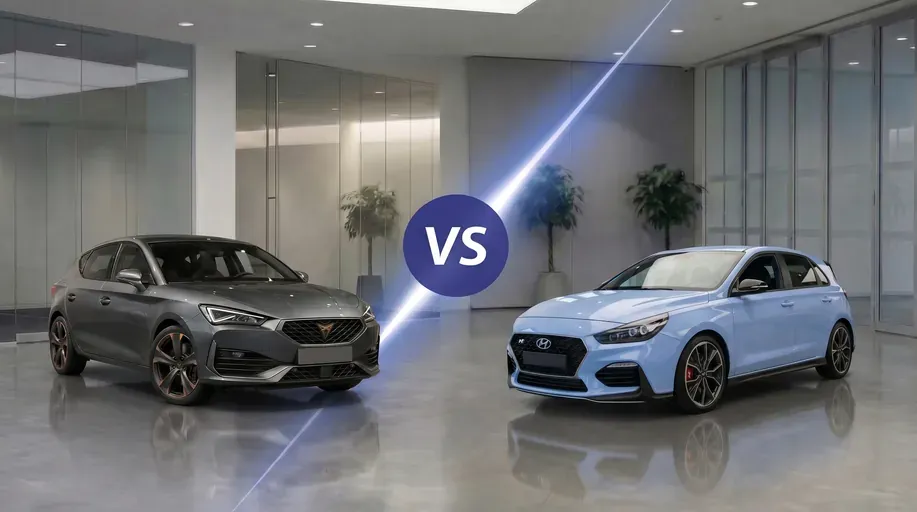
Cupra Leon vs Hyundai i30 N: Which hot hatch is better? A detailed comparison of performance, equipment, and reliability of used cars. Find out our verdict and make the right choice!
Apr 18, 2026