Review Audi Q7: What do owners and experts really say?
Third-generation Audi Q7 review: real owner feedback, TDI quattro performance, boot space, and expert verdict on the new luxury SUV.
November 6, 2026
Verdict at a Glance
Who it suits: Large families and commercial drivers requiring multi-row seating, substantial towing capacity, and long-distance motorway capability.
Recommended engine: The higher-output 3.0 TDI for sustained motorway journeys, full passenger loads, and towing.
What to avoid: Frequent short urban trips, which prevent exhaust aftertreatment components from properly regenerating.
Introduction
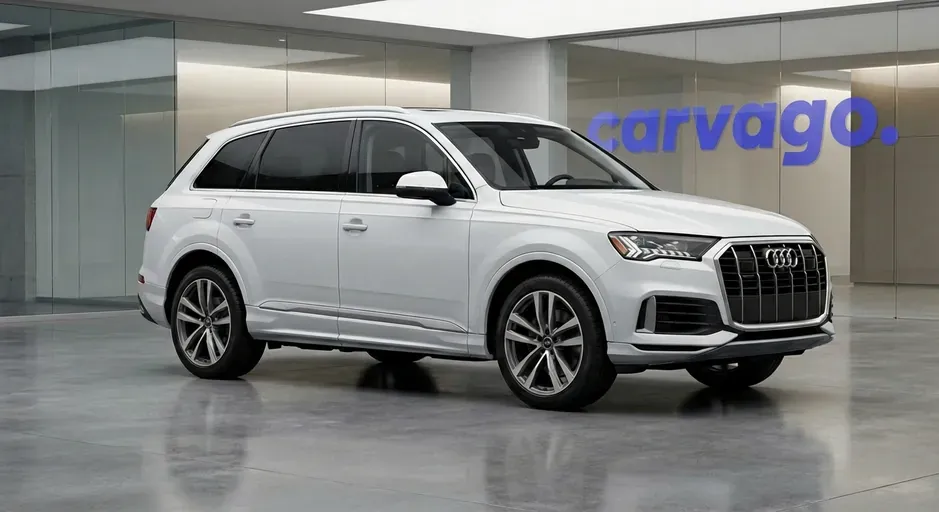
The third-generation Audi Q7 represents the brand’s flagship full-size luxury SUV. Following its world premiere on 9 June 2026 and the opening of German order books on 22 June 2026, initial European customer deliveries commenced in September 2026.
Built exclusively as a large five-door SUV, the cabin comes in a standard five-seat configuration, with six-seat and seven-seat arrangements available as options. European market launch focuses on diesel Audi Q7 models with all-wheel drive, while petrol, plug-in hybrid, and performance V8 variants are scheduled for subsequent release.
The Audi Q7 SUV primarily targets private and commercial buyers requiring multi-row seating, substantial towing limits, and long-distance motorway capability. This review focuses specifically on this third generation and examines how it meets the requirements of large-family and executive transport.
Owner Experiences: Common Faults and Recalls
European customer deliveries of the third-generation Audi Q7 commenced in September 2026. Because the vehicle has been in customer hands for approximately two months as of November 2026, long-term operational reliability, high-mileage component wear, and recurring mechanical failure patterns are not yet established. Secondary market availability remains limited to dealer demonstration cars and management inventory.
Official safety registers across European monitoring authorities—including the Kraftfahrt-Bundesamt and the EU Safety Gate—confirm that zero safety recalls have been issued for the third-generation Audi Q7 SUV through November 2026. Safety campaigns announced in late 2025 for the nameplate, which addressed front seat belt buckle fasteners and high-voltage battery cell modules on plug-in hybrid variants, applied exclusively to the preceding generation and carried official build windows that concluded prior to the launch of this model.
Early owner discussions across broader vehicle communities sharing similar electronic architectures have noted occasional software latency with menu responses or over-the-air deployment, but these are handled via incremental updates and do not represent a verified model-specific defect. European workshops report no recurring technical service bulletins or systematic mechanical faults on the launch diesel Audi Q7. Buyers evaluating an early example can independently verify the vehicle's factory specifications and condition through CarAudit.
🔍 What to check before buying
Chassis and towing specification: Confirm whether the vehicle has the base steel spring setup or optional adaptive air suspension, as braked towing capacity homologation differs between the two suspension systems.
Cabin seating architecture: Physically inspect whether the interior is configured with standard five seats, the optional six-seat captain's chair arrangement, or the optional seven-seat layout, and test the second-row folding mechanism to ensure the configuration meets your passenger requirements.
Roof equipment: Check the vehicle build sheet to confirm roof specifications, as the smart panoramic glass panel with switchable transparency was excluded from initial launch orders.
Factory campaign status by VIN: Ask an authorised dealer to run the specific car's vehicle identification number through the factory database to ensure all delivery updates and quality actions have been applied.
Engines: Which One to Choose
The third-generation Audi Q7 entered the European market with an engine line-up initially focused on six-cylinder diesels assisted by mild-hybrid electrification. Both launch variants feature standard all-wheel drive and an automatic transmission.
Engine
Fuel
Power
Gearbox
Model years
3.0 TDI MHEV plus
Diesel (mild hybrid)
180 kW (245 hp)
8-speed automatic
2026–present
3.0 TDI MHEV plus
Diesel (mild hybrid)
220 kW (299 hp)
8-speed automatic
2026–present
Frequent short trips in town do not suit either diesel variant, as repeated short runs prevent the exhaust aftertreatment components from sustaining the temperatures required for regular particulate filter regeneration. For mixed daily driving, the lower-powered 3.0 TDI delivers steady throttle response and low-end pulling power assisted by an electric compressor and starter-generator, making it well matched to routine family use and moderate cruising speeds.
For sustained motorway travel, carrying a full passenger load, or regular towing, the more powerful 3.0 TDI is the better choice. Given the vehicle's substantial unladen mass, the higher-output diesel provides noticeably stronger reserve acceleration when merging into fast-moving traffic or maintaining speed on inclines with a trailer attached. The automatic gearbox shifts smoothly under moderate throttle, keeping engine revs low and acoustic refinement high when driving a diesel Audi Q7 at highway speeds.
Because European customer deliveries only began in late 2026, long-term mechanical reliability for these powertrains is not yet established; for early owner observations and recall status, consult the owner experiences section.
Space & Practicality
Parameter
5-seat layout
7-seat layout
Length (mm)
5,056
5,056
Width without mirrors (mm)
2,010
2,010
Height (mm)
1,757–1,820
1,757–1,820
Wheelbase (mm)
2,994–3,002
2,994–3,002
Boot capacity – seats upright / folded (l)
670–806 / 2,075
581–722 / 1,980
Seven-seat cargo capacity is measured with the third row folded flat; upright volume with all seats in place is unverified. Stated cargo figures do not apply to upcoming plug-in hybrid variants.
In the Audi Q7 SUV, the second row slides fore and aft to divide legroom between rows and incorporates an outer tilt mechanism that enables access to the rearmost seats without detaching fitted child seats. Isofix anchor points across the passenger rows provide practical flexibility for larger families. The optional third row accommodates adults adequately for shorter journeys, though passengers sit with raised knees, and the rearmost row lacks dedicated ventilation vents. Choosing the optional seven-seat configuration noticeably reduces underfloor storage compared to the standard five-seater, but folding the rear backrests produces an expansive, flat loading surface for bulky cargo. An optional six-seat arrangement with individual second-row captain's chairs is also available for buyers prioritising middle-row comfort.
What the Tests Say
Professional road tests describe the Audi Q7 SUV as a composed long-distance cruiser, though low-speed compliance divides opinion. With adaptive air suspension, high-speed stability is strong. Over urban tarmac, however, testers disagree: some report noticeable thumping and shudder over sharp ridges on the largest available wheels, whereas others praise its ability to filter road imperfections. The steering is accurate but lacks feedback. Optional all-wheel steering significantly aids low-speed maneuverability, while optional active anti-roll stabilization keeps the tall body flat through corners. Several reviewers note that the hexagonal steering wheel rim feels clumsy to feed through the hands mid-turn.
Cabin refinement is high, with wind and engine sound thoroughly muted at cruising speeds, though the automatic transmission can hesitate or hold higher engine revs unnecessarily in comfort settings. Optional powered automatic doors generate mixed verdicts, deemed genuinely useful by some given the wide door reach, but criticized by others for sluggish operation.
Inside, the curved display layout and available open-pore wood trim present well, yet extensive gloss-black plastic lowers the perceived cabin quality. Testers consistently criticize integrating all climate functions into the touchscreen, though permanent temperature shortcuts soften the frustration. Other ergonomic complaints include an awkward combined lighting and wiper stalk, while early test cars revealed minor build issues such as a rattling dashboard vent. As an all-new generation introduced in 2026, no facelift has taken place.
Prices and Market Offer
All the charts in this section are drawn from Carvago listings across the entire Audi Q7 model family, including previous generations, rather than the reviewed third generation alone. Because this broader market dataset combines multiple production eras, it does not establish a separate price level for the latest generation. Across current listings, the median asking price ranges from €45,000 for 2019 build years to €95,000 for 2026 models, with 2024 examples recording a median asking price of €87,900. These numbers represent advertised asking figures across varying specifications rather than tracked historical depreciation.
The chart tracks the number of active Audi Q7 listings on the platform across six months, beginning at 4,469 in May 2026 and dipping to a low of 3,958 in August 2026 before climbing back up.
Audi Q7 - availability over time
Active listings over time
Month
Audi Q7
2026-05
4 469
2026-06
4 360
2026-07
4 196
2026-08
3 958
2026-09
4 391
2026-10
4 200
Source Carvago
Advertised inventory has fluctuated between roughly 4,000 and 4,500 vehicles, finishing at 4,200 in October 2026, meaning prospective buyers can expect a consistently deep selection of used cars to choose from.
Among used listings advertised today, the median asking price of cars built in 2019 is €45,000, while the median asking price of cars advertised today built in 2026 is €95,000, as detailed across the model years below.
Audi Q7 - median price by model year
Median advertised price by year of manufacture
Model year
Audi Q7
2019
45 000
2020
53 000
2021
53 800
2022
56 000
2023
67 800
2024
87 900
2025
88 000
2026
95 000
Source Carvago
Buyers targeting a 2020 model year encounter a median asking price of €53,000, while a 2022 model year requires a median asking price of €56,000. Newer 2024 and 2025 model years call for median asking prices of €87,900 and €88,000.
The depreciation curve below illustrates how the Audi Q7 loses value as it ages, shedding roughly 18% of its initial residual value in the first year alone and around 36% by age three.
Audi Q7 - value loss by age
Residual value by vehicle age
Vehicle age
Audi Q7
New
92 000
1 yr
75 100
2 yrs
66 700
3 yrs
59 200
4 yrs
51 300
5 yrs
46 000
6 yrs
43 200
7 yrs
36 700
Source Carvago
Across the seven-year span shown, the model sheds 60% of its initial residual value. The annual decline is steepest in the first year, after which the rate of value loss moderates significantly.
Between May and October 2026, diesel led advertised supply, starting at 3107 listings in May alongside 804 hybrids. The chart below shows the monthly count of active listings across each available fuel type.
Audi Q7 - supply by fuel over time
Supply composition by fuel type
Petrol
Diesel
Hybrid
Month
Petrol
Diesel
Hybrid
2026-05
558
3 107
804
2026-06
581
3 032
747
2026-07
575
2 868
753
2026-08
543
2 708
705
2026-09
546
3 095
748
2026-10
528
2 988
682
Source Carvago
By October 2026, diesel continued to dominate the market with 2988 active listings, compared to 682 hybrids and 528 petrol models. Buyers will find diesel configurations by far the easiest to source, while those seeking petrol or hybrid versions have a much narrower selection to choose from.
The chart shows the average asking price for the Audi Q7 from May 2026 to October 2026, beginning the period at €61,000.
Audi Q7 - price trend over time
Average price development over time
Month
Audi Q7
2026-05
61 000
2026-06
60 000
2026-07
58 000
2026-08
59 500
2026-09
64 300
2026-10
65 200
Source Carvago
Across the six months, the average asking price dipped to €58,000 in July 2026 before rising to €65,200 in October 2026, representing an overall increase of under 7 percent.
Strong high-speed stability and quiet cabin refinement at motorway cruising speeds
Flexible seating configurations with a sliding second row that tilts forward past fitted child seats
Steady pulling power from mild-hybrid diesel powertrains well suited for heavy loads and towing
Cons
Climate controls integrated entirely into the central touchscreen alongside fingerprint-prone gloss-black trim
Divisive low-speed urban ride comfort with noticeable thumping over sharp ridges on large wheels
Optional third row leaves adult passengers sitting with raised knees and lacks dedicated ventilation vents
Frequently asked questions
Is the third-generation Audi Q7 reliable?
Long-term reliability is not yet established because European customer deliveries of the third-generation Audi Q7 only began in September 2026, though zero safety recalls have been issued. Early feedback notes minor software latency with menu responses, but these are addressed through incremental updates rather than indicating recurring mechanical defects.
Which engine is best suited to the Audi Q7?
For sustained motorway travel, carrying full passenger loads, or regular towing, the higher-output diesel Audi Q7 provides stronger reserve acceleration to handle the vehicle's substantial mass. The lower-powered diesel covers mixed daily use, though neither variant suits frequent short urban journeys due to particulate filter requirements.
What should you check before buying an early Audi Q7?
Confirm whether the chassis features standard steel springs or optional adaptive air suspension, as braked towing limits differ between the two setups. You should also verify the seating configuration and have an authorised dealer check the vehicle identification number to confirm all factory delivery updates are complete.
How comfortable is the third row in the seven-seat Audi Q7?
The optional rearmost seats accommodate adults adequately for shorter journeys, though occupants sit with raised knees and the third row lacks dedicated air vents. The tilting second-row mechanism provides convenient access without detaching fitted child seats, but choosing seven seats noticeably reduces underfloor luggage space.