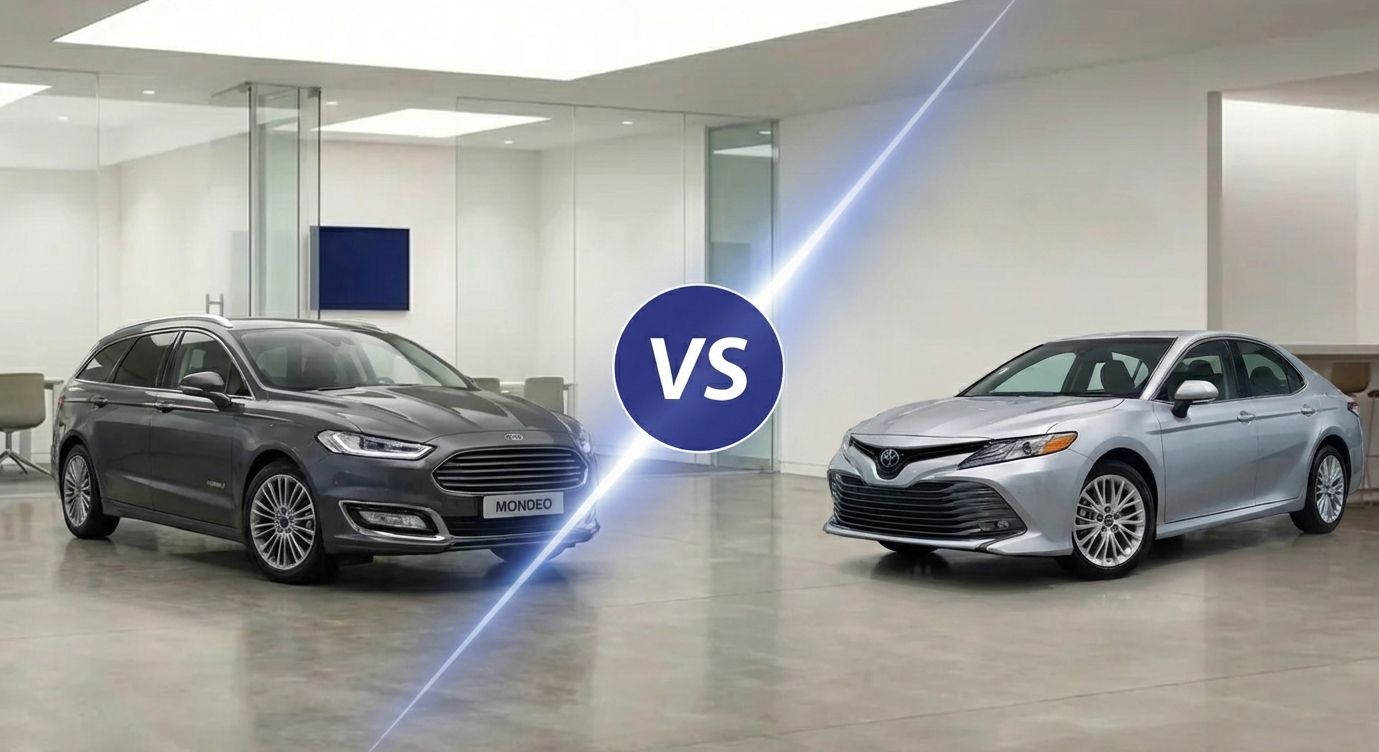
Car battle
Ford Mondeo vs Toyota Camry: Complete Comparison 2026
Ford Mondeo vs. Toyota Camry: Detailed comparison, tests, data, and verdict. Find out which sedan is the best choice for you on the used car market.
Oct 23, 2026
Audi A4 (B9) review: real owner experience, common faults, engine picks and used prices — everything you need to know before you buy.
October 21, 2026
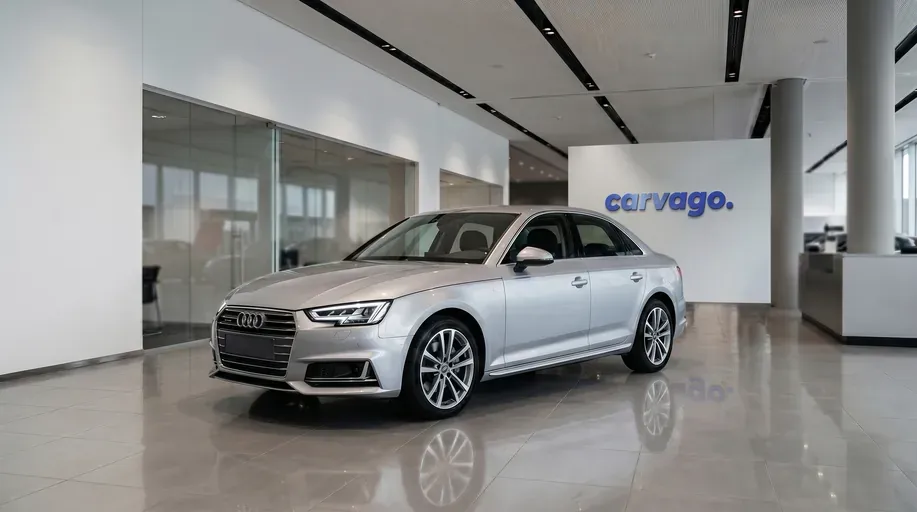
The fifth generation of the Audi A4 represents the brand's long-running entrant in the European compact executive class. Following its premiere in 2015, European customer deliveries began in November 2015. Throughout its production run, the model was offered as a four-door Audi A4 Saloon and a five-door Audi A4 Avant estate, alongside the raised-clearance allroad quattro that joined the European range in 2016.
Audi unveiled a mid-cycle facelift in May 2019, with first customer deliveries arriving in October 2019. The update revised the exterior body panels, restyled the lighting, and integrated a touchscreen-based infotainment system, followed by broader mild-hybrid integration across the engine range in August 2020. The generation concluded its production cycle in 2024, when Audi restructured its naming strategy and moved its combustion-engined mid-size models under the A5 badge.
On the European used market, this generation primarily serves business fleets, long-distance commuters, and family buyers seeking a premium estate or saloon. This review examines how the fifth-generation Audi A4 holds up across both its pre-facelift and updated iterations.
European vehicle safety authorities have issued several recalls affecting the fifth-generation Audi A4. In May 2020, a worldwide recall covering approximately 530,000 vehicles was initiated for models built between May 2017 and March 2020 equipped with the mild-hybrid petrol Audi A4 2.0 TFSI. The official notice stated that moisture could enter the belt starter-generator, potentially causing a short circuit, local overheating, and an increased fire risk even after the vehicle has been parked. Authorised workshops replace the starter-alternator with an updated, sealed unit. In April 2022, a follow-up recall covered 111,682 vehicles globally built between 7 November 2019 and 16 April 2021 across all body styles, where a previous replacement of rear axle nuts may have altered toe or camber alignment, leading to uneven rear tyre wear and possible sudden pressure loss; dealers check the rear axle geometry, realign it, and replace damaged tyres. Earlier, in June 2018, a campaign affecting petrol Audi A4 2.0 TFSI models built from late 2015 to 2017 addressed auxiliary coolant pumps that could block due to moisture or debris, requiring pump replacement and a software update.
For the diesel Audi A4 range, emissions-related recalls announced in late 2024 covered early models built up to 2017 fitted with 2.0 TDI and 3.0 TDI engines. The official notices highlighted that exhaust gas recirculation reduction controlled by ambient temperature did not comply with European regulations. Authorised workshops reprogram the engine and transmission management software to broaden the operating window of the exhaust gas recirculation system; across several European markets, completing this update is mandatory to maintain vehicle registration.
Beyond safety campaigns, professional workshop inspections and road tests identify recurring mechanical and electrical weaknesses. On the 2.0 TFSI petrol engine, coolant loss is a widely documented fault; tests describe the composite thermostat and water pump housing warping or leaking around its seals under repeated heat cycles, leaving crusty deposits under the intake manifold and eventually triggering low coolant warnings. Resolving this requires installing an updated coolant pump and housing assembly. On the chassis side, technical inspection registers frequently report worn front multi-link suspension bushings between 80,000 and 120,000 km, which leads to knocking noises over rough surfaces, vague tracking, and uneven tyre wear. On facelifted models built from 2019 onwards, tests describe sporadic software freezes of the central touchscreen and intermittent warnings regarding limited emergency call functions, which are addressed through software updates to the telematics control unit or, in stubborn cases, replacement of the control module.
During its production run from 2015 to 2024, the fifth-generation Audi A4 offered a comprehensive lineup of turbocharged four-cylinder and V6 powertrains. The range shifted gradually from conventional combustion units to mild-hybrid systems, also adopting Audi’s revised alphanumeric naming strategy alongside mid-cycle engineering updates.
| Engine | Fuel | Power | Gearbox | Drivetrain | Model Years |
|---|---|---|---|---|---|
| 1.4 TFSI | Petrol | 110 kW (150 hp) | 6-speed manual, 7-speed automatic | FWD | 2015–2018 |
| 2.0 TFSI ultra / 40 TFSI | Petrol | 140 kW (190 hp) | 6-speed manual, 7-speed automatic | FWD | 2015–2019 |
| 2.0 TFSI | Petrol | 185 kW (252 hp) | 6-speed manual, 7-speed automatic | FWD, AWD | 2015–2018 |
| 2.0 TFSI g-tron / 40 g-tron | CNG / Petrol | 125 kW (170 hp) | 6-speed manual, 7-speed automatic | FWD | 2017–2023 |
| S4 3.0 TFSI | Petrol | 260 kW (354 hp) | 8-speed automatic | AWD | 2016–2018 |
| RS 4 Avant 2.9 TFSI | Petrol | 331 kW (450 hp) | 8-speed automatic | AWD | 2017–2024 |
| 35 TFSI (MHEV) | Petrol | 110 kW (150 hp) | 6-speed manual, 7-speed automatic | FWD | 2019–2024 |
| 40 TFSI (MHEV) | Petrol | 140 kW (190 hp) | 7-speed automatic | FWD | 2019–2020 |
| 40 TFSI (MHEV) | Petrol | 150 kW (204 hp) | 7-speed automatic | FWD, AWD | 2020–2024 |
| 45 TFSI (MHEV) | Petrol | 180 kW (245 hp) | 7-speed automatic | AWD | 2019–2020 |
| 45 TFSI (MHEV) | Petrol | 195 kW (265 hp) | 7-speed automatic | AWD | 2020–2024 |
| 2.0 TDI (base) | Diesel | 90 kW (122 hp) | 6-speed manual, 7-speed automatic | FWD | 2016–2018 |
| 2.0 TDI / 35 TDI | Diesel | 110 kW (150 hp) | 6-speed manual, 7-speed automatic | FWD, AWD | 2015–2019 |
| 2.0 TDI / 40 TDI | Diesel | 140 kW (190 hp) | 6-speed manual, 7-speed automatic | FWD, AWD | 2015–2019 |
| 3.0 TDI | Diesel | 160 kW (218 hp) | 7-speed automatic | FWD, AWD | 2015–2018 |
| 3.0 TDI | Diesel | 200 kW (272 hp) | 8-speed automatic | AWD | 2015–2018 |
| 30 TDI (MHEV) | Diesel | 100 kW (136 hp) | 7-speed automatic | FWD | 2019–2024 |
| 35 TDI (MHEV) | Diesel | 120 kW (163 hp) | 7-speed automatic | FWD | 2019–2024 |
| 40 TDI (MHEV) | Diesel | 150 kW (204 hp) | 7-speed automatic | FWD, AWD | 2020–2024 |
| 45 TDI | Diesel | 170 kW (231 hp) | 8-speed automatic | AWD | 2019–2020 |
| 50 TDI (MHEV) | Diesel | 210 kW (286 hp) | 8-speed automatic | AWD | 2019–2023 |
| S4 TDI (MHEV) | Diesel | 255 kW (347 hp) | 8-speed automatic | AWD | 2019–2020 |
| S4 TDI (MHEV) | Diesel | 251 kW (341 hp) | 8-speed automatic | AWD | 2020–2023 |
For drivers navigating mostly urban commutes or short suburban trips, petrol Audi A4 variants make practical sense as a used car. The entry 1.4 TFSI and later 35 TFSI run quietly and reach operating temperatures quickly, though they require frequent downshifts on steep inclines or when fully loaded.
For mixed driving and general versatility, the mid-tier 40 TFSI hits the sweet spot. Its modified combustion cycle balances brisk throttle response with relaxed cruising manners, offering adequate passing reserve without excessive fuel demand.
High-mileage highway drivers will find diesel Audi A4 models far better suited to continuous motorway journeys. The four-cylinder 40 TDI delivers muscular mid-range pulling power across long stretches, although early throttle response at low speeds can feel slightly hesitant when pulling away from rest. Buyers who frequently pull heavy trailers or tackle unpaved gradients should look toward an Audi A4 4x4 equipped with one of the larger 3.0 TDI six-cylinder units, where strong torque and a smooth torque-converter automatic provide steady traction and composed hauling ability.
For a detailed breakdown of known mechanical vulnerabilities, coolant leaks, and transmission service considerations across these engines, consult our dedicated owner experiences section.
The Audi A4 provides sufficient legroom for outboard rear passengers, allowing taller adults to travel comfortably behind a tall driver, though rear headroom in the Audi A4 Saloon is somewhat tighter than in the estate due to the sloping roofline. Carrying three adults across the rear bench is compromised by a prominent centre floor tunnel and a firmer, elevated middle cushion. Daily practicality is aided by a standard 40:20:40 three-way split-folding rear seatback across all European variants, which allows long items to slide between two seated occupants. While the rear bench is fixed and cannot slide fore or aft, the Audi A4 Avant compensates with remote mechanical seatback releases in the luggage compartment, a low loading lip, and an evenly proportioned cargo floor that easily swallows bulky luggage or strollers.
| Dimension / Capacity | Saloon (Pre-facelift / Facelift) | Avant (Pre-facelift / Facelift) |
|---|---|---|
| Length (mm) | 4,726 / 4,762 | 4,726 / 4,762 |
| Width (mm) | 1,842 / 1,847 | 1,842 / 1,847 |
| Height (mm) | 1,427 / 1,431 | 1,434 / 1,460 |
| Wheelbase (mm) | 2,820 / 2,820 | 2,820 / 2,820 |
| Boot capacity – seats upright (L) | 480 / 460 | 505 / 495 |
| Boot capacity – seats folded (L) | 965 / 965 | 1,510 / 1,495 |
Note: Dimensions and luggage capacities in the table do not apply to the raised-clearance Allroad quattro or the bivalent natural-gas Avant g-tron, which has reduced luggage capacity due to underfloor gas fuel tanks.
Professional road tests consistently commend the Audi A4 for its long-distance composure and quiet cabin. Mechanical and wind noise remain thoroughly subdued at cruising speeds, aided further on examples fitted with optional front acoustic glass. Ride quality, however, depends heavily on chassis specification. While versions with optional adaptive dampers absorb broken surfaces smoothly, testers noted that cars with passive sport suspension and large alloy wheels can feel reactive and thud over urban potholes, accompanied by low-frequency tyre roar on coarse surfaces. Through corners, the chassis prioritises directional stability and safe, predictable line-holding over agility; the steering is light and accurate, though it offers limited road feel.
Inside, assembly quality earns consistent praise for tight panel alignment and high-grade materials throughout. Ergonomics, however, mark the main point of division between pre-facelift and updated models. Early cars featured a central rotary controller between the front seats, which testers found straightforward to operate without looking away from the road. The 2019 facelift removed that physical dial in favour of a standalone central touchscreen. Testers observed that the screen sits relatively far from the driver's natural reach, demanding more visual distraction while driving, even though the interface responds promptly.
All market charts in this section are drawn from Carvago listings of the complete Audi A4 model family, including other generations represented in the data, rather than exclusively the reviewed generation. Because the underlying data covers multiple generations across various production years, this dataset does not establish a separate price level for the reviewed generation alone. Across the currently advertised listings, the median asking price ranges from 20,200 EUR for 2018 model-year cars to 38,800 EUR for 2024 models. These variations primarily reflect differences in accumulated mileage and equipment across individual advertised vehicles.
Across the six months from April to September 2026, advertised Audi A4 listings initially grew from 15,018 to a peak of 16,527 in June before tapering off. The chart below tracks these active listing counts over the period.
Active listings over time
| Month | Audi A4 |
|---|---|
| 2026-04 | 15 018 |
| 2026-05 | 15 876 |
| 2026-06 | 16 527 |
| 2026-07 | 16 341 |
| 2026-08 | 14 582 |
| 2026-09 | 14 150 |
Source Carvago
Even with the total dipping to 14,150 listings by September 2026, overall numbers remain high, giving prospective buyers a wide pool of vehicles to choose from across the market.
Among listings available today, the median asking price of cars advertised today built in 2018 is €20,200, compared to €38,800 for those built in 2024. The chart below compares these figures across build years to show the differences between older and newer models.
Median advertised price by year of manufacture
| Model year | Audi A4 |
|---|---|
| 2018 | 20 200 |
| 2019 | 23 000 |
| 2020 | 25 400 |
| 2021 | 26 400 |
| 2022 | 27 800 |
| 2023 | 34 900 |
| 2024 | 38 800 |
| 2025 | 38 000 |
Source Carvago
Buyers comparing model years will find median asking prices from €20,200 for 2018 models up to €27,800 for 2022 models, before a noticeable step to €34,900 for 2023 models. The median asking price is highest for 2024 models at €38,800, whereas late-registered 2025 models sit slightly lower at €38,000.
Across the recorded period, active Audi A4 listings were heavily concentrated in conventional powertrains, standing at 8,803 diesel and 5,231 petrol models advertised in September 2026. The breakdown below details monthly listing numbers across each fuel type from April to September 2026.
Supply composition by fuel type
Petrol
Diesel
Hybrid
CNG
LPG
| Month | Petrol | Diesel | Hybrid | CNG | LPG |
|---|---|---|---|---|---|
| 2026-04 | 5 671 | 9 188 | 70 | 79 | 2 |
| 2026-05 | 6 066 | 9 678 | 57 | 69 | 2 |
| 2026-06 | 6 349 | 10 071 | 39 | 62 | 1 |
| 2026-07 | 6 320 | 9 911 | 43 | 59 | 1 |
| 2026-08 | 5 598 | 8 876 | 50 | 47 | 1 |
| 2026-09 | 5 231 | 8 803 | 44 | 58 | 1 |
Source Carvago
Diesel provides the widest selection on the market followed by petrol, while alternatives such as hybrid with 44 listings and CNG with 58 listings in September 2026 represent only a tiny fraction of available stock. Anyone browsing the market will realistically choose between diesel and petrol, as other fuel types appear in very limited numbers.
This chart traces the average asking price for the Audi A4 from April 2026 to September 2026, when listings began at an average of €25,600.
Average price development over time
| Month | Audi A4 |
|---|---|
| 2026-04 | 25 600 |
| 2026-05 | 25 300 |
| 2026-06 | 25 000 |
| 2026-07 | 24 600 |
| 2026-08 | 24 500 |
| 2026-09 | 24 400 |
Source Carvago
Across the six months shown, the average asking price moved from €25,600 to €24,400, representing a modest overall decline of under 5%.
Quiet cabin with composed long-distance cruising manners
High-grade interior assembly and durable cabin materials
Standard three-way split-folding rear seatback aids cargo versatility
Firm, reactive ride on cars fitted with passive sport suspension
Facelift touchscreen demands more driver distraction than the earlier rotary dial
Known coolant housing leaks on petrol engines and front suspension bushing wear
The Audi A4 demonstrates solid build quality, provided all safety recalls have been documented and completed by VIN. The main mechanical wear items to inspect are front suspension bushings and coolant leaks around the water pump housing on petrol models.
For mixed commuting, the mid-range 40 TFSI petrol strikes the most balanced compromise between responsive performance and fuel efficiency. High-mileage drivers are better served by the 40 TDI diesel, while regular heavy towing favours a six-cylinder diesel paired with all-wheel drive.
Facelifted models from late 2019 offer refreshed styling and broader mild-hybrid integration, but pre-facelift cars retain the physical rotary infotainment dial, which proves less distracting to operate while driving.
Check the digital service records to confirm completed safety recalls and regular transmission fluid changes, and monitor the automatic gearbox for smooth engagement during low-speed crawling. A visual inspection should also confirm that the coolant pump housing is free from leaks.
Sources: audi.com, adac.de, kba.de, autobild.de, autozeitung.de
This article was prepared using artificial intelligence tools. The section guarantor is Petr Dušek.
Ford Mondeo vs. Toyota Camry: Detailed comparison, tests, data, and verdict. Find out which sedan is the best choice for you on the used car market.
Oct 23, 2026

BMW 3 Series (G20/G21) review: real owner experience, common faults, engine picks and used prices — everything you need before you buy.
Oct 22, 2026
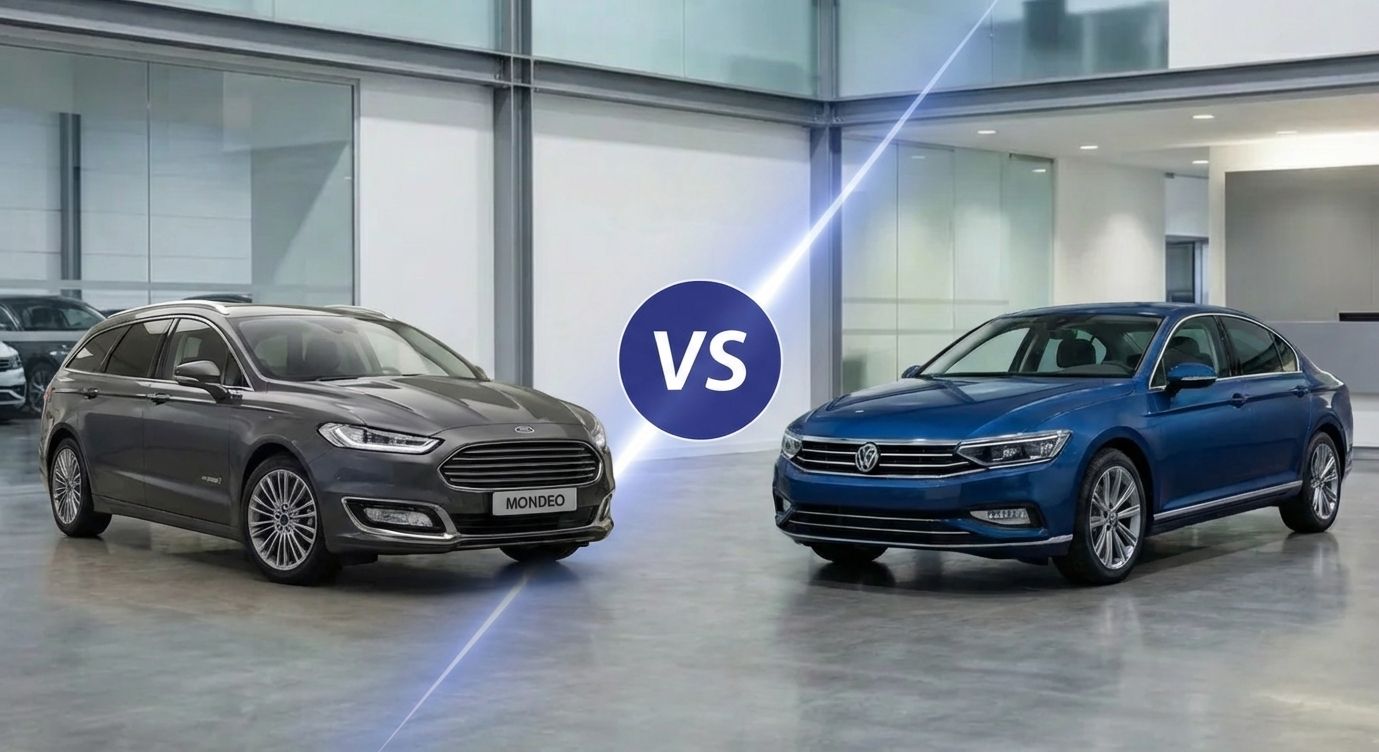
Ford Mondeo vs. Volkswagen Passat: Detailed comparison, reviews, engines, and verdict. Find out which of these popular cars is the better choice for you.
Oct 22, 2026