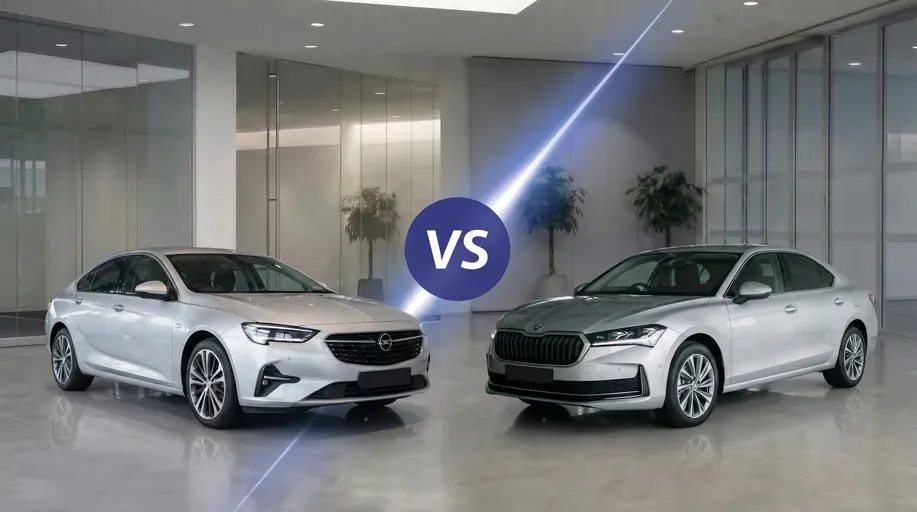
Car battle
Opel Insignia vs. Škoda Superb: Complete comparison 2026
Detailed comparison: Opel Insignia vs. Škoda Superb. Find out which car offers better space, reliability, and driving characteristics. Read our verdict!
May 20, 2026
Articles
Review
BMW 3 Series (G20/G21) review: real owner experience, common faults, engine picks and used prices — everything you need before you buy.
October 22, 2026
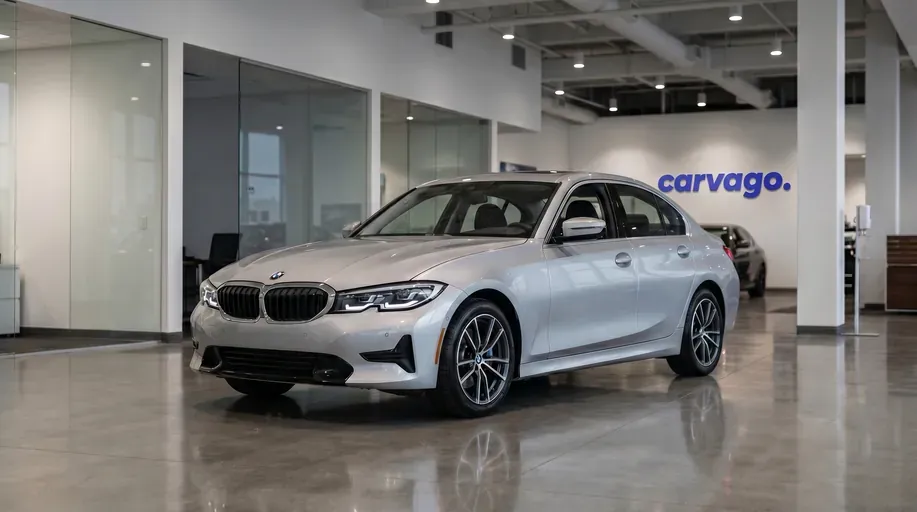
The seventh-generation BMW 3 Series occupies the core of the premium mid-size segment. This review focuses entirely on this generation—coded G20 for the four-door BMW 3 Series Sedan and G21 for the five-door BMW 3 Series Touring estate. European customer handovers commenced on 9 March 2019 for the saloon and 28 September 2019 for the estate.
BMW updated the line-up twice during its lifecycle. The first major update entered production in July 2022 following its 18 May 2022 premiere, introducing refreshed exterior aprons alongside a curved digital dashboard display. A second technical update entered European production in July 2024 after an unveiling on 29 May 2024, bringing revised operating software, chassis fine-tuning, and expanded battery capacity for plug-in hybrid models.
The model appeals primarily to business fleet users, long-distance motorway commuters, and private buyers who prioritize a driver-focused rear-wheel-drive or all-wheel-drive chassis paired with practical everyday dimensions.
European safety authorities and workshop logs record several important safety recalls for the seventh-generation BMW 3 Series, with campaigns centring on starter assemblies and mild-hybrid electrical connections. Announced in September 2026, an official recall for vehicles manufactured between 29 July 2014 and 12 November 2020 affects 189,130 vehicles worldwide (including 5,788 in Germany). Safety notices state that water may enter the starter motor and cause damage, which could lead to continuous activation, local overheating, and vehicle fires even when the ignition is switched off. Dealerships replace the assembly with a modified unit protected against moisture ingress.
A second starter campaign, published in February 2026 and expanded under monitoring in July 2026, covers 744,234 vehicles worldwide built between 28 May 2020 and 04 October 2024. In the words of the safety notice, a high number of starting operations can lead to increased wear in the magnetic switch. Internal relay abrasion can cause electrical contact resistance, resulting in rare cases in a short circuit and localized fire during or shortly after starting. Dealerships inspect the starter identification code and install an updated starter motor. Earlier, in May 2025, a recall covering 37,430 vehicles worldwide built between 01 September 2023 and 25 February 2025 addressed mild-hybrid petrol and diesel engines. The notice warned that an improperly manufactured positive battery cable could overheat contact points at the starter-generator; workshops inspect and retorque or replace the cable assembly.
| Recall Focus | Affected Production Window | Official Reach | Defect and Workshop Action |
|---|---|---|---|
| Starter motor moisture ingress | 29 July 2014 – 12 November 2020 | Worldwide (189,130 vehicles) | Water ingress causes short circuits and thermal overload; dealer replaces the starter assembly |
| Starter magnetic switch relay wear | 28 May 2020 – 04 October 2024 | Worldwide (744,234 vehicles) | Switch contact wear creates starting short circuits; dealer inspects code and replaces the unit |
| Starter-generator positive cable | 01 September 2023 – 25 February 2025 | Worldwide (37,430 vehicles) | Loose connection on mild hybrids causes overheating; dealer secures or replaces cable harness |
Away from official safety recalls, manufacturer technical bulletins address an issue with the electric power steering on cars produced between 2019 and 2024. Owners and technicians report a clicking or knocking sound from the front suspension when turning at low speeds or crossing rough pavement. The cause is excessive breakaway torque in the steering tie-rod thrust bearings, which workshops address by fitting revised inner and outer tie-rod assemblies and performing a mechanical wheel alignment.
Independent specialist workshops also identify cooling circuit weaknesses on 2.0-litre four-cylinder and 3.0-litre six-cylinder petrol engines. Repetitive thermal cycling can cause the small plastic expansion tank ventilation line to become brittle and crack at the engine connector, in some cases leading to sudden coolant loss. Weeping from the plastic oil filter housing and thermostat flanges has also been documented on higher-mileage examples. In addition, tests report that cars driven primarily on short urban trips can suffer from 12V auxiliary battery discharge warnings and disabled start-stop functions due to control modules failing to sleep or battery sensor calibration drift, which dealers address with software updates or new sensor cables.
Before purchasing a pre-owned BMW 3 Series Saloon or BMW 3 Series Touring, having the vehicle's maintenance history and chassis independently checked through a service like CarAudit ensures that all open manufacturer campaigns have been settled and that typical front-end wear is properly identified.
The seventh-generation BMW 3 Series offers an engine portfolio spanning four- and six-cylinder petrol and diesel units, alongside plug-in hybrid options. While early base diesel models offered a manual transmission, the vast majority of vehicles feature an automatic gearbox and either classic rear-wheel drive or xDrive all-wheel drive.
| Engine | Fuel | Power | Gearbox | Drivetrain | Model years |
|---|---|---|---|---|---|
| 318i | Petrol | 115 kW (156 hp) | 8-speed automatic | Rear-wheel drive | 2020–present |
| 320i | Petrol | 135 kW (184 hp) | 8-speed automatic | Rear-wheel drive / All-wheel drive | 2019–present |
| 330i | Petrol | 190 kW (258 hp) | 8-speed automatic | Rear-wheel drive / All-wheel drive | 2019–2022 |
| 330i | Petrol | 180 kW (245 hp) | 8-speed automatic | Rear-wheel drive / All-wheel drive | 2022–present |
| M340i xDrive | Petrol / Petrol mild hybrid | 275 kW (374 hp) | 8-speed automatic | All-wheel drive | 2019–present |
| 316d | Diesel mild hybrid | 90 kW (122 hp) | 8-speed automatic | Rear-wheel drive | 2020–2024 |
| 318d | Diesel / Diesel mild hybrid | 110 kW (150 hp) | 6-speed manual (to 2022) / 8-speed automatic | Rear-wheel drive | 2019–present |
| 320d | Diesel / Diesel mild hybrid | 140 kW (190 hp) | 6-speed manual (to 2021) / 8-speed automatic | Rear-wheel drive / All-wheel drive | 2019–present |
| 330d | Diesel | 195 kW (265 hp) | 8-speed automatic | Rear-wheel drive / All-wheel drive | 2019–2020 |
| 330d | Diesel mild hybrid | 210 kW (286 hp) | 8-speed automatic | Rear-wheel drive / All-wheel drive | 2020–present |
| M340d xDrive | Diesel mild hybrid | 250 kW (340 hp) | 8-speed automatic | All-wheel drive | 2020–present |
| 320e | Petrol plug-in hybrid | 150 kW (204 hp) | 8-speed automatic | Rear-wheel drive / All-wheel drive | 2021–2024 |
| 330e | Petrol plug-in hybrid | 215 kW (292 hp) | 8-speed automatic | Rear-wheel drive / All-wheel drive | 2019–present |
For short urban trips, petrol and plug-in hybrid variants are the most practical choices. The entry-level 318i warms up quickly and avoids the diesel particulate filter loading associated with frequent short trips. Buyers with home or workplace charging should consider a hybrid BMW 3 Series, such as the 330e or the earlier 320e, which handle daily commutes on electric power while retaining petrol flexibility for longer journeys.
For drivers splitting their mileage between town, secondary roads, and occasional motorway trips, the 320i represents the sweet spot among petrol BMW 3 Series variants. It provides stronger overtaking reserves than the base petrol while maintaining reasonable running costs. Buyers in regions with harsh winters can add all-wheel drive via the xDrive variant for improved traction on slippery surfaces.
Frequent long-distance drivers are best served by diesel power, where the diesel BMW 320 is the most balanced choice for cruising economy and low-down pulling power. For drivers who regularly tow trailers, carry heavy passenger loads, or demand rapid overtaking acceleration at high speeds, the six-cylinder 330d or M340d xDrive provides authoritative performance. For heavy towing duties, the six-cylinder M Performance models offer the highest braked capacity across the range.
For enthusiastic drivers who want rapid performance alongside daily usability, the six-cylinder petrol M340i xDrive provides brisk acceleration and standard all-wheel drive stability.
For details on common mechanical faults, workshop service patterns, and official safety recalls, refer to the owner experiences section.
| Body Style & Powertrain | Dimensions L × W × H (mm) | Wheelbase (mm) | Boot Volume (upright / folded, l) |
|---|---|---|---|
| Saloon (Petrol / Diesel) | 4,709–4,713 × 1,827 × 1,435–1,445 | 2,851 | 480 / unverified |
| Saloon (Plug-in Hybrid) | 4,709–4,713 × 1,827 × 1,444–1,446 | 2,851 | 375 / unverified |
| Touring (Petrol / Diesel) | 4,709–4,713 × 1,827 × 1,440–1,445 | 2,851 | 500 / 1,510 |
| Touring (Plug-in Hybrid) | 4,709–4,713 × 1,827 × 1,440–1,448 | 2,851 | 410 / 1,420 |
Note: Maximum boot capacity with rear seats folded flat is officially unverified for the saloon. Stated exterior dimensions do not apply to M Performance models, which feature model-specific ride heights.
The BMW 3 Series provides balanced passenger accommodation, offering adequate knee room and headroom in the outer rear positions for adult passengers, although taller occupants will notice that the low rear cushion angle limits under-thigh support on extended journeys. Seating three adults across the rear bench is compromised by a wide central transmission tunnel that severely restricts middle-seat foot space. Day-to-day usability is aided by a standard three-way split-folding rear backrest, allowing longer cargo items to slide through without folding the outer seats. Everyday practicality peaks with the BMW 3 Series Touring, which retains a separate opening rear tailgate window that enables rapid loading of bags in tight parking bays without opening the main tailgate. Buyers choosing plug-in hybrid variants of either the estate or the BMW 3 Series Sedan trade cargo space for electrification, as the high-voltage battery sits under the floor and removes the standard underfloor storage compartment.
Professional tests consistently highlight the BMW 3 Series for its sharp steering, immediate turn-in, and composed chassis balance. Body roll remains tightly controlled through quick direction changes. Ride compliance, however, depends heavily on specification. Passive setups—especially the firmer sport suspension paired with large wheels—can feel fidgety over sharp urban ridges and potholes. Even on the BMW 3 Series Touring, standard dampers lean toward the firm side for everyday duties. Testers universally prefer examples equipped with optional adaptive dampers, which filter broken tarmac without sacrificing agility. Motorway refinement is strong thanks to front acoustic glass, though tyre rumble surfaces on coarse tarmac, and artificial synthesised engine sounds on electrified models are widely judged discordant.
Inside, testers commend the supportive seating and solid assembly quality, though thick roof pillars hinder rearward visibility. The most significant split in verdicts involves the ergonomic shift introduced with the facelifts. Pre-facelift cars earn unanimous praise for combining a physical rotary controller with dedicated climate buttons. Later revisions replaced this layout with a large curved display; while visually modern, moving temperature and ventilation settings entirely into touchscreen menus increases distraction while driving. On the chassis side, later production updates introduced recalibrated dampers and stiffer rear mounting points, which testers agree noticeably improved secondary ride comfort over early passive-suspension examples.
All market data and charts in this section reflect Carvago listings for the entire BMW 3 Series model family, including other generations present in the catalogue, rather than the reviewed generation alone. Because the data aggregates the broader model line by build year, it does not establish a separate price level specifically for the seventh generation. Within this offering, the median asking price stands at €25,400 for 2019 cars and €30,000 for 2022 examples. Later production years show higher listings, recording a median asking price of €38,200 for 2023 and €48,900 for 2026.
Active BMW 3 Series listings fluctuated between 11,483 in April 2026 and a peak of 11,727 in July 2026 before easing toward the end of the period. The chart below shows the total number of advertised cars for each month from April to September 2026.
Active listings over time
| Month | BMW 3 Series |
|---|---|
| 2026-04 | 11 483 |
| 2026-05 | 11 371 |
| 2026-06 | 11 668 |
| 2026-07 | 11 727 |
| 2026-08 | 11 026 |
| 2026-09 | 10 861 |
Source Carvago
Buyers have a wide selection of vehicles to choose from across the market, with monthly listings moving within a relatively narrow range before settling at 10,861 in September 2026.
Among used listings advertised today, the median asking price of cars built in 2019 is €25,400, while the median asking price of cars built in 2026 is €48,900. The chart below illustrates how median asking prices compare across build years.
Median advertised price by year of manufacture
| Model year | BMW 3 Series |
|---|---|
| 2019 | 25 400 |
| 2020 | 27 400 |
| 2021 | 28 900 |
| 2022 | 30 000 |
| 2023 | 38 200 |
| 2024 | 43 000 |
| 2025 | 42 700 |
| 2026 | 48 900 |
Source Carvago
Buyers considering 2019 to 2022 model years find median asking prices ranging from €25,400 to €30,000, whereas 2023 listings sit at €38,200. A 2026 model reflects a median asking price of €48,900, though 2025 listings are slightly lower at €42,700 compared to the €43,000 median for 2024 cars.
This depreciation curve illustrates how the model family's residual value declines with vehicle age, shedding roughly 24% of its value in the first year and 40% by age three.
Residual value by vehicle age
| Vehicle age | BMW 3 Series |
|---|---|
| New | 63 500 |
| 1 yr | 48 100 |
| 2 yrs | 43 300 |
| 3 yrs | 38 000 |
| 4 yrs | 32 400 |
| 5 yrs | 28 900 |
| 6 yrs | 26 300 |
| 7 yrs | 22 900 |
Source Carvago
Over the seven years shown, the car sheds roughly 64% of its initial residual value. The sharpest drop occurs between age zero and age one, after which depreciation continues at a steady, moderate pace.
Between April and September 2026, advertised listings were consistently led by diesel and petrol, starting at 7,224 diesel and 3,018 petrol cars in April. The chart below illustrates the monthly distribution across all recorded fuel types.
Supply composition by fuel type
Petrol
Diesel
Hybrid
Electric
| Month | Petrol | Diesel | Hybrid | Electric |
|---|---|---|---|---|
| 2026-04 | 3 018 | 7 224 | 1 174 | 0 |
| 2026-05 | 3 026 | 7 205 | 1 064 | 0 |
| 2026-06 | 3 207 | 7 337 | 1 051 | 0 |
| 2026-07 | 3 355 | 7 304 | 997 | 0 |
| 2026-08 | 3 204 | 6 780 | 977 | 0 |
| 2026-09 | 3 116 | 6 715 | 970 | 2 |
Source Carvago
By September 2026, diesel remained the dominant choice with 6,715 listings alongside 3,116 petrol cars and 970 hybrids, while electric options totaled just 2 listings. Buyers will find by far the widest selection among diesel and petrol variants, whereas hybrid and electric alternatives represent a much smaller share of the market.
The chart outlines the average asking price from April 2026 to September 2026, starting at €29,800.
Average price development over time
| Month | BMW 3 Series |
|---|---|
| 2026-04 | 29 800 |
| 2026-05 | 30 000 |
| 2026-06 | 29 800 |
| 2026-07 | 29 600 |
| 2026-08 | 30 200 |
| 2026-09 | 30 700 |
Source Carvago
Rather than moving in a single direction, the average dipped to €29,600 in July 2026 before climbing to €30,700 in September 2026, reflecting a modest overall variation of about 3%.
Sharp steering and composed chassis balance across rear-wheel and all-wheel-drive variants
Broad engine portfolio spanning efficient diesels, punchy petrols, and plug-in hybrids
Practical estate body style featuring an independently opening rear tailgate window
Fidgety ride over sharp road imperfections on cars fitted with standard passive suspension
Climate controls moved entirely into touchscreen menus on facelifted models
Wide central transmission tunnel severely restricts foot space for middle rear passengers
Overall mechanical reliability for the BMW 3 Series is solid, though cooling-circuit plastic hoses require inspection for weeping on petrol engines. Always verify by VIN with an authorized dealer that official safety recalls covering starter motors and mild-hybrid wiring harnesses have been completed.
For mixed daily driving, the petrol BMW 320 provides good performance reserves while avoiding diesel particulate filter issues during short urban trips. Frequent motorway commuters will benefit more from the diesel BMW 320, which delivers superior long-distance fuel efficiency and low-down pulling power.
Pre-facelift cars feature dedicated physical climate controls and a rotary dial that minimize driver distraction on the move. Facelifted versions adopt a modern curved digital display and recalibrated suspension dampers that provide noticeably better ride comfort over sharp bumps.
Listen for front-end metallic knocking when turning at low speeds, which indicates worn steering tie-rod bearings. On all-wheel-drive cars, inspect tyres across both axles for even tread wear to prevent transfer-case judder, and verify documented recall history through a pre-purchase inspection like CarAudit.
Sources: press.bmwgroup.com, adac.de, ec.europa.eu, autocar.co.uk, whatcar.com
This article was prepared using artificial intelligence tools. The section guarantor is Petr Dušek.
Detailed comparison: Opel Insignia vs. Škoda Superb. Find out which car offers better space, reliability, and driving characteristics. Read our verdict!
May 20, 2026
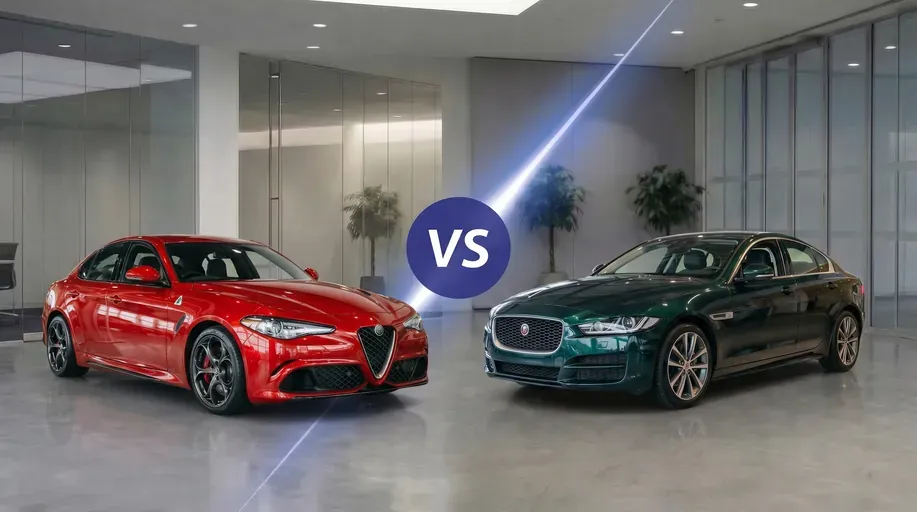
Detailed comparison of Alfa Romeo Giulia vs Jaguar XE. Discover real-world experiences, differences in driving characteristics, and the verdict on which sedan to choose.
Nov 12, 2026
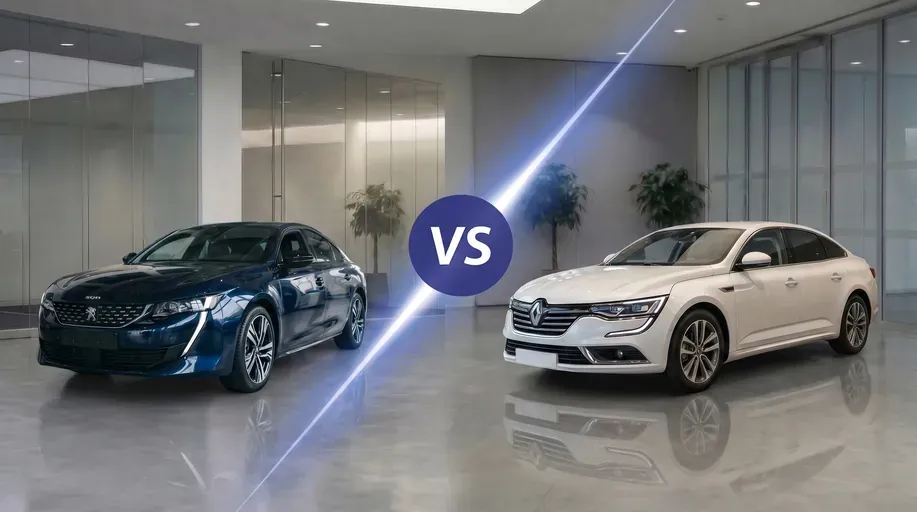
Detailed comparison of used Peugeot 508 vs. Renault Talisman. Which French car has better engines, equipment, and reliability? Find out in our verdict.
May 9, 2026