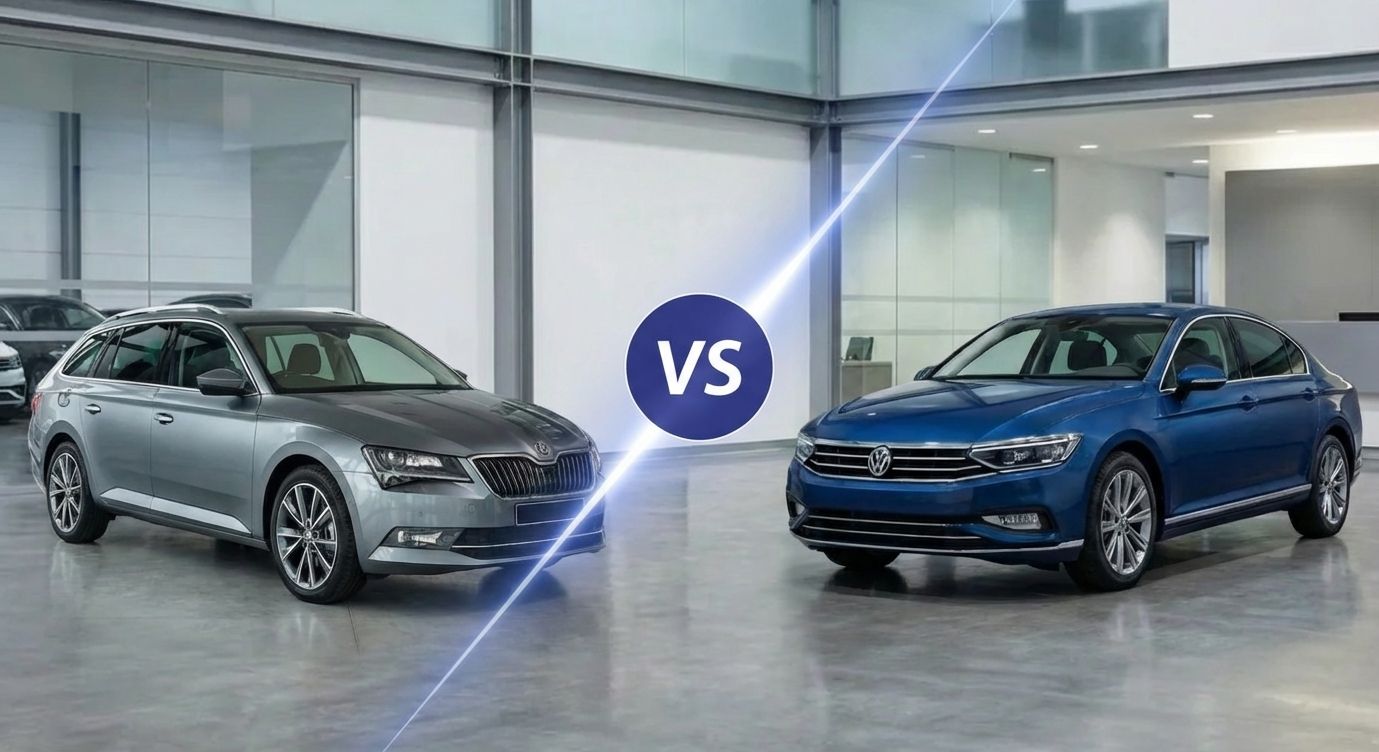
Car battle
Škoda Superb vs. Volkswagen Passat: Complete Comparison 2025
Škoda Superb vs. VW Passat: A detailed comparison, real-world experience, and a verdict to help you choose the right car for 2024.
Oct 16, 2026
Articles
Car battle
Detailed comparison of used Peugeot 508 vs. Renault Talisman. Which French car has better engines, equipment, and reliability? Find out in our verdict.
May 9, 2026
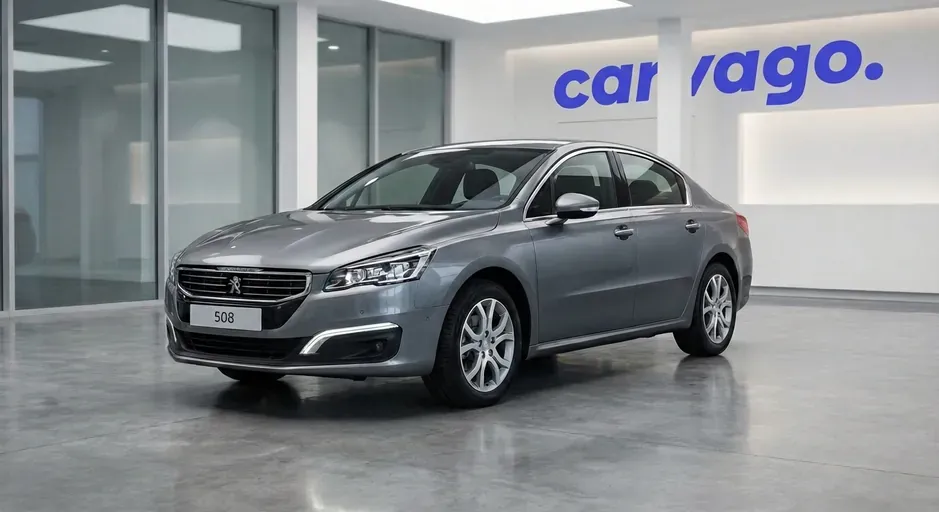
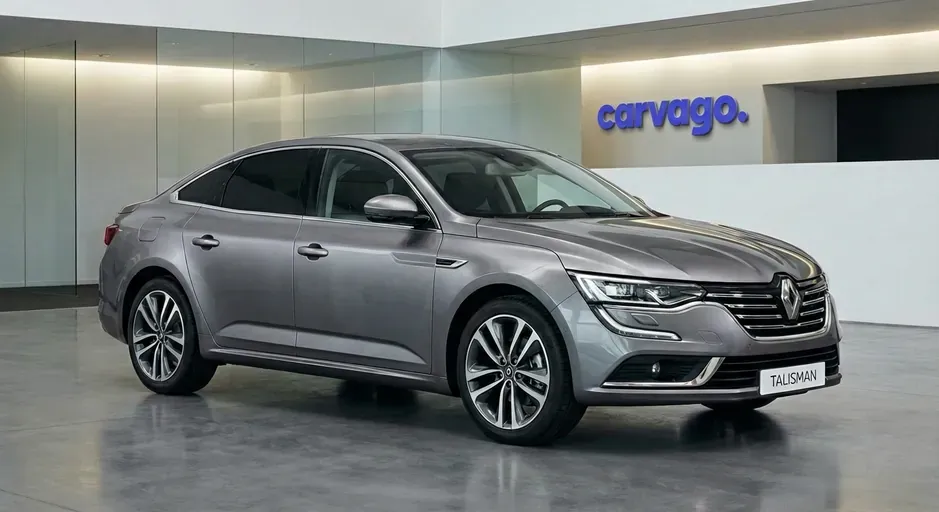
The French charmer Peugeot 508, also known in selected markets in an extended version as the Peugeot 508L, has made a name for itself as a stylish representative of the mid-size class, attracting buyers with its aggressive design and premium interior. Standing against it is its direct competitor, the Renault Talisman, sold in South Korea as the Renault Samsung SM6, which instead bets primarily on majestic dimensions, an exceptionally comfortable chassis, and a wealth of technological features. Let's take a detailed look at how these two French rivals fare in a head-to-head comparison and which of them represents a better choice on the used car market today.
Looking at the external dimensions, it is immediately clear that although both cars belong to the same mid-size segment, they approach it with very different philosophies. The Renault Talisman is a typical representative of spacious executive cruisers. In its standard body style, it measures 4,849 mm in length, which is a significant 99 mm more than the Peugeot 508. For the more practical versions with a large luggage compartment, this difference narrows slightly, yet the Renault Talisman Grandtour (Estate) at 4,865 mm is still 87 mm longer than the Peugeot 508 SW.
The most striking and visually noticeable difference, however, is found in the height of the two cars. The second-generation Peugeot 508 was intentionally designed with an emphasis on a sporty, wide, and very low-slung design, reminiscent of frameless four-door coupes. With a height of just 1,403 mm (1,420 mm for the estate version), it is nearly 6 centimetres lower than the more conventionally and robustly shaped Renault Talisman. This dynamic stance earns the Peugeot 508 points for its attractive appearance, better aerodynamics, and lower centre of gravity. However, it significantly affects the interior space – the lower silhouette and sloping roofline logically mean less headroom for rear-seat passengers and slightly more difficult entry.
Regarding the wheelbase, which is often a key parameter for longitudinal legroom in the cabin, the Renault Talisman again comes out on top with a value of up to 2,809 mm, while the Peugeot 508 offers 2,793 mm. While a difference of 16 millimetres might not look dramatic on paper, combined with the taller body structure, it makes the Renault Talisman a noticeably airier and more comfortable car for long journeys with four adults on board. Conversely, the Peugeot 508 benefits from its slightly more compact overall dimensions when manoeuvring; the shorter body makes it easier to park in tight urban spaces and underground garages, whereas the Renault Talisman, at nearly 4.9 metres, is already bordering on the executive class.
| Parameter | Peugeot 508 Liftback | Renault Talisman Sedan | Peugeot 508 Estate | Renault Talisman Estate |
|---|---|---|---|---|
| Length (mm) | 4750 | 4849 | 4778 | 4865 |
| Width (mm) | 1859 | 1868 | 1859 | 1868 |
| Height (mm) | 1403 | 1456-1463 | 1420 | 1456-1465 |
| Wheelbase (mm) | 2793 | 2808-2809 | 2793 | 2808-2809 |
Trunk capacity is often a key argument when choosing a mid-size car, whether you are looking for a reliable motorway cruiser for business trips or a spacious family vehicle. The Peugeot 508 (in its 2nd generation) and the Renault Talisman (1st generation) approach this discipline with different philosophies, which is reflected in roughly four-year-old used cars not only in absolute numbers but also in the body concept itself. While the Renault Talisman offers a traditional four-door sedan and a classic, maximally spacious estate with the Grandtour moniker, the Peugeot 508 has opted for a more aggressive design with a liftback body (often categorized as a hatchback in technical data and on the market) and a lifestyle-oriented estate known as the SW.
A look at the tables shows that the design elegance of the Peugeot 508 has taken only a slight toll on practicality. The base version with its sloping rear offers a trunk capacity of 487 liters, which increases to a solid 1,537 liters after easily folding the rear backrests. If you opt for the more practical Peugeot 508 SW variant, you get 530 liters in the basic configuration, which is perfectly sufficient for a typical large weekend shop or a long holiday trip. A huge benefit for buyers of these used cars is that there is no reduction in space in the Peugeot 508 with a plug-in hybrid powertrain. The batteries are cleverly stored under the floor, so even these more economical models offer the same trunk volume in liters as the purely internal combustion variants.
The Renault Talisman, on the other hand, scores primarily in the discipline of pure space in the basic configuration and will serve traditional families very well. The Renault Talisman sedan version accommodates a generous 608 liters behind its lid, meaning plenty of room for several extra suitcases. Its disadvantage is the typically smaller loading aperture and limited use for oversized cargo when you need to fold the seats. Those who need to move strollers and transport bulky items will reach for the Renault Talisman Grandtour (estate). This features an excellent base capacity of 572 liters and, with the seats fully folded, transforms into a van with up to 1,681 liters of space. In a direct comparison of maximum transport capacity for the estate versions, however, the Peugeot 508 paradoxically wins by nearly a hundred liters (1,780 liters), despite its more sloping sporty roofline.
| Parameter | Peugeot 508 Liftback | Renault Talisman Sedan | Peugeot 508 SW | Renault Talisman Grandtour |
|---|---|---|---|---|
| Base capacity (liters) | 487 | 608 | 530 | 572 |
| Max. capacity with seats folded (liters) | 1537 | - | 1780 | 1681 |
While the Renault Talisman scores with a giant base trunk, ideal for a summer holiday with five occupants, the Peugeot 508 in the estate version counters with a surprisingly larger maximum space after folding the seats and no loss of liters in the popular hybrids. The choice thus depends purely on whether you prefer maximum trunk volume every day or greater variability and absolute transport capacity when the backrests are folded.
Trailer weight and total towing capacity are often key parameters for drivers who expect their car not only to represent them daily but also to be practical for transporting bulky loads. In this discipline, there are significant differences between the two French models, largely stemming from their different approaches to powertrains. The Renault Talisman is considered a reliable mid-size workhorse. For petrol engines of the Renault Talisman, the standard braked trailer weight starts at 1500 kg, while the popular and more powerful diesel versions of the Renault Talisman confidently reach a maximum capacity of 1800 to 1850 kg. Such a value represents a large reserve and is fully sufficient for weekend shopping for building materials as well as longer holidays with a larger caravan.
In contrast, the Peugeot 508 pays the price for the ecological trend and the installation of heavier batteries in its plug-in hybrid systems, which noticeably limits its towing capabilities in newer models. While conventional two-liter diesels (2.0 BlueHDi) from earlier production years confidently match the Renault Talisman with a maximum capacity of 1800 kg, the popular modern plug-in hybrid variants of the Peugeot 508 (1.6 HYBRID) only allow for towing braked trailers weighing between 1300 and 1340 kg. Paradoxically, the least suitable for towing is the most powerful sports version, the PSE HYBRID4 360, whose limit ends at just 1260 kg. For unbraked trailers, both cars rely on the usual limit of 740 to 750 kg, which is more than enough for attaching a smaller trailer and gaining space for a few extra suitcases. Therefore, if you plan to regularly tow heavier loads or a large caravan, the more conventionally designed Renault Talisman with a diesel engine will clearly be the safer and more versatile choice for you.
| Model and engine | Braked trailer weight (kg) | Unbraked trailer weight (kg) |
|---|---|---|
| Peugeot 508 (2nd generation) | ||
| 1.2 PureTech 130 (96 kW) | 1290 - 1340 | 745 - 750 |
| 1.5 BlueHDi 130 (96 kW) | 1450 - 1500 | 745 - 750 |
| 1.6 PureTech 180 / 225 (133–165 kW) | 1600 | 745 - 750 |
| 2.0 BlueHDi 160 / 180 (120–130 kW) | 1800 | 745 - 750 |
| 1.6 HYBRID 180 / 225 (110–133 kW) | 1300 - 1340 | 745 - 750 |
| PSE HYBRID4 360 (147 kW) | 1260 - 1280 | 745 - 750 |
| Renault Talisman (1st generation) | ||
| TCe 160 / 225 GPF (117–165 kW) | 1500 - 1800 | 740 - 750 |
| ENERGY TCe 150 / 200 (110–147 kW) | 1500 - 1850 | 740 - 750 |
| ENERGY dCi 110 / 130 / 160 (81–118 kW) | 1600 - 1850 | 740 - 750 |
| BLUE dCi 120 / 150 (88–110 kW) | 1800 - 1850 | 740 - 750 |
| BLUE dCi 160 / 190 / 200 (118–147 kW) | 1800 - 1850 | 740 - 750 |
While the Peugeot 508 and Renault Talisman target a similar range of customers looking for an elegant mid-size car, their approach to powertrains is diametrically different. Both vehicles provide a wide range of engines tailored to various driving profiles. Peugeot has significantly shifted its focus with the Peugeot 508 towards modern plug-in hybrid technologies, culminating in the high-performance PSE variant with 265 kW on both axles, and standardly pairs most engines with a smooth-shifting eight-speed automatic transmission. In contrast, Renault opted for robust and economical internal combustion engines for the Renault Talisman, with the exceptionally reliable 2.0 Blue dCi diesel and proven TCe petrol units standing out on the nearly-new used car market. These are most often paired with the responsive EDC dual-clutch automatic. For the average user, the comparison comes down to a choice between French hybrid avant-garde for tech enthusiasts and an honest combustion classic, ideal for drivers with high annual motorway mileage.
Looking at the second-generation Peugeot 508 (produced since 2018), a strong emphasis on electrification is evident. For proponents of traditional engines, it offers the entry-level 1.2 PureTech three-cylinder (96 kW) and the more powerful 1.6 PureTech petrol four-cylinder (up to 165 kW). At the start of production, the diesel range consisted of the very economical 1.5 BlueHDi and the more powerful 2.0 BlueHDi units. However, it is crucial to note that the larger 2.0-litre diesel engines (2.0 BlueHDi) were only available until roughly 2020 and are practically non-existent in four-year-old used cars, as the manufacturer replaced them with an expanded range of plug-in hybrids (PHEV). The hybrid portfolio starts with 1.6 HYBRID variants producing 133 kW and 165 kW. At the very top sits the exclusive, sports-division-tuned Peugeot Sport Engineered (PSE) HYBRID4 360, boasting a massive 265 kW (360 hp), 520 Nm of torque, and advanced all-wheel drive. All modern powertrains in the Peugeot 508 use a comfortable eight-speed automatic (8AT).
In its facelifted versions intended for the nearly-new used car market (especially model years 2018 to 2022), the Renault Talisman focused almost exclusively on reliable classic engines without plug-in hybrid technology. Among the petrol versions of the Renault Talisman, the exceptionally well-engineered 1.3 TCe 160 GPF (118 kW) four-cylinder is highly sought after. For drivers seeking strong dynamics, the top-of-the-line 1.8 TCe 225 GPF petrol unit with 165 kW was available, its advanced technology having direct roots in the Alpine A110 sports coupe. In the diesel range, the solidly built 2.0 Blue dCi unit takes center stage, available in versions with up to 147 kW and a generous 400 Nm of torque. It is this engine that makes the Renault Talisman a fantastic car for long-distance travel with truly top-tier real-world fuel consumption. On the market, one must account for the fact that production of the Renault Talisman ended definitively in early 2022, so nearly-new cars represent the final, exceptionally refined production runs. In the vast majority of newer versions, the transmissions consist of the fast EDC dual-clutch gearbox (7 speeds for petrol, 6 for diesel); only the weaker older diesel variants (1.7 Blue dCi) commonly offered a six-speed manual.
| Engine Type | Fuel | Power (kW) | Torque (Nm) | Transmission |
|---|---|---|---|---|
| 1.2 PureTech 130 | Petrol | 96 | 230 | 8AT |
| 1.6 PureTech 180 / 225 | Petrol | 133 / 165 | 250 / 300 | 8AT |
| 1.5 BlueHDi 130 | Diesel | 96 | 300 | 6MT / 8AT |
| 2.0 BlueHDi 160 / 180 | Diesel | 118 / 130 | 400 | 8AT |
| 1.6 HYBRID 180 / 225 | Plug-in Hybrid | 133 / 165 | 360 | 8AT |
| PSE HYBRID4 360 | Plug-in Hybrid | 265 | 520 | 8AT (4x4) |
| Engine Type | Fuel | Power (kW) | Torque (Nm) | Transmission |
|---|---|---|---|---|
| 1.3 TCe 160 GPF | Petrol | 118 | 270 | 7EDC |
| 1.8 TCe 225 GPF | Petrol | 165 | 300 | 7EDC |
| 1.7 BLUE dCi 120 / 150 | Diesel | 88 / 110 | 300 / 340 | 6MT |
| 2.0 BLUE dCi 160 | Diesel | 118 | 360 | 6EDC |
| 2.0 BLUE dCi 190 / 200 | Diesel | 140 / 147 | 400 | 6EDC |
While the Peugeot 508 appeals to those interested in modern plug-in hybrid technology and offers a wider range of electrified powertrains with a smooth eight-speed automatic, the Renault Talisman is a bet on a classic motorway cruiser with robust diesel engines and a responsive dual-clutch automatic.
Choosing the right engine is key to long-term satisfaction with a used car, and our recommendations are based on a balance of performance, real-world fuel consumption, and mechanical reliability. While the Peugeot 508 tends to favor smaller displacements, supplemented in more recent years by popular plug-in hybrid technology, the Renault Talisman retained one of the best modern two-liter diesels on the market at the end of its production. For roughly four-year-old used cars, it is also necessary to account for the impact of stricter emission standards, which significantly limited or, conversely, positively transformed the range of engines offered for both rivals.
Although it is logical to aim for the newest possible model years when looking for a roughly four-year-old used car, in the case of the second-generation Peugeot 508, it pays to focus on cars manufactured until the fall of 2020 for absolute reliability. According to available data, it was during 2020 that the legendary 2.0 BlueHDi diesel disappeared from the price lists for good, replaced by the smaller 1.5 BlueHDi unit along with plug-in hybrid versions. However, the original two-liter is by far the best choice for this model – it offers an excellent compromise between dynamics and low fuel consumption (realistically around 5.5 to 6 liters per 100 km). Combined with the smooth-shifting Aisin eight-speed automatic transmission, it turns the Peugeot 508 into the perfect highway cruiser. Mechanically, it is a very durable engine that does not suffer from premature wear and easily handles high mileage without major issues.
When buying this engine, pay particular attention to a meticulous service history. Find out if the owner changed the oil on time – a shortened interval of 15,000 km is ideal prevention for the long life of the turbocharger and internal components. For cars operated mainly in city traffic, there is a risk of a prematurely clogged diesel particulate filter (DPF), which in practice you can recognize by constant regeneration cycles or a perceived reduction in engine pull. We also recommend checking the functionality of the emission system with urea injection (AdBlue), where the electronics or the pump in the tank occasionally fail. If you still decide on a car younger than 2020, the reliable 1.6 PureTech four-cylinder gasoline engine makes sense, or the 1.6 HYBRID plug-in hybrid (but here, require proof of battery health). It is better to avoid the 1.2 PureTech three-cylinder due to potential problems with the timing belt immersed in oil.
In the case of the Renault Talisman, the situation on the four-year-old used car market is much more favorable and easier. The clear favorite here is the modern 2.0 Blue dCi diesel, which remained in the range until the end of the model's production in early 2022. This engine successfully replaced the more delicate older 1.6 dCi units and represents a huge leap forward in mechanical durability and refinement. The unit, designed in cooperation with Nissan, runs incredibly quietly, smoothly, and without the typical diesel clatter. Its technical advantage is an exemplary flat torque curve (up to 400 Nm from 1,750 rpm in the top version), thanks to which the Renault Talisman has confident flexibility for safe overtaking. Together with the responsive EDC dual-clutch transmission, the Renault Talisman with automatic transmission is a perfect choice for drivers on long highway routes, with fuel consumption usually not exceeding 6.5 l/100 km.
The greatest risk for most modern diesel engines, and the 2.0 Blue dCi is no exception, are faults in the complicated emission system. Therefore, before buying, carefully test for smooth operation immediately after a cold start (the engine should not fluctuate in RPM) and watch closely to see if the trip computer signals an SCR system failure. Replacing a non-functional NOx sensor or repairing the AdBlue injection can be an unpleasant financial expense. This engine explicitly needs regular warming up to operating temperature; if the car spent most of its time crawling through the city, the DPF filter may be clogged. For drivers operating primarily in city traffic, the proven and reliable 1.3 TCe gasoline four-cylinder will be a much more sensible alternative. However, in terms of overall longevity, highway comfort, and towing capacity, the two-liter diesel from the last years of production is a total bullseye for the Renault Talisman.
When choosing a used car, such as a roughly four-year-old Peugeot 508 or Renault Talisman, fuel consumption plays a crucial role. However, driver experience clearly shows that there is often a difference between official manufacturer data and real-world consumption, sometimes by more than a litre per hundred kilometres. For the most accurate picture, it is ideal to look at databases where real values are entered by drivers themselves, such as the popular German portal Spritmonitor.de. The table below is based on data averages from specifications for models on the used car market (focused on cars from 2020–2022); however, user logs show that to obtain actual consumption in normal traffic, it is advisable to add roughly 1 to 1.5 litres to these values – especially for petrol engines and under load.
| Model and Engine | Average Consumption (l/100 km) | Source |
|---|---|---|
| Diesel engines | ||
| Peugeot 508 1.5 BlueHDi 130 | 4.8 | Spritmonitor.de |
| Peugeot 508 2.0 BlueHDi 160 | 4.5 | Spritmonitor.de |
| Renault Talisman 2.0 BLUE dCi 160 | 4.9 | Spritmonitor.de |
| Renault Talisman 2.0 BLUE dCi 200 | 4.9 | Spritmonitor.de |
| Petrol engines | ||
| Peugeot 508 1.2 PureTech 130 | 5.8 | Spritmonitor.de |
| Peugeot 508 1.6 PureTech 180 | 6.2 | Spritmonitor.de |
| Renault Talisman 1.3 TCe 160 GPF | 5.5 | Spritmonitor.de |
| Renault Talisman 1.8 TCe 225 GPF | 7.1 | Spritmonitor.de |
| Plug-in Hybrid engines | ||
| Peugeot 508 1.6 HYBRID 225 | 1.2 | Spritmonitor.de |
Looking closer at the trends, it is clear that diesel engines remain the uncrowned kings of long-distance routes. In the Peugeot 508, the surprisingly more powerful 2.0 BlueHDi 160 engine performs very similarly on paper (and in practice), or even slightly more economically than the smaller 1.5 BlueHDi, which has to work harder under higher loads on the motorway. A similar phenomenon can be seen in the Renault Talisman, where the powerful 2.0 BLUE dCi 200 offers almost identical consumption (around 4.9 l/100 km) as the slightly weaker BLUE dCi 160. As for the petrol variants, smaller turbocharged engines (such as the 1.2 PureTech in the Peugeot or the 1.3 TCe in the Renault) look exceptionally economical on paper, but in practice, under the load of a full car, they cannot always offer the savings expected of them. The plug-in hybrid Peugeot 508 is a chapter of its own. Its declared average consumption of just over one litre requires diligent and constant charging from the grid – without it, the car functions like a standard heavy petrol vehicle, and real-world motorway consumption rises dramatically.
What does this mean for the average user and prospective used car buyer? For drivers who cover dozens to hundreds of kilometres daily on motorways, betting on the larger two-litre diesel engines in both models remains the absolute most sensible choice. Not only do they offer a safe power reserve, but their operating costs will also be very favourable and stable thanks to excellent efficiency. Conversely, petrol engines, especially the 1.8 TCe 225 in the Renault Talisman or the 1.6 PureTech in the Peugeot 508, make more sense for users with lower annual mileage. They will appreciate the quiet operation and better refinement without having to worry too much about the car asking for roughly seven to eight litres per hundred kilometres in the real world.
In conclusion, it can be safely said that fuel consumption in both of these French mid-size flagships does not represent a barrier to purchase. Both the Peugeot 508 and Renault Talisman can be surprisingly economical companions with a well-chosen engine (especially the diesel ones). The final decision between the two cars will likely not depend on a difference of tenths of a litre in consumption, but rather on your personal preference for design, dashboard layout, or preferred suspension comfort.
When looking at approximately four-year-old models (production years 2021–2022), you will encounter a vast price difference on the used car market. While the Peugeot 508 holds its value relatively well thanks to its attractive design and more premium focus, the Renault Talisman drops in price much faster, making it an enticing choice for those looking for an affordable mid-size car.
The second-generation Peugeot 508 is a stylish choice for which you will still pay a premium on the used market. Prices for four-year-old models start slightly below the €16,500 mark, but for this money, you usually get basic equipment or cars with higher mileage.
Renault ended production of the Renault Talisman in 2022, which, combined with a general lack of market interest in large French sedans and estates, led to a sharp price drop on the secondary market. A four-year-old Renault Talisman is thus significantly more affordable compared to the Peugeot 508 and often ends up being thousands cheaper than traditional mainstays like the Škoda Superb or Volkswagen Passat.
| Model | Starting Price | Average Price | Top Version (low mileage, top trim) |
|---|---|---|---|
| Peugeot 508 | ~ €16,500 | €20,600 – €26,800 | up to €32,900 |
| Renault Talisman | ~ €11,500 | €14,400 – €18,500 | up to €20,600 |
When deciding, the total budget plays a very significant role. The Renault Talisman offers a highly comfortable and spacious car at a very favorable price, excelling with an unrivaled price-to-equipment ratio. In contrast, the Peugeot 508 targets the emotions of drivers who are happy to pay extra for a more exclusive and aggressive look, advanced assistance systems, or the possibility of emission-free driving with the hybrid, even if it means a significantly higher initial investment.
On the used car market, the Renault Talisman is the clear winner in terms of value for money, while the attractive Peugeot 508 requires a substantially larger investment, which is balanced by better retention of its future residual value.
When evaluating the safety of used cars, it is common to highlight maximum five-star Euro NCAP ratings. Although both of these models shone in their tests and achieved the full number of stars, it is absolutely crucial to consider the context and the year the tests were conducted. This is because the methodology and testing protocols are constantly evolving and becoming radically stricter over time. For this reason, percentage scores from different years cannot be directly compared. Modern tests place an incomparably higher emphasis on advanced active safety, such as new frontal impact simulations, cyclist detection, or emergency scenarios at intersections.
The second-generation Peugeot 508 underwent Euro NCAP testing in 2018 under significantly stricter rules than its older competitor. The car excelled in adult occupant protection with a score of 96% and received a very good 86% for child protection. Vulnerable road user protection was rated at 71%, and safety assist systems scored 79%. These results show that the car benefits from a more modern architecture and more advanced assistants, including high-quality autonomous emergency braking with pedestrian and cyclist detection. Although the rating has formally expired after seven years from Euro NCAP's perspective, for a buyer of a roughly four-year-old used car, it still represents a guarantee of a top-tier and highly modern safety standard.
The Renault Talisman, on the other hand, was tested as early as 2015, when the rules were not nearly as uncompromising. It also easily achieved a five-star rating with results of 86% for adult protection, 84% for child protection, 68% for vulnerable road user protection, and 76% for safety assist systems. These values prove that the structural rigidity and passive safety of the platform were at an excellent level at the time of its market launch. On the other hand, the slightly lower percentage gains in pedestrian protection and assistants clearly reflect the era before the massive onset of the most advanced active systems and complex sensors.
From the perspective of more current standards, the Peugeot 508 thus offers an overall more modern and comprehensive occupant protection package. While the Renault Talisman remains a very safe car today that was at the absolute top in its time, the newer construction of the Peugeot 508 and its development tuned for the more demanding 2018 criteria give it a noticeable advantage in the area of overall and active safety.
| Parameter | Peugeot 508 | Renault Talisman |
|---|---|---|
| Year of testing | 2018 | 2015 |
| Adult occupant protection | 96 % | 86 % |
| Child protection | 86 % | 84 % |
| Vulnerable road user protection | 71 % | 68 % |
| Safety assist systems | 79 % | 76 % |
Although both models boast five stars, the Peugeot 508 benefits from newer testing protocols and more advanced active assistants, making it a safer and more modern choice for used car buyers.
In addition to standard equipment, each of the models offers several unique features that can be decisive for the customer, with both French automakers choosing a completely different approach to the concept of the modern mid-size class.
The second-generation Peugeot 508 has moved away from traditional shapes and opted for a sportier approach, making it one of the most distinctive cars on the used car market.
The Renault Talisman, on the other hand, is the embodiment of traditional French comfort and spatial generosity. Its main weapon is its focus on passenger comfort and top-tier chassis technology.
Attractive and dynamic body design (fastback and SW estate) with elegant frameless windows
Premium interior with high-quality materials and the modern i-Cockpit layout
Confident and sportier driving characteristics that engage the driver
Economical and reliable BlueHDi diesel engines and widely available plug-in hybrid versions
Wide range of advanced assistance systems, including optional night vision
Limited headroom in the rear seats due to the sharply sloping roofline
The specific ergonomics of the i-Cockpit with its small steering wheel and high-mounted dials may not suit every body type
Smaller base luggage capacity compared to direct competitors in the mid-size segment
Stiffer suspension setup results in poorer filtration of sharp bumps on broken roads
The Peugeot 508 is an ideal choice for drivers looking for a stylish and emotive mid-size car with a distinct premium feel. It is perfect for those who prioritize attractive design, quality craftsmanship, and a sportier driving feel over maximum family practicality and a massive trunk.
Excellent overall cabin spaciousness with plenty of room in all directions, especially for rear passengers
Generous and highly practical luggage space (especially in the popular Grandtour estate version)
Unique 4Control four-wheel steering system, providing great maneuverability in the city and stability on the highway
Very comfortable suspension tuning and comfortable seats (often with a massage function), ideal for long highway trips
More favorable purchase prices on the used car market offer an excellent price-to-value ratio
More complex operation and occasional slow responses from the infotainment system (especially the older R-Link 2 system before the facelift)
Cheaper-looking plastics in some lower parts of the interior, which lag behind the Peugeot 508
Faster depreciation of residual value on the used car market
Limited range of engines in the final years of the model's production
The Renault Talisman will primarily appeal to practical buyers and families who appreciate smooth comfort and generous interior space on long journeys. Thanks to its rear-wheel steering, it surprises with its agility, and on the market for four-year-old used cars, it offers a lot of car for very reasonable money.
Based on our own data, long-term user feedback, service reports, and detailed data from comprehensive vehicle inspections, we have compiled an overview of the most common problems that used car buyers should watch out for with these models.
The second generation of the Peugeot 508 (from 2018) is generally considered more reliable than its predecessor, yet it has several weak points, especially in the area of electronics and specific engine versions.
The greatest risks for the Peugeot 508 are the AdBlue systems and the timing belts/chains on certain engines. From a mechanical standpoint, it is otherwise a relatively robust car, troubled more by software quirks and minor shortcomings of the frameless construction.
The Renault Talisman, whose production ended in 2022, struggled with a significant number of "teething troubles" in its early stages. For facelifted models (from late 2020), which are now the most common on the four-year-old used car market, reliability has improved significantly, though specific issues still persist.
For the Renault Talisman, a thorough test drive focused on the smoothness of the EDC dual-clutch transmission and a check of the chassis condition is absolutely crucial, especially for the attractive versions equipped with the 4Control all-wheel steering system.
When buying a used car, a thorough inspection is crucial. Here are some specific points to focus on for these two models, while maximum peace of mind will always be provided by a professional used car inspection.
The Renault Talisman is more spacious overall, which will be especially appreciated by rear-seat passengers, where its competitor suffers from an elegantly sloping roofline. In the estate body style, the Talisman Grandtour offers a luggage capacity of 572 litres, while the Peugeot 508 SW has 530 litres. For family use and frequent transport of bulkier items, the Renault Talisman is the more practical choice.
The Peugeot 508 is tuned significantly more sportily, offering a stiffer chassis, sharper steering, and an overall more agile driving experience. The Renault Talisman, on the other hand, focuses on maximum comfort and smoothness, although thanks to the unique 4Control rear-wheel steering system, it surprises with excellent manoeuvrability in corners and in the city. The Peugeot 508 is therefore more suitable for drivers looking for dynamics, while the Renault Talisman excels at relaxed motorway cruising.
Both French cars feature very well-designed and economical diesel engines. The BlueHDi units in the Peugeot 508 and the Blue dCi engines in the Renault Talisman are considered durable choices on the used car market, with low real-world fuel consumption of around 5 to 6 l/100 km. By adhering to regular service intervals and timely oil changes, you will avoid major technical problems with both brands.
The Peugeot 508 uses the avant-garde i-Cockpit concept with a small steering wheel and high-mounted instrument cluster, which takes some getting used to and may not suit every body type. The Renault Talisman has a more conventional dashboard layout with a vertical central display, which has been very smooth and user-friendly since the 2020 facelift. The choice therefore depends primarily on whether you prefer a futuristic and more cocoon-like cockpit or a more traditional and airy layout of the controls.
Neither of these mid-size representatives offers a classic mechanical all-wheel drive with a propshaft. However, the Peugeot 508 provides 4x4 drive in its top-of-the-line plug-in hybrid versions (for example, the PSE sports variant), where the rear axle is powered by a separate electric motor. The Renault Talisman, on the other hand, is available on the used car market exclusively with standard front-wheel drive.
Sources: ADAC, svetmotoru.cz, idnes.cz, autosalon.tv, emobility.cz, roadblog.cz
This article was prepared using artificial intelligence tools. The section guarantor is Petr Dušek.
Škoda Superb vs. VW Passat: A detailed comparison, real-world experience, and a verdict to help you choose the right car for 2024.
Oct 16, 2026
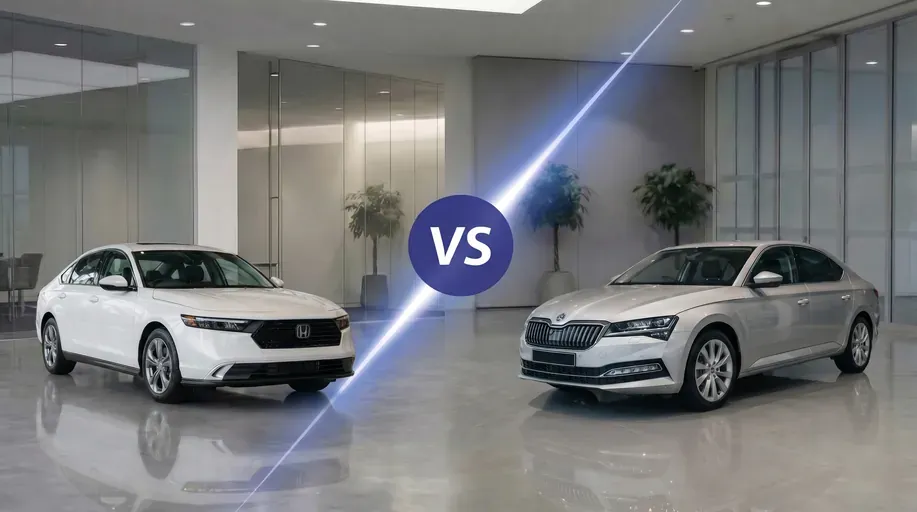
Detailed comparison of Honda Accord vs. Škoda Superb. Discover real-world experiences, equipment and driving characteristics comparisons, and read the verdict for the best choice.
Oct 16, 2026
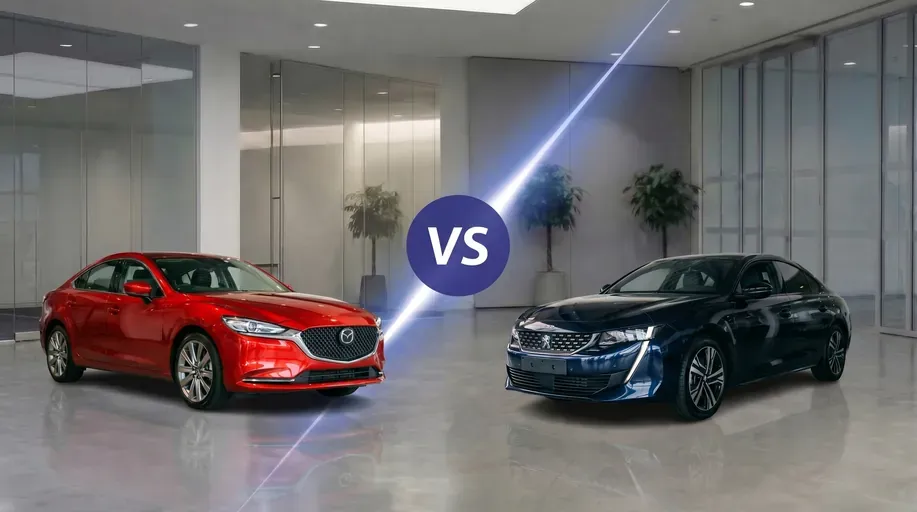
Detailed comparison of the Mazda 6 vs. the Peugeot 508. We compared real-world driving characteristics, engines, and equipment. Read the verdict that will make choosing a used car easier.
May 2, 2026