Articles

Car battle

Toyota Hilux vs. Volkswagen Amarok: Complete comparison 2026

Detailed comparison of used Toyota Hilux vs Volkswagen Amarok pickups. Discover the differences in reliability and equipment, and read the verdict before you buy.

April 22, 2026

VS
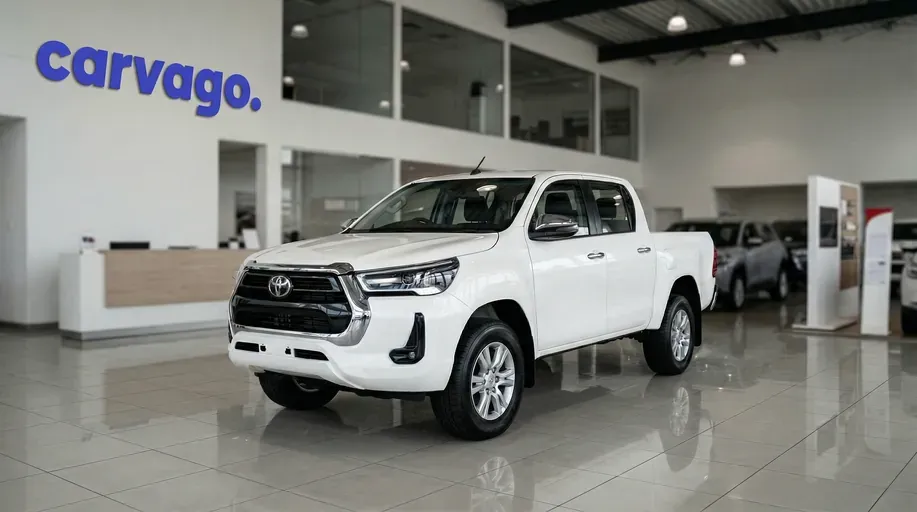
Toyota Hilux

Toyota Hilux

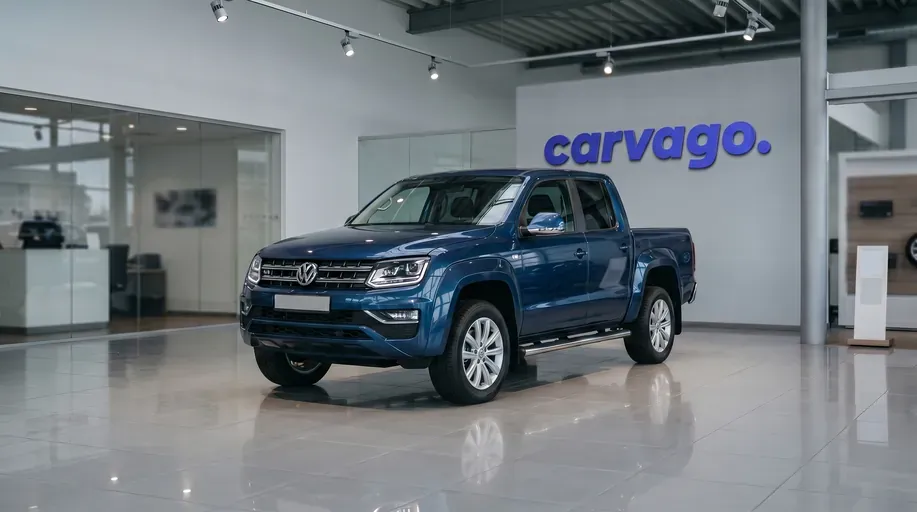
Volkswagen Amarok

Volkswagen Amarok

Introduction

Toyota Hilux, a globally recognized Japanese workhorse famous for its indestructibility and extraordinary reliability in tough terrain, represents a long-standing benchmark in the pickup truck class on the used car market. Standing against it is the Volkswagen Amarok, a more premium-oriented German competitor that successfully combines high payload capacity with sophisticated driving comfort and a more luxuriously crafted interior. Let's take a detailed look at which of these two robust vehicles fares better in our direct comparison and represents the ideal choice for your daily work tasks as well as weekend adventures.

Comparison of External Dimensions

Looking at the exterior dimensions, it is immediately clear that both vehicles belong to the category of full-size work pickups; however, their approach to overall size has evolved differently. In its popular generation (facelifted since 2020), the Toyota Hilux maintains its traditional, slightly narrower, and more practical proportions from an off-road perspective. However, on the market for approximately four-year-old used cars, you will encounter an interesting peculiarity with the Volkswagen Amarok – due to a production hiatus, buyers choose between late 1st-generation vehicles (up to 2020) or the technically completely different 2nd generation (from 2023). The newer Amarok has grown significantly in length and height compared to both the Toyota and its predecessor.

The main difference you will feel in daily use is the overall width and wheelbase. The Amarok has always been among the widest vehicles in its class (up to 1954 mm for the first and 1910 mm for the second generation) compared to the Hilux, which even in the most equipped Double Cab versions measures 1855 mm (and in more utilitarian Single Cab versions, even just 1800 mm).

  • Advantages of a wider body (Amarok): More generous shoulder room for the crew in the interior and a more confident, stable stance on regular asphalt roads.
  • Advantages of a narrower body (Hilux): Much easier parking in front of shopping centers and trouble-free maneuvering through tight forest trails.

The distance between the axles also has a fundamental influence on the choice of vehicle. While the Toyota Hilux maintains an agile 3085 mm, the wheelbase of the newer Amarok generation has jumped to a massive 3270 mm. The longer wheelbase guarantees the Volkswagen a significantly smoother and calmer ride on the highway, making it an excellent highway cruiser for towing heavy trailers. Conversely, the shorter platform of the Toyota Hilux offers a much better breakover angle. Thanks to this, the Japanese workhorse maintains its reputation as an unstoppable off-roader, as it won't get "high-centered" as easily in sharp terrain and on off-road crests.

ParameterToyota Hilux PickupVolkswagen Amarok Pickup
Length (mm)53255254 - 5350
Width (mm)1800 - 18551910 - 1954
Height (mm)1795 - 18151820 - 1884
Wheelbase (mm)30853095 - 3270

Note: The values in the table take into account the models most commonly available on the four-year-old used car market (Toyota Hilux after the 2020 facelift and the intersection of both modern Volkswagen Amarok generations). The different ranges in dimensions reflect various cabin types (Single, Extra, Double Cab) and trim levels.

Trunk Volume

In pick-ups such as the Toyota Hilux and Volkswagen Amarok, the traditional luggage compartment is replaced by a spacious open bed. For those interested in approximately four-year-old used cars (where we are mainly talking about the Hilux AN1P generation after the facelift and the first or upcoming second generation of the Amarok), the size and usability of the cargo area is one of the main arguments for purchase. Whether you are looking for a robust vehicle for transporting building materials or a durable workhorse for active family weekends at the cottage, pick-ups offer unsurpassed practicality. Unlike the carefully upholstered trunks of conventional SUVs, you can simply rinse out the massive bed with a hose when it gets dirty, and it's ready for the next trip.

The Volkswagen Amarok traditionally boasts one of the widest loading areas on the market and, in its most popular Double Cab version, offers a generous 1,222 mm between the wheel arches. In practice, this means that you can easily load a standard Euro pallet crosswise onto the bed. The basic calculated volume of the Amarok's bed up to its upper edge is thus around 1,280 litres. The Toyota Hilux is slightly narrower in the wheel arch area, but with a volume of approximately 1,127 litres for the Double Cab version, it still offers plenty of space for bulky cargo. If you need the absolute maximum space for work and can do without the second pair of doors, both models are also sold in a purely work-oriented Single Cab version. In the case of the Amarok, this provides a huge loading volume of around 1,814 litres, while with the Hilux, you get a space with a volume of 1,750 litres.

Unlike passenger cars, pick-ups do not allow the rear seats to be folded down to connect the cargo area with the interior. The stated basic bed volume is thus essentially also the maximum volume. In the Double Cab versions of both vehicles, you can fold the rear bench seat upwards, but this only creates a dry and safe space in the cabin for storing more valuable tools or weekend shopping, not an extension of the loading area itself. Specific electrified versions, such as the mild-hybrid Hilux (available from around 2024), maintain exactly the same cargo space dimensions as the purely diesel variants, despite the more modern technology and added battery. Overall, the Amarok benefits from slightly larger bed dimensions, but the Hilux counters with its indestructible construction. Furthermore, both vehicles can be easily retrofitted with a plastic liner and a lockable hardtop (rigid canopy) or a roller shutter, transforming the bed into a huge and secure luggage compartment perfect for family travel.

ParameterToyota Hilux Single CabVolkswagen Amarok Single CabToyota Hilux Extra CabToyota Hilux Double CabVolkswagen Amarok Double Cab
Basic volume (litres)17501814133811271280
Max. volume with seats folded (litres)Not applicableNot applicableNot applicableNot applicableNot applicable

Kings of Utility Space 🚜

Although the Volkswagen Amarok offers a slightly wider and overall more voluminous loading area allowing for the comfortable loading of a Euro pallet crosswise, the Toyota Hilux does not lag behind in terms of everyday practicality. Either of these models can be transformed into a family expedition vehicle using a hardtop, where you will never have to anxiously count transport litres again.

Discover the true condition of the car thanks to an independent inspection

Order CarAudit™

Trailer Weights

The ability to tow heavy trailers is often a key parameter for pick-up trucks, determining their utility for both demanding work and active leisure. Looking at used cars approximately four years old, we find that both models are among the top in their class and fully utilize legislative limits, although there are minor variations depending on the chosen generation and specification.

The Toyota Hilux AN1P generation (representing model years around 2020–2024 on the used car market) and the Volkswagen Amarok (comparing the outgoing 1st generation up to 2020 and the incoming 2nd generation from 2023) offer excellent on-paper figures. The standard braked trailer weight for the popular Double Cab body styles has climbed to a maximum of 3,500 kg. For the Hilux, this applies to both the base 2.4 D-4D engine and the more powerful 2.8 D-4D. Furthermore, the newer 2.8 D-Mildhybrid version retains this maximum capacity without restriction. Reduced towing capacity in the Toyota is mainly found in specific Single Cab work variants, where it drops to 2,800 kg for some versions.

On the other hand, the first-generation Volkswagen Amarok, highly sought after with the 3.0 V6 TDI engine, offered a towing capacity ranging from 3,000 to 3,500 kg depending on the specific equipment and chassis modifications. The second-generation Amarok (available from 2023) unified these values: the base 2.0 TDI SCR (125 kW) version can handle 3,450 kg, while all more powerful versions and the top-of-the-line six-cylinder already tow a full 3,500 kg. For both vehicles, the unbraked trailer weight falls under the standard European limit of 750 kg.

In practice, a seemingly minor difference of 500 kg in older Amaroks can play a crucial role. These five hundred kilograms represent exactly the missing capacity for transporting heavier construction machinery, bulky horse trailers, or premium caravans. A value of 3,500 kg is perfectly sufficient for a weekend holiday with the largest boat as well as daily use on a farm or construction site.

In conclusion, both models provide first-class capabilities in terms of towing power. However, when choosing from the used car market, those interested in a first-generation Volkswagen Amarok must carefully check the registration certificate of the specific vehicle. Not every unit automatically reaches the magic 3.5-tonne limit, which the modern Hilux and 2nd-generation Amarok offer as virtually standard in their class.
Model and engineBraked trailer (kg)Unbraked trailer (kg)
Toyota Hilux Double Cab 2.4 D-4D (AN1P)3500750
Toyota Hilux Double Cab 2.8 D-4D (AN1P)3500750
Toyota Hilux Double Cab 2.8 D-Mildhybrid (AN1P)3500750
Toyota Hilux Single Cab 2.4 D-4D (AN1P)2800 - 3500750
VW Amarok Double Cab 3.0 V6 TDI (1st generation)3000 - 3500750
VW Amarok Double Cab 2.0 TDI (2nd generation)3450 - 3500750
VW Amarok Double Cab 3.0 V6 TDI (2nd generation)3500750

Overview of Most Common Motorizations

When choosing a used pickup truck approximately four years old, you will encounter a completely different approach to powertrains in these two models. The Toyota Hilux traditionally relies on the legendary indestructibility of its D-4D four-cylinder diesels, which are designed for the toughest off-road use, but historically lagged behind in terms of dynamics. The turning point came in 2020, when the Hilux received an uprated 2.8 D-4D engine, significantly narrowing the performance gap. The Volkswagen Amarok, on the other hand, became famous for its highway dominance and refinement, provided in the later years of the first generation by the massive 3.0 V6 TDI. However, it is crucial to point out the specifics of the used car market: the first generation of the Amarok ended its journey in Europe in mid-2020, and the brand-new second generation (developed in cooperation with Ford) did not arrive until May 2023. Those interested in a roughly four-year-old vehicle must decide whether to search for the last produced and now highly valued first-generation six-cylinders, perhaps pay a bit more for the latest Amarok from model year 2023, or choose the absolutely dominant facelifted Toyota Hilux in this age bracket.

Toyota Hilux Engines

Under the hood of the eighth-generation Toyota Hilux reigns a proven diesel classic. The cornerstone for everyday work is the 2.4 D-4D engine with an output of 110 kW (150 hp). While it offers a calmer pace, it excels in efficiency and legendary durability. In response to demands for a more powerful machine – whether for more confident overtaking or towing heavy trailers – Toyota added the 2.8 D-4D engine with 150 kW (204 hp) to the range at the end of 2020. In combination with a six-speed automatic transmission, it delivers an impressive 500 Nm of torque (for the manual, the value is limited to 420 Nm). The automaker recently expanded the range with a modern 2.8 D-Mildhybrid, but this has only been in production since the end of 2024, so you won't come across it in the typical selection of four-year-old used cars.

Engine typeFuelPower (kW)Torque (Nm)Transmission
2.4 D-4DDiesel1104006MT / 6AT
2.8 D-4DDiesel150420 / 5006MT / 6AT
2.8 D-MildhybridDiesel / MHEV1505006AT

Volkswagen Amarok Engines

The engine range for the Volkswagen Amarok is strictly divided by production year. The end of the popular first generation (available until roughly July 2020) belonged to the fantastic 3.0 V6 TDI diesel, which in its top tuning delivered up to 190 kW (258 hp) and a massive 580 Nm of torque. After the aforementioned three-year production hiatus, the second generation launched in May 2023 with a completely new architecture. The 2.0 TDI SCR four-cylinder became the standard (available with 125 kW or as a more powerful BiTDI with 151 kW). However, the heart for connoisseurs remained the six-cylinder, this time a 3.0 V6 TDI SCR with 177 kW and a giant 600 Nm of torque. Unlike the older eight-speed units, the modern second-generation engines are paired with an advanced ten-speed automatic, which further reduces highway fuel consumption.

Engine typeFuelPower (kW)Torque (Nm)Transmission
3.0 V6 TDI (1st gen, until 2020)Diesel120 - 190500 - 5806MT / 8AT
2.0 TDI SCR (2nd gen, from 2023)Diesel1254056MT / 6AT
2.0 BiTDI SCR (2nd gen, from 2023)Diesel15150010AT
3.0 V6 TDI SCR (2nd gen, from 2023)Diesel17760010AT

Summary and recommendation: The decision between these two rivals largely depends on how you intend to use the vehicle. If you are looking for an indomitable workhorse for tradespeople or for regular driving through mud, the budget-oriented and indestructible Hilux 2.4 D-4D is a bullseye. Heavier loads can then be handled with ease by the more agile Hilux 2.8 D-4D. We recommend the Volkswagen Amarok – especially in the case of well-maintained first-generation models with the 3.0 V6 TDI engine or newer second-generation six-cylinders – to drivers who cover hundreds of highway kilometers during the week and want to transport a boat or caravan to the sea with premium comfort on the weekend.

Power versus indestructibility 🛻

While Toyota scores with robust four-cylinders with unrivaled longevity for heavy work, the Amarok wins the hearts of drivers with its smooth and dynamic six-cylinders ideal for long journeys.

Choosing the right engine is absolutely crucial for long-term satisfaction with these work and lifestyle pickups. While the Toyota Hilux has long relied on mechanically durable diesel four-cylinders with a reputation for indestructible technology, the Volkswagen Amarok has built a cult status among customers primarily thanks to its prestigious diesel six-cylinders, which give the pickup dynamics and refinement approaching premium SUVs. Our recommendations are based on real-world experience, fuel consumption in normal traffic, owner feedback, and focus on the engine options most relevant to the market for roughly four-year-old used cars.

For the Toyota Hilux, we recommend: 2.8 D-4D (150 kW / 204 hp)

This diesel four-cylinder, which arrived under the Hilux's hood with the 2020 facelift, definitively solved the main weakness of older models with the smaller 2.4 D-4D engine – the perceived and actual lack of power when fully loaded. In real-world driving, you will appreciate the generous 500 Nm of torque (in combination with the automatic transmission), which makes overtaking, hill climbing, or towing heavy trailers completely effortless. At the same time, the engine maintains the legendary reliability typical of the Toyota brand and pleases with reasonable fuel consumption oscillating around 9 to 10 liters per 100 km. The most powerful engine option is perfectly tuned for demanding users, more dynamic driving, and drivers who require an uncompromising workhorse combined with confidence on long-distance routes.

  • Diesel Particulate Filter (DPF) clogging: If the diesel Hilux is used as a regular passenger car primarily for short city trips, the system does not have time to burn off the soot. This leads to reduced performance and dangerous dilution of the engine oil with unburned diesel, which fundamentally reduces the oil's lubricating properties. How to tell: During the test drive, look for rougher idling or reduced power. Physically pull out the oil dipstick – the level must not be above the maximum mark (which indicates diesel dilution).
  • Chassis and drivetrain wear from off-roading: The Hilux tempts one to venture off-road, but extreme off-roading can leave hidden consequences on drivetrain components that you won't spot at first glance on the road. How to tell: Physically inspect the underside of the vehicle, specifically the skid plates and differential housings. Oil leaks from the differentials, gouges, or significant damage to the axle crossmember suggest that the previous owner did not spare the car off-road, which could soon mean expensive servicing.

For the Volkswagen Amarok, we recommend: 3.0 V6 TDI (177 kW - 190 kW)

When looking for an Amarok on the market for approximately four-year-old used cars, you will encounter a specific situation in terms of years – due to the end of production of the first generation in Europe at the end of 2020 and the actual arrival of the second generation only in 2023, there is a production gap in the listings for exactly four-year-old vehicles. You will thus be choosing between highly valued late units of the first generation (190 kW / 258 hp) or paying slightly more for early models of the current second generation (177 kW / 240 hp). In both cases, the powerful diesel six-cylinder is the only right choice. It gives the pickup a velvety operation, a huge power reserve, and behavior similar to premium SUVs. The refined cooperation with excellent automatic transmissions makes it a perfect machine for highway mile-munchers, comfort-oriented drivers, and owners who need to tow heavy boats or horse trailers comfortably and without the vehicle breaking a sweat.

  • Timing chain stretch (especially 1st generation): Owners of older six-cylinders must expect that the complex timing mechanism will begin to show play at higher mileages. Ignoring the problem can lead to the chain skipping and fatal engine failure, while the timing chain replacement itself is extremely expensive due to the need to remove the engine from the vehicle. How to tell: Insist on a completely cold start – the engine must not be warmed up before your arrival at the dealer. If a very distinct metallic rattling sound is heard from the area near the cabin for a few seconds immediately after starting, the chain is already due for replacement.
  • Oil leaks and gearbox condition: The powerful engine generates significant stress, and with neglected service, the Amarok can suffer from leaks. How to tell: Shine a light on the lower part of the engine, specifically where the engine block meets the gearbox. Oil drops in these areas mean a leaking crankshaft oil seal. Furthermore, verify in the service history that the oil in the automatic transmission was changed at most every 60 to 80 thousand kilometers – during the test drive, the automatic must shift smoothly without any jerking.

Real Fuel Consumption

The difference between official fuel consumption values stated by the manufacturer and real-world practice is particularly evident in large off-road pickups. On-paper figures often fail to account for poorer aerodynamics, driving with heavy loads, or frequent use of the vehicle off paved roads and in terrain.

For the most accurate comparison possible, we have based our findings on real-world data from owners themselves on the well-known user portal Spritmonitor.de. We focused primarily on models and generations that you can find on the market today as roughly four-year-old used cars – specifically the Toyota Hilux after the facelift (AN1P generation from 2020–2024) and the corresponding engine versions of the Volkswagen Amarok (on the transition between the popular outgoing first generation and the start of the second generation).

Model and engineAverage consumption (l/100 km)
Toyota Hilux 2.4 D-4D (110 kW)8,9
Volkswagen Amarok 2.0 TDI (125 kW)9,0
Toyota Hilux 2.8 D-4D (150 kW)9,6
Volkswagen Amarok 3.0 V6 TDI (177 kW)10,5

A closer look at the collected data reveals that the smaller four-cylinder engines reliably fulfill their primary purpose and represent the most economical choice. The Toyota Hilux with the base 2.4 D-4D engine is the most frugal in real-world traffic, averaging just under the nine-liter-per-hundred-kilometer mark, which is an excellent result for such a robust pickup. For the Volkswagen Amarok, the smaller 2.0 TDI four-cylinder offers very similar efficiency. A surprise from practice is the finding that although the Amarok's smaller displacement promises savings on paper, in the real world, when dealing with such a heavy car, it consumes practically the same amount of diesel as Toyota's larger 2.4-liter unit.

Higher performance and a greater number of cylinders naturally take their toll on both models. The popular top-of-the-line 3.0 V6 TDI under the Amarok's hood commonly exceeds the ten-liter mark, although it rewards with unprecedented refinement. The situation is similar for the more powerful 2.8-liter four-cylinder variant of the Toyota, which requires approximately just under a liter more fuel than its weaker sibling, but in terms of absolute figures, it remains slightly more economical than the German six-cylinder.

For the average user who uses a pickup as a daily work tool for frequent commutes or deliveries to construction sites in suburban conditions, the basic four-cylinders make the most economic sense. On the other hand, if you plan to frequently tow heavy trailers or spend a lot of time on long highway hauls, consumption should not deter you from purchasing the more powerful versions. The power reserve of the Amarok V6 or the Hilux 2.8 D-4D ensures that these engines will not be working at the limit of their capabilities under load, and the difference in consumption compared to strained weaker four-cylinders will suddenly vanish.

Overall, it can be said that fuel consumption should not be the main and only deciding factor between these two rivals. The differences between comparable four-cylinder versions of both brands are quite minimal and, in practice, will depend much more on the driver's driving style, the route profile, and the weight of the cargo being carried. However, if you succumb to the charm of maximum power and six-cylinder pull in the Amarok, you simply have to expect in advance that you will reach deeper into your pocket with every visit to the filling station.

Price Range and Used Car Offerings

Looking at the market for used cars approximately 4 years old (manufactured around 2021–2022), we encounter exceptionally strong value retention for both models. Although they are the most popular representatives of the pick-up segment, each targets a slightly different customer, which is directly reflected in the supply and pricing on the secondary market.

Toyota Hilux: A workhorse with minimal depreciation

The eighth-generation Toyota Hilux underwent a significant modernization in 2020, which, in addition to a refreshed look, brought primarily the new and sought-after 2.8 D-4D diesel engine. It is the models after this facelift that form the ideal cross-section of the four-year-old used car market.

  • Price range: Approximately €29,000 to €45,000.
  • Equipment and engines: While basic work versions (often with the 2.4 D-4D engine and manual transmission) are at the lower end, fully equipped models with automatic transmission in the more luxurious Invincible trim or the sporty GR Sport with the more powerful 2.8 D-4D engine easily approach the €40,000 mark.
  • Residual value: The Hilux holds its value in an exemplary manner. Thanks to its legendary reputation for indestructibility, its residual value is among the very best in the automotive industry.

Volkswagen Amarok: The last chance for a proper six-cylinder

For roughly 4-year-old Volkswagen Amarok vehicles, buyers will encounter a very specific market situation. In 2020 and 2021, production of the first generation after the facelift was ending in Europe, and the brand-new second generation (sharing a platform with the Ford Ranger) did not arrive until late 2022. Used cars from this transition period are thus mostly sought-after "run-out" models of the first generation.

  • Price range: Approximately €31,000 to €49,000.
  • Equipment and engines: In this age range, powerful 3.0 V6 TDI six-cylinders absolutely dominate. They often appear in premium Highline or top-tier Aventura trims. Well-maintained units with low mileage sell for amounts that even after years exceed €40,000.
  • Residual value: The Amarok holds its value for a different reason than the Toyota. It has become something of a cult item, and there is still unceasing interest among used car buyers for the powerful, premium six-cylinders.

Quick market comparison

ModelGeneration and common engines (age ~4 years)Approximate price (€)Used market characteristics
Toyota Hilux8th gen (post-2020 facelift), 2.4 & 2.8 D-4D29,000 – 45,000Work and lifestyle use, exceptional reliability and durability.
VW Amarok1st gen (end of production), 3.0 V6 TDI31,000 – 49,000High demand driven by more luxurious interior and V6 performance.

While buying a used Toyota Hilux represents a conservative investment in a car that will work tirelessly as an honest tool for decades to come, Volkswagen Amarok buyers are usually drivers looking for the dynamics and driving comfort of an expensive SUV, but with the added practicality of a cargo bed.

Price and investment 💰

While the Hilux maintains its exceptionally high residual value thanks to its reputation as an indestructible workhorse, the prices of used Amaroks are driven high by the unceasing demand for the cult diesel six-cylinder from the end of the first generation.

Safety and Euro NCAP Rating

Although both the Toyota Hilux and Volkswagen Amarok boast a maximum five-star rating in Euro NCAP crash tests, it is crucial for a used car buyer to perceive these results in their historical context. The testing protocols of this independent organization are constantly evolving and becoming significantly stricter over the years. For this reason, percentage results from different years cannot be directly compared. Five stars obtained several years ago in terms of active and passive protection represent a completely different level of safety than the same rating achieved under the latest and much more demanding standards.

The current eighth-generation Toyota Hilux underwent European Euro NCAP tests in 2016. It earned its five-star rating only for models equipped with the optional Toyota Safety Sense safety package (the basic version of the car received only three stars at the time). Although the 93% adult protection rating looks excellent at first glance, it was achieved according to older and considerably more lenient criteria. According to today's strict Euro NCAP standards, the 2016 certification has officially expired, and the testing methodology at the time did not include modern intersection collision simulations or advanced detection of cyclists and pedestrians when reversing.

In contrast, the new generation of the Volkswagen Amarok (technically related to the Ford Ranger) underwent testing in 2022. Its result thus reflects substantially stricter protocols. The Amarok was subjected to the use of a modern mobile barrier for complex frontal impact simulation, strict evaluation of autonomous emergency braking (AEB) with detection of vulnerable road users, and demanding evasive maneuver tests. Despite these tougher conditions, it demonstrated an excellent level of child protection (90%) and high reliability of integrated safety assistants.

ParameterToyota Hilux (2016*)Volkswagen Amarok (2022)
Year of testing20162022
Adult occupant protection93%84%
Child protection82%90%
Vulnerable road user protection83%74%
Safety assist systems63%84%

*The values shown apply to the Hilux model with the optional Safety Sense safety package.

A deeper look at the results reveals a huge generational leap in technology, which is particularly important for customers choosing a roughly four-year-old used car. While the mechanical protection of the robust body is very good in both pickups, the 63% score for safety assistants for the Toyota Hilux in 2016 shows the limits of its older platform from today's perspective. Conversely, the 84% score for active safety assistants for the 2022 Amarok is an excellent result in the context of modern demanding tests. It indicates that the vehicle has an extensive range of responsive sensors capable of proactively preventing a collision.

Overall, if you prefer modern safety technologies when choosing an older nearly-new pickup, the Volkswagen Amarok offers a substantially more comprehensive and advanced safety package. Its active assistance systems and ability to protect the crew fully comply with current strict standards, making it an uncompromising choice for particularly demanding users.

🛡️ Safer and more modern Amarok

Although both models boast five stars from Euro NCAP tests, the newer Volkswagen Amarok, proven by stricter tests, offers a disproportionately more modern level of active safety compared to the structurally older Toyota Hilux.

Comparison of Interesting Equipment Features

In addition to standard equipment, each model offers several unique features that can be decisive for the customer. While the Japanese representative builds on years of proven mechanics and gradual improvements for everyday comfort, the German pick-up attacks with top-tier digital technologies and a premium environment that rivals luxury SUVs.

Toyota Hilux: Legendary Durability and Sporting Spirit

  • Engines and chassis: After an extensive modernization (for models from 2020 onwards), the improved 2.8 D-4D diesel four-cylinder brought not only a significant increase in power but also smoother operation. A fundamental change was made to the rear axle suspension – redesigned leaf springs and shock absorbers significantly improved comfort when driving with an empty bed, without sacrificing the vehicle's legendary payload capacity.
  • Off-road technologies: Improved traction on the road and in lighter terrain is ensured by the electronic Auto LSD system, which acts as a limited-slip differential for the rear-wheel drive. Extreme off-road capability is then complemented by the Active Traction Control (A-TRC) system and a very smooth Downhill Assist Control (DAC).
  • Sport and top trims: If you are looking for something exceptional, the GR Sport variant offers a sport-tuned chassis with stiffer shock absorbers, unique design elements inspired by successes in the Dakar Rally, and premium sports seats with Alcantara. In contrast, the luxuriously tuned Invincible version pampers the crew with leather and distinctive exterior cladding for a more rugged look.
  • Infotainment and safety: Even a work tool can be smart. Models from this generation already fully support smartphone mirroring (Apple CarPlay and Android Auto). For everyday family use, the advanced Toyota Safety Sense assistant package is key, including adaptive cruise control or a pre-collision system with pedestrian detection. Music lovers will appreciate the premium JBL audio system in higher trims.

Volkswagen Amarok: Premium Comfort and Technological Dominance

  • Engines and transmissions: In the used car market for the second-generation Amarok, the powerful 3.0 TDI diesel V6 resonates the most. This is standardly paired with a modern ten-speed automatic transmission controlled via an electronic selector (e-shifter). This combination provides exceptional refinement, lightning-fast shifting, and immense towing power.
  • Electronics and infotainment: The interior represents a huge generational leap. The center console is dominated by a vertically oriented touchscreen (with a diagonal of up to 12 inches) connected to an advanced digital driver's cockpit. The system allows for over-the-air (OTA) software updates, and a top-tier Harman Kardon audio system takes care of the musical experience.
  • Chassis and assistance systems: The Amarok boasts an advanced intelligent 4MOTION all-wheel-drive system, complemented by up to six special driving modes (from normal road to deep mud and snow). A huge technological advantage for night travel are the intelligent IQ.Light LED Matrix headlights, which smoothly mask oncoming vehicles and illuminate corners.
  • Specific trim lines and smart solutions: Volkswagen cleverly split the top versions into two different paths. The PanAmericana line is focused on off-road with more rugged cladding and all-terrain tires, while the Aventura version targets luxury, large wheels, and chrome details. Travelers and adventurers will be pleased by the extreme static roof load capacity (up to 350 kg), which is ideal for installing roof tents, or the optionally supplied, electrically operated cargo area roller shutter, which can be retracted directly from the cabin or from the key.

Key Advantages and Disadvantages

Toyota Hilux

Pros

Legendary reliability and robustness in the most demanding conditions

Excellent off-road capability thanks to a ladder frame and a classic low-range gearbox

Very slow depreciation, ensuring a high residual value on the used car market

The modernized 2.8 D-4D engine (from 2020 onwards) successfully addressed the previous lack of power and dynamics

Lower service and operating costs in the long run

Cons

Stiffer and more bouncy ride with an unladen bed on regular roads

The interior feels more utilitarian and contains a higher proportion of hard plastics

Outdated graphics and slower response of the infotainment system

Noticeably higher cabin noise at highway speeds compared to more premium competitors

Toyota Hilux is the perfect choice for users looking for an almost indestructible work tool who often operate in demanding terrain. It will primarily appeal to buyers for whom absolute priority is reliability, long life, and utility value, even at the cost of slight concessions in road comfort.

Volkswagen Amarok

Pros

Phenomenal 3.0 V6 TDI engine, providing massive torque and excellent dynamics

Driving characteristics and acoustic comfort on the road that boldly match premium SUVs

Spacious cabin with superior build quality and excellent seat ergonomics

Wider cargo bed area, which can easily accommodate a Euro pallet widthwise

Absolutely superior stability and power when towing heavy trailers

Cons

Higher purchase price on the used car market and generally more expensive service tasks

Absence of a classic low-range gearbox in popular versions with the eight-speed automatic

Higher average fuel consumption due to the large six-cylinder engine

Slightly worse approach angles and limits in truly extreme terrain compared to the Hilux

Volkswagen Amarok will appeal to customers who require the practicality and payload of a pick-up but refuse to compromise on driving comfort on paved roads. It represents an ideal and representative highway cruiser built for comfortably swallowing hundreds of kilometers and confident trailer towing.

Common Problems and Owner Complaints

Based on our long-term experience, service statistics, and detailed data provided by a comprehensive car audit, we have compiled an overview of the most common problems you should watch out for with these used pick-ups.

The eighth-generation Toyota Hilux (especially with the popular 2.4 D-4D and 2.8 D-4D engines) maintains a reputation on the market as a nearly indestructible vehicle, yet even it has its specific weak points.

  • Engine and emission systems: The most common issues concern the diesel particulate filter (DPF), which tends to clog faster if the vehicle is used exclusively for short distances. Problems also arise with the SCR system (AdBlue urea injection), where fluid crystallization and pump failure can occur.
  • Chassis and bodywork: Especially in work-heavy units that were frequently used off-road, surface corrosion of the ladder frame and chassis components appears. A known, but rather cosmetic, ailment is the squeaking of the rear leaf springs, which require occasional lubrication.
  • Interior and infotainment: Owners often complain about the outdated and slow-responding multimedia system, which can suffer from occasional Bluetooth connection drops. In purely work versions, hard plastics in the interior wear out faster.

Toyota Hilux: A mechanical workhorse with minor flaws

Thanks to its robust construction, it is among the most reliable vehicles in its class, with the most attention during purchase required for checking frame corrosion and the condition of the DPF filter. If it has a regular service history, it can handle hundreds of thousands of kilometers without fatal mechanical failures.

The Volkswagen Amarok (represented on the four-year-old used car market primarily by the highly sought-after first generation with the 3.0 V6 TDI engine, or the incoming second generation) offers first-class dynamics and comfort, but is somewhat more sensitive to precise maintenance.

  • Engine and gearbox: In the popular six-cylinder diesels, timing chain rattling can be heard at higher mileages, indicating worn tensioners. The eight-speed ZF automatic transmission is mechanically durable but strictly requires oil changes (ideally every 60,000 to 80,000 kilometers), otherwise there is a risk of jerking during shifts and gradual damage to the torque converter.
  • Emission systems: Similar to the Toyota, there is a risk of DPF filter clogging for vehicles operated in cities. In TDI engines, faults in EGR valves and exhaust gas coolers occur more frequently, which can lead to coolant leaks.
  • Chassis and bodywork: Due to the higher weight on the front axle (especially in V6 versions), faster wear of the front arm bushings and steering joints occurs. A typical and frequently reported fault of the first generation is water leaking into the cabin through the perished seal of the third brake light.

Volkswagen Amarok: A highway cruiser more demanding on service

The Amarok scores with top-tier driving characteristics and powerful engines, but requires a more responsible approach to maintenance and prevention of emission and timing systems. When buying a verified unit with a transparent service history, it will reward you with the best travel comfort in the pick-up class.

Tips for Buying a Used Car

When buying a used car, a thorough inspection is key. Especially with off-road pickups that may have experienced hard work with heavy loads or demanding off-roading, an independent technical inspection of the car is absolutely essential. Here are some specific points to focus on for these two models.

When choosing a Toyota Hilux:

  • Condition of the Diesel Particulate Filter (DPF) and AdBlue system: The 2.4 D-4D and 2.8 D-4D diesel engines in the Hilux are extremely reliable, but they can suffer if the vehicle has been used primarily for short city trips where regular DPF regeneration does not occur. During the test drive, watch for fluctuating idle speeds or warnings on the instrument cluster related to the emission system.
  • Frame corrosion and chassis damage: Even with vehicles around four years old, it's important to remember that the Hilux is often used for tough work. Check the ladder frame's corrosion protection – surface rust is common, but it must not be deep. A detailed physical inspection of the used car should also focus on signs of off-road impacts (e.g., bent control arms, damaged rear differential, or skid plates).
  • Squeaking rear leaf springs: The Hilux is known for its robust rear suspension, which can squeak and creak unpleasantly under load or in dusty environments. Test drive over bumps with an empty bed and listen for noises from the rear axle. Often, cleaning and lubrication are all that's needed, but it can also indicate wear on the leaf spring bushings.
  • Automatic transmission and 4x4 system behavior: The six-speed automatic must shift smoothly and without any jerking or delay. On an unpaved surface (never on dry asphalt!), test the functionality of the part-time four-wheel drive (H4) and the low-range gearing (L4). Switching should occur smoothly, with at most a quiet click.

When choosing a Volkswagen Amarok:

  • Smoothness of the 10-speed automatic transmission: Newer models (using alliance technology) are equipped with a ten-speed automatic transmission. This can occasionally jerk noticeably or hesitate when driving at low speeds (especially when shifting from 1st to 2nd and 3rd gear). During the test drive, focus on stop-and-go traffic and smooth starts without jerking.
  • Load-related wear on V6 engines: Models with the powerful V6 diesel (whether from the older or newer generation) were often bought by original owners for towing heavy trailers. Check the condition of the tow hitch and look for signs of excessive wear on the rear brakes and shock absorbers. A comprehensive vehicle inspection should reliably verify whether heavy loads have caused excessive stress on the drivetrain and driveshaft.
  • Software and infotainment responsiveness: The modern generation of the Amarok relies on a large vertical touchscreen that integrates most controls, including the climate control. During the drive, test the system's smoothness for any lag, test the switching of driving modes, and don't forget to check how quickly the parking cameras activate after shifting into reverse.
  • Sealing and operation of the load bed cover: Original electric or manual roll-up covers on the Amarok's bed often suffer from dust and dirt clogging the guide rails, leading to jamming or even water leaking into the cargo area. Try opening and closing the cover several times, listen for any crunching in the mechanism, and check the moisture level at the bottom of the bed.

FAQ: Most Frequently Asked Questions

Toyota Hilux is legendary for its indestructibility and benefits from excellent axle articulation and an extremely durable chassis in demanding terrain. Volkswagen Amarok handles off-road very well thanks to its sophisticated all-wheel drive, but the Hilux remains the surer choice for daily use in the harshest conditions.

The Volkswagen Amarok clearly excels in driving comfort, as its chassis tuning and cabin soundproofing are closer to the driving feel of a premium SUV. The Toyota Hilux has a stiffer and more utilitarian suspension, which helps when fully loaded, but with an empty bed, it is noticeably bouncier on broken roads.

Both models can standardly tow a braked trailer weighing up to 3.5 tons and carry about one ton of cargo in the bed, depending on the specific equipment. However, the Volkswagen Amarok has a slightly wider loading area, where a standard Euro pallet fits better widthwise.

Yes, the Volkswagen Amarok is highly sought after for its popular diesel six-cylinder (V6), which offers confident dynamics and massive pull even under full load. The Hilux, on the other hand, relies on proven four-cylinder engines with a displacement of 2.4 or 2.8 liters, which excel in efficiency and durability but lack the power reserve and punch of the six-cylinder.

The Toyota Hilux has an unrivaled worldwide reputation for long-term reliability, which allows it to hold its price like few other vehicles on the market. The Amarok also retains its value very well, but potential servicing of its more complex six-cylinder engines can be more financially demanding for older used cars.

Conclusion: Which Model to Choose?

Our Verdict

The decision between the Toyota Hilux and the Volkswagen Amarok on the market for approximately four-year-old used cars depends primarily on whether you are looking for an indomitable work tool or rather a premium and comfortable cruiser. The Japanese Hilux excels with its legendary reliability, unmatched off-road capability in heavy terrain, and unrivaled value retention, making it an ideal choice for demanding craftsmen, foresters, or fans of rugged off-roading. In contrast, the Volkswagen Amarok, sought after especially for its powerful and smooth V6 diesel engine, scores with a wider load bed and confident driving characteristics that can easily match luxury SUVs on paved roads. So, if you need an indestructible workhorse for mud and construction sites, go for the Toyota with confidence; however, for comfortable towing of heavy trailers and swallowing long-distance kilometers every day, the more refined Volkswagen will serve you much better.

Find your ideal car

Sources: ADAC, e15.cz, novinky.cz, auto-mania.cz, mobilmania.cz, autospektrum.cz

This article was prepared using artificial intelligence tools. The section guarantor is Petr Dušek.

Related articles

Car battle

Ford Ranger vs. Isuzu D-Max: Complete comparison 2026

Looking for the perfect pickup truck? A detailed comparison of the Ford Ranger vs. Isuzu D-Max. We reveal the differences in off-road performance, reliability, and equipment to help you choose the best one.

Apr 13, 2026

Car battle

Isuzu D-Max vs. Nissan Navara: Complete comparison 2026

Isuzu D-Max vs. Nissan Navara: Which pick-up is better? Our detailed comparison, tests, and verdict will help you choose the right vehicle.

Apr 14, 2026

Car battle

Isuzu D-Max vs. Volkswagen Amarok: Complete comparison 2026

Detailed comparison of the Isuzu D-Max and Volkswagen Amarok. Find out which pickup offers better reliability and equipment. Read our verdict before buying a used car!

Apr 17, 2026

We accept online card payments as well as wire transfers.

visa payment provider logovisa-electron payment provider logomastercard payment provider logomaestro payment provider logodiners-club payment provider logodiscover payment provider logo