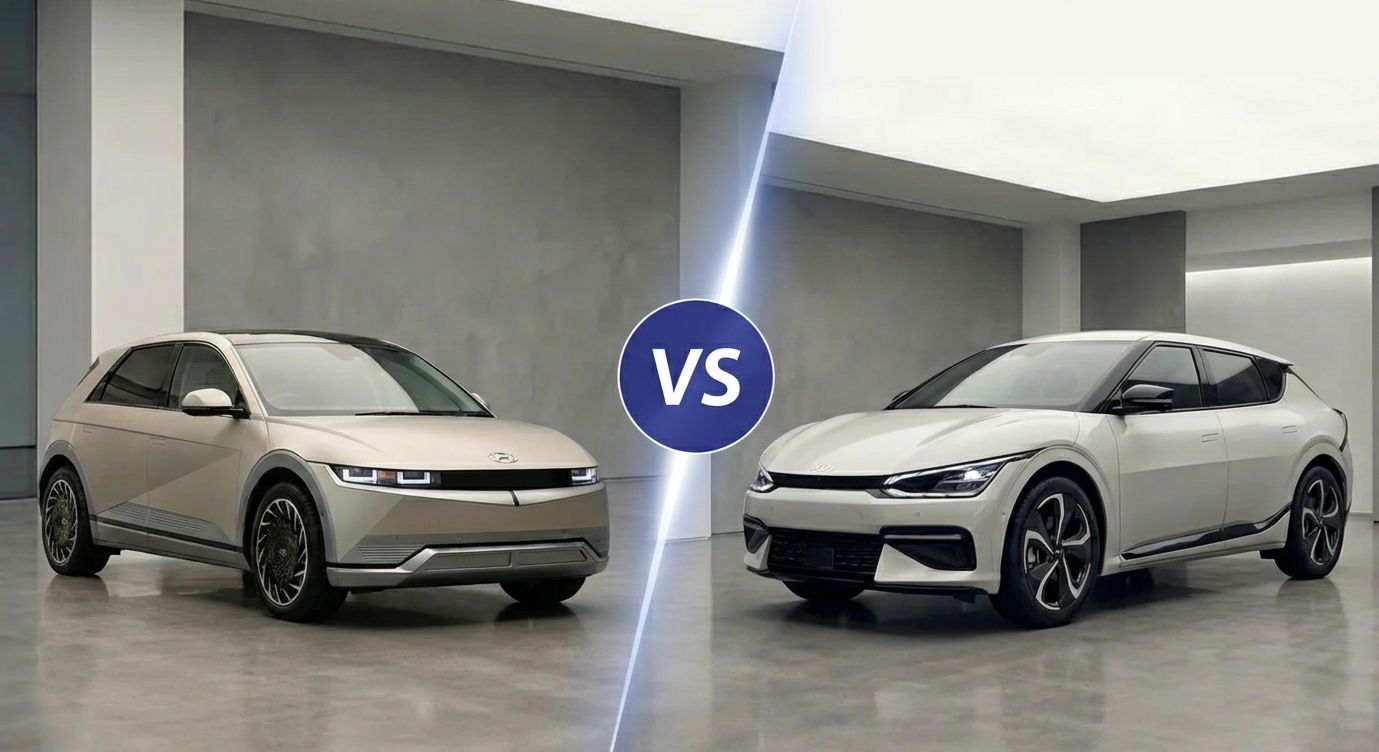
Car battle
Hyundai Ioniq 5 vs. Kia EV6: Complete Comparison 2025
Hyundai Ioniq 5 vs. Kia EV6: Which electric car is better? A detailed comparison of range, technology, and price to help you make the right decision.
Apr 13, 2026
Articles
Car battle
Detailed comparison of Tesla Model X vs Volvo EX90. Find out the real range, compare the equipment, and read our verdict. Choose the best electric SUV!
April 16, 2026
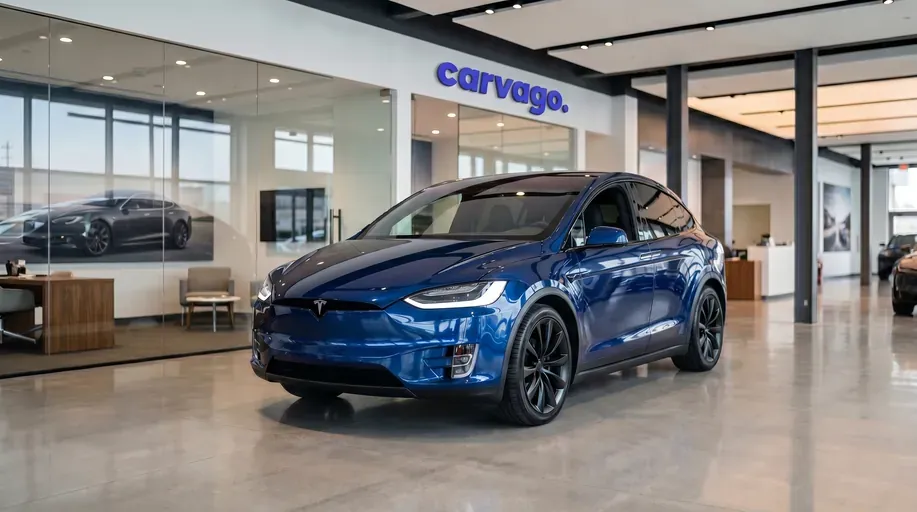
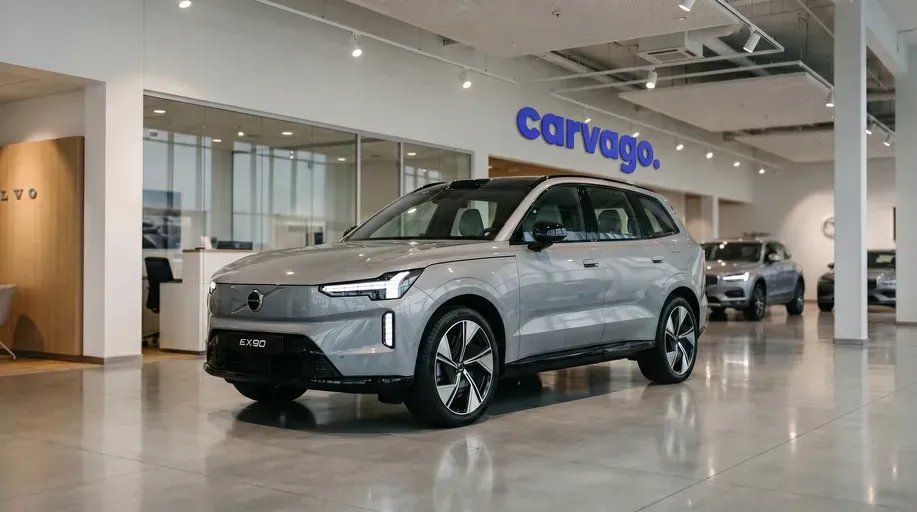
Tesla Model X, a pioneering electric SUV known for its iconic "Falcon Wing" rear doors and breathtaking performance, has long been the benchmark for technological innovation in the premium electric vehicle market. Standing against it is the Volvo EX90, the Swedish brand's fully electric flagship, which defines a new era of seven-seater family cars with an absolute emphasis on uncompromising safety systems and sustainable Scandinavian luxury. Let's take a detailed look at how these two representatives of luxury electric cruisers stack up in a direct comparison and which one represents the smarter choice for your daily journeys.
Looking at the exterior dimensions, it is immediately clear that both the Tesla Model X and the Volvo EX90 belong to the category of large premium electric SUVs that command respect on the road. In terms of length, the two vehicles differ by a completely negligible 1 millimeter (5036 mm for the Tesla and 5037 mm for the Volvo). This means that when searching for a parallel parking space in narrow city streets, you will face exactly the same challenges with both cars.
However, we find more significant differences in width and height. At 1999 mm, the Tesla Model X is 35 mm wider than the Volvo EX90 (1964 mm). This immense width gives the Tesla a stable and confident stance, though it may present a slight disadvantage when getting out of the car in narrow European parking garages. Conversely, the Volvo benefits from a taller, more traditionally styled body. With a height of 1744 mm, the EX90 is a noticeable 60 mm taller than the more aerodynamic Model X (1684 mm), ensuring a better view from the vehicle and more generous headroom for passengers.
An important parameter for interior spaciousness is the wheelbase. The Volvo EX90 offers 2985 mm here, which is 20 mm more than the Tesla (2965 mm). Although this is a small difference on paper, combined with the taller and boxier roof, the Volvo feels more spacious for passengers in the third row of seats. In contrast, the Tesla's lower silhouette is clearly subordinated to aerodynamic efficiency, which helps range at highway speeds.
In terms of exterior proportions, the choice depends on which style you prefer. The Tesla Model X will appeal to those looking for a sportier-tuned, wide, and low SUV with excellent aerodynamics. The Volvo EX90, on the other hand, is ideal for drivers seeking a traditional layout with a higher seating position and maximum emphasis on the utilization of vertical space inside the cabin.
| Parameter | Tesla Model X SUV | Volvo EX90 SUV |
|---|---|---|
| Width (mm) | 1999 | 1964 |
| Length (mm) | 5036 | 5037 |
| Height (mm) | 1684 | 1744 |
| Wheelbase (mm) | 2965 | 2985 |
When it comes to choosing a premium family electric car, the luggage compartment volume plays a crucial role. Especially with large SUVs like the Tesla Model X and Volvo EX90, customers expect uncompromising practicality. Both these vehicles target users who need a car capable of handling daily logistics with children as well as a car packed for a long family holiday without any issues. Although both cars belong to the same category of luxury SUVs, their approach to interior space utilization differs slightly, which can be a deciding factor for many buyers in the nearly new used car market (around four years old for the Tesla and newer model years for the Volvo EX90).
The Tesla Model X is an absolute leader in terms of total transport capacity and essentially has no competition among classic SUVs. In the most common five-seat configuration, it offers a massive base volume of 1233 liters, which increases to an impressive 2593 liters after fully folding the rear seats. If you opt for the six-seat or seven-seat variant, the base space behind the third row of seats is still a very above-average 608 liters. On the other hand, the Volvo EX90, designed primarily as a seven-seat SUV, offers 310 liters with all backrests upright. However, if you fold the third row into the floor (converting the car into a classic five-seat mode), you get a generous 655 liters, with the maximum volume after folding all rear rows being 1915 liters. Both electric cars also feature a practical front trunk, known as a "frunk." While the Tesla hides an exceptionally spacious 183 liters here, the Volvo offers a more modest 34 liters, which is still a perfect place for separate storage of charging cables.
In practice, these numerical differences mean that the Tesla Model X provides significantly more generous transport options. This literally creates space for several extra suitcases, sports equipment, or even transporting bulky items without the need for any complex reconfiguration. The Volvo EX90, on the other hand, relies on smart organization, bag hooks, and a practical double floor. Despite the smaller figures on paper, it offers space that is perfectly sufficient for weekend shopping and longer holidays. In conclusion, if maximum hauling capacity and giant volume are your absolute priority, the Tesla Model X will be the better partner. However, the Volvo EX90 represents a highly comfortable and smart choice for those who are satisfied with a more standard volume wrapped in a neat and exceptionally safe Nordic package.
| Parameter | Tesla Model X SUV | Volvo EX90 SUV |
|---|---|---|
| Base volume (liters) | 1233 | 655 |
| Maximum volume with seats folded (liters) | 2593 | 1915 |
While the Tesla Model X impresses with an unrivaled, huge trunk more reminiscent of a van, the Volvo EX90 offers a slightly more modest but exceptionally cleverly designed trunk for optimal daily family use.
The ability to tow a trailer is often a key parameter for large family SUVs, whether you are planning weekend trips with a bike rack, transporting materials, or a summer holiday with a full-sized caravan. Both the Tesla Model X and Volvo EX90 offer more than decent capacities in this regard, but a closer look at individual motorizations reveals important differences.
Both vehicles can easily tow an unbraked trailer with a standard legal weight of 750 kg. This value is quite sufficient for common everyday tasks, such as weekend shopping for larger items, transporting garden waste, or smaller construction materials. However, fundamental differences and technological limits appear with braked trailers.
If you are looking for a used car around four years old, the Tesla Model X (for example, in Maximum Range, Performance, or the newer Plaid versions) offers a very confident towing capacity. The maximum permitted weight of a braked trailer here is an impressive 2,250 kg, while for the latest standard versions from 2023 and newer, the capacity has even climbed to 2,300 kg. The Volvo EX90 is significantly newer on the market and shows more noticeable differences across its specifications. For the top-tier Twin Motor and Twin Performance variants, the maximum weight of a braked trailer is 2,200 kg, which is a value very close to the Tesla and easily sufficient for towing a heavier caravan or boat. However, for the basic Single Motor version, this capacity drops to 1,200–1,500 kg, which can represent a significant limit for bulkier loads.
Final evaluation:
If maximum towing power is an absolute priority for you, the Tesla Model X provides consistently high values across almost all versions you will encounter in the used car market. The Volvo EX90 represents a full-fledged alternative for towing larger trailers, but only provided you choose the more powerful twin-motor variant. Its single-motor specifications will serve better for lighter trailers.
| Model and motorization | Braked weight of trailer (kg) | Unbraked weight of trailer (kg) |
|---|---|---|
| Tesla Model X (Maximum Range / Performance / Plaid) | 2250 | 750 |
| Tesla Model X (Base model, from 2023) | 2300 | 750 |
| Volvo EX90 Single Motor | 1200-1500 | 750 |
| Volvo EX90 Twin Motor / Twin Performance | 2200 | 750 |
Both these premium electric SUVs offer a completely different approach to powertrains and cater to different types of buyers in the nearly-new used car market. The differences in the offered engines directly affect not only the car's dynamics and energy consumption but also tire wear and overall vehicle stability in poor conditions. While the American Tesla has gradually reduced its offering for its updated 1st generation (model years 2022 and newer) exclusively to extremely powerful all-wheel-drive models, the Swedish Volvo has maintained a more comprehensive range of powertrains for its modern EX90 model, available on the market since 2024, including an economical rear-wheel-drive version. From a standard perspective, Volvo starts at a very reasonable 205 to 245 kW for the Single Motor version, while the absolute base for the newer Tesla is a massive 500 kW for the Dual Motor version. The extreme peak for thrill-seekers is the three-motor Model X Plaid with an incredible 760 kW and a massive 1420 Nm of torque. For Volvo, the sporty variant is represented by the Twin Performance version with 380 kW. Interestingly, while the three-motor Tesla catapults the whole family forward at the pace of a hypercar, Volvo's motors were designed primarily for perfectly smooth power distribution without unnecessary and aggressive jolts, which passengers will appreciate especially during long journeys. If you prefer unlimited power and a sporty character, Tesla clearly wins; drivers looking for a more economical and smoother ride, on the other hand, will happily lean towards the more flexible offering of the Swedish brand.
The range of powertrains for the Tesla Model X (1st generation) has undergone significant development and profiling since its launch in 2016. While earlier models appearing between 2016 and 2019 offered options with lower battery capacity and weaker performance such as 60D, 75D, or 90D, in the market for roughly four-year-old and younger used cars (mostly the 2022–2025 period), only two immensely powerful motorizations play a major role. The entry point is the Dual Motor version (also referred to as Long Range) equipped with two electric motors, providing an uncompromising combined output of 500 kW. However, the pinnacle of engineering skill is the Plaid variant (available mostly since the turn of 2022 and 2023). This brings three asynchronous electric motors with carbon-sleeved rotors into play, allowing for an output of 760 kW (more than 1000 hp). All current and most sought-after used variants are equipped with a permanent all-wheel-drive (AWD) system and a single-speed automatic transmission; older, weaker motorizations are currently becoming a rather rare niche choice for buyers of premium electric SUVs.
| Engine type | Fuel type | Power (kW) | Torque (Nm) | Transmission |
|---|---|---|---|---|
| Dual Motor AWD | Electricity | 500 | 750 | 1AT |
| Tri Motor AWD (Plaid) | Electricity | 760 | 1420 | 1AT |
The Volvo EX90, as the 1st generation sold since 2024, represents the traditional European automaker's answer to family electrification and brings to the market a range of engines designed primarily to achieve an optimal balance between performance and consumption. For customers looking for long range and efficiency, Volvo has prepared for the first time a model oriented towards only one axle – specifically the rear-wheel drive labeled Single Motor. This unit achieves an output of 205 to 245 kW depending on the specific market specification, which is easily enough even for a fully occupied family car and offers an excellent range. The center of the range and the most rational choice in terms of safety in poor conditions are the Twin Motor variants, where the system output and all-wheel drive (AWD) bring a stable 300 to 335 kW. For fans of dynamic driving, there is the top-of-the-line Twin Performance variant with 380 kW and a massive 910 Nm of torque. Compared to Tesla's aggressive nature, however, the Volvo EX90's power is delivered through a linearly tuned single-speed transmission so as not to disturb the typical calm on board.
| Engine type | Fuel type | Power (kW) | Torque (Nm) | Transmission |
|---|---|---|---|---|
| Single Motor RWD | Electricity | 205 - 245 | 480 - 490 | 1AT |
| Twin Motor AWD | Electricity | 300 - 335 | 670 - 770 | 1AT |
| Twin Performance AWD | Electricity | 380 | 910 | 1AT |
While the Tesla Model X attracts with uncompromising sports dynamics and the crushing performance of the Plaid version, the Volvo EX90 prefers a more comprehensive offering with an emphasis on comfort, efficiency, and a sense of reliable safety for the whole family.
Choosing the right motorization is key to long-term satisfaction with the vehicle, and our recommendations are based on real-world experience with performance, consumption, user feedback, and mechanical reliability. While the Tesla Model X bets on extreme dynamics and a years-refined electric powertrain with highly efficient thermal management, the Volvo EX90 represents the latest generation of family SUVs, where silence, refinement, and an uncompromising emphasis on safety play the leading role. It is important to note that while the market for roughly four-year-old used cars is very rich for Tesla, the Volvo EX90 only arrived on the market during 2024, so used units will be significantly younger and will come from the first months of production.
This model (typically available on the market as the standard Model X from 2023–2025, or an older version labeled as Long Range) represents objectively the best choice in the entire model range. It offers an ideal compromise between highly above-average dynamics and excellent real-world efficiency. Thanks to great aerodynamics and tuned battery management, it is no problem to achieve an average consumption of around 20–22 kWh/100 km, which even with a slightly used car guarantees a generous real-world range of over 450 kilometers. While the more powerful Plaid version or the older Performance impress with paper values and acceleration, in practice, their enormous power degrades tires and chassis components much faster. What to watch out for: During the vehicle inspection, focus thoroughly on the condition of the front half-shafts. The test drive should include sharp acceleration – if the car vibrates noticeably (the well-known "shudder" effect), an early replacement awaits you. A specific feature of this car is its enormous weight approaching 2.5 tons, so check for play in the control arms and the air suspension bellows, which suffer particularly in city traffic full of speed bumps. This motorization is perfect for highway travelers, large families, and drivers looking for smooth dynamics backed by an unrivaled and reliable network of Superchargers.
Although this luxury Swedish electric SUV has only been available since 2024, the clear choice for trouble-free long-term ownership is the middle ground in the form of the Twin Motor AWD version. While the basic Single Motor version (reserved mainly for later model years) may have a harder time with a vehicle weighing around 2.8 tons when fully loaded, the Twin Performance variant (380 kW) is an absolutely unnecessary luxury for such a comfort-tuned colossus. The standard Twin Motor provides excellent, silky-smooth torque cleverly distributed to both axles, and the massive 111 kWh battery ensures a safe highway range of over 400 km even in winter conditions. What to watch out for: Since only cars from the launch series (years 2024 and 2025) are entering the used market, your main concern will not be worn mechanics, but rather immature software from the beginning of production. During the inspection, focus on whether the central display, mobile phone connection, and all assistance systems relying on the roof-mounted LiDAR work smoothly and without crashes. Before buying, always verify at an authorized service center whether the car has all available OTA (Over-The-Air) updates installed, which effectively solve these "teething troubles." This powertrain perfectly suits calmer drivers who prioritize absolute safety, unrivaled traction in bad weather, and a smooth, quiet ride.
Official consumption values stated by manufacturers according to the WLTP methodology often differ significantly from what drivers experience in everyday real-world operation. While laboratory measurements assume ideal conditions, real life involves variable weather, highway speeds, or intensive use of air conditioning or heating, which is a key factor for large and heavy electric SUVs. For the most accurate comparison, we have therefore used data based on available specifications and real-world user experiences collected on community platforms such as Spritmonitor.de and in specialized electromobility databases. In this comparison, we focus on models and powertrains corresponding to the market for nearly new used cars up to approximately four years old, where the proven Tesla Model X meets the recently introduced Volvo EX90.
| Model and powertrain | Average consumption (kWh/100 km) |
|---|---|
| Tesla Model X (2023 – 2025) | 19.1 |
| Tesla Model X Plaid (2022 – 2025) | 20.8 |
| Volvo EX90 Single Motor (2024 – 2025) | 18.1 |
| Volvo EX90 Twin Motor (2024 – 2025) | 20.3 |
| Volvo EX90 Twin Performance (2024 – 2025) | 20.3 |
One fundamental trend is clearly evident from the interpretation of these values. Although the Volvo EX90 is a significantly newer model, in terms of efficiency alone, it struggles to surpass the Tesla, which has been innovated over many years. On paper, the most economical choice is the Volvo EX90 in the Single Motor version, which, thanks to the absence of a second electric motor, can drive at an average of 18.1 kWh per 100 km. However, if we compare the all-wheel-drive versions (Twin Motor and Twin Performance), the consumption of the Volvo increases to an average of 20.3 kWh/100 km. Even after years, the Tesla Model X benefits from first-class aerodynamics and sophisticated thermal management. Its standard dual-motor version shows an average of 19.1 kWh/100 km, and even the extremely powerful tri-motor Plaid version with massive performance consumes only 20.8 kWh/100 km, making it an exceptional standout in terms of the power-to-efficiency ratio.
These figures carry an important message for typical users and families. If you spend most of your time commuting to work or driving in suburban traffic, the single-motor Volvo EX90 will be a very efficient companion, making it easier to keep consumption within reasonable limits. For drivers who, on the other hand, prefer long highway trips and cross-border travel, the Tesla Model X offers an advantage not only in the slightly lower average consumption of the dual-motor version but, above all, in its renowned ability to resist consumption increases at higher speeds thanks to its aerodynamic body shape.
In conclusion, however, it turns out that electricity consumption should not be the main argument that tips the scales one way or the other. For cars in this price and size category, the differences in monthly charging costs are not significant enough to justify choosing a car purely based on spreadsheet efficiency. Personal preference remains much more crucial in the selection process—whether it's Tesla's technological dominance, sporty design, and Supercharger network, or Volvo's maximum emphasis on Nordic luxury, safety, and quiet majesty.
When searching the used car market, you will encounter one fundamental difference between these two premium electric SUVs – their availability based on age and market launch date. While the Tesla Model X is an established staple and ideal four-year-old units from 2022 are easy to find, the Volvo EX90 is a hot newcomer. Due to delayed production starts in previous years, it reached the first customers much later. A typical "used" Volvo EX90 is therefore at most a year old, often just a demonstrator model with minimal mileage.
This difference in the age of available cars completely shapes the price gap that you must consider when buying a used vehicle.
A four-year-old Tesla Model X, which is the generation after the significant interior and powertrain upgrade (the so-called Palladium refresh, including Long Range and Plaid versions), currently offers an excellent price-to-performance ratio. The vehicle has already shed its highest initial depreciation.
You simply won't find a four-year-old used car of this model on the market. Most used cars offered come directly from dealers or are nearly new cars sold shortly after the break-in period.
| Model | Typical age of used car on the market | Approximate price range | Market status |
|---|---|---|---|
| Tesla Model X | 4 years (2022) | €62,000 – €76,000 | Stable supply, significant drop from original price |
| Volvo EX90 | 1 year (2025) | €82,000 – €103,000 | Nearly new and demonstrator models, like-new condition |
While with a four-year-old Tesla Model X you will benefit from a favorable drop in value and get a sophisticated modernized SUV at a reasonable price, a "used" Volvo EX90 represents, due to its novelty, an investment in a practically new car for a corresponding premium amount.
Both of these premium electric models earned the maximum five-star overall rating from independent Euro NCAP crash tests, confirming their privileged position regarding road safety. However, when comparing their specific percentage results, it is critically important to consider the context and the specific year the vehicles were tested. Euro NCAP's methodology and test protocols evolve constantly and are regularly tightened. For this reason, percentage scores from different years cannot be compared directly and equally – a 90% score several years ago does not represent the same level of difficulty as 90% according to today's standards.
The Tesla Model X underwent its crash tests in 2019. Under the conditions at the time, it dominated completely, particularly in adult occupant protection, where it achieved an impressive 98%. Furthermore, its advanced Autopilot system helped it achieve what was then a top rating for safety assistants. In contrast, the Volvo EX90 did not undergo testing until the end of 2025, thereby facing significantly stricter and more modern testing protocols. These newer tests already place extreme emphasis on advanced frontal impact simulations with a mobile barrier, detailed cyclist detection (including scenarios of opening a door into the path of an approaching cyclist), protection at intersections, and comprehensive driver fatigue monitoring.
| Parameter | Tesla Model X | Volvo EX90 |
|---|---|---|
| Year of testing | 2019 | 2025 |
| Adult occupant protection | 98 % | 92 % |
| Child occupant protection | 81 % | 93 % |
| Vulnerable road user protection | 72 % | 82 % |
| Safety assist systems | 94 % | 86 % |
From the perspective of a used car buyer, the interpretation of this data is crucial. Tesla's excellent 2019 result demonstrates that the car has an extremely rigid structure, a low center of gravity thanks to the batteries, and large crumple zones, providing first-class protection during the physical impact itself. However, for tests older than five years, the validity of the original certification usually expires, as the methodology of the time does not fully reflect the latest legislative and technological requirements for active accident prevention. In contrast, the Volvo EX90, which standardly utilizes advanced lidar, a suite of radars, and a precise system for understanding driver behavior, offers hardware equipment that is a generation newer. The test results show its excellent ability to protect small children in the rear seats and prevent collisions with pedestrians in today's dense traffic.
Although both SUVs are undeniably highly safe and reliable, the Volvo EX90, thanks to its substantially fresher design, brings a more modern and comprehensive safety package that fully corresponds to the toughest current standards of both testing laboratories and real-world traffic.
While the Tesla Model X offers massive passive safety with phenomenal adult protection verified by older tests, the modern Volvo EX90, thanks to the latest tests from 2025, guarantees unsurpassed protection for children and pedestrians according to the strictest current benchmarks.
In addition to standard equipment, each of the models offers several unique features that can be decisive for a customer when choosing a premium electric SUV, and each approaches overall added value in a completely different way.
Access to an extensive, fast, and highly reliable Supercharger network
Extreme performance and breathtaking acceleration (especially in the Plaid version)
Excellent powertrain efficiency providing above-average real-world range
Huge total storage space including a large front trunk (frunk)
Lightning-fast infotainment with advanced features and frequent OTA updates
Occasional shortcomings in build quality and body panel alignment
Rear Falcon Wing doors can be problematic in tight spaces or low garages
Lack of support for popular Apple CarPlay and Android Auto interfaces
Ultra-minimalist interior with an absence of physical buttons and stalks behind the steering wheel impairs ergonomics
Tesla Model X is the ultimate electric SUV for tech enthusiasts who demand uncompromising dynamics, maximum range, and easy long-distance travel. Thanks to the seamless Supercharger ecosystem, it excels as a highway cruiser, though its eccentric ergonomic solutions and occasional compromises in assembly quality may not suit every premium car buyer.
Unrivaled range of assistance and safety systems, including a standard LiDAR sensor
Luxuriously crafted interior with premium, sustainable materials and top-tier sound insulation
Highly comfortable seats and a practically designed full seven-seat space for the family
Well-tuned chassis that smooths out bumps better than stiffer competitors
Google Automotive-based infotainment with native maps and Apple CarPlay support
High curb weight negatively affects overall efficiency and energy consumption
Slightly lower top speed and fast-charging curve compared to Tesla
Some software features were missing in early model years or were added over time
Less focus on sporty driving characteristics due to softer suspension and higher weight
The Volvo EX90 is the embodiment of family safety, tranquility, and Scandinavian luxury, appealing primarily to buyers seeking maximum comfort and more traditional premium craftsmanship. This model represents the perfect sanctuary for a large family, although it lags slightly behind its American rival in terms of absolute electric powertrain efficiency and raw dynamics.
Based on our own data from our Independent Car Audit service, reliability statistics, and detailed feedback from long-term users, we have compiled an overview of the most common problems that buyers of these used cars must take into account.
The Tesla Model X is famous on the used car market for its high technological advancement, extreme performance, and unconventional solutions, which in practice also brings specific structural and electronic issues.
This car attracts with thrilling dynamics and unique equipment, but the complexity of its opening mechanisms and the heavily tested chassis represent a risk of higher service expenses on the used car market.
As the new flagship of the Swedes, the Volvo EX90 brought a completely new software and safety architecture, which faces more significant teething troubles in early used units.
EX90 impresses with top-notch craftsmanship and comfort, but those interested in older units must count on occasional whims of the onboard electronics and the need for consistent software updates.
When buying a used car, a thorough inspection is key. Here are some specific points to focus on for these two models. Modern electric cars are also very complex in terms of sensors and software, so it is especially important not to underestimate a used car inspection by experienced mechanics.
Tesla has overall better aerodynamics and efficiency, which, depending on the version, allows for a rated range of around 570 to 600 km on a single charge. Volvo relies on a massive 111kWh battery, thanks to which it achieves very similar values of over 580 km. In real-world driving and at higher highway speeds, however, the American car tends to be slightly more efficient due to its shape.
The Swedish SUV offers a more traditional body shape, which ensures more headroom in the third row of seats and an overall airier interior for adult passengers. Its competitor impresses with unique upward-opening "Falcon Wing" rear doors, which significantly facilitate placing children into car seats but can be an obstacle in lower garages. Both cars feature generous luggage space, including a practical storage compartment under the front hood (frunk).
The Volvo comes standard with an advanced LiDAR laser sensor, which significantly improves the accuracy of obstacle and pedestrian detection even in total darkness. Tesla, on the other hand, relies exclusively on a sophisticated camera system (Tesla Vision) combined with advanced artificial intelligence in its modern generations. Both brands are at the absolute top in terms of active and passive safety, with each choosing a completely different technological approach on the path to autonomous driving.
The EX90 uses Google's integrated Android Automotive system with native maps and the Play Store, which also supports popular smartphone mirroring via Apple CarPlay. The Model X has its own closed ecosystem controlled via a massive central display, which excels with lightning-fast response and a rich selection of games and streaming apps. The American representative does not officially support smartphone mirroring, but it tries to fully compensate for this with its top-tier proprietary route planner.
The American electric car is world-renowned for its extraordinary performance, with even the base version accelerating to 100 km/h in under four seconds and the top-tier Plaid variant in just 2.6 seconds. The most powerful Swedish model offers an impressive output of over 500 hp and acceleration from zero to 100 km/h in less than five seconds. While the Model X is the ideal choice for drivers seeking near-supercar acceleration, the EX90 focuses primarily on maximum comfort and a calm, quiet ride.
Sources: ADAC, aktualne.cz, auto.cz, autoexpress.cz, automagazin.cz, autosvet.cz
This article was prepared using artificial intelligence tools. The section guarantor is Petr Dušek.
Hyundai Ioniq 5 vs. Kia EV6: Which electric car is better? A detailed comparison of range, technology, and price to help you make the right decision.
Apr 13, 2026
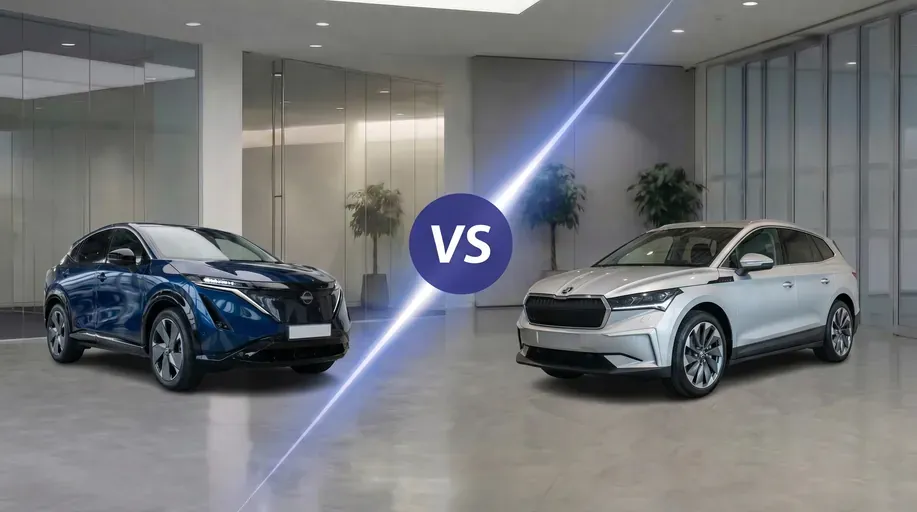
Nissan Ariya vs. Škoda Enyaq iV Comparison: Which electric SUV is better? We reveal real-world range, spaciousness, and equipment. Read our final verdict!
Apr 14, 2026
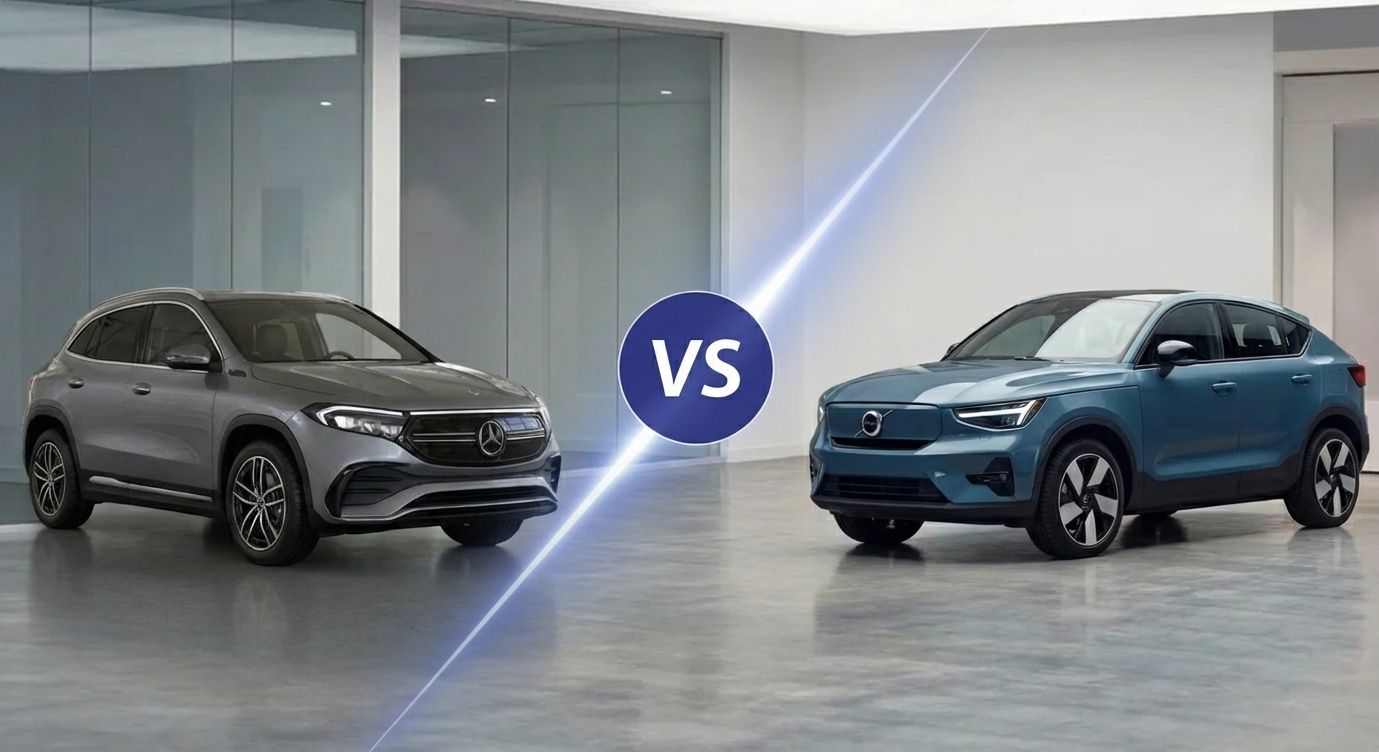
Mercedes-Benz EQA vs. Volvo C40 Recharge. Which premium electric SUV is better? A detailed comparison of range, performance, and price will help you decide.
Apr 14, 2026