Car battle
Nissan Juke vs. Opel Mokka: A Complete Comparison for 2025
Nissan Juke vs Opel Mokka: A detailed comparison of design, ride, and features. Our verdict will help you choose the right compact crossover.
Apr 14, 2026
Articles
Car battle
Suzuki Vitara or Škoda Kamiq? A detailed comparison of engines, equipment, and prices. Find out which of these popular small SUVs is the better choice for you.
April 13, 2026
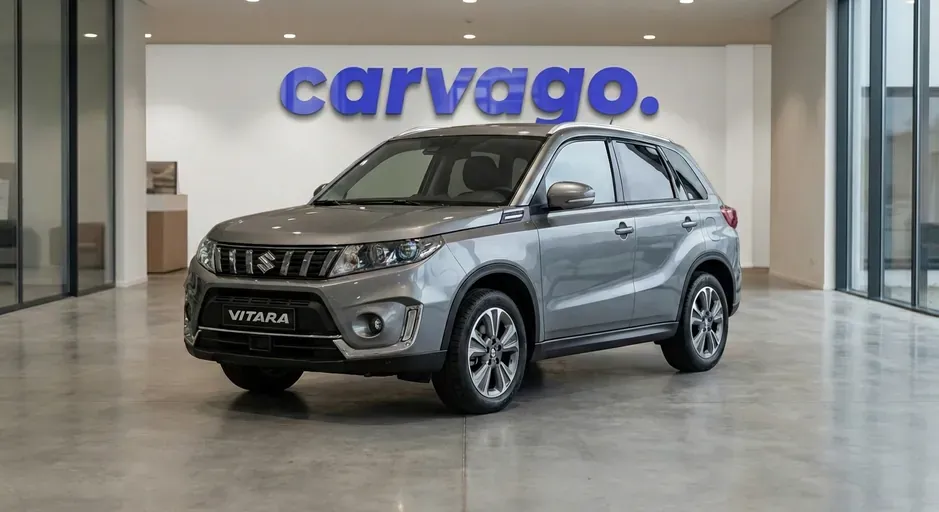
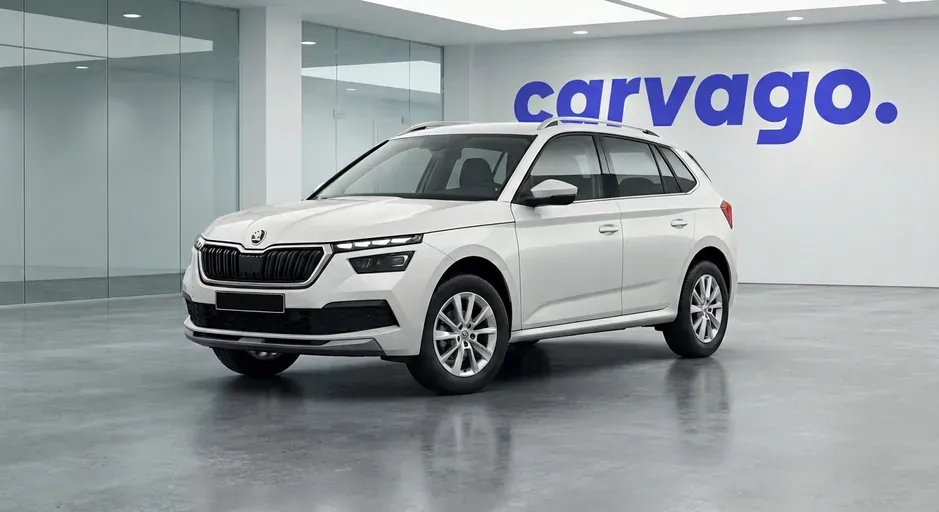
The Suzuki Vitara, also known as the Escudo in Japan and some other markets, has long been an established player in the compact SUV field, building on its robustness and optional all-wheel drive. It is pitted against the Škoda Kamiq, the smallest SUV from the Mladá Boleslav carmaker, which has brought a fresh design, clever solutions, and a focus primarily on urban traffic and family use to the same segment. This duel will show whether the proven Japanese versatility or modern Czech practicality is the better choice.
Looking at the dimensions table, it is clear that although both cars fall into the same compact SUV category, the Škoda Kamiq is slightly larger overall. With a length of 4,241 mm, it outgrows the Suzuki Vitara (4,170-4,175 mm) by about 7 centimetres. This difference will be noticeable not only in the more spacious cabin, but also when looking for a parking space. The Vitara, on the other hand, is a little more agile in narrow city streets thanks to its more compact dimensions.
A similar, though smaller, difference can be found in the width, where the Kamiq's 1,793 mm is just under two centimetres wider than the Vitara's (1,775 mm). This small difference on paper can contribute to a feeling of greater airiness in the interior. The Kamiq's exterior dimensions make it more inclined to be a family car.
A fundamental difference comes in height. Here, the Suzuki Vitara dominates, which at around 1,600 mm is significantly taller than the Škoda Kamiq (1,527 mm). This gives it a more classic SUV silhouette, a higher driving position and potentially more headroom. The Kamiq looks more like a raised hatchback or crossover.
However, the biggest difference lies in the wheelbase. With its 2,651 mm, the Kamiq declasses the Vitara (2,500 mm) by a whopping 15 centimetres. It is this parameter that is key to the interior space, especially for the knees of the rear seat passengers. While the Vitara relies on compactness and agility, the Kamiq clearly prioritises crew comfort.
| Parameter | Suzuki Vitara (2nd gen) | Škoda Kamiq (1st gen) |
|---|---|---|
| Length (mm) | 4,170 - 4,175 | 4,241 |
| Width (mm) | 1,775 | 1,793 |
| Height (mm) | 1,595 - 1,610 | 1,527 |
| Wheelbase (mm) | 2,500 | 2,651 |
For many buyers in the compact SUV segment, practicality is a key factor and boot size plays a major role. This is where one of the most significant differences between the Škoda Kamiq and the Suzuki Vitara comes to the fore. While both cars offer enough space for normal family needs, the Czech representative is clearly on top in this discipline.
The Škoda Kamiq boasts one of the largest boots in its class. In its basic configuration, it offers a generous 400 litres. Folding down the rear seats creates up to 1395 litres of space, making the Kamiq a great partner not only for weekend shopping, but also for longer holidays with the whole family. However, care should be taken with the G-TEC version with CNG drive, where the gas tanks reduce the volume to just 278 litres.
The Suzuki Vitara is a little more modest, but still very practical. Its luggage compartment has a basic volume of 375 litres, which is only 25 litres less than the Kamiq. You will hardly notice this difference in practice. It becomes more apparent only after folding down the backrests, when the Vitara offers a maximum of 1120 litres. An important piece of information for those interested in hybrid versions is that while the mild-hybrid variants do not reduce the boot volume, the fully hybrid 1.5 Dualjet Hybrid model has a reduced boot size of 289 litres due to the battery storage.
| Parameter | Suzuki Vitara | Škoda Kamiq |
|---|---|---|
| Basic volume (litres) | 375 | 400 |
| Maximum volume with seats folded down (litres) | 1120 | 1395 |
The ability to tow a trailer is crucial for many crossover owners, whether for transporting bikes, garden waste or a small caravan. In this respect, the two models differ more than it might seem at first glance, and the winner is, somewhat surprisingly, the Suzuki Vitara, especially in its mild-hybrid version.
The Škoda Kamiq offers solid, but not exceptional values. Most petrol engines, including the popular 1.0 TSI (with 81 kW) and the more powerful 1.5 TSI (110 kW), can handle a braked trailer weighing 1200 kg and 1250 kg respectively. This is comfortably sufficient for a standard unbraked car trailer or a small caravan. However, it is important to mention that the CNG version (1.0 TGI G-TEC) is not approved for towing a trailer.
On the other hand, the Suzuki Vitara shows its strength and versatility. While the basic petrol and full-hybrid variants (e.g. 1.5 Dualjet Hybrid) can tow a standard 1200 kg, the 1.4 Boosterjet Hybrid version with mild-hybrid technology can handle up to 1500 kg. This 250 kg difference compared to the most powerful Kamiq is already noticeable in practice and opens the door to towing larger caravans or heavier loads, making the Vitara a more practical helper for active families and cottagers.
| Model and motorization | Braked trailer weight (kg) | Unbraked trailer weight (kg) |
|---|---|---|
| Škoda Kamiq 1.0 TSI (81 kW) | 1200 | 620 |
| Škoda Kamiq 1.5 TSI (110 kW) | 1250 | 640 |
| Škoda Kamiq 1.0 TGI G-TEC (CNG) | Not approved | Not approved |
| Suzuki Vitara 1.4 Boosterjet (103 kW) | 1200 | 400 |
| Suzuki Vitara 1.5 Dualjet Hybrid (75 kW) | 1200 | 400 |
| Suzuki Vitara 1.4 Boosterjet Hybrid (95 kW) | 1500 | 600 |
When looking at the engine offerings, the Suzuki Vitara and Škoda Kamiq take completely different paths. While the post-facelift Vitara has focused almost exclusively on electrification and is the only one in this duel to offer all-wheel drive, the Kamiq sticks to the proven turbocharged petrol engines from the VW Group and previously also tempted buyers with a diesel or a CNG-powered option. The choice, therefore, clearly depends on your priorities – whether you are looking for an economical hybrid with the ability to venture off paved roads, or you prefer a wider range of conventional engines for driving mainly on the road.
In recent years, Suzuki has made a radical cut in its engine lineup. While on the used car market you can still find older versions with the 1.0 Boosterjet petrol turbo engine (82 kW) or even the 1.6 DDiS diesel (88 kW), since 2020 the range has revolved exclusively around hybrid technologies.
The core powertrain is the 1.4 Boosterjet Hybrid. This is a mild-hybrid system where a 48V starter-generator assists the combustion engine during acceleration, thereby reducing fuel consumption and improving throttle response. This engine is an ideal compromise between performance and running costs. For drivers who frequently drive in the city, there is the 1.5 Dualjet Hybrid, which is a full hybrid capable of running on pure electricity for short distances. However, it comes exclusively with an AGS automated manual gearbox, whose character may not suit everyone. A key advantage of the Vitara remains the option of AllGrip all-wheel drive, which makes it a more capable vehicle in poor traction conditions.
| Engine Type | Fuel | Power (kW) | Torque (Nm) | Gearbox |
|---|---|---|---|---|
| 1.0 Boosterjet | Petrol | 82 | 170 | 5-speed manual / 6-speed automatic |
| 1.4 Boosterjet | Petrol | 103 | 220 | 6-speed manual / 6-speed automatic |
| 1.4 Boosterjet Hybrid | Mild-Hybrid | 95 | 235 | 6-speed manual |
| 1.5 Dualjet Hybrid | Full-Hybrid | 85 | 138 | 6-speed automated (AGS) |
| 1.6 DDiS | Diesel | 88 | 320 | 6-speed manual / 6-speed dual-clutch |
Note: The 1.0 Boosterjet, 1.4 Boosterjet (without hybrid assistance), and 1.6 DDiS engines are no longer available in new cars, but they are common on the used car market.
The Škoda Kamiq offers a more traditional, yet very broad and proven range of power units. The foundation is the three-cylinder 1.0 TSI engine, which is perfectly adequate for everyday driving and is available in two power variants. For more demanding drivers who often travel on the motorway or with a fully loaded car, the ideal choice is the four-cylinder 1.5 TSI engine with ACT technology, which deactivates two cylinders under light load to save fuel.
On the used car market, you can also find the economical 1.6 TDI diesel engine, which was ideal for drivers with high annual mileage, or the environmentally friendly 1.0 TGI G-TEC variant that runs on compressed natural gas (CNG). However, both of these options have already been discontinued from the new car lineup. Unlike the Vitara, the Kamiq comes exclusively with front-wheel drive. However, for most engines, customers can choose between a manual gearbox and a comfortable seven-speed DSG automatic transmission.
| Engine Type | Fuel | Power (kW) | Torque (Nm) | Gearbox |
|---|---|---|---|---|
| 1.0 TSI | Petrol | 70 | 175 | 5-speed manual |
| 1.0 TSI | Petrol | 81-85 | 200 | 6-speed manual / 7-speed DSG |
| 1.5 TSI EVO | Petrol | 110 | 250 | 6-speed manual / 7-speed DSG |
| 1.6 TDI | Diesel | 85 | 250 | 6-speed manual / 7-speed DSG |
| 1.0 TGI G-TEC | CNG/Petrol | 66 | 160 | 6-speed manual |
Note: The 1.6 TDI and 1.0 TGI G-TEC engines are no longer available in new cars, but they represent an interesting alternative on the used car market.
Choosing the right engine is crucial for long-term satisfaction with a car. Our recommendations are based on a combination of performance, real-world fuel consumption, owner feedback, and mechanical reliability. While Suzuki bets on simplicity and proven mild-hybrid technology, Škoda offers a more sophisticated engine with cylinder deactivation technology. Both approaches have their strengths.
This power unit is the ideal choice for the Vitara. It combines the lively and time-tested turbocharged Boosterjet engine with a simple but effective 48V mild-hybrid system. This not only helps to reduce fuel consumption but, above all, improves the engine's response at low revs, where a small electric motor assists the combustion engine. The result is a subjectively strong pull and pleasant flexibility.
If you expect more from a compact crossover than just basic transportation, the 1.5 TSI engine is the clear choice. It lends the Kamiq confident dynamics, making it a mature-feeling car that won't be out of place even on the German autobahn. Its main advantage is the Active Cylinder Technology (ACT), which automatically deactivates two of the four cylinders under low load.
The paper consumption figures provided by manufacturers are one thing, but real-world operation is another. To get the most accurate picture, we looked at data from real drivers, for example, from databases like the German Spritmonitor.de. This data gives us a better idea of what fuel costs can actually be expected for both models, especially for cars that are several years old and most in demand on the used car market.
| Model and Engine | Average Real-World Consumption (l/100 km) |
|---|---|
| Škoda Kamiq 1.0 TSI (70/85 kW) | 6.1 |
| Škoda Kamiq 1.5 TSI (110 kW) | 6.4 |
| Škoda Kamiq 1.6 TDI (85 kW) | 5.2 |
| Suzuki Vitara 1.0 Boosterjet (82 kW) | 6.5 |
| Suzuki Vitara 1.4 Boosterjet (103 kW) | 6.6 |
| Suzuki Vitara 1.4 Boosterjet Hybrid (95 kW) | 5.9 |
| Suzuki Vitara 1.6 DDiS (88 kW) | 5.3 |
Looking at the table, it is clear that both cars offer economical engine options. For the Škoda Kamiq, the 1.6 TDI diesel engine excels, staying just over five litres in real-world operation, making it an ideal choice for drivers with high annual mileage. The petrol TSI engines are very similar in consumption. The more powerful 1.5 TSI averages only a few tenths of a litre more than the one-litre three-cylinder, which is also due to the cylinder deactivation technology (ACT) under lower load. The real-world consumption of the one-litre engine is slightly above six litres.
The Suzuki Vitara relies primarily on Boosterjet petrol engines, which are known for their reliability. Interestingly, the introduction of mild-hybrid technology in the 1.4 Boosterjet engine brought significant fuel savings, with average consumption reduced by more than half a litre compared to its purely petrol predecessor. The older 1.6 DDiS diesel engine, which was offered in the first years of the current generation's production, is comparably economical to Škoda's TDI. However, there is a noticeably smaller selection of it on the used car market.
For drivers who cover a large number of kilometres, especially on motorways, the diesel engine remains the clear choice, whether in the Kamiq or an older Vitara. For city driving and shorter trips, the petrol units are ideal. With the Vitara, it is worth looking for the newer mild-hybrid version, which effectively reduces consumption. With the Kamiq, the difference in real-world consumption between the 1.0 TSI and 1.5 TSI is so small that the choice depends more on a preference for dynamics. Overall, fuel consumption is not a decisive factor between these two models. Both offer modern and economical engines, and the final choice will depend more on the specific engine and the overall condition of the used car.
When comparing the prices of used Suzuki Vitara and Škoda Kamiq cars, approximately four years old, we encounter interesting differences that reflect their original focus and popularity on the Czech market. In general, the Škoda Kamiq, as a newer and more sought-after model, holds its value slightly better, but the Vitara counters with more affordable versions with all-wheel drive.
The Škoda Kamiq, launched in 2019, quickly became a bestseller, which is also reflected in the used car market. The prices of models from 2020 to 2022 range quite widely.
There are also CNG (G-TEC) cars on the market, which may have a more attractive purchase price, sometimes even below €12,000, but at the cost of higher mileage and specific service requirements.
The Suzuki Vitara, after its 2018 facelift which introduced turbocharged BoosterJet engines and later mild-hybrid technology, represents a rational and often more affordable choice on the used car market, especially if you are looking for 4x4 drive.
Overall, it can be said that for similar money, you often get better equipment or all-wheel drive with the Vitara, while the Kamiq offers a more modern interior and the feel of a newer car, for which you will pay extra on the used car market.
Although both cars received a five-star rating in Euro NCAP tests at the time of their release, a direct comparison of the percentage results is misleading. The testing methodology is constantly becoming stricter, and what was enough for a full star rating a few years ago might not be today. The difference in the testing dates of the two models is therefore a key factor.
The Suzuki Vitara underwent Euro NCAP crash tests back in 2015 and earned a full five stars right at its launch. This was an excellent result at the time, testifying to its robust construction and good level of passive safety. In the individual categories, it achieved 89% for adult occupant protection, 85% for child occupant protection, 76% for pedestrian protection, and 75% for assistance systems. However, it must be emphasized that since 2015, Euro NCAP tests have undergone several fundamental changes that place much greater emphasis on advanced driver-assistance systems (ADAS), such as autonomous braking with cyclist detection or lane-keeping systems, which were not assessed as strictly when the Vitara was tested.
The Škoda Kamiq was tested in 2019, under a significantly more demanding methodology. Nevertheless, it also took away the maximum five-star rating with excellent results. For adult occupant protection, it received an exceptional 96%, which is one of the best results in Euro NCAP history. Child occupant protection was rated at 85%, protection for vulnerable road users (pedestrians and cyclists) at 80%, and assistance systems at 76%. The high scores for both adult and pedestrian/cyclist protection prove that the Kamiq was designed from the outset with the latest safety standards in mind.
Although both cars received five stars, the Škoda Kamiq objectively offers a more modern and comprehensive safety package. Its tests were conducted four years later under stricter rules, which is reflected particularly in the excellent score for adult occupant protection and the rating of modern assistance systems. While the Vitara is still a safe car, its protection and especially its assistance technologies correspond to the standards of 2015. For a buyer who places maximum emphasis on the latest safety features, the Škoda Kamiq is the clear choice.
| Parameter | Suzuki Vitara | Škoda Kamiq |
|---|---|---|
| Year of testing | 2015 | 2019 |
| Adult protection | 89 % | 96 % |
| Child protection | 85 % | 85 % |
| Pedestrian protection | 76 % | 80 % |
| Assistance systems | 75 % | 76 % |
In addition to standard equipment, each model offers several unique features that can be decisive for the customer. While Suzuki bets on robust technology and a time-tested all-wheel-drive system, Škoda counters with cleverness, connectivity, and practical details for everyday life.
In the used car market, the Suzuki Vitara profiles itself as a choice for drivers who appreciate mechanical durability and confidence even off the tarmac. Its interesting features are mainly focused on the technology under the bonnet and the drivetrain.
The Škoda Kamiq is a typical representative of the brand's philosophy. It focuses on maximising space, practical details, and technologies that make life easier.
Advantages:
Disadvantages:
Advantages:
Disadvantages:
Based on our own CarAudit inspections, breakdown statistics, and owner feedback, we have compiled an overview of the most common problems that buyers of used cars should look out for. Neither model suffers from major, expensive faults, but they do have a few weak spots.
The Suzuki Vitara has a long-standing reputation as a very reliable car, which is confirmed by TÜV Report statistics, where it ranks among the top performers. Most problems are of a minor nature and do not affect key mechanical parts.
Summary for the Vitara: The problems are mostly minor and solvable. The mechanical foundation is very reliable, making the Vitara a safe bet. A thorough physical inspection of a used car should focus mainly on the functionality of the electronics and the condition of the chassis.
The Škoda Kamiq is built on the modern and proven MQB A0 platform, sharing many reliable components with other models from the group. Nevertheless, a few typical issues appeared in the first model years.
Summary for the Kamiq: Most problems are related to software and electronics, which can often be resolved with an update. The mechanics are reliable, but the DSG transmission requires attention, especially in cars with higher mileage. A careful, comprehensive vehicle inspection is key to uncovering any hidden defects, particularly concerning the functionality of electronic systems and the condition of the automatic transmission.
When buying a used car, a thorough inspection is crucial and should not be underestimated, even with relatively reliable models like the Vitara and Kamiq. Here are a few specific points to focus on with these two models to make your investment as safe as possible.
The Škoda Kamiq offers a slightly more spacious interior and a larger boot with a volume of 400 litres, while the Suzuki Vitara has a boot size of 375 litres. The Kamiq is also slightly longer, which contributes to better interior space for passengers. The Vitara, on the other hand, scores points with a higher seating position, which some drivers may prefer.
For driving off paved roads, the Suzuki Vitara is clearly the better choice. Unlike the Škoda Kamiq, which is only available with front-wheel drive, the Vitara is also available with AllGrip all-wheel drive. The Vitara also has slightly higher ground clearance, making it easier to overcome minor off-road obstacles.
Both models are very similar in terms of fuel consumption and are among the more economical cars. The Suzuki Vitara often has slightly lower combined consumption, especially in the mild-hybrid versions, which ranges from around 5.3 to 5.8 l/100 km. The Škoda Kamiq with TSI petrol engines achieves consumption of around 5.5 to 5.8 l/100 km.
Both brands are considered reliable, but their approach to engines differs. Suzuki relies on naturally aspirated engines or simpler mild-hybrid technology, which is proven and generally very reliable. The Škoda Kamiq uses modern turbocharged TSI engines that offer excellent dynamics but can theoretically be more maintenance-intensive.
For family use, the Škoda Kamiq is slightly better suited due to its larger boot and more spacious interior, which you will especially appreciate when travelling with children. It also offers a range of "Simply Clever" solutions that enhance everyday practicality. The Vitara is still a good choice, but its smaller dimensions may be a limitation for families with more children.
Sources: ADAC, novinky.cz, svetmotoru.cz, auto-mania.cz, autoexpress.cz, csas.cz
This article was prepared using artificial intelligence tools. The section guarantor is Petr Dušek.
Nissan Juke vs Opel Mokka: A detailed comparison of design, ride, and features. Our verdict will help you choose the right compact crossover.
Apr 14, 2026
Ford Puma vs Peugeot 2008: Which crossover should you choose? Our detailed comparison, real-world insights, and verdict will help you decide.
Apr 13, 2026
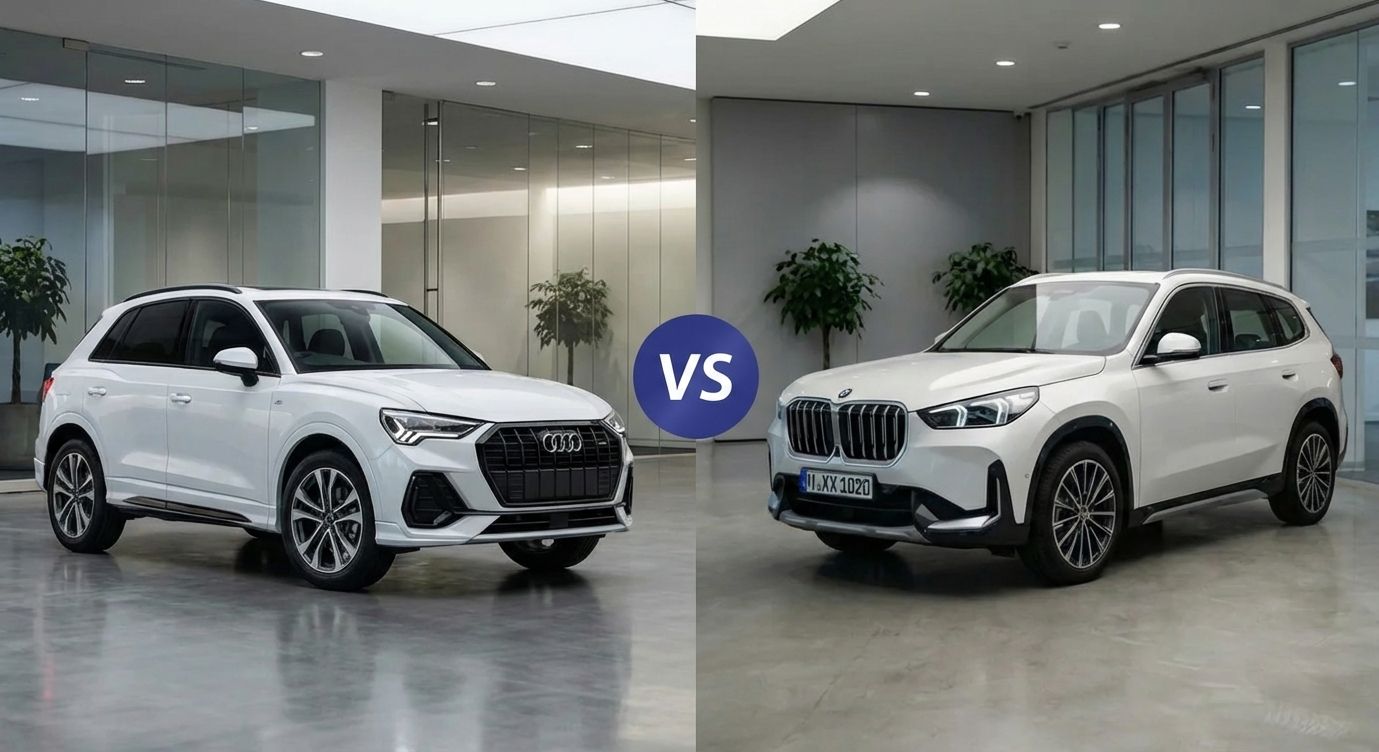
Audi Q3 vs BMW X1: Detailed comparison of design, performance, and practicality. Find out which premium SUV is the right choice for you in our verdict.
Apr 14, 2026