Car battle
Kia Ceed vs. Opel Astra: Complete comparison 2026
Detailed comparison of the Kia Ceed and Opel Astra. We compared real-world fuel consumption, reliability, and equipment. Find out which popular hatchback is worth buying.
Apr 14, 2026
Articles
Car battle
Detailed comparison of Škoda Octavia vs. VW Golf (Volkswagen Golf). Discover real-world experiences, differences in space, and our verdict on which car is more worth it.
April 15, 2026
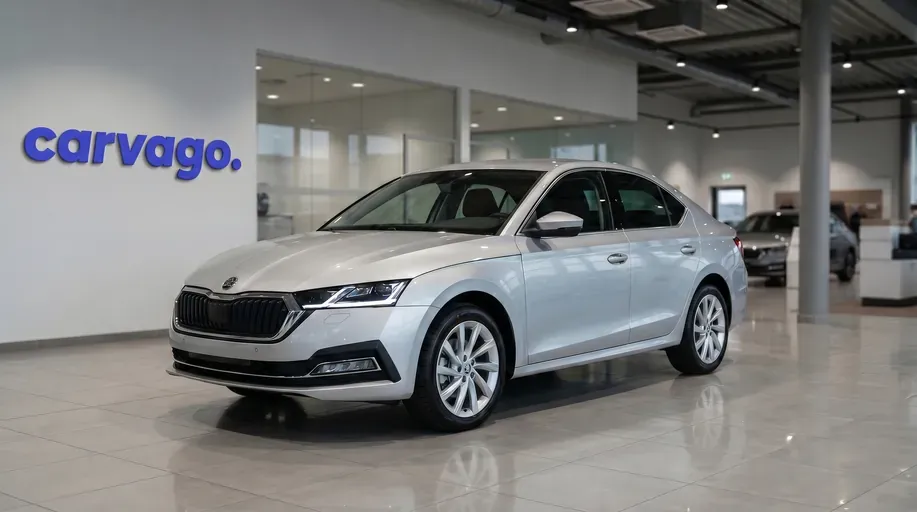
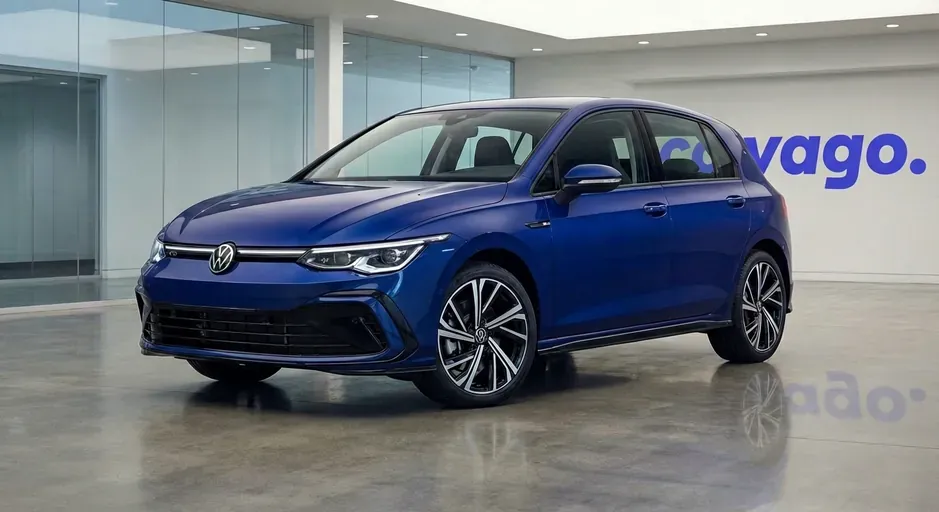
Škoda Octavia represents an unsurpassed benchmark of practicality and spaciousness, which, thanks to its above-average luggage compartment and clever family solutions, has won the hearts of many Czech and European drivers. In contrast, the Volkswagen Golf, with which it shares the same technical platform, has been defining the entire compact car class for decades and traditionally relies on perfectly balanced driving characteristics, timeless design, and a hallmark of German precision. Let's take a look together in this detailed comparison at which of these two technically related but characterfully different group siblings will be the better choice for your daily journeys.
When it comes to exterior dimensions, both cars clearly show a different approach to the compact class concept. The eighth-generation Volkswagen Golf remains true to its long-standing definition of a compact hatchback, designed from the ground up with everyday European traffic and limited parking options in mind. In contrast, the fourth-generation Škoda Octavia cleverly balances on the border between the compact and mid-size classes with its proportions, traditionally feeling like a more generous "extra piece of car." In terms of choosing a used car, this presents a clear dilemma: if you need a car that is easy to park in any city gap, the more compact Golf will clearly be the friendlier choice for narrow streets. However, if you prefer the feel of a large car and highway dominance, the bulkier Octavia will undoubtedly satisfy your requirements better.
The most significant differences are, of course, revealed by looking at the basic body versions of both rivals. The Octavia, with its elegant liftback body, is a staggering 405 mm longer with a total length of 4689 mm and exactly 40 mm wider (1829 mm) than the base five-door Golf hatchback. The Czech bestseller also has a respectable 67 mm longer wheelbase (2686 mm compared to 2619 mm for the Golf), which has a very positive effect on both the car's directional stability and the comfortable knee room for rear passengers. Volkswagen, on the other hand, scores slightly in a category where few would expect it – the hatchback is 21 mm taller. This mix of proportions clearly points to the target groups: the longer and wider Octavia will perfectly meet the needs of long-distance drivers with its centimeters, while the slightly taller and significantly shorter Golf will be appreciated by those who care about a compact footprint and perhaps a slightly airier feeling overhead.
For the more practical estates, which are extremely sought after on the used car market, the length differences narrow considerably, but even here, the Škoda has the upper hand. The Škoda Octavia Combi maintains a length of 4689 mm, so it outgrows the Volkswagen Golf Variant by only 56 mm. However, a wider track and a slightly lower silhouette give the Mladá Boleslav car a visually more mature and wider stance. The Golf Variant, on the other hand, again bets on a slightly taller body structure, exceeding the Octavia Combi by 30 mm (1498 mm compared to 1468 mm). In practice, the estate from Wolfsburg feels slightly less sporty on the road, but it can offer a small ergonomic bonus in the form of easier entry for taller individuals. Despite all of Volkswagen's efforts, it is ultimately the larger and visually more massive Octavia Combi that will be the more logical choice for demanding families, for whom literally every centimeter in the interior is priceless during weekend trips.
| Parameter | Škoda Octavia Liftback | Volkswagen Golf Hatchback | Škoda Octavia Combi | Volkswagen Golf Variant |
|---|---|---|---|---|
| Length (mm) | 4689 | 4284 | 4689 | 4633 |
| Width (mm) | 1829 | 1789 | 1829 | 1789 |
| Height (mm) | 1470 | 1491 | 1468 | 1498 |
| Wheelbase (mm) | 2686 | 2619 | 2686 | 2669 |
Luggage compartment volume is often one of the main decision-making criteria when choosing a practical second-hand car, and it is in this discipline that the different concepts of both models are fully revealed. For families, cottagers, and drivers who often transport bulky cargo, boot capacity is an absolutely essential feature. While the eighth-generation Volkswagen Golf represents a traditional compact hatchback focused more on agility and easier parking, the fourth-generation Škoda Octavia – both cars typical for the market of roughly four-year-old used vehicles – benefits from a significantly extended rear overhang. In practice, the Czech representative offers space for several extra suitcases and can handle weekend shopping or a longer holiday with a deep pram and a pile of bags without much trouble.
In the standard versions with a truncated rear, the difference in transport capacity is huge. The Škoda Octavia in the liftback version holds a fantastic 600 litres of cargo in its basic configuration, while the Volkswagen Golf hatchback offers a noticeably smaller 381 litres. After fully folding the rear seats, the available space increases to 1555 litres for the Škoda and 1237 litres for the Volkswagen. If we focus on the more spacious body variants, the numbers get a bit closer, but the king of space remains the same. The Škoda Octavia Combi has a basic volume of 640 litres, which can be expanded to a massive 1700 litres by simply folding the backrests. In contrast, the Volkswagen Golf Variant will satisfy users with a volume of 611 litres, or a maximum value of 1642 litres. Both estate versions are fully sufficient for the vast majority of families; however, the Octavia again benefits from a slightly longer and deeper loading area.
When choosing a used car, it is important to pay close attention to the chosen engine, as the popular plug-in hybrid versions of the time significantly reduce usable space due to the installation of the traction battery. For the Škoda Octavia iV, the basic volume drops to 450 litres for the liftback and a more acceptable 490 litres for the estate. However, an even more dramatic concession is required by the hybrid Volkswagen Golf eHybrid or the sportily styled GTE (hatchback), where the boot is reduced to a very modest 273 litres. Such a value can already significantly limit normal family use. The spatial aspect thus makes the Octavia a much more versatile choice for families looking for a spacious hauler, while the Golf will suit young couples or individuals in particular.
| Parameter | Škoda Octavia Liftback | Volkswagen Golf Hatchback | Škoda Octavia Combi | Volkswagen Golf Variant |
|---|---|---|---|---|
| Basic volume (litres) | 600 | 381 | 640 | 611 |
| Max. volume with seats folded (litres) | 1555 | 1237 | 1700 | 1642 |
While the Volkswagen Golf offers a standard boot corresponding to the compact hatchback class, the Škoda Octavia unrivalledly dominates with both its body versions and is the clear choice for buyers requiring maximum transport capacity.
The ability to tow a trailer is often a key factor for cottagers, families, and active individuals considering transporting a caravan, boat, or building materials. Given that the Škoda Octavia and Volkswagen Golf share the identical MQB chassis platform, their initial design limits for towing equipment are very similar. Nevertheless, in the market for roughly four-year-old used cars (Octavia 4th generation and Golf 8th generation), interesting differences resulting from the specifications of individual engines can be found.
For both models, the maximum braked trailer weight starts at 1,300 kg for the basic one-liter three-cylinder engines (1.0 TSI with 81 kW). The popular "sweet spot" in the form of 1.5 TSI units or basic two-liter diesels (2.0 TDI with 85 kW) raises this capacity to a much more versatile 1,500 kg for both representatives. For more demanding use, more powerful 2.0 TDI diesels (110 kW) are offered, where the braked trailer value standardly reaches 1,600 kg.
However, when comparing specific versions, subtle nuances begin to surface. A remarkable difference exists in modern plug-in hybrids. While the Škoda Octavia iV (110 kW) offers a braked trailer capacity of 1,500 kg, the Volkswagen Golf eHybrid and GTE can tow up to 1,700 kg, making it a slightly more practical companion for eco-conscious caravanners. If you are looking for the absolute maximum, you must choose all-wheel-drive models from both brands. Both the Škoda Octavia Scout and the Volkswagen Golf Alltrack (equipped with the most powerful 2.0 TDI engines) easily push the towing limit to a top-tier 2,000 kg.
In practical terms, these values represent enormous flexibility – an ordinary unbraked trailer limited to 750 kg is perfectly sufficient for a weekend purchase of building materials, while a capacity over 1,500 kg will reliably cover the needs for a summer holiday with a larger caravan.
In terms of overall comparison, the Škoda Octavia and Volkswagen Golf have little to reproach each other for. The choice of vehicle will depend more on what target weight you need to tow and whether you might take advantage of the slight benefit of the plug-in hybrid Golf, or go straight for the top-of-the-line all-wheel-drive versions.
| Model and engine | Braked trailer weight (kg) | Unbraked trailer weight (kg) |
|---|---|---|
| Škoda Octavia 1.0 TSI (81 kW) | 1,300 | 640 - 750 |
| VW Golf 1.0 TSI / eTSI (81 kW) | 1,300 | 640 - 750 |
| Škoda Octavia 1.5 TSI (110 kW) | 1,500 | 680 - 750 |
| VW Golf 1.5 TSI / eTSI (110 kW) | 1,500 | 680 - 750 |
| Škoda Octavia 1.4 TSI iV (110 kW) | 1,500 | 750 |
| VW Golf 1.5 eHybrid (110 kW) | 1,700 | 750 |
| Škoda Octavia 2.0 TDI SCR (110 kW) | 1,600 | 700 - 750 |
| VW Golf 2.0 TDI SCR (110 kW) | 1,600 | 700 - 750 |
| Škoda Octavia Scout 2.0 TDI SCR (147 kW) | 2,000 | 750 |
| VW Golf Alltrack 2.0 TDI SCR (147 kW) | 2,000 | 750 |
Since the Škoda Octavia and Volkswagen Golf share the same MQB Evo platform, their engine ranges are technologically very similar. For a buyer of a used car approximately four years old (i.e., the fourth-generation Octavia and eighth-generation Golf), this means access to highly efficient and reliable units with an emphasis on reducing fuel consumption and emissions. While the standard engines in both models are represented by economical 1.0 TSI three-cylinder petrol engines, the highlights of both ranges are powerful two-liter engines and modern plug-in hybrids. However, differences can be found in the overall focus of both brands. The Octavia primarily targets maximum practicality, family use, and fleet customers with its legendary 2.0 TDI diesels. The Golf, on the other hand, offers a much more diverse selection of explicitly sporty variants for more demanding drivers. In both cars, you will encounter advanced technologies such as mild-hybrid systems (labeled as e-TEC at Škoda and eTSI at VW), which help reduce real-world fuel consumption thanks to a 48V onboard network, and of course, optional all-wheel drive (4x4 at Škoda, 4MOTION at Volkswagen).
The engine range for the fourth-generation Škoda Octavia (on the market since 2020) is designed with high mileage and excellent operating economy in mind. The base is the 1.0 TSI three-cylinder, but the most common and popular choice on the used car market is the exceptionally balanced 1.5 TSI (110 kW) four-cylinder petrol engine, which excels in its great ratio of dynamics to fuel consumption. The 2.0 TDI SCR diesel engines, available in several power levels and characterized by an incredibly low appetite for fuel, remain the highway and fleet benchmark. Škoda has also joined the electrification wave – e-TEC mild-hybrids paired exclusively with a DSG automatic transmission are available, as well as full plug-in hybrid versions: the 1.4 TSI iV (150 kW) and the sportier Octavia RS iV (180 kW). Also worth mentioning is the 1.5 TGI G-TEC natural gas variant. This featured heavily in offers around 2020 and 2021; however, the automaker has since moved away from this powertrain due to market trends, so today you can find it only on the used car market.
| Engine type | Fuel | Power (kW) | Torque (Nm) | Transmission |
|---|---|---|---|---|
| 1.0 TSI / 1.0 TSI e-TEC | Petrol / Mild-hybrid | 81 | 200 | 6MT / 7DSG |
| 1.5 TSI / 1.5 TSI e-TEC | Petrol / Mild-hybrid | 110 | 250 | 6MT / 7DSG |
| 2.0 TSI | Petrol | 140 | 320 | 7DSG (4x4) |
| 1.4 TSI iV | Plug-in Hybrid | 150 | 350 | 6DSG |
| 1.4 TSI iV RS | Plug-in Hybrid | 180 | 400 | 6DSG |
| 2.0 TDI SCR | Diesel | 85 / 110 | 300 / 360 | 6MT / 7DSG (4x4 optional) |
| 2.0 TDI SCR RS | Diesel | 147 | 400 | 7DSG (4x4 optional) |
| 2.0 TSI RS | Petrol | 180 | 370 | 6MT / 7DSG |
| 1.5 TGI G-TEC | CNG | 96 | 200 | 7DSG |
The eighth-generation Volkswagen Golf shares most of its "civilian" engine options with its Czech sibling, from the modest 1.0 TSI to the robust 2.0 TDI. However, the fundamental difference and selling point of the Golf lies in its sports division. If you are looking for driving excitement, the Golf offers the iconic GTI with 180 kW, complemented by the even sharper and more driver-focused Clubsport variant (221 kW). Diesel has its performance representative in the GTD highway express (147 kW), and there is also an eco-friendly performance model labeled GTE (180 kW). The absolute king of the range is the Golf R with 235 kW and a sophisticated 4MOTION all-wheel-drive system with torque vectoring. As with the Octavia, you may occasionally come across compressed natural gas versions (1.5 TGI) on the four-year-old used car market, which Volkswagen has now phased out, but for buyers with access to CNG stations, they represent very low-cost operation.
| Engine type | Fuel | Power (kW) | Torque (Nm) | Transmission |
|---|---|---|---|---|
| 1.0 TSI / 1.0 eTSI | Petrol / Mild-hybrid | 81 | 200 | 6MT / 7DSG |
| 1.5 TSI / 1.5 eTSI | Petrol / Mild-hybrid | 96 / 110 | 200 / 250 | 6MT / 7DSG |
| 2.0 TSI | Petrol | 140 | 320 | 7DSG (4MOTION) |
| 1.4 eHybrid | Plug-in Hybrid | 150 | 350 | 6DSG |
| 1.4 GTE | Plug-in Hybrid | 180 | 400 | 6DSG |
| 2.0 TDI SCR | Diesel | 85 / 110 | 300 / 360 | 6MT / 7DSG (4MOTION optional) |
| 2.0 TDI GTD | Diesel | 147 | 400 | 7DSG |
| 2.0 TSI GTI / Clubsport | Petrol | 180 / 221 | 370 / 400 | 6MT / 7DSG |
| 2.0 TSI R | Petrol | 235 | 420 | 7DSG (4MOTION) |
| 1.5 TGI | CNG | 96 | 200 | 7DSG |
While the Škoda Octavia impresses with rational and exceptionally efficient engines that are absolutely ideal for long journeys and family or business use, the Volkswagen Golf offers a much more diverse range of purely sporty versions for driving enthusiasts. However, the reliability and efficiency of the standard units are at a top-tier level for both used cars.
Choosing the right engine is crucial for long-term satisfaction. Our recommendations are based on real-world performance, actual fuel consumption, owner feedback, and mechanical reliability in practice. The 4th generation Škoda Octavia and the 8th generation Volkswagen Golf (both widely represented in the market for approximately four-year-old used cars from 2020–2022) share the group's MQB Evo platform, which brings a very similar range of power units. An interesting fact, however, is how differently these engines can be used in both cars – while the Octavia has historically excelled on long routes thanks to its body with sophisticated aerodynamics and logically attracts diesel long-distance cruisers, the eighth-generation Golf has fully capitalized on the development of innovative mild-hybrid petrol technologies (eTSI), which have proven to be a phenomenal solution for agile daily operation on shorter and mixed routes.
For the fourth-generation Octavia, this two-liter diesel of the EVO generation (EA288 evo) represents the absolute ideal. It offers an excellent compromise between effortless dynamics and top efficiency, with real-world consumption staying below 5 liters per 100 km in the long term with a light foot. The engine is characterized by powerful pull from the lowest revs (generous 360 Nm torque), which perfectly fits the character of a fully loaded family car or a highway cruiser. Thanks to the "Twin Dosing" system with two SCR catalytic converters and double AdBlue injection, it is also unexpectedly clean and meets strict emission standards with a margin.
What to watch out for: For modern diesels, the biggest bogeyman is operation on very short routes. With predominantly urban hopping, there is a risk of faster clogging of the diesel particulate filter (DPF) and oil degradation due to incomplete regenerations. When choosing a used car, therefore, carefully check the service history and ideally use diagnostics to check the filter's fill level. As a preventive measure, it is strongly recommended to refuel with high-quality additivated diesel and take regular longer highway trips, which allow the DPF to burn off safely.
This engine is perfectly optimal for drivers with a higher annual mileage (over 20,000 km) and those who eat up hundreds of kilometers on highways or longer regional routes.
In the case of the Volkswagen Golf VIII from the used car market, the most versatile and driver-friendly choice is the mild-hybrid petrol four-cylinder 1.5 eTSI, always paired with a DSG dual-clutch automatic. This engine provides a great output of 150 hp, exceptionally refined operation, and thanks to the 48V starter-generator, it allows the car to "coast" completely imperceptibly with the engine off. This, in combination with the Active Cylinder Technology (ACT) system at lower loads, brings excellent real-world consumption of around 5.5 to 6 l/100 km. Mild-hybrid assistance helps when starting with the electric motor, cleverly covering the so-called turbo lag, and ensures an extremely smooth ride even in a congested city.
What to watch out for: In early eighth-generation models from 2020 and 2021, teething problems in the form of software glitches in car management and infotainment appeared relatively often. Before buying, therefore, always thoroughly check whether the specific car has all available software updates installed at an authorized service center. From a mechanical standpoint, for the long life of the eTSI, it is key to shorten the variable oil change interval to a fixed 15,000 km (or 1 year), thereby preventing premature carbon deposit formation on the intake valves.
This petrol powertrain will delight a wide range of drivers – from people commuting daily to work in suburban traffic, where they will use the efficiency of coasting, to those who like a more dynamic ride on a winding road, where the engine shows its excellent flexibility.
Official fuel consumption figures provided by manufacturers almost always differ from reality on ordinary roads. Although stricter laboratory measurements according to the WLTP cycle have brought slightly more accurate estimates, they still cannot fully simulate the impact of heavy city traffic, the load of a family holiday, or the different driving style of each driver.
For the most objective comparison of four-year-old used cars, we used real data from hundreds of drivers from the crowdsourcing platform Spritmonitor.de. We specifically focused on the fourth generation of the Škoda Octavia and the eighth generation of the Volkswagen Golf. Both generations entered the market around 2020 and currently represent the most sought-after model years in used car dealerships.
| Model and engine | Average consumption (l/100 km) |
|---|---|
| Škoda Octavia 2.0 TDI 110 kW | 5.1 |
| Volkswagen Golf 2.0 TDI 110 kW | 5.2 |
| Škoda Octavia 1.5 TSI 110 kW | 6.0 |
| Volkswagen Golf 1.5 TSI 110 kW | 6.1 |
| Škoda Octavia 1.0 TSI 81 kW | 5.8 |
| Volkswagen Golf 1.0 TSI 81 kW | 5.8 |
A detailed look at real user data clearly shows why 2.0 TDI diesel units are still so in demand on the market. They confidently fulfill the role of economical long-distance cruisers, where they stay just above the five-liter mark without much difficulty. The slight difference of one-tenth of a liter between the Golf and the Octavia stems primarily from different aerodynamics and weight, but in practice, you will hardly notice it.
Interesting and to some extent surprising is the finding regarding the basic three-cylinder 1.0 TSI engines. While official brochures suggest more attractive fuel savings, the reality is often different. As soon as you load these smaller units with luggage or take them on the highway, they have to spend more time at higher revs, which brings their real consumption dangerously close to the values of the full-fledged and much more refined 1.5 TSI four-cylinders. The saving thus amounts to a mere two-tenths of a liter.
For a typical used car buyer, there is a clear recommendation:
Can consumption therefore be declared the deciding factor when choosing between these two rivals? Definitely not. Both vehicles share absolutely identical group technology, and the differences in their efficiency fall into the realm of statistical error. The winner should therefore not be decided by saved tenths of a liter of fuel, but rather by whether you absolutely need the huge luggage space of the Octavia for your life, or conversely, if you appreciate the easier parking and more compact dimensions of the Golf.
When looking for a used car approximately 4 years old (typically 2021 and 2022 models), direct group siblings meet on the market: the 4th generation Škoda Octavia and the 8th generation Volkswagen Golf. Both models are built on the identical MQB Evo platform, but their pricing and overall availability on the Czech and European used car markets differ significantly, primarily due to the different ways they were used by their first owners.
| Used Car Category | Škoda Octavia IV | Volkswagen Golf VIII |
|---|---|---|
| Basic equipment / Higher mileage (over 150,000 km) | €13,000 – €16,000 | €16,000 – €18,000 |
| Golden middle ground (mileage up to 100,000 km) | €16,000 – €20,000 | €18,000 – €21,000 |
| Premium and sports versions (RS / R-Line, GTI) | €23,000 – €27,000+ | €23,000 – €29,000+ |
Due to the massive popularity of the Octavia as a company and fleet car, the used car market is literally flooded with offers. For the buyer, this brings significant advantages and much wider options for negotiation.
The eighth-generation Golf is considerably rarer on the domestic used car market. This is because they mostly come from private owners or are individual imports from abroad, which results in different price behaviour:
When choosing a 4-year-old used car, similar maintenance rules apply to both siblings. The most sought-after and versatile choices on the market in the long term are versions with the economical 1.5 TSI (110 kW) four-cylinder petrol engine or the proven 2.0 TDI (85 kW and 110 kW) diesel. Since both cars use a shared electronic architecture with touch infotainment, we recommend thoroughly testing the speed and stability of the onboard system during a test drive. Earlier issues with smoothness from the first years of production were, in most cases, resolved by major software updates, which an ideal used car should already have installed.
While the used Octavia clearly wins with its huge selection and unbeatable utility-to-price ratio, the Golf maintains a slightly higher price tag even after years, thanks to higher-quality materials and a better reputation on the global market.
Both the Škoda Octavia and the Volkswagen Golf received the maximum five-star rating in independent Euro NCAP tests. When comparing the safety of used cars, however, it is crucial to take into account the year the tests were conducted, as the Euro NCAP methodology is constantly evolving, becoming stricter and placing higher demands on active accident prevention. Percentage results from different years cannot be directly compared. Although both models (the fourth-generation Octavia and the eighth-generation Golf) were first tested at their market launch in 2019, car manufacturers have continuously improved their safety equipment throughout the production cycle. As a result, both cars underwent a stricter retest in 2022, which includes more demanding simulations of frontal collisions, side impacts, and more sophisticated reactions to cyclists and pedestrians at intersections. The certification for both models is therefore highly up-to-date and perfectly illustrates the safety level of today's roughly four-year-old used cars.
The Škoda Octavia performed very confidently in the updated 2022 tests. As part of the modernization, it received not only a driver's knee airbag as standard equipment but, above all, a center airbag between the front seats, which effectively prevents dangerous head collisions between the driver and passenger in a severe side impact. Furthermore, the assistance systems were enriched with an automatic braking function if there is a risk of collision with an oncoming vehicle when turning at an intersection or if a cyclist crosses the path. Adult occupant protection earned a very solid 86%, and child protection 84%. A slight weakness of the Octavia in this measurement was the protection of vulnerable road users, where the car achieved a result of 68%. The effectiveness of assistance systems in critical situations was rated at an above-standard 81%.
In 2022, the Volkswagen Golf also comfortably defended its five-star result, but in a close battle, it demonstrated even better readiness for the strictest standards. Like its Czech sibling, the Golf was also widely equipped with a center airbag, lap belt pretensioners, and advanced emergency braking systems before intersections. However, the Golf excelled with slightly higher percentages in the tests – adult passenger protection reached an excellent 88%, child protection 87%, and the rating for assistance systems was 82%. The most significant difference lies in the category of protection for vulnerable road users (pedestrians and cyclists), where the Golf obtained a convincing 74%, indicating a better-optimized deformation zone in the front of the body and more responsive sensors.
| Parameter | Škoda Octavia | Volkswagen Golf |
|---|---|---|
| Year of testing | 2022 | 2022 |
| Adult occupant protection | 86 % | 88 % |
| Child occupant protection | 84 % | 87 % |
| Protection of vulnerable road users | 68 % | 74 % |
| Safety assistance systems | 81 % | 82 % |
In conclusion, both models represent the absolute top of the market for approximately four-year-old used cars and feature passive and active safety elements that were until recently the domain of much more expensive premium classes. Although the Škoda Octavia is an exceptionally safe and robust family car, the Volkswagen Golf offers an even more modern and comprehensive safety package based on current standards. This is confirmed by its statistical victory in all evaluated percentage categories, with the Golf's greatest benefit being its significantly safer design in terms of pedestrian and cyclist protection.
Although both cars are exceptionally safe and feature advanced elements such as a center airbag, the Volkswagen Golf has a slight edge thanks to slightly better results in all categories and a more considerate solution for pedestrian protection.
In addition to standard equipment, each model offers several unique features that can be decisive for the customer, and both cars approach added value in their own, very specific way.
The fourth generation of the Czech mainstay focuses on maximum user-friendliness, clever details, and an unexpected level of comfort, making it stand out particularly as an ideal family and fleet car.
The eighth generation of the Golf model has approached equipment much more through modern technology, digitalization, and advanced assistance systems that make it easier for drivers to navigate complex traffic.
Huge luggage compartment (600 liters for the liftback, 640 liters for the Combi version)
Superior legroom for rear-seat passengers
Practical "Simply Clever" solutions making daily use of the car easier
More comfortably tuned chassis that filters out bumps excellently on long journeys
Great liquidity and traditionally high residual value on the used car market
Slow and occasionally unstable infotainment software in the early production years of the fourth generation
Less engaging and more wallowy driving behavior during dynamic cornering
Physically longer body (even for the liftback), which can make parking in narrow city streets difficult
The fourth-generation Škoda Octavia is the undisputed king of practicality, serving families and motorway mile-munchers perfectly. Its main advantages are the huge interior space and top-tier travel comfort, making it a highly rational and versatile choice for daily use.
More confident, agile, and sportier handling thanks to more sophisticated chassis tuning
More compact dimensions of the hatchback version, ideal for maneuvering in city traffic
Better cabin soundproofing at highway speeds and an overall more premium driving feel
Wider range of attractive sports derivatives (GTI, GTE, R) on the used car market
Slightly higher quality materials used in the upper part of the dashboard
Frustrating interior ergonomics due to touch surfaces and the unlit volume and temperature control slider
Significantly smaller luggage compartment and less rear knee room compared to the Octavia
Higher average purchase price for used cars with comparable engines and equipment
Same initial software problems with the onboard system as its sister models from the VW Group
The eighth-generation Volkswagen Golf targets drivers who prefer driving dynamics, more premium soundproofing, and do not need to transport extreme volumes of luggage. Despite compromises in interior touch ergonomics, it remains the benchmark of the compact class with fantastic road behavior and great maneuverability.
Based on our own statistics, service center reports, and data provided by independent car condition check, we have compiled an overview of the most common problems that buyers of used cars approximately four years old should watch out for.
The fourth-generation Škoda Octavia (from 2020) is a very robust car mechanically, but its first years of production were accompanied by well-known "teething troubles" associated with the transition to a new digital architecture.
While the engines and chassis of the fourth-generation Octavia are exceptionally durable, when buying a used car from the first years of production, pay maximum attention to the smoothness of the onboard system and ask about the software update history and potential steering wheel replacement.
The eighth-generation Volkswagen Golf shares the identical MQB Evo group platform with the Škoda Octavia, which is why very similar software and mechanical faults appear in it as a closely related model.
The eighth-generation Golf is an excellent car in terms of driving characteristics and engine durability, whose initial model years were unfortunately marred by software shortcomings. If you are buying a used car from the 2022 model year onwards or a vehicle with resolved infotainment warranty repairs, you won't go wrong.
When buying a used car, a thorough inspection is key. Even though both cars are technically very closely related and share the same platform, each model has its own specifics and teething troubles that you should focus on during a test drive. Before proceeding with the purchase itself, it is always worth investing in services such as a comprehensive car audit, which will reveal even hidden defects.
Škoda Octavia offers a significantly larger trunk, both in the standard liftback version (600 liters) and as an estate (640 liters). The Volkswagen Golf in the hatchback version has a volume of 381 liters, while the longer Volkswagen Golf Variant holds 611 liters of luggage. For families and drivers with high space requirements, the Czech representative is therefore the better choice overall.
Both cars rely primarily on touch controls, but Volkswagen has removed almost all physical buttons, which requires a longer adjustment period. The Octavia has retained at least a bar with fixed buttons for quick access to the vehicle's most important functions. Although the infotainment systems of both cars share the same technological basis, the solution in the Škoda is often rated as clearer by automotive journalists.
Since the models use the same platform and identical engines (for example, the popular 1.5 TSI or 2.0 TDI), their average fuel consumption is practically the same. Minor differences only occur due to better aerodynamics or, conversely, higher weight in the larger Octavia. In real-world driving, both cars easily stay within the range of 5 to 6 liters per 100 kilometers, depending on the chosen engine.
The Volkswagen Golf boasts a slightly more sophisticated chassis tuning, which better absorbs small bumps and provides a quieter ride at higher speeds. The Octavia is tuned more towards a softer and bouncier feel, but it can be more jittery on sharp transverse bumps if not equipped with DCC adaptive dampers. For maximum driving comfort, sound insulation, and overall refinement, the German model has a slight edge.
Due to their technical kinship, both cars suffered from similar teething problems early in production, which were primarily freezing screens and infotainment software bugs. Mechanically and in terms of engines, however, they are reliable and proven technology that does not suffer from fatal defects. When choosing a used car, it is therefore most important to check whether the previous owner has undergone all available software updates at an authorized service center.
Sources: ADAC, lidovky.cz, novinky.cz, autojournal.cz, autoexpress.cz, carfans.cz
This article was prepared using artificial intelligence tools. The section guarantor is Petr Dušek.
Detailed comparison of the Kia Ceed and Opel Astra. We compared real-world fuel consumption, reliability, and equipment. Find out which popular hatchback is worth buying.
Apr 14, 2026
Mazda 3 vs. Peugeot 308: A detailed comparison of engines, interior, and reliability. Find out which stylish hatchback is the best choice for you.
Apr 13, 2026
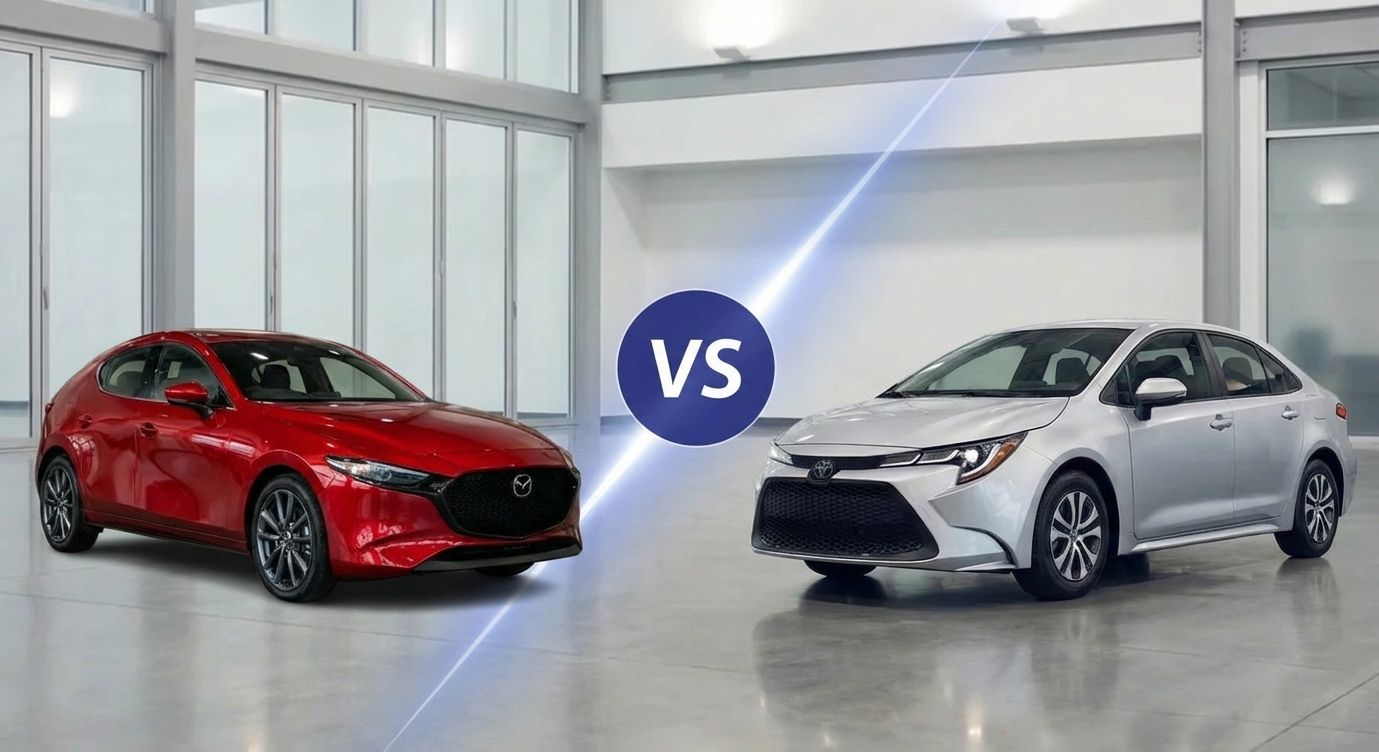
Mazda 3 vs. Toyota Corolla: Which bestseller is better? Our detailed comparison of engines, features, and handling will help you make your final choice.
Apr 13, 2026