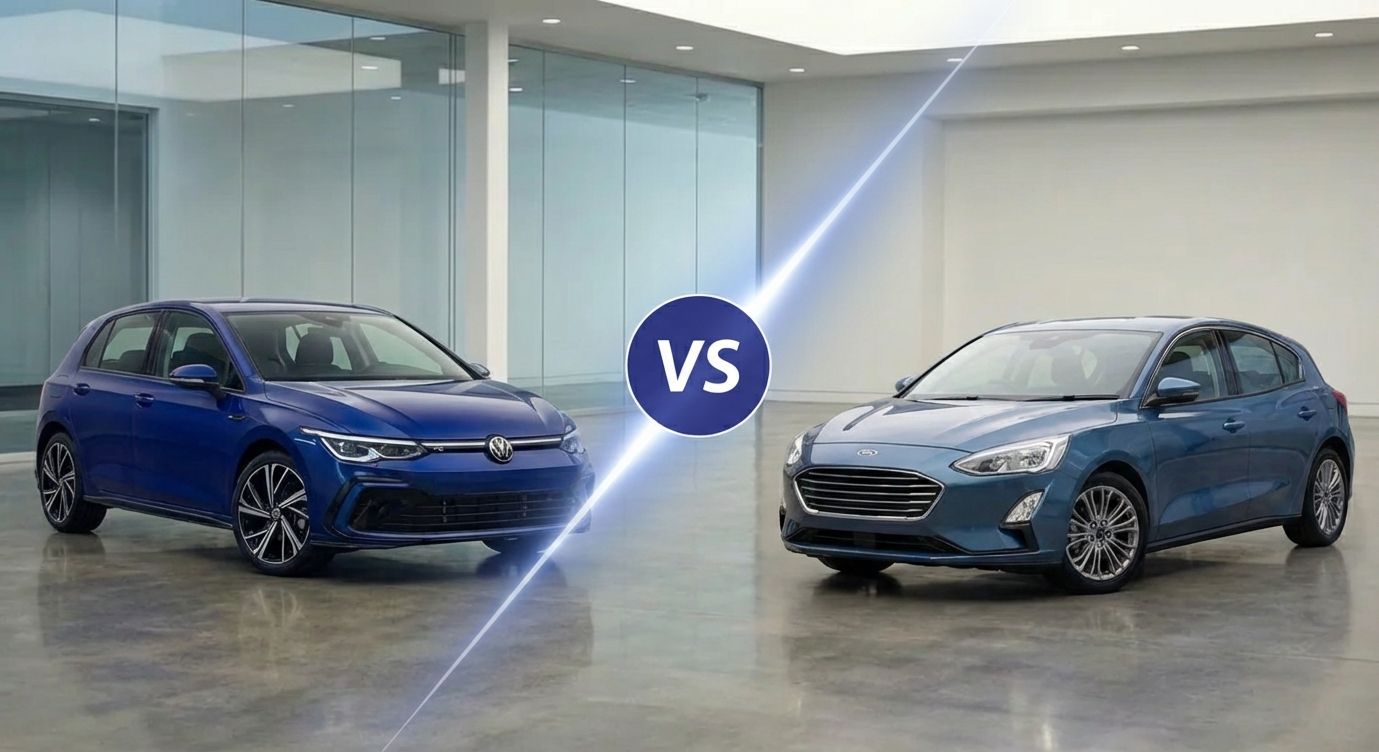
Car battle
Volkswagen Golf vs. Ford Focus: Complete comparison 2026
Volkswagen Golf vs. Ford Focus: a detailed comparison of the engine, equipment, and reliability. Find out which of these hatchbacks is the best choice for you.
Apr 13, 2026
Articles
Car battle
Mazda 3 vs. Peugeot 308: A detailed comparison of engines, interior, and reliability. Find out which stylish hatchback is the best choice for you.
April 13, 2026
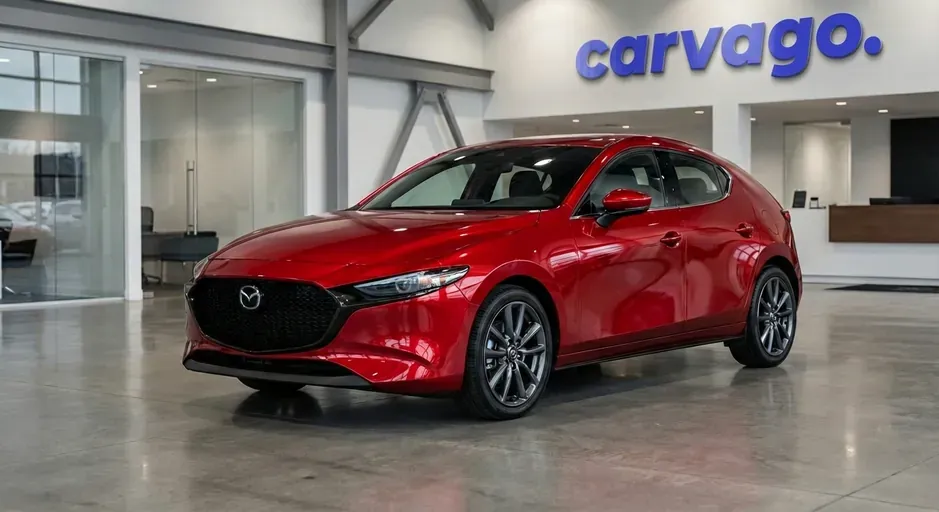
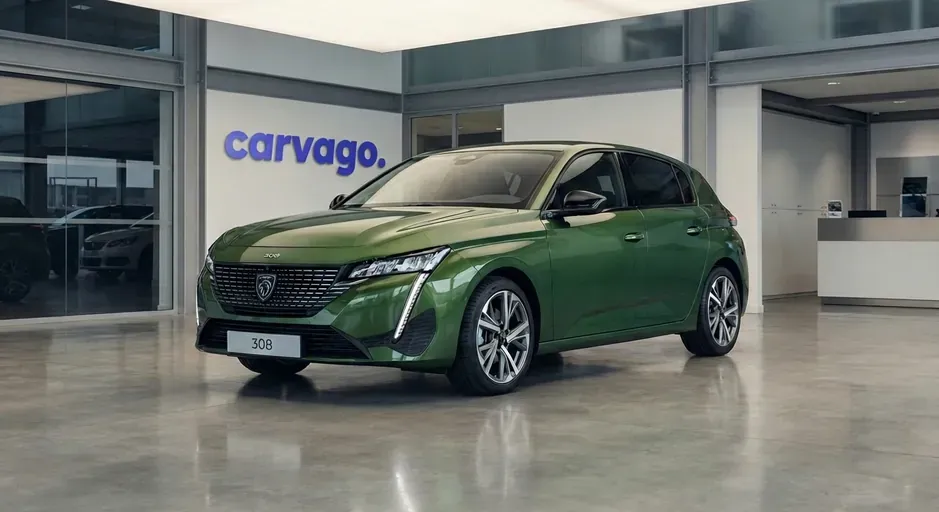
The Mazda 3, also known in some markets as the Mazda Axela, has long attracted drivers with its sporty design and excellent driving characteristics that promise fun behind the wheel. It is up against the Peugeot 308, a typical representative of the French school of car design, which relies on an avant-garde style, a comfortable chassis, and an innovative interior with the i-Cockpit concept. Let's take a closer look at how these two different approaches to a compact car fare in a direct comparison and which one might be the right choice for you.
At first glance of the Mazda 3 and Peugeot 308, it is clear that although both cars fall into the same category of compact hatchbacks, their creators have chosen different philosophies regarding exterior dimensions. In its latest generation (BP, from 2019), the Mazda 3 is significantly longer and has a longer wheelbase, giving it a more elegant and sporty silhouette. In contrast, the Peugeot 308 (3rd generation, from 2021) counters with a greater width and a shorter body, promising better manoeuvrability in the city and a more spacious interior at shoulder level.
The Mazda 3 hatchback surpasses its French rival by a noticeable 93 mm in length. This difference, along with a 50 mm longer wheelbase, translates not only into elegant proportions but, above all, into potentially better ride comfort on longer journeys and more generous legroom for rear passengers. The Peugeot, on the other hand, is 57 mm wider, which the front-row occupants will appreciate, and its shorter profile makes parking in narrow streets easier. In terms of height, the cars are almost identical, with a difference of only a few millimetres.
The differences become even more pronounced with other body variants. The Mazda 3 offers an elegant Fastback (sedan) version, which, with a length of 4660 mm, is one of the longest cars in its class and targets more conservative customers. The Peugeot 308, on the other hand, scores points with families with its practical estate (SW) variant, which not only offers a huge luggage compartment but, with a length of 4636 mm and a wheelbase of 2732 mm, also provides maximum comfort for the crew. The choice thus depends not only on brand preference but also on whether you prefer the sporty elegance of a sedan or the uncompromising practicality of an estate.
| Parameter | Mazda 3 Hatchback (BP) | Peugeot 308 Hatchback (3rd gen) | Mazda 3 Fastback (BP) | Peugeot 308 SW (3rd gen) |
|---|---|---|---|---|
| Length (mm) | 4460 | 4367 | 4660 | 4636 |
| Width (mm) | 1795 | 1852 | 1795 | 1852 |
| Height (mm) | 1435 | 1441 | 1440 | 1442 |
| Wheelbase (mm) | 2725 | 2675 | 2725 | 2732 |
The size of the luggage compartment is one of the key factors that can decide a car purchase, especially for families or those who frequently transport larger loads. In this respect, the philosophies of the Mazda 3 and the Peugeot 308 differ significantly. While Peugeot places great emphasis on maximum usability and offers some of the best values in its class, Mazda prioritises elegant design, which results in a slightly smaller, though still very usable, boot.
In the hatchback body style, the Peugeot 308 has a clear advantage. Its basic volume of 412 litres comfortably surpasses the 351 litres offered by the Mazda 3. This difference of almost 60 litres means space for one small suitcase or several extra shopping bags in practice. With the rear seats folded down, the gap widens even more: the Peugeot provides up to 1323 litres, while the Mazda offers 1026 litres. It should be noted, however, that the plug-in hybrid and electric versions of the Peugeot 308 have a boot reduced to a still-respectable 361 litres due to the batteries.
If we compare the more practical variants, the differences are even more profound. The Mazda 3 is also available as an elegant sedan with a 450-litre boot, which is a solid value but lacks the versatility of a fifth door. It is up against the Peugeot 308 in the estate (SW) version, which is a true master of transport. With a basic volume of 608 litres, it outclasses not only the Mazda but also most of the competition. Folding the seats down creates a space with a staggering volume of 1634 litres. For families and active individuals for whom maximum space is a priority, the choice is clear.
| Parameter | Mazda 3 Hatchback | Peugeot 308 Hatchback | Mazda 3 Sedan | Peugeot 308 SW (Estate) |
|---|---|---|---|---|
| Basic Volume (litres) | 351 | 412 | 450 | 608 |
| Maximum Volume (litres) | 1026 | 1323 | - | 1634 |
The ability to tow a trailer is a key factor for many drivers when choosing a car, whether for transporting materials or for weekend trips with a caravan. In this respect, the philosophies of Mazda and Peugeot differ significantly. The Mazda 3 opts for simplicity and consistency, while the Peugeot 308 offers a wider range of options depending on the engine.
The Mazda 3 fourth generation (BP, from 2019) provides a uniform maximum braked trailer weight of 1300 kg for most of its engine options, including the mild-hybrid petrol variants Skyactiv-G and Skyactiv-X. This is a solid value that is easily sufficient for a small caravan or a hobby trailer. Owners therefore do not have to limit their choice of engine too much if they plan on occasional towing.
On the other hand, the Peugeot 308 of the second (T9, until 2021) and third generation (P5, from 2021) shows its practical strength primarily in its diesel and hybrid versions. While the basic 1.2 PureTech petrol engines offer a comparable capacity of between 1200 and 1300 kg, the real difference comes with the BlueHDi engines. The second-generation 1.5-litre diesel can tow up to 1500 kg, and in the latest generation, even up to 1600 kg. This is a value that allows you to tow even a larger caravan. The third-generation plug-in hybrid versions also perform very well, with a capacity of up to 1500 kg.
For those who need maximum towing capacity, the clear winner is the Peugeot 308 with a diesel engine. However, if your requirements are more modest and you prefer a straightforward offering, the Mazda 3, with its uniform and sufficient value, is a reliable choice.
| Model and Engine | Braked trailer (kg) | Unbraked trailer (kg) |
|---|---|---|
| Mazda 3 2.0 e-SKYACTIV-G (BP) | 1300 | 600 |
| Mazda 3 2.0 e-SKYACTIV-X (BP) | 1300 | 600 |
| Mazda 3 1.8 SKYACTIV-D (BP) | 1300 | 600 |
| Peugeot 308 1.2 PureTech 130 (T9/P5) | 1200 - 1300 | 640 - 680 |
| Peugeot 308 1.5 BlueHDi 130 (T9) | 1400 - 1500 | 720 - 740 |
| Peugeot 308 1.5 BlueHDi 130 (P5) | 1550 - 1600 | 750 |
| Peugeot 308 1.6 Plug-In Hybrid (P5) | 1500 | 750 |
When it comes to engine selection, the Mazda 3 and Peugeot 308 take completely different paths, which is one of the most important differences for buyers. Mazda sticks to its Skyactiv philosophy, primarily relying on larger-displacement, naturally aspirated petrol engines supplemented with mild-hybrid technology. The goal is linear power delivery, immediate throttle response, and driving pleasure. In contrast, Peugeot is a master of downsizing – its lineup is built on award-winning turbocharged 1.2 PureTech three-cylinder engines, efficient BlueHDi diesels, and, in the latest generation, modern plug-in hybrids. Each approach has its merits and will appeal to a different type of driver.
The fourth-generation Mazda 3 (designated BP, from 2019) is found on the used car market almost exclusively with petrol engines, which are always paired with a 24V mild-hybrid system. The foundation is the two-litre four-cylinder e-Skyactiv-G with outputs of 90 kW (122 hp) or 110 kW (150 hp). It offers smooth and refined operation, but for more dynamic driving, it requires downshifting and keeping the revs high, which is typical for naturally aspirated units. For more demanding drivers, there is the unique e-Skyactiv-X engine, which combines the advantages of petrol and diesel engines thanks to SPCCI (Spark Controlled Compression Ignition) technology. It delivers up to 137 kW (186 hp), better low-end flexibility, and favourable fuel consumption. From 2019 to 2021, a 1.8 Skyactiv-D diesel unit (85 kW) was also briefly available, which is now only available on the used car market and represents a quiet and economical choice for high-mileage drivers.
| Engine Type | Fuel | Power (kW) | Torque (Nm) | Transmission |
|---|---|---|---|---|
| 2.0 e-Skyactiv-G | Petrol (Mild-Hybrid) | 90 / 110 | 213 | 6-speed manual / 6-speed automatic |
| 2.0 e-Skyactiv-X | Petrol (Mild-Hybrid) | 132 / 137 | 224 / 240 | 6-speed manual / 6-speed automatic |
| 1.8 Skyactiv-D | Diesel | 85 | 270 | 6-speed manual / 6-speed automatic |
Note: The 1.8 Skyactiv-D engine was only available until 2021.
The Peugeot 308 offers a much more diverse range of engines. On the used market, you will encounter both the facelifted second generation (until 2021) and the new third generation (from 2021). The backbone of the lineup is the turbocharged 1.2 PureTech three-cylinder engine with 81 kW (110 hp) or 96 kW (130 hp), which is lively and economical, but its reliability in older models requires attention. For long-distance journeys, the 1.5 BlueHDi four-cylinder diesel (96 kW) is ideal, characterized by low fuel consumption and refinement. A more powerful 2.0 BlueHDi diesel (up to 130 kW) was also available in the second generation, which today represents a powerful and economical option. The third generation brings a major difference, also offering plug-in hybrid versions with a combined output of 132 kW (180 hp) or 165 kW (225 hp), allowing for a purely electric range of around 60 km.
| Engine Type | Fuel | Power (kW) | Torque (Nm) | Transmission |
|---|---|---|---|---|
| 1.2 PureTech | Petrol | 81 / 96 | 205 / 230 | 6-speed manual / 8-speed automatic |
| 1.5 BlueHDi | Diesel | 75 / 96 | 250 / 300 | 6-speed manual / 8-speed automatic |
| 1.6 Plug-In Hybrid | Petrol/Electric | 132 / 165 | 360 | 8-speed automatic |
| 2.0 BlueHDi | Diesel | 110 / 130 | 370 / 400 | 6-speed manual / 8-speed automatic |
Note: The 2.0 BlueHDi engine was only available for the second generation (until 2020). Plug-in hybrid versions are only available for the third generation (from 2021).
Choosing the right engine is key to long-term satisfaction with a car. Our recommendations are based on a combination of performance, real-world fuel consumption, owner feedback, and mechanical reliability. Mazda and Peugeot take completely different approaches. While Mazda relies on larger-displacement, naturally aspirated petrol engines, which are a rarity today, Peugeot sticks to a strategy of small-displacement turbocharged units, both petrol and diesel.
This engine is unique these days. It's a two-litre, naturally aspirated four-cylinder that does without a turbocharger. For a used car buyer, this is great news as it represents a safe bet and long-term reliability. The engine has a very refined and linear character – power builds smoothly with revs, which will be appreciated by drivers who enjoy the driving experience. The mild-hybrid system (24V) helps reduce fuel consumption in the city and during acceleration; in real-world driving, you can achieve 6 to 6.5 l/100 km. Both power versions (122 and 150 hp) are almost identical in terms of hardware and provide sufficient dynamics for everyday driving.
Although the 1.2 PureTech petrol engine is very common, we recommend caution with used cars due to its oil-immersed timing belt, which can cause fatal engine damage if maintenance is neglected. That's why our choice for the Peugeot 308 is the 1.5 BlueHDi diesel unit. This engine is a great example of a modern diesel: it's quiet, refined, and incredibly economical. Thanks to its high torque of 300 Nm, it offers confident flexibility for overtaking and on the motorway. Combined with the eight-speed EAT8 automatic transmission, it forms a perfectly matched pair for comfortable and economical travel. Long-term fuel consumption easily stays below 5 l/100 km.
The official consumption figures provided by manufacturers are one thing, but real-world driving is another. Laboratory cycles often don't reflect everyday challenges like city traffic jams, hilly terrain, or a more dynamic driving style. That's why we looked at data from drivers themselves, for example, from the German portal Spritmonitor.de, to find out how the two rivals perform in the real world. We are primarily comparing the generations relevant to the used car market – the Mazda 3 BP generation (from 2019) and the Peugeot 308 second generation post-facelift (2017–2021) and the succeeding third generation (from 2021).
The following table shows the average real-world consumption of the most common engine versions, as reported by the owners themselves.
| Model and Engine | Average Real-World Consumption (l/100 km) |
|---|---|
| Mazda 3 2.0 Skyactiv-G (90 kW/122 hp) | 6.6 |
| Mazda 3 2.0 Skyactiv-X (132 kW/180 hp) | 6.8 |
| Peugeot 308 1.2 PureTech (96 kW/130 hp) | 6.7 |
| Peugeot 308 1.5 BlueHDi (96 kW/130 hp) | 5.1 |
At first glance, it's clear that both manufacturers take a different approach to efficiency. Mazda relies on larger-displacement naturally aspirated engines (so-called "rightsizing") and mild-hybrid technology, while Peugeot uses small-displacement turbocharged three-cylinder PureTech engines. In the real world, however, the differences in petrol engines blur. The naturally aspirated two-litre in the Mazda 3 averages 6.6 l/100 km, which is only slightly less than the turbocharged 1.2-litre in the Peugeot 308 with an average of 6.7 l/100 km. Interestingly, Mazda manages to keep its real-world consumption very close to the official figures, whereas with small-displacement turbo engines like the PureTech, the spread between calm and dynamic driving tends to be significantly larger.
For drivers who cover long distances, especially on motorways, the clear winner is the diesel Peugeot 308. The 1.5 BlueHDi engine, with an average consumption of around 5.1 l/100 km, is a very economical choice that Mazda does not offer a direct competitor for in its latest generation (the Skyactiv-D engine was only on the market for a short time).
As a result, fuel consumption is not a deciding factor between these two cars when considering the petrol variants. The Mazda 3 offers the more refined performance of a naturally aspirated four-cylinder engine with very favourable and stable fuel economy. The Peugeot 308 counters with the flexibility of its turbocharged engine and has an ace up its sleeve for long-distance drivers in the form of an exceptionally economical diesel. The choice, therefore, depends more on the preferred engine character and the type of journeys most frequently taken.
A look at the used car market reveals significant price differences between the Mazda 3 and the Peugeot 308. The Japanese precision and more premium feel of the Mazda are reflected in a higher residual value, while the Peugeot offers a more attractive initial investment.
The fourth generation of the Mazda 3, known as the BP, holds its value relatively well even as a used car. This is due to its attractive design, high-quality interior, and the reputation of its reliable naturally aspirated Skyactiv-G engines.
As a direct competitor to the 2019 Mazda 3, we have the second-generation Peugeot 308 (T9) after its update. This model is significantly more affordable on the used market and offers excellent value for money.
| Model (approx. 4 years old) | Approximate Price Range | Key Price Factors |
|---|---|---|
| Mazda 3 (2019) | €16,000 - €21,000 | Higher trim, Skyactiv-X engine, low mileage |
| Peugeot 308 (2018) | €9,000 - €12,000 | Engine (diesel), estate body, Allure/GT trim |
The choice between these two models is clearly defined from a price perspective. The Peugeot 308 represents a rational and more affordable option, offering a modern car with good equipment and low running costs for less money. In contrast, the Mazda 3 is the choice for drivers willing to pay extra for a more premium feel, exceptional design, and acclaimed reliability, which is reflected in its higher residual value.
When comparing safety, it is crucial to realise that both cars underwent Euro NCAP crash tests in different years and according to different, stricter criteria. Although the star rating provides a quick overview, the detailed percentage results and the context of the testing reveal significant differences in the approach to protecting occupants and other road users.
The fourth-generation Mazda 3 was tested by Euro NCAP in 2019 and received a full five-star rating. It particularly excelled in the adult occupant protection category, achieving an outstanding score of 98%. This result was one of the best of that year and attests to the exceptionally strong and well-thought-out design of the Skyactiv-Vehicle Architecture body. It also performed excellently in child occupant protection (87%) and vulnerable road user protection (81%), where it scored maximum points for the protection of pedestrians' legs and pelvis. The 73% rating for safety assist systems was in line with the standards of the time when the car was launched.
The third-generation Peugeot 308 was tested in 2022, under significantly stricter rules. It received four stars, which should not automatically be interpreted as a worse result. The newer methodology places much greater emphasis on advanced assistance systems and protection in more complex crash scenarios. The ratings of 76% for adult occupant protection and 84% for child protection are still solid figures. However, the tests revealed some weaknesses, such as only marginal protection for the driver's chest in a frontal impact and the absence of a centre airbag to prevent contact between front passengers. The lower scores for vulnerable road user protection (68%) and safety assist systems (65%) primarily reflect the more demanding requirements of the new tests, which include scenarios such as turning across the path of a cyclist.
Although the Mazda 3 has five stars and better percentage results on paper, its test was conducted according to older, less stringent rules. The Peugeot 308 was tested three years later using a stricter methodology. Its four stars may, paradoxically, signify a comparable, and in some respects more modern, level of safety, especially concerning responses to new traffic situations. The Mazda excels in passive safety and body rigidity. The Peugeot, despite a weaker result in adult protection, had to meet more demanding criteria for its assistance systems. The choice, therefore, depends on your priorities – whether you prefer the near-perfect passive protection of the Mazda 3, or the more modern, albeit not perfectly executed, safety package of the Peugeot 308, tested to the latest and strictest standards.
| Parameter | Mazda 3 | Peugeot 308 |
|---|---|---|
| Year of testing | 2019 | 2022 |
| Adult Occupant Protection | 98% | 76% |
|---|---|---|
| Child Occupant Protection | 87% | 84% |
| Vulnerable Road User Protection | 81% | 68% |
| Safety Assist | 73% | 65% |
In addition to standard equipment, each model offers several unique features that can be decisive for the customer. While Mazda focuses on premium craftsmanship and innovative technology, Peugeot counters with an avant-garde interior concept and practicality.
The fourth-generation Mazda 3 (from 2019) targets drivers who appreciate quality craftsmanship, advanced technologies, and, above all, the joy of driving. Its interesting features focus on connecting the driver with the car.
The second-generation Peugeot 308 after its facelift (2017–2021) stands out primarily for its futuristic and bold interior concept, complemented by unexpected practicality and efficient engines.
Advantages:
Disadvantages:
Advantages:
Disadvantages:
Based on our own CarAudit inspections, breakdown statistics, and service data, we have compiled an overview of the most common problems that used car buyers should watch out for. While both cars are considered reliable, their weaknesses lie in completely different areas.
The fourth-generation Mazda 3 maintains its reputation as a very reliable car and does not suffer from any fatal design flaws. Most of the recorded problems relate to electronics or have been addressed through recalls.
Summary for Mazda: The Mazda 3's problems are more minor and electronic in nature. The mechanical foundation is very robust. A careful, comprehensive vehicle inspection focusing on recall history and electronics functionality is the ideal way to secure a trouble-free car.
With the Peugeot 308, the situation is more complex and depends heavily on the specific engine and year of manufacture. While the BlueHDi diesel engines are considered reliable, extra caution is needed with the gasoline units.
Summary for Peugeot: The riskiness of a Peugeot 308 hinges on the choice of engine. While it's a good choice with a diesel engine and a verified service history, an independent inspection of the car's technical condition is an absolute must for the 1.2 PureTech gasoline engine. Overall, the Peugeot is more prone to numerous minor issues, as well as a few potentially very serious mechanical problems.
When buying a used car, a thorough inspection is key, and neither of these models is an exception. Although both are considered relatively reliable, each has specific areas to focus on to prevent expensive repairs. An independent comprehensive vehicle inspection is always the best guarantee.
The fourth-generation Mazda 3 (designated BP, produced from 2019) has a reputation as a reliable car, but it's still a good idea to pay attention to a few details.
The second generation Peugeot 308 (T9, produced from 2013–2021) is a popular used car, but it requires careful selection, especially regarding its engines and electronics.
The Peugeot 308 hatchback has a practical advantage, offering a boot volume of 412 litres. The Mazda 3 hatchback lags behind with a volume of 351 litres. However, with the Mazda 3, it is possible to choose the saloon body style, which offers a larger boot volume at the expense of practicality.
The fundamental difference lies in the layout philosophy. The Peugeot 308 uses its characteristic i-Cockpit with a small steering wheel and an instrument cluster positioned above it. The Mazda 3, on the other hand, sticks to a classic, sport-oriented layout with a traditional view of the gauges through the steering wheel.
The Mazda 3 has a long-standing reputation as a very reliable manufacturer, especially thanks to its naturally aspirated Skyactiv petrol engines. The Peugeot 308 has significantly improved its reliability in recent years, but some of its turbocharged PureTech engines have had problems in the past, for example with the wet timing belt. From this perspective, the Mazda 3 is the safer bet.
If you prefer high-revving engines with smooth power delivery and proven technology, choose the naturally aspirated or mild-hybrid Skyactiv engines in the Mazda 3. If you prefer a more dynamic ride with strong torque delivery at lower revs, the turbocharged PureTech engines in the Peugeot 308 will suit you better.
Both cars are among the best to drive in their class, but each has a different focus. The Mazda 3 is often praised for its agile steering and a sportier, stiffer chassis that provides a more engaging driving experience. The Peugeot 308 focuses more on a comfortable and refined ride, yet it still maintains good handling and confidence.
Sources: ADAC, garaz.cz, aktualne.cz, auto-mania.cz, autohome.cz, autobox.cz
This article was prepared using artificial intelligence tools. The section guarantor is Petr Dušek.
Volkswagen Golf vs. Ford Focus: a detailed comparison of the engine, equipment, and reliability. Find out which of these hatchbacks is the best choice for you.
Apr 13, 2026
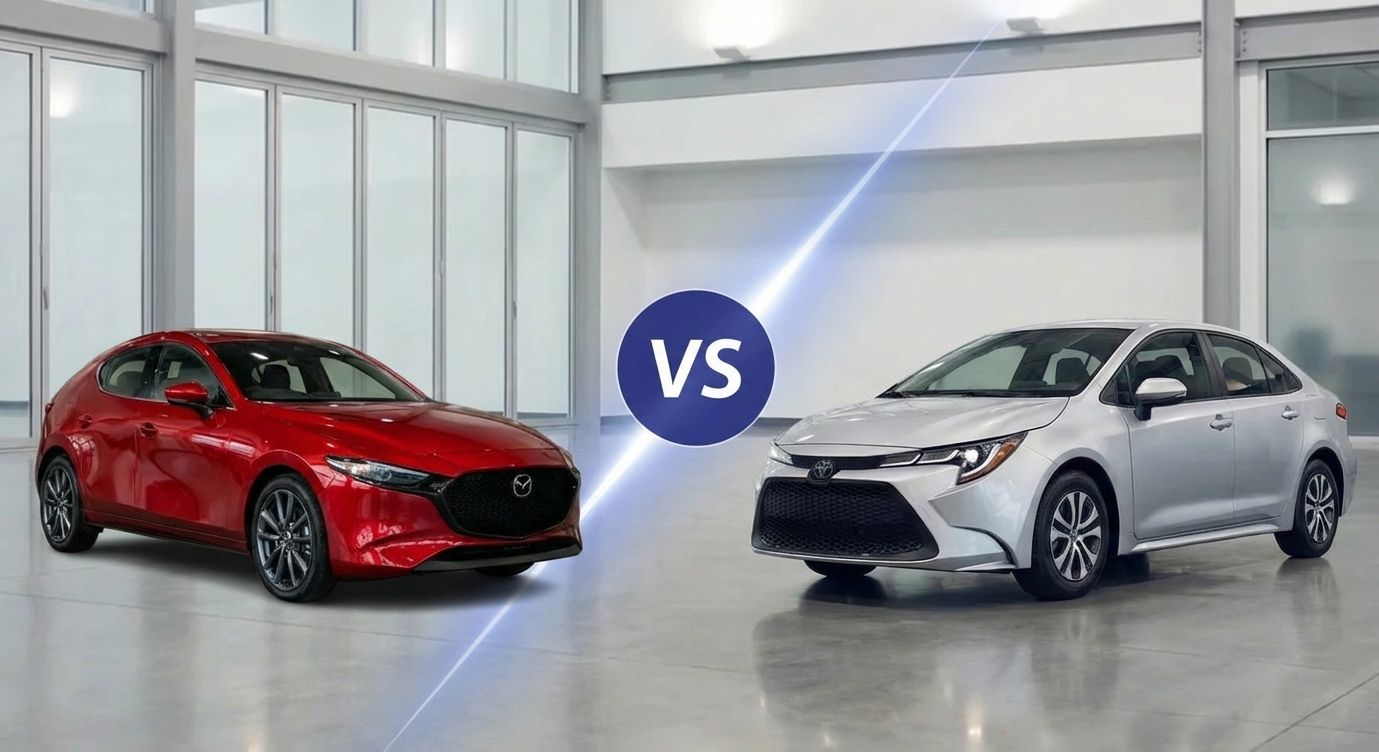
Mazda 3 vs. Toyota Corolla: Which bestseller is better? Our detailed comparison of engines, features, and handling will help you make your final choice.
Apr 13, 2026
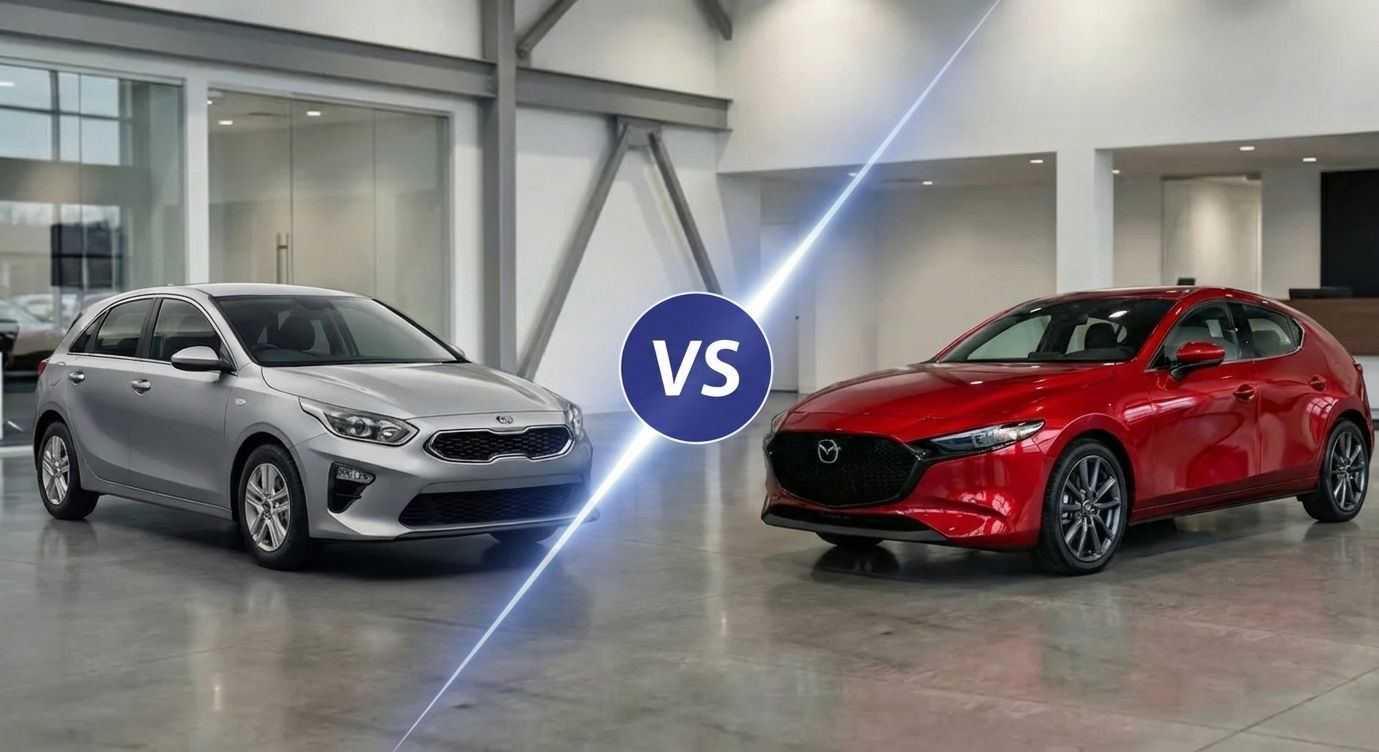
Detailed comparison: Kia Ceed vs. Mazda 3. We compared the engines, equipment, and driving characteristics. Read our verdict and find out which hatchback to choose.
Apr 8, 2026