Car battle
Mazda 3 vs. Toyota Corolla: Complete Comparison 2025
Mazda 3 vs. Toyota Corolla: Which bestseller is better? Our detailed comparison of engines, features, and handling will help you make your final choice.
Apr 13, 2026
Articles
Car battle
Detailed comparison: Kia Ceed vs. Mazda 3. We compared the engines, equipment, and driving characteristics. Read our verdict and find out which hatchback to choose.
April 8, 2026
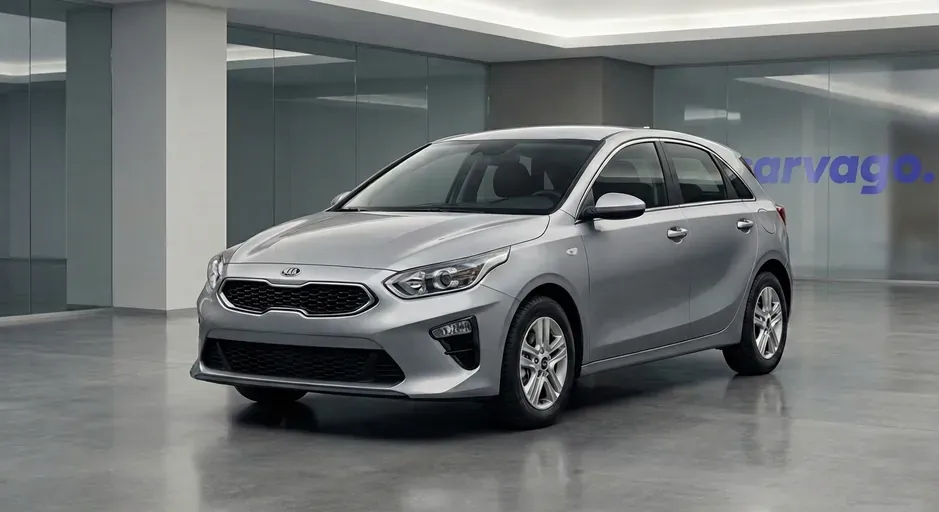
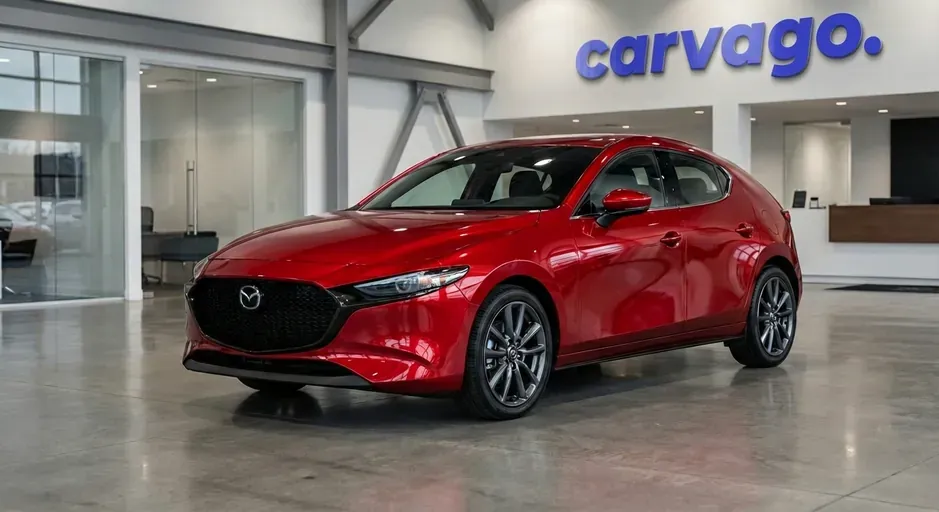
The South Korean representative Kia Ceed, known in its earlier generations by the stylistically unconventional name cee'd, is a practical and reliable hatchback designed and manufactured primarily for European customers. Standing against it is the attractive Japanese Mazda 3, previously sold in some markets as the Mazda Axela, which appeals mainly through its dynamic design, premium interior finish, and excellent driving characteristics. Let's take a detailed look at how these two popular compact class representatives fare in a direct comparison on the four-year-old used car market and which one represents the smarter choice for your daily travels.
When comparing the external dimensions of both cars, we encounter two completely different philosophies that fundamentally influence daily life with the vehicle. While the Kia Ceed sticks to traditional European compact class proportions, the Mazda 3 bets on a more dynamic silhouette with a long hood and a rearward-shifted cabin. If we measure the popular five-door hatchbacks among roughly four-year-old used cars (the CD generation for Kia and BP for Mazda from 2018–2024), we find that the Mazda 3, at 4,460 mm, is a noticeable 135 to 150 mm longer. This gives it a visually much more mature and aggressive look. The Kia Ceed, on the other hand, benefits from its shorter build (4,310 to 4,325 mm) primarily in crowded city streets, where you will undoubtedly appreciate its easier maneuvering and trouble-free parking in tight spaces.
An important parameter is the wheelbase, which primarily dictates interior space and influences driving characteristics. The Mazda 3 boasts an above-average wheelbase of 2,725 mm, which is exactly 75 mm more than the Ceed (2,650 mm). Theoretically, such a difference should mean more legroom for rear passengers. In practice, however, the sporty sloping roofline and overall lower build enter the equation – at 1,435 mm, the Mazda hatchback is about a centimeter lower than the Kia. In the end, the rear part of the cabin in the Japanese car is surprisingly more cramped despite the generous wheelbase. The South Korean Kia, by contrast, manages to "conjure up" a much airier and more rational space from its smaller footprint, packaged more efficiently, making it a more practical choice for families. As for the width of the car itself, the differences are negligible; at exactly 1,800 mm, the Ceed is only a minor 5 mm wider than the Mazda 3.
The range of body variants also plays a crucial role when choosing a used car. Here, the manufacturers have diverged completely. For family and business purposes, Kia offers the highly sought-after estate labeled as Sportswagon with a body length of 4,600 to 4,605 mm. Mazda dropped the estate body for the third generation and prepared an elegant three-box sedan (often referred to by the manufacturer and dealers as the Fastback) for customers wanting a longer car. At 4,660 mm, it is paradoxically even longer than the Kia estate. While the Mazda 3 Fastback represents a clear choice for those looking for a representative highway cruiser with timeless charm, the Kia Ceed Sportswagon with its more accessible boot will be the clear favorite for drivers requiring maximum utility, the transport of larger items, or baby strollers.
| Parameter | Kia Ceed Hatchback | Mazda 3 Hatchback | Kia Ceed Estate (SW) | Mazda 3 Sedan (Fastback) |
|---|---|---|---|---|
| Width (mm) | 1800 | 1795 | 1800 | 1795 |
| Length (mm) | 4310 - 4325 | 4460 | 4600 - 4605 | 4660 |
| Height (mm) | 1442 - 1447 | 1435 | 1460 - 1465 | 1440 |
| Wheelbase (mm) | 2650 | 2725 | 2650 | 2725 |
If you are choosing a used compact class car manufactured around 2020 to 2022 (the current and most common generations in used car lots, Kia Ceed CD and Mazda 3 BP), luggage compartment volume will likely play a crucial role in your decision. The difference in the approach of both carmakers in this regard is vast and directly affects daily family usability and overall practicality. While the Kia Ceed focuses on maximum transport capacity and satisfying the needs of pragmatic families, the Mazda 3 prioritizes elegant sporty lines and a distinctive design, which takes a slight toll on the rear seats and in the boot.
For traditional five-door hatchbacks, the Kia Ceed offers a very solid base volume of 395 liters. If you fold down the rear backrests, you get a trunk size of up to 1,291 liters. This total capacity is more than sufficient for weekend shopping or a longer holiday for two. The competing Mazda 3 Hatchback is noticeably more modest in direct comparison – the base trunk holds 351 liters, and if the used car is also equipped with a premium Bose audio system with a built-in subwoofer, the capacity drops to as low as 330 liters. After fully folding the rear seats, the value for the Japanese model increases to 1,026 liters. A difference of over 40 liters in the base already means useful space for several smaller bags or extra luggage in practice, clearly in favor of the Korean car.
However, the most significant differences in the practicality of both models only fully manifest when we bring other available body styles into play. For families with children, cottagers, or people transporting larger sports equipment, the absolute favorite is the Kia Ceed Sportswagon (representing the Estate class). It boasts a giant trunk with a base volume of 625 liters. Folding the rear bench creates a flat loading area with a total space of a staggering 1,694 liters. With this popular estate, just be careful when buying a plug-in hybrid (PHEV) powertrain, where the large battery installation under the car floor reduces the trunk capacity by about two hundred liters to a more cramped 437 liters. The Japanese automaker does not offer the popular estate variant in its portfolio at all and markets the classic four-door Sedan as a more spacious alternative to the hatchback. While it pleases with a better base volume of 450 liters and offers approximately 1,138 liters after folding the backrests, the narrower and structurally limited loading opening restricts the loading of bulkier items.
Final verdict and choice
The space king and the most logical choice of this comparison from a trunk perspective is clearly the Kia Ceed. Especially in its highly-rated Sportswagon version, this model can easily serve as a primary family car and transport strollers or a pile of holiday gear without hesitation. In contrast, the Mazda 3 is an ideal alternative for single drivers or childless couples, for whom original and emotive exterior design clearly wins over the effort to transport oversized cargo in their hierarchy of values.
| Parameter | Kia Ceed Hatchback | Mazda 3 Hatchback | Kia Ceed Estate | Mazda 3 Sedan |
|---|---|---|---|---|
| Base volume (liters) | 395 l | 351 l | 625 l | 450 l |
| Max. volume after folding seats (liters) | 1291 l | 1026 l | 1694 l | 1138 l |
The ability to tow a trailer often plays a surprisingly important role when choosing a compact car, whether it's for hauling materials to a cabin or summer travel with a caravan. The approach of both automakers differs diametrically in this regard. While Mazda relies on simplicity and uniform values for current generations, Kia offers capacities that vary significantly depending on the chosen engine and the presence of hybrid technology.
Both models, the Kia Ceed (current CD generation) and the Mazda 3 (BP generation), agree on unbraked trailers, where they can tow a standard 600 kg. This value is perfectly sufficient for a regular weekend trip to a DIY store, hauling garden waste, or a small move. However, the differences fully manifest with braked trailers.
The Mazda 3 offers a unified maximum braked trailer weight of 1,300 kg for practically all its modern engines – from the e-SKYACTIV-G petrol two-liters and innovative e-SKYACTIV-X to the 1.8 SKYACTIV-D diesel engine. This represents a very solid universal standard that is easily enough for a smaller caravan. Mazda owners thus do not have to limit themselves when choosing an engine based on whether they will occasionally use the car for towing.
The Kia Ceed approaches towing capacities much more specifically. If you go for the popular 1.6 CRDi diesel engine, you get the highest capacity in this comparison, up to 1,500 kg. The mid-range petrol choice in the form of the 1.5 T-GDI unit can handle a very respectable 1,210 to 1,410 kg, which safely provides space for several extra suitcases or a longer family holiday with a trailer. With the base 1.0 T-GDI three-cylinder, however, expect a stricter limit of 1,000 kg. The greatest attention is then required by the modern mild-hybrid variants (48V) of this one-liter engine, where the maximum braked trailer weight drops radically to just 700 to 710 kg. This can already be a significant limitation for cottagers. In contrast, the full plug-in hybrid version (PHEV) maintains a solid average of 1,300 kg.
In conclusion, if maximum towing capacity is a priority for you (for example, for a medium-sized caravan), the ideal choice is the Kia Ceed with a diesel engine. However, if you are looking for a reliable petrol car with the certainty of a sufficient reserve for most common needs, the Mazda 3 brings a more consistent and worry-free solution across its entire engine range.
| Model and engine | Braked trailer weight (kg) | Unbraked trailer weight (kg) |
|---|---|---|
| Kia Ceed 1.0 T-GDI (74 kW / 88 kW) | 1000 | 600 |
| Kia Ceed 1.0 T-GDI 48V (mild-hybrid) | 700 - 710 | 600 |
| Kia Ceed 1.5 T-GDI (103 kW / 118 kW) | 1210 - 1410 | 600 |
| Kia Ceed 1.6 CRDi (85 kW / 100 kW) | 1500 | 600 |
| Kia Ceed 1.6 GDI Plug-in Hybrid | 1300 | 600 |
| Mazda 3 2.0 e-SKYACTIV-G M Hybrid | 1300 | 600 |
| Mazda 3 2.0 e-SKYACTIV-X M Hybrid | 1300 | 600 |
| Mazda 3 1.8 SKYACTIV-D | 1300 | 600 |
Comparing the engine options of the Kia Ceed and Mazda 3 reveals two completely different engineering approaches, which is a key factor for those interested in a roughly four-year-old used car in terms of dynamics, reliability, and real-world fuel consumption. While Kia, with its CD generation, relies primarily on modern small-displacement turbocharged engines and covers an extremely wide spectrum from economical diesel to advanced plug-in hybrids, Mazda stubbornly sticks to its philosophy of larger naturally aspirated displacements and innovative mild-hybrid technologies with the BP generation. An absolute unique feature of Mazda is the innovative e-SKYACTIV-X engine, which can burn petrol using diesel engine principles, and unlike the Kia, it also offers the option of all-wheel drive (AWD) with its top engine. Significant differences also exist in the concept of automatic transmissions – Kia relies on popular dual-clutch transmissions (DCT), which excel in shifting speed and a sportier feel, while Mazda uses traditional torque converter transmissions (AT), which please with maximum smoothness and refinement, especially in city traffic. For drivers who appreciate the strong pull of a turbocharger from low revs or are considering purely electric commuting around town, the Kia Ceed range makes sense. Proponents of the linear pull of a classic naturally aspirated engine and sophisticated, durable technology, on the other hand, will likely choose the Mazda 3.
The third-generation Kia Ceed (CD) offers a very diverse range of engines on the used car market, capable of flexibly satisfying both less demanding drivers and those with high annual mileage. The base of the range is the reliable 1.0 T-GDI turbocharged three-cylinder, which is ideal for shorter commutes. However, the main draw for four-year-old used cars from 2020 and 2021 is the exceptionally refined and dynamic 1.5 T-GDI four-cylinder with 118 kW. This completely replaced the older and slightly less powerful 1.4 T-GDI (103 kW) in the lineup, production of which definitely ended in early 2021, thus limiting it only to older second-hand units. Diesel proponents can easily choose from the traditional economical 1.6 CRDi engines, which in newer model years began using mild-hybrid (48V) technology to reduce consumption and emissions. If you are looking for maximum efficiency in the city and have the possibility of daily charging, you can find the 1.6 GDI in a Plug-in hybrid variant on the market, available for the estate version (Sportswagon). Drivers with a racer's soul can then reach for the top GT version with a very lively 1.6 T-GDI petrol unit.
| Engine type | Fuel | Power (kW) | Torque (Nm) | Transmission |
|---|---|---|---|---|
| 1.0 T-GDI | Petrol | 74 / 88 | 172 | 6MT / 7DCT |
| 1.4 T-GDI | Petrol | 103 | 242 | 6MT / 7DCT |
| 1.5 T-GDI | Petrol | 118 | 253 | 6MT / 7DCT |
| 1.6 T-GDI (GT) | Petrol | 150 | 265 | 7DCT |
| 1.6 CRDi | Diesel | 85 / 100 | 280 / 320 | 6MT / 7DCT |
| 1.6 GDI PHEV | Petrol (Plug-in hybrid) | 104 | 265 | 6DCT |
The fourth-generation Mazda 3 (BP) plays the role of a likeable technological maverick in the used compact market. The vast majority of available cars around four years old feature two-litre petrol four-cylinders without a traditional turbo, which predisposes the models to high mechanical reliability and an attractive driving character. The basic and very popular choice is the 2.0 e-SKYACTIV-G engine in versions with 90 kW and 110 kW, which are aided by a standard-fit mild-hybrid system. The greatest technological pride is the revolutionary petrol engine labelled e-SKYACTIV-X with 132 kW (after the update referred to as the version 186 with increased power to 137 kW and 240 Nm). This advanced engine is also the only one in the entire comparison available with a reliable all-wheel-drive system (AWD), which is a huge competitive advantage in this segment for mountainous areas. Until 2021, a classic 1.8 SKYACTIV-D diesel unit was also installed under the Mazda's hood, but it was withdrawn from the market relatively quickly and can no longer be found in younger used cars. Power is transferred to the wheels via precise six-speed manual gearboxes or a traditional, reliable torque converter automatic (6AT).
| Engine type | Fuel | Power (kW) | Torque (Nm) | Transmission |
|---|---|---|---|---|
| 2.0 e-SKYACTIV-G | Petrol (Mild-hybrid) | 90 / 110 | 213 | 6MT / 6AT |
| 2.0 e-SKYACTIV-X | Petrol (Mild-hybrid) | 132 / 137 | 224 / 240 | 6MT / 6AT |
| 1.8 SKYACTIV-D | Diesel | 85 | 270 | 6MT / 6AT |
Choosing the right engine is key to long-term satisfaction. While Kia, with the CD generation (from 2018), bet mostly on small-displacement turbocharged engines that offer a strong pull from low revs, Mazda took the completely opposite path with its BP generation (from 2019) and sticks to naturally aspirated two-litre engines. Interestingly, the Mazda 3 completely ignores the downsizing trend and relies on a high compression ratio in combination with mild-hybrid technology, while Kia continuously refined its turbocharged portfolio and in 2021 replaced the popular 1.4 T-GDI unit with the more modern and efficient 1.5 T-GDI engine. The following recommendations are based on real-world dynamics, fuel consumption, owner feedback, and mechanical reliability of roughly four-year-old used cars that currently dominate the market.
This gasoline four-cylinder engine, which arrived under the Ceed's hood in the spring of 2021 and reliably covers the market for approximately four-year-old used cars, represents the absolute ideal in the range. Compared to its predecessor (1.4 T-GDI), it offers smoother operation, significantly better dynamics, and, thanks to an optimally tuned torque curve (253 Nm available from as low as 1,500 rpm), very pleasant flexibility without the need for frequent shifting. In real-world driving, its consumption hovers around a respectable 6 to 6.5 l/100 km. Mechanically, it is an exceptionally well-designed and reliable engine; however, like most direct-injection units, it faces the risk of carbon buildup on the intake valves and oil dilution with gasoline during frequent short city trips. During a test drive, focus on the cold idle – if the engine jerks after starting, runs roughly, or the RPM fluctuates, it could indicate advanced carbonization. You can mitigate these risks by shortening the oil change interval to a maximum of 15,000 km and regularly warming up the engine with a longer highway drive. For versions with the dual-clutch automatic (DCT7), also pay attention to starting off and crawling at a walking pace; any jerking or vibration reveals worn clutch plates. This engine is the best choice for all-around drivers, more dynamic family use, and frequent highway travelers who appreciate the power reserve and quiet operation.
In the case of the Japanese model (available as both a hatchback and a fastback), we recommend opting for the naturally aspirated 2.0-liter in the more powerful 150 hp version (introduced in 2020). It is a perfect compromise, offering noticeably better dynamics at higher RPMs than the base 122 hp version, while remaining mechanically much simpler and less risky to service than the innovative but complex e-SKYACTIV-X engine. The main technical weapon of this 2.0-liter is its linear pull with a beautiful power delivery, the absence of a delicate turbocharger, and the presence of a 24V mild-hybrid system that smooths out operation and helps bring real-world consumption down to an economical 6 l/100 km. From a long-term perspective, it is a bulletproof engine, but it is equipped with a cylinder deactivation system (two cylinders) under low load. In early production years, there were occasional issues with imperfect software calibration of this system. During a test drive, focus on smooth driving at a steady speed (for example, 50 km/h or 90 km/h in 4th or 5th gear around 2,000 rpm) – the transition to two-cylinder mode should not be accompanied by any noticeable jerking or booming. If the car jerks slightly at a steady speed, the control unit will require a software update. This engine is tailor-made for "classic" drivers who appreciate smooth driving, don't mind downshifting for power, enjoy revving the engine, and whose main priority is top-tier long-term mechanical durability without the risk of expensive turbo failures.
Official fuel consumption figures often differ from reality, which is why it is crucial to look at actual data from drivers themselves when choosing a used car. For a relevant comparison of roughly four-year-old vehicles – specifically the Kia Ceed (CD, produced since 2018) and Mazda 3 (BP, produced since 2019) generations – we used long-term user data from the independent portal Spritmonitor.de. This accurately reveals the appetite of these popular compact hatchbacks in everyday real-world use.
| Model and engine | Average consumption (l/100 km) |
|---|---|
| Kia Ceed 1.6 CRDi 100 kW | 4.7 |
| Mazda 3 1.8 SKYACTIV-D 85 kW | 5.3 |
| Mazda 3 2.0 e-SKYACTIV-X 132 kW | 6.1 |
| Kia Ceed 1.0 T-GDI 88 kW | 6.3 |
| Mazda 3 2.0 e-SKYACTIV-G 90 kW | 6.4 |
| Kia Ceed 1.5 T-GDI 118 kW | 6.5 |
From the perspective of gasoline engines, a very interesting trend emerges that reflects the different technical approaches of the two manufacturers. Kia relies on turbocharged downsizing; however, the smaller 1.0 T-GDI three-cylinder does not save as much fuel in the real world as one might expect from the spec sheets. Its average of 6.3 l/100 km is only 0.2 liters lower than that of the dynamically much more confident 1.5 T-GDI four-cylinder. The Japanese automaker, on the other hand, prefers optimizing naturally aspirated 2.0-liter engines with mild-hybrid technology. The results show that the innovative e-SKYACTIV-X engine, which combines the combustion characteristics of gasoline and diesel, can achieve an excellent 6.1 l/100 km with a light foot, making it more efficient in practice than the weaker base e-SKYACTIV-G. In the diesel category, however, Kia clearly dominates, with its 1.6 CRDi engine being one of the absolute leaders in its class with an excellent value of 4.7 l/100 km, while the diesel Mazda 3 lags slightly behind.
What do these figures mean for the typical user? If you are looking for a car for daily city and suburban commuting, gasoline versions are the logical and most common choice. With the Mazda, you will appreciate the smooth operation of the larger naturally aspirated engine; with the Kia, it is definitely worth paying extra for the more powerful 1.5 T-GDI, as its consumption is no different from the three-cylinder, but it offers significantly better dynamics and driving comfort. For drivers covering long highway distances and those with a tight monthly fuel budget, the diesel Ceed makes a lot of sense, excelling with exemplary efficiency.
Overall, it can be said that fuel consumption faithfully reflects the different technical philosophies of these two brands, but for popular gasoline engines, the differences are only in the range of tenths of a liter. For most buyers of roughly four-year-old used cars, fuel consumption alone should not be the only deciding factor. A much more significant factor when choosing between the Kia Ceed and Mazda 3 will be the desired character of the car, performance requirements, and whether you, as a driver, prefer the linear pull of the Japanese 2.0-liter or the more pronounced torque of the Korean turbo engine.
Looking at the used car market, specifically at models roughly four years old (i.e., 2021 and 2022 models), there is a fairly clear difference in the pricing policy and residual value of both cars. While the Kia Ceed targets buyers' wallets with an excellent price-to-value ratio, the Mazda 3 holds its price significantly higher thanks to its more premium craftsmanship and unique technology.
Kia Ceed (3rd generation, type CD)
The Korean representative is one of the most affordable and sought-after used cars in the compact class on the Czech market, which is reflected in the wide selection available at dealerships.
Mazda 3 (4th generation, type BP)
The Japanese hatchback and sedan hold their value exceptionally well. This is great news for sellers, but used car buyers must expect a higher initial investment. Furthermore, there are significantly fewer used fourth-generation Mazdas on the market compared to Ceeds.
| Car Category | Kia Ceed (CD) | Mazda 3 (BP) |
|---|---|---|
| Starting price (base) | from €11,000 | from €16,000 |
| Most common models (mid trim/engine) | €14,000 – €18,000 | €19,000 – €22,000 |
| Top versions (top trim / powerful engine) | €20,000 – €24,000 | €23,000 – €26,000 |
In conclusion: If a tight budget is key when choosing a used car and you are looking for a sensible, modern daily driver, the Kia Ceed will offer you a significantly newer model year or much lower mileage for the same money. The Mazda 3, on the other hand, targets drivers who view cars more as a matter of the heart. They are willing to pay extra for the beautiful design, luxury-feeling interior, and above-average driving characteristics, which ensures the Japanese car a stronger position in terms of value retention.
Both compared cars boast a maximum five-star rating in independent Euro NCAP safety tests. However, when assessing these results, it is always crucial to consider the context and the specific year the crash tests were performed. Euro NCAP's methodology and testing protocols are constantly evolving and becoming significantly stricter, meaning that percentage scores from different years cannot be directly compared. Modern protocols now standardly require, for example, advanced frontal impact simulations with a moving barrier, better cyclist detection, or solutions for emergency scenarios at intersections. In our comparison, however, we have an advantage – both models underwent testing in the same year, providing an ideal opportunity for an objective comparison.
The third-generation Kia Ceed underwent Euro NCAP testing in 2019. The car received a full five-star rating in the version equipped with the optional Advanced Driving Assistance Pack, which significantly improved the protection of vulnerable road users and the overall rating of safety assistants. The base equipment without this pack achieved four stars at the time. The test results confirmed high body rigidity and reliable protection for both adults and children. While the 2019 tests already included assessments of autonomous emergency braking (AEB) with pedestrian and cyclist detection, they did not yet include the strictest scenarios for intersection collision prevention. In terms of overall validity, the 2019 certification is now at the edge of its usual six-year expiration, but for the four-year-old used car market, the Ceed still represents a highly safe family car.
The Mazda 3 was also tested in 2019, and its results literally astounded safety experts at the time. The car achieved a phenomenal 98% for adult occupant protection, representing one of the best results ever in the history of the methodology at that time. The vehicle demonstrated an excellent level of protection for passengers of various sizes in all seats and in all types of impacts. Mazda also achieved an excellent score in the protection of vulnerable road users, primarily thanks to a more gently shaped front end and the standard emergency braking assistant, which reacted excellently in urban scenarios. Although the Mazda 3 was also assessed according to the same protocols (without the latest barrier and intersection tests), its comprehensive suite of active safety features was so advanced even in the base trim that it could stand comparison with newer vehicles.
In the overall assessment of safety and Euro NCAP results, the Mazda 3 emerges as the winner of this duel. Although both cars come from the same testing year and offer a full five-star standard under the right circumstances, the Mazda 3 excels with absolutely top-tier passive occupant protection and significantly better protection for pedestrians and cyclists. The Kia Ceed is undoubtedly a very safe car for daily travel, but it achieved the maximum rating only on the condition of purchasing optional assistance systems. Mazda, on the other hand, provides an exceptionally strong and comprehensive safety package even in its base trim, making it a more modern and complex choice in this regard.
| Parameter | Kia Ceed | Mazda 3 |
|---|---|---|
| Year of testing | 2019 | 2019 |
| Adult occupant protection | 88 % | 98 % |
| Child occupant protection | 85 % | 87 % |
| Vulnerable road user protection | 68 % | 81 % |
| Safety assist systems | 73 % | 73 % |
In addition to standard equipment, each model offers several unique features and technologies that often serve as the main deciding factor. Simply put, both cars approach added value and the driving experience itself in their own, completely different ways.
The South Korean representative bets on modern digital technologies, a diverse range of body styles, and trim levels that keep both daily user comfort and emotions in mind.
The Japanese Mazda follows a path of unorthodox engineering solutions, perfect ergonomics, and clean design, thanks to which it rivals representatives of premium brands.
Advantages:
Disadvantages:
Advantages:
Disadvantages:
Based on long-term owner experiences, reliability statistics, service reports, and data provided by our comprehensive car inspection, we have compiled an overview of the most common problems that used car buyers should watch out for. We focused on generations of roughly four-year-old vehicles that currently dominate the used car market (3rd generation Kia Ceed with the code name CD and 4th generation Mazda 3 with the designation BP).
A roughly four-year-old Kia Ceed is considered a robust and reliable car. Most problems that appear stem from neglected maintenance or inappropriate use of specific engine types.
Summary for the Kia Ceed:
This is an above-average reliable car. The main risk is a worn dual-clutch transmission in cars operated primarily in the city and carbon buildup in petrol engines. If you avoid these risk factors and the car has a clear service history, the Ceed represents a very safe choice.
The BP generation Mazda 3 excels in great mechanical durability, especially regarding the powertrains. However, the Japanese automaker has its own specifics that may slightly irritate some owners.
Summary for the Mazda 3:
In terms of expensive mechanical failures (engine, transmission), the Mazda 3 is one of the most reliable cars in its class. Prospective used car buyers should prepare more for cosmetic imperfections in the form of paint chips and scratched glossy surfaces in the interior. Due to the condition of the paint and bodywork, a thorough physical inspection of the car before purchase is very important.
When buying a used car, a thorough inspection is key. Here are some specific points to focus on for these two models, although the greatest certainty will always be provided by an independent used car inspection, which will reveal even hidden defects.
The Kia Ceed is the more practical choice, as its hatchback offers a boot capacity of 395 liters and has better access. In contrast, the Mazda 3 has a smaller luggage compartment with a volume of 358 liters and a higher loading lip. If you need even more space, the Ceed is also available in a spacious estate version, which its Japanese competitor does not offer at all.
The Mazda 3 has long been considered one of the best-driving cars in the compact class. It offers excellent steering feedback, precise shifting, and an overall sportier feel behind the wheel. While the Kia drives very confidently, safely, and comfortably, it does not achieve the same level of driver engagement as its Asian rival.
The Kia is significantly more suitable for families due to its overall better interior space utilization. Passengers in the rear seats have more head and legroom in the Korean car, and more light enters the cabin through the large windows. Due to its dynamic design and sloping roof, the Mazda has a relatively cramped space in the back, which can feel claustrophobic for children.
Mazda relies on innovative Skyactiv engines with mild-hybrid technology, which are exceptionally reliable but require higher revs for dynamic driving. Kia primarily uses modern T-GDi turbocharged engines, which offer pleasant pull from low revs, something you'll appreciate in normal city traffic. Both brands are among the top in terms of reliability, and a used Ceed can still benefit from the remainder of its above-standard seven-year factory warranty.
With its precise craftsmanship and abundance of soft-touch materials in the cabin, the Mazda 3 boldly approaches more expensive premium brands. Its minimalist design, perfect driving position, and intuitive controls create a very luxurious impression. Kia also offers a very well-assembled interior with excellent ergonomics and practical physical buttons, but visually it opts for a more traditional and purely functional look.
Sources: ADAC, novinky.cz, mdcr.cz, emobility.cz, autozive.cz, fastcars.cz
This article was prepared using artificial intelligence tools. The section guarantor is Petr Dušek.
Mazda 3 vs. Toyota Corolla: Which bestseller is better? Our detailed comparison of engines, features, and handling will help you make your final choice.
Apr 13, 2026
Deciding between the MG4 and the Opel Astra Electric? Our detailed comparison of range, price, and equipment will help you choose the right electric hatchback for you.
Apr 14, 2026
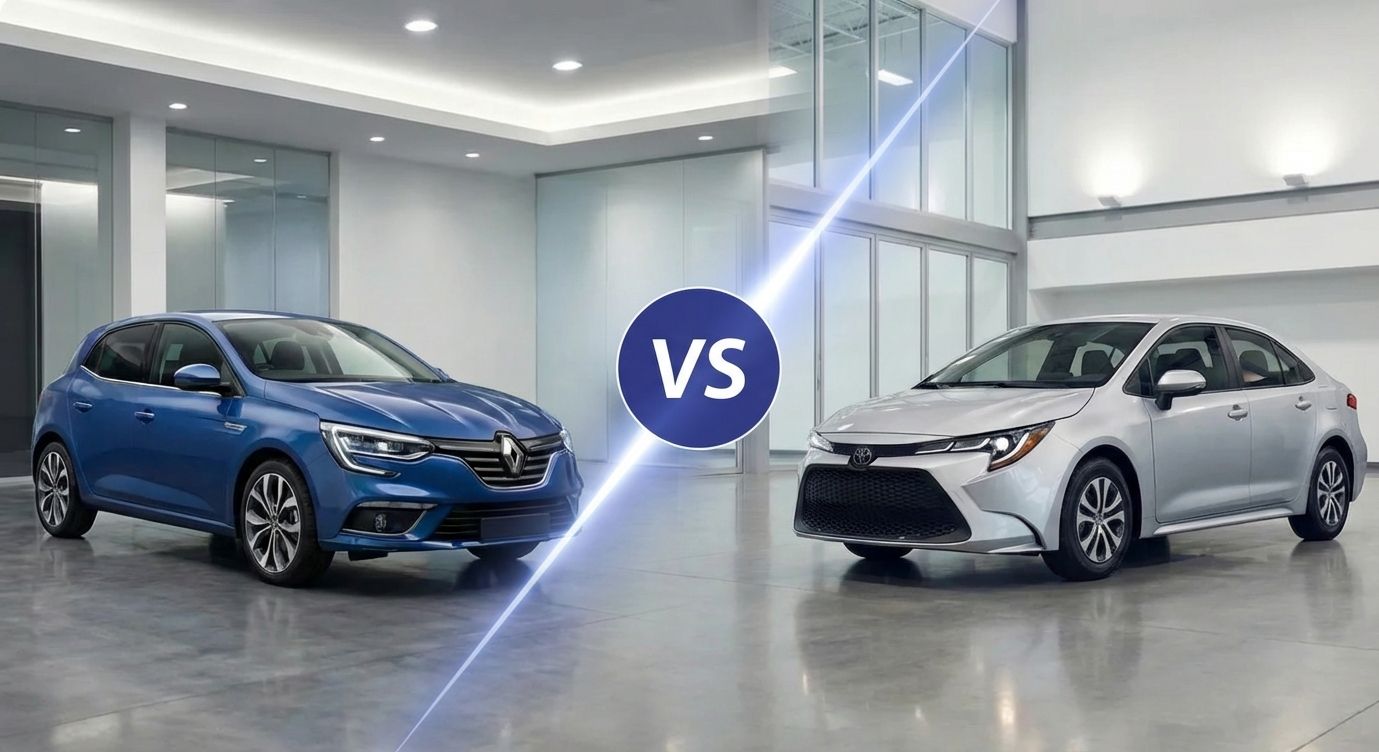
Detailed comparison: Renault Mégane vs Toyota Corolla. Discover the differences in engines, equipment, and reliability, and find out which used car is the best for you.
Apr 13, 2026