Car battle
Audi Q5 vs. BMW X3: A Complete 2025 Comparison
Audi Q5 vs. BMW X3: Which premium SUV is better? Our detailed comparison and verdict will help you choose the right car for your needs.
Apr 14, 2026
Articles
Car battle
Škoda Kodiaq vs. VW Tiguan Allspace: Which 7-seater SUV is better? Our detailed comparison, real-world insights, and verdict will help you choose.
April 13, 2026
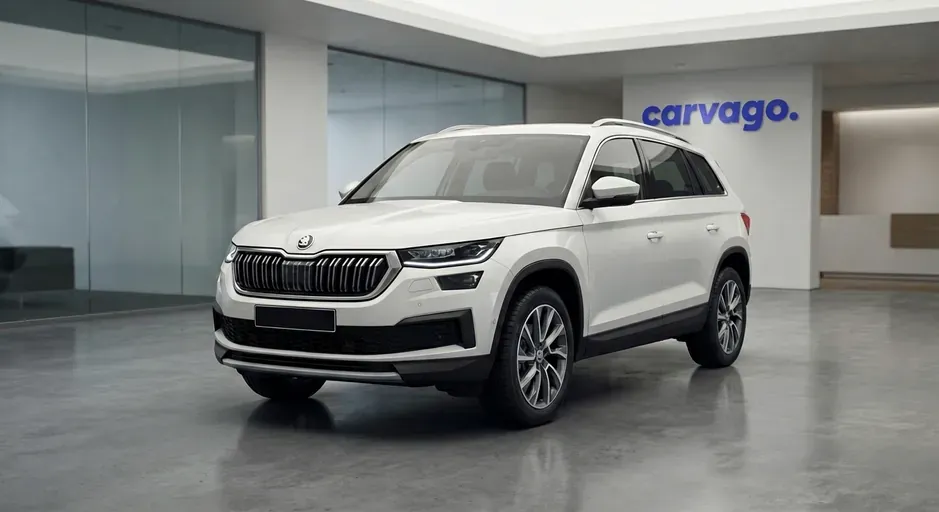
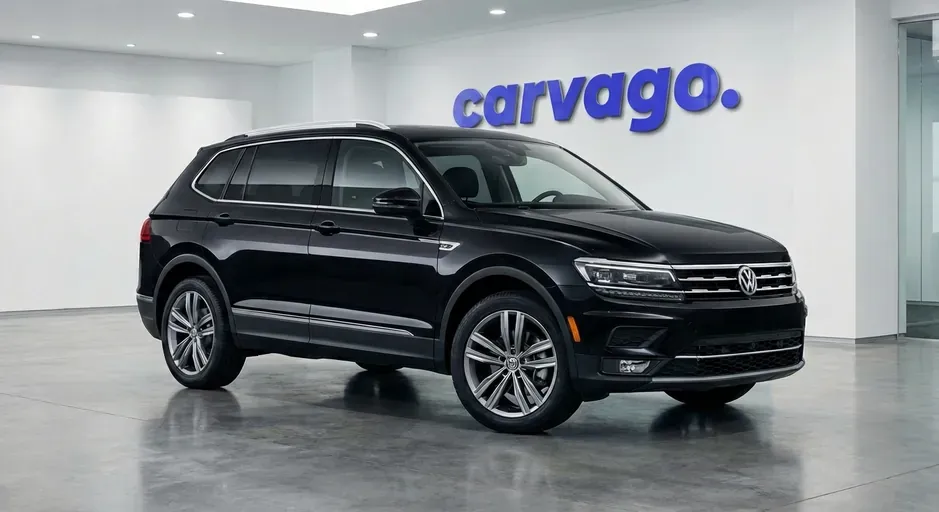
The Škoda Kodiaq is a spacious and practical family SUV that has won the hearts of many drivers since its launch, thanks to its versatility and clever solutions. The Volkswagen Tiguan Allspace, its corporate sibling built on the same platform, counters with precise workmanship and a slightly different approach to design and interior space, with both models offering the option of a seven-seater layout. Let's take a closer look at the key differences that will help you decide which of these two giants is right for you.
Although the Škoda Kodiaq and the Volkswagen Tiguan Allspace share the same corporate platform and may seem almost identical at first glance, a detailed look at the exterior dimensions reveals key differences. Both cars are very close in length and wheelbase, which suggests a similar interior space for passengers. The main difference, which you will feel not only in the cabin but also when maneuvering, is the width of the body.
At 1882 mm, the Škoda Kodiaq is noticeably wider than the Tiguan Allspace, which measures 1839 mm. The difference of more than four centimetres has a positive effect on the interior, where the Kodiaq offers slightly more shoulder room for passengers in the front and rear. This robustness also gives it a more dominant stance on the road. On the other hand, the slightly narrower Tiguan Allspace can be a small advantage when parking in tight garages or driving through narrow streets.
In other parameters, the differences are minimal. The length of both cars is around 4.7 metres and the wheelbase is almost identical. This ensures that neither model loses out in the longitudinal direction and both offer generous legroom. The Kodiaq is also slightly taller, which contributes to the feeling of airiness in the cabin. When choosing between these two cars, the exterior dimensions will therefore play a role primarily in whether you prefer the wider and more spacious interior of the Kodiaq, or the slightly more compact footprint of the Tiguan Allspace.
| Parameter | Škoda Kodiaq (1st gen) | Volkswagen Tiguan Allspace (II) |
|---|---|---|
| Length (mm) | 4697 - 4705 | 4701 - 4728 |
| Width (mm) | 1882 | 1839 - 1859 |
| Height (mm) | 1660 - 1688 | 1674 - 1679 |
| Wheelbase (mm) | 2788 - 2791 | 2787 - 2789 |
Spaciousness and practicality are key factors when choosing a large family SUV, and both corporate siblings excel in this discipline. Nevertheless, there are differences that can play a role in the decision-making process. The Škoda Kodiaq is often seen as the benchmark for space in its class, and the numbers confirm this. Especially after the 2021 facelift, it offers an absolutely stunning basic volume of 835 litres in the five-seater configuration. This is a figure that few competitors can beat and that can easily accommodate luggage for the whole family on a long holiday.
The Volkswagen Tiguan Allspace, although slightly smaller, is certainly not to be outdone. Its basic volume of 760 litres in the five-seater configuration is still well above average and more than sufficient for most family needs. The 75-litre difference in favour of the Kodiaq will be most noticeable when packing bulky items, such as a pram next to several suitcases. When the rear seats are folded down, the Škoda's lead increases slightly - the Kodiaq offers a cavernous 2065 litres, while the Tiguan Allspace provides 1920 litres.
The optional third row of seats is also an important factor. With the seven-seater variants, the boot volume is logically significantly reduced in the basic configuration. In this case, the Kodiaq offers 270 litres, while the Tiguan Allspace offers slightly less, specifically 230 litres. However, when the third row is folded down, both cars return to very generous figures - the Kodiaq provides approximately 765 litres and the Tiguan Allspace a full 700 litres. The conclusion is clear: both cars are exceptionally practical, but if your main criterion is the absolute maximum of space, the Škoda Kodiaq has a slight edge in all configurations.
| Parameter | Škoda Kodiaq SUV | Volkswagen Tiguan Allspace SUV |
|---|---|---|
| Basic volume (litres) | 835 | 760 |
| Max. volume with seats folded (litres) | 2065 | 1920 |
The ability to tow a trailer is a key parameter for many owners of large SUVs. Although both the Škoda Kodiaq and Volkswagen Tiguan Allspace are very capable in this discipline, there are significant differences between them that can influence a purchase decision. In certain specifications, the Volkswagen Tiguan Allspace offers a higher maximum braked trailer weight, making it the favourite for those who need to tow the heaviest loads.
Both models with the basic and very popular 1.5 TSI (110 kW) petrol engine can equally handle a braked trailer weighing 1800 kg. This is sufficient for smaller caravans or trailers with materials. Older Kodiaqs with the 1.4 TSI engine could tow up to 2000 kg.
The biggest differences, however, are seen in the diesel and more powerful petrol engines, usually combined with all-wheel drive. While the Škoda Kodiaq with 2.0 TDI and 2.0 TSI engines most often tops out at a respectable 2300 kg, the Tiguan Allspace can push the limit even further. Its most powerful diesel and petrol variants can handle a trailer weighing up to 2500 kg. This two-hundred-kilogram difference can play a role, for example, when towing large caravans, boats, or horse trailers.
For average users, the towing capabilities of both cars will be more than sufficient. But if you regularly hitch the heaviest loads allowed by law to your vehicle, the Volkswagen Tiguan Allspace will provide you with the necessary reserve and extra peace of mind. The unbraked trailer weight for both models is a standard 750 kg.
| Model and engine | Braked trailer weight (kg) | Unbraked trailer weight (kg) |
|---|---|---|
| Škoda Kodiaq 1.5 TSI ACT (110 kW) | 1800 - 2000 | 750 |
| Škoda Kodiaq 2.0 TDI (110 kW) | 2000 - 2300 | 750 |
| Škoda Kodiaq 2.0 TDI (147 kW) | 2000 - 2300 | 750 |
| Škoda Kodiaq 2.0 TSI (140 kW) | 2000 - 2200 | 750 |
| VW Tiguan Allspace 1.5 TSI (110 kW) | 1800 | 750 |
| VW Tiguan Allspace 2.0 TDI (110 kW) | 2000 - 2500 | 750 |
| VW Tiguan Allspace 2.0 TDI (147 kW) | 2300 - 2500 | 750 |
| VW Tiguan Allspace 2.0 TSI (140 kW / 180 kW) | 2200 - 2500 | 750 |
When choosing an engine for the Škoda Kodiaq or Volkswagen Tiguan Allspace, buyers will encounter a very similar, if not nearly identical, range of options. Both cars are built on the same MQB Group platform and therefore share a portfolio of proven turbocharged petrol (TSI) and diesel (TDI) engines. The differences are more in the details, the availability of specific combinations with drive and transmission, and the existence of top-of-the-line sports versions. The choice will not be about which brand offers a "better" engine, but which unit best suits your needs in terms of performance, fuel consumption, and running costs.
The Škoda Kodiaq offers a wide range of engines that has changed slightly over the years. The basis for cars from years relevant to the used car market (approx. 2019-2023) is the economical yet sufficiently powerful 1.5 TSI (110 kW) petrol engine, often with ACT technology for cylinder deactivation, which was available with both manual and automatic DSG transmissions and primarily with front-wheel drive. For drivers who cover more kilometres or frequently tow a trailer, the 2.0 TDI diesel engine is the ideal choice. It was offered in variants with 110 kW (150 hp) or 147 kW (200 hp) after the 2021 facelift. Both versions were often paired with 4x4 drive and an automatic DSG transmission.
An interesting feature is the top-of-the-line Kodiaq RS version. Before the facelift (until 2020), this model was powered by a unique twin-turbocharged 2.0 BiTDI diesel engine with 176 kW (240 hp). After the modernisation in 2021, it was replaced by a more powerful and lighter 2.0 TSI petrol engine with 180 kW (245 hp), known from the Octavia RS, for example.
| Engine type | Fuel | Power (kW) | Torque (Nm) | Transmission |
|---|---|---|---|---|
| 1.5 TSI ACT | Petrol | 110 | 250 | 6MT / 7DSG |
| 2.0 TSI | Petrol | 140 | 320 | 7DSG |
| 2.0 TSI RS | Petrol | 180 | 370 | 7DSG |
| 2.0 TDI | Diesel | 110 | 340 / 360 | 6MT / 7DSG |
| 2.0 TDI | Diesel | 147 | 400 | 7DSG |
| 2.0 BiTDI RS | Diesel | 176 | 500 | 7DSG |
Note: The 2.0 BiTDI RS (176 kW) engine was only available until 2020. It was replaced by the petrol 2.0 TSI RS (180 kW).
The engine range for the Tiguan Allspace is essentially a mirror image of the Kodiaq's. The base is the 1.5 TSI (110 kW) petrol engine, which provides solid dynamics for everyday driving and is available with front-wheel drive and an optional DSG transmission. For higher performance, there is the 2.0 TSI engine, available in 140 kW (190 hp) versions and a top variant with 180 kW (245 hp), always paired with 4MOTION all-wheel drive and a DSG automatic.
As with the Kodiaq, the backbone of the range here is the 2.0 TDI diesel unit. The basic version with 110 kW (150 hp) is an economical and reliable choice, while the more powerful variant with 147 kW (200 hp) offers commanding pulling power and is ideal for a fully loaded vehicle. Although the Tiguan Allspace did not have an official "RS" designation, until 2020 it offered the identical 2.0 BiTDI diesel engine with 176 kW (240 hp), which made it a performance-equivalent rival to the first-generation Kodiaq RS.
| Engine type | Fuel | Power (kW) | Torque (Nm) | Transmission |
|---|---|---|---|---|
| 1.5 TSI | Petrol | 110 | 250 | 6MT / 7DSG |
| 2.0 TSI | Petrol | 140 | 320 | 7DSG |
| 2.0 TSI | Petrol | 180 | 370 | 7DSG |
| 2.0 TDI | Diesel | 110 | 340 / 360 | 6MT / 7DSG |
| 2.0 TDI | Diesel | 147 | 400 | 7DSG |
| 2.0 BiTDI | Diesel | 176 | 500 | 7DSG |
Note: The 2.0 BiTDI (176 kW) engine was withdrawn from the range in 2020 and replaced by a more powerful version of the 2.0 TSI petrol engine (180 kW).
Given the nearly identical range of power units, the decision is simple and guided by the driver's needs, not the car's brand.
Choosing the right engine is key to long-term satisfaction with the car. Although the Škoda Kodiaq and Volkswagen Tiguan Allspace share the same corporate technology and their engine range is almost identical, there are minor differences in tuning and the availability of combinations with drive and transmission systems. Our recommendations are based on a combination of performance, real-world fuel consumption, mechanical reliability, and owner experiences.
For a large family SUV, which the Kodiaq undoubtedly is, the 2.0 TDI diesel engine with 110 kW represents the golden mean. It's not a tarmac-tearer, but its strength lies in its massive torque of 340 Nm (up to 360 Nm in newer versions), which is available at low revs. This means that even a fully loaded car with seven passengers and luggage pulls away with ease and doesn't run out of breath when overtaking on the motorway. A key advantage is its real-world fuel consumption, which is easily around 6 litres per 100 km during calm driving outside the city, while in combined cycle you can expect figures between 6.5 and 7.5 litres. The engine belongs to the reliable EA288 series, which does not suffer from major design flaws.
What to watch out for: Like any modern diesel, this engine requires proper handling. Frequent short city trips risk clogging the diesel particulate filter (DPF). The AdBlue injection system (SCR) is effective at reducing emissions, but it means another operating fluid to top up. For those who often drive fully loaded or tow a trailer, the more powerful 140 kW version (later 147 kW) is an ideal choice, offering noticeably better dynamics for only slightly higher fuel consumption and is often paired with 4x4 drive.
Who is the engine ideal for: For families who use the car for longer journeys, holidays, and weekend trips. It's a workhorse that offers an excellent compromise between running costs and utility value.
Since the Tiguan Allspace shares its technical basis and engine portfolio with the Kodiaq, our recommendation remains the same. The 110 kW two-litre diesel is a safe bet here too, and the most rational choice for the vast majority of drivers. The engine provides sufficient dynamics for safe travel, and its main advantage is low fuel consumption on motorway journeys. The engine's refinement is at a very good level, and in combination with the seven-speed DSG gearbox, it forms a perfectly matched pair for comfortable and effortless driving.
What to watch out for: The risks are identical to those of the Kodiaq. Short trips with a cold engine are not good for the particulate filter, and the SCR system requires regular AdBlue top-ups. Before buying a used car, focus on the smoothness of the DSG gearbox, whose lifespan is significantly extended by regular oil changes every 60,000 km. If you desire more power, Volkswagen also offered more powerful variants with 147 kW (200 hp) or even, for a short time, the top-of-the-line 2.0 BiTDI version with 176 kW (240 hp), which turns the Tiguan Allspace into a very fast SUV, albeit at the cost of higher service costs.
Who is the engine ideal for: For drivers looking for a reliable and economical partner for long journeys. Whether you cover hundreds of kilometres on the motorway daily or set off across Europe with your family, this engine will not disappoint you.
Official fuel consumption figures are one thing, but the day-to-day reality on the road is another. That's why we looked at data from drivers themselves, which often better reflects the appetite you can expect from these large SUVs. We are basing this on data from hundreds of owners who track their refuelling and consumption over the long term on portals like Germany's Spritmonitor.de. This gives us an accurate picture of how the Kodiaq and Tiguan Allspace perform in everyday use.
Given the focus on roughly four-year-old used cars, we are comparing the first generation of the Škoda Kodiaq (especially after the 2021 facelift) and the second generation of the Volkswagen Tiguan Allspace. Three key engines dominate this category, where the differences in consumption are minimal.
| Model and Engine | Average Real-World Consumption (l/100 km) |
|---|---|
| Škoda Kodiaq 1.5 TSI (110 kW) | 7.1 |
| Volkswagen Tiguan Allspace 1.5 TSI (110 kW) | 6.9 |
| Škoda Kodiaq 2.0 TDI (110/147 kW) | 6.3 |
| Volkswagen Tiguan Allspace 2.0 TDI (110/147 kW) | 6.2 |
| Škoda Kodiaq 2.0 TSI (140 kW) | 8.4 |
| Volkswagen Tiguan Allspace 2.0 TSI (140/180 kW) | 8.6 |
As the table suggests, both cars are very similar in terms of fuel consumption. With the basic 1.5 TSI petrol engine, the Tiguan Allspace has a slight edge with an average of around 6.9 l/100 km, while the Kodiaq is around 7.1 litres. However, this difference is negligible in practice and depends heavily on driving style and route profile. For frequent city driving, the consumption of both models can be even higher.
Traditionally, the 2.0 TDI diesel engines offer the greatest savings. Here, the average consumption for both cars is around a very favourable 6.2 to 6.3 l/100 km. For drivers who cover tens of thousands of kilometres annually and often travel on motorways, the diesel is the clear choice, and its low consumption can offset potentially higher service costs. Even the less powerful 110 kW version offers sufficient dynamics while maintaining excellent efficiency.
At the other end of the spectrum are the powerful 2.0 TSI petrol engines, which, while delivering superior performance, demand their price at the petrol station. Here, you need to expect consumption approaching the 8.5-litre mark, and even more with more dynamic driving.
Ultimately, fuel consumption is not the deciding factor when choosing between these two models. The differences between comparable engine versions are so small that you will hardly feel them in your wallet. The key decision is rather between a petrol and a diesel engine, which should be based purely on your driving habits. For long-distance travellers, the TDI is the winner; for those who drive shorter routes and in the city, the TSI may be a better choice.
Looking at the price tags of used cars, it becomes clear that the Škoda Kodiaq and Volkswagen Tiguan Allspace are very close even after several years on the market. Their residual value is high, and the price differences between comparably aged and equipped units are often minimal. Nevertheless, certain trends can be observed that may play a role in the purchasing decision.
There is generally a wider range of Kodiaq models on the used car market, which also brings a larger price range. Four-year-old cars (around the 2022 model year) can be purchased at prices starting at approximately €26,000. These are typically cars in basic trim levels, often with a 2.0 TDI engine producing 110 kW and front-wheel drive.
At the top of the range, on the other hand, are richly equipped versions such as Sportline, Laurin & Klement, or the sporty RS variant. The prices of these low-mileage models with more powerful engines (e.g., 2.0 TSI or 2.0 TDI 147 kW) can easily exceed €36,000, and for RS models, even over one million crowns. The average price for a 2022 Kodiaq is around €30,800.
Price range for a used Kodiaq (approx. 4 years old):
The supply of used Volkswagen Tiguan Allspace models is somewhat smaller, which can slightly increase their price compared to a Kodiaq with the same specification. In terms of price, four-year-old models are very close to the Kodiaq, but the basic models tend to be tens of thousands of crowns more expensive.
The prices of used 2022 Tiguan Allspace models start closer to the €28,000 mark. The average price is around €30,600, which is very similar to the Kodiaq. The more expensive models are primarily the better-equipped Elegance and especially the sporty R-Line versions. These models with more powerful engines and 4Motion all-wheel drive are commonly sold for prices from €34,000 upwards.
Price range for a used Tiguan Allspace (approx. 4 years old):
For both models, the price is most influenced by:
Ultimately, the price battle between these two corporate siblings is very balanced. The Kodiaq offers a slightly wider selection and a potentially lower entry price, while the Tiguan Allspace often maintains a slightly higher value for comparable units, reflecting its positioning within the Volkswagen brand.
When choosing a family SUV, safety is a key factor, and both corporate siblings can boast the highest, five-star rating from the independent organisation Euro NCAP. However, it is necessary to view the results in the context of the time when the tests were conducted. The methodology of crash tests is constantly being tightened, and therefore a direct comparison of percentage results from different years is not entirely conclusive.
The first generation of the Škoda Kodiaq, which is relevant for the used car market, underwent Euro NCAP tests in 2017 and received a full five stars. The car demonstrated a high level of protection for adult occupants (92%) and robust protection in a side impact. In child protection, it scored 77%, which was a solid score at the time. A weakness of that generation's assistance systems was the rating in the Safety Assist category, where the Kodiaq achieved 54%. Although the car offered an emergency braking system, its functionality was rather basic by the standards of the time.
The Volkswagen Tiguan, from whose technical basis and results the extended Allspace version is also derived, underwent crash tests a year earlier, in 2016. It also received five stars, achieving impressive figures in the individual categories. Adult occupant protection was rated at 96%, which is a top value even by today's standards. In child protection, it also performed slightly better than the Kodiaq with 84%. A significant difference was noticeable in the assistance systems category, where the Tiguan received 68%, indicating slightly more advanced standard safety equipment already at the time of its launch.
Both cars were at the top of their class in their time and provide a high standard of passive safety. Looking at the test figures for the relevant generations, the Volkswagen Tiguan Allspace shows slightly better results, especially in adult occupant protection and the level of assistance systems available at the time of the test.
However, it should be emphasized that the Euro NCAP methodology has become significantly stricter since then, especially after 2020. Newer cars are tested for cyclist detection, more complex intersection scenarios, and overall sophistication of active safety. While both cars are structurally safe, the Tiguan had a slight edge in what were modern technologies at the time of its creation. For a used car buyer, this means that both models are a safe bet, but the Tiguan offered a slightly more comprehensive package.
| Parameter | Škoda Kodiaq (2017) | Volkswagen Tiguan Allspace (2016) |
|---|---|---|
| Year of testing | 2017 | 2016 |
| Adult Occupant Protection | 92 % | 96 % |
| Child Occupant Protection | 77 % | 84 % |
| Vulnerable Road User Protection | 71 % | 72 % |
| Safety Assist Systems | 54 % | 68 % |
In addition to standard equipment, each model offers several unique features that can be decisive for the customer. While Škoda relies on proven practical solutions, Volkswagen focuses on advanced technologies and a premium feel.
The Škoda Kodiaq is based on its "Simply Clever" philosophy, which is reflected in many details that make everyday life easier. It's not just about spaciousness, but about thoughtful accessories that you often won't find in the competition.
The Tiguan Allspace is positioned as the more technologically advanced and premium-oriented sibling. It targets drivers who appreciate advanced assistance systems and a more polished digital environment.
Advantages:
Disadvantages:
Pros:
Cons:
Based on our own CarAudit inspections, breakdown statistics, and owner feedback, we have compiled an overview of the most common problems that used car buyers should look out for. Although the Škoda Kodiaq and Volkswagen Tiguan Allspace share a great deal of technology, their typical faults differ in some respects.
The Škoda Kodiaq is generally considered a reliable family SUV, but it does have a few weak spots.
Summary for the Kodiaq: Most of the Škoda Kodiaq's problems are related to electronics and software, which can be resolved relatively easily. Mechanical faults, such as timing issues with the TSI engines, require more attention at the time of purchase and a careful check of the service history.
The Tiguan Allspace shares its technical basis with the Kodiaq, and therefore some of its problems. Nevertheless, it has its own specific issues.
Summary for the Tiguan Allspace: With the Tiguan Allspace, in addition to the common VW Group issues with DSG and TSI engines, it is necessary to check the recall history. Potential oil leaks and problems with the panoramic roof highlight the importance of a thorough independent inspection of the car's technical condition before purchase.
A thorough inspection is key when buying a used car. Although both the Škoda Kodiaq and the Volkswagen Tiguan Allspace are considered reliable cars, they have their specific issues that are good to focus on. Here are a few points to help you uncover potential problems.
The Škoda Kodiaq offers a slightly larger boot, both in the seven-seater and five-seater configurations. Specifically, with the third-row seats folded down, the Kodiaq has 720 litres, while the Tiguan Allspace has 700 litres. The Kodiaq is also a noticeable 43 mm wider, which has a positive effect on the interior space.
The Volkswagen Tiguan Allspace has a stiffer and more sportily tuned chassis, which provides more confidence in corners. The Škoda Kodiaq, on the other hand, is more focused on comfort, and its suspension is softer. In normal driving, however, both cars are very similar and offer comparable comfort.
The interior of the Volkswagen Tiguan Allspace feels a bit more premium and luxurious thanks to the use of soft-touch plastics and higher-quality materials. The Škoda Kodiaq focuses more on practicality, robustness, and "Simply Clever" solutions, such as the second glove box in front of the passenger. However, both interiors are well-made and designed to withstand the rigours of family life.
Generally, the Škoda Kodiaq is slightly cheaper than the Volkswagen Tiguan Allspace with comparable equipment and engine. The price difference may vary depending on the specific specification, but the Kodiaq often offers better value for money. The Volkswagen, on the other hand, holds a slightly higher residual value.
Both models, the Škoda Kodiaq and the Volkswagen Tiguan Allspace, offer the option of a third row of seats, providing a seven-seat configuration. In both vehicles, however, the third row is primarily intended for children or for occasional use over short distances, as adults will find comfort limited. As standard, both models are five-seaters.
The choice between Škoda Kodiaq and Volkswagen Tiguan Allspace is a battle of practicality versus premium feel, with both SUVs sharing the same technology. Škoda Kodiaq excels in maximum interior space, practical "Simply Clever" solutions, and an unbeatable price-to-value ratio, making it an ideal choice for pragmatic families. Conversely, Volkswagen Tiguan Allspace targets customers looking for a more premium interior, a more refined driving experience, and more advanced technological equipment, for which they are willing to pay extra. The final decision thus depends on personal priorities, not on the objective superiority of one model. If you are looking for maximum utility and space, choose the Kodiaq; for a more premium feel and technology, the Tiguan Allspace is better.
Sources: ADAC, topgear.com, carbuyer.co.uk, roadandtrack.com, automotive-fleet.com, chargedevs.com
This article was prepared using artificial intelligence tools. The section guarantor is Petr Dušek.
Audi Q5 vs. BMW X3: Which premium SUV is better? Our detailed comparison and verdict will help you choose the right car for your needs.
Apr 14, 2026
Detailed comparison of Hyundai Santa Fe vs Volkswagen Tayron. We compared space, equipment, and driving characteristics. Read our verdict and choose the right SUV.
Apr 8, 2026
Kia Sorento vs. Volkswagen Tayron. Which large SUV is better? A detailed comparison of price, features, and driving performance to help you decide.
Apr 13, 2026