Car battle
Kia Sorento vs. Volkswagen Tayron: A Complete 2025 Comparison
Kia Sorento vs. Volkswagen Tayron. Which large SUV is better? A detailed comparison of price, features, and driving performance to help you decide.
Apr 13, 2026
Articles
Car battle
Detailed comparison of Hyundai Santa Fe vs Volkswagen Tayron. We compared space, equipment, and driving characteristics. Read our verdict and choose the right SUV.
April 8, 2026
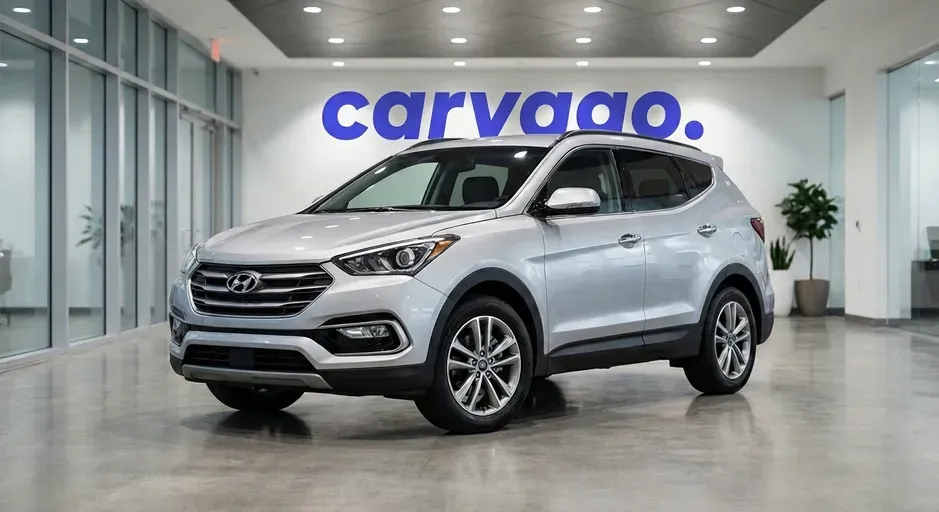
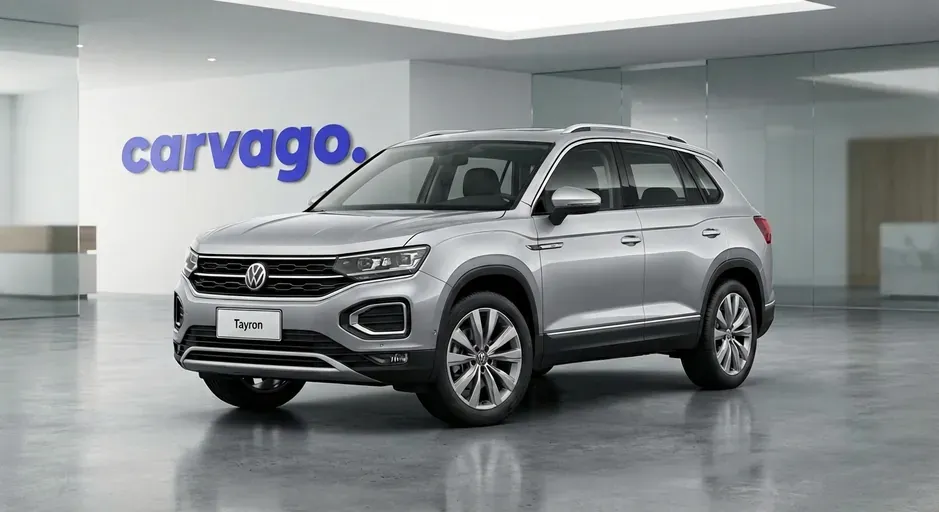
The Hyundai Santa Fe, offered in the past in selected markets under the names Hyundai Maxcruz or Santa Fe XL, is a popular and unmissable family SUV that builds its success on generous interior space, comfort, and bold design. Standing against it is the Volkswagen Tayron, which has moved from its original domain in the Asian market into the role of the global successor to the popular Tiguan Allspace model (in North America, it is additionally sold simply under the name Tiguan) and relies primarily on proven German engineering combined with premium workmanship. In the following comparison, we will take a detailed look at the key features of both these spacious cruisers to find out which one represents a better choice for your everyday family and travel needs.
When we compare the exterior dimensions of both cars with regard to the nearly-new used car market (where for the Hyundai brand it makes sense to compare the popular 4th generation, and the Volkswagen Tayron features as a novelty replacing the Tiguan Allspace model), we find that they are very evenly matched rivals. The Volkswagen Tayron measures 4,792 mm in length, which means it is an imperceptible 7 to 22 millimeters longer than the 4th generation Hyundai Santa Fe (4,770–4,785 mm). In practice, you will hardly feel this minor difference when parallel parking. However, the Tayron has managed to extract a slightly longer wheelbase from this footprint (up to 2,790 mm compared to 2,765 mm for the Hyundai), which usually brings slightly better longitudinal legroom for passengers in the rear rows.
The Hyundai Santa Fe, on the other hand, clearly dominates in terms of width and height, giving it a more massive and confident stance typical of full-fledged family SUVs. With a maximum width of 1,900 mm, it is up to 47 mm wider than its German competitor (1,853–1,866 mm). The wider body of the Santa Fe means a noticeably airier interior in the shoulder and elbow area, but you will pay the price for this comfort when maneuvering in narrow parking garages. The Korean SUV is also slightly taller (up to 1,685 mm compared to a maximum of 1,668 mm for the VW), which taller passengers in particular can benefit from thanks to more generous headroom.
In the final decision, it therefore depends primarily on your spatial priorities and the environment where you will be driving the car most often. The Volkswagen Tayron cleverly combines a long wheelbase to maximize interior longitudinal space with a slightly narrower body, making it noticeably easier to live with in urban agglomerations and narrowed lanes. The Hyundai Santa Fe, on the other hand, relies on overall robustness and a more majestic appearance, which will offer the crew a sense of safety and excellent cabin width for comfortable travel on long routes.
| Parameter | Hyundai Santa Fe SUV | Volkswagen Tayron SUV |
|---|---|---|
| Width (mm) | 1890 - 1900 | 1853 - 1866 |
| Length (mm) | 4770 - 4785 | 4792 |
| Height (mm) | 1680 - 1685 | 1666 - 1668 |
| Wheelbase (mm) | 2765 | 2788 - 2790 |
Luggage compartment space is one of the most important criteria for many families and active drivers when choosing a large car. Given that the Volkswagen Tayron is a completely new model for 2025 on the European market, for a meaningful comparison (so as not to compare generations that are too far apart in age), it is most appropriate to place it next to its direct generational peer – the fifth generation of the Hyundai Santa Fe. Both of these massive SUVs aim for unrivaled practicality, however, their approach to utilizing interior space and overall body shaping differs noticeably. While the Santa Fe impresses with a strictly angular rear end with a giant opening, the Tayron relies on a more traditionally cut line maximizing the enclosed interior volume.
Looking at the exact numbers, the Volkswagen Tayron in the classic five-seater version brings an excellent base volume of 885 liters. In the seven-seater version (with the third row folded down), the capacity slightly decreases to 850 liters. The fifth-generation Hyundai Santa Fe offers 711 liters in the base five-seater hybrid version, and if you choose the six- or seven-seater version, expect a standard volume of 628 liters. A very interesting comparison occurs with the plug-in hybrid motorizations of both cars, where due to the installation of traction batteries, the values almost level out – the Tayron eHybrid will offer 705 liters, while the Santa Fe PHEV has a volume of 704 liters. After completely folding down the rear seats, the Santa Fe can create a huge flat loading area with a maximum capacity of 2,032 liters, however, the Tayron offers an absolute value of up to 2,090 liters in this discipline.
In practice, these differences mean that both cars will handle the transport of a stroller with absolute ease, provide space for several extra suitcases, and offer sufficient volume for weekend shopping as well as a longer vacation. The Tayron scores in overall paper values and a slightly deeper trunk, while the Santa Fe counters with an extremely wide tailgate, into which non-standard shaped, large items are easier to load. If your priority is the maximum possible capacity in a standard layout for five passengers, the Tayron will provide you with noticeably more space. The Hyundai Santa Fe, on the other hand, is an ideal choice for those who prefer a boxy shape and will fully utilize the perfectly flat floor, which, by the way, is also great for emergency sleeping on the road.
| Parameter | Hyundai Santa Fe SUV | Volkswagen Tayron SUV |
|---|---|---|
| Base volume (liters) | 711 | 885 |
| Max volume with seats folded down (liters) | 2032 | 2090 |
Trailer weight is a crucial parameter for families and active users who plan to tow caravans, boats, or transport heavier materials. Both of these spacious SUVs offer very solid towing capacities, but the choice of engine plays a critical role. Looking at the used car market, you will come across an interesting generational overlap, where four-year-old Hyundai models are complemented on the market by the relatively new Volkswagen Tayron, which is the conceptual successor to the earlier Tiguan Allspace.
In practice, this means that while the hybrid Santa Fe offers sufficient capacity for a weekend purchase of bulkier materials or transporting a light tent trailer, the hybrid Tayron can easily handle a medium-heavy caravan, which is a huge advantage for a family summer holiday. For unbraked trailers, the standard European limit of 750 kg applies to both cars in this weight category, which easily covers the space for a few extra suitcases, garden waste, or building materials.
In conclusion, if you desire the absolute maximum and uncompromising power for heavy trailers, the proven diesel Santa Fe of the 4th generation is the ideal workhorse. However, if you prefer a more economical plug-in hybrid drive but still do not want to give up the ability to tow a full-sized caravan, the Volkswagen Tayron is a significantly more versatile choice.
| Model and motorization | Braked weight of trailer (kg) | Unbraked weight of trailer (kg) |
|---|---|---|
| Hyundai Santa Fe 2.0 CRDi / 2.2 CRDi (4. gen) | 2000–2500 | 750 |
| Hyundai Santa Fe 2.4 GDI (4. gen) | 2000 | 750 |
| Hyundai Santa Fe 1.6 T-GDI Hybrid (4. gen) | 1650 | 750 |
| Hyundai Santa Fe 1.6 T-GDI PHEV (4. gen) | 1350 | 750 |
| Volkswagen Tayron 2.0 TDI SCR (1. gen) | 2000–2400 | 750 |
| Volkswagen Tayron 2.0 TSI OPF (1. gen) | 2300 | 750 |
| Volkswagen Tayron 1.5 eHybrid OPF (1. gen) | 1800–2000 | 750 |
| Volkswagen Tayron 1.5 eTSI (1. gen) | 1800 | 750 |
When comparing the powertrains of these two robust family SUVs, we encounter a completely different starting position and a generational shift, which is of fundamental importance to buyers. While the Hyundai Santa Fe on the market of typical four-year-old used cars (the dominant 4th generation from 2020–2024) relies primarily on an exceptionally strong and sought-after diesel engine or proven electrified units, the Volkswagen Tayron is an absolute novelty on the European market for 2025. As an indirect successor to the Tiguan Allspace model, the Tayron does not yet feature on the older used car market at all. The differences in the engine range are therefore significant: a used Santa Fe represents the certainty of massive torque from a diesel unit suitable for towing heavy trailers for more affordable money. The brand-new Tayron, on the other hand, showcases the current emission standard represented by advanced mild-hybrids (1.5 eTSI) or top-tier plug-in hybrids (eHybrid) that can travel over 100 kilometers on a single charge. Both vehicles, however, share the conviction that for medium and higher trim levels, an automatic transmission and capable all-wheel drive (HTRAC for Hyundai, 4MOTION for VW) are exclusively the standard today.
In the case of the 4th generation Hyundai Santa Fe (in specifications typical for the used car market), the offer consisted of three core powertrains. For highway travelers and drivers with caravans, the clear favorite was the 2.2 CRDi four-cylinder diesel, which boasts a strong output of 142 kW (up to 147 kW in the first years after launch) and a massive torque of 440 Nm. The engine was perfectly tuned to work with the responsive eight-speed dual-clutch 8DCT transmission. However, as availability data shows, with the arrival of the latest 5th generation (2024 and newer), this diesel workhorse is permanently disappearing from the European lineup, making used diesel Santa Fes all the more valuable commodities. An ecological and significantly more city-friendly choice is the traditional self-charging hybrid 1.6 T-GDI HEV with a total output of 169 kW and a six-speed automatic, where you don't have to worry about cables. The most powerful version and a direct bridge to electromobility is the 1.6 T-GDI Plug-in-Hybrid (PHEV), which delivers 195 kW, always drives both axles, and provides a purely electric range of realistically around 50 km.
| Engine type | Fuel | Power (kW) | Torque (Nm) | Transmission |
|---|---|---|---|---|
| 1.6 T-GDI HEV | Petrol / HEV | 169 | 350 | 6AT |
| 1.6 T-GDI Plug-in-Hybrid | Petrol / PHEV | 195 | 350 | 6AT |
| 2.2 CRDi | Diesel | 142 - 147 | 440 | 8DCT |
As a hot new release for 2025, the Volkswagen Tayron brings a diverse range of powertrains without compromise, benefiting from the latest iteration of the group's platform. Since it does not yet exist as a four-year-old used car, you are choosing from a lineup primarily intended for new vehicles. A great stepping stone is the undemanding 1.5 eTSI petrol mild-hybrid tuned to 110 kW with exclusively front-wheel drive. A major technological trump card are the two versions of the 1.5 eHybrid OPF plug-in hybrid with an output of 150 kW or a commanding 200 kW. These engines have received a generous battery with a capacity of almost 20 kWh and fast DC charging, allowing them to travel over 100 km without local emissions, thereby significantly outclassing the range of used Hyundai plug-ins. For traditionalists, the proven 2.0 TDI SCR diesel engine (110 kW or 142 kW) and the powerful 2.0 TSI OPF turbocharged petrol engine with very generous outputs of 150 kW and 195 kW respectively, remain in the lineup. From an output of 142 kW and above, the Tayron relies exclusively on 4MOTION all-wheel drive. Shifting is handled by intelligent DSG transmissions, predominantly seven-speed (six-speed for the eHybrid versions).
| Engine Type | Fuel | Power (kW) | Torque (Nm) | Transmission |
|---|---|---|---|---|
| 1.5 eTSI | Petrol / mHEV | 110 | 250 | 7DSG |
| 1.5 eHybrid OPF | Petrol / PHEV | 150 / 200 | 350 / 400 | 6DSG |
| 2.0 TSI OPF | Petrol | 150 / 195 | 320 / 400 | 7DSG |
| 2.0 TDI SCR | Diesel | 110 / 142 | 360 / 400 | 7DSG |
Choosing the right powertrain is crucial for long-term satisfaction with the car, and our recommendations are based on real-world experience with reliability, actual fuel consumption, and feedback from the owners themselves. When comparing these two models, we encounter an interesting generational paradox: while the excellent and highly sought-after diesel engine clearly rules among roughly four-year-old used Hyundai Santa Fe models (in the fourth generation), you can no longer get a diesel from the Korean brand at all in the current fifth generation (from 2024). Conversely, the Volkswagen Tayron, which is a hot new release and the successor to the Tiguan Allspace for 2025, retains advanced diesel engines even today, which, alongside modern plug-in hybrids, still represent a safe bet.
This powerful four-cylinder diesel from the fourth generation (produced until mid-2024) represents an absolutely ideal choice on the market of approximately four-year-old used cars, especially because this great engine is missing in the latest generation of the model. Its main technical advantage is a dense torque curve and excellent coordination with the eight-speed dual-clutch transmission with wet clutches (8DCT). The result is a very reasonable real-world fuel consumption of around 7 to 8 liters per 100 km for such a heavy family SUV, and excellent dynamics even when fully loaded. A known risk of this unit, however, is the clogging of the EGR valve with carbon and the blocking of the diesel particulate filter (DPF) if the previous owner only tortured the car on short city routes. Why checking this matters and how to detect the problem: Carbon-clogged intake and a full DPF mean a significant drop in performance and the threat of repairs in the order of tens of thousands of crowns. When inspecting the car, have the engine started completely cold – it must run absolutely smoothly. During the test drive, observe whether the car has a smooth pull right from low revs. Visually check the exhaust tailpipes (there must not be a thick layer of greasy soot in them) and insist on reading the ash mass in the DPF using diagnostics. This engine is best suited for drivers who drive long distances, highway stretches, or frequently tow a caravan or heavy trailers.
Since the Tayron is a completely new model sold only from 2025, you will encounter it on the market mostly in the form of nearly new or demonstration vehicles. From the offered range of engines, we recommend the top-of-the-line two-liter diesel from the EA288 Evo family. Its biggest technical weapon is the "twin-dosing" system – double injection of AdBlue into two consecutive SCR catalytic converters, which drastically reduces nitrogen oxide emissions while the engine maintains fantastic efficiency with a real-world highway consumption of around 6 to 6.5 liters. With such nearly new cars, you do not have to worry about mechanical wear, but the main risk with nearly new used cars is often long periods of standing at dealerships, which can lead to the crystallization of the AdBlue fluid in the tank or injector. Why checking this matters and how to detect the problem: A fault in the AdBlue dosing is software-critical – after the countdown of error kilometers, the car will block you from starting it again. Even with a nearly new car with a few thousand kilometers, insist on turning on the ignition and checking the remaining AdBlue range in the onboard menu. Make sure that the orange check engine light does not stay on after starting. We recommend this engine to drivers with high annual mileage, large families for holiday travel, and all users who do not want to be dependent on charging and are looking for an honest, robust powertrain for long highway journeys.
Official fuel consumption figures provided by car manufacturers can often paint an overly optimistic picture that slightly diverges from the reality of everyday driving. To get a more accurate and reliable idea of how the Hyundai Santa Fe and Volkswagen Tayron perform in real-world conditions, we combined technical specifications with long-term data from drivers themselves on platforms like Spritmonitor.de. Given that the Volkswagen Tayron is a hot new release (replacing the older Tiguan Allspace), we are comparing its latest powertrains with the popular fourth generation of the Hyundai Santa Fe. The latter represents an ideal and highly relevant candidate for those interested in an approximately four-year-old family SUV.
| Model and powertrain | Average consumption (l/100 km) |
|---|---|
| Hyundai Santa Fe 2.0 CRDi (4th generation) | 6.1 |
| Hyundai Santa Fe 2.2 CRDi (4th generation) | 6.6 |
| Hyundai Santa Fe 1.6 T-GDI Hybrid (4th generation) | 6.9 |
| Hyundai Santa Fe 2.4 GDI (4th generation) | 9.6 |
| Hyundai Santa Fe 1.6 T-GDI PHEV (4th generation) | 1.6 * |
| VW Tayron 2.0 TDI SCR (1st generation) | 5.9 |
| VW Tayron 1.5 eTSI (1st generation) | 6.2 |
| VW Tayron 2.0 TSI OPF (1st generation) | 8.0 |
| VW Tayron 1.5 eHybrid OPF (1st generation) | 1.5 * |
\ Values for plug-in hybrids (PHEV) correspond to an ideal scenario with a charged battery; during longer drives without recharging, consumption rises to the level of conventional petrol engines.*
A look at the collected data brings no major shocks, but rather confirms the unwritten rule of this automotive class – for large, heavy, and spacious SUVs, the diesel engine remains the absolute king of efficiency. The Tayron, with its excellent 2.0 TDI powertrain, manages to push average consumption slightly below 6 liters. However, it is ably seconded by the bulkier Santa Fe with its reliable 2.2 CRDi diesel, which asks for an average of 6.6 l/100 km. For a car of this size with permanent all-wheel drive, this is an excellent result. The real-world consumption of modern petrol hybrids might come as a surprise. While smaller turbocharged engines (1.5 eTSI in the VW and 1.6 T-GDI HEV in the Hyundai) promise maximum savings in the city, at highway speeds they have to overcome significant aerodynamic drag, pushing their appetite closer to the 7-liter mark. With plug-in hybrid variants, you cannot fully rely on the official figures of around 1.5 l/100 km; in practice, you will only maintain this dream consumption with strict daily charging at home or at work.
So what does this mean for the typical buyer? Your choice should reflect your daily driving rhythm as accurately as possible. If your daily bread is eating up hundreds of kilometers across the country on highways, the diesel variants of both brands (TDI and CRDi) are the best and most economical choice for you, guaranteeing massive torque and a long range. However, if the car is used mainly for suburban commutes, morning school runs, and shopping trips, the mild-hybrid and full-hybrid petrol variants will offer quieter operation and very smooth pull-aways with perfectly adequate running costs. Conversely, large-displacement naturally aspirated petrol engines (such as the older 2.4 GDI in the Santa Fe) with an average consumption approaching ten liters should be avoided by drivers with high annual mileage.
As a result, fuel consumption alone will probably not be the main and definitive argument that sways you to one side or the other. Thanks to a brand-new platform and advanced aerodynamics, the Volkswagen Tayron has a slight edge in diesel and mild-hybrid powertrains. Nevertheless, the fourth generation of the Santa Fe bravely compensates for this slight on-paper handicap with the time-tested robustness of its powertrain, solid engineering, and generous interior space. If you choose a powertrain correctly sized for your typical routes in either car, you will be very satisfied with both family cruisers at the petrol station.
When comparing used car prices on the Czech market, it is necessary to take into account the fundamental generational and historical difference between the two models. While the Hyundai Santa Fe offers a wide selection of classic four-year-old used cars (model years 2021–2022), the Volkswagen Tayron only arrived on the European market as the successor to the Tiguan Allspace at the turn of 2024 and 2025. On the used car market, you will therefore only come across 1 to 2-year-old nearly new or demonstrator Volkswagen vehicles, not four-year-old examples.
The market for approximately 4-year-old Santa Fe models is currently very rich and offers an excellent price-to-value ratio. Cars from 2021 and 2022 represent the popular fourth generation after a significant facelift.
Because the Tayron has been on the market for a relatively short time, those interested in a second-hand car must reach for very young examples with minimal mileage, which are also still covered by the factory warranty.
| Model | Estimated price (base / higher mileage) | Estimated price (top trim / PHEV / 4x4) | Typical age of used car on the market |
|---|---|---|---|
| Hyundai Santa Fe | €23,000 | €39,000 | 4 years (2021–2022) |
| Volkswagen Tayron | €37,000 | €66,000 | 1–2 years (2024–2025) |
If you are looking for a proven large family SUV and your budget is around €31,000, a four-year-old Hyundai Santa Fe represents a logical and very rational choice with huge interior space and reliable technology. On the other hand, the Volkswagen Tayron targets buyers who, although looking for a second-hand vehicle, require an almost new car with the latest VW Group architecture. With this model, however, it is necessary to count on a starting budget that safely begins above the €37,000 mark.
Both models, the Hyundai Santa Fe and the Volkswagen Tayron, achieved the maximum five-star rating in the demanding independent Euro NCAP crash tests. For the South Korean representative, however, this prestigious result is conditional on the presence of an optional safety package, as the car received a four-star certificate in its standard equipment. When comparing the safety of used and nearly new cars, it is always necessary to take into account the context and the specific year of testing. The Euro NCAP methodology and test protocols are constantly evolving, becoming stricter, and introducing new requirements across the board, which means that percentage scores from different years cannot always be directly compared with 100% certainty.
The latest generation Hyundai Santa Fe underwent testing in 2024, while the brand new Volkswagen Tayron (the direct successor to the popular Tiguan Allspace) passed an even stricter assessment for 2025. In both cases, however, the tests already reflect the latest standards. The methodology examined not only new simulations of frontal collisions with a moving barrier but also advanced cyclist detection, demanding crisis scenarios at intersections, and systems preventing doors from opening into the path of another road user (so-called dooring).
| Parameter | Hyundai Santa Fe | Volkswagen Tayron |
|---|---|---|
| Year of testing | 2024 | 2025 |
| Adult occupant protection | 84% | 87% |
| Child occupant protection | 88% | 85% |
| Vulnerable road users protection | 70% | 83% |
| Safety assist systems | 69% | 80% |
From the detailed results, it is evident that the Hyundai Santa Fe places enormous emphasis on the passive protection of the family and the interior space of the car. The 88% score in the child protection category even slightly exceeds its German rival and demonstrates top-notch safety when integrating child car seats. The Volkswagen Tayron, on the other hand, clearly dominates in all other disciplines, even despite facing the uncompromising 2025 methodology. It has built a fundamental lead primarily in consideration for vulnerable road users and in the effectiveness of active safety assistants. The abysmal difference in the rating of assistance systems (80% compared to 69%) points to a significantly more precise calibration of autonomous emergency braking, more reliable interventions in lane keeping, and an overall higher standard of safety already in the vehicle's basic equipment.
Overall, both cars represent the absolute pinnacle in the field of large family SUVs; however, the Volkswagen Tayron currently offers a more modern and technologically complex safety package corresponding to the strictest current standards. Thanks to more sophisticated active accident prevention and better results in pedestrian protection, it provides a slightly more secure background for everyday traffic. For the Hyundai Santa Fe model, a strong recommendation applies – if you are choosing a car on the used market, specifically look for those units that the first owner equipped with the optional safety package, without which the car lags behind on paper.
In addition to standard equipment, each of the models offers several unique features that can be decisive for the customer and bring a specific approach to added value.
Pros:
Cons:
Pros:
Cons:
Based on our own CarAudit inspections, failure rate statistics, and expert articles, we have compiled an overview of the most common problems that buyers of used cars should watch out for.
Engines and fuel system
For the highly sought-after 2.2 CRDi diesel engine from the Smartstream family, its mechanical foundation is reliable in the long term. However, a weaker point is the Bosch high-pressure fuel pump (type CP4). It is extremely sensitive to diesel lubricity – long-term use of low-quality fuel without additives can cause excessive wear of the pump, which subsequently releases metal shavings into the entire fuel system. The result is clogged injectors and a very expensive repair. At higher mileages, diesels also experience problems with a clogged EGR valve. In hybrid versions (1.6 T-GDI HEV/PHEV), owners occasionally report software hesitations and slower switching between purely electric and gasoline modes.
Transmission and drivetrain
Diesel engines use an eight-speed DCT dual-clutch transmission. Its most common weakness is its behavior at low speeds. When crawling slowly in traffic jams or parking on a hill, the transmission may jerk slightly or get "confused" and constantly shift gears. Hybrid models paired with a classic six-speed automatic are smoother when pulling away, but suffer from a delay in downshifting when the accelerator is pressed hard (kickdown).
Electronics and bodywork
Frequently reported minor faults include sound dropouts from the infotainment speakers. The system can randomly mute the radio, media, and navigation instructions. In most cases, a full reset and uploading a more current software version will help. In terms of the bodywork, some owners (especially with white and pastel paints) complain about the paint being more susceptible to stone chipping and occasional creaking of interior plastics in the rear of the car.
Summary
The Hyundai Santa Fe is a solidly built and highly reliable SUV. The occurrence of serious mechanical failures is low, however, for diesel versions, proper maintenance and refueling with high-quality diesel are crucial. Given the occasional ailments with the dual-clutch transmission, a Comprehensive car audit is highly recommended before purchase, which will reveal any jerking during shifting or fluid leaks from the engine compartment.
Note: The Tayron is a hot new arrival on the European market, replacing the Tiguan Allspace model. However, it shares the complete MQB Evo platform with models like the Tiguan or Škoda Kodiaq, so identical structural and operational characteristics apply to it.
Engines and mild-hybrid system
The base 1.5 eTSI (mild-hybrid) engine shows minor complications in the software tuning of the assist electric motor and brakes in the first months of operation. Owners often notice rougher and unsmooth clutch disengagement when coasting. The braking effect during recuperation is sometimes inconsistent – the pedal tends to change resistance, so the car may brake more sharply than the driver intends when approaching an intersection. The 2.0 TDI diesel engines, on the other hand, are proven workhorses, but they are absolutely unsuitable for short city routes. With under-revving and a lack of highway kilometers, the diesel particulate filter (DPF) quickly clogs, to which the car reacts by frequently triggering regeneration and noisy running of the fans even after the engine is turned off.
Transmission and chassis
All European Tayrons use the DSG automatic dual-clutch transmission. Its traditional quirks on the MQB Evo platform include hesitation when starting from a standstill. Before the transmission engages, there is a slight delay on the throttle. The least pleasant phenomenon reported by owners within the shared technology is the abrupt functioning of the Auto-Hold system (electronic parking brake). If you are parking in close quarters, the brake often harshly "clamps" the car in place instead of allowing it to brake smoothly.
Infotainment and electronics
Although the Tayron received the new and significantly more powerful MIB4 infotainment (and the climate control sliders are finally backlit), it is still plagued by software "teething problems". Momentary freezing of the main screen, temporary dropouts of wireless Apple CarPlay / Android Auto mirroring, or false error messages from the parking sensors may occur.
Summary
The Volkswagen Tayron benefits from a reliable mechanical foundation and top-notch ergonomics, but it pays the price for the typical software ailments of the most modern cars and the less refined interplay of the DSG with the mild-hybrid system. To avoid purchasing a car with a clogged DPF filter or a hidden problem in the onboard network, an Independent technical inspection of the car using professional diagnostics is recommended.
When buying a used car, a thorough inspection is crucial, and for both models, there are specific areas worth focusing on. While a standard test drive will tell you a lot, if you want to be absolutely certain, an independent technical inspection of the car can reveal even hidden defects that would otherwise only become apparent shortly after purchase.
The Hyundai Santa Fe generally provides slightly more generous space in the third row of seats and overall feels airier thanks to its width. The Volkswagen Tayron scores points for excellent variability and a sliding second row, but the space in the very back is more suitable for children. However, in a five-seat configuration, both vehicles offer a huge luggage compartment that will easily satisfy family needs.
For frequent city driving, the Hyundai excels thanks to its efficient full hybrid (HEV) and plug-in hybrid (PHEV) powertrains, which reliably reduce fuel consumption. However, Volkswagen counters excellently with its economical TDI diesel engines, which remain unbeatable for frequent long highway journeys. It therefore depends primarily on your driving profile and whether you have the option to charge regularly from the grid.
For towing caravans or heavy trailers, the Volkswagen equipped with a 2.0 TDI diesel engine and all-wheel drive, which can tow up to 2500 kg, is traditionally a safer choice. The Hyundai in its popular hybrid version has a towing capacity usually limited to 1650 kg, which can be limiting for some users. If you are looking for a towing workhorse for maximum load, the German representative has a slight edge in this regard.
The Korean representative benefits from a robust construction and is highly valued on the used car market for its reliable hybrid powertrain and a long five-year warranty with unlimited mileage. Volkswagen, on the other hand, uses an extremely widespread group platform, which guarantees excellent availability of spare parts and a very wide network of independent service centers. For both cars, it is crucial to check the maintenance history, especially regarding regular oil changes in the automatic transmissions.
Hyundai focuses heavily on a feeling of luxury and offers a very softly tuned chassis that excellently irons out bumps and ensures complete peace in the cabin. Volkswagen provides stiffer but more precise driving characteristics, which will be appreciated especially by drivers who prefer more confident handling in corners. Both SUVs can handle hundreds of highway kilometers without fatiguing the crew, but the Korean model feels a step more floating and relaxed.
Sources: ADAC, auto.cz, novinky.cz, automix.cz, autotechnik.cz, autorskola.cz
This article was prepared using artificial intelligence tools. The section guarantor is Petr Dušek.
Kia Sorento vs. Volkswagen Tayron. Which large SUV is better? A detailed comparison of price, features, and driving performance to help you decide.
Apr 13, 2026
Hesitating between the Škoda Kodiaq and the Volkswagen Tayron? Our detailed comparison of engines, design, and prices will help you choose the right spacious SUV for your family.
Apr 8, 2026
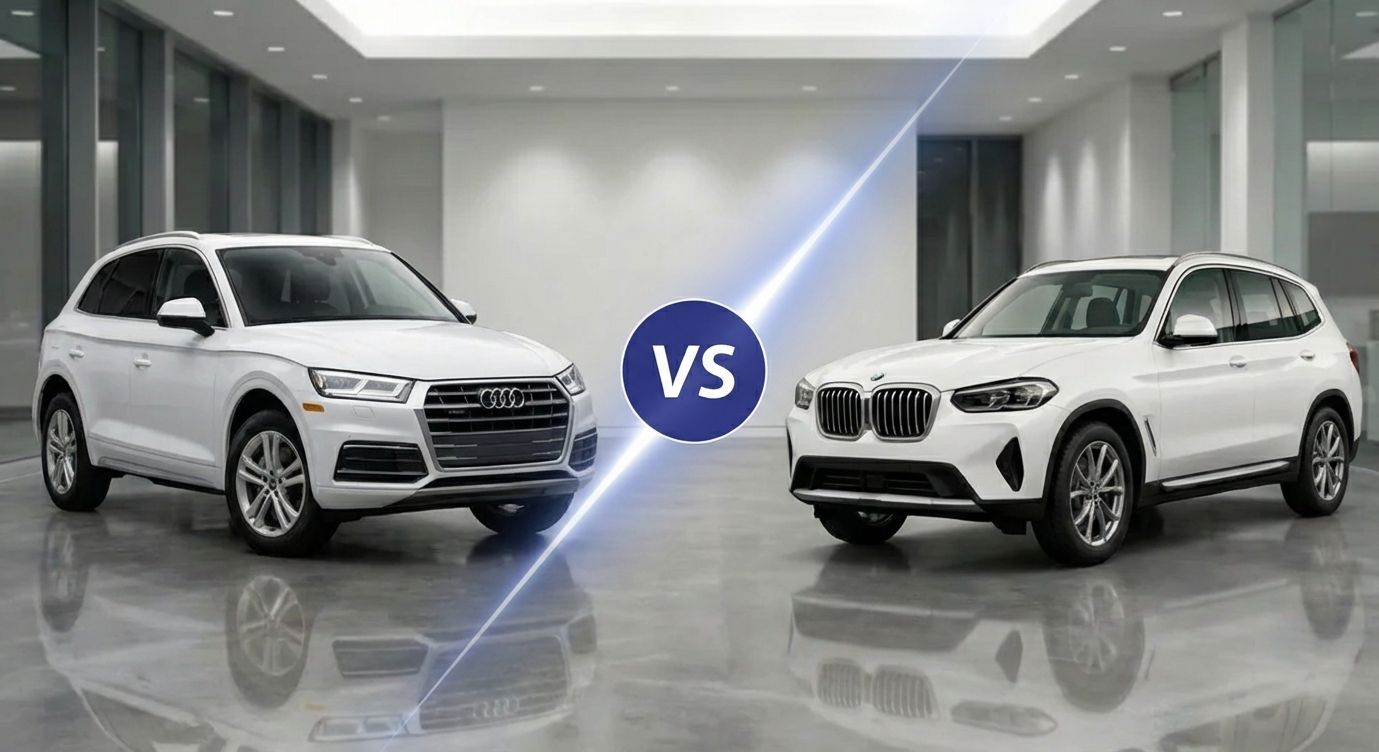
Audi Q5 vs. BMW X3: Which premium SUV is better? Our detailed comparison and verdict will help you choose the right car for your needs.
Apr 14, 2026