Articles

Car battle

Audi Q5 vs. BMW X3: A Complete 2025 Comparison

Audi Q5 vs. BMW X3: Which premium SUV is better? Our detailed comparison and verdict will help you choose the right car for your needs.

April 14, 2026

VS
Audi Q5

Audi Q5

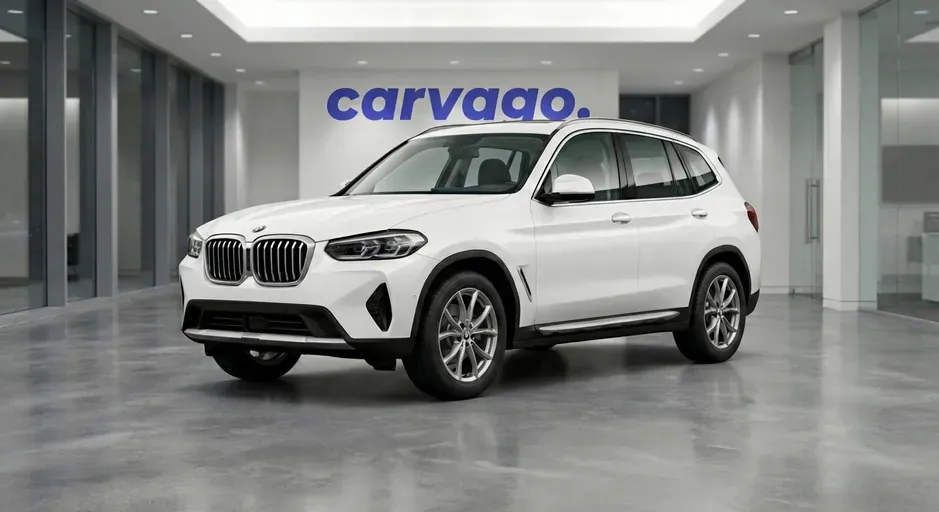
BMW X3

BMW X3

Introduction

The Audi Q5, a premium SUV from Audi renowned for its comfort and technology, goes head-to-head with the BMW X3, known for its sporty character and dynamic driving performance. This article will compare these two titans in key areas to help you decide which German SUV is right for you.

Comparison of External Dimensions

Exterior Dimensions: A Battle of Millimetres with Practical Impact

Although both the Audi Q5 and the BMW X3 fall into the same category of premium mid-size SUVs, their exterior dimensions reveal slightly different philosophies. At first glance, the cars are very similar, but a closer look reveals that the BMW X3 is slightly larger than its Ingolstadt rival in most key parameters. These differences, though only a matter of centimetres, translate into interior space and driving characteristics.

The most significant difference is in length and wheelbase. The G01 generation BMW X3, at over 4.7 metres long, is roughly 3 to 5 centimetres longer than the FY generation Audi Q5. Even more substantial is the difference in wheelbase, where the X3 offers a noticeable 45 mm more (2,864 mm vs. 2,819 mm). This directly translates into cabin roominess, especially for rear-seat passengers, and contributes to better longitudinal stability at higher speeds. Conversely, the slightly more compact Audi Q5 may have a slight advantage when manoeuvring and parking on tight city streets.

In terms of width, the two models are almost identical – separated by just a few millimetres, which makes no practical difference. However, the BMW X3 comes out on top again in height, being approximately 1.5 cm taller. This gives it a slightly more robust and classic SUV stance, while the lower roofline of the Audi Q5 creates a sportier and sleeker impression. The choice thus depends on personal preference – whether you prefer the feel of a larger vehicle and better visibility in the BMW, or the more dynamic silhouette of the Audi.

ParameterAudi Q5 SUV (FY, 2017-2024)BMW X3 SUV (G01, 2017-2024)
Length (mm)4663 - 46894708 - 4716
Width (mm)18931891 - 1897
Height (mm)1659 - 16621676
Wheelbase (mm)28192864

Trunk Volume

The Battle for Every Litre: Who Offers a More Spacious Boot?

In the premium family SUV category, boot space plays a key role. Although both the Audi Q5 and the BMW X3 offer generous practicality, a detailed look at the numbers reveals interesting differences that could influence a decision. Both models are very similar in their basic configuration, but their paths diverge when it comes to maximum capacity.

For the Audi Q5 (FY) generation, which is the most common on the used car market, the boot volume varies by production year. Models produced before the 2020 update offered the same basic volume as the BMW X3, 550 litres. After the facelift, however, the Audi's boot shrank slightly to a still-solid 520 litres. The G01 generation BMW X3 has maintained a consistent 550 litres throughout its production run. The main difference becomes apparent when the rear seats are folded down – here, the BMW has the upper hand with 1,600 litres compared to 1,520 litres in the updated Audi. This 80-litre difference can mean space for several extra sports bags.

The situation is further complicated with specific variants. Audi offers a more stylish Q5 Sportback version, which pays for its elegant silhouette with a smaller boot – specifically 510 litres as standard and 1,480 litres with the seats folded. With plug-in hybrid versions, you have to account for battery space. While the hybrid Q5 TFSI e offers 465 litres, the BMW X3 xDrive30e counters with a slightly smaller 450 litres. However, when the seats are folded, the ratio flips back in favour of the BMW, which provides 1,500 litres compared to Audi's 1,405 litres. Ultimately, both cars are excellent companions for family travel, but if maximum cargo capacity is your key priority, the BMW X3 offers a little more space.

ParameterAudi Q5 SUV (FY facelift)BMW X3 SUV (G01)Audi Q5 Sportback (FY)
Basic volume (litres)520550510
Maximum volume with seats folded (litres)152016001480

Leave it to Carvago CarAudit™

Order CarAudit™

Trailer Weights

Towing Power: Who Can Pull More?

The ability to tow a trailer is a key feature for premium SUVs, whether you plan to haul a caravan, a boat, or just a bulky load. In this respect, the Audi Q5 and BMW X3 are very similar, but there are differences that can play a role in your choice, especially with specific engine options.

For most standard diesel and petrol engines, both models agree on an excellent figure – they can tow a braked trailer weighing up to 2,400 kg. This applies, for example, to the Audi Q5 with the 40 TDI and 45 TFSI engines, as well as the BMW X3 in the xDrive20d, xDrive30d, or the powerful M40i versions. With such capacity, you can easily tow a large caravan or a horse trailer.

However, differences emerge in the basic and hybrid variants. The basic diesel Audi Q5 35 TDI has its maximum trailer weight reduced to 2000 kg. The difference is even more pronounced in the plug-in hybrid versions. While the BMW X3 xDrive30e maintains a solid 2000 kg, older Audi Q5 50 TFSI e models (up to around 2020) had a limit of only 1750 kg. Although newer versions have caught up to 2000 kg, this is an important detail for a used car buyer to verify. For both cars, the maximum unbraked trailer weight is the same at 750 kg.

For those looking for maximum towing capacity, the standard versions of both cars are a comparable choice. However, if you are considering a basic model or a plug-in hybrid, you need to pay attention. Here, BMW offers slightly more consistent values, and in the case of older hybrids, higher ones.

Model and EngineBraked trailer weight (kg)Unbraked trailer weight (kg)
Audi Q5 (gen. FY)
35 TDI2000750
40 TDI2400750
45 TFSI2400750
50/55 TFSI e (plug-in hybrid)1750 - 2000750
BMW X3 (gen. G01)
xDrive20d2400750
xDrive30d2400750
M40i/M40d2400750
xDrive30e (plug-in hybrid)2000750

Overview of Most Common Motorizations

Engine Comparison: Efficiency and Performance First

When choosing between the Audi Q5 and the BMW X3, the range of engines plays a key role, clearly reflecting the philosophy of both brands. Audi focuses on technologically advanced and efficient units, often equipped with mild-hybrid (MHEV) technology to reduce consumption. BMW, on the other hand, traditionally places greater emphasis on dynamic driving performance, as evidenced by its range of powerful inline-six engines and the option of rear-wheel drive on some versions, which is unique in this segment. However, both carmakers offer a wide range of petrol, diesel, and plug-in hybrid powertrains that will satisfy both drivers looking for economical operation and those who crave sporty performance.

Audi Q5 Engines (FY generation, from 2020)

After the 2020 facelift, the Audi Q5 is primarily betting on electrification. Most combustion engines are equipped with a 12V mild-hybrid system, which helps reduce fuel consumption, for example, by allowing the car to coast with the engine off. The range is clearly divided using numerical designations (e.g., 40 TDI), which reflect the performance level. All versions come standard with an S tronic automatic transmission and most also with quattro all-wheel drive.

Engine designationFuelPower (kW)Torque (Nm)Gearbox
35 TDIDiesel1203707-speed S tronic
40 TDIDiesel1504007-speed S tronic
50 TDIDiesel2106208-speed Tiptronic
45 TFSIPetrol1953707-speed S tronic
50 TFSI ePlug-in Hybrid220 (system)3507-speed S tronic
55 TFSI ePlug-in Hybrid270 (system)5007-speed S tronic
SQ5 TDIDiesel2517008-speed Tiptronic

Note: The power for plug-in hybrid versions is the system total, combining the combustion engine and the electric motor.

BMW X3 Engines (G01 generation, from 2017)

The BMW X3 G01 generation offers a diverse range of engines, from economical four-cylinders to the legendary inline-six engines that are the pride of the brand. Most models are equipped with xDrive all-wheel drive, but for those interested in a classic layout, rear-wheel drive (sDrive) is also available for the basic engines. All engines are paired with the highly-rated eight-speed Steptronic automatic transmission. Newer models are also equipped with 48V mild-hybrid technology.

Engine designationFuelPower (kW)Torque (Nm)Gearbox
xDrive20iPetrol1353008-speed Steptronic
xDrive30iPetrol1853508-speed Steptronic
M40iPetrol2655008-speed Steptronic
xDrive20dDiesel1404008-speed Steptronic
xDrive30dDiesel2106508-speed Steptronic
M40dDiesel2507008-speed Steptronic
xDrive30ePlug-in Hybrid215 (system)4208-speed Steptronic

Note: The power for the plug-in hybrid version is the system total, combining the combustion engine and the electric motor.

Summary and Recommendation

For drivers who prefer economy, the four-cylinder diesel engines are the ideal choice. The Audi Q5 40 TDI (150 kW) and the BMW X3 xDrive20d (140 kW) offer very similar parameters, great dynamics, and low consumption. Both variants are refined and ideal for long journeys.

For dynamic driving enthusiasts, the door to six-cylinder engines opens. Audi counters with the massive torque of the diesel SQ5 TDI (251 kW / 700 Nm), which offers crushing acceleration. BMW responds twice: with the petrol M40i (265 kW) with its characterful sound, and the diesel M40d (250 kW), which combines immense power with reasonable consumption.

For environmentally conscious drivers or those who frequently drive in the city, there are plug-in hybrids. Audi offers two power versions, the 50 TFSI e and 55 TFSI e, while BMW counters with the xDrive30e. All can cover dozens of kilometres on pure electricity while also providing impressive combined performance for dynamic driving.

Choosing the right engine is key to long-term satisfaction, and this is doubly true for premium SUVs. Our recommendations are based on a combination of performance, real-world fuel consumption, owner feedback, and mechanical reliability. In this generation of vehicles, both manufacturers relied heavily on diesel engines, which dominated sales. Audi enhanced its four-cylinder TDI with mild-hybrid technology, while BMW countered not only with its economical two-litre engine but, above all, with its legendary inline-six, which is the jewel in its line-up.

For the Audi Q5, we recommend: 40 TDI quattro S tronic (150 kW)

The golden mean and the most sensible choice for the post-facelift Audi Q5 (from 2020 onwards) is the 40 TDI engine. This is a two-litre turbodiesel from the modern Evo series, offering 150 kW (204 hp) of power and a strong torque of 400 Nm. This power is perfectly sufficient for brisk and safe driving even with a fully loaded car, whether on the motorway or on country roads.

  • Why it's the best choice: The engine represents an ideal compromise between performance and running costs. It is noticeably more powerful than the basic 35 TDI version and at the same time more economical and less demanding to service than the six-cylinder 50 TDI. The unit is also supplemented by a 12V mild-hybrid system, which helps to cover the load, smooths out the start-stop system's function, and allows for "coasting" with the engine off, which slightly reduces fuel consumption in real-world driving. In reality, you can drive this engine with a fuel consumption of between 6.5 and 7.5 litres per 100 km.
  • What to watch out for: As with many modern diesels, the AdBlue injection system can be a sensitive point here. Short city trips with a cold engine are not good for the diesel particulate filter (DPF) in the long run. The S tronic dual-clutch transmission requires a regular oil change every 60,000 km for trouble-free operation.
  • Who it's ideal for: For drivers who often travel longer distances, for families on holiday, or for anyone looking for a powerful, economical, and versatile powertrain for everyday use.

For the BMW X3, we recommend: xDrive30d Steptronic (210 kW)

If you want to experience the best the BMW X3 has to offer while sticking to a reasonably economical engine, then the inline-six in the xDrive30d version is the clear choice. After the 2021 facelift, this engine (designation B57) was boosted to 210 kW (286 hp) and a massive 650 Nm of torque, further supported by 48V mild-hybrid technology.

  • Why it's the best choice: This engine is a masterpiece. Its operation is so velvety smooth and refined that those unfamiliar with it might mistake it for a petrol engine. The power is available almost instantly, and the pull is absolutely commanding at any speed. Combined with the brilliant eight-speed ZF automatic transmission, it forms one of the best powertrains on the market. Despite its huge performance, the engine is surprisingly economical – at a calm pace, it's no problem to drive at 7 litres/100 km, and the long-term average is often around 8 l/100 km.
  • What to watch out for: The B57 series engines are considered very reliable, especially when compared to some of the brand's older four-cylinder engines. Service costs are logically higher than for the two-litre, but it doesn't exhibit any systematic or notorious problems. Timely oil changes and the use of high-quality diesel are important.
  • Who it's ideal for: For the demanding driver who appreciates top-notch refinement, crushing dynamics, and the character of an inline-six. It turns a family SUV into a car that brings real driving pleasure, without crippling fuel costs. It's a choice that sets the X3 apart from the competition.

Real Fuel Consumption

Real-World Consumption Comparison: Which is More Economical?

Official fuel consumption figures, measured under laboratory conditions of the WLTP cycle, are one thing; real-world operation and the experiences of drivers themselves are another. To get the most accurate picture of how much the Audi Q5 and BMW X3 actually consume in everyday life, we turned to data from the German portal Spritmonitor.de. It collects data from thousands of real owners, thus providing valuable insight into the reality on the roads. For comparison, we selected the most sought-after engine versions of the generations available on the used car market, specifically the Audi Q5 (FY, from 2017) and the BMW X3 (G01, from 2017).

Model and EngineAverage Real-World Consumption (l/100 km)
Audi Q5 40 TDI quattro (150 kW)7.1
BMW X3 xDrive20d (140 kW)6.8
Audi Q5 45 TFSI quattro (195 kW)8.9
BMW X3 xDrive30i (185 kW)8.7
Audi Q5 50 TFSI e quattro (220 kW)3.5 - 5.5*
BMW X3 xDrive30e (215 kW)3.8 - 6.0*

\The consumption of plug-in hybrids is extremely dependent on the frequency of charging. The range shown reflects driving with regular charging versus driving mainly with a depleted battery.*

It is clear from the table that the battle for the lowest fuel consumption is extremely close between these two rivals. In the case of diesel engines, the BMW X3 xDrive20d has a slight edge, with its real-world consumption averaging just under the 7-litre mark. The Audi Q5 40 TDI is a close second, but it shows an appetite that is a few tenths of a litre higher. For drivers who cover tens of thousands of kilometres a year, mainly on motorways, both diesel engines are still the most economical choice, and the difference between them is practically negligible.

A similar situation exists with the petrol variants. According to driver data, the BMW X3 xDrive30i is slightly more economical than the Audi Q5 45 TFSI. However, a difference of two-tenths of a litre per hundred kilometres does not play a significant role in practice, and the real consumption of both cars will depend heavily on driving style. Those who like to use the dynamic potential of powerful petrol engines must expect consumption approaching the 10 l/100 km mark in both models.

The plug-in hybrid versions are a special chapter. The Audi Q5 50 TFSI e and BMW X3 xDrive30e entice with fantastically low official consumption figures. However, the reality depends purely on the user. If the owner charges diligently and their daily routes fit within the electric range (approximately 40-50 km in real-world conditions), they can drive with a fantastic petrol consumption of just over 3 litres. However, as soon as the battery is depleted and the combustion engine comes into play, which is also carrying the extra weight of the batteries, consumption approaches and sometimes even exceeds that of the purely petrol versions.

In conclusion, no clear winner can be declared. The differences in real-world consumption for comparable engines are minimal and are unlikely to be a deciding factor for most buyers. The choice will therefore depend more on personal preferences, driving style, and, in the case of plug-in hybrids, primarily on the availability of regular charging.

Price Range and Used Car Offerings

When choosing a premium SUV that is about four years old, the Audi Q5 and BMW X3 naturally come into the spotlight for many drivers. Both models offer prestige, modern technology, and excellent driving characteristics. But how do they fare on the used car market, and which one represents a smarter investment? We looked at the prices of models from 2020 to 2022.

Generally, the prices of both cars are very comparable. The differences begin to emerge when looking at specific engine options, trim levels, and mileage. Expect to pay a sum starting around €28,000 and climbing up to €48,000 for a well-preserved unit with reasonable mileage, and for nearly new cars with powerful engines and full equipment.

Price Range: Where to Look for Differences?

Basic and Most Sought-After Versions
You will most often come across models with two-litre diesel engines, which represent a reasonable compromise between performance and fuel consumption.

  • Audi Q5 40 TDI quattro: Prices for these popular models range from €30,000 to €38,000. Cars with lower mileage and attractive features, such as the S line package, naturally stay at the upper end of this range.
  • BMW X3 xDrive20d: The Munich competitor is very similar in price. Expect price tags between €31,200 and €39,200. Here too, the popular M sport package increases the price.

More Powerful and Petrol Variants
If you desire a more powerful experience, prepare a higher budget.

  • Audi Q5 45 TFSI quattro and more powerful diesels (50 TDI): Petrol versions or six-cylinder diesels tend to start around €36,000 and can easily exceed the €44,000 mark, especially for models facelifted in 2021.
  • BMW X3 xDrive30d and M40i/M40d: Six-cylinder diesels from BMW are in high demand, and their price usually ranges from €38,000 upwards. The sporty M Performance versions (M40i, M40d) then easily approach the €48,000 mark.

Plug-in Hybrids
Plug-in hybrid versions are also appearing on the market, with prices comparable to more powerful combustion engines. For a 2020 BMW X3 xDrive30e, expect a price around €32,000, while the Audi Q5 55 TFSI e is priced similarly.

What Influences the Price Most?

Besides the engine and year of manufacture, the equipment and overall condition of the car play a key role.

  • Sport Packages: As mentioned, the S line package for Audi and the M Sport package for BMW are a major draw for buyers and can increase the price of a used car by thousands of euros.
  • Technological Equipment: Features like adaptive suspension, a digital instrument cluster (Virtual Cockpit in Audi), a head-up display, a panoramic roof, or a premium audio system clearly increase the car's price.
  • History and Origin: Cars with a clear service history, ideally from the first owner and purchased in the country, hold their value better than imported cars with an unclear past.

What to Watch Out for in Terms of Costs?

Although both models are considered relatively reliable, you need to account for premium service costs. With BMW, there are occasional mentions of problems with timing chains in older diesel engines, but the G01 generation (from 2017) is significantly better. For both cars, it is important to check the condition of the chassis and the functionality of all electronics, as potential repairs can be expensive. It is always worthwhile to invest in a comprehensive car inspection at a professional service centre.

Safety and Euro NCAP Rating

Safety and Euro NCAP Results: Five Stars with a Question Mark

At first glance, it may seem that there is no difference in safety between the Audi Q5 and the BMW X3. Both premium SUVs received the highest five-star rating in the Euro NCAP crash tests. However, it is crucial to look at the details and, above all, the year the tests were conducted. The Euro NCAP methodology is constantly becoming stricter, and ratings that are several years old may not correspond to today's standards, especially in the area of assistance systems.

The generations of both models relevant to the market for approximately four-year-old used cars were tested in 2017. At that time, these were top-tier results, confirming their robust construction and high level of passive safety. However, percentage scores from different years are not directly comparable, as newer tests include more demanding scenarios, such as cyclist detection, more complex frontal impacts, or the evaluation of driver attention monitoring systems.

Audi Q5 (tested 2017)

The second generation of the Audi Q5 achieved an excellent score in the 2017 Euro NCAP tests, highlighting its focus on occupant protection. With a result of 93% for adult protection and 86% for child protection, it was at the top of its class. The rigid body and effective restraint systems provided a stable survival space in all types of impacts. The slightly weaker result in the safety assist category (58%) is due to the standards of the time, when many technologies that are common today were not a mandatory part of the assessment. For example, the PreSense City emergency braking system was standard.

BMW X3 (tested 2017)

The third generation of the BMW X3 also underwent Euro NCAP tests in 2017 and achieved five stars. The score was remarkably similar to its main competitor: 93% for adult protection, 84% for child protection, and an identical 58% for safety assist systems. The X3 received a slightly lower rating for pedestrian protection (70% compared to 73% for the Q5). Here too, the result in the safety assist category reflects the era – many advanced assistants were available as optional extras, not as standard, which influenced the overall rating in this discipline.

Although both cars offer top-tier passive safety as standard, which hasn't diminished over the years, differences can be found in the equipment of specific used models. At the time of testing, advanced assistance systems like adaptive cruise control, active lane-keeping assist, or blind-spot monitoring were not always standard. From the perspective of the latest Euro NCAP standards, both models would achieve a significantly lower score in the "Safety Assist" category today if tested with basic equipment. Nevertheless, in terms of occupant protection during an actual accident, both models represent the absolute pinnacle of their era.
ParameterAudi Q5 (2017)BMW X3 (2017)
Year of Testing20172017
Adult Occupant Protection93%93%
Child Occupant Protection86%84%
Vulnerable Road User Protection73%70%
Safety Assist Systems58%58%

Comparison of Interesting Equipment Features

In addition to standard equipment, each model offers several unique features that may be decisive for the customer. While Audi focuses on elegant technology and comfort, BMW concentrates on dynamics and driver interaction.

Audi Q5: Sophisticated Technology and Versatility

The second-generation Audi Q5 (FY) brings a range of innovations to the premium SUV segment that make everyday use and long journeys more pleasant.

  • Drivetrain and Chassis: The heart of many versions is the quattro all-wheel-drive system with ultra technology. Unlike permanent all-wheel drive, this system can completely disconnect the rear axle when not needed, reducing fuel consumption during calm driving. As soon as the system detects a risk of slippage, the rear-wheel drive is predictively engaged within a fraction of a second. Another significant feature is the optional adaptive air suspension, which allows for changing the car's ride height and adjusting the stiffness of the dampers to suit driving conditions.
  • Interior Technology: The dashboard is dominated by the Audi Virtual Cockpit, a fully digital 12.3-inch instrument cluster that allows the driver to customize the display of maps, driving data, and other information. The MMI infotainment system with haptic feedback and a rotary controller on the center tunnel (in older versions) is known for its intuitiveness.
  • Practicality and Comfort: The Q5 scores points with its sliding rear bench, which allows for changing the ratio between passenger space and luggage compartment size. Another specialty is the optional Matrix LED headlights, which can "mask out" surrounding vehicles to avoid dazzling their drivers, while the rest of the road remains illuminated by high beams.

BMW X3: Sporting Genes and Interactive Control

The third-generation BMW X3 (G01) adheres to the brand's traditional values, emphasizing driving pleasure complemented by modern technologies.

  • Drivetrain and Chassis: The intelligent xDrive all-wheel-drive system favors the rear axle in normal mode, giving the car a characteristic sporty driving feel. The system reacts instantly to changes in traction and seamlessly transfers power where it is most needed. For the ultimate driving experience, BMW offers the adaptive M suspension with electronically controlled dampers and sport steering.
  • Interior Technology: The center of activity is the iDrive system with a rotary controller and a touchscreen display. Selected versions offered unique gesture control, allowing the driver to accept a call or adjust the volume with a simple hand movement. BMW also offers a fully digital instrument cluster, known as the Live Cockpit Professional.
  • Assistance Systems and Innovations: The X3 boasts an advanced Driving Assistant Professional package, which includes active lane-keeping assist and other functions for semi-autonomous driving. Another interesting feature is the optional laser headlights (BMW Laserlight), which offer an extremely long range in high-beam mode, thus increasing safety when driving at night.

Key Advantages and Disadvantages

Audi Q5

Advantages:

  • High-quality interior: Precise workmanship, high-value materials, and an elegant design create a premium atmosphere on board.
  • Exceptional ride comfort: Excellent sound insulation and (in better-equipped versions) adaptive air suspension ensure a smooth and quiet ride even on lower-quality roads.
  • Intuitive technology: Audi's Virtual Cockpit is still among the best, being clear and easy to operate. The overall infotainment system is user-friendly.
  • Refined and efficient engines: Especially the updated TDI engines with mild-hybrid technology offer solid dynamics while maintaining favorable fuel consumption.
  • Sense of safety and robustness: The car feels very solid and safe, which is confirmed by high ratings in Euro NCAP crash tests.

Disadvantages:

  • Less engaging driving characteristics: Compared to the BMW X3, the Q5 offers a less sporty and more comfort-oriented driving experience, which may not suit everyone.
  • Smaller boot space: With a volume of 520 liters, it slightly lags behind its Bavarian competitor (550 liters), which may be a deciding factor for some families.
  • Higher price for optional equipment: Although the base price is competitive, many attractive features (e.g., air suspension) come at a hefty premium.
  • More conservative design: The exterior and interior appearance is rather restrained and plays it safe, which some may find less daring.

BMW X3

Advantages:

  • Excellent driving dynamics: A traditional strength of BMW, the X3 offers agile and sporty behavior, precise steering, and great handling that is enjoyable for the driver.
  • Powerful and flexible engines: A wide range of engines, including powerful six-cylinder units, provides above-average dynamics and quick responses.
  • Larger and more practical boot: It offers a basic volume of 550 liters, and up to 1600 liters with the seats folded down, which is more than the Q5.
  • Modern and clear iDrive infotainment: The iDrive system is considered one of the best on the market due to its speed, logical operation, and the option of control via the rotary controller.
  • Excellent eight-speed automatic transmission: The ZF Steptronic transmission shifts quickly, smoothly, and intelligently in both comfort and sport modes.

Disadvantages:

  • Stiffer suspension: Even in the comfort setting, the suspension is firmer, which can reduce ride comfort on poor-quality roads compared to the Audi Q5.
  • The interior feels less luxurious: Although the build quality is high, the design and some interior materials may not feel as valuable and premium as in the Audi.
  • Higher road noise: More noise from the tires can penetrate the cabin, especially on rough asphalt and at higher speeds.
  • Some assistance systems are missing from the base model: While Audi had some features as standard in those years, many assistance systems were optional extras for the BMW.

Common Problems and Owner Complaints

Based on our own CarAudit inspections, breakdown statistics from the German TÜV, and owner feedback, we have compiled an overview of the most common problems that used car buyers should watch out for. Neither model suffers from fatal flaws, but both have their specific issues that are good to know about.

Audi Q5 (FY generation, from 2017)

The second-generation Audi Q5 is generally considered a reliable and well-built car. Nevertheless, it does have some recurring problems that are worth checking before buying.

  • Engine and transmission: With 2.0 TDI diesel engines, problems with the turbocharger or injection system can appear after 100,000 km, manifesting as a loss of power. The S tronic dual-clutch transmission is significantly more reliable than its predecessors but still requires regular oil changes (every 60,000 km). Any sign of jerking when starting off or shifting gears requires closer inspection.
  • Suspension: If the car is equipped with the optional air suspension, a thorough check for leaks is necessary. Air leaks or compressor failures are not uncommon after a few years, and their repair is expensive. The rear axle geometry also deserves attention; a recall for 2019–2021 models addressed the risk of uneven tire wear.
  • Electronics: Minor software glitches in the MMI infotainment system can occasionally occur, which are usually resolved with an update. Owners sometimes complain about the start-stop system being overly sensitive. A recall was issued for the TFSI-e plug-in hybrid versions due to a potential risk of the high-voltage battery overheating during charging.
  • Bodywork and interior: A common problem, especially in cars with a panoramic roof, is clogged drain channels. This can lead to water leaking into the interior and subsequent damage to the electronics. A thorough physical inspection of the used car is crucial here.

Summary for the Audi Q5: The problems mostly relate to specific and often optional equipment, such as the air suspension. The core of the car – the engines and transmissions – is reliable with proper servicing. Emphasis should be placed on checking the service history and inspecting the electronics.

BMW X3 (G01 generation, from 2017)

The third-generation BMW X3 performs well in reliability tests, but it also has a few areas that deserve increased attention, especially in cars from the first years of production.

  • Engine and drivetrain: In the two-litre petrol engines (xDrive20i, 30i), a problem with the timing chain can occur after higher mileage (over 100,000 km), manifesting as a typical rattling sound during a cold start. For diesel engines, prevention is key, involving shortened oil change intervals and occasional longer drives to regenerate the DPF filter. With the xDrive all-wheel-drive system, jerking when starting off is sometimes reported, which can indicate a problem in the transfer case – regular oil changes are important.
  • Cooling system: Some owners report coolant leaks from various parts of the system, such as hoses, the water pump, or the radiator. Before buying, it is essential to visually inspect the engine bay and ensure there are no traces of dried pink coolant anywhere.
  • Electronics and software: The error message "Emergency call not available" may occasionally appear on the dashboard, which is usually related to a failure of the backup battery in the telematics unit. Occasional problems with Bluetooth connectivity or the electric tailgate have also been reported.
  • Recalls: Cars manufactured until June 2018 may have been part of a major recall to replace Takata airbags. It is essential to verify with an authorized dealer whether this applies to the specific car and if the repair has been carried out.

Summary for the BMW X3: With the X3, it is crucial to focus on engine maintenance, especially timely oil changes and checking the timing chain on petrol versions. Many of the reported issues are minor electronic annoyances rather than serious mechanical faults. A careful, comprehensive inspection of the car and verification of its recall history are key to trouble-free ownership.

Tips for Buying a Used Car

What to Look Out for When Buying a Used Car

When buying a used car, a thorough inspection is key, and premium models like the Audi Q5 and BMW X3 are no exception. Here are a few specific points to focus on with these two SUVs to ensure you make the best choice.

When choosing an Audi Q5:

  • S tronic (DSG) transmission: During the test drive, focus on the smoothness of the gear shifts. The transmission should not jerk when starting off or when shifting between lower gears in traffic. Also, try to accelerate sharply – any hesitation or judder could signal wear in the mechatronics or clutches, which are expensive to replace.
  • Air suspension: If the car is equipped with air suspension, test all its modes (Comfort, Dynamic, Offroad). The car should change its ride height quickly and smoothly. After the test drive, let the car stand for a while and check if it sags to one side, which would indicate a leak in the system.
  • MMI system and Virtual Cockpit: Thoroughly click through all the functions of the infotainment and the digital instrument cluster. Verify that the system does not freeze, responds quickly, and that all functions, including navigation and phone connectivity, work flawlessly. Occasional software problems can occur, and their solution requires an update at an authorized service center.
  • quattro Ultra all-wheel drive: Newer Q5 models (from 2016) often use the quattro Ultra system, which disconnects the rear axle to reduce fuel consumption. When driving on a slippery surface or during sharper cornering, the engagement of the rear wheels should not be accompanied by any jolts. Any vibrations or noise from the chassis deserve a thorough technical inspection of the car.

When choosing a BMW X3:

  • ZF automatic transmission: The eight-speed transmission from ZF is generally very reliable, but it must shift smoothly and without hesitation. During a test drive, watch for any "kicks" or jerking during both calm and dynamic driving. Irregular oil changes can lead to problems.
  • xDrive system: BMW's all-wheel drive is sensitive to the correct tires. Check that the car is fitted with tires of the same brand, model, and especially with the same tread depth on both axles. Uneven wear can put excessive strain on the center transfer case and lead to its expensive repair. Noise or juddering at full steering lock are warning signs.
  • Chassis and steering: While driving over bumps, listen for any knocking sounds from the axle area, which may indicate play in the control arms or bushings. The steering should be precise and free of vibrations. With the adaptive suspension, try all driving modes and feel the differences in stiffness.
  • Diesel engines (B47/B57): Although modern BMW diesels are reliable, it is important to check their history. Focus on regular oil changes and inspection of the EGR (exhaust gas recirculation) system, which can be prone to carbon build-up. A quiet and refined operation without suspicious noises after a cold start is a good sign. Any doubt should lead to a comprehensive vehicle inspection.

FAQ: Most Frequently Asked Questions

The BMW X3 offers a slightly larger basic luggage capacity, specifically 550 liters compared to 520 liters in the Audi Q5. However, some versions of the Audi Q5 counter with a practical sliding rear bench, which allows for an increase in luggage space. Access to the trunk is easy in both models thanks to the large tailgate.

The main difference lies in the focus on driving dynamics and comfort. The BMW X3 is traditionally more sport-oriented, offering more direct steering and subjectively less body roll in corners. The Audi Q5, on the other hand, focuses more on comfort and a smooth ride, especially with the optional air suspension, which the X3 does not offer.

Both models are premium cars in their classes with a good reputation, but specific problems can arise. The B48 engine in the BMW is often praised for its reliability. In the Audi, it is recommended to check the history of the S tronic transmission, and for all cars, regular and documented maintenance is key.

The interior space for passengers is very similar in both cars, and both can comfortably seat four adults. The BMW X3 may offer slightly more legroom in the rear seats, but the differences are minimal. The Audi Q5, in turn, may feel a bit more airy due to its dashboard design.

The Audi Q5 relies on a fully digital environment with large touchscreens and the Virtual Cockpit. The BMW X3 combines a touchscreen with the intuitive iDrive rotary controller, which many drivers find safer to operate while driving. Both systems are top-notch, so the choice depends more on personal preference.

Conclusion: Which Model to Choose?

Our Verdict

The choice between Audi Q5 and BMW X3, both top-tier premium SUVs, depends on personal priorities. Audi Q5 excels in maximum driving comfort, build quality, and technological sophistication, offering a luxurious and quiet ride for those seeking a mobile oasis of calm. In contrast, BMW X3 brings the typical "joy of driving" with more agile and sporty characteristics, precise steering, and dynamic engines. It is ideal for drivers who perceive driving as fun and will also appreciate slightly greater practicality. In short, Audi Q5 is for comfort and luxury, while BMW X3 is for sporty dynamics and driving excitement.

Find your ideal car

Sources: ADAC, motor1.com, carwow.co.uk, motortrend.com, jalopnik.com, electricvehicleweb.com

This article was prepared using artificial intelligence tools. The guarantor for this section is Petr Dušek.

Related articles

Car battle

Hyundai Santa Fe vs. Volkswagen Tayron: Complete comparison 2026

Detailed comparison of Hyundai Santa Fe vs Volkswagen Tayron. We compared space, equipment, and driving characteristics. Read our verdict and choose the right SUV.

Apr 8, 2026

Car battle

Kia Sorento vs. Volkswagen Tayron: A Complete 2025 Comparison

Kia Sorento vs. Volkswagen Tayron. Which large SUV is better? A detailed comparison of price, features, and driving performance to help you decide.

Apr 13, 2026

Car battle

Nissan X-Trail vs. Peugeot 5008: Complete comparison 2026

Nissan X-Trail vs. Peugeot 5008 SUV comparison. We compared real-world fuel consumption, family space, and the equipment of used models. Read our detailed verdict before buying!

Apr 14, 2026

We accept online card payments as well as wire transfers.

visa payment provider logovisa-electron payment provider logomastercard payment provider logomaestro payment provider logodiners-club payment provider logodiscover payment provider logo