Car battle
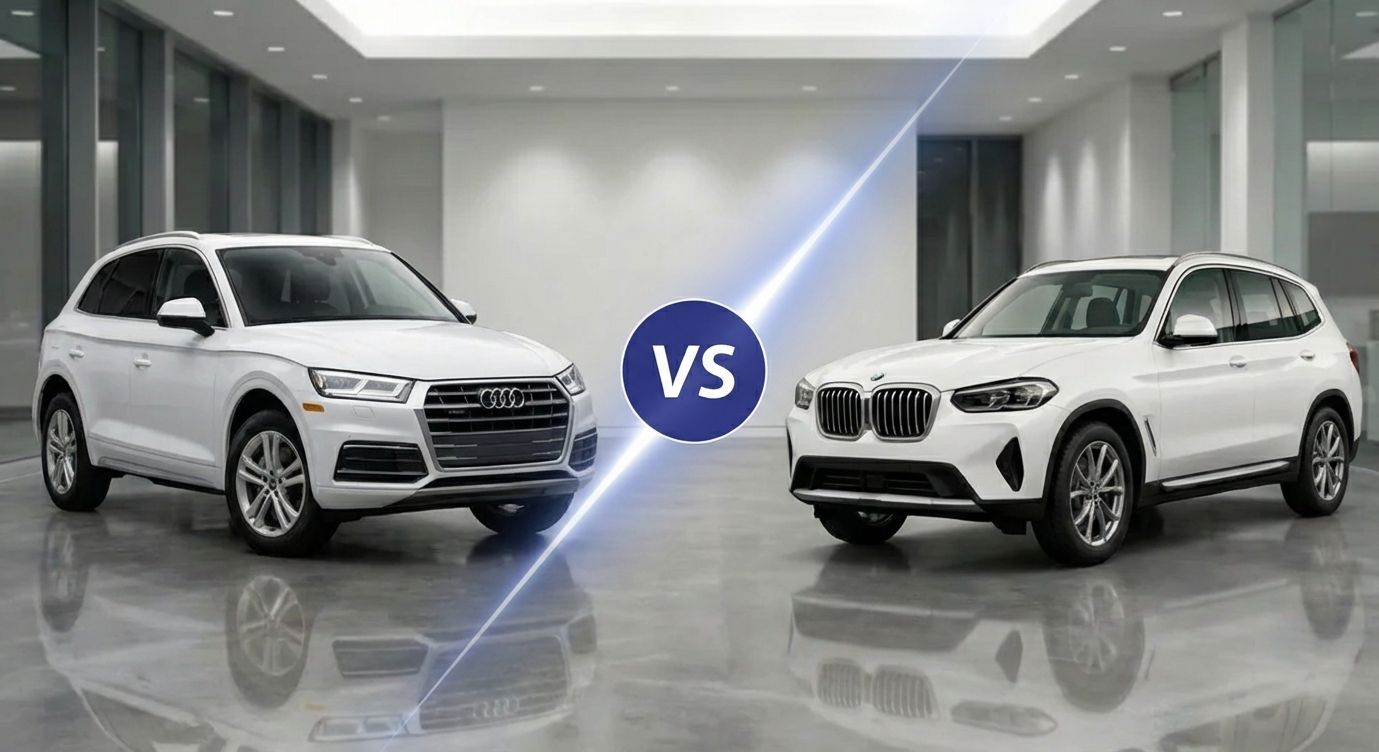
Audi Q5 vs. BMW X3: A Complete 2025 Comparison
Audi Q5 vs. BMW X3: Which premium SUV is better? Our detailed comparison and verdict will help you choose the right car for your needs.
Apr 14, 2026
Articles
Car battle
Nissan X-Trail vs. Peugeot 5008 SUV comparison. We compared real-world fuel consumption, family space, and the equipment of used models. Read our detailed verdict before buying!
April 14, 2026
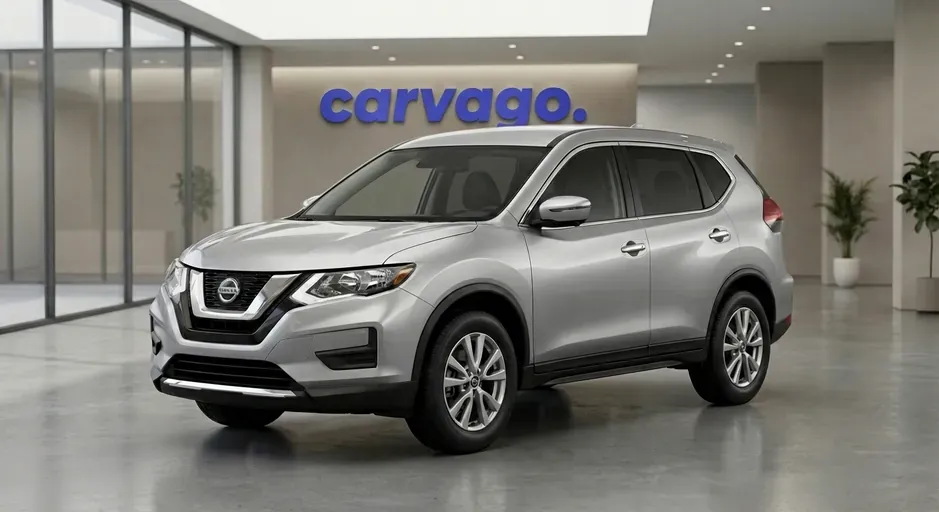
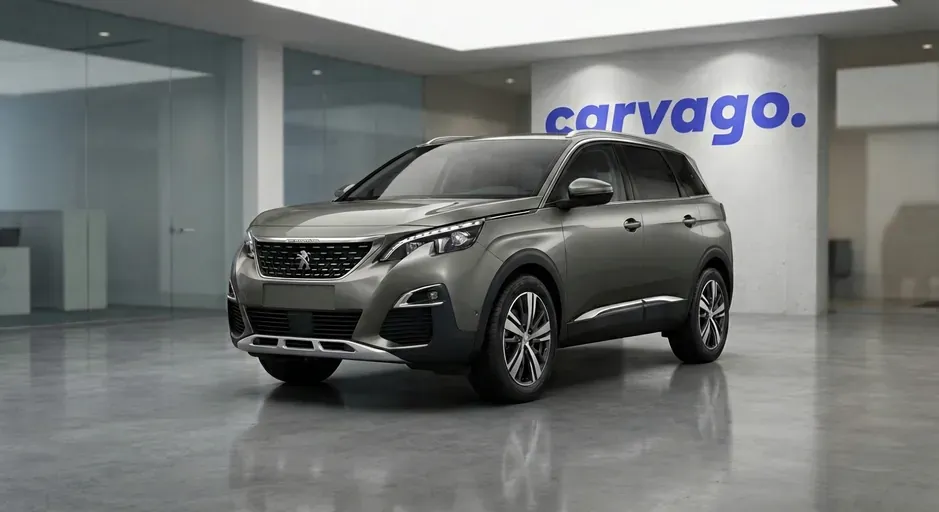
The Nissan X-Trail, also known as the Nissan Rogue in the North American market, is a popular Japanese SUV that prides itself on technological advancement and versatile family practicality. Facing it is the Peugeot 5008, an elegant French representative that scores primarily with its unmistakable design and generous interior with the option of a seven-seat layout. In the following direct comparison, we will explore in detail the strengths and weaknesses of both models to find out which of them represents the overall better choice for your daily journeys.
Looking at the external dimensions, both popular family SUVs on the market for roughly four-year-old used cars differ in their proportions, which clearly reveals their different approach to construction and interior space. The Nissan X-Trail is, with a length of 4680 to 4690 mm, less than 5 centimeters longer than the Peugeot 5008 (4641 mm). The Japanese representative is also noticeably taller – its roof reaches a height of up to 1720 mm, while the French competitor measures only 1646 mm in height. This height advantage gives the Nissan a more robust off-road appearance and guarantees more generous headroom for passengers, while Peugeot bets on a more aerodynamic silhouette, which visually and practically is closer to family MPVs.
However, a fundamental difference can be found in the wheelbase, which is absolutely key for interior spaciousness. Although the Peugeot 5008 is shorter overall, its wheelbase is an impressive 2840 mm, which is a significant 135 mm more than the Nissan X-Trail (2705 mm). This parameter gives the Peugeot 5008 a huge advantage in terms of longitudinal legroom for passengers in the second and potentially third row of seats. Moreover, with its 1844 mm, the French model is also slightly wider than the Nissan (1820 to 1840 mm), which ensures a better sense of airiness and more shoulder room for the crew.
In daily use and city parking, both cars will offer very similar user-friendliness, as their overall footprint is comparable despite minor differences. Shorter body overhangs and a long wheelbase make the Peugeot 5008 an ideal family cruiser for long highway trips with maximum emphasis on passenger comfort. The Nissan X-Trail, on the other hand, honors the traditions of classic SUVs with its proportions and, thanks to its higher build, offers not only a more confident feeling behind the wheel with a better view of the road but also more certain passage on unpaved roads and when overcoming city curbs.
| Parameter | Nissan X-Trail SUV | Peugeot 5008 SUV |
|---|---|---|
| Width (mm) | 1820 - 1840 | 1844 |
| Length (mm) | 4680 - 4690 | 4641 |
| Height (mm) | 1700 - 1720 | 1646 |
| Wheelbase (mm) | 2705 | 2840 |
When choosing a family SUV, luggage compartment volume often plays a decisive role, as it directly affects the daily practicality and usability of the car for the whole family. While both vehicles target users with children and offer the option of a seven-seat layout, their approach to interior space differs significantly. The Peugeot 5008 in its second generation (2017–2024) benefits from its former belonging to the category of MPVs and offers one of the largest trunks in its class, emphasizing maximum transport capacity. In contrast, the current Nissan X-Trail generation T33 (since 2022) honors the more traditional proportions of a classic SUV, which is reflected in a slightly smaller, yet still very usable and well-thought-out trunk.
Looking at the exact numbers, the differences between the two concepts are fully revealed. The Peugeot 5008 boasts a staggering basic volume of 780 liters in a five-seat configuration, which grows to a van-like 1940 liters after folding the second-row seats. In comparison, the Nissan X-Trail offers a solid 585 liters in its base. It should be mentioned that for the popular full-hybrid variants of the X-Trail labeled e-Power, this volume is slightly reduced to 575 liters due to the battery installation under the floor. After folding the rear backrests, the total space in the Nissan increases to a maximum of 1424 liters. A huge advantage of the Peugeot is also three individually sliding seats in the second row, which in practice means a highly flexible space for several extra suitcases, while the Nissan relies on a classic split bench.
In terms of daily use, the Peugeot 5008 is the ideal choice for those who require uncompromising volume. Its trunk is easily sufficient for weekend shopping and longer vacations, playfully swallowing a folded stroller, balance bikes, and a pile of luggage without the need for tedious rearranging. The Nissan X-Trail may lose in absolute numbers, but it makes up for it with clever storage solutions, such as a practical double floor that can divide the space and prevent smaller items from moving while driving. In the end, the Peugeot is the clear winner for demanding families on the move, while the Nissan represents a very sensible compromise for those who find a slightly more modest but well-organized space sufficient and who appreciate a more robust build with the option of advanced all-wheel drive.
| Parameter | Nissan X-Trail SUV | Peugeot 5008 SUV |
|---|---|---|
| Basic volume (l) | 585 | 780 |
| Max. volume after folding seats (l) | 1424 | 1940 |
A crucial parameter when choosing a family SUV for many buyers is the towing capacity, whether you plan to pull a family caravan, a horse trailer, or just a trailer with wood. When comparing roughly four-year-old used cars (the outgoing T32 generation and the incoming T33 for Nissan versus the second generation of Peugeot), you will encounter surprisingly large differences that affect overall practicality and can quickly settle your decision.
Traditional SUV against a family all-rounder
Thanks to its Japanese origin and more robust construction, the Nissan X-Trail handles heavier loads significantly more confidently. The maximum for its modern mild-hybrid versions (1.5 VC-T) reaches up to 2000 kg. Even the standard and more affordable older 1.3 DIG-T (T32) engine offers a solid towing capacity of 1500 kg.
The Peugeot 5008, on the other hand, is a typical crossover oriented more towards interior variability and passenger comfort. Its standard and very popular 1.2 PureTech petrol engine usually only tows 1000 to 1280 kg, while the economical 1.5 BlueHDi diesel ranges around 1200 to 1300 kg. If you need to tow a heavier load with the Peugeot, you must specifically look for the more powerful 2.0 BlueHDi diesel, which represents the model's ceiling with a maximum of 1800 kg.
Watch out for hybrid variants
For both models, it is necessary to pay close attention to the specifications of modern, more eco-friendly variants. If you choose the specific e-Power hybrid drive (T33 generation) for the Nissan, the braked trailer capacity is drastically reduced. Depending on the equipment, it can handle 1650 kg, but for some versions, the limit drops to a very restricted 670 kg. The unbraked trailer capacity for both cars standardly reaches the legislative maximum of 750 kg, but for the weakest e-Power versions, it is logically limited to those 670 kg.
What does this mean in practice?
The capacity of the Peugeot 5008 is perfectly sufficient for weekend shopping, attaching a small trailer with building materials for the cottage, or using a tow bar as a support for a bike rack. However, if your plans include regular and longer holidays with a heavy caravan, the Nissan X-Trail will provide you with much more maneuvering room. This means not only higher safety and stability for the combination, but you will also have a weight reserve and space for several extra suitcases directly in the car without approaching the maximum permitted weight.
Final evaluation
While the Peugeot 5008 excels primarily as an exceptionally practical transporter for a larger family, when there is a need for frequent towing of heavier loads, the Nissan X-Trail clearly wins, not denying its working roots even in its modern guise.
| Model and engine | Braked trailer weight (kg) | Unbraked trailer weight (kg) |
|---|---|---|
| Nissan X-Trail 1.3 DIG-T (T32) | 1500 | 750 |
| Nissan X-Trail 1.5 VC-T Mild-Hybrid (T33) | 1800 - 2000 | 750 |
| Nissan X-Trail 1.5 VC-T e-Power (T33) | 670 - 1650 | 670 - 750 |
| Peugeot 5008 1.2 PureTech 130 (2nd Gen) | 1000 - 1280 | 750 |
| Peugeot 5008 1.5 BlueHDi 130 (2nd Gen) | 1200 - 1300 | 750 |
| Peugeot 5008 2.0 BlueHDi 180 (2nd Gen) | 1500 - 1800 | 750 |
The engine range for the Nissan X-Trail and Peugeot 5008 reflects the different philosophies of both manufacturers and brings completely different options to buyers in the used car market. The choice of powertrain has a fundamental impact on fuel consumption, overall dynamics, and operating costs for these large family SUVs. While the Peugeot 5008 has long relied on time-tested internal combustion engines, where economical BlueHDi diesel units and small-displacement turbocharged PureTech three-cylinder petrol engines play a primary role, the Nissan X-Trail has undergone a technical revolution in recent years. In the market for roughly four-year-old used cars, the Nissan X-Trail sees an interesting meeting of outgoing classic engines with the completely new and innovative e-Power hybrid system, which uses the internal combustion engine exclusively as an electric generator. Both family SUVs thus appeal to a different target group – Peugeot scores with its simplicity and great efficiency on long motorway routes, while Nissan excels with electrified smoothness for city driving and intelligent all-wheel drive.
From the perspective of the four-year-old used car market, the situation for the Nissan X-Trail is exceptionally diverse, as two generations of the vehicle overlap during this period (the outgoing T32 model and the incoming T33). Older T32 models from 2019–2022, still widely represented on the market, offered a lively 1.3 DIG-T petrol four-cylinder and temporarily a 1.7 dCi diesel unit. Crucially, diesel engines completely disappeared from the range with the arrival of the newer T33 generation in 2022. Conversely, the new generation brought a revolution in the form of advanced powertrains, where the base is a 1.5 VC-T petrol three-cylinder with a variable compression ratio functioning as a mild-hybrid. The top of the range is the e-Power version, available as both front-wheel drive and the advanced e-4ORCE all-wheel drive with two electric motors. The e-Power system brought a fundamental refinement to the drive, as the wheels are driven exclusively by the electric motor and the internal combustion engine only takes care of energy production.
| Engine type | Fuel | Power (kW) | Torque (Nm) | Transmission |
|---|---|---|---|---|
| 1.3 DIG-T (T32) | Petrol | 116 | 270 | 7DCT |
| 1.7 dCi (T32) | Diesel | 110 | 340 | 6MT / CVT |
| 1.5 VC-T Mild-Hybrid (T33) | Petrol / MHEV | 120 | 300 | Xtronic (CVT) |
| 1.5 VC-T e-Power (T33) | Hybrid | 150 | 330 | e-Power (reduction gear) |
| 1.5 VC-T e-Power e-4ORCE (T33) | Hybrid | 157 | 330 / 195 | e-Power (reduction gear) |
For the Peugeot 5008 from the 2018–2023 period (the popular 2nd generation), the backbone of sales consists of traditional petrol and diesel units, which are excellently complemented by the smooth-shifting EAT8 eight-speed automatic transmission. A highly sought-after choice is the economical 1.5 BlueHDi diesel engine, which is ideal for regular family trips, although it may lose some breath on hills when the up to seven-seater car is fully loaded. For this reason, the more powerful 2.0 BlueHDi variant with a massive 400 Nm of torque is more sought after by motorway travelers. However, it is necessary to take into account that production of the 2.0-liter diesel engine was discontinued for emission reasons and is no longer available in newer used cars. Among petrol alternatives, the 1.2 PureTech turbocharged three-cylinder is the standard, and the more powerful 1.6 PureTech four-cylinder served for more dynamic driving. Newer mild-hybrid versions (1.2 Hybrid 136) only entered the range at the very end of the 2nd generation's life cycle from 2023.
| Engine type | Fuel | Power (kW) | Torque (Nm) | Transmission |
|---|---|---|---|---|
| 1.2 PureTech 130 | Petrol | 96 | 230 | 6MT / EAT8 |
| 1.6 PureTech 180 | Petrol | 133 | 250 | EAT8 |
| 1.5 BlueHDi 130 | Diesel | 96 | 300 | 6MT / EAT8 |
| 2.0 BlueHDi 180 | Diesel | 130 | 400 | EAT8 |
| 1.2 Hybrid 136 | Petrol / MHEV | 100 | 230 | e-DSC6 |
When choosing a used car, these models have clearly defined strengths and weaknesses.
For budget-conscious drivers spending most of their time on highways, we recommend looking for a well-maintained Peugeot 5008 with a diesel engine. For families who require the security of all-wheel drive in winter months and want an exceptionally smooth family car suitable for constant city driving, the Nissan X-Trail will be an excellent choice.
Choosing the right engine is absolutely crucial for long-term satisfaction with a family SUV, and our recommendations are based on a combination of real-world fuel consumption, mechanical reliability, and feedback from owners of roughly four-year-old used cars. Both manufacturers at this age rely on shared technologies from large alliances, but they approach it from opposite ends. Under the hood, the Nissan X-Trail often hides engines developed in cooperation between Renault-Nissan and Mercedes-Benz, which has brought it exceptionally refined and reliable turbocharged petrol units. In contrast, the Peugeot 5008, built on the French EMP2 platform, dominates primarily with its excellent history of powerful BlueHDi diesel engines, which represent a much safer bet compared to their petrol siblings (known for more delicate timing belts running in oil).
For a roughly four-year-old used car from the T32 generation after the facelift, the most rational choice is the 1.3 DIG-T four-cylinder petrol engine. This engine, developed in cooperation with Mercedes-Benz, excels with a perfectly balanced power of 116 kW and a generous torque of 270 Nm. It is an ideal choice for family use because it eliminates concerns about a clogged diesel particulate filter (DPF) during frequent city driving, while maintaining a real-world combined fuel consumption of a very favorable 7 to 8 liters per 100 km. Data on engine availability shows that this popular unit was available for the T32 generation until the end of its production in August 2022, before it was fully replaced in the succeeding T33 generation by the significantly more complex e-Power hybrid powertrain.
Possible risks and how to detect them: The petrol engine itself is highly reliable, but you must pay increased attention to the continuously variable transmission (CVT), branded as Xtronic by Nissan.
Overall, this specification is tailored for drivers with a calmer driving style who use the car for daily short-distance commutes as well as weekend trips and prefer mechanical durability over more complex diesels.
In the case of the majestic Peugeot 5008 from 2020 to 2022, we clearly recommend the large-displacement 2.0 BlueHDi four-cylinder diesel. For four-year-old used cars, in terms of preventing expensive breakdowns, it is better to avoid the weaker 1.5 BlueHDi diesel unit (which often suffers from an undersized 7mm camshaft timing chain) as well as the PureTech petrol engines. The top-of-the-line two-liter with 130 kW and a massive 400 Nm of torque offers this heavier, often seven-seater SUV absolutely confident dynamics with highway fuel consumption under 6.5 liters. However, please note that according to catalog data, this legendary two-liter was removed from the range in mid-2022 for emission reasons. In the used car market, it is therefore worth specifically filtering for units from the end of its production, which represent the pinnacle of French reliability before it disappeared from the price lists for good.
Possible risks and how to detect them: The engine mechanics themselves can easily handle huge mileages, but the weak point here is the AdBlue urea injection emission system.
This mammoth diesel engine is tailor-made for highway cruisers, large families spending holidays on long routes, and for drivers who appreciate massive torque for confident overtaking or towing a caravan.
Official fuel consumption figures provided by manufacturers are often overly optimistic, and in real-world driving—especially with large, heavy SUVs with higher aerodynamic drag—they are difficult to achieve. Therefore, when choosing a used car, it is much more reliable to rely on the real experiences of owners themselves. The following comparison draws on data from the independent community portal Spritmonitor.de, which collects thousands of records from real drivers. The data is intentionally focused on engines typical for roughly four-year-old cars – for the Peugeot 5008, this is the popular 2nd generation, while for the Nissan X-Trail, we cover the transition phase between the outgoing T32 generation and the incoming T33 generation.
| Model and engine | Average consumption (l/100 km) | Data source |
|---|---|---|
| Peugeot 5008 1.5 BlueHDi (96 kW) | 6.2 | Spritmonitor.de |
| Peugeot 5008 2.0 BlueHDi (130 kW) | 6.8 | Spritmonitor.de |
| Nissan X-Trail 1.7 dCi (110 kW) | 7.0 | Spritmonitor.de |
| Peugeot 5008 1.2 PureTech (96 kW) | 7.2 | Spritmonitor.de |
| Nissan X-Trail 1.5 VC-T e-Power (157 kW) | 7.4 | Spritmonitor.de |
| Peugeot 5008 1.6 PureTech (133 kW) | 8.0 | Spritmonitor.de |
| Nissan X-Trail 1.3 DIG-T (117 kW) | 8.5 | Spritmonitor.de |
Looking at the real-world data, it is clear that diesel engines still dominate this category of large family cars in terms of overall operating efficiency. The Peugeot 5008 1.5 BlueHDi performs best in the entire comparison, managing to move even a fully loaded family car with an average of around 6.2 liters per 100 km. However, the findings regarding small turbocharged petrol engines might be quite surprising. Miraculous savings are often expected from them, but the 1.2 PureTech three-cylinder in the Peugeot has to struggle quite a bit with the large SUV, which pushes real consumption safely above the 7-liter mark. We see a similar case with the older generation Nissan X-Trail (T32), where the 1.3 DIG-T petrol engine typically requires around 8.5 liters. The incoming innovative e-Power hybrid drive (in the T33 generation) promises a revolution thanks to the wheels being driven purely by an electric motor, but in the real world of combined driving, it cannot cheat the physics of a large car, and the overall average is around 7.4 l/100 km.
For a typical used car user, this means a clear division of roles. If you are a driver who spends most of your time on highways, regularly covers long distances, or often drives with a fully loaded vehicle, diesel variants like the Peugeot 5008 1.5 or 2.0 BlueHDi, or the older Nissan X-Trail 1.7 dCi, will be the clear and noticeably most economical choice for your wallet. Conversely, if the car primarily serves for city driving, school runs, and shorter suburban routes, smaller petrol engines (like the 1.2 PureTech) or Nissan's innovative e-Power hybrid will offer much better user comfort. You will avoid potentially expensive issues with clogged DPF filters, and in purely urban traffic, their efficiency will be much better than during high-speed highway driving.
In conclusion, fuel consumption plays an important role for both models, but it should not be the only decision-making criterion. While the diesel Peugeot clearly wins the absolute efficiency charts on long routes, the petrol and hybrid variants score points for quietness, smoothness, and reliability in suburban traffic. The decision should therefore be based purely on your personal driving profile and the environment in which you most often spend your kilometers.
When looking at the market for used cars approximately four years old (2021 and 2022 models), we encounter a different price dynamic for both models. While the Peugeot 5008 was going through a calmer production phase after the second-generation facelift, the Nissan X-Trail was undergoing a major generational change that still significantly affects prices on the secondary market today.
A used Peugeot 5008 from 2021 to 2022, i.e., in the modernized version (facelift from late 2020), represents a very stable commodity on the used car market with a gradual price decline. The French automaker scored with its attractive design and interior versatility, which keeps demand at a high level.
For the Nissan X-Trail, the situation for buyers of roughly four-year-old used cars is a bit more complex, but very interesting in terms of choice. If you search for 2021 and 2022 models, you will encounter a sharp price break caused by the transition between the third (T32) and the completely new fourth (T33) generation.
| Model and year | Generation / Specification | Estimated used car price (€) |
|---|---|---|
| Nissan X-Trail (2021) | 3rd generation (T32) | €16,000 – €17,000 |
| Peugeot 5008 (2021) | 2nd generation (post-facelift) | €18,000 – €20,000 |
| Peugeot 5008 (2022) | 2nd generation (post-facelift) | €19,000 – €21,000 |
Note: In practice, prices may vary depending on the chosen engine, trim level, overall condition, and mileage of the specific vehicle.
If your primary goal is maximizing the price-to-value ratio for a roughly four-year-old SUV, the outgoing third-generation Nissan X-Trail (T32) from 2021 emerges as the most affordable and highly rational choice. It offers solid technology for amounts just slightly over €16,000.
Conversely, the Peugeot 5008 (2021-2022) can justify its more stable value for a slight premium thanks to its more modern "i-Cockpit" interior layout and a design that doesn't seem to age at all. However, if you are attracted to the most advanced hybrid technologies and don't mind significantly increasing your budget, the modern Nissan X-Trail generation T33 (from 2022) is the absolute technological winner in this selection, even though you will pay a very noticeable premium for it on the used car market.
Both models boast a maximum five-star rating in crash tests by the independent organization Euro NCAP. However, when choosing a used family car, it is absolutely crucial to put these results into the correct context and consider primarily the year the tests took place. Euro NCAP's methodology and test protocols are constantly evolving and becoming significantly stricter over time. Percentage scores from different years can therefore in no way be directly compared. Newer tests include substantially more demanding disciplines, such as innovated frontal impact simulations with a moving barrier, more rigorous monitoring of side impact damage, advanced cyclist detection, or assistant reactions at complex intersections.
The current generation Nissan X-Trail (T33), which is entering the nearly-new used car market as a 2022 model, underwent Euro NCAP tests in 2022. Its five-star rating was thus subject to the strictest modern standards. High scores for adult (91%) and child (90%) protection reflect a robust architecture using ultra-high-strength steel and the presence of an innovative center airbag, which effectively prevents front passengers' heads from colliding in a side impact. The X-Trail also performed exceptionally well in the safety assist category (95%). This is thanks to the advanced Nissan Intelligent Mobility system package, which reliably recognizes pedestrians and cyclists and features very prompt autonomous emergency braking reactions.
The second-generation Peugeot 5008, which is a frequent choice for those interested in a roughly four-year-old family SUV (often already after the 2020 facelift), received its full star rating back in 2016, sharing the rating with the structurally identical 3008 model. Although the body and equipment have been updated over the years, the basic safety structure remained the same, and the five-star result therefore reflects significantly older and milder protocols. The car guarantees a solid level of passive protection for adults (86%) and children (85%), but from today's perspective, it already lacks some modern passive protection features, such as the center airbag. Safety assist system scores at 58% and vulnerable road user protection (67%) show that the functionality and sensitivity of sensors from 2016 simply do not reach the complexity of the latest systems on the market.
From the perspective of today's standards, the Nissan X-Trail is the clear winner of this comparison. It offers customers a significantly more modern and sophisticated level of active and passive safety that fully meets current strict requirements. The Peugeot 5008 is undoubtedly still a safe and sufficiently protective car, but its safety architecture logically corresponds to the technological level of its development time, and the original certification is thus slightly aging today.
| Parameter | Nissan X-Trail | Peugeot 5008 |
|---|---|---|
| Year of testing | 2022 | 2016 |
| Adult occupant protection | 91% | 86% |
| Child occupant protection | 90% | 85% |
| Vulnerable road user protection | 70% | 67% |
| Safety assist systems | 95% | 58% |
In addition to standard equipment, each model offers several unique features that can be decisive for the customer, as they approach added value in different ways.
Advantages:
Disadvantages:
Advantages:
Disadvantages:
Based on our long-term experience from inspections, reliability statistics, service reports, and owner feedback, we have compiled a detailed overview of the most common problems that buyers of roughly four-year-old used cars should watch out for. Knowledge of these weak points is crucial for buying on the used car market, and a thorough independent technical condition inspection can reveal potential risks and expensive hidden defects in time.
The third generation of the X-Trail is generally among mechanically robust cars, but its reliability depends significantly on the chosen engine and adherence to prescribed servicing.
Summary:
A used Nissan X-Trail represents a solid choice with a durable chassis, but with a big "but" regarding automatic transmissions. If you are buying a version with an automatic, a documented service history regarding transmission oil changes is an absolute necessity. Defects are more of a mechanical nature and can be prevented through maintenance.
The French family-style SUV is exceptionally practical, but under the hood, it hides several specific technological risks that every prospective buyer of a roughly four-year-old used car must know about.
Summary:
The Peugeot 5008 suffers from relatively major systemic errors in an otherwise attractive offering. The biggest concerns are timing belt degradation in petrol engines and the collapsing AdBlue system in diesels. Before the actual purchase, a professional comprehensive vehicle inspection, including advanced diagnostics, is absolutely crucial in this case.
When buying a used car, a thorough inspection is key, and it always pays to undergo a comprehensive vehicle check. Here are some specific points to focus on for these two models, as both cars have their typical weak spots.
The Peugeot 5008 excels with three separate seats in the second row and slightly better usable space for seven passengers. The Nissan X-Trail is more of a traditional compact SUV with an emergency third row, so for regularly transporting a larger family, the French car is more practical.
In a five-seat configuration, the Peugeot offers a massive trunk with a volume of up to 780 liters, ranking it among the absolute best in its class. The X-Trail lags behind with a volume of around 565 liters, which is sufficient for normal family needs but significantly loses out to its French competitor.
The 5008 often appears on the used market with very economical BlueHDi diesel engines, which guarantee low operating costs on long journeys. In the X-Trail, you will find reliable diesel or gasoline units, and in newer model years, the innovative e-Power hybrid, which is quiet in the city but tends to have slightly higher consumption on the highway.
The Japanese SUV historically benefits from a reputation for solid mechanical durability, but it is necessary to ensure regular oil changes in the CVT automatic transmissions. For the French car, increased attention must be paid to timely timing belt changes in the 1.2 PureTech gasoline engines and checking the correct operation of the AdBlue system in diesel versions.
Sources: ADAC, garaz.cz, lidovky.cz, emobility.cz, autosalon.tv, csas.cz
This article was prepared using artificial intelligence tools. The section guarantor is Petr Dušek.
Audi Q5 vs. BMW X3: Which premium SUV is better? Our detailed comparison and verdict will help you choose the right car for your needs.
Apr 14, 2026
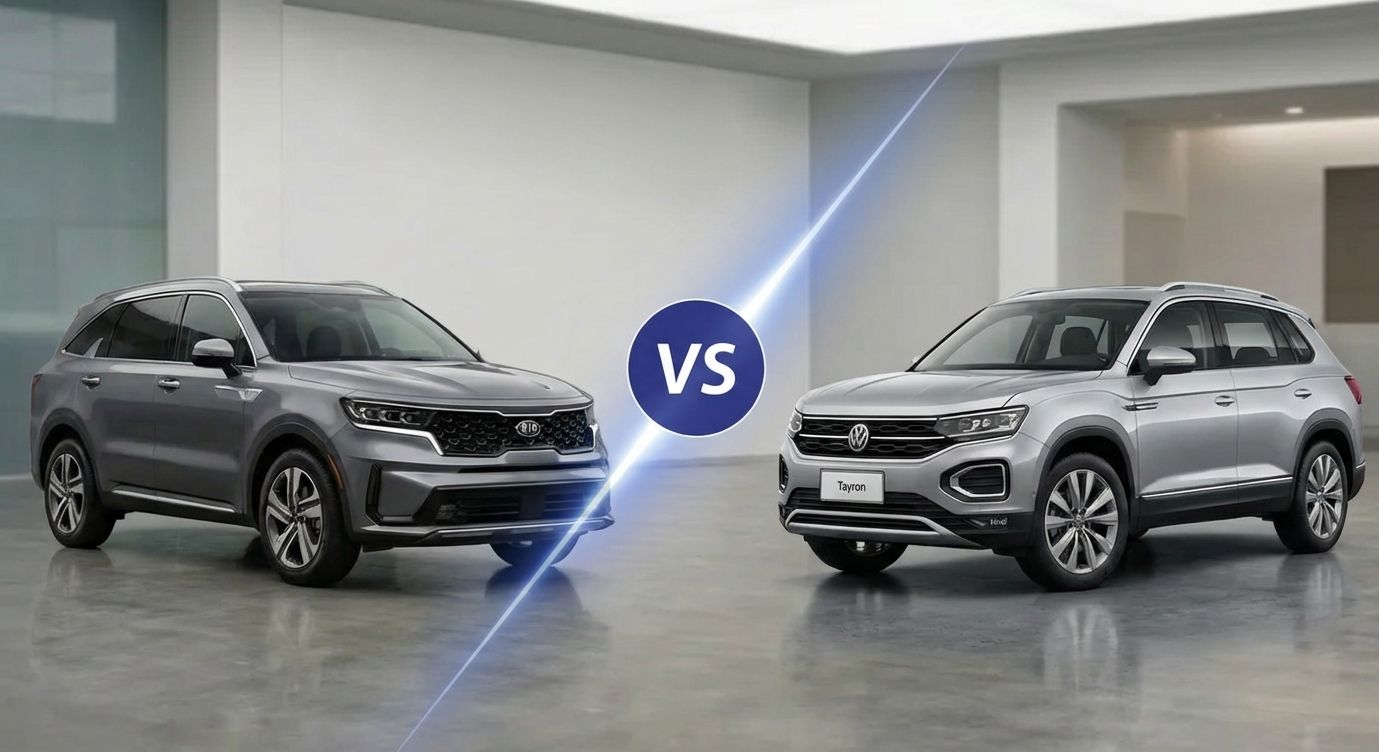
Kia Sorento vs. Volkswagen Tayron. Which large SUV is better? A detailed comparison of price, features, and driving performance to help you decide.
Apr 13, 2026
Detailed comparison of Hyundai Santa Fe vs Volkswagen Tayron. We compared space, equipment, and driving characteristics. Read our verdict and choose the right SUV.
Apr 8, 2026