Car battle
Audi Q5 vs. BMW X3: A Complete 2025 Comparison
Audi Q5 vs. BMW X3: Which premium SUV is better? Our detailed comparison and verdict will help you choose the right car for your needs.
Apr 14, 2026
Articles
Car battle
Kia Sorento vs. Volkswagen Tayron. Which large SUV is better? A detailed comparison of price, features, and driving performance to help you decide.
April 13, 2026
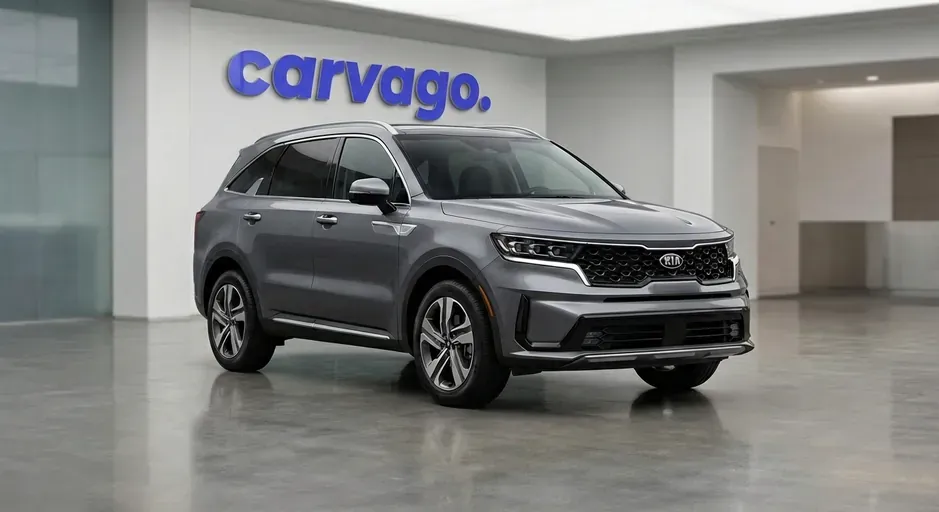
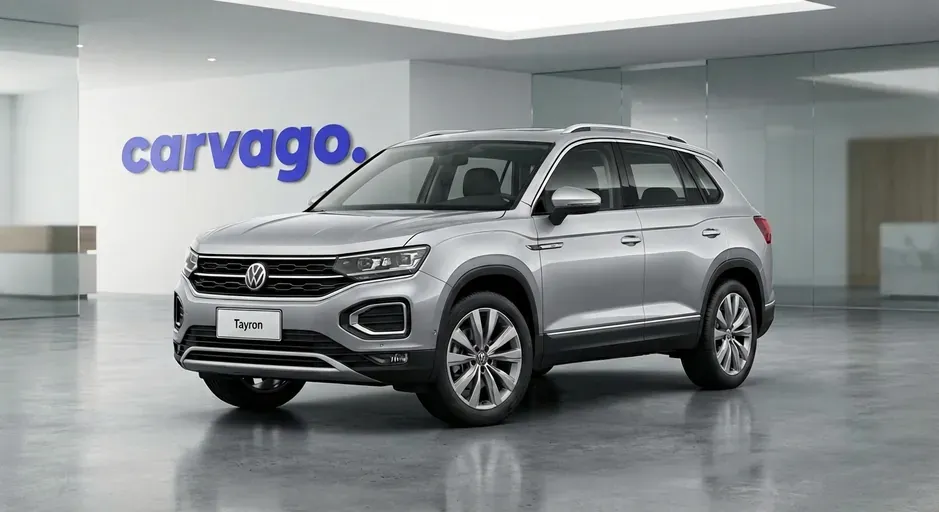
The Kia Sorento has long been a staple in the spacious family SUV market, gaining popularity for its bold design, practicality, and extensive features. It's now up against the Volkswagen Tayron, a global model that replaces the extended Tiguan Allspace in the lineup, bringing the latest technology and German precision to the large SUV segment. Let's take a detailed look at the key differences between these two competitors to find out which one better suits your needs.
At first glance at the Kia Sorento and the Volkswagen Tayron, it's clear that both vehicles belong to the large SUV category, but with slightly different proportions. The Kia Sorento is slightly larger in most respects, giving it a more robust and dominant presence on the road. The Tayron appears somewhat more compact and sleek, which can be an advantage in city traffic.
The biggest difference is noticeable in the width, where the Sorento surpasses its German rival by about 3 to 4 centimetres. A wider body usually translates into more generous shoulder room for passengers, increasing comfort on longer journeys. On the other hand, the narrower Tayron may be slightly more agile and easier to park in tight underground garages. The difference in length is minimal, but the Sorento's longer wheelbase suggests potentially more legroom for passengers in the second and third rows of seats and better driving stability at higher speeds.
| Parameter | Kia Sorento (MQ4) | Volkswagen Tayron (1st generation) |
|---|---|---|
| Length (mm) | 4810 | 4792 |
| Width (mm) | 1900 | 1853 - 1866 |
| Height (mm) | 1695 | 1666 - 1668 |
| Wheelbase (mm) | 2815 | 2788 - 2790 |
The spaciousness and practicality of the boot are key parameters for large family SUVs. In this respect, the battle between the Kia Sorento and the Volkswagen Tayron offers an interesting comparison, where the newer Tayron significantly raises the bar in some configurations, but the Sorento holds its own and keeps pace in certain aspects.
The fourth-generation Kia Sorento, which is commonly available on the used car market, offers a very decent volume in its five-seater configuration. For the diesel version, it's 705 litres, and for the hybrid variant, slightly less at 697 litres. If the car is equipped with a third row of seats, the space behind them shrinks to a modest 187 litres (diesel) or 179 litres (hybrid), which is only enough for a small shopping trip. However, after folding down the second row of seats, the Sorento reveals its strength, offering a cavernous space of up to 2100 litres, making it a great partner for moving or transporting bulky items.
As a newer model, the Volkswagen Tayron comes with impressive figures, especially for the internal combustion engine versions. In its basic five-seater configuration, it offers a staggering 885 litres, clearly surpassing the Kia and providing space for several extra pieces of luggage. For the hybrid variant, however, the difference almost disappears, with the Tayron eHybrid having a volume of 705 litres. After folding the seats, the values of both vehicles are again comparable – the Tayron provides a maximum of 2090 litres, practically the same as the Sorento. It's important for families that both models offer the option of a seven-seater configuration, although in both cases, the boot space shrinks to a minimum when fully occupied.
| Parameter | Kia Sorento SUV | Volkswagen Tayron SUV |
|---|---|---|
| Basic volume (litres) | 693 - 705 (5-seater version) | 705 - 885 (5-seater version) |
| Max. volume with seats folded (litres) | 1988 - 2100 | 1915 - 2090 |
When choosing a large family SUV, towing capacity plays a key role. And it is in this discipline that the Kia Sorento and Volkswagen Tayron differ significantly, reflecting their different focuses. While the Sorento relies on the power of a classic diesel, the Tayron counters with impressive figures for its hybrid variants.
For those who need to tow heavy loads, such as large caravans or boat trailers, the clear favourite is the Kia Sorento with the 2.2 CRDi diesel engine. This unit can handle a braked trailer weighing up to 2500 kg, which is a top-class figure. The electrified versions are considerably more modest. The standard 1.6 T-GDI Hybrid can still manage a respectable 1650 kg, but the Plug-in Hybrid can only tow 1500 kg, which is the price for heavier batteries.
On the other side is the Volkswagen Tayron, which, although it doesn't reach the absolute maximum of the diesel Sorento, excels in the area of hybrid powertrains. Its top versions, the 2.0 TDI and 2.0 TSI, offer a solid towing capacity of 2300 kg. Most impressive, however, is the more powerful 1.5 eHybrid plug-in hybrid, which can tow up to 2000 kg – half a tonne more than the plug-in hybrid Sorento. Even the weaker hybrid variant of the Tayron, with 1800 kg, surpasses both electrified models from Kia.
The choice is therefore clear. If your priority is maximum towing power and you plan to regularly use the full potential of the tow hitch, the diesel Sorento is an unbeatable choice. However, if you are looking for a modern SUV with an electrified powertrain that still offers excellent towing capabilities, the Volkswagen Tayron in its hybrid versions provides a much more versatile and capable package.
| Model and Engine | Braked trailer weight (kg) | Unbraked trailer weight (kg) |
|---|---|---|
| Kia Sorento 2.2 CRDi | 2500 | 750 |
| Kia Sorento 1.6 T-GDI Hybrid | 1650 | 750 |
| Kia Sorento 1.6 T-GDI Plug-in-Hybrid | 1500 | 750 |
| Volkswagen Tayron 2.0 TDI SCR (142 kW) | 2300 | 750 |
| Volkswagen Tayron 2.0 TSI OPF | 2300 | 750 |
| Volkswagen Tayron 1.5 eHybrid OPF (130 kW) | 2000 | 750 |
When it comes to engine selection, the Kia Sorento and Volkswagen Tayron take slightly different paths, reflecting their market positioning. The Sorento, especially in the MQ4 generation (from 2020), relies on a clearly defined range focused on electrification and an economical diesel. In contrast, the Tayron, as a newcomer to the European market, arrives with the latest range of VW Group engines, including mild-hybrid, plug-in hybrid, and powerful petrol and diesel versions. The choice, therefore, is between proven and economical units in a used Sorento and cutting-edge technology in a new Tayron.
For the fourth-generation Sorento, Kia simplified its lineup and focused on three key engine options that cover the needs of most large SUV drivers. The foundation is an economical full-hybrid, ideal for combined driving. The plug-in hybrid is designed for maximum reduction of local emissions and costs on shorter routes. There is also a powerful and proven diesel engine, which has long been a popular choice for drivers with high annual mileage and for those who frequently tow a trailer. However, this engine was gradually withdrawn from the new car lineup, making it an attractive option on the used car market.
| Engine Type | Fuel | Power (kW) | Torque (Nm) | Gearbox |
|---|---|---|---|---|
| 1.6 T-GDI HEV | Petrol/Hybrid | 169 | 350 | 6-speed automatic |
| 1.6 T-GDI PHEV | Petrol/Plug-in Hybrid | 195 | 350 | 6-speed automatic |
| 2.2 CRDi | Diesel | 142 | 440 | 8-speed dual-clutch (8DCT) |
As the successor to the Tiguan Allspace, the Volkswagen Tayron enters the market with a completely new and technologically advanced range of power units. The base is the 1.5 eTSI mild-hybrid petrol engine, which reduces fuel consumption during normal driving. For environmentally-conscious drivers, there is a new-generation 1.5 eHybrid plug-in hybrid with an electric range of over 100 km. There are also traditional yet modernized 2.0 TDI engines for economical long-distance journeys and a powerful 2.0 TSI petrol engine for maximum dynamics, both often paired with 4MOTION all-wheel drive.
| Engine Type | Fuel | Power (kW) | Torque (Nm) | Gearbox |
|---|---|---|---|---|
| 1.5 eTSI | Petrol/Mild-Hybrid | 110 | 250 | 7-speed DSG |
| 1.5 eHybrid | Petrol/Plug-in Hybrid | 150 - 200 | Approx. 400 | 6-speed eDSG |
| 2.0 TDI | Diesel | 110 / 142 | 360 / 400 | 7-speed DSG |
| 2.0 TSI 4MOTION | Petrol | 150 / 195 | 320 / 400 | 7-speed DSG |
Choosing the right engine is crucial for long-term satisfaction with a car. Our recommendations are based on a combination of performance, real-world fuel consumption, owner feedback, and mechanical reliability. This comparison pits the proven used Kia Sorento, where we focus on the generation available on the market as approximately four-year-old cars, against the newcomer Volkswagen Tayron, which is just entering the market and replacing the Tiguan Allspace. While the Sorento relies on a proven diesel and modern hybrids, the Tayron arrives with the latest generation of plug-in hybrids and mild-hybrid petrol engines, but also keeps a traditional diesel engine in its lineup.
For a large family SUV like the Sorento undoubtedly is, the 2.2 CRDi diesel engine is an ideal choice, combining power, economy, and reliability. This power unit, available since the start of sales for the fourth generation (MQ4) in 2020, is perfect for drivers who frequently travel long distances or need to tow a heavy trailer. With 440 Nm of torque available at low revs, the engine offers confident pulling power and a sense of reserve power even when fully loaded. In real-world driving, motorway consumption is around 6.5–7.5 l/100 km, which is an excellent figure for such a large car. The engine is paired with a new eight-speed dual-clutch transmission (8DCT), which shifts quickly and smoothly.
Although the Volkswagen Tayron is a new model for 2025, replacing the Tiguan Allspace, it relies on proven and time-tested technology. The 2.0 TDI engine in its latest EA288evo evolution is the heart of many VW Group models and represents a safe bet. For a large SUV like the Tayron, we recommend the more powerful 142 kW (193 hp) version, which comes standard with 4MOTION all-wheel drive and a seven-speed DSG transmission. This engine offers an excellent compromise between performance and running costs. It provides massive pulling power and low fuel consumption, which can easily stay below 7 l/100 km on long journeys.
Official fuel consumption figures, measured under laboratory conditions of the WLTP cycle, are one thing, but the reality on the road is often different. The true operating costs are only revealed by data from the drivers themselves. For our comparison, we therefore analyzed data from consumption databases, such as the German Spritmonitor.de, to get the most accurate picture of the appetite of both SUVs in normal operation. We are primarily comparing the fourth-generation Kia Sorento (MQ4, from 2020), which is relevant for the used car market, with the upcoming Volkswagen Tayron, for which we rely on expected values based on its technical foundation.
The following table shows the average real-world consumption for the most common engine versions:
| Model and Engine | Average Real-World Consumption (l/100 km) |
|---|---|
| Kia Sorento 2.2 CRDi (142 kW) | 7.1 |
| Kia Sorento 1.6 T-GDI Hybrid (169 kW) | 7.8 |
| Kia Sorento 1.6 T-GDI Plug-in Hybrid (195 kW) | 2.5 - 8.2* |
| Volkswagen Tayron 2.0 TDI (142 kW) | 6.8 (expected) |
| Volkswagen Tayron 1.5 eTSI (110 kW) | 7.2 (expected) |
| Volkswagen Tayron 1.5 eHybrid (150 kW) | 1.8 - 7.9* (expected) |
*For plug-in hybrid versions, consumption is highly dependent on the frequency of charging. The lower value corresponds to driving with a fully charged battery, while the higher value represents consumption in hybrid mode with a depleted battery.
Several key trends are clear from the data. For drivers who spend most of their time on motorways and cover tens of thousands of kilometres annually, the diesel engine remains the most economical choice. Both the Sorento 2.2 CRDi and the expected Tayron 2.0 TDI have real-world consumption figures around the seven-litre mark, which is an excellent value for such large SUVs. The difference between them is negligible and, in practice, will be influenced more by driving style than by technology.
The comparison of the hybrid variants is interesting. The fully hybrid Sorento without external charging capability is, on average, almost a litre thirstier than its diesel sibling. Its strength is most evident in urban traffic, where it can use electric power more frequently. On the motorway, however, its advantage disappears. The mild-hybrid Tayron 1.5 eTSI will likely be a very similar case – efficient in the city, but its consumption on the motorway will approach that of larger engines.
Plug-in hybrids are a separate chapter. Their on-paper consumption of under two litres is only achievable with regular charging and short trips of up to 50 km. For daily commuting "around the block" with the option of charging at home or work, they are unbeatable. However, once you embark on a longer journey with a depleted battery, their consumption paradoxically exceeds that of purely petrol or diesel versions due to the higher weight of the batteries. Here, the consumption of both models will be around 8 l/100 km.
Fuel consumption is therefore not the deciding factor in this duel. Both models offer very economical diesel engines for high-mileage drivers and technologically advanced plug-in hybrids for a specific group of users. The choice between them will thus depend more on other criteria, such as price, space, or design.
When comparing the prices of used cars between the Kia Sorento and the Volkswagen Tayron, we encounter a fundamental difference in their history on the Czech market. While the Sorento is an established player here, the Tayron is a newcomer that has only recently replaced the Tiguan Allspace. This is significantly reflected in the availability and prices of used cars.
The fourth-generation Kia Sorento, produced since 2020, already has a solid presence on the used car market. This allows potential buyers to choose from more engine versions, equipment levels, and, above all, price points.
The wider selection gives buyers a better negotiating position and the opportunity to find a car that exactly matches their expectations and budget.
The Volkswagen Tayron is a newcomer to the Czech market, and therefore it is practically impossible to find an older, for example, four-year-old used model. The offer consists exclusively of nearly new or demonstration cars, which corresponds to their high price.
From a price perspective, the situation is clear. If you're looking for a spacious SUV and your budget is limited, the Kia Sorento offers significantly better value for money on the used car market. You can get it for thousands less than a comparably old (in this case, almost new) Tayron.
On the other hand, if you insist on the latest model and don't mind paying extra for a car with minimal mileage and a factory warranty, the Volkswagen Tayron is a modern, albeit more expensive, alternative. The buyer is essentially choosing between a proven, more affordable used car and an investment in a nearly new vehicle.
When comparing safety, it's crucial to realise that while both cars received five stars in Euro NCAP crash tests, they were tested in different years and according to different, stricter criteria. The testing methodology is constantly becoming more rigorous, so a direct comparison of percentage results from different years is not entirely indicative.
The fourth-generation Kia Sorento underwent Euro NCAP tests in 2020 and earned a full five stars. In the individual categories, it achieved 82% for adult occupant protection, 85% for child occupant protection, 63% for vulnerable road user protection, and an excellent 87% for safety assist systems. The organisation praised the robustness of the passenger compartment, which remained stable in a frontal impact, as well as the presence of a centre airbag that prevents contact between the driver and front passenger in a side impact. The high score for assistance systems confirmed that the Sorento was already equipped with modern technologies at the time of its launch, such as autonomous emergency braking, lane keeping assist, and driver fatigue monitoring.
The Volkswagen Tayron, which arrived on the European market later, was tested according to the significantly stricter Euro NCAP rules for 2025 and also received five stars. Its results are: 87% for adult occupant protection, 85% for child occupant protection, 83% for vulnerable road user protection, and 80% for safety assist systems. Although the Tayron has a slightly lower score for safety assist systems than the Sorento, it is important to emphasise that it underwent more demanding tests, which include, for example, new scenarios for autonomous braking (reacting to motorcyclists) or systems to prevent opening a door into the path of a cyclist ("dooring"). Its significantly better result in pedestrian and cyclist protection shows progress in the design of the front end and in sensor sensitivity.
Although both cars are at the top of their class in terms of safety, the newer testing methodology gives a slight advantage to the Volkswagen Tayron. Its results, especially in the protection of vulnerable road users, reflect the latest standards and technologies. The Kia Sorento still offers an exceptionally high level of passive and active safety, but the Tayron demonstrates that it was developed from the ground up to meet the even more demanding requirements of the future.
| Parameter | Kia Sorento | Volkswagen Tayron |
|---|---|---|
| Year of testing | 2020 | 2025 |
| Adult Occupant Protection | 82 % | 87 % |
| Child Occupant Protection | 85 % | 85 % |
| Vulnerable Road User Protection | 63 % | 83 % |
| Safety Assist Systems | 87 % | 80 % |
In addition to the standard equipment, each model offers several unique features that may be decisive for the customer. Both cars approach technology and comfort slightly differently, which is reflected in their most interesting features.
The fourth-generation Kia Sorento (from 2020) opted for a bold design and a massive influx of modern technologies previously reserved for premium brands.
The European predecessor to the Tayron was the popular Tiguan Allspace, which offered a range of advanced features after its 2021 update. Volkswagen focuses more on evolution and integrating technology into a well-thought-out package.
Advantages:
Disadvantages:
Advantages:
Disadvantages:
Based on our own CarAudit inspections, breakdown statistics, and owner feedback, we have compiled an overview of the most common problems that used car buyers should watch out for. Although both cars are modern and generally well-built, neither has escaped a few teething problems and potential weaknesses.
The fourth generation of the Sorento brought a revolutionary design and technology, but also several recurring problems that are well-documented due to the large number of units sold.
Kia has issued several important recalls for this generation of the Sorento. In addition to the aforementioned transmission oil pump, there was a risk of a fuel leak in the 2.5-liter turbo engine and a risk of a short circuit and fire in the tow hitch wiring harness. Before buying a used car, it is crucial to verify that all these recalls have been carried out.
The Sorento's problems are mainly centered around the dual-clutch transmission and occasional software glitches. Most of these have known solutions and have been addressed under warranty or through recall campaigns. Nevertheless, a thorough pre-purchase technical inspection focusing on the smoothness of the transmission and the functionality of the electronics is absolutely essential.
The Volkswagen Tayron is a relatively new name on the European market (replacing the Tiguan Allspace), and therefore the user experience database is smaller. However, it is based on the proven MQB platform and shares technology with many other models from the group, which helps in identifying potential risks.
So far, very few recalls have been registered for the Tayron in Europe. One of the first concerned a very limited number of vehicles from 2025 and addressed a potential issue with the airbag control unit.
The Tayron is expected to have the reliability typical of modern VW cars built on the MQB platform. Potential issues are more general in nature and relate to established components like the DSG transmission, where proper servicing is the key to trouble-free operation. There are no known systematic, recurring faults specific to this model. A comprehensive vehicle inspection should primarily focus on the maintenance history and the condition of the transmission.
When buying a used car, a thorough inspection is crucial, and you shouldn't underestimate it with these two models either. Here are a few specific points to focus on.
Both models offer a seven-seat layout, but the Kia Sorento has a slight edge in interior space, especially in the third row of seats. The Volkswagen Tayron, which replaces the Tiguan Allspace, counters with a slightly larger basic boot volume in the five-seat configuration. However, the Sorento scores when it comes to maximum cargo space with all rear seats folded down.
Both cars offer a wide range of engines, including petrol, diesel, and plug-in hybrid versions. The Volkswagen Tayron generally focuses on a more dynamic ride, and its more powerful variants offer better acceleration. The Kia Sorento, on the other hand, focuses on a more comfortable driving experience, and its diesel engine is known for its refinement and smooth operation.
Yes, both models are available with all-wheel drive and can handle light terrain such as dirt tracks or snowy roads. The Volkswagen Tayron has slightly more ground clearance, which gives it a slight advantage. The Kia Sorento, in its X-Line and X-Pro versions, offers specific off-road modes and enhanced underbody protection for more demanding conditions.
Historically, the Kia brand is known for offering generous standard equipment at a competitive price, and the Sorento is no exception. The Volkswagen Tayron, on the other hand, boasts a more premium-feeling interior and more advanced infotainment and assistance system technologies, but this is reflected in its price. The final choice depends on the buyer's preferences and budget.
In recent years, Kia has built a reputation for producing reliable cars, and the Sorento continues this trend, with the added benefit of a seven-year warranty. Volkswagen is an established brand with a dense service network, but maintenance and potential repair costs can be slightly higher. As the Tayron is a newer model, specific data on its long-term reliability is still being collected.
The Volkswagen Tayron offers a more agile and sporty driving experience, which will be appreciated by drivers who prefer a more dynamic driving style. Its chassis is stiffer and provides better control in corners. The Kia Sorento is primarily focused on comfort; its suspension absorbs bumps better, and the ride is generally smoother and more relaxed.
Sources: ADAC, pistonheads.com, evo.co.uk, thetruthaboutcars.com, autonews.com, chargedevs.com
This article was prepared using artificial intelligence tools. The section guarantor is Petr Dušek.
Audi Q5 vs. BMW X3: Which premium SUV is better? Our detailed comparison and verdict will help you choose the right car for your needs.
Apr 14, 2026
Detailed comparison of Hyundai Santa Fe vs Volkswagen Tayron. We compared space, equipment, and driving characteristics. Read our verdict and choose the right SUV.
Apr 8, 2026
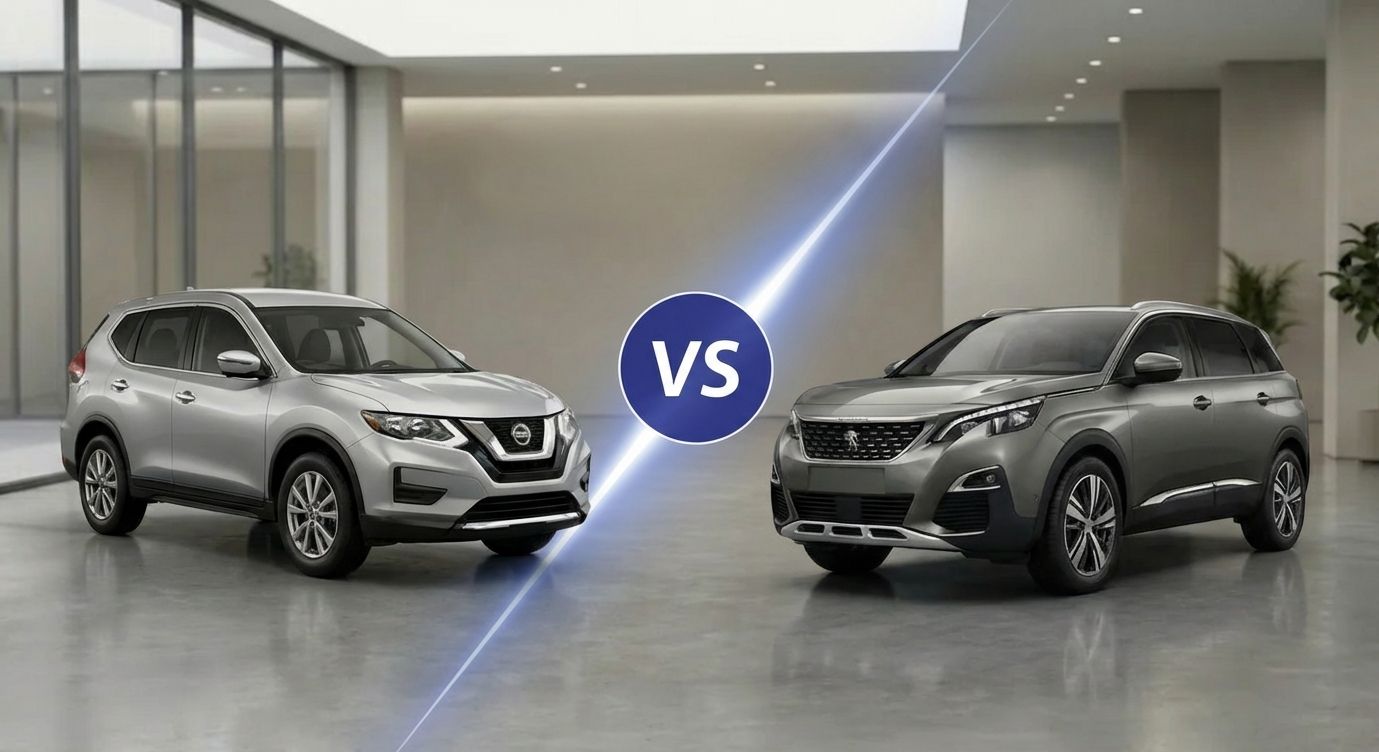
Nissan X-Trail vs. Peugeot 5008 SUV comparison. We compared real-world fuel consumption, family space, and the equipment of used models. Read our detailed verdict before buying!
Apr 14, 2026