Car battle
Audi Q5 vs. BMW X3: A Complete 2025 Comparison
Audi Q5 vs. BMW X3: Which premium SUV is better? Our detailed comparison and verdict will help you choose the right car for your needs.
Apr 14, 2026
Articles
Car battle
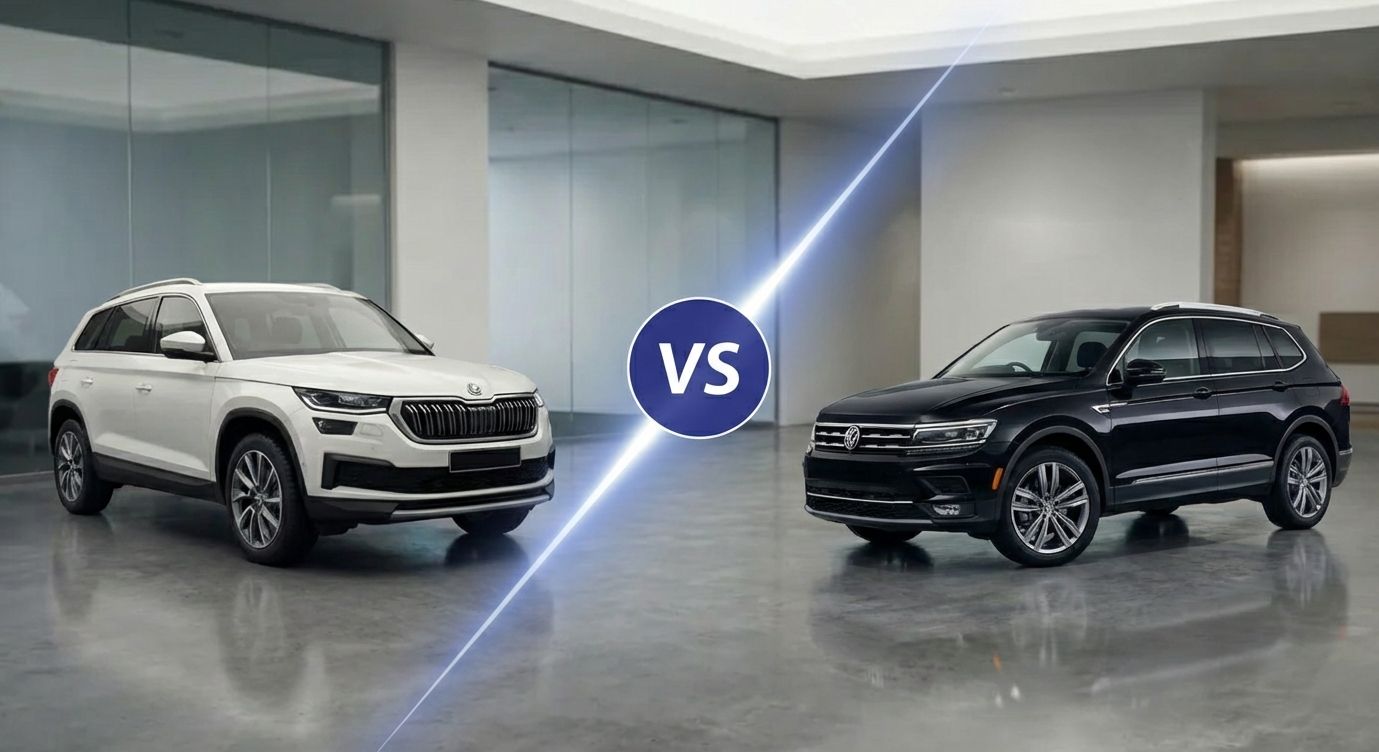
Hesitating between the Škoda Kodiaq and the Volkswagen Tayron? Our detailed comparison of engines, design, and prices will help you choose the right spacious SUV for your family.
April 8, 2026
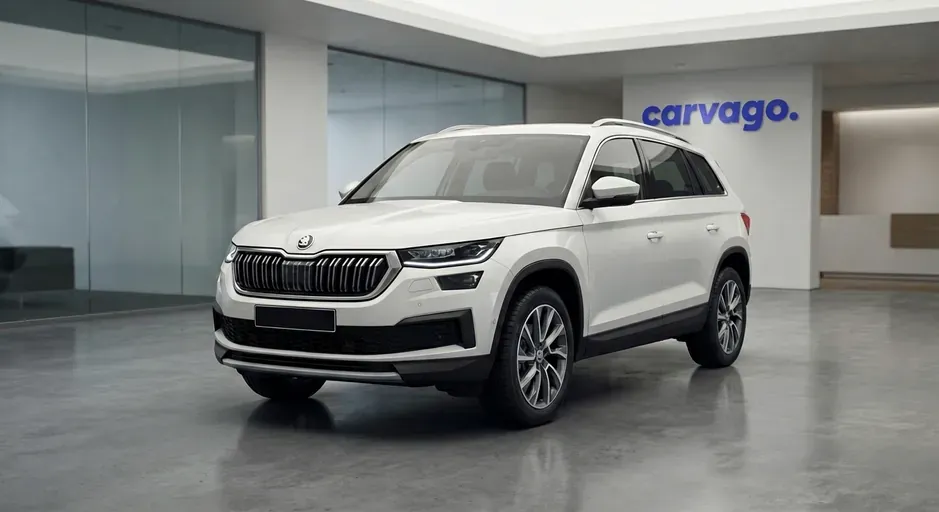
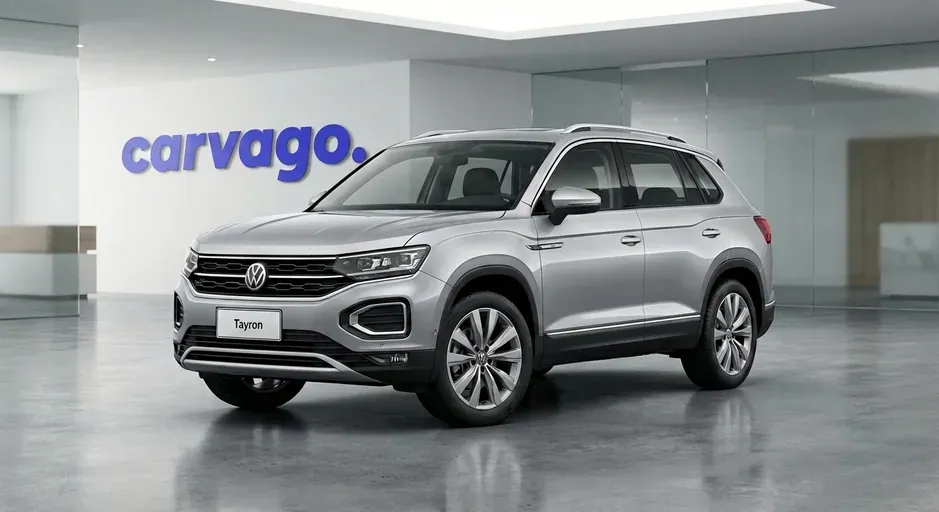
The Škoda Kodiaq has long been one of the most popular large SUVs on the Czech market, prized for its practicality, spaciousness, and clever solutions. It now faces its group sibling and direct competitor, the Volkswagen Tayron, which replaces the Tiguan Allspace and brings a slightly different perspective to the family SUV with an emphasis on technology and perceived quality. This showdown will reveal which of these two models, built on the same foundations, is the better choice for your needs.
Although the Škoda Kodiaq and Volkswagen Tayron share group technology, their exterior dimensions reveal different priorities. At first glance, it is clear that the latest Tayron is noticeably longer, while the first-generation Kodiaq, relevant to the used car market, maintains a slight lead in width. These differences, though they may seem small, play a significant role in practicality, manoeuvrability, and interior space.
The biggest difference is in the overall length. The Volkswagen Tayron measures 4792 mm, surpassing the Kodiaq (4697–4705 mm) by more than 8 centimetres. This increase has a positive effect, especially on the luggage compartment and potentially on the space for passengers in the optional third row of seats. For families who need maximum transport capacity, every extra centimetre can be crucial.
In terms of body width, the Škoda Kodiaq has the upper hand. At 1882 mm, it is approximately 2 centimetres wider than the Tayron (1853–1866 mm). This can translate into a slightly greater sense of airiness in the interior, especially in the shoulder area. However, the Tayron's narrower body can be a small advantage when parking in tight spaces or driving through narrow city streets.
When it comes to height and wheelbase, both models are very similar. The almost identical wheelbase (around 2790 mm) suggests a comparable amount of longitudinal space for passengers in the front and rear seats. The height does not differ dramatically either, meaning that headroom will be at a very similar level in both cars. Therefore, neither vehicle gains a decisive advantage here.
| Parameter | Škoda Kodiaq (1st generation) | Volkswagen Tayron (1st generation) |
|---|---|---|
| Length (mm) | 4697 - 4705 | 4792 |
| Width (mm) | 1882 | 1853 - 1866 |
| Height (mm) | 1660 - 1688 | 1666 - 1668 |
| Wheelbase (mm) | 2788 - 2791 | 2788 - 2790 |
The volume of the luggage compartment is often a deciding factor for large family SUVs. In this respect, both cars excel, but each with slightly different cards to play. While the Škoda Kodiaq is an established player on the used car market, the Volkswagen Tayron arrives as its brand-new group sibling and successor to the Tiguan Allspace. We are therefore comparing the proven generosity of the first-generation Kodiaq after its modernisation (from 2021) with the parameters of the upcoming Tayron.
After its facelift, the Škoda Kodiaq increased its already impressive basic boot volume to a fantastic 835 litres in the five-seater configuration. This is a value that can easily accommodate luggage for the whole family on a long holiday as well as bulky cargo. After folding down the rear seats, an almost perfectly flat surface is created, and the transport capacity increases to a massive 2065 litres, making the Kodiaq one of the most practical cars in its class.
As a newer model, the Volkswagen Tayron pushes the boundaries a little further. In its basic configuration, it offers as much as 885 litres, which is 50 litres more than its rival from Mladá Boleslav. While this difference is not dramatic, it represents space for a few extra bags. The maximum capacity after folding down the seats is 2090 litres. Although the Kodiaq is a legend in terms of spaciousness, the Tayron shows that it is still possible to build on an excellent foundation and offer a little bit more.
| Parameter | Škoda Kodiaq | Volkswagen Tayron |
|---|---|---|
| Basic volume (litres) | 835 | 885 |
| Max. volume after folding seats (litres) | 2065 | 2090 |
For many people interested in a large SUV, the ability to tow a trailer is a key parameter. Whether it's a caravan for a holiday, a trailer with a boat, or just a cart for building materials, both the Škoda Kodiaq and the Volkswagen Tayron offer very solid values in this regard, which, however, vary depending on the chosen engine.
The first-generation Škoda Kodiaq, which is relevant to the used car market, has nothing to be ashamed of in this respect. Even the basic and very common 1.5 TSI petrol engine with an output of 110 kW can tow a braked trailer weighing 1800 kg. However, if you need a real powerhouse, go for the 2.0 TDI diesel versions or the more powerful 2.0 TSI petrol engine. Here, the maximum weight of a braked trailer ranges from 2000 kg up to a top-of-the-line 2300 kg for the most powerful variants, including the sporty RS version. This value is more than sufficient for most large caravans and heavy loads.
As a newer model built on similar technology, the Volkswagen Tayron offers practically identical capabilities. Its more powerful variants, specifically the 2.0 TDI (142 kW) and 2.0 TSI, also offer a maximum towing capacity of 2300 kg. The basic mild-hybrid 1.5 eTSI can handle 1800 kg. An interesting feature is the plug-in hybrid eHybrid versions, which, despite the presence of batteries, can tow a respectable 1800 to 2000 kg, which is not always a given for hybrids.
As a result, both models are very similar. The key difference for the buyer is that with the Kodiaq, these capabilities can be found in proven used cars, while the Tayron offers them as a brand-new model. For maximum towing power, a more powerful two-litre diesel or petrol engine is a safe bet in both cases.
| Škoda Kodiaq 1.5 TSI (110 kW) | 1800 | 750 |
|---|---|---|
| Škoda Kodiaq 2.0 TDI (110-147 kW) | 2000 - 2300 | 750 |
| Škoda Kodiaq 2.0 TSI (140 kW) | 2000 - 2200 | 750 |
| Škoda Kodiaq RS | 2300 | 750 |
| Volkswagen Tayron 1.5 eTSI (110 kW) | 1800 | 750 |
| Volkswagen Tayron 1.5 eHybrid (110-130 kW) | 1800 - 2000 | 750 |
| Volkswagen Tayron 2.0 TDI (110-142 kW) | 2000 - 2300 | 750 |
| Volkswagen Tayron 2.0 TSI (150-195 kW) | 2300 | 750 |
When it comes to engine selection, the Kodiaq and Tayron differ fundamentally, reflecting their generational gap. While the first-generation Škoda Kodiaq, widely available on the used car market, offers a broad range of traditional and proven petrol and diesel engines, the Volkswagen Tayron, as its successor, enters the market exclusively with electrified and automatic powertrains. The choice, therefore, is between a proven, diverse lineup and a modern, more fuel-efficient approach.
The engine lineup for the first-generation Škoda Kodiaq (especially after the 2021 facelift) is a prime example of a classic VW Group offering. The base engine is the economical yet sufficiently flexible 1.5 TSI petrol engine with 110 kW (150 hp), often equipped with ACT technology to deactivate two cylinders under light load, which reduces fuel consumption. This engine was available with both a manual and a DSG automatic transmission. For more dynamic driving, there was the more powerful 2.0 TSI petrol engine with 140 kW (190 hp), paired as standard with all-wheel drive and a DSG transmission.
For drivers who cover high annual mileage, the 2.0 TDI Evo diesel engines were the ideal choice. The less powerful version delivered 110 kW (150 hp) and was available with both front-wheel and all-wheel drive. The more powerful variant with 147 kW (200 hp) offered commanding performance and was always paired with 4x4 drive and a DSG automatic. The top of the range after the facelift was the sporty Kodiaq RS model, which swapped its original diesel engine for a 2.0 TSI petrol engine with 180 kW (245 hp), turning the family SUV into a very fast car.
| Engine Type | Fuel | Power (kW) | Torque (Nm) | Transmission |
|---|---|---|---|---|
| 1.5 TSI ACT | Petrol | 110 | 250 | 6MT / 7DSG |
| 2.0 TSI 4x4 | Petrol | 140 | 320 | 7DSG |
| 2.0 TDI | Diesel | 110 | 340 / 360 | 7DSG |
| 2.0 TDI 4x4 | Diesel | 110 | 360 | 7DSG |
| 2.0 TDI 4x4 | Diesel | 147 | 400 | 7DSG |
| 2.0 TSI 4x4 (RS) | Petrol | 180 | 370 | 7DSG |
The Volkswagen Tayron, which replaces the extended Tiguan Allspace in the European market, relies exclusively on modern and electrified powertrains paired with a DSG automatic transmission. A manual transmission is no longer offered. The base is a mild-hybrid 1.5 eTSI petrol engine with 110 kW (150 hp), where a small electric motor assists during acceleration and reduces fuel consumption.
A key innovation is the eHybrid plug-in hybrid versions, which combine the 1.5 TSI engine with a powerful electric motor. They will be offered in two power variants – 150 kW (204 hp) and 200 kW (272 hp). Thanks to a large battery, they promise an all-electric range of around 100 km, making them an ideal choice for daily commuting with zero local emissions. For traditionalists, the proven 2.0 TDI diesel engine remains available in versions with 110 kW (150 hp) and 142 kW (193 hp) for the 4x4 variant. The top of the petrol range is the 2.0 TSI with all-wheel drive, which will offer 150 kW (204 hp) or even 195 kW (265 hp).
| Engine Type | Fuel | Power (kW) | Torque (Nm) | Transmission |
|---|---|---|---|---|
| 1.5 eTSI | Petrol (mHEV) | 110 | 250 | 7DSG |
| 1.5 eHybrid | Petrol (PHEV) | 150 | 350 | 6DSG |
| 1.5 eHybrid | Petrol (PHEV) | 200 | 400 | 6DSG |
| 2.0 TDI | Diesel | 110 | 360 | 7DSG |
| 2.0 TDI 4MOTION | Diesel | 142 | 400 | 7DSG |
| 2.0 TSI 4MOTION | Petrol | 150 | 320 | 7DSG |
| 2.0 TSI 4MOTION | Petrol | 195 | 400 | 7DSG |
Choosing the right engine is crucial for long-term satisfaction with a car. Our recommendations are based on a combination of performance, real-world fuel consumption, owner feedback, and mechanical reliability. While for the Škoda Kodiaq we focus on proven engines from the used car market, the Volkswagen Tayron is a newcomer, so we are looking at its future lineup based on experience with VW Group technology.
This engine option is the golden mean and the most sought-after choice in the first-generation Kodiaq, especially after the 2021 facelift. The 2.0 TDI engine from the EA288 Evo generation is refined, reliable, and above all, economical, making it an ideal partner for a large family SUV. Its 110 kW of power and 360 Nm of torque provide sufficient performance for everyday driving, even with a fully loaded car, without fuel consumption reaching high figures. In real-world conditions, it's easy to drive with a fuel consumption of between 6 and 7 litres per 100 km.
As the Volkswagen Tayron is a completely new model for Europe (arriving in 2025), this recommendation is based on assumptions founded on the latest generation of the group's engines, found in models like the new Tiguan or Passat. The most powerful version of the two-litre diesel, with an output of 142 kW and 400 Nm of torque, will be the best choice for a large, premium-oriented SUV, which the Tayron undoubtedly is. It always comes standard with 4MOTION all-wheel drive and a DSG automatic transmission.
When choosing a large family SUV, fuel consumption plays a key role, but the on-paper figures provided by manufacturers often differ from everyday reality. For the most objective comparison, we combine official data with real-world driver experiences, drawn from sources like the German portal Spritmonitor.de. For the first-generation Škoda Kodiaq (post-facelift, 2021-2023), we have thousands of user records available. In contrast, the Volkswagen Tayron, which arrives on the European market in 2025 as the successor to the Tiguan Allspace, currently relies only on official data from the WLTP cycle.
The following table compares the most popular engine options for both models, which are technically very similar. For the Kodiaq, we list average real-world consumption figures, while for the Tayron, we provide the official combined values.
| Model and Engine | Average Consumption (l/100 km) |
|---|---|
| Škoda Kodiaq (1st gen, real-world consumption) | |
| 1.5 TSI (110 kW) | 7.6 |
| 2.0 TDI (110 kW) | 6.7 |
| 2.0 TSI 4x4 (140 kW) | 9.1 |
| Volkswagen Tayron (1st gen, official consumption) | |
| 1.5 eTSI mHEV (110 kW) | 6.3 |
| 2.0 TDI (110 kW) | 5.4 |
| 2.0 TSI 4x4 (150 kW) | 7.5 |
The data shows that although both vehicles share the group's technology, the Tayron comes with more modern and efficient variants. Its basic 1.5 eTSI petrol engine is equipped with mild-hybrid technology, which should reduce real-world consumption compared to the older 1.5 TSI in the Kodiaq, especially in the city. For the 2.0 TDI diesel engines, very similar real-world figures can be expected – for the Kodiaq, they have long been between 6.5 and 7 litres, which is still an excellent figure for long-distance travel in such a large car. The two-litre petrol engines are the choice for drivers demanding performance, and their real-world consumption for both models will be around 9 litres.
For the typical user, this means the diesel engine remains the most economical choice for high-mileage motorway drivers in both cases. For mixed driving, the new Tayron with its mild-hybrid system may be more appealing. The deciding factor thus becomes availability and the type of powertrain. While a used Kodiaq offers proven technology without electrification, the Tayron is also entering the market with a plug-in hybrid version, which the first-generation Kodiaq lacked and which can dramatically reduce running costs with regular charging. However, the fuel consumption of the internal combustion engines alone should not be the main deciding factor between these two vehicles.
Looking at the price tags of used cars, the different histories and market positions of the two models in Europe become fully apparent. While the Škoda Kodiaq is an established player with a wide and varied supply, the Volkswagen Tayron is a newcomer to the used car market, which is significantly reflected in its availability and price.
The Škoda Kodiaq holds a strong position on the used car market. Thanks to the model's popularity, the supply of cars around four years old is truly abundant and diverse in price.
Thanks to the wide range, buyers can choose from various engines and equipment levels and select a car with a clear service history, often purchased in the Czech Republic.
The situation with the Volkswagen Tayron is completely different. Since it only recently went on sale in Europe as the successor to the Tiguan Allspace, you will practically not find a four-year-old used car on the market. The offer is limited to nearly new, demonstration, or one-year-old cars.
For the buyer, this means a fundamental difference: while the Kodiaq offers a wide range of affordable used cars, those interested in a Tayron must expect an investment comparable to buying a new car, and its offer on the used car market is very limited for now.
When choosing a family SUV, safety is a key factor. Both the Škoda Kodiaq and the Volkswagen Tayron can boast the highest, five-star rating from the independent organisation Euro NCAP. However, it is important to look at the details of the tests, as the methodology is constantly being tightened and newer tests are more demanding. A direct comparison of percentage results from different years may not be entirely conclusive, but both models have already been tested according to the newer, stricter criteria introduced in 2023.
The new generation of the Škoda Kodiaq underwent Euro NCAP tests in 2024 and easily received a full five stars. This result confirms the brand's long-term commitment to safety, as every new Škoda model since 2008 has achieved the highest rating. The Kodiaq performed excellently in the individual categories: adult occupant protection was rated at 89%, child protection at 83%, protection of vulnerable road users (pedestrians and cyclists) at 82%, and assistance systems scored 78%. These values demonstrate a high level of both passive and active safety.
The Volkswagen Tayron, a newcomer to the European market, underwent Euro NCAP crash tests in 2025 and also took home the maximum five-star rating. Volkswagen thus underscores its "Safety for All" standard. In the sub-ratings, the Tayron achieved 87% for adult protection, 85% for child passenger protection, 83% for the protection of vulnerable road users, and 80% in the safety assistance systems category. Even in its basic equipment, it offers a wide range of accident prevention assistants.
Both cars represent the absolute pinnacle of safety, as evidenced by their five-star ratings in the demanding Euro NCAP tests. The differences in percentage scores are minimal, and both models provide excellent protection for occupants and their surroundings. The Škoda Kodiaq slightly dominates in adult occupant protection, while the Volkswagen Tayron has a slight edge in child protection, vulnerable road user protection, and the rating of assistance systems. Given the more recent test date and a slightly higher score for assistance systems, the Tayron's safety package can be considered a bit more modern, but in practice, both cars are an absolutely comparable and excellent choice in terms of safety.
| Parameter | Škoda Kodiaq | Volkswagen Tayron |
|---|---|---|
| Year of testing | 2024 | 2025 |
| Adult occupant protection | 89% | 87% |
| Child protection | 83% | 85% |
| Vulnerable road user protection | 82% | 83% |
| Assistance systems | 78% | 80% |
In addition to the standard equipment, each model offers several unique features that can be decisive for a potential buyer. While the Škoda Kodiaq relies on proven and practical solutions for everyday life, the Volkswagen Tayron counters with modern technologies and a digital interior concept.
Škoda is famous for its "Simply Clever" solutions, and the Kodiaq is no exception. These small but ingenious features make daily life with the car easier and show that the designers have thought about the real needs of drivers and their families.
The Volkswagen Tayron presents itself as the more technologically advanced sibling. It targets customers who appreciate large displays, advanced assistance systems, and a modern interior concept.
Based on user feedback, service reports, and reliability statistics, we have compiled an overview of the most common problems that buyers of used cars should look out for. Although both vehicles share VW Group technology, specific issues may differ.
The Škoda Kodiaq is generally considered a reliable SUV, but over the years, several typical faults have emerged that are good to know about. These are mostly solvable problems, but they should be identified by a thorough vehicle inspection.
With dual-clutch DSG transmissions, especially the 7-speed version with dry clutches (DQ200) in lower-powered engines, jerking may occur when starting off or driving in stop-and-go traffic. For versions with wet clutches (DQ250, DQ381, DQ500), regular oil changes every 60,000 km are crucial. Neglecting this interval can lead to expensive mechatronics repairs. Problems can appear after as little as 20,000–40,000 km and are often resolved with a software update.
The Škoda Kodiaq has also been the subject of several recall campaigns, concerning issues such as faulty airbags, seat mountings, or engine covers. It is therefore important to verify that a specific used car has undergone all prescribed checks.
Summary: The problems with the Škoda Kodiaq are mostly well-known and solvable. The key to trouble-free operation is regular, high-quality servicing, especially for the DSG gearbox and TSI engines. These are not major design flaws, but rather annoyances that can be troublesome.
The Volkswagen Tayron is a relatively new player on the European used car market, but because it shares technology with other models in the group (e.g., Tiguan Allspace), some potential problems can be inferred. Experiences from owners in markets where the model has been available for longer point to several areas that deserve attention.
Summary: The Volkswagen Tayron's problems seem to be concentrated mainly in the areas of software, electronics, and the integration of the mild-hybrid system. Mechanical faults are less common, but user reviews suggest that the reliability of electronic components can be inconsistent. Before buying, it is crucial to conduct a thorough physical inspection of the used car and focus on the functionality of all electronics and the smoothness of the ride.
When buying a used car, a thorough inspection is key, and these two models are no exception. Although both are considered reliable, they have specific areas that are good to focus on to prevent expensive repairs.
Although the Volkswagen Tayron is a few centimeters longer, the Škoda Kodiaq offers slightly more luggage space. In a five-seater configuration, the Kodiaq provides 910 liters of volume, while the Tayron offers 885 liters. Both models are corporate siblings and offer similar interior space and an optional third row of seats.
The Škoda Kodiaq is primarily focused on comfort and a smooth ride that effectively absorbs bumps. The Volkswagen Tayron offers a slightly stiffer and more agile ride with more precise steering, which will be appreciated by drivers who prefer a more dynamic drive. The Tayron may come with an adaptive chassis as standard, which is an extra charge or available in higher versions for the Kodiaq.
The Tayron's interior feels a bit more premium and technologically advanced, often offering a larger infotainment display as standard. Volkswagen also tends to include features like adaptive cruise control or a heated steering wheel in the basic equipment, which are extras for the Škoda. The Kodiaq, on the other hand, traditionally scores with practical 'Simply Clever' solutions and simpler, more intuitive controls.
The Škoda Kodiaq generally has a lower base purchase price than a comparably equipped Volkswagen Tayron. For used cars, this difference is likely to be reflected in their residual value. Due to the shared engine range, the actual running costs, especially fuel consumption, are very similar for both models.
Both cars share most of the engines built on the MQB Evo platform, including petrol, diesel, and plug-in hybrid variants. However, Volkswagen has exclusively reserved a more powerful 272 hp version of the plug-in hybrid for the Tayron. Conversely, Škoda also offers a less powerful diesel engine with front-wheel drive only for the Kodiaq, which is missing from the Tayron's lineup.
The choice between Škoda Kodiaq and Volkswagen Tayron lies in the preference between proven practicality and modern technologies, although both cars share a capable foundation. Škoda Kodiaq is ideal for pragmatic families looking for maximum space, utility value, and reliability at the best price, with an emphasis on Simply Clever solutions and availability in the used car market. Conversely, Volkswagen Tayron targets customers desiring the latest technologies, a digital interior, and modern design, with the advantage of electrified powertrains. Choose Škoda Kodiaq if space and price are a priority for a reliable family car, while Volkswagen Tayron is for those who appreciate the most up-to-date equipment and hybrid engines and are willing to pay extra.
Sources: ADAC, auto.cz, idnes.cz, automix.cz, autozive.cz, autowork.cz
This article was prepared using artificial intelligence tools. The section guarantor is Petr Dušek.
Audi Q5 vs. BMW X3: Which premium SUV is better? Our detailed comparison and verdict will help you choose the right car for your needs.
Apr 14, 2026
Kia Sorento vs. Volkswagen Tayron. Which large SUV is better? A detailed comparison of price, features, and driving performance to help you decide.
Apr 13, 2026
Škoda Kodiaq vs. VW Tiguan Allspace: Which 7-seater SUV is better? Our detailed comparison, real-world insights, and verdict will help you choose.
Apr 13, 2026