Car battle
Audi Q5 vs. BMW X3: A Complete 2025 Comparison
Audi Q5 vs. BMW X3: Which premium SUV is better? Our detailed comparison and verdict will help you choose the right car for your needs.
Apr 14, 2026
Articles
Car battle
Seat Tarraco vs. Ford Edge: Which large SUV is the better choice? Our comparison reveals differences in driving, design, and practicality to help you choose right.
April 13, 2026
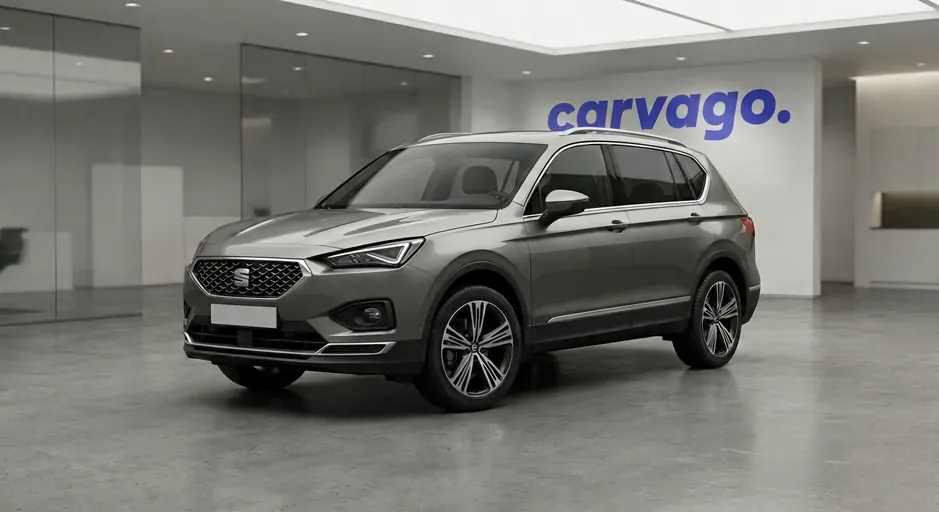
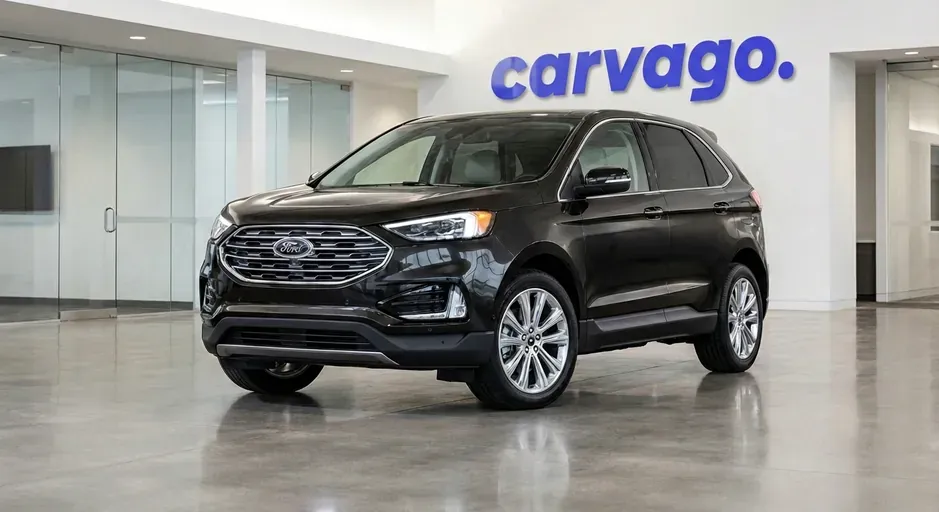
The Seat Tarraco is the flagship of the Spanish car manufacturer, bringing practicality and an optional seven-seater configuration to the large SUV market. Against it stands the American Ford Edge, a robust crossover that tempts with powerful engines and comfort. In our comparison, we'll see which of these two different worlds offers a better combination of features for the discerning driver and their family.
Looking at the exterior dimensions, it is immediately clear that the Ford Edge is a larger car in every respect than the Seat Tarraco. This difference is not only visual, but also has practical implications for everyday use, from parking to interior space. While the Tarraco's dimensions are close to those of a typical European SUV, the Edge brings American generosity to the contest.
The Ford Edge is a noticeable 92 mm longer and 89 mm wider than the Seat Tarraco. This difference gives it a more robust and dominant appearance on the road. In practice, however, the greater width can be a disadvantage in tight parking garages or narrow city streets. In contrast, the more compact Tarraco will be easier to manoeuvre in heavy traffic and finding a parking space will be a little easier.
The 93 mm height difference in favour of the Ford Edge not only contributes to its more massive stance, but also suggests a potentially airier interior with more headroom. The 58 mm longer wheelbase of the Edge promises better ride comfort on long journeys and more legroom for rear passengers. Although the Seat Tarraco is smaller, its dimensions are still generous and perfectly adequate for family use, while offering better agility.
| Parameter | Seat Tarraco | Ford Edge |
|---|---|---|
| Length (mm) | 4735 | 4827 |
| Width (mm) | 1839 | 1928 |
| Height (mm) | 1658 | 1751 |
| Wheelbase (mm) | 2790 | 2848 |
Practicality is key in a large SUV, and boot space plays a crucial role for many families. In this respect, the Seat Tarraco and the Ford Edge approach the use of interior space differently, which can be a key factor for buyers. While the Tarraco focuses on maximum volume in its basic configuration, the Edge counters with an impressive figure when the seats are folded down.
In its five-seater configuration, the Seat Tarraco clearly dominates with a generous basic volume of 760 litres. This space can easily accommodate luggage for the whole family on a long holiday, as well as bulky cargo. If you opt for the seven-seater version, you still get an excellent 700 litres with the third row of seats folded down. However, it should be noted that with a fully occupied car, the boot shrinks to just 230 litres, which is barely enough for a few smaller bags. Those interested in the e-HYBRID plug-in hybrid version must also be careful, as the batteries reduce the space to 610 litres.
The Ford Edge offers a much more modest 602 litres in its standard configuration. Although this is still more than enough for regular shopping and weekend trips, the 158-litre difference in favour of the five-seater Tarraco is noticeable in practice – it represents, for example, one extra large suitcase. However, an interesting twist occurs when the rear seats are folded down. Here, the Ford Edge takes the lead with a maximum volume of 1847 litres, while the Tarraco offers 1775 litres. For those who often transport large and bulky items, the Ford may paradoxically be the more practical choice.
| Parameter | Seat Tarraco | Ford Edge |
|---|---|---|
| Basic volume (litres) | 760 (700 for 7-seater version, 610 for PHEV) | 602 |
| Max. volume with seats folded (litres) | 1775 | 1847 |
When choosing a large SUV, the ability to tow a trailer plays a key role for many drivers. Whether it's a caravan for a family holiday, a trailer with a boat or a horse, differences in permitted weight can be decisive. In this respect, the Seat Tarraco offers a significantly wider range of options and in its top versions surpasses the Ford Edge, which relies on a single value that is sufficient for most situations.
The Ford Edge in its latest European generation with EcoBlue engines offers a consistent and solid braked trailer weight of 2000 kg. This value applies to all diesel variants and is sufficient for most common caravans and cargo trailers. For drivers looking for a simple and reliable choice without having to study the details of individual engine options, the Edge is the clear choice.
The Seat Tarraco, on the other hand, is much more variable. The basic 1.5 TSI petrol engine and even the 1.4 e-HYBRID plug-in hybrid version can handle a respectable 1800 kg. The weaker 2.0 TDI (110 kW) diesel matches the Ford with a value of 2000 kg. However, the real strength of the Tarraco is shown in the more powerful engine versions. The more powerful versions of the 2.0 TDI engine (140 kW and 147 kW) and the 2.0 TSI petrol engines (140 kW and 180 kW) can tow a braked trailer weighing up to 2300 kg. This 300 kg difference compared to the Ford can mean the ability to tow a larger caravan or a heavier load, making the Tarraco the clear winner for those who need maximum towing capacity.
| Model and engine | Braked trailer weight (kg) | Unbraked trailer weight (kg) |
|---|---|---|
| Seat Tarraco 1.5 TSI | 1800 | 750 |
| Seat Tarraco 1.4 e-HYBRID | 1800 | 750 |
| Seat Tarraco 2.0 TDI (110 kW) | 2000 - 2300 | 750 |
| Seat Tarraco 2.0 TDI (140/147 kW) | 2300 | 750 |
| Seat Tarraco 2.0 TSI | 2250 - 2300 | 750 |
| Ford Edge 2.0 EcoBlue | 2000 | 750 |
When looking at the engine offerings, the Seat Tarraco and Ford Edge differ quite fundamentally, reflecting their different origins and market targeting. While the Seat Tarraco, built on the corporate MQB platform, offers a wide and modern range of power units including petrol, diesel, and even plug-in hybrid variants, the Ford Edge, in the relevant period on the European market, relied exclusively on diesel engines. This makes the Tarraco a much more versatile choice, capable of appealing to a broader spectrum of customers – from those looking for economical city driving to drivers demanding dynamics and all-wheel drive. The Ford Edge, on the other hand, targeted drivers who prefer the strong pull and robustness of diesel engines, typical of large American SUVs.
The Seat Tarraco brings a diverse range of engine options that cover almost every conceivable need. The base is the economical yet sufficiently powerful 1.5 TSI petrol engine, which is ideal for regular family use and shorter trips. For drivers who cover more kilometres, the proven 2.0 TDI diesel engine is available in several power variants, with both front-wheel drive and 4x4 (4Drive). The top of the range is the powerful 2.0 TSI petrol engine, and for environmentally conscious drivers, there's the 1.4 e-HYBRID plug-in version, which allows for purely electric driving and offers low running costs with regular charging. Most engines are available with both manual and dual-clutch DSG automatic transmissions.
| Engine Type | Fuel | Power (kW) | Torque (Nm) | Transmission |
|---|---|---|---|---|
| 1.5 TSI ACT | Petrol | 110 | 250 | 6-speed manual / 7-speed DSG |
| 2.0 TSI 4Drive | Petrol | 140 / 180 | 320 / 370 | 7-speed DSG |
| 2.0 TDI | Diesel | 110 | 340 / 360 | 6-speed manual / 7-speed DSG |
| 2.0 TDI 4Drive | Diesel | 110 / 140 / 147 | 340 / 400 | 7-speed DSG |
| 1.4 e-HYBRID | Petrol/Electric | 180 | 400 | 6-speed DSG |
On the European market, the Ford Edge bet everything on one card – the 2.0 EcoBlue diesel engine. It was available in several power levels. The base version with 110 kW (later 140 kW) was often paired with an eight-speed automatic transmission and front-wheel or all-wheel drive. For more demanding drivers, there was the top Bi-Turbo version, which, thanks to twin-turbocharging, offered up to 175 kW (later 177 kW) and a massive torque of 500 Nm. This variant was standardly paired with all-wheel drive and an automatic transmission, making the Edge a commanding motorway cruiser and a capable vehicle for towing trailers. However, the absence of petrol or hybrid alternatives significantly limited its appeal to customers with different preferences. Sales of the Ford Edge in Europe were discontinued in 2020.
| Engine Type | Fuel | Power (kW) | Torque (Nm) | Transmission |
|---|---|---|---|---|
| 2.0 EcoBlue | Diesel | 110 | 400 | 6-speed manual |
| 2.0 EcoBlue AWD | Diesel | 140 | 400 | 8-speed automatic |
| 2.0 EcoBlue Bi-Turbo AWD | Diesel | 175 / 177 | 450 / 500 | 8-speed automatic |
The choice between these two SUVs is relatively simple in terms of engines. If you are looking for versatility, modern technology, and a wider selection, the Seat Tarraco is the clear choice. Its range will satisfy drivers who primarily drive in the city (1.5 TSI, 1.4 e-HYBRID), as well as motorway mile-eaters (2.0 TDI) and those who want a sportier ride (2.0 TSI).
Conversely, the Ford Edge is ideal for a specific group of drivers: those who want a large, comfortable, and powerful diesel SUV with high torque, perfect for long journeys and for towing heavy loads. If your main criterion is a strong and robust diesel engine, the Edge, especially in the Bi-Turbo version, will not disappoint. For everyone else, however, the more flexible and modern range of the Tarraco will likely be the better choice.
Choosing the right engine is key to long-term satisfaction with a car. In the following comparison, we will focus on the recommended engine options for both models, with our recommendations based on a combination of performance, real-world fuel consumption, feedback from owners, and mechanical reliability. While the Seat Tarraco offers a wide range of petrol, diesel, and hybrid powertrains, the Ford Edge, after its 2018 update on the European market, relied exclusively on diesel engines, which greatly simplifies the choice.
This engine option is the ideal choice for a large family SUV. The two-litre turbodiesel in its most powerful version (147 kW/200 hp, which replaced the older 140 kW variant) offers a perfect balance between commanding dynamics and reasonable running costs. It comes standard with 4Drive all-wheel drive and a DSG dual-clutch transmission, making it a versatile car for all conditions.
In the case of the Ford Edge, the choice is clear. After the 2018 facelift, the top of the range was a two-litre diesel with two turbochargers, which replaced the older TDCi units. This engine was always paired with a smooth-shifting eight-speed automatic and all-wheel drive, a combination that perfectly matches the character of this comfortable SUV.
The paper consumption figures quoted by manufacturers are one thing, but the reality on the road is often different. That's why we looked at data from real drivers on the German portal Spritmonitor.de to find out what appetite both cars have for fuel in real-world driving. This is where the fundamental difference in engines becomes apparent – while the Tarraco offers a wide range, including popular petrol engines, the Ford Edge is found on the European used car market almost exclusively with EcoBlue diesel engines.
The following table shows the average real-world consumption for the most common and relevant engine versions of both models for the used car market.
| Model and engine | Average consumption (l/100 km) |
|---|---|
| Seat Tarraco 1.5 TSI (110 kW) | 7.8 |
| Seat Tarraco 2.0 TDI (110 kW) | 6.8 |
| Seat Tarraco 2.0 TDI (147 kW) | 7.5 |
| Seat Tarraco 2.0 TSI (140 kW) | 9.4 |
| Ford Edge 2.0 EcoBlue (140 kW) | 8.1 |
| Ford Edge 2.0 EcoBlue Bi-Turbo (175 kW) | 8.5 |
The data clearly shows that the most economical choice in the case of the Tarraco is the 2.0 TDI diesel engine in the weaker 110 kW version, which averages under seven litres. Its more powerful 147 kW version consumes noticeably more, about 0.7 litres of diesel extra. The basic 1.5 TSI petrol engine is refined, but in a heavier SUV its real-world consumption climbs to eight litres, which is more than the weaker diesel. The least economical, as expected, is the powerful 2.0 TSI petrol engine, whose consumption is close to ten litres.
The Ford Edge, powered exclusively by diesel engines, shows that its higher weight and focus on the American market take their toll. The weaker 2.0 EcoBlue version averages around 8.1 l/100 km, while the more powerful Bi-Turbo requires about half a litre more. This means that even the most powerful diesel Tarraco is more economical in practice than the basic Ford Edge engine.
For drivers with high annual mileage who often drive on motorways, the Seat Tarraco with the 2.0 TDI engine will clearly be the more economical choice. For those who prefer petrol and drive shorter routes, the 1.5 TSI in the Tarraco is a logical, though not exactly frugal, choice. The Ford Edge is more demanding in terms of consumption and is better suited for drivers who appreciate its robustness and comfort on long journeys and for whom higher fuel costs are not a priority. Consumption is therefore one of the key factors that significantly differentiates these two cars.
A look at used car prices clearly shows that the Seat Tarraco is the more affordable and widespread choice on the Czech market. Prices for models around four years old vary over a very wide range, giving potential buyers a decent choice according to their budget and preferences.
Seat Tarraco: Wide availability and more favourable prices
Younger used Seat Tarraco models from 2021 to 2023 can be purchased in a price range from approximately €21,000 to over €41,000. The price depends significantly on the mileage, engine, and especially the equipment level.
Ford Edge: Rarer and potentially more expensive
The Ford Edge is a much rarer sight on the Czech used car market. Its sales in Europe were discontinued in 2021, so the supply is mainly limited to model years 2019 to 2020. Due to the smaller selection and often rich equipment (in Europe, it was mainly sold in higher specifications like ST-Line and Vignale), its prices can be comparable to more expensive Tarraco units.
Running Costs and Summary
The running costs will be similar for both cars, but the more widespread Seat Tarraco is likely to have a slight advantage. Thanks to shared technology with the Volkswagen Group, the availability of spare parts and service networks is excellent, which can lead to slightly lower maintenance costs.
Overall, if your main criteria are a wider selection and a potentially lower purchase price, the Seat Tarraco is the clear choice. The Ford Edge, on the other hand, is the choice for those looking for a less common SUV with American charm and rich equipment, who don't mind the more limited supply on the used car market.
When evaluating safety, it is clear at first glance that both cars, the Seat Tarraco and the Ford Edge, received a full five-star rating in the Euro NCAP crash tests. While this is an excellent result, the context is key, especially the year in which the tests were conducted. The Euro NCAP methodology is constantly becoming stricter, so a direct comparison of percentage results from different years is not entirely meaningful. Newer tests include more demanding scenarios and evaluate assistance systems more rigorously.
Seat Tarraco (tested in 2019)
The Seat Tarraco was tested in 2019, and its results reflect modern safety standards. It achieved an exceptionally high score of 97% for adult occupant protection, placing it at the top of its class. It also performed excellently in child occupant protection (84%). Its standard equipment at the time of testing already included advanced systems like autonomous emergency braking with pedestrian and cyclist detection and a lane-keeping system, which resulted in a solid rating for assistance systems (79%) and vulnerable road user protection (79%). The Tarraco thus demonstrates that it was designed from the ground up to meet the strict safety requirements of the late 2010s.
Ford Edge (tested in 2016)
The Ford Edge was tested in 2016, three years earlier and according to slightly less stringent criteria. It also achieved five stars, but its percentage results are lower in direct comparison: 85% for adult occupant protection and 76% for child occupant protection. It scored 67% for pedestrian protection. Interestingly, despite the older test protocol, it achieved a very high rating for assistance systems (89%), which indicates Ford's effort at the time to equip its model with modern technologies. However, it should be noted that the tests at that time did not, for example, evaluate the ability of systems to recognize cyclists or function in more complex scenarios as comprehensively.
Although both models are very safe SUVs, the Seat Tarraco has the upper hand from the perspective of current standards. Its five-star rating comes from newer and more demanding tests, which means its construction and portfolio of assistance systems better meet current expectations for active and passive safety. The Ford Edge still offers a high level of protection, but its safety certification is older. For a buyer who places maximum emphasis on the most modern safety features and verification according to the strictest criteria, the Tarraco is the clear choice.
| Parameter | Seat Tarraco | Ford Edge |
|---|---|---|
| Year of testing | 2019 | 2016 |
| Adult occupant protection | 97 % | 85 % |
| Child occupant protection | 84 % | 76 % |
| Vulnerable road user protection | 79 % | 67 % |
| Safety assist systems | 79 % | 89 % |
In addition to the standard equipment, each model offers several unique features that can be decisive for the customer, and each approaches this in its own way.
The Seat Tarraco focuses on modern technology and a more emotional design, especially in the higher trim levels, which it inherited from its smaller siblings.
The Ford Edge focuses more on comfort, robustness, and advanced technologies that make driving easier and increase safety.
Advantages:
Disadvantages:
Advantages:
Disadvantages:
Based on our own CarAudit inspections, breakdown statistics, and service bulletins, we have compiled an overview of the most common problems that used car buyers should watch out for. Although both models are generally considered reliable, no car is flawless, and it's good to know which areas to focus on when choosing.
The Seat Tarraco shares its technology with its corporate siblings, which means proven solutions but also some known issues. Most reported problems relate to minor electronic faults and matters that can be resolved with a software update.
Summary for the Tarraco: The Seat Tarraco's problems are mostly minor and often related to electronics that can be resolved with a software update. A careful check of the service history and the condition of the DSG gearbox is fundamental for a trouble-free purchase.
The Ford Edge is a mechanically robust vehicle, but it too can have specific problems that are good to know about. These more often concern peripheral engine components and electronic modules.
Summary for the Edge: With the Ford Edge, increased attention should be paid to the condition of the turbocharger and the smoothness of the automatic transmission. Minor electrical faults can occur, but they are not usually fatal. A thorough, comprehensive inspection of the car before purchase is particularly important here.
When buying a used car, a thorough inspection is key. Here are a few specific points to focus on with these two models, as both have known weaknesses, and identifying them can save you future worries and costs.
The Ford Edge is an overall larger car, it is longer and wider than the Seat Tarraco. In terms of boot space, the Edge offers a volume of 602 litres in its standard configuration, while the Tarraco in the five-seater version provides 760 litres. However, after folding down the rear seats, the situation is reversed, and the Edge offers slightly more space.
Yes, this option is offered by the Seat Tarraco, which can be equipped with a third row of seats for an extra charge. The Ford Edge was sold exclusively in a five-seater version on the European market. For large families, the Tarraco is therefore the more practical choice.
The Seat Tarraco is considered a more agile vehicle with better acceleration; for example, in comparable diesel engine versions, it accelerates to 100 km/h more than a second faster. The Ford Edge, on the other hand, focuses more on comfort, quietness, and a smooth ride, making it a pleasant companion for long journeys. Overall, the Edge is geared more towards comfort than sporty performance.
Both models are among the reliable cars in their classes, but they have their specifics. With the Seat Tarraco, which shares technology with the VW Group, it is necessary to pay attention to the service history of the DSG automatic transmissions. The Ford Edge is a robust car, but some of its spare parts may be harder to find and more expensive due to its lower prevalence in Europe.
The Ford Edge was offered in Europe exclusively with EcoBlue diesel engines, often paired with an automatic transmission and all-wheel drive. The Seat Tarraco has a wider range of engines, which includes both TSI petrol and TDI diesel engines. With the Tarraco, it was also possible to choose between front-wheel drive and 4Drive all-wheel drive.
Sources: ADAC, motor1.com, evo.co.uk, automobilemag.com, wardsauto.com, electricvehicleweb.com
This article was prepared using artificial intelligence tools. The section guarantor is Petr Dušek.
Audi Q5 vs. BMW X3: Which premium SUV is better? Our detailed comparison and verdict will help you choose the right car for your needs.
Apr 14, 2026
Detailed comparison of Hyundai Santa Fe vs Volkswagen Tayron. We compared space, equipment, and driving characteristics. Read our verdict and choose the right SUV.
Apr 8, 2026
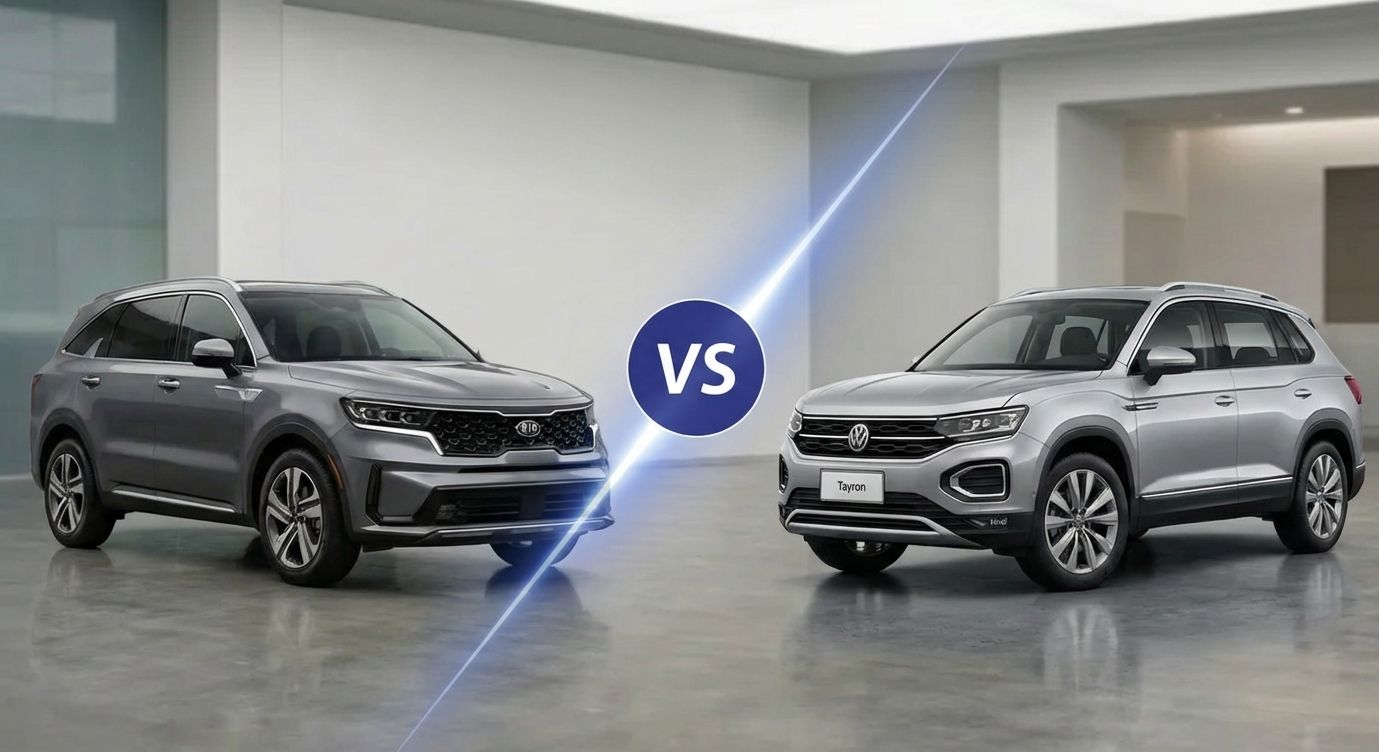
Kia Sorento vs. Volkswagen Tayron. Which large SUV is better? A detailed comparison of price, features, and driving performance to help you decide.
Apr 13, 2026