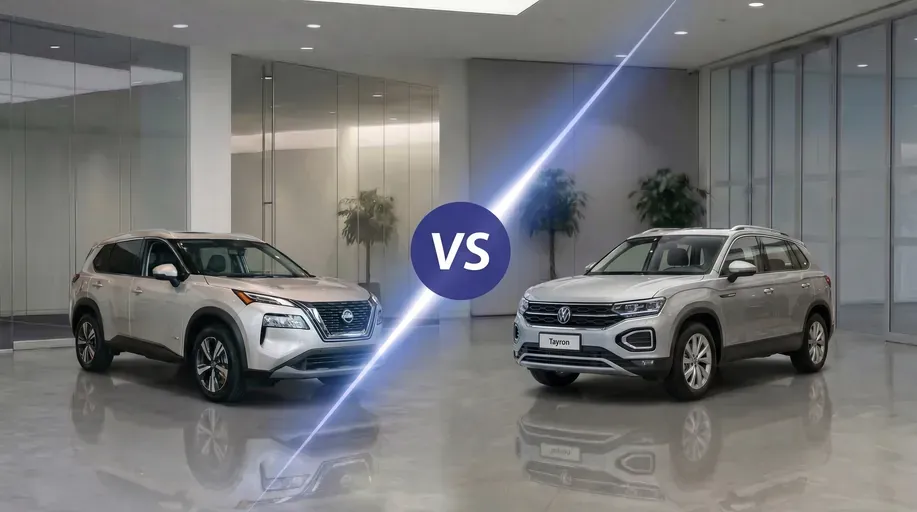
Nissan X-Trail vs. Volkswagen Tayron: Complete comparison 2026
Nissan X-Trail vs. Volkswagen Tayron comparison. Read our detailed verdict, equipment comparison, and real-world experiences. Choose the ideal SUV for your family.
Apr 25, 2026
Articles
Car battle
Detailed comparison: Peugeot 5008 vs. Toyota Highlander. Discover the differences in space, engines, and equipment of these used cars. Read our verdict before you buy!
April 28, 2026


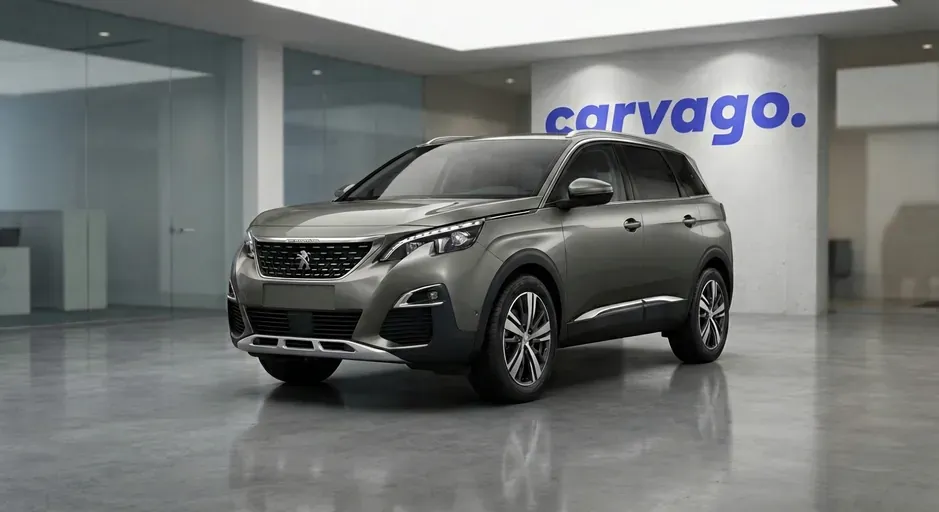
[Peugeot 5008](https://carvago.com/en/cars/peugeot/5008) is a popular French SUV that appeals to family customers primarily with its futuristic interior concept and extraordinary interior variability. Standing against it is the robust [Toyota Highlander](https://carvago.com/en/cars/toyota/highlander), also sold under the name Toyota Kluger in the Japanese and Australian markets, which brings proven reliability and generous travel comfort. The following comparison will provide a detailed look at the strengths and weaknesses of both vehicles, helping you decide which of these spacious models will be the best choice for your daily journeys.
When you place the [Peugeot 5008](https://carvago.com/en/cars/peugeot/5008) and the [Toyota Highlander](https://carvago.com/en/cars/toyota/highlander) side by side, you will immediately notice that they play in slightly different size leagues. While the second-generation French representative represents a typical European family SUV, the Highlander brings honest American proportions to our region. With a length of 4,966 mm, the Toyota is a significant 325 mm longer than the Peugeot (4,641 mm). You will feel this difference as soon as you look for a parallel parking space in the city or maneuver through narrow streets, where the more compact dimensions clearly play in favor of the French car.
The Japanese model dominates in other directions as well – it is 86 mm wider (1,930 mm vs. 1,844 mm) and a substantial 109 mm taller (1,755 mm vs. 1,646 mm). As a result, the Highlander makes a much more majestic impression on the road and commands more respect. By far the most interesting comparison, however, is offered by a look at the wheelbase. Although the Toyota is more than thirty centimeters longer, its wheelbase (2,850 mm) exceeds that of the Peugeot 5008 (2,840 mm) by just a single centimeter. This points to the excellent engineering work of the French carmaker, which has managed to masterfully utilize the enclosed space by pushing the wheels to the very corners of the body.
If you weave through city traffic daily, often park in shopping centers, and appreciate agility, the shorter and narrower Peugeot 5008 will be a much more pleasant daily companion for you. Conversely, the Toyota Highlander makes sense where external dimensions do not limit you in the parking lot and you want to benefit from maximum robustness, an unmistakable appearance, and confident stability during highway travel.
| Parameter | Peugeot 5008 SUV | Toyota Highlander SUV |
|---|---|---|
| Length (mm) | 4641 | 4966 |
| Width (mm) | 1844 | 1930 |
| Height (mm) | 1646 | 1755 |
| Wheelbase (mm) | 2840 | 2850 |
Both of these large SUVs target large families, for whom luggage compartment volume is often a decisive factor. Although the Toyota Highlander is significantly more massive in its external dimensions, a comparison of trunk transport capacity shows that Peugeot's cleverly designed interior space has its undeniable advantages. For both vehicles, we consider measurements in a five-seat configuration (with the third row of seats folded down), which is the most common and practical mode for family use in cars on the market for approximately four-year-old used vehicles.
The second-generation Peugeot 5008 benefits from its earlier genes derived from MPV category vehicles. In a five-seat configuration, it offers a massive basic volume of 780 liters. If you also fold down the second row of seats, you reach a maximum value of 1,940 liters. A useful benefit is the fact that the third-row seats can be completely removed from the vehicle, providing hidden storage space for several extra suitcases under the floor. The Peugeot's trunk is thus perfectly sufficient for weekend shopping as well as longer holidays.
The Toyota Highlander (XU70 generation) features a luggage compartment with a basic volume of 658 liters in a five-seat configuration (measured up to the luggage cover). By folding down the second row of seats, you create a long flat surface and a maximum space of 1,909 liters. The lower basic volume compared to the Peugeot is primarily due to the presence of a robust all-wheel-drive system and the hybrid system's batteries, which simply require more space under the rear floor. Even so, it is an absolutely luxurious hauler that will satisfy all family needs.
| Parameter | Peugeot 5008 SUV | Toyota Highlander SUV |
|---|---|---|
| Base volume (liters) | 780 l | 658 l |
| Max volume with seats folded down (liters) | 1940 l | 1909 l |
While the Toyota Highlander scores with its massive external body structure, for those interested in a used family car with the absolute largest trunk, the Peugeot 5008 is a better candidate, benefiting from masterful interior space packaging.
Towing capacity is often a decisive parameter for families and active drivers planning to tow a caravan, a horse trailer, or a heavier load. When comparing these two popular SUVs on the used car market – typically around four-year-old vehicles – we encounter quite fundamental differences in towing capacity, reflecting the different design and focus of both cars.
The Toyota Highlander XU70 generation (2021–2024) offers excellent and, above all, consistent parameters in this regard. Its robust 2.5 Hybrid full hybrid powertrain can tow a braked trailer weighing an impressive 2000 kg. In contrast, the second-generation Peugeot 5008 (from the relevant years 2020–2022) is much more dependent on the chosen engine. The standard 1.2 PureTech three-cylinder petrol engine allows towing only 1100 kg, while the model's maximum towing capacity is offered by the more powerful 2.0 BlueHDi diesel version, which gets you up to a solid 1750 kg (or 1800 kg for slightly older models). It is very interesting to observe the impact of electrification on both cars. While the hybrid system does not limit the towing capacity of the massive Toyota and maintains its two-ton maximum, for newer mild-hybrid and plug-in hybrid versions of the Peugeot 5008, the maximum weight of a braked trailer drops to just 1000 to 1050 kg.
In practice, these differences mean completely different usage possibilities. The 2000 kg value for the [Toyota Highlander](https://carvago.com/en/cars/toyota/highlander) represents a huge amount of extra space and is perfectly sufficient for towing a large twin-axle caravan for a long holiday or safely transporting a heavy boat. The [Peugeot 5008](https://carvago.com/en/cars/peugeot/5008) with a limit of around 1100 to 1300 kg for its common engines will serve more for lighter loads – it is ideal for attaching a trailer when buying building materials on the weekend, hauling garden waste, or for a smaller folding caravan. If regular towing of heavy trailers is a clear priority for you, the Toyota Highlander is clearly the more robust choice. On the other hand, the Peugeot 5008 will perfectly suit occasional and less demanding users, especially if you go for its more powerful diesel variant.
| Model and engine | Braked trailer weight (kg) | Unbraked trailer weight (kg) |
|---|---|---|
| Peugeot 5008 1.2 PureTech 130 (96 kW) | 1100 | 750 |
| Peugeot 5008 1.5 BlueHDi 130 (96 kW) | 1200 - 1300 | 750 |
| Peugeot 5008 2.0 BlueHDi 180 (130 kW) | 1750 - 1800 | 750 |
| Peugeot 5008 1.2 Hybrid 136 (100 kW) | 1000 - 1050 | 750 |
| Toyota Highlander 2.5 Hybrid (140 kW) | 2000 | 750 |
When comparing the engine lineups of these two large family SUVs, we encounter completely different technical philosophies, which is a crucial factor for those interested in a nearly-new used car in terms of driving habits, overall fuel consumption, and reliability. The French model relies on a relatively wide range of conventional turbocharged internal combustion engines, covering smaller petrol units for suburban use as well as traditional fuel-efficient diesels ideal for long motorway journeys. Conversely, its Japanese competitor takes the path of exclusive electrification in the form of a single, highly advanced full hybrid powertrain that offers significant power and smoothness without the need for plugging in. While buyers of the European representative can choose more affordable and simpler specifications, the Japanese model brings a premium standard including an uncompromising hybrid and intelligent all-wheel drive.
In its second generation (the model years of which dominate the four-year-old used car market), the Peugeot 5008 offered a flexible range of power units. The base is represented by the proven 1.2 PureTech 130 (96 kW) three-cylinder petrol engine, while drivers accustomed to lower consumption at motorway speeds most often opt for the 1.5 BlueHDi 130 (96 kW) four-cylinder diesel. For more demanding users, more powerful and flexible four-cylinder engines were initially available: the 1.6 PureTech 180 (133 kW) and the highly sought-after 2.0 BlueHDi 180 (130 kW) diesel. However, it is crucial to emphasize that according to market data, production of both these more powerful variants (2.0 BlueHDi and 1.6 PureTech) ended in mid-2022, so you will no longer find them in newer models on the used car market. At the end of this generation's production (from 2023), the range was expanded with the fuel-efficient 1.2 Hybrid 136 (100 kW) mild-hybrid version. All 5008 engine versions drive the front wheels exclusively and are paired, depending on the version, with a 6-speed manual, a reliable 8-speed automatic (EAT8), or a new 6-speed dual-clutch automatic (e-DSC6) in the case of the mild-hybrid.
| Engine type | Fuel | Power (kW) | Torque (Nm) | Transmission |
|---|---|---|---|---|
| 1.2 PureTech 130 | Petrol | 96 | 230 | 6MT / 8-speed EAT8 |
| 1.2 Hybrid 136 | Petrol (MHEV) | 100 | 230 | 6-speed e-DSC6 |
| 1.6 PureTech 180 | Petrol | 133 | 250 | 8-speed EAT8 |
| 1.5 BlueHDi 130 | Diesel | 96 | 300 | 6MT / 8-speed EAT8 |
| 2.0 BlueHDi 180 | Diesel | 130 | 400 | 8-speed EAT8 |
On the European market, the Toyota Highlander takes a much more exclusive and significantly simpler approach with the XU70 generation (which has been on sale since 2021). Under the bonnet of this model, you will find exclusively a single variant among four-year-old used cars. This is the 2.5 Hybrid AWD-i, a proven full hybrid (HEV) system operating on the efficient Atkinson cycle. It combines a naturally aspirated 2.5-litre four-cylinder petrol engine with a pair of powerful electric motors on both axles. The entire setup produces a very confident combined output of 182 kW (248 hp). An electronically controlled planetary e-CVT gearbox ensures precise and perfectly smooth power delivery. A huge advantage over its French competitor is the standard presence of intelligent all-wheel drive. Although the Highlander is a significantly heavier vehicle, this sophisticated solution allows for frequent electric driving, especially in city traffic jams and at lower speeds, which fundamentally reduces overall real-world fuel consumption.
| Engine type | Fuel | Power (kW) | Torque (Nm) | Transmission |
|---|---|---|---|---|
| 2.5 Hybrid AWD-i | Hybrid (HEV) | 182 | 239 (combustion engine) | e-CVT |
In conclusion, both model ranges serve completely different needs. Those who cover thousands of motorway kilometres will undoubtedly appreciate the presence of classic and very fuel-efficient diesel engines in the Peugeot 5008 range (especially the powerful 2.0-litre in older units from the beginning of the decade). Conversely, families and drivers who emphasize maximum refinement, top-tier city fuel economy, and require the peace of mind of safe all-wheel drive will find the advanced full hybrid solution from Toyota to be the ideal choice.
While the Peugeot 5008 pleases buyers with a rich selection of available engines, including reliable motorway diesels, the Toyota Highlander scores heavily with its confident, standard-fit hybrid paired with all-wheel drive.
Choosing the right power unit is key to long-term satisfaction with a used car. Our recommendations for roughly four-year-old used cars are based on real-world driving experience, mechanical reliability, actual fuel consumption, and overall everyday usability. While the popular French representative offers several variants on the used car market and bets on a torquey diesel, the Japanese behemoth offers only a single, yet technically extremely sophisticated hybrid powertrain in Europe, which surprisingly defies the laws of physics regarding the fuel consumption of heavy SUVs with its extraordinary efficiency.
Although the engine range for the second-generation Peugeot 5008 is quite broad, the best choice for this seven-seater family SUV is clearly the powerful two-liter diesel. However, it is crucial to know that this robust engine was only available in the database of offered powertrains until 2022 and was subsequently replaced in the price list exclusively by smaller and weaker units. In the category of four-year-old used cars, it is therefore a gem worth searching for.
With the Toyota Highlander, which began sales in Europe in its XU70 generation from 2021, the choice is completely worry-free. The manufacturer decided to offer European customers exclusively a single powertrain for this vehicle – a proven hybrid without the option of external charging. It is therefore the only, and it must be noted, the absolute best choice.
Official fuel consumption figures provided by manufacturers are often overly optimistic, and in real-world driving—especially with large and heavy family SUVs with higher aerodynamic drag—they are difficult to achieve. For an objective assessment of fuel costs, it is therefore much more reliable to base it on the actual experiences of owners themselves. The following comparison draws data from the independent community portal Spritmonitor.de, where thousands of ordinary drivers across Europe record their refueling over the long term. We focused exclusively on the generations of both cars typical for the market of roughly four-year-old used cars – the popular second generation of the Peugeot 5008 and the spacious Toyota Highlander (XU70 generation).
| Model and engine | Average consumption (l/100 km) |
|---|---|
| Peugeot 5008 1.5 BlueHDi 130 | 6.2 |
| Peugeot 5008 2.0 BlueHDi 180 | 7.0 |
| Peugeot 5008 1.2 PureTech 130 | 7.3 |
| Toyota Highlander 2.5 Hybrid | 7.7 |
Several interesting trends emerge from the available data. The most economical choice in this comparison is undoubtedly the diesel Peugeot 5008 with the 1.5 BlueHDi engine. This exceptionally efficient unit can achieve consumption only slightly exceeding six liters, even with a fully loaded seven-seater car. However, the real-world behavior of small turbocharged gasoline engines might be a surprising finding. Although miraculous savings are traditionally expected from downsizing, in daily operation, the 1.2 PureTech three-cylinder in the massive Peugeot has to work hard, which reliably pushes its average consumption above the seven-liter mark. In contrast, the Toyota Highlander follows a completely different philosophy and hides exclusively a large-displacement 2.5-liter full-hybrid under the hood. Given that the Highlander is significantly bulkier, heavier, and equipped as standard with AWD-i intelligent all-wheel drive, the average of 7.7 l/100 km represents an absolutely fantastic result, which in practice proves the extraordinary technological maturity of the Japanese hybrid.
For the typical user, this means a fairly clear division of the ring. If you spend a lot of time on highways or regularly cover hundreds of kilometers on long routes, the diesel engines of the Peugeot 5008 will be the most suitable choice for you. Especially the more powerful 2.0 BlueHDi version offers a great compromise between confident pull and very favorable consumption on long journeys. Conversely, the territory of the Toyota Highlander with its hybrid drive is more urban and suburban areas. It is there that the system can recuperate exceptionally efficiently and drive purely on electricity for a significant part of the time. Thanks to this, such a large and luxurious SUV will not drain you financially even during endless stop-and-go driving in morning traffic jams.
Fuel consumption thus represents a key decision-making factor in this duel, and the choice of the ideal engine should be entirely based on your daily driving profile. If you are looking for the lowest possible total operating costs and can settle for a car with only front-wheel drive, the [diesel Peugeot 5008](https://carvago.com/en/cars/peugeot/5008/diesel) is the more economical choice. The Toyota Highlander may ask for a few extra tenths of a liter of fuel, but considering its huge dimensions, the immediate confidence of 4x4 drive, and the renowned smoothness of the hybrid system, it is a completely negligible price to pay for top-tier family comfort.
When looking at used cars around 4 years old (approximately 2021–2022 models), you will find that the Peugeot 5008 and Toyota Highlander target completely different budgets. While the French representative offers a more affordable path to a spacious family SUV, the Japanese giant holds its value much more confidently thanks to advanced hybrid technology and a more premium focus.
| Model (2021–2022 model year) | Typical price from | Typical price to |
|---|---|---|
| Peugeot 5008 (2nd generation) | €18,000 | €31,000 |
| Toyota Highlander (4th generation) | €35,000 | €49,000 |
From a used car market perspective, the Peugeot 5008 represents an excellent price-to-utility ratio for an average large family. The Toyota Highlander, on the other hand, scores points with buyers who have a more generous budget, are looking for immense interior space, strictly require 4x4 drive, and appreciate an exceptionally slow decline in value.
While the Peugeot 5008 attracts families with very attractive residual prices and a wide choice of engines, the Toyota Highlander requires a thicker wallet, which it balances with top-tier hybrid technology and very slow depreciation.
Although a full five-star rating in Euro NCAP tests can be expected for such large family SUVs, and there is great confidence in both vehicles in this regard, it is absolutely crucial to assess the results strictly in the context of the year of testing. The methodology of European crash tests is constantly evolving and becoming more stringent over time. Therefore, percentage results from different years cannot be fairly and directly compared – older vehicles were simply not confronted with such demanding conditions as, for example, simulations of a crossing cyclist, testing of active response in oncoming traffic, or deep analysis of collisions at complex intersections.
The relevant second generation of the Peugeot 5008, which you will encounter on the market today as approximately four-year-old used cars, underwent Euro NCAP testing in 2016 (the rating is based on the structurally identical 3008 model). At that time, the car took home a confident five stars. It showed a very good 86% for adult protection and 85% for child protection in car seats. While the prevention systems performed decently by the standards of the time, the result of 67% for vulnerable road users and 58% for safety assistants clearly show that older electronics do not reach the capabilities of today's sensors. It is also necessary to add that the validity of the 2016 certification has already officially expired from the perspective of current Euro NCAP standards.
In the case of the giant Toyota Highlander SUV, which entered the European market with its current generation at the turn of 2020 and 2021, we find a blank space in the Euro NCAP tables. The car was not officially tested here, and European test data is therefore missing. However, the absence of a certificate is far from meaning weaker protection for Toyota. In American crash tests by the strict IIHS institute, the car excelled with the Top Safety Pick+ award. The car relies fully on an exceptionally robust structure and the standard Toyota Safety Sense package of active helpers (including, for example, preventive autonomous braking with pedestrian detection day and night and advanced adaptive cruise control). However, as the rules of comparison dictate, in the absence of relevant data for the European market, we cannot fill in any hypothetical percentage values in the table.
When assessing overall safety comfort, both vehicles offer stable protection for your loved ones. The Peugeot 5008 provides solid evidence and black-and-white results from European laboratories, although they are subject to an older methodology that no longer keeps pace with current active assistants. Despite the missing Euro NCAP seal, the Toyota Highlander embodies a much more modern defensive shield thanks to its stiffer body and far more advanced sensors, which better withstand modern traffic hazards.
| Parameter | Peugeot 5008 | Toyota Highlander |
|---|---|---|
| Year of testing | 2016 | Not rated |
| Adult occupant protection | 86 % | - |
| Child occupant protection | 85 % | - |
| Vulnerable road users protection | 67 % | - |
| Safety assist systems | 58 % | - |
Although the Peugeot 5008 has an older five-star certification from Europe up its sleeve, the robust Toyota Highlander, with its more massive construction and more advanced assistants, represents a safer choice in terms of the latest trends in occupant protection.
In addition to standard equipment, each model offers several unique features that can be decisive for the customer, and both cars thus bring their own distinctive approach to added value.
The Peugeot 5008 scores points primarily with its well-thought-out interior layout and bold technological approach, which turns a family car into a design experience.
Peugeot 5008 rely on front-wheel drive; however, the French automaker compensates for this with the clever electronic Grip Control system. It offers several driving modes (snow, mud, sand) that optimize traction and works with Hill Assist Descent Control (HADC).The Toyota Highlander brings a typically American recipe for family travel to Europe, mixing it with absolute reliability and the brand's advanced hybrid technologies.
Original and modern design with the i-Cockpit dashboard layout
Three individual sliding seats in the second row, ideal for three child car seats
Significantly lower purchase price on the four-year-old used car market
Wide selection of fuel-efficient petrol and diesel engines
Smaller exterior dimensions and overall lightness ensure easier maneuvering in European cities
Complete absence of full-fledged all-wheel drive (only the electronic Grip Control system is available)
Cramped space in the third row of seats, suitable mostly for smaller children
Slower response and less intuitive menu of the onboard infotainment
Poorer chassis soundproofing on the highway compared to more premium competitors
Peugeot 5008 is an excellent choice for larger families looking for maximum interior versatility who appreciate three individual seats in the second row. Since it relies exclusively on front-wheel drive and smaller engines, it offers a very attractive price-to-value ratio for those who don't need to drive in tougher terrain.
Reliable and advanced hybrid powertrain (2.5 Hybrid), which ensures great fuel economy for such a large car
Intelligent all-wheel drive (AWD-i) as standard
Huge interior space with significantly more generous room for passengers in the third row
High overall structural robustness and traditionally excellent residual value of Toyota vehicles
Top-tier travel comfort and excellent cabin soundproofing on long journeys
Noticeably higher purchase price on the used car market
Specific acoustic behavior of the e-CVT continuously variable transmission during sharp acceleration
Outdated graphics and interface of the multimedia system
Large body dimensions make parking difficult in tight spaces and underground garages
Toyota Highlander targets more demanding buyers who require uncompromising interior space, a sense of absolute safety, and standard all-wheel drive. It is a tireless highway and family cruiser whose higher purchase price is well compensated by excellent reliability and the fuel-efficient operation of the proven hybrid system.
Based on long-term user feedback, failure statistics, service reports, and data provided by our [comprehensive car audit](https://carvago.com/en/caraudit), we have compiled an overview of the most common problems that buyers of roughly four-year-old used cars should watch out for.
[Peugeot 5008](https://carvago.com/en/cars/peugeot/5008) offers a comfortable and spacious interior, but when choosing a used car, it requires increased caution regarding engine choice and a careful check of the electronics.
The Peugeot 5008 suffers from the delicacy of the 1.2 PureTech engine and problems with the AdBlue system in otherwise economical diesels, which requires an exceptionally careful choice of used car and a documented service history.
[Toyota Highlander](https://carvago.com/en/cars/toyota/highlander) is built on an exceptionally proven hybrid foundation that does not suffer from serious mechanical failures; therefore, it tends to have minor user-related issues.
The Toyota Highlander confirms the brand's bulletproof reputation with its trouble-free mechanics and long service life; the only weak points are the outdated infotainment and aerodynamic noise on the highway.
When buying a used car, a thorough inspection is key. Here are some specific points you should focus on with these two family SUVs. Remember that a professional [independent technical inspection](https://carvago.com/en/caraudit) can reveal hidden defects that you might not notice during a regular test drive, potentially saving you a lot of worry and money.
The [Toyota Highlander](https://carvago.com/en/cars/toyota/highlander) is overall a significantly larger vehicle and offers much more space for adult passengers in the third row, as well as a larger trunk when fully occupied. The [Peugeot 5008](https://carvago.com/en/cars/peugeot/5008) has a third row of seats designed more for emergency use, suitable primarily for children on shorter trips. The Highlander is therefore a noticeably better choice for families who need to travel regularly and comfortably with seven people.
The Toyota Highlander dominates thanks to its exceptionally efficient full hybrid powertrain, which keeps consumption very low, often around 7 liters per 100 km, despite the vehicle's massive dimensions. The Peugeot 5008 offers very economical diesel and gasoline engines, but in slow city traffic, it naturally loses out to Toyota's sophisticated hybrid. Both cars can be cost-effective, but the Highlander delivers a much more impressive ratio of overall size, performance, and real-world fuel economy.
No, the Peugeot 5008 comes standard only with front-wheel drive, and traction in poor conditions can only be enhanced with the optional electronic Grip Control system. In contrast, the Toyota Highlander relies on the intelligent AWD-i all-wheel drive across all trim levels, which utilizes an additional electric motor directly on the rear axle. If you plan frequent trips to the mountains, driving in snow, or towing heavier trailers, the Toyota is clearly the more capable choice.
The Peugeot 5008 is significantly easier to parallel park and maneuver in narrow streets thanks to its more compact exterior dimensions and smaller turning radius. The Toyota Highlander is a massive vehicle, nearly five meters long, which can make daily driving in crowded city centers quite complicated. Although Toyota's hybrid powertrain saves fuel perfectly in the city, in terms of physical size and agility, the Peugeot is the clear winner here.
The Toyota Highlander is globally renowned for its above-average mechanical reliability and the immense durability of its hybrid system, which guarantees owners very predictable operating costs. The Peugeot 5008 is a reliable family car in its newer generations; however, its more complex onboard electronics may require a bit more service attention over time. In the long run, Toyota performs better in terms of worry-free ownership and excellent residual value retention.
Sources: ADAC, svetmotoru.cz, garaz.cz, autoservis.cz, autojournal.cz, carsandcoffee.cz
This article was prepared using artificial intelligence tools. The section guarantor is Petr Dušek.

Nissan X-Trail vs. Volkswagen Tayron comparison. Read our detailed verdict, equipment comparison, and real-world experiences. Choose the ideal SUV for your family.
Apr 25, 2026

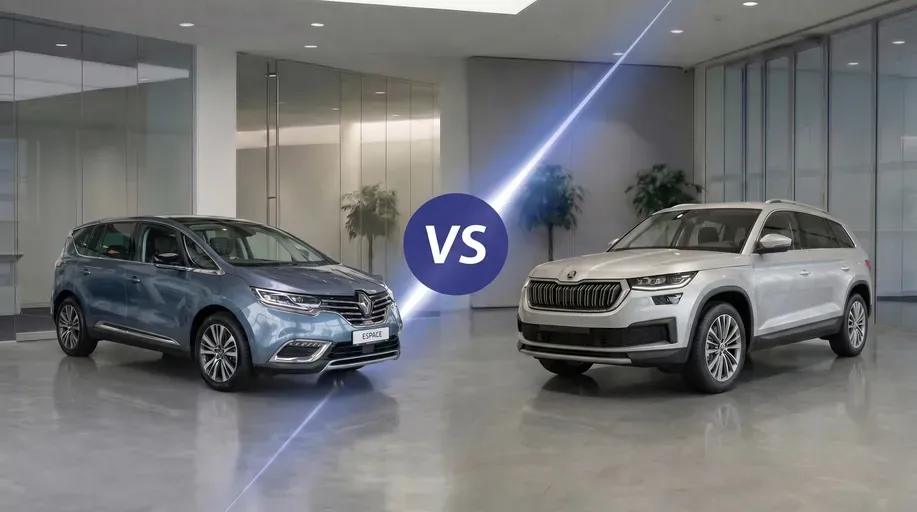
Detailed comparison of Renault Espace vs. Škoda Kodiaq. Find out how these family cars perform in real-world driving, space, and reliability. Read our verdict!
Apr 16, 2026

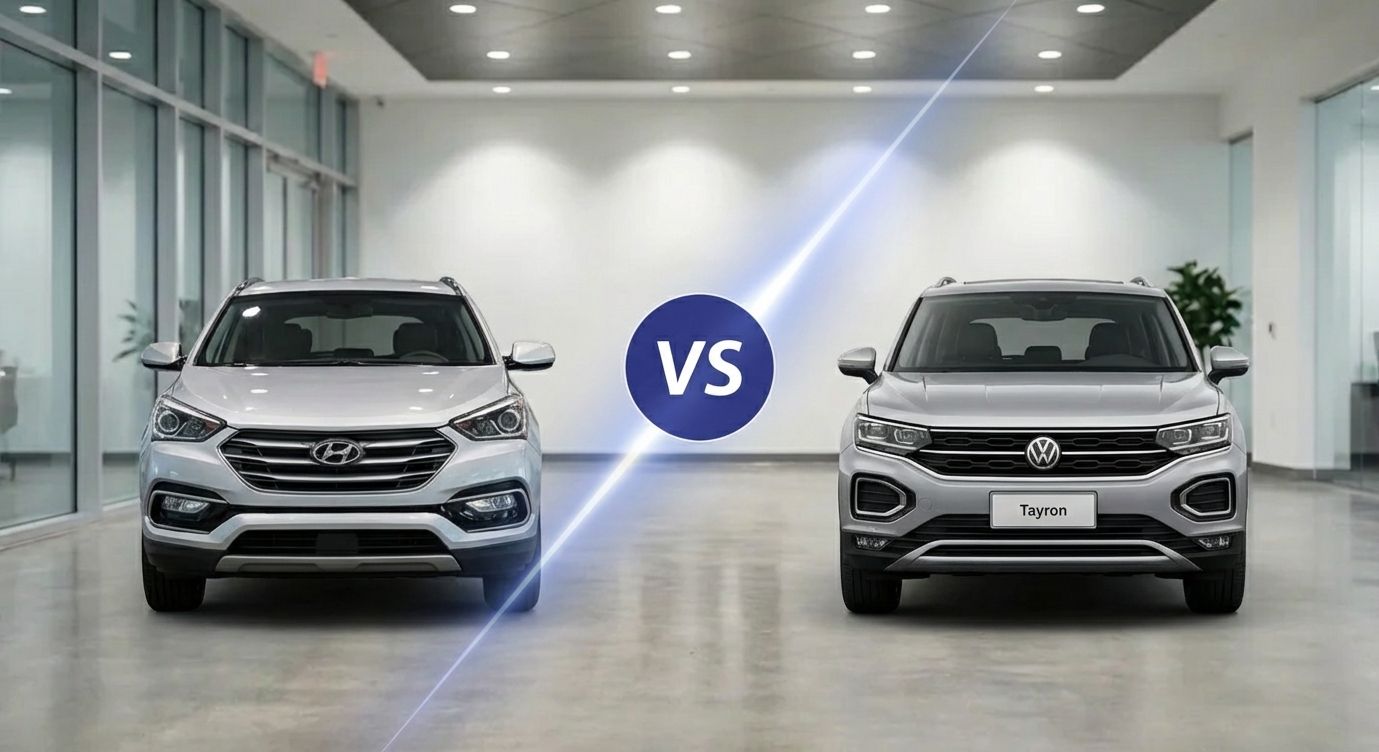
Detailed comparison of Hyundai Santa Fe vs Volkswagen Tayron. We compared space, equipment, and driving characteristics. Read our verdict and choose the right SUV.
Apr 8, 2026