Ford Edge vs. Nissan X-Trail: Complete comparison 2026
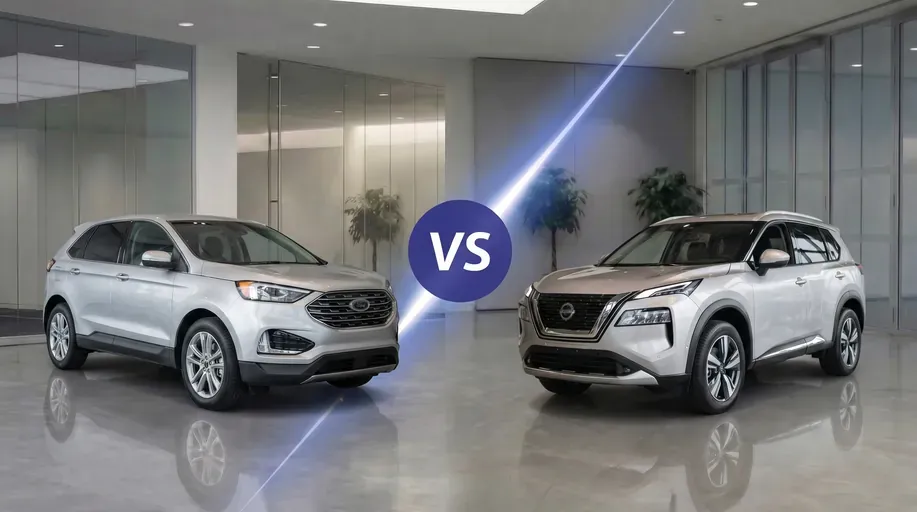
Detailed comparison of Ford Edge vs. Nissan X-Trail (Rogue). Discover the differences in spaciousness, equipment, and reliability. Read our verdict and make the right choice!
Apr 15, 2026
Articles
Car battle
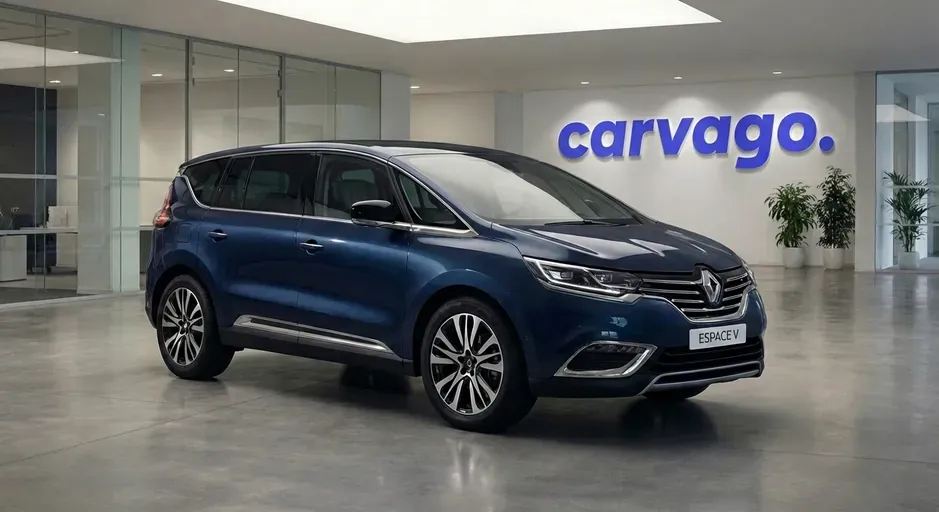
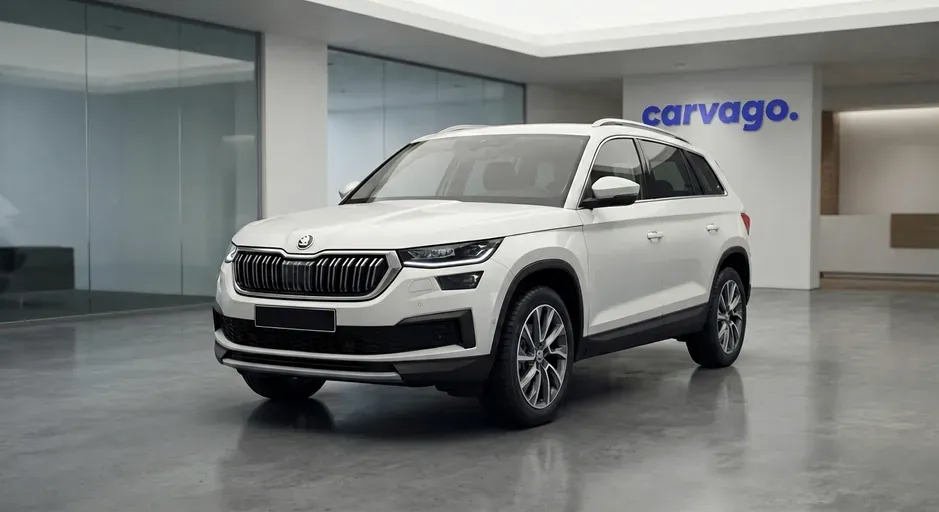
Detailed comparison of Renault Espace vs. Škoda Kodiaq. Find out how these family cars perform in real-world driving, space, and reliability. Read our verdict!
April 16, 2026


The Renault Espace, a legendary model that has undergone a fascinating evolution from a pioneering family MPV to a modern and elegant SUV, represents the French vision of maximum travel comfort. Standing against it is the popular Škoda Kodiaq, which has earned a solid position on the European market thanks to its robustness, well-thought-out practicality, and exceptionally generous interior space for the whole family. Let's take a detailed look at how these two popular family cruisers fare in a direct comparison and which one will become the ideal choice for your daily journeys.
When looking for a family car on the used car market around four years old, i.e., mainly among models produced between 2021 and 2023, we encounter a very interesting generational and conceptual clash between the Renault Espace and the Škoda Kodiaq. During this period, Škoda offered its first, immensely popular generation of the Kodiaq model with a typical SUV body. Renault, on the other hand, was selling the fifth generation of the Espace, which stood on the boundary between a traditional multi-purpose vehicle (Van/MPV) and a crossover. In terms of overall length, the fifth-generation Espace dominates the road – measuring nearly 4,858 mm, making it about 150 mm longer than its competitor from Mladá Boleslav. In practice, this means a more generous interior space, which you will appreciate when transporting long items or when the third row of seats is occupied. However, it also means having to account for a certain clumsiness when parking in narrow city streets and underground garages, where the Kodiaq, with its length under 4.7 meters, feels significantly more agile.
A crucial parameter for passenger comfort is the wheelbase. Here, the fifth-generation Espace, with a value of 2,884 mm, overwhelmingly beats the first-generation Kodiaq, which has a wheelbase of 2,788 mm. This nearly ten-centimeter difference plays into the hands of the French car and translates into king-sized legroom for passengers in the second row. However, the rules of the game change with newer models. In 2023, Renault introduced the sixth generation of the Espace, which has fully transitioned to a traditional SUV shape. This new Espace "slimmed down" between generations and shortened to 4,722 mm, while its wheelbase dropped to 2,738 mm. Thus, while the newer Renault version offers easier maneuvering in the city, it surprisingly hands the baton back to the Škoda Kodiaq in terms of longitudinal space on board. Furthermore, the Czech representative benefits throughout from its slightly boxier and taller build (up to 1,688 mm), which provides better vertical usability of the luggage compartment and plenty of headroom.
The choice between these two models, in terms of external dimensions, thus depends on which generation and body style you choose. If your absolute priority is maximum interior space, an airy cabin, and you don't mind the more difficult parking of a larger car, the fifth-generation Renault Espace (Van) is the unrivaled favorite. If you prefer more balanced proportions that don't unnecessarily complicate daily city driving, either the Škoda Kodiaq or the newer, more compact sixth-generation Espace with an SUV body will be the safer choice.
| Parameter | Renault Espace Van | Renault Espace SUV/Offroad | Škoda Kodiaq SUV/Offroad |
|---|---|---|---|
| Width (mm) | 1888 - 1914 | 1830 - 1843 | 1882 |
| Length (mm) | 4857 - 4858 | 4722 - 4746 | 4697 - 4705 |
| Height (mm) | 1675 - 1681 | 1645 | 1660 - 1688 |
| Wheelbase (mm) | 2884 | 2738 | 2788 - 2791 |
Luggage capacity is often a deciding factor for families looking for a practical vehicle for daily commutes and weekend adventures. When comparing roughly four-year-old used cars, we encounter an interesting battle between two different body styles. The traditional Škoda Kodiaq (1st generation), representing the classic SUV category, goes head-to-head with the innovative Renault Espace (5th generation), which combines elements of a dynamic crossover and a large family multi-purpose vehicle (MPV).
If we judge by the basic volume in the standard five-seat configuration, the Czech representative has the upper hand:
At maximum load with all rear backrests folded down, the tables turn slightly. The Kodiaq reaches a maximum capacity of 2065 liters, making it an extremely capable hauler. Renault Espace, however, fully benefits from its MPV heritage and offers a total of 2101 liters. Practicality in the Espace is further enhanced by the ability to electronically fold the second and third-row seats completely flat at the touch of buttons on a panel located directly in the trunk.
Note on seven-seat versions: Both vehicles were available on the used car market with a third row of seats. For these variants, it is necessary to account for a slight reduction in usable space. In this case, the basic volume behind the second row of seats drops to approximately 765 liters for the Kodiaq and 614 liters for the Espace. Similarly, it is wise to watch out for hybrid and electrified powertrains, where a small portion of the space under the trunk floor is taken up by the battery.
Overall, it can be summarized that the Škoda Kodiaq offers a better and more easily usable basic volume for everyday life. However, if you appreciate maximum flexibility, independently sliding seats, and occasionally need to turn the car into a van for long or bulky cargo, the French Espace will suit you better.
| Parameter | Renault Espace Van | Škoda Kodiaq SUV |
|---|---|---|
| Basic volume (liters) | 680 | 835 |
| Max. volume with seats folded (liters) | 2101 | 2065 |
The Škoda Kodiaq wins in terms of unrivaled basic trunk space, while the Renault Espace responds with the great flexibility of its sliding rear seats and a slightly larger volume reserve when they are fully folded.
A car's ability to tow heavy trailers is a key parameter for families with caravans, boat owners, or drivers who regularly transport bulky cargo. Differences in the maximum weight of a braked trailer can mean the difference between going on holiday with a large, fully equipped twin-axle caravan or having to settle for a smaller model. When choosing a used car around four years old, we encounter interesting differences in both models.
In the first-generation Škoda Kodiaq, which currently dominates the used car market, we find an exceptionally wide range of towing capacity depending on the chosen drivetrain.
The fifth-generation Renault Espace approaches towing capacity a bit more conservatively, yet with great confidence.
In real life, these values represent significant differences. The 2000 kg capacity of the fifth-generation Renault Espace is perfectly sufficient for a typical weekend purchase of building materials as well as for towing the vast majority of medium-sized family caravans. However, the Škoda Kodiaq with its 2300 kg offers an ultimate reserve – those extra 300 kilograms mean valuable space for several extra heavy suitcases, loading additional equipment directly into the caravan, or the possibility of attaching a motorhome from the highest class. Conversely, the limited capacity of the hybrid Espace will serve more for transporting smaller trailers or bike racks.
If frequent towing of the heaviest trailers is a priority for you, the diesel Škoda Kodiaq is an absolutely unrivaled choice. However, the Renault Espace with classic engines represents a highly solid compromise that will reliably handle everything an average or even slightly more demanding user requires.
| Model and Engine | Braked Trailer Weight (kg) | Unbraked Trailer Weight (kg) |
|---|---|---|
| Škoda Kodiaq 1.5 TSI ACT (1st generation) | 1800 - 2000 | 750 |
| Škoda Kodiaq 2.0 TDI SCR (1st generation) | 1950 - 2300 | 750 |
| Škoda Kodiaq RS 2.0 TDI/TSI (1st generation) | 2300 | 750 |
| Renault Espace Blue dCi 160/190 (5th generation) | 2000 | 750 |
| Renault Espace TCe 225 (5th generation) | 2000 | 750 |
| Renault Espace E-Tech Full Hybrid (6th generation) | 1500 - 1600 | 750 |
When choosing a roughly four-year-old family car, you will encounter two different approaches to engine options with the Renault Espace and Škoda Kodiaq models. Both manufacturers designed their vehicles for different audiences, which affects operating economy, performance, and the overall driving experience. After its facelift (around 2020), the fifth-generation Espace focused on a narrower but more exclusive range of power units that emphasize long-distance comfort and quiet operation. In contrast, the first-generation Škoda Kodiaq excels on the used car market with an exceptionally diverse range. The selection starts with the economical 1.5 TSI base for calmer families with lower mileage, continues through the highly sought-after and durable 2.0 TDI diesels, and ends with the sporty RS versions. While the Kodiaq scores with versatility and a choice between front-wheel or all-wheel drive (4x4), the Espace relies exclusively on front-wheel drive supplemented by the 4Control all-wheel steering system.
In the used market for 2019–2022 models, 2.0-liter Blue dCi diesels clearly dominate the Espace. These engines are designed for covering long highway distances with very reasonable fuel consumption. The sweet spot is the 118 kW (160 hp) version. For more demanding drivers, a more powerful variant was available, initially offering 147 kW (200 hp) and slightly reducing power to 140 kW (190 hp) after the adjustment of strict emission standards in 2020. Both of these versions have massive torque. An unexpected highlight of the Espace was the 1.8 TCe (165 kW) petrol engine, which the car shared with the lightweight Alpine A110 sports model. It provided the giant MPV with highly above-average dynamics, but it completely disappeared from the range in 2020 due to tightening emissions. All mentioned power units are paired exclusively with the EDC dual-clutch automatic transmission from the factory.
| Engine Type | Fuel | Power (kW) | Torque (Nm) | Transmission |
|---|---|---|---|---|
| 1.8 TCe 225 | Petrol | 165 | 300 | 7-EDC |
| 2.0 Blue dCi 160 | Diesel | 118 | 360 | 6-EDC |
| 2.0 Blue dCi 190 / 200 | Diesel | 140 / 147 | 400 | 6-EDC |
Note: The powerful 1.8 TCe petrol version and the stronger Blue dCi 200 diesel version were gradually replaced or discontinued in 2020 and can therefore only be found in older units.
For four-year-old used cars, the Škoda Kodiaq offers a spectrum of power units covering the period just before and after the car's facelift. The base is the popular 1.5 TSI ACT (110 kW) four-cylinder, which can deactivate two cylinders during steady driving to save fuel. For frequent trips with a full trunk, a caravan, or for regularly conquering mountain passes, the 2.0 TDI diesel (most commonly available with 110 kW or the more powerful 147 kW) is an unbeatable choice. A gem in the used car range are the RS versions. Here, a significant generational change occurred – until 2020, the Kodiaq RS was powered by the phenomenal twin-turbocharged 2.0 Bi-TDI diesel engine (176 kW, 500 Nm), which had to be discontinued due to emission limits. Since 2021, it has been replaced under the hood of the top-tier Kodiaq by the equally potent 2.0 TSI petrol engine taken from the Octavia RS with 180 kW.
| Engine Type | Fuel | Power (kW) | Torque (Nm) | Transmission |
|---|---|---|---|---|
| 1.5 TSI ACT | Petrol | 110 | 250 | 6MT / 7DSG |
| 2.0 TSI (incl. RS) | Petrol | 140 / 180 | 320 / 370 | 7DSG (4x4) |
| 2.0 TDI SCR | Diesel | 110 | 340 / 360 | 6MT / 7DSG |
| 2.0 TDI SCR | Diesel | 147 | 400 | 7DSG (4x4) |
| 2.0 Bi-TDI RS | Diesel | 176 | 500 | 7DSG (4x4) |
Note: The 2.0 Bi-TDI RS (176 kW) diesel engine is only found in models up to the turn of 2019/2020; newer RS variants already rely purely on the powerful 2.0 TSI petrol engine.
While the Renault Espace impresses with powerful and refined diesel engines ideal for luxurious and comfortable long-distance travel, the Škoda Kodiaq dominates with an incomparably wider selection and unrivaled versatility, to which the optional 4x4 drive significantly contributes.
Choosing the right engine is absolutely crucial for long-term satisfaction with a used car, which is why our recommendations are based on real-world fuel consumption, reliability, and the experiences of owners and mechanics. Although both cars primarily target families, their approach to space and technology differs slightly – while the Škoda Kodiaq offers a massive luggage compartment with a volume of up to 910 liters and a towing capacity for trailers weighing up to 2,300 kg, the fifth-generation Renault Espace took the path of a luxury "lounge" crossover with a slightly smaller trunk, but excellent maneuverability thanks to the 4Control rear-wheel steering. Given the high weight and the fact that we are mainly looking for highway cruisers and workhorses among roughly four-year-old used cars, proven diesel engines make by far the most sense in both cases.
After the facelift of the fifth generation, which appears on the used car market roughly between 2020 and 2022, Renault replaced the previous twin-turbo 1.6-liter with a much more robust Blue dCi 2.0-liter diesel with 160 or 190 hp (118 and 140 kW). This engine is the best choice for the crossover weighing over 1.6 tons, as it offers a perfectly linear and calm pull and a generous torque of up to 400 Nm (in the more powerful version). Compared to the older generation of engines, it stands out for its exemplary mechanical durability, very decent soundproofing, and complements the standard EDC dual-clutch transmission well. Real-world fuel consumption stays around a reasonable 6.5 to 7.5 liters per 100 kilometers. However, as with any modern diesel, there is one main pitfall: a car with this engine literally suffers if it only drives short distances and sits in city traffic jams. In such cases, the oil degrades faster, and the diesel particulate filter (DPF) and EGR valve become excessively clogged. Another specific detail to focus on during a test drive of a used car is the condition of the front axle – the weight of the 2.0-liter engine takes a toll on the ball joints and silent blocks on the front control arms. We can therefore wholeheartedly recommend this engine to everyone buying an Espace for family trips across the country or long holidays.
For the first generation of the Škoda Kodiaq, especially for facelifted cars from 2021 to 2023, the 2.0 TDI with 110 kW (150 hp) represents the absolute "golden middle way." Although a more powerful 147 kW (200 hp) version is also available, practice and service experience show that older units of the more powerful engine sometimes exhibit higher oil consumption, which subsequently has a negative effect on rapid DPF clogging. The lower 110 kW specification does not suffer from these pitfalls nearly as much, and 360 Nm of torque is perfectly sufficient for safe and relaxed travel with a fully loaded vehicle. With this engine, it is no problem to drive in combined mode even below the 6.5-liter diesel mark. You will very often come across used cars paired with a seven-speed DSG automatic and all-wheel drive. In such cases, pay maximum attention to the service book – both the DSG and the 4x4 clutch need an oil change every 60,000 km to function reliably even after years. The only other blemish on this very durable engine (type EA288 Evo) is occasional coolant leaks around the water pump. It is an ideal power unit for rational buyers, smooth drivers, and those who will use the Kodiaq for towing heavy trailers, as this engine can tow a trailer weighing up to 2 tons.
Every experienced driver knows that there is often a vast gap between the official fuel consumption figures provided by manufacturers and the reality of daily use. While standardized tests promise miraculous efficiency for large family SUVs and MPVs, physics simply cannot be cheated. To get a truly objective picture of how much fuel these roughly four-year-old family cruisers (focusing on the ideal used car model years 2021 to 2022 for both models) actually consume, we looked into the extensive database of the user portal Spritmonitor.de, where thousands of regular drivers record their daily refueling. The results bring several interesting surprises and clearly show the different approaches of Škoda and Renault.
| Model and engine | Average consumption (l/100 km) |
|---|---|
| Škoda Kodiaq 2.0 TDI SCR 110 kW | 6.4 |
| Renault Espace 2.0 Blue dCi 160 | 6.8 |
| Škoda Kodiaq 2.0 TDI SCR 147 kW | 7.1 |
| Renault Espace 2.0 Blue dCi 190 | 7.8 |
| Škoda Kodiaq 1.5 TSI ACT 110 kW | 7.6 |
| Škoda Kodiaq 2.0 TSI 140 kW | 8.6 |
| Renault Espace 1.8 TCe 225 GPF | 8.8 |
Looking at the real-world data, several key trends are clearly visible. Diesel engines are undoubtedly the most logical and economical choice for these massive and heavy vehicles. The Czech Kodiaq with the 2.0 TDI (110 kW) engine is exceptionally efficient, and in the real world, it can typically be driven at around 6.4 liters. The Renault Espace, which is longer overall and offers a bulkier build and a more luxurious interior, pays a price for its dimensions in the form of a slightly higher appetite – its excellent Blue dCi diesel base requires about half a liter more. A surprising finding is the real-world efficiency of the petrol units. Downsizing in the form of the smaller 1.5 TSI in the Škoda saves a full liter of fuel compared to the more powerful two-liter, but consumption still stays above 7.5 liters, proving that a small turbo engine simply has to work harder with a heavy vehicle. At the very bottom of the table is logically the top-of-the-line 1.8 TCe 225 unit in the Espace. An interesting historical fact about this model is that this powerful four-cylinder shares its technical basis with the lightweight Alpine A110 sports car – while the dynamics are superb here, in a giant family car, it easily and frequently approaches the nine-liter per hundred kilometers mark.
For the typical user, this means a relatively straightforward decision. If you are a driver who often covers hundreds of kilometers on motorways with a fully loaded car or regularly tows a trailer, the two-liter diesels (whether the popular TDI from Škoda or the refined Blue dCi from Renault) will be an absolute necessity for you, immediately rewarding you with great range and savings on operating costs. Conversely, for families who use their car primarily for shorter suburban commutes or school runs, petrol versions make more sense. Especially in the case of diesel engines, frequent short trips and constant stop-and-go in city traffic cause the technology to suffer from incomplete regeneration cycles, posing a real risk of diesel particulate filter (DPF) clogging, which could very quickly wipe out any fuel savings.
In conclusion, fuel consumption will play a crucial role in the final choice between these two cars, particularly for petrol engines, where the Škoda Kodiaq proves to be a significantly more budget-friendly choice for families. In the most popular diesel territory, the Kodiaq is overall more economical thanks to its slightly lower kerb weight and marginally lower frontal resistance, but the differences compared to the majestic Renault Espace are not so vast as to outweigh the other benefits of both models, whether it be practicality, unique interior space, or overall driving comfort.
Looking at the market for approximately four-year-old used cars (2021 and 2022 models), we encounter an interesting generational and conceptual clash. While the Škoda Kodiaq is a highly sought-after first generation after its facelift, Renault was offering the fifth generation of the Espace model following its modernization. The fifth-generation Espace was a specific crossover between a family MPV and an SUV, unlike the current sixth generation, which has already become a purebred SUV.
This difference in concepts and brand perception fundamentally affects the residual value of both cars and creates completely different opportunities in the used car market.
The Kodiaq holds its value on the used car market with admirable tenacity. Thanks to its immense popularity, wide service network, and reputation as an indomitable family workhorse, demand for the Czech SUV remains consistently high. Furthermore, the used car market is literally saturated with them, so buyers can dictate their preferred color and engine.
The fifth-generation Espace paid the price for the Europe-wide decline in interest in MPVs. Although the car offered a very avant-garde design, top-tier technology (including 4Control rear-wheel steering), and uncompromising comfort, its value drops significantly faster than that of its competitor from Mladá Boleslav. For a used car buyer, however, this represents a huge financial advantage.
| Model (2021-2022 models) | Average used car price | Market availability | Value drop |
|---|---|---|---|
| Škoda Kodiaq I (facelift) | €27,000 | Very high | Slow |
| Renault Espace V | €23,000 | Low | Fast |
Market Situation Summary
While the selection of Kodiaqs in the listings is enormous and the right piece can be found without problems, you will have to search for a while for a well-maintained fifth-generation Espace from the end of production with a documented history. Škoda scores with certainty, a huge luggage compartment, and ease of future resale. Renault, on the other hand, excels in the price-to-equipment ratio – offering an opulent highway cruiser for substantially less money.
While the Škoda Kodiaq holds its price excellently and represents the certainty of an easy future sale, the faster-depreciating Renault Espace V from 2021-2022 gives used car buyers a tempting opportunity to get maximum luxury and rich equipment for a fraction of the original price.
Both vehicles, the Renault Espace and the Škoda Kodiaq, earned a full five-star rating in their crash tests by the independent Euro NCAP organization. When choosing a used car, however, it is absolutely crucial to view this result in the context of the year the testing took place. Euro NCAP's methodology and protocols are constantly evolving and becoming stricter. Therefore, percentage ratings from different years cannot be directly compared. Newer tests include modern frontal impact simulations with a moving barrier, advanced cyclist detection, or junction emergency scenarios that were completely absent from older protocols. For cars approximately four years old, it is necessary to rely on the ratings of their generations at the time, for which the certification validity has already expired due to the continuous development of safety standards.
The fifth generation of the Renault Espace, which makes up the used family car market, underwent Euro NCAP testing in 2015. The car took home a full five stars at the time and excelled particularly in child protection (89%) and a wide package of active safety assistants even in the basic equipment (80%). Given the age of this test, the certification according to current standards has naturally expired. If we look at the brand's latest results, the sixth-generation Espace (based on the Austral platform) passed a much stricter methodology in 2022 and successfully defended its five stars (with 85% for adult protection and 82% for assistants), but for those interested in a more affordable roughly four-year-old used car, the robust 2015 result remains a relevant guide.
The first generation of the Škoda Kodiaq underwent testing in 2017 and it too received the maximum five-star rating. Compared to the Renault, it offered slightly better structural protection for adult passengers, where it achieved an excellent 92%. However, it lost significantly in the safety assistants category (only 54%), primarily due to the absence of some smart features in the standard European equipment at the time. For the Kodiaq as well, the validity of the original five-star certificate officially expired in January 2024. For context, the brand-new second-generation Kodiaq from 2024 safely meets modern standards (with 89% for adults and 78% for assistance systems), but when buying a four-year-old used car, one must account for the specifications of the older version.
When comparing the relevant generations, the Škoda Kodiaq proved to have structurally slightly better protection for adult occupants in an impact at the time. The Renault Espace, on the other hand, brought a substantially more comprehensive and generous package of active safety features to the family duel, giving it a noticeable advantage in everyday traffic. From the perspective of daily use of assistance systems, a used Espace offers a more modern experience, even though both cars represent a highly safe choice for family transport.
| Parameter | Renault Espace | Škoda Kodiaq |
|---|---|---|
| Year of testing | 2015 | 2017 |
| Adult occupant protection | 82 % | 92 % |
| Child occupant protection | 89 % | 77 % |
| Vulnerable road user protection | 70 % | 71 % |
| Safety assistance systems | 80 % | 54 % |
While the Škoda Kodiaq proved to have an exceptionally strong cabin and better adult protection in its time, a used Renault Espace wins thanks to a more generous standard equipment of active safety systems. For both vehicles, however, it must be taken into account that their five-star certifications at the time have already expired due to the natural aging of methodologies.
In addition to standard equipment, each model offers several unique features that give everyday use a different dimension and can be decisive for the customer in the final selection. While the French representative bets on an avant-garde concept and agility, the Czech competitor scores with unrivaled everyday practicality and smart equipment for families.
A unique combination of a large MPV and a crossover with a very attractive design
Exceptionally comfortable chassis and excellent acoustic insulation of the cabin
The 4Control four-wheel steering system guarantees top-notch maneuverability even in tight spaces
Luxuriously crafted interior and rich standard equipment (especially in the top-of-the-line Initiale Paris version)
Significantly more favorable purchase price of a used car in relation to the equipment offered
Faster depreciation and generally lower liquidity on the used car market
The third row of seats offers only very limited space, even for children
The option of traditional 4x4 all-wheel drive is completely missing
The onboard infotainment in older models may respond a bit more slowly
The fifth-generation Renault Espace is an excellent choice for those looking for an unconventional family car with an emphasis on maximum travel comfort and a luxurious atmosphere. With its top-notch soundproofing and great agility, it will appeal to drivers for whom comfort on long highway routes is more important than rugged off-road capabilities or sporty driving.
Huge and highly usable luggage space that outclasses most competitors
Excellent control ergonomics and popular practical "Simply Clever" solutions
A wide range of engines, including economical 2.0 TDI diesels and reliable 4x4 drive
Clear and user-friendly dashboard with physical buttons for the air conditioning
Excellent value retention and exceptionally easy subsequent resale of the used car
Stiffer chassis tuning on broken roads for versions without adaptive dampers (DCC)
High purchase price on the used market caused by enormous pan-European demand
Noticeably cramped space and more difficult access to the third row in seven-seater variants
Much more conservative exterior and interior appearance compared to its French rival
Škoda Kodiaq represents an exceptionally rational choice that scores primarily with its unrivaled interior spaciousness, robustness, and everyday practicality. It is an ideal and versatile SUV for active families who appreciate powerful diesel engines suitable for towing trailers, a reliable 4x4, and minimal loss of value.
Based on long-term user experience, service reports, and our comprehensive vehicle inspection, we have compiled an overview of the most common problems that buyers of roughly four-year-old used cars of both these models should watch out for.
The fifth generation of the Renault Espace has moved towards luxury crossovers, but its more complex and innovative technology sometimes takes its toll on used cars.
When choosing a used Espace, it is crucial to verify the full functionality of all electronic equipment and insist on smooth operation of the EDC transmission without jerking. A meticulous service history with regular software updates is an absolute necessity for this model.
The first-generation Škoda Kodiaq is considered a sturdy and very reliable family SUV; however, even it has several typical weak points that are beginning to manifest as the warranty period nears its end.
The Kodiaq is considered a mechanically durable car, whose biggest threats are neglected DSG transmission oil changes and failing water pumps in diesel engines. If the car has a documented regular service history, it represents a safe bet on the used car market.
When buying a used car, a thorough inspection is key. Here are some specific points to focus on for these two models to avoid unpleasant and costly surprises. Even if you test everything thoroughly during a test drive, a professional Used Car Audit will give you maximum peace of mind.
Škoda Kodiaq offers a slightly larger and more voluminous luggage compartment, which in the five-seater version reaches up to 835 litres depending on the position of the rear seats. The Renault Espace provides around 680 litres, but its advantage is better interior variability and the ability to fold the rear seats perfectly flat at the touch of a button.
For larger families, the Renault Espace is more practical because it offers three full-sized individual seats in the second row equipped with Isofix anchors. The Škoda Kodiaq has a standard split bench in the back, which typically cannot accommodate three wider child car seats side by side.
The Renault Espace excels with above-average smooth ride comfort and, thanks to the 4Control rear-axle steering, is surprisingly agile in the city for its size. The Kodiaq offers more confident and stable handling in corners, but its chassis is tuned more firmly, which is typical for SUV category vehicles.
The clear winner off-road is the Škoda Kodiaq, which has higher ground clearance and offers an advanced 4x4 all-wheel-drive system. The Renault Espace is designed as a family crossover for motorways, and all-wheel drive was never offered for it.
The Škoda Kodiaq with 2.0 TDI and 1.5 TSI engines is among the reliable cars with vast and more affordable availability of spare parts and authorized service centers. In its final years of production with 2.0 Blue dCi engines, the Renault Espace is significantly more reliable than its early model years, but its more complex electronics and chassis can mean slightly higher service costs.
Sources: ADAC, auto.cz, svetmotoru.cz, autozive.cz, elektromobil.cz, e-auto.cz
This article was prepared using artificial intelligence tools. The section guarantor is Petr Dušek.

Detailed comparison of Ford Edge vs. Nissan X-Trail (Rogue). Discover the differences in spaciousness, equipment, and reliability. Read our verdict and make the right choice!
Apr 15, 2026

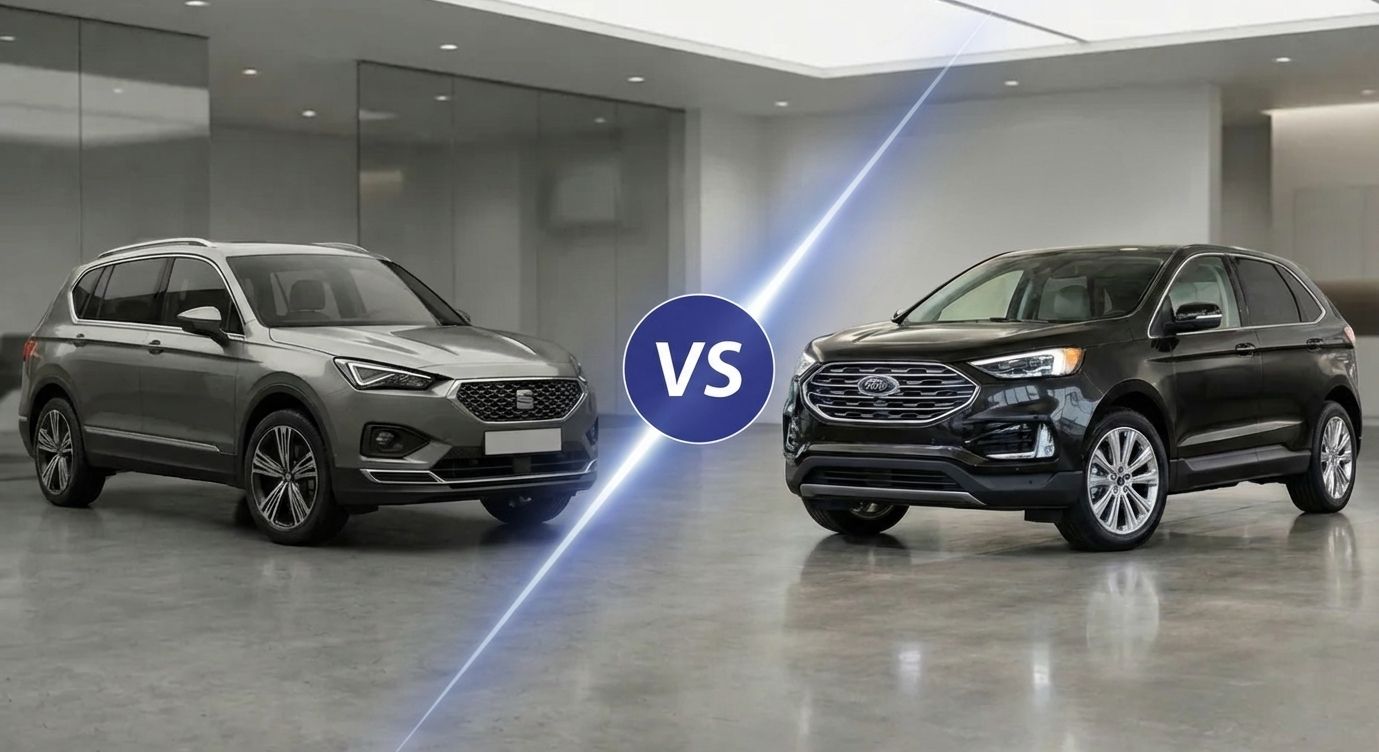
Seat Tarraco vs. Ford Edge: Which large SUV is the better choice? Our comparison reveals differences in driving, design, and practicality to help you choose right.
Apr 13, 2026