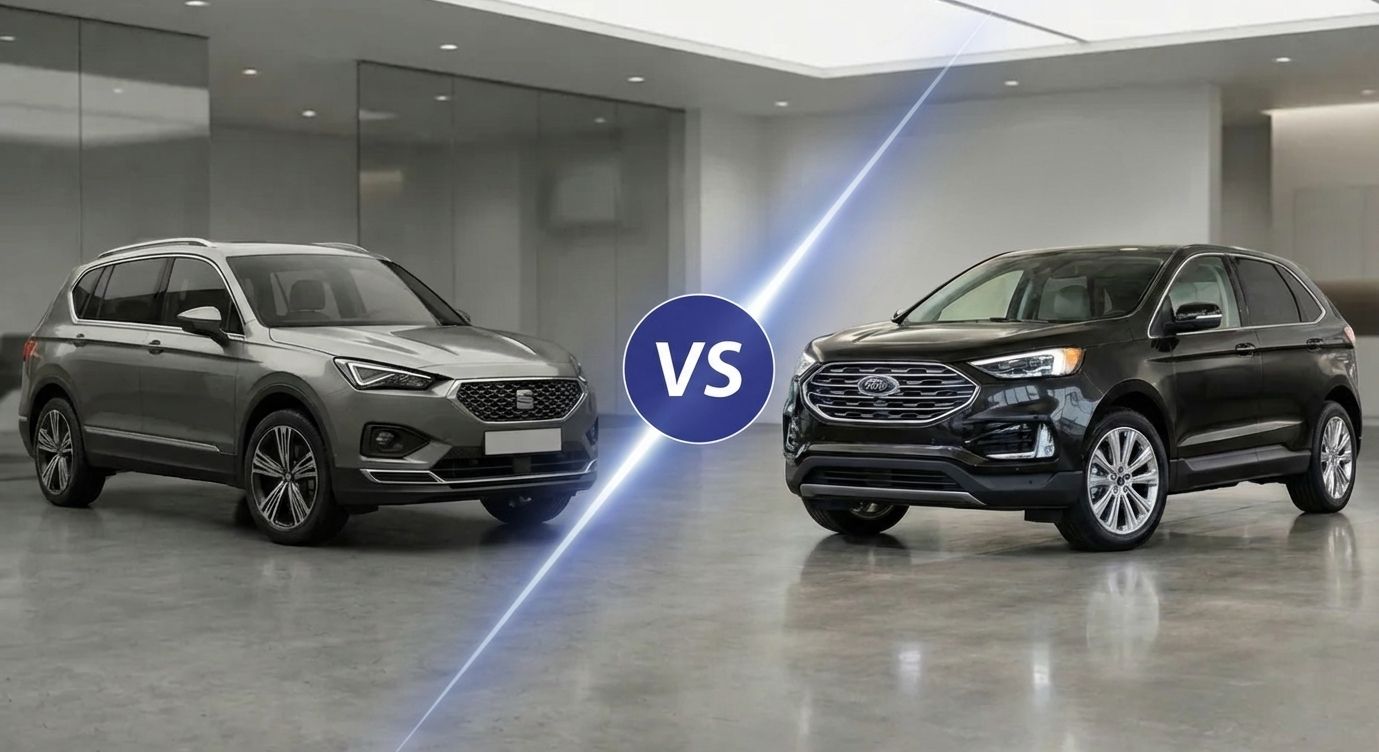
Car battle
Seat Tarraco vs. Ford Edge: Complete Comparison 2025
Seat Tarraco vs. Ford Edge: Which large SUV is the better choice? Our comparison reveals differences in driving, design, and practicality to help you choose right.
Apr 13, 2026
Articles
Car battle
Detailed comparison of Ford Edge vs. Nissan X-Trail (Rogue). Discover the differences in spaciousness, equipment, and reliability. Read our verdict and make the right choice!
April 15, 2026
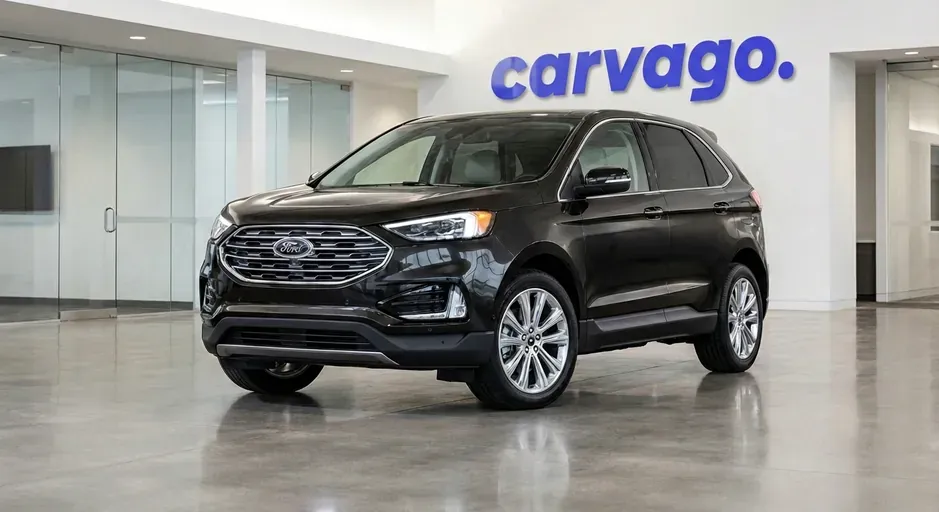
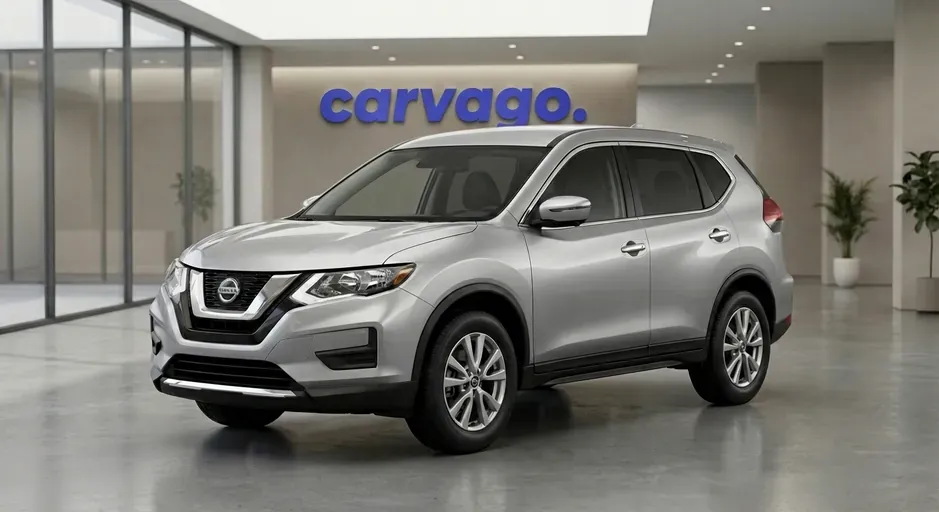
Ford Edge, also known as the Ford Endura in some markets such as Australia and New Zealand, is a robust mid-size SUV that has gained popularity particularly for its generous interior space and emphasis on driving comfort. Standing against it is the Nissan X-Trail, sold in North America under the name Nissan Rogue, which is conversely sought after worldwide for its practicality, family variability, and versatile use. In the following comparison, we will take a detailed look at the key differences between these two attractive models to help you find out which one offers better features for your daily needs.
When comparing the exterior dimensions of the Ford Edge and the Nissan X-Trail on the used car market (considering an age of roughly four years, i.e., the transition between the T32 and T33 generations for Nissan and the last available 1st generation models for Ford), it is obvious at first glance that the American Ford plays in a higher league. The Ford Edge is a typical representative of larger SUVs, while the Nissan X-Trail strictly adheres to more classic European proportions for more compact family SUVs.
The Ford Edge measures up to 4 827 mm in length, which is nearly 150 mm more than the Nissan X-Trail, whose length for the relevant 2020–2022 models ranges from approximately 4 680 to 4 690 mm. A fundamental difference can then be found in the width of both cars. With a value of 1 928 mm, the Edge is noticeably 88 to 108 mm wider than the X-Trail (1 820–1 840 mm). In practice, this means that the Ford offers disproportionately more generous shoulder room for the crew and an overall more massive stance. The price for this comfort, however, is poorer maneuverability – parking the Edge in narrow city garages or at shopping centers can be a challenge, while the narrower Nissan squeezes through everywhere much more easily.
Another key parameter is the wheelbase, which directly affects the longitudinal spaciousness of the cabin, especially the knee room for passengers in the second row. The Ford Edge boasts a wheelbase of 2 848 mm, while the Nissan X-Trail offers 2 705 mm. This difference of over 140 mm gives the Ford a clear advantage in better directional stability on the highway and a smoother ride over bumps. The height of both cars, on the other hand, is surprisingly comparable (averaging around 1 710 to 1 751 mm), so both provide the popular elevated driving position and a good view of the traffic situation.
From the perspective of exterior dimensions, the choice is therefore quite clear. If you are looking for maximum interior space, a confident and comfortable cruiser on the road, and frequently cover hundreds of highway kilometers, the larger Ford Edge will be a significantly better choice for you. The Nissan X-Trail, on the other hand, is a much more rational and agile solution for daily city driving, where you will appreciate its more compact footprint without having to make fatal compromises in family utility.
| Parameter | Ford Edge SUV | Nissan X-Trail SUV |
|---|---|---|
| Width (mm) | 1928 | 1820 - 1840 |
| Length (mm) | 4808 - 4827 | 4680 - 4690 |
| Height (mm) | 1686 - 1751 | 1700 - 1720 |
| Wheelbase (mm) | 2848 - 2850 | 2705 |
Luggage space is often one of the most important parameters for those looking for a large family SUV. Both the Ford Edge and the Nissan X-Trail offer generous and very practical trunks in their generations that are currently popular choices on the four-year-old used car market. However, the approach of the two carmakers differs slightly. While the American Ford Edge is designed exclusively as a luxury five-seater SUV with an emphasis on absolute space for passengers and their luggage, the Japanese Nissan X-Trail scores primarily with its versatility and the possibility of a seven-seat layout. This makes it a more flexible choice for larger families, but the presence of a third row of seats naturally reflects on the base volume.
Looking at the numbers, the Ford Edge has a slight advantage. In a five-seat configuration, it offers a generous base volume of 602 liters. If you fold down the rear seats, you get a massive transport capacity of up to 1,847 liters. For the Nissan X-Trail, the values vary depending on which generation and version you choose. In the very widespread T32 generation (sold until 2022) and the succeeding T33 generation (from 2022), the standard five-seat version offers a base volume of 550 to 585 liters. However, if you choose the seven-seat variant, expect the space to decrease below the 500-liter mark (usually 445 to 485 liters depending on the engine). The maximum volume after folding the rear backrests in the Nissan ranges from 1,424 liters (for newer e-POWER hybrid versions, where space is taken up by batteries and the rear electric motor) to an excellent 1,982 liters for the purely internal combustion five-seat variant of the older generation.
In practice, these differences mean that the Ford Edge easily swallows space for several extra suitcases and is perfectly sufficient for a long family vacation without the need to mount an additional box on the roof. Furthermore, the loading area is almost flat after folding the seats. The Nissan X-Trail, on the other hand, counters with a sliding second row of seats and clever double trunk floors that allow the space to be divided. Both cars are excellently prepared for weekend shopping or transporting sports equipment, but with the Nissan, you have to think carefully about whether to go for the maximum trunk size or choose a model with two additional seats in reserve.
| Parameter | Ford Edge SUV | Nissan X-Trail SUV |
|---|---|---|
| Base volume (liters) | 602 l | 550 - 585 l |
| Maximum volume with seats folded (liters) | 1847 l | 1424 - 1982 l |
While the Ford Edge impresses with a massive and always available trunk for five passengers, the Nissan X-Trail scores with clever versatility and the option of seven seats at the cost of a slightly smaller base volume.
Towing capacity is an absolutely key factor for many people interested in spacious SUVs, whether they plan to tow a large caravan for a family holiday or just need to hitch up a trailer for a weekend trip to buy building materials. While the Ford Edge offers completely consistent and robust values in this regard across the entire range, the capabilities of the Nissan X-Trail vary significantly depending on the specific engine, which requires a more careful selection.
For first-generation Ford Edge models (typically 2016–2020 model years, which are commonly found on the market for four-year-old and older used cars), the situation is very clear. All available diesel engines, whether the older 2.0 TDCi or the newer 2.0 EcoBlue, can tow a braked trailer weighing 2000 kg. This capacity is quite sufficient for towing large and heavy caravans or horse trailers. Ford thus represents a stable and predictable workhorse.
In the case of the Nissan X-Trail of the popular T32 generation (available until 2022), the permitted trailer weight depends exclusively on the chosen powertrain. More powerful diesel versions, such as the 1.7 dCi or 2.0 dCi, match their American rival and offer a maximum towing capacity of up to 2000 kg. However, if you opt for the common 1.3 DIG-T petrol engine, the capacity drops to a standard 1500 kg. This is a value that is still easily sufficient for weekend shopping for bulkier items or towing a lighter caravan, but it won't be enough for heavy-duty work.
A specific chapter for the Nissan X-Trail is the intergenerational comparison with the succeeding T33 generation (from 2022), which you can also already find in used car dealerships. Its advanced 1.5 VC-T e-Power hybrid version offers a significantly reduced capacity ranging from 670 to 1650 kg. In many hybrid models, the maximum trailer weight is reduced to protect the electrical system, which limits the vehicle's versatility.
In terms of overall practicality, the Ford Edge is therefore a more reliable workhorse regardless of which unit you choose from the range. The Nissan X-Trail can do just as good a job, but when buying one, you must check the data in the vehicle registration document much more carefully, especially if you are considering a petrol or modern hybrid variant.
| Model and engine | Braked trailer (kg) | Unbraked trailer (kg) |
|---|---|---|
| Ford Edge 2.0 TDCi / EcoBlue (1st generation) | 2000 | 750 |
| Nissan X-Trail 1.7 dCi / 2.0 dCi (T32) | 1500 - 2000 | 750 |
| Nissan X-Trail 1.3 DIG-T (T32) | 1500 | 750 |
| Nissan X-Trail 1.5 VC-T Mild-Hybrid (T33) | 1800 - 2000 | 750 |
| Nissan X-Trail 1.5 VC-T e-Power (T33) | 670 - 1650 | 750 |
When comparing the powertrains of these two SUVs, we encounter completely different approaches that clearly define who each vehicle is intended for. The Ford Edge, a massive SUV with American roots, bet exclusively on powerful diesel engines in the European market. It is a typical highway cruiser, whose domain is long distances and towing heavy trailers, matched by its massive torque. Conversely, the Nissan X-Trail offers a much more diverse range. While with roughly four-year-old used cars (T32 generation) you will come across traditional petrol and diesel engines, the newer generation (T33) introduced in 2022 brought a revolution in the form of sophisticated e-Power hybrid systems. The choice thus depends on whether you are looking for traditional diesel power for devouring highway kilometers or a modern and highly efficient hybrid ideal for family and suburban use.
Ford completely omitted petrol or hybrid alternatives for the Edge model on the European market and focused exclusively on diesel. Given that sales of the Edge model in Europe were definitively terminated at the end of 2020, you won't find newer examples on the market, and when looking for a roughly four-year-old used car, you will be choosing from the last produced facelift models (from 2018). These use modernized units labeled 2.0 EcoBlue, which replaced the older 2.0 TDCi units. The standard version of the two-liter EcoBlue offers 110 kW, or 140 kW in conjunction with 4x4 drive. However, the true top of the range is the 2.0 EcoBlue Bi-Turbo variant with 175 kW (238 hp) and a massive 500 Nm of torque. This twin-turbocharged engine is always paired with a smooth eight-speed automatic and intelligent all-wheel drive (AWD), thanks to which it handles the car's two-ton weight effortlessly and quietly.
| Engine | Fuel | Power (kW) | Torque (Nm) | Transmission |
|---|---|---|---|---|
| 2.0 TDCi (until 2018) | Diesel | 132 | 400 | 6-speed manual / 6-speed PowerShift |
| 2.0 TDCi Bi-Turbo (until 2018) | Diesel | 154 | 450 | 6-speed PowerShift |
| 2.0 EcoBlue (2018 to 2020) | Diesel | 110 / 140 | 400 | 6-speed manual / 8-speed automatic |
| 2.0 EcoBlue Bi-Turbo (2018 to 2020) | Diesel | 175 | 500 | 8-speed automatic |
When choosing a roughly four-year-old Nissan X-Trail, you will be at the turning point of two different generations representing completely different worlds. The outgoing T32 generation (offered until roughly 2022) relied on a 1.3 DIG-T (117 kW) turbocharged four-cylinder petrol engine with a DCT automatic transmission and an exceptionally economical 1.7 dCi (110 kW) diesel engine. With the arrival of the all-new T33 generation in 2022, these classic internal combustion engines were definitively phased out, and the X-Trail fully switched to electrification. This paved the way for the 1.5 VC-T Mild-Hybrid (120 kW) petrol engine with unique variable compression ratio technology. However, the biggest technological draw is the revolutionary 1.5 VC-T e-Power system. In this setup, the internal combustion engine serves only as a quiet generator of electrical energy, while the wheels themselves are driven exclusively by electric motors. You can find it on the market with front-wheel drive (150 kW) or with the top-tier e-4ORCE all-wheel drive (157 kW), which adds a second electric motor to the rear axle. The car thus provides immediate response and smoothness comparable to an electric vehicle, but with the certainty and speed of refueling classic petrol.
| Engine | Fuel | Power (kW) | Torque (Nm) | Transmission |
|---|---|---|---|---|
| 1.3 DIG-T (T32; until 2022) | Petrol | 117 | 270 | 7-speed DCT |
| 1.7 dCi (T32; until 2022) | Diesel | 110 | 340 | 6-speed manual / CVT (Xtronic) |
| 1.5 VC-T Mild-Hybrid (T33; from 2022) | Petrol (MHEV) | 120 | 300 | CVT (Xtronic) |
| 1.5 VC-T e-Power (T33; from 2022) | Hybrid | 150 | 330 | 1-speed reduction gear |
| 1.5 VC-T e-Power e-4ORCE (T33; from 2022) | Hybrid | 157 | 330 | 1-speed reduction gear |
While the Ford Edge, with its powerful diesels and massive torque, excels on long highway journeys and when towing trailers, the Nissan X-Trail, with its efficient mild-hybrid and e-Power technologies, is clearly the more modern and versatile choice for refined daily driving.
Choosing the right engine is key to long-term satisfaction with a car. Our recommendations for both cars are based on real owner experiences, mechanical reliability, and real-world fuel consumption. While the massive American Ford Edge has historically relied on heavy-duty diesel units providing strong torque for long hauls, the Japanese Nissan X-Trail offers modern and efficient petrol units in its popular outgoing T32 generation. For both used cars, it is extremely important not to underestimate the choice of fuel and to consider your daily driving profile, as the wrong choice of engine can lead to inadequately high and completely unnecessary service costs.
From our data and sales cycles, it is clear that the Ford Edge stopped being sold on the European market at the end of 2020. Therefore, you will practically not find it among typical four-year-old used cars, and you have to choose from cars roughly five or more years old. Even so, the top-of-the-line 2.0 EcoBlue Bi-Turbo diesel engine with 175 kW is absolutely the most sensible choice for this model.
For the Nissan X-Trail (in the outgoing T32 generation) on the market of current roughly four-year-old used cars, we conversely recommend ignoring the popular diesel clichés and clearly betting on the proven 1.3 DIG-T turbocharged petrol four-cylinder. If you were looking for the popular 1.7 dCi diesel, it was withdrawn from the range back in 2020 – today you would not only be buying an older used car, but you would also expose yourself to more significant service headaches.
Manufacturer-claimed fuel consumption figures often differ significantly from real-world driving, and this is doubly true for large family SUVs. To get an accurate picture of how much fuel these models actually consume, we rely on the database of the independent community portal Spritmonitor.de, where thousands of drivers enter their real refueling records. The data is intentionally focused on engines typical for roughly four-year-old used cars – for the Ford Edge, this covers the end of its European production with EcoBlue engines (2019–2020), while for the Nissan X-Trail, we cover the transition between the outgoing T32 generation and the incoming innovative T33 generation.
Source of data: Spritmonitor.de
| Model and Engine | Average Consumption (l/100 km) |
|---|---|
| Petrol and Hybrid Engines | |
| Nissan X-Trail 1.5 VC-T e-Power | 7,4 |
| Nissan X-Trail 1.3 DIG-T | 8,5 |
| Diesel Engines | |
| Nissan X-Trail 1.7 dCi | 7,0 |
| Ford Edge 2.0 EcoBlue | 8,1 |
| Ford Edge 2.0 EcoBlue Bi-Turbo | 8,5 |
Looking at the real-world data, several key trends immediately emerge:
For a typical used car buyer, the conclusions are clear. If you are a driver who spends most of their time on the highway or regularly drives with a fully loaded vehicle, the diesel Nissan X-Trail 1.7 dCi will be noticeably the most economical choice. Conversely, for daily school runs, shopping, and shorter trips, the innovative e-Power hybrid will offer much greater user comfort with its unbeatably smooth operation, without the worry of a clogged diesel particulate filter (DPF).
The Ford Edge clearly comes out on the losing end in this discipline. Although it offers superior comfort and highway power, its overall thirst means it will be significantly more expensive to fuel. In terms of total operating costs, fuel consumption becomes a very strong argument for purchasing the substantially more efficient Nissan X-Trail, making it a vital and decisive factor for budget-oriented buyers.
When choosing a roughly four-year-old SUV, the market situation is very interesting, which is due to the historical development of both models in Europe. While the Ford Edge was slowly withdrawing from European showrooms around 2020 and 2021, the Nissan X-Trail was experiencing the end of production of its extremely popular T32 generation during the same period and preparing for the completely new T33 version. This generational difference is very significantly reflected in purchase prices and the selection of used cars.
The Ford Edge was relatively expensive as a new car because it aimed for the absolute top of the Blue Oval's European range and competed with premium brands. On the used car market (when looking for 2019–2021 post-facelift models), however, it represents an exceptionally tempting offer due to a steeper depreciation curve.
A used Nissan X-Trail from the end of the T32 generation (2020–2022 models) is, by contrast, a more pragmatic choice. As a new car, it was more affordable, primarily family-oriented, and it logically maintains this character on the secondary market.
| Criterion | Ford Edge (facelift) | Nissan X-Trail (end of T32) |
|---|---|---|
| Typical used car price | €18,000 – €27,000 | €14,000 – €23,000 |
| Most common engine in listings | 2.0 EcoBlue (diesel, 175 kW) | 1.7 dCi (diesel) / 1.3 DIG-T (petrol) |
| Depreciation rate | High (advantage for used car buyers) | Average (holds value well) |
| Availability in dealerships | Lower (requires more careful searching) | High (easy choice of color and trim) |
While the Nissan X-Trail scores with its wide availability in dealerships and lower purchase price for family specifications, a used Ford Edge represents a hidden gem for those looking for maximum equipment, a powerful engine, and a premium feel at a fraction of the price.
Both models, the Ford Edge and the Nissan X-Trail, achieved the maximum overall rating of five stars in crash tests by the independent organization Euro NCAP; however, the number of stars alone does not tell the whole story. When evaluating the safety of used cars, it is crucial to put these results into context and consider the year the tests were conducted. The Euro NCAP methodology evolves regularly and becomes significantly stricter. While a robust body and functional airbags were once enough to earn a full star rating, today the organization places immense emphasis on advanced active assistance systems and more demanding simulations of real-world accidents. Percentage scores from different years cannot, therefore, be simply and directly compared.
The Ford Edge last underwent crash testing in 2016. At the time, it delivered a solid performance and impressed with a very high rating for assistance systems for its era; however, the tests back then did not yet include modern and demanding scenarios such as cyclist detection, emergency braking at intersections, or the mandatory presence of center airbags to prevent head-to-head collisions between front passengers. In contrast, the Nissan X-Trail (in the current T33 generation) underwent testing in 2022 according to significantly stricter and more comprehensive protocols. This newer test already fully vetted the latest frontal impact simulations with a mobile barrier as well as the most advanced collision prevention systems for vulnerable road users.
| Parameter | Ford Edge | Nissan X-Trail |
|---|---|---|
| Year of testing | 2016 | 2022 |
| Adult occupant protection | 85 % | 91 % |
| Child occupant protection | 76 % | 90 % |
| Vulnerable road user protection | 67 % | 70 % |
| Safety assistance systems | 89 % | 95 % |
What do these results mean from the perspective of someone interested in a roughly four-year-old used car? Although the Ford Edge has a rigid and massive construction, its Euro NCAP certification has long since expired in terms of official validity. Furthermore, a noticeably weaker result in child protection (76%) suggests that the anchor points and impact energy absorption inside the cabin do not reach the level of current standards. The Nissan X-Trail, on the other hand, dominates here – achieving an excellent 90% in child occupant protection and 91% for adults. Its active safety systems (with an outstanding score of 95%) also include modern technologies that intervene in driving much earlier and more reliably than those in the older Ford.
As a result, it is clear that the Nissan X-Trail offers a significantly more modern and comprehensive safety package that meets current standards. While the Ford Edge protects you primarily through its bulk, the Nissan adds state-of-the-art preventive systems that can avoid accidents much more effectively.
Although both cars have five stars, the Nissan X-Trail benefits from a newer design and stricter 2022 testing, making it a much safer and more technologically advanced choice for protecting the whole family.
In addition to standard equipment, each of the models offers several unique features that go beyond the basic foundation and demonstrate a different approach to providing added value for the end user. While Ford focuses on maximum travel comfort and isolation from the outside world, Nissan excels in well-thought-out family practicality and versatility.
Huge interior space for five passengers with generous legroom and shoulder room
Top-tier cabin soundproofing thanks to the Active Noise Control system and acoustic glass
Very comfortable chassis, ideal for long highway journeys
Powerful and reliable 2.0 EcoBlue diesel engines, often paired with all-wheel drive
Rich standard equipment and more premium interior finish in higher trim levels (e.g., Vignale)
Absence of a seven-seater version, which can be limiting for larger families
Higher curb weight negatively affects fuel consumption and agility
More limited selection of used cars on the European market compared to more mainstream competitors
The SYNC 3 multimedia system now lags behind modern standards in terms of graphics and speed
The Ford Edge is the embodiment of a robust American-style SUV, targeting drivers looking for maximum comfort, cabin quietness, and a majestic road presence. It is an ideal cruiser for families who only need five seats but require above-standard interior space for passengers and luggage and don't mind slightly higher running costs.
Practical interior variability including a sliding rear bench and the option of a seven-seat layout
More favorable purchase price on the used car market and overall lower running costs
Very good visibility from the car thanks to a more upright seating position and generous glazing
Easy maintenance and wide availability of spare parts and service networks
Clear and ergonomic controls with physical buttons retained for key functions
Significantly worse cabin soundproofing at highway speeds compared to the Ford
Less dynamic driving characteristics and a weaker range of engines (often paired with a continuously variable transmission)
When using the third row of seats, the luggage capacity is almost zero
The plastics and materials used in the interior of older models feel cheaper and less durable
The Nissan X-Trail is a typical representative of a rational family SUV, scoring points mainly for its everyday practicality and excellent price-to-value ratio. It will primarily appeal to practical-minded buyers who occasionally use seven seats and prefer lower service costs over sporty dynamics or premium materials.
Based on service reports, long-term user experiences, and data from our comprehensive vehicle inspections, we have compiled an overview of the most common issues that buyers of these used SUVs should watch out for.
For the Ford Edge (post-facelift generation), most problems are related to its above-average weight and the more complex all-wheel-drive system in combination with EcoBlue diesel engines.
Although the Ford Edge is an exceptionally comfortable and robust SUV, it requires careful all-wheel-drive service, and prospective buyers must expect higher operating costs for more frequent brake and tire replacements.
The Nissan X-Trail from the years just before the generational change is considered a mechanically durable family car, whose greatest weaknesses are the sensitive automatic transmission and slightly outdated onboard electronics.
The biggest bogeyman of a used Nissan X-Trail is a neglected Xtronic CVT transmission and occasional creaking in the interior; mechanically, however, it is a surprisingly durable companion.
When buying a used car, a thorough inspection is key. Here are some specific points to focus on for these two roughly four-year-old models. If you are not confident in your ability to detect hidden defects, the ideal solution is to use the CarAudit service and rely on an independent inspection of the used car by an experienced mechanic.
Ford Edge is overall wider and offers generous passenger space in a five-seat configuration with a basic boot capacity of 602 litres. Nissan X-Trail has a slightly smaller luggage compartment (around 565 litres for the five-seat version), but unlike the Ford, it offers a practical seven-seat option, which larger families will appreciate.
The Nissan X-Trail is generally more economical due to its lower kerb weight and smaller engine displacements, whether in older diesel versions or newer hybrid powertrains. In contrast, the Ford Edge is a very heavy and massive vehicle, whose most common two-litre EcoBlue diesels consume between 7 and 8 litres per 100 kilometres in real-world combined driving.
Although both used cars are commonly available with all-wheel drive, the Nissan X-Trail handles unpaved roads and light terrain better thanks to a smarter 4x4 system and slightly better approach angles. The system in the Ford Edge and the overall tuning of its chassis are designed primarily for reliable traction on snowy roads and maximum highway stability.
The Ford Edge is the clear favorite in this category, as it functions as an excellent highway cruiser with an exceptionally comfortable chassis and an advanced active noise cancellation system in the cabin. While the Nissan X-Trail is also a comfortable family car, more aerodynamic wind noise and road impacts penetrate its interior at higher highway speeds.
For the Ford Edge, focus on the smoothness of the eight-speed automatic transmission and thoroughly check the vehicle's history regarding diesel particulate filter (DPF) issues. For the Nissan X-Trail, the most risky element is the continuously variable transmission (CVT, X-Tronic), where it is absolutely necessary to insist on documented regular oil changes; otherwise, there is a risk of its failure.
Sources: ADAC, denik.cz, idnes.cz, autohome.cz, autotechnik.cz, ceskyautoblog.cz
This article was prepared using artificial intelligence tools. The section guarantor is Petr Dušek.
Seat Tarraco vs. Ford Edge: Which large SUV is the better choice? Our comparison reveals differences in driving, design, and practicality to help you choose right.
Apr 13, 2026
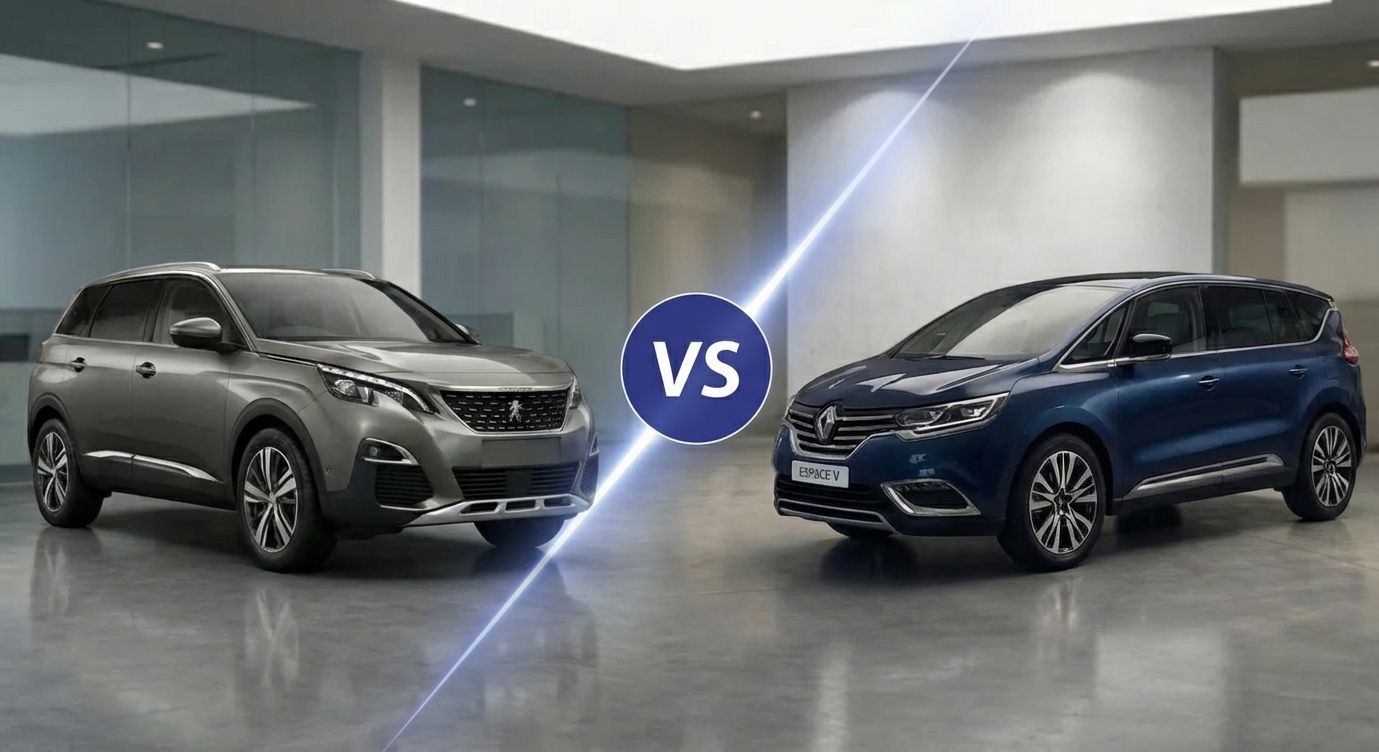
Detailed comparison of Peugeot 5008 vs Renault Espace. We reveal real-world experiences, equipment details, and a clear verdict. Find out which 7-seater car to choose.
Apr 13, 2026
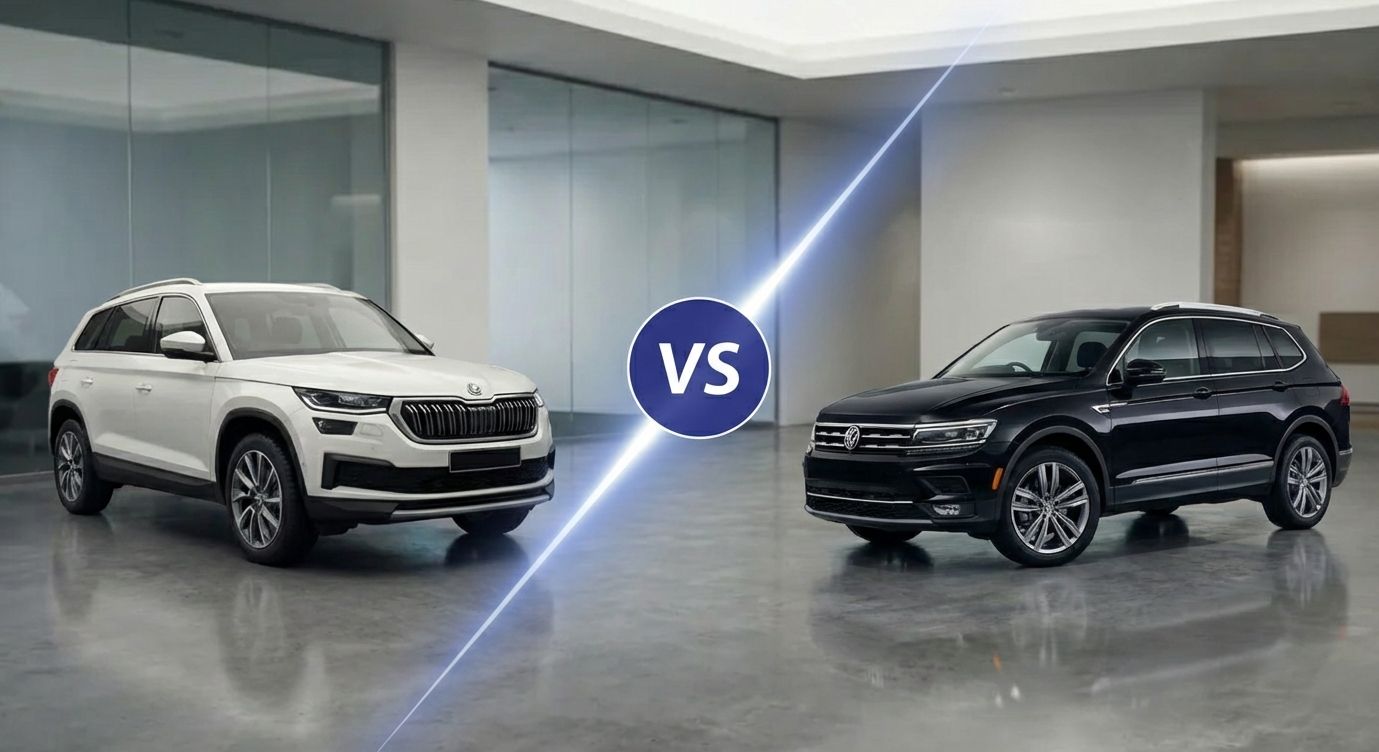
Škoda Kodiaq vs. VW Tiguan Allspace: Which 7-seater SUV is better? Our detailed comparison, real-world insights, and verdict will help you choose.
Apr 13, 2026