Car battle
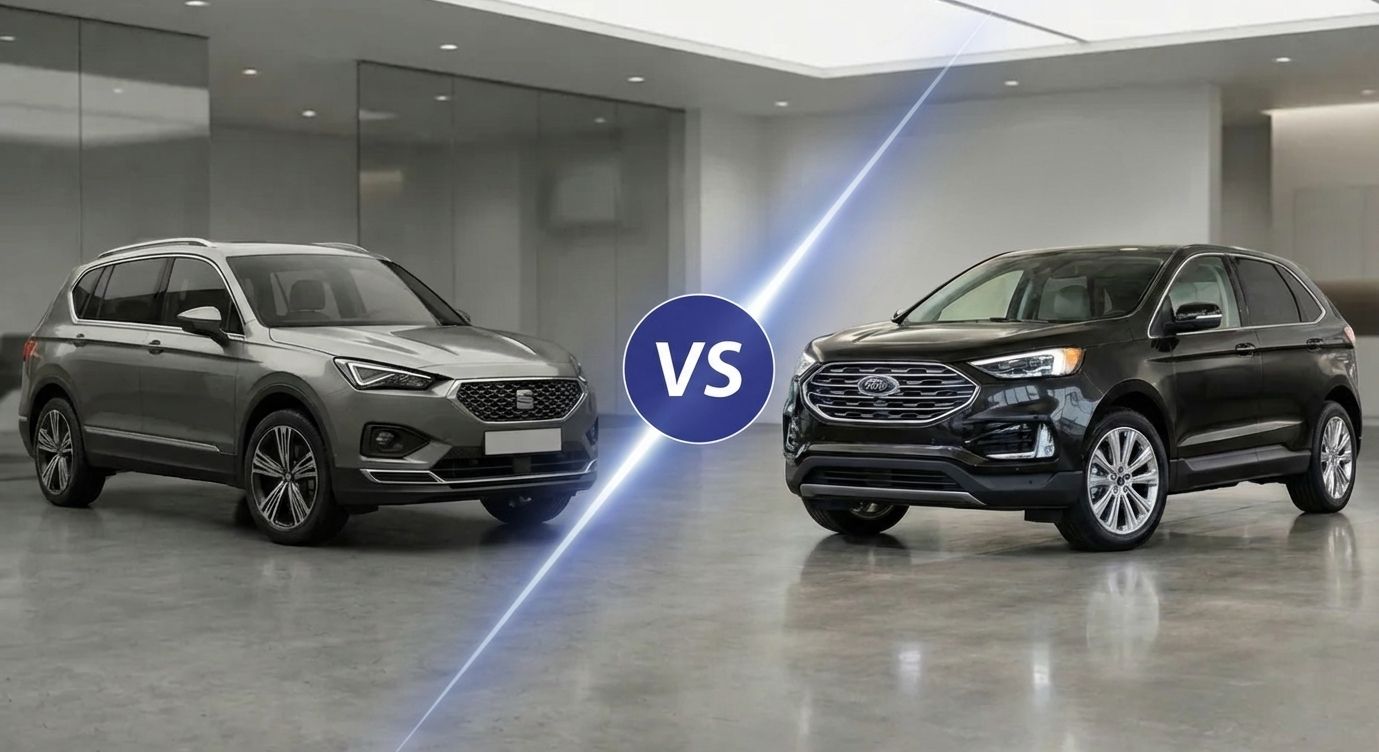
Seat Tarraco vs. Ford Edge: Complete Comparison 2025
Seat Tarraco vs. Ford Edge: Which large SUV is the better choice? Our comparison reveals differences in driving, design, and practicality to help you choose right.
Apr 13, 2026
Articles
Car battle
Detailed comparison of Peugeot 5008 vs Renault Espace. We reveal real-world experiences, equipment details, and a clear verdict. Find out which 7-seater car to choose.
April 13, 2026
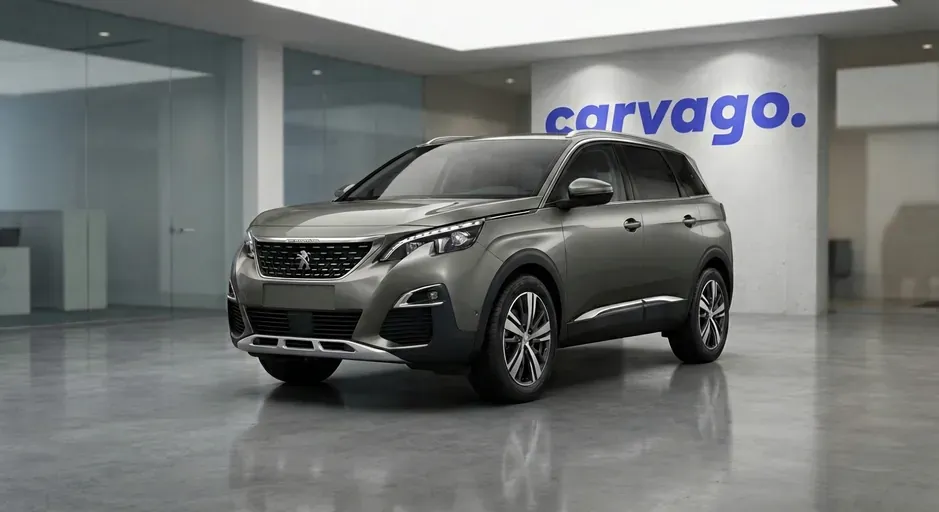
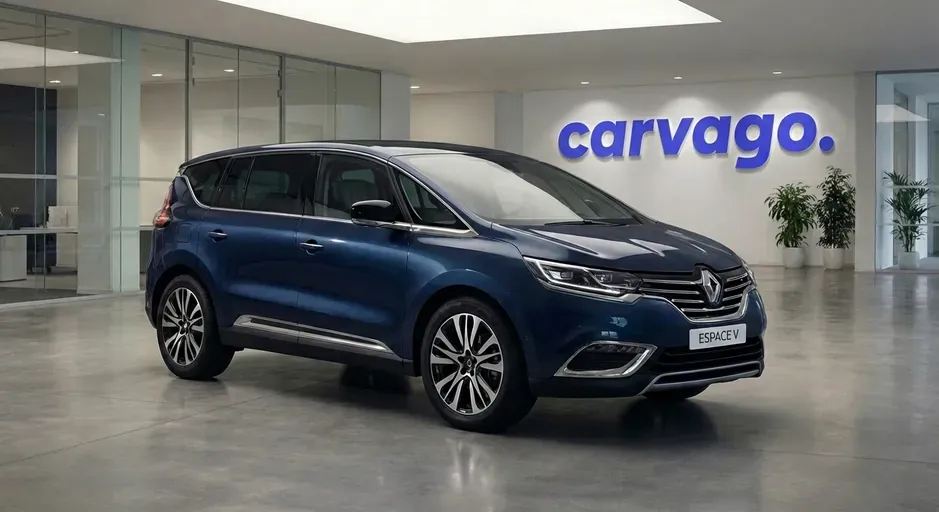
The Peugeot 5008, which has successfully transformed from a classic MPV into a stylish family SUV over the course of its existence, today represents one of the most practical seven-seater vehicles on the European market. Standing against it is the legendary Renault Espace, a historical pioneer of large-capacity vehicles, which in its modern form has also adopted an attractive and more dynamic SUV body with an emphasis on premium comfort and innovative technology. Let's take a detailed look at which of these two spacious French cruisers offers a better price-to-utility ratio, smarter interior solutions, and more confident driving characteristics.
When looking at cars roughly four years old (representatives of the second-generation Peugeot and fifth-generation Renault), the different approach of both manufacturers to the concept of a family car is evident at first glance. The Peugeot 5008 profiles itself as an attractive SUV, while the Renault Espace traditionally represents the category of large-capacity vehicles (or crossovers approaching the Van class). This fundamentally affects their exterior dimensions. The Espace appears more majestic and longer at first sight, which predetermines its dominance in longitudinal space.
A detailed comparison of the figures confirms this visual impression. The Renault Espace measures up to 4,858 mm in length, meaning it is a substantial 217 mm longer than the Peugeot 5008 (4,641 mm). Renault also has the upper hand in width, where its up to 1,914 mm surpasses the Peugeot (1,844 mm) by exactly 70 mm. The wheelbase, which is a key indicator for internal longitudinal spaciousness, is 2,884 mm for the Renault compared to 2,840 mm for the Peugeot. This noticeable difference translates in practice to more legroom for passengers and a generally airier cabin, making the Renault a more comfortable companion for very long journeys.
However, the larger dimensions of the Renault Espace may present a certain challenge in everyday city use. A longer and wider body means less agility in narrow streets and a more demanding search for a suitable parking space. The Peugeot 5008, on the other hand, cleverly benefits from its overall more compact stance. The difference of more than twenty centimetres in length makes it a significantly more agile vehicle that is easier to park and manoeuvre at shopping centres, while still being able to satisfy the needs of a larger family.
| Parameter | Peugeot 5008 SUV | Renault Espace Van |
|---|---|---|
| Length (mm) | 4641 | 4857 - 4858 |
| Width (mm) | 1844 | 1888 - 1914 |
| Height (mm) | 1646 | 1675 - 1681 |
| Wheelbase (mm) | 2840 | 2884 |
Boot space is often a deciding factor for family-oriented vehicles, and both French representatives excel in this regard, albeit each with a slightly different approach. The volume and variability of the boot directly determine how easily you can pack for a long family holiday, load sports equipment, or transport a folded pram without the need for complex disassembly. While the second-generation Peugeot 5008 (an ideal choice for the market of roughly four-year-old used cars) has profiled itself proportionally and through marketing as a spacious SUV, the fifth-generation Renault Espace still retains the genes of a large-capacity and luxury vehicle in the Van (MPV) category. This different character of the body styles is naturally reflected in the overall concept of the interior space and its everyday usability.
In the basic five-seat configuration, the Peugeot 5008 surprisingly has the upper hand, offering an excellent volume of 780 litres. In practice, this means space for several extra suitcases and a capacity perfectly sufficient for a large weekend shop as well as a three-week family holiday. The Renault Espace in the same configuration provides 680 litres, which is still a highly above-average and very generous value, albeit exactly 100 litres less than its competitor. However, the situation reverses the moment you need to transport an oversized load and fold down the second-row seats. Here, the Renault Espace takes full advantage of its overall length and offers a maximum volume of a respectable 2,101 litres. In such a case, the Peugeot 5008 reaches a maximum capacity of 1,940 litres. Both vehicles are also found on the used car market in seven-seater versions. If the third row of seats is fully occupied by passengers, a symbolic 166 litres remains behind the backrests in the Peugeot, while the Renault offers a slightly more practical 247 litres.
The overall comparison clearly shows that both cars will easily satisfy even more demanding users, though with slightly different benefits. The Peugeot 5008 will please buyers who primarily travel with five people and want the largest possible basic boot. A great advantage of the Peugeot is also the fact that the third-row seats can be quite easily removed from the vehicle entirely, giving you additional valuable space under the floor. The Renault Espace, on the other hand, is a great choice for those who require absolute variability and occasionally need maximum transport capacity after electronically folding all rear seats (One-Touch system), where the Espace offers a more spacious loading area ideal even for transporting furniture.
| Parameter | Peugeot 5008 SUV | Renault Espace Van |
|---|---|---|
| Base volume (litres) | 780 | 680 |
| Max volume with seats folded down (litres) | 1940 | 2101 |
When it comes to towing a trailer, the differences between these two family cars are quite significant and may be a deciding factor for many buyers. Towing capacity directly determines the overall practicality of the car – from the ability to transport garden waste to towing a large family caravan.
The fifth-generation Renault Espace (roughly four-year-old used cars from 2020–2022) is the clear leader in this discipline. Whether you opt for the BLUE dCi 160 and 190 diesel engines or the TCe 225 petrol version, the Espace offers a confident standard and maximum braked towing weight of exactly 2,000 kg.
Conversely, with the second-generation Peugeot 5008 from the same period, the situation is much more modest. Standard and most common engines, such as the 1.2 PureTech or 1.5 BlueHDi, can only tow 1,100 to 1,300 kg. If you need higher capacity from a Peugeot, you must look for the most powerful two-litre diesel, the 2.0 BlueHDi, which reaches a maximum of 1,750 to 1,800 kg, which at least comes close to its Renault competitor.
It is important to mention that for both models, electrification and the transition to newer technologies bring a noticeable reduction in towing capabilities. The newer mild-hybrid Peugeot 5008 1.2 Hybrid from the end of the second generation drops in capacity to just 1,050 kg. We see a similar trend with the latest sixth-generation Renault Espace with the E-Tech Full Hybrid powertrain, where the maximum trailer weight has been reduced to a more compromising 1,500 to 1,600 kg.
The two-ton capacity of the Renault Espace makes it a perfect workhorse. It can safely tow heavy and fully equipped caravans, providing a solution that is perfectly adequate for a long holiday across Europe. The Peugeot 5008, with its lower limits, is instead more suitable for a weekend trip to a DIY store, towing a smaller trailer, or the worry-free installation of a rack for several heavy e-bikes – providing you with welcome space for a few extra suitcases. However, as a primary towing vehicle for extremely heavy loads, it will not hold up with the base engines.
The conclusion is clear: if towing heavy trailers and large caravans is your priority, the Renault Espace will not disappoint you with its uncompromising two-ton capabilities. The Peugeot 5008, on the other hand, will perfectly suit families for whom standard towing capacity for everyday leisure activities and the occasional transport of bicycles is sufficient.
| Model and motorization | Braked weight of trailer (kg) | Unbraked weight of trailer (kg) |
|---|---|---|
| Peugeot 5008 1.2 PureTech 130 (2nd Gen) | 1100 - 1280 | 690 - 750 |
| Peugeot 5008 1.5 BlueHDi 130 (2nd Gen) | 1200 - 1300 | 750 |
| Peugeot 5008 2.0 BlueHDi 180 (2nd Gen) | 1750 - 1800 | 750 |
| Peugeot 5008 1.2 Hybrid 136 (2nd Gen) | 1050 | 750 |
| Renault Espace BLUE dCi 160/190 (5th Gen) | 2000 | 750 |
| Renault Espace TCe 225 GPF (5th Gen) | 2000 | 750 |
| Renault Espace E-Tech Hybrid 200 (6th Gen) | 1500 - 1600 | 750 |
In the world of roughly four-year-old used cars, the Peugeot 5008 and Renault Espace differ in their approach to power units, which stems directly from their focus. While the second-generation Peugeot 5008 relies on smaller, more economical displacements built for maximum daily efficiency (such as the 1.5 BlueHDi), the fifth-generation Renault Espace offers significantly more powerful engines under the hood, reminiscent of its roots as a comfortable highway cruiser. Peugeot offers the three-cylinder 1.2 PureTech petrol with 96 kW as standard, while Renault enters the ring straight away with a powerful 1.8 TCe four-cylinder boasting an impressive 165 kW. In terms of diesel, the difference is similar – Peugeot gives a choice between an economical 1.5-litre and a larger 2.0-litre, while Renault equipped its fifth-generation Espace exclusively with powerful 2.0-litre Blue dCi diesels (up to 147 kW). Buyers desiring a power reserve will thus more often appreciate the French competitor with the diamond logo, while families carefully watching their budget will find appeal in the more economical variants of the lion.
Under the hood of the second-generation Peugeot 5008 (produced until 2024), which you will encounter most often in used car dealerships, you will find engines designed for low operating costs. The petrol base consists of the agile 1.2 PureTech three-cylinder (96 kW), which is ideal for shorter trips, although it may run out of breath at higher speeds when the seven-seater SUV is fully loaded. A significantly more dynamic alternative is the 1.6 PureTech four-cylinder with 133 kW, which is always paired with the smooth-shifting EAT8 eight-speed automatic. If you are looking for diesel, the economical choice is the 1.5 BlueHDi (96 kW), but the best companion for towing trailers and long journeys is clearly the top-of-the-range 2.0 BlueHDi diesel with 133 kW and a solid 400 Nm of torque. Towards the end of the generation's life cycle (from 2023), the range was also enriched by the 1.2 Hybrid mild-hybrid system with a new e-DSC6 dual-clutch transmission, which gradually replaced older models with manual and conventional automatic transmissions before the arrival of the recent 3rd generation.
| Engine type | Fuel type | Power (kW) | Torque (Nm) | Transmission |
|---|---|---|---|---|
| 1.2 PureTech 130 | Petrol | 96 | 230 | 6MT / 8AT |
| 1.6 PureTech 180 | Petrol | 133 | 250 | 8AT |
| 1.2 Hybrid 136 | Mild-hybrid | 100 | 230 | 6AT |
| 1.5 BlueHDi 130 | Diesel | 96 | 300 | 6MT / 8AT |
| 2.0 BlueHDi 180 | Diesel | 133 | 400 | 8AT |
The four-year-old used car market for the Renault Espace is fully dominated by the fifth generation (produced until 2023), which was designed for confident pulling power and highway smoothness. Unlike the Peugeot, the diesel base here starts where the 5008 almost ends – with 2.0 BLUE dCi units with outputs of 118 kW, 140 kW, and even 147 kW. Each of these diesel versions also maintains massive torque (up to 400 Nm) and comes standard with an EDC dual-clutch transmission. The petrol gem for the fifth generation is the 1.8 TCe 225 GPF turbocharged four-cylinder, whose 165 kW gives the large family car very confident parameters without the assistance of heavy batteries. It should be borne in mind that if you go for the newer 6th generation (from 2023 onwards), you will no longer find these traditional and large-displacement internal combustion engines – Renault has switched exclusively to the advanced but more complex E-Tech Full Hybrid 200 system.
| Engine type | Fuel type | Power (kW) | Torque (Nm) | Transmission |
|---|---|---|---|---|
| 1.8 TCe 225 GPF | Petrol | 165 | 300 | 7EDC |
| E-Tech Full Hybrid 200 | Hybrid | 147 | 410 | Multi-Mode |
|---|---|---|---|---|
| 2.0 BLUE dCi 160 | Diesel | 118 | 360 | 6EDC |
| 2.0 BLUE dCi 190 | Diesel | 140 | 400 | 6EDC |
| 2.0 BLUE dCi 200 | Diesel | 147 | 400 | 6EDC |
Final Recommendation:
When choosing an engine between these models, it mostly depends on where you usually drive. The Peugeot 5008 is a great choice for calm and budget-conscious drivers; its smaller diesel and petrol units can effectively reduce fuel consumption to an acceptable minimum during daily commuting or family trips. The Renault Espace, on the other hand, will please performance-oriented individuals and highway mile-munchers. Its standard is the punchy pull of two-liter engines (whether diesel or powerful petrol), which handle the car's heavy weight with absolute confidence, albeit at the cost of marginally higher service and fuel costs.
Choosing the right engine is absolutely crucial for long-term satisfaction with the vehicle. The following comparison and recommendations for roughly four-year-old used cars are based on real experiences of mechanics, mechanical reliability, real fuel consumption, and overall feedback from owners of these popular family vehicles.
For a fully loaded seven-seater second-generation SUV, the best choice is the 2.0 BlueHDi 180 diesel, which offers an excellent balance between performance and reliability. Compared to the smaller 1.5 BlueHDi unit or the riskier PureTech petrol engines, this engine provides confident torque, ensuring the car doesn't lose steam even on long highway climbs. Its huge technical advantage is long-term mechanical durability and a very decent real-world consumption of around 6.5 liters per 100 km. A known weakness of this otherwise great engine is the urea injection system (AdBlue), which risks crystallization and subsequent destruction of the pump in the tank during frequent short trips. The problem can be easily prevented by regularly adding special anti-crystallization additives directly to the AdBlue. When looking for a used car, however, it is important to monitor the production years – data reveals that this legendary engine was discontinued in mid-2022. This engine is ideal primarily for highway drivers and families traveling long distances; however, for newer models, buyers must settle for weaker power units.
For the fifth generation of the Espace (in years ideal for the four-year-old used car market), the most sensible choice seems to be the powerful 2.0 Blue dCi with 140 kW (190 hp) paired with the EDC dual-clutch transmission. This unit, offered primarily between 2020 and 2023, very successfully repaired the tarnished reputation of older, over-engineered 1.6 dCi engines. Its main domain is a smooth torque curve and exceptionally refined, quiet operation with average consumption staying below the 7 liters per 100 km mark. The biggest pitfall in terms of reliability is a clogged diesel particulate filter (DPF) – the massive Espace with this diesel literally suffers in city traffic. Short trips lead to incomplete regeneration cycles, causing engine oil dilution with diesel. When purchasing, it is therefore absolutely necessary to have the DPF soot level checked via diagnostics and subsequently preventively shorten the oil change interval to 15,000 km. The engine will be appreciated mainly by calmer drivers looking for a quiet, economical, and sufficiently powerful cruiser for smooth intercity and highway travel.
Every experienced motorist knows that there is often a yawning gap between the paper consumption figures given by the manufacturer and the reality of daily operation. While laboratory cycles promise miraculous efficiency for large MPVs and family SUVs, physics simply cannot be cheated. To get a truly objective picture of how much fuel these roughly four-year-old family cruisers actually consume, we looked into the extensive database of the Spritmonitor.de user portal, where thousands of regular drivers across Europe record their daily refueling. The results bring several surprises.
| Model and Engine | Average Consumption (l/100 km) |
|---|---|
| Diesel Engines | |
| Peugeot 5008 1.5 BlueHDi 130 | 6.0 |
| Renault Espace BLUE dCi 160 | 6.8 |
| Peugeot 5008 2.0 BlueHDi 180 | 7.0 |
| Renault Espace BLUE dCi 190 / 200 | 7.8 |
| Petrol Engines | |
| Peugeot 5008 1.2 PureTech 130 | 7.5 |
| Peugeot 5008 1.6 PureTech 180 | 8.0 |
| Renault Espace TCe 225 GPF | 8.8 |
Looking at the real-world data in detail, several interesting trends are apparent:
For a typical user, this data represents a clear guide. If you are a highway mile-muncher, regularly commuting long distances or carrying a car loaded to the brim on weekends, diesel engines are the ideal choice for you. The base Peugeot 5008 with the 1.5 BlueHDi engine is an excellent and incredibly economical companion for calmer drivers, while the more powerful two-liter diesels in both rivals offer a more confident performance with an adequate tax for higher power. Conversely, for city drivers who cover fewer kilometers and want to avoid potentially expensive problems with diesel particulate filters (DPF) in a used car, petrol units make sense – however, they must be prepared for significantly higher bills at the filling stations.
In conclusion, it can be clearly stated that fuel consumption is a key decision factor in this duel. Thanks to its lower overall weight and more aerodynamic build, the used Peugeot 5008 emerges from the comparison as an incomparably more economical choice, which will be appreciated by all budget-conscious buyers. The Renault Espace, on the other hand, trades slightly higher fuel consumption for a more majestic road presence and unrivaled premium dynamics on the highway. However, if low consumption is at the absolute top of your priority list, the Peugeot 5008 becomes the rational winner from an operating cost perspective.
When choosing a roughly four-year-old used car, you will most often encounter model years 2021 to 2022. For the most accurate picture in terms of age and model cycles, it makes sense to compare the 2nd generation Peugeot 5008 after the facelift and the 5th generation Renault Espace after the facelift (i.e., before its transformation into a full-fledged SUV in the current 6th generation).
The Peugeot 5008 benefits from its status as an exceptionally popular family SUV on the used car market. The selection in used car dealerships is quite wide, and prices are slightly decreasing due to the large representation of more basic specifications and smaller engines.
The fifth generation of the Espace balances on the edge between a spacious MPV and a luxury crossover. While the market supply is not as vast as for the Peugeot, the vast majority of these cars were sold with high-end equipment, which visually increases the average selling price of a used unit.
| Model (years 2021–2022) | Starting price (higher mileage) | Average used price | Top versions (GT / Initiale Paris) |
|---|---|---|---|
| Peugeot 5008 (2nd gen. facelift) | from ~16 000 € | ~20 000 € | 24 000 € – 26 000 € |
| Renault Espace (5th gen. facelift) | from ~18 000 € | ~21 000 € | over 26 000 € |
Both models can be purchased in this age category for very attractive prices compared to their original purchase costs. While the Peugeot 5008 attracts with a slightly wider selection and a more affordable average price, the Espace often offers significantly more space and sophisticated premium features typical of higher classes for a slight surcharge.
Both cars can boast a maximum five-star rating in tests by the independent Euro NCAP organization throughout their history; however, it is crucial to put these results into context and consider the specific year of testing. Euro NCAP methodologies and protocols are constantly evolving and becoming significantly stricter over time. This means that percentage scores from different years cannot be directly compared, as newer tests include modern frontal impact simulations, advanced cyclist detection, or complex intersection scenarios that were completely absent from older evaluations.
In the case of the second-generation Peugeot 5008, which currently dominates the market for roughly four-year-old used cars, the rating is based on tests from 2016 (the car then shared structural certification with the smaller 3008 model). At the time of its testing, it achieved an excellent 86% for adult protection and 85% for child protection. Vulnerable road user protection was rated at 67%, and safety assist systems received 58%. Although the validity of this specific certificate has formally expired due to the natural aging of the methodology – and for completeness, it is worth mentioning that the brand-new third generation received four stars under the strictest 2024/2025 standards – for the purpose of choosing an older used car, the 2016 result remains good evidence of the car's reliable passive safety.
Renault Espace has the advantage of a significantly more up-to-date certification for its newer versions. While its fifth generation (typical for cars up to roughly 2022) earned a full five stars back in 2015, Euro NCAP applied a completely new assessment to the incoming sixth generation in 2022 (adopted from the platform-related Austral model). Under these modern and substantially tougher rules, the car defended its five-star standard without difficulty. It scored 85% for adult occupant protection, 83% for children, 69% for vulnerable road users, and an excellent 82% for safety assistance systems. These data clearly demonstrate the huge technological leap active safety has made in just a few years.
In a final comparison of both vehicles, we find that basic body stiffness and occupant protection during an actual impact are at a top level for both candidates. However, in the context of newer tests and younger generations, the Renault Espace offers a much more modern and comprehensive safety package. While older Peugeot 5008 models inevitably lag slightly in the field of standard active features (reflecting the 58% score at the time), the Renault Espace from recent testing years clearly demonstrates complete readiness for current standards of electronic accident prevention.
| Parameter | Peugeot 5008 | Renault Espace |
|---|---|---|
| Year of testing | 2016 | 2022 |
| Adult protection | 86 % | 85 % |
| Child protection | 85 % | 83 % |
| Protection of vulnerable road users | 67 % | 69 % |
| Safety assistance systems | 58 % | 82 % |
In addition to standard equipment, both models offer much more than just basic functions, with each having its own distinctive approach to added value and innovation that can be decisive for the customer.
Based on long-term user experience, service reports, recall actions, and data from technical inspections, we have compiled an overview of the most common problems that used car buyers should watch out for. Roughly four-year-old cars have already gone through their initial depreciation, but also their first tens of thousands of kilometers, during which any neglected service tasks begin to manifest. Therefore, a detailed physical inspection of the car is absolutely essential before purchase, as it can detect impending expensive repairs in time.
The second-generation Peugeot 5008 (especially models after the 2020 facelift) is sought after for its attractive design and versatile interior. In terms of reliability, however, it hides several typical ailments, mainly related to the powertrains.
Summary for Peugeot: The 5008 is a mechanically solid car, but it requires considerable caution when choosing a power unit. If you are considering the 1.5 BlueHDi version, it is crucial to verify the condition of the camshaft chain from the repair history. For all diesels, it is necessary to account for the potential risk of replacing AdBlue system components.
The fifth generation of the Espace model has transformed into a luxury crossover. At around four years old, the used car market mainly features models after the extensive facelift (2020 and newer). In these, Renault corrected many previous shortcomings, yet there are areas requiring attention.
Summary for Renault: The facelifted Espace with the 2.0 Blue dCi engine and the newer Easy Link infotainment represents a reliable and comfortable highway cruiser. The main risks are associated with the traditional limits of modern diesels, rapid wear of consumable parts on the front axle, and the need for consistent servicing of the automatic transmission.
When buying a used car, a thorough inspection is key, as each of these French family models has its specific weak points that you need to watch out for. The best way to avoid unexpected investments is always a detailed physical inspection of the used car.
The Renault Espace traditionally provides a slightly airier interior, which also applies to passengers in the third row of seats. The Peugeot 5008 has a third row designed more as an emergency option for children or for shorter distances. However, the seats in the Peugeot can be completely removed from the vehicle, which significantly increases its practicality and versatility.
In a five-seat configuration, the Peugeot 5008 offers an excellent 780 litres of luggage space. The fifth-generation Renault Espace has approximately 680 litres as standard, but the total volume changes depending on the position of the second row of seats. The Peugeot will thus please families who need to transport the maximum possible volume of luggage.
Both vehicles with popular diesel engines commonly achieve a combined real-world consumption of around 6 to 6.5 l/100 km. The Peugeot 5008 benefits from overall lower weight and good aerodynamics, making it slightly more economical. The Renault Espace, on the other hand, often offers more powerful power units, which may consume a few tenths of a litre more fuel on the motorway.
The Peugeot 5008 with the two-litre BlueHDi diesel is considered a mechanically robust choice with a minimum of chronic faults. The Renault Espace had electronics issues in its early years of production, but post-facelift models (from 2020 onwards) are already much more reliable. Overall, the Peugeot is slightly simpler in construction, which reduces the risk of potentially expensive repairs in the long run.
The Renault Espace often stands out with its 4Control four-wheel steering system, which gives it great agility in the city and excellent stability on the motorway. The Peugeot 5008 uses the i-Cockpit layout with a small steering wheel and a stiffer chassis, making it feel more agile behind the wheel. The Renault, by contrast, is tuned much more for comfort and filters out bumps better during long family trips.
Sources: ADAC, svetmotoru.cz, forbes.cz, automix.cz, mobilmania.cz, retroauta.cz
This article was prepared using artificial intelligence tools. The section guarantor is Petr Dušek.
Seat Tarraco vs. Ford Edge: Which large SUV is the better choice? Our comparison reveals differences in driving, design, and practicality to help you choose right.
Apr 13, 2026
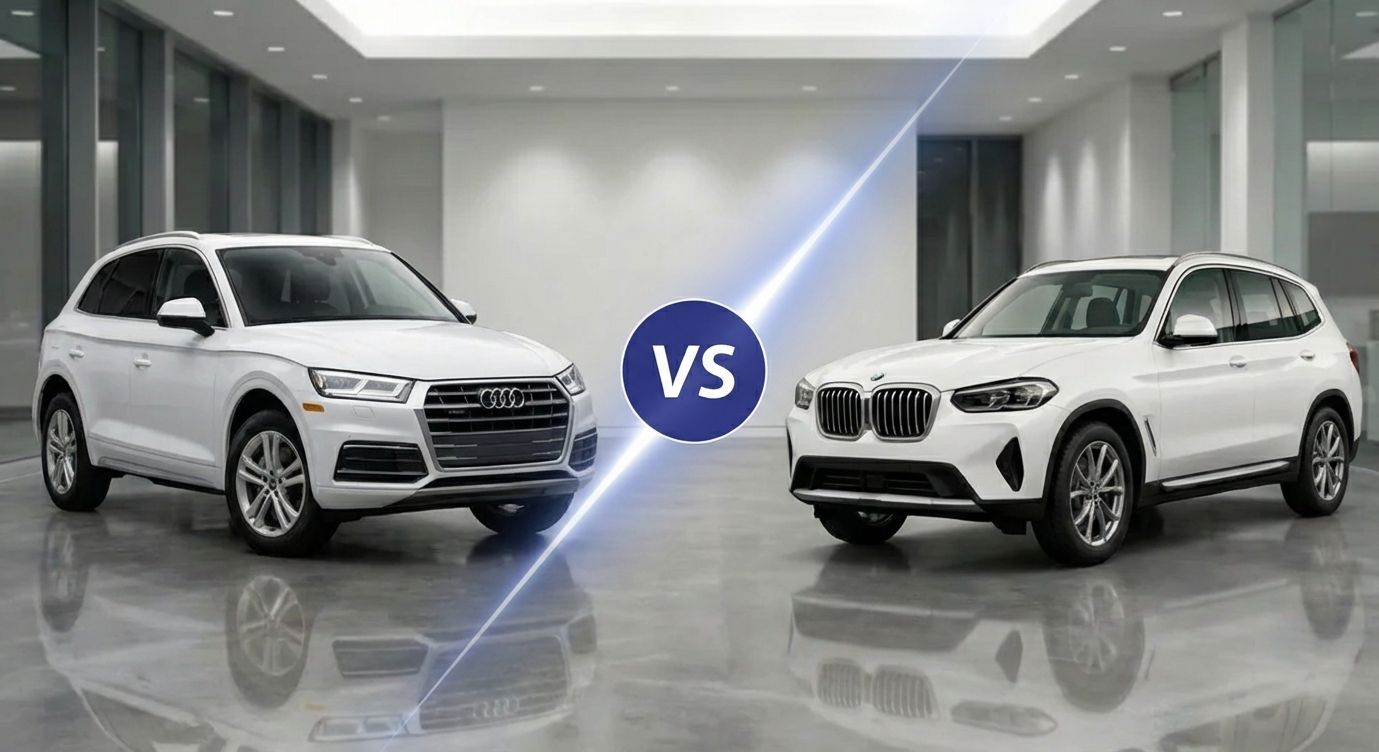
Audi Q5 vs. BMW X3: Which premium SUV is better? Our detailed comparison and verdict will help you choose the right car for your needs.
Apr 14, 2026
Detailed comparison of Hyundai Santa Fe vs Volkswagen Tayron. We compared space, equipment, and driving characteristics. Read our verdict and choose the right SUV.
Apr 8, 2026