Articles

Car battle

Nissan X-Trail vs. Volkswagen Tayron: Complete comparison 2026

Nissan X-Trail vs. Volkswagen Tayron comparison. Read our detailed verdict, equipment comparison, and real-world experiences. Choose the ideal SUV for your family.

April 25, 2026

VS
Nissan X-Trail

Nissan X-Trail

Volkswagen Tayron

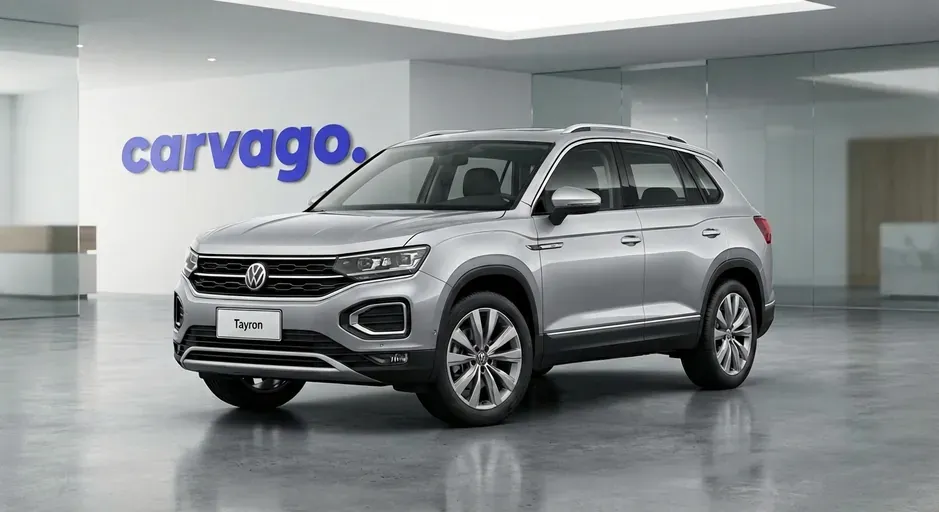
Volkswagen Tayron

Introduction

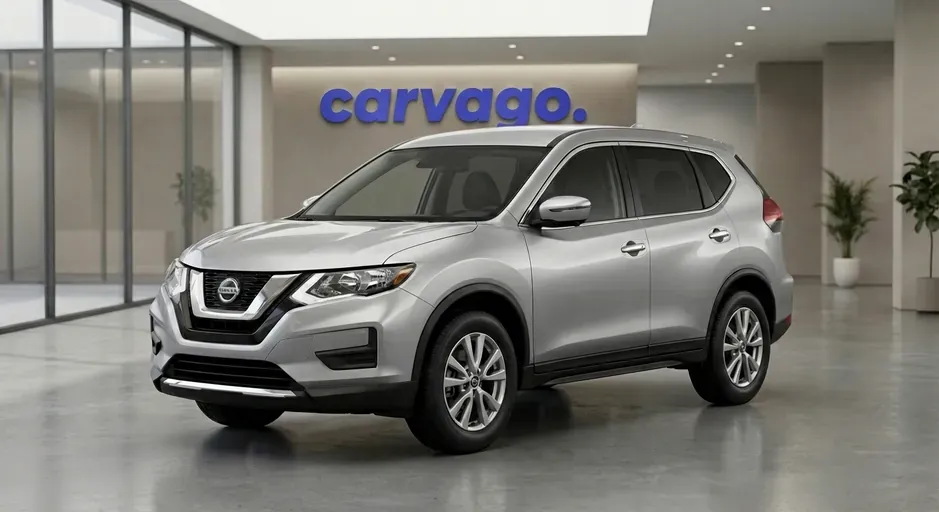
The Nissan X-Trail, also sold in North American and other markets under the name Nissan Rogue, represents a versatile and proven family SUV that combines a robust appearance with advanced technologies and an emphasis on comfort. Standing against it is the Volkswagen Tayron, which has evolved from an originally exclusive model for the Asian market into a global vehicle, directly replacing the popular extended variant, the Volkswagen Tiguan Allspace, in the automaker's lineup. In the following comparison, we will examine in detail the key differences in technical specifications, interior space, and driving characteristics to help you determine which of these two attractive competitors will be the best choice for your daily journeys.

Comparison of External Dimensions

When comparing the exterior dimensions of these two family SUVs, it is necessary to take into account that while the Nissan X-Trail in its current generation (T33, available on the market since approximately 2022) represents an established constant, the Volkswagen Tayron is a brand-new model replacing the Tiguan Allspace. In terms of overall size, both models focus on slightly different priorities.

With a total length of 4792 mm, the Volkswagen Tayron outgrows the Nissan X-Trail (4680 mm) by a significant 112 mm. This length advantage is primarily reflected in the wheelbase, which is up to 85 mm longer on the Tayron (2790 mm compared to 2705 mm for the Nissan). In practice, this means that the German model can offer more longitudinal legroom for second-row passengers and an overall slightly airier interior for long journeys. Conversely, the more compact dimensions of the Nissan X-Trail are a distinct advantage in daily city traffic – the car is more agile and easier to maneuver in tight parking lots.

Another interesting contrast is brought by the height and width of both cars. The Volkswagen Tayron bets on a slightly wider (up to 1866 mm) and overall lower build (up to 1668 mm), which gives it a more dynamic, road-hugging stance. In contrast, the X-Trail follows the path of traditional proportions – with a height of 1720 mm, it is more than 50 mm taller than the Tayron. This taller body brings benefits in the form of more headroom and a typically more upright seating position behind the wheel, which suits many drivers thanks to a more commanding view of the road.

ParameterNissan X-Trail SUVVolkswagen Tayron SUV
Length (mm)46804792
Width (mm)18401853-1866
Height (mm)17201666-1668
Wheelbase (mm)27052788-2790

Trunk Volume

When choosing a family SUV, the luggage compartment volume is often one of the most important parameters that determines the daily usability and practicality of the car. A spacious trunk means you won't have to compromise when packing for a holiday and can easily load a stroller, sports equipment, and bulky cargo. Both the Nissan X-Trail and Volkswagen Tayron models are designed with maximum consideration for family needs, but each approaches the concept of interior space differently, which is significantly reflected in their official and real-world capacities.

The Volkswagen Tayron, which replaced the popular extended Tiguan Allspace in the lineup, offers a truly gigantic luggage compartment in its class. In the standard five-seat configuration with conventional internal combustion engines (TSI and TDI), it boasts a respectable volume of 885 liters. If you choose the seven-seat version, the capacity behind the second row of seats drops slightly to 850 liters, while the plug-in hybrid eHybrid model, which is only available as a five-seater, offers 705 liters due to the high-voltage battery storage. In contrast, the current generation Nissan X-Trail (T33) offers a slightly more modest but still fully usable space. The basic five-seat mild-hybrid version has a volume of 585 liters, while in the popular full-hybrid e-Power powertrain, this space is slightly reduced to 575 liters. The seven-seat variant of the X-Trail then offers 485 liters after folding down the third row.

These differences become even more pronounced after fully folding down the rear backrests. The Volkswagen Tayron can create a maximum transport capacity of up to 2,090 liters (1,915 liters for the eHybrid version), providing you with unrivaled space for several extra suitcases and easily handling the transport of smaller furniture. The Nissan X-Trail, on the other hand, provides a maximum space of 1,424 liters (1,396 liters for the e-Power version) after folding the seats. This volume is perfectly sufficient for weekend shopping or a longer holiday, but on paper, it falls short of the van-like capacity of its German competitor.

In summary, for families whose priority is absolute transport volume and maximum flexibility, the Volkswagen Tayron will be a major attraction. However, the Nissan X-Trail counters with a very accessible and thoughtfully designed trunk, which, with its shape, covers the vast majority of everyday logistical challenges.
ParameterNissan X-Trail SUVVolkswagen Tayron SUV
Base volume (liters)585885
Max volume with seats folded down (liters)14242090

Capacity versus Agility 🧳

While the Volkswagen Tayron excels with a giant transport capacity approaching that of vans, the Nissan X-Trail offers a slightly more modest but still fully sufficient and cleverly usable space for an average family.

Trailer Weights

Towing capacity is a key parameter for drivers who regularly use their vehicle to tow caravans, heavy utility trailers, or boat trailers. In a direct comparison of models from generations currently relevant to the used car market, the Volkswagen Tayron and Nissan X-Trail approach this discipline with slightly different philosophies. From the very beginning, the Volkswagen Tayron has positioned itself as an exceptionally capable workhorse. Its maximum braked towing capacity reaches an impressive 2400 kg for the 2.0 TDI diesel versions, while the top-of-the-line 2.0 TSI petrol variants can handle exactly 2300 kg. Even the more environmentally focused plug-in hybrids (eHybrid) in the Tayron range can tow a solid 1800 to 2000 kg. In contrast, the current T33 generation Nissan X-Trail offers a towing capacity between 1800 and 2000 kg for its standard 1.5 VC-T mild-hybrid version, which is fully sufficient for average users. However, a major difference is found in the very popular e-Power full-hybrid version, whose electrified system significantly limits towing capacity. For a braked trailer, it drops to 1650 kg, and the value for an unbraked trailer falls to 670 kg (compared to the industry standard of 750 kg, which the Tayron fully offers). In practice, these differences mean that while the X-Trail easily covers occasional needs, such as hauling garden waste or towing a smaller caravan for a summer holiday, the Tayron provides a massive reserve even for towing the largest family caravans. In conclusion, thanks to its robustness and powerful diesel engines, the Volkswagen Tayron is a safe bet for intensive work and travel use, while the Nissan X-Trail is better suited for lighter, recreational use.

Model and motorizationBraked weight of trailer (kg)Unbraked weight of trailer (kg)
Nissan X-Trail 1.5 VC-T Mild-Hybrid (120 kW)1800 - 2000750
Nissan X-Trail 1.5 VC-T e-Power (116 kW)1650670
Volkswagen Tayron 1.5 eTSI (110 kW)1800750
Volkswagen Tayron 1.5 eHybrid OPF (110-130 kW)1800 - 2000750
Volkswagen Tayron 2.0 TSI OPF (150-195 kW)2300750
Volkswagen Tayron 2.0 TDI SCR (110-142 kW)2000 - 2400750

Overview of Most Common Motorizations

The differences in engine options between the Nissan X-Trail and the Volkswagen Tayron perfectly illustrate the different approaches automakers take to powering spacious family SUVs. This fact has a significant impact on fuel consumption, reliability, and the overall driving experience for used car buyers. While Nissan, for roughly four-year-old models in the preferred T33 generation (from 2022), took the path of innovative electrification with its unique e-Power hybrid system, the Volkswagen Tayron – introduced as a newer model range from 2025, replacing the popular Tiguan Allspace – bets on a wide range of classic but highly efficient internal combustion and plug-in hybrid units. Customers thus face a choice: Japanese smoothness approaching that of an electric vehicle, or German variability with a range of economical diesels for the highway and performance-oriented turbocharged petrol engines. Both vehicles offer advanced standard engines focused on efficiency as well as advanced versions ensuring perfect traction.

Engines: Nissan X-Trail

For roughly four-year-old used Nissan X-Trails, the current T33 generation is the most important in terms of modern technology. Its standard power unit is the innovative 1.5 VC-T Mild-Hybrid turbocharged three-cylinder petrol engine with a variable compression ratio, producing 120 kW (163 hp), which is always paired with an Xtronic continuously variable automatic transmission (CVT). However, the technological pride of the Japanese brand is the 1.5 VC-T e-Power full hybrid system. In this unique configuration, the petrol engine serves primarily as a quiet generator to charge the battery, while the wheels themselves are driven exclusively by a powerful electric motor. The basic front-wheel-drive version offers 150 kW, while the advanced all-wheel-drive version with e-4ORCE technology adds a second electric motor on the rear axle. This brings the combined output to 157 kW (213 hp) and provides excellent traction supported by massive, instantly available torque.

For those interested in more affordable vehicles, late examples of the previous T32 generation can still be found in the four-year-old used car category. Following its facelift, this model was characterized by the popular 1.3 DIG-T four-cylinder engine with a dual-clutch transmission. It is important to note that classic diesel engines (e.g., 1.7 dCi or 2.0 dCi), which were previously sought after for long trips with the X-Trail, completely disappeared from the lineup with the arrival of the T33 generation in 2022 and beyond. Nissan has thus completely replaced diesel with refined electric drive.

Engine typeFuel typePower (kW)Torque (Nm)Transmission
1.5 VC-T Mild-Hybrid (T33)Petrol / MHEV120300Xtronic (CVT)
1.5 VC-T e-Power (T33)Hybrid150330e-Power (reduction gear)
1.5 VC-T e-Power e-4ORCE (T33)Hybrid157330 / 195e-Power (reduction gear)
1.3 DIG-T (T32)Petrol1162707DCT
1.7 dCi (T32)Diesel1103406MT / Xtronic

Engines: Volkswagen Tayron

Although the Volkswagen Tayron is a relative newcomer to the European market (generation starting from 2025), it provides a huge advantage for those interested in nearly-new cars – it maintains an incredibly comprehensive range of powertrains. The core of the portfolio is the refined 1.5 eTSI petrol mild-hybrid with an output of 110 kW (150 hp). An alternative focused on eco-friendly urban driving is the advanced 1.5 eHybrid OPF plug-in hybrid version. This provides a system output of 150 kW or 200 kW, and its large externally charged battery allows for long ranges on pure electricity.

The biggest difference and a strong weapon compared to the Nissan is the offering of popular and efficient diesel units. The Tayron offers the exceptionally economical 2.0 TDI SCR diesel engine, which produces 110 kW (150 hp) in the front-wheel-drive version and reaches 142 kW (193 hp) with a massive 400 Nm of torque in the top-tier diesel paired with 4MOTION all-wheel drive. Those who prefer a more spirited driving style and sharper dynamics can opt for the powerful 2.0 TSI OPF petrol two-liter engine tuned to 150 kW or an uncompromising 195 kW (265 hp). The advantage with Volkswagen is that no matter which variant you choose, you always get a responsive and fast DSG dual-clutch transmission.

Engine typeFuel typePower (kW)Torque (Nm)Transmission
1.5 eTSIPetrol / MHEV1102507DSG
1.5 eHybrid OPFPlug-in Hybrid150 / 200350 / 4006DSG
2.0 TSI OPFPetrol150 / 195320 / 4007DSG
2.0 TDI SCRDiesel110 / 142360 / 4007DSG

Summary and Recommendations

While both vehicles target modern families with their specifications, the final decision is heavily dependent on the profile of your typical routes.

  • City and technology-oriented drivers: If you spend a lot of time in the city and appreciate smooth acceleration without gear shifts and a quiet cabin, the advanced e-Power hybrid drive in the Nissan X-Trail is a perfect, low-maintenance choice.
  • Highway and dynamic travelers: If your daily bread is devouring hundreds of highway kilometers at speeds where the aerodynamics of large SUVs are tested, the classic 2.0 TDI diesel under the hood of the Tayron maintains excellent efficiency. For dynamically minded owners, the VW Tayron with 2.0 TSI petrol engines also profiles as a much more aggressive option.

Usage determines the choice 🛣️

While the Nissan X-Trail will thrill you with the absolute smoothness of its innovative urban hybrid, the nearly-new VW Tayron strongly defends its position as the king of the highway thanks to its unbeatably efficient diesel units.

Choosing the right engine is absolutely crucial for long-term satisfaction with a vehicle. The following recommendations are therefore based on performance, real-world fuel consumption, owner feedback, and mechanical reliability. While the current generation Nissan X-Trail offers a fascinating approach using a unique e-Power series hybrid—where the internal combustion engine acts purely as an electricity generator and the wheels are driven exclusively by electric motors—the brand-new Volkswagen Tayron relies on the proven efficiency of diesel units with massive torque and modern mild-hybrids. Both concepts differ in their focus: the Japanese model scores with absolute smoothness and silence in the city, while the German car is a confident all-rounder for highway stretches and heavy loads.

For the Nissan X-Trail, we recommend: 1.5 VC-T e-Power e-4ORCE (157 kW / 213 hp)

This innovative series hybrid is undoubtedly the best choice in the X-Trail T33 generation lineup, whose representatives on the market represent an ideal choice for a four-year-old to nearly new used car. Its greatest advantage is the fact that the wheels are driven exclusively by two electric motors (150 kW at the front and 100 kW at the rear), while the variable compression ratio three-cylinder combustion engine serves purely as an onboard power plant. This gives you the quiet pull and instant throttle response typical of electric vehicles, but without range anxiety. Technical strengths include great dynamics and very favorable real-world fuel consumption, which ranges between 6.0 and 6.5 l/100 km, especially in urban and suburban traffic. A certain weakness is highway driving, where fuel consumption rises more quickly. Given the complexity of the entire powertrain, it is also crucial to thoroughly check the high-voltage system diagnostics and the condition of the traction battery when buying. This check is essential because any potential loss of capacity would mean the combustion engine needs to run more frequently, resulting in poorer smoothness and the risk of expensive future repairs. During the test drive, focus on smooth transitions when the combustion engine engages—any jerking indicates a problem. This powertrain is best suited for suburban users and families looking for the comfort of an electric vehicle but who do not want to deal with charging cables.

For the Volkswagen Tayron, we recommend: 2.0 TDI SCR 4MOTION (142 kW / 193 hp)

Since the Volkswagen Tayron only went on sale in 2025, you won't currently find it on the market as a typical four-year-old used car, but exclusively as a very nearly new or demonstrator vehicle with minimal mileage. Even so, for an SUV of this size, the top-of-the-line two-liter turbodiesel from the EA288 evo family is the most reliable long-term choice. The engine excels with a great compromise between power and exemplary running costs. Extreme torque of 400 Nm gives the car confident dynamics, and thanks to the intelligent 4MOTION all-wheel drive, the vehicle has an excellent towing capacity of up to 2,400 kg. Real-world consumption remains below the 7 l/100 km mark despite the vehicle's substantial size. A natural risk to watch out for with modern diesel engines is the rapid clogging of the diesel particulate filter (DPF) and degradation of the AdBlue system during frequent short city trips with a cold engine. When purchasing a nearly new unit, it's worth looking into the exhaust tailpipe—if it's black with soot inside, the particulate filter is not functioning correctly. Also, use diagnostics to verify the intervals of past regenerations. Repairs to emission systems represent a significant financial expense. This engine is therefore by far the best choice for long-distance drivers, active families who often head to the mountains, and all drivers who need to confidently tow heavy trailers.

Real Fuel Consumption

The difference between official laboratory fuel consumption figures and the harsh reality of daily driving is often surprising for large family SUVs. To get the most accurate picture of real operating costs, we don't just rely on manufacturers' paper promises; we work with aggregated data from users themselves – relying on renowned crowdsourcing platforms like the German portal Spritmonitor and long-term consumer tests.

Looking at the used car market (focusing on roughly four-year-old vehicles), you will most often encounter the outgoing T32 generation (2019–2022) and the nearly new successor T33 generation (from 2022) of the Nissan X-Trail. In contrast, the Volkswagen Tayron is a brand-new arrival on the European market, replacing the older Tiguan Allspace model. It therefore exists exclusively as a 1st generation vehicle (from 2025). However, its powertrains are built on well-mapped and years-tuned Group technology, for which an accurate data basis already exists.

Below we list the average real-world fuel consumption for the most common engine versions of both vehicles:

Model and engineAverage consumption (l/100 km)
Nissan X-Trail 1.7 dCi (T32)5.8
Nissan X-Trail 1.3 DIG-T (T32)6.4
Nissan X-Trail 1.5 VC-T e-Power (T33)5.9
Nissan X-Trail 1.5 VC-T Mild-Hybrid (T33)7.0
Volkswagen Tayron 2.0 TDI SCR5.8
Volkswagen Tayron 1.5 eTSI6.2
Volkswagen Tayron 2.0 TSI OPF8.0
Volkswagen Tayron 1.5 eHybrid1.5

What do the real numbers say?

Looking at specific engines, the different approaches of the two manufacturers are clearly visible. In older Nissan X-Trail (T32) models, the 1.7 dCi diesel engine represents a reliable and efficient workhorse. However, the more modern e-Power system in the T33 generation deserves special attention. In this system, the three-cylinder internal combustion engine does not drive the wheels but functions purely as an electric power generator. While it allows the car to drive with consumption just under 6 liters in the city or on country roads and behave like a smooth electric vehicle, the efficiency of this system drops slightly on the highway due to aerodynamic drag and engine load. A standard 1.5 VC-T mild-hybrid then takes an average of a full liter more petrol from the tank.

The Volkswagen Tayron, on the other hand, relies on a total classic. The legendary 2.0 TDI SCR four-cylinder diesel cannot deny its Group roots and, with a consumption of 5.8 l/100 km, defends its position as a reliable highway express. For those who don't use diesel, the 1.5 eTSI petrol mild-hybrid proves to be an ideal compromise, pushing real-world consumption to just over 6 liters thanks to coasting. The most powerful 2.0 TSI two-liter is then a choice only for drivers who prioritize dynamics over fuel economy (approx. 8 l/100 km). Also noteworthy is the Plug-in hybrid Tayron. The catalog value of around 1.5 liters is extremely tempting, but expect to achieve such consumption only if you faithfully charge the vehicle every day. If you drive with a discharged battery, expect a standard average between 6 and 6.5 liters.

Which engine to choose based on usage?

  • For highway mile-munchers: Diesel units clearly dominate here. Both the Volkswagen Tayron 2.0 TDI and the four-year-old Nissan X-Trail 1.7 dCi can briskly cover highway distances even under heavy load without ruining your monthly budget.
  • For city and suburban commuting: If the car serves as a daily family taxi in traffic jams, the Nissan X-Trail with e-Power technology wins hands down. It brings huge savings, peace, and the refinement of electric drive without you having to look for cables.
  • For solar panel owners: The plug-in hybrid Tayron is a fantastic and unrivaled weapon against expensive fuel, provided you have a house and the possibility to plug it into the grid overnight.

In conclusion, it should be summarized that average fuel consumption will likely not be the most important factor for these vehicles. Both spacious SUVs can drive unusually economically for their size, but the key to success is not making a mistake when choosing the fuel and engine. Volkswagen brings years of refined mechanics and top-tier diesels for long-distance travel, while Nissan has a strong city trump card up its sleeve thanks to its unique and exceptionally efficient Japanese hybrid school.

Price Range and Used Car Offerings

When comparing these two models on the used car market, it is essential to take into account the completely different situation regarding their generation cycles and history on the Old Continent. While the Nissan X-Trail is a complete mainstay in Europe, the Volkswagen Tayron is a relative newcomer here – it entered the European market only at the turn of 2024 and 2025, replacing the popular Tiguan Allspace model.

To make the comparison as useful as possible for buyers, we will focus on the newer generations from the last two to three years, which are technologically equivalent. If you are looking for a classic four-year-old used car with a production year around 2022, you won't find the Tayron in European listings at all, while with Nissan, you will have a choice from a rich stock of the outgoing but still very popular generation.

Volkswagen Tayron (2024 and newer models)

Given that the Tayron is represented on the European used car market exclusively as a nearly new or demo car aged one to two years, its price level is understandably relatively high. However, the customer pays for an almost new car, which is usually covered by a full factory warranty.

  • Basic and slightly used cars: Prices start roughly at the €37,000 to €39,000 mark for more affordable trim levels (e.g., Life) with 1.5 eTSI engines.
  • Higher trims and plug-in hybrids: If you go for the dynamically tuned R-Line version or the economical eHybrid engine (with a very decent electric-only range), purchase costs commonly exceed €47,000 to €53,000.

Nissan X-Trail (T33 generation, 2023–2025 models)

The latest generation of the Nissan X-Trail (code-named T33), which arrived on the market at the end of 2022, represents a direct technological competitor to the Tayron. However, its slight lead in sales duration is favorably reflected in availability and more favorable prices on the secondary market.

  • Slightly used cars (T33): Modern units equipped with the praised e-Power hybrid system can be found today with price tags starting around €31,000 to €33,000.
  • Top versions: For fully equipped models with all-wheel drive (e-4ORCE) and luxury Tekna trim, you will pay roughly €39,000 to €43,000, which represents an interesting saving compared to a comparably equipped Tayron.

Tip for buyers looking for a 4-year-old car: If your budget is tighter and you are looking for a car with a production year around 2021 or 2022, a huge market for the reliable previous generation (T32) opens up with Nissan. This is currently commonly sold in a wide price range from €20,000 to €31,000 and offers a great price-to-value ratio.

Overview of indicative market prices

Model and generationTypical age of used carIndicative price range (€)
Nissan X-Trail (T32)4 years (approx. 2022)€20,000 – €31,000
Nissan X-Trail (T33)1–3 years (2023+)€31,000 – €43,000
Volkswagen Tayron1–2 years (2024+)€37,000 – €53,000+

Price verdict: Tradition vs. Hot Newcomer 💰

While the Nissan X-Trail offers huge flexibility for various budgets thanks to the existence of an older and cheaper generation, the nearly new Volkswagen Tayron will primarily appeal to those looking for an almost new modern car and are willing to pay extra for the model's current status on the market.

Safety and Euro NCAP Rating

Both compared vehicles, the Nissan X-Trail and the Volkswagen Tayron, boast a maximum five-star rating in the prestigious Euro NCAP safety tests. However, when evaluating the safety of used cars, it is always essential to consider the context and the year of testing itself. Euro NCAP protocols and methodologies constantly evolve and become stricter over time. For this reason, percentage scores from different years cannot be directly and equally compared, as the requirements for obtaining five stars are constantly increasing.

The Nissan X-Trail underwent safety tests in 2022 and took home a full five-star rating. It was tested according to the standards in force at the time, which placed great emphasis on advanced emergency braking systems, lane-keeping, and occupant protection in a crash. The car's assistance systems in particular were rated at a respectable 95%, demonstrating an exceptionally high level of accident prevention for its time.

The Volkswagen Tayron is an even newer car on the market and underwent tests in 2025, where it also confidently received five stars. However, its evaluation was already governed by much more demanding protocols. These strict methodologies include more complex frontal crash simulations, expanded detection of cyclists or pedestrians, protection against secondary impacts, and very complex intersection scenarios with oncoming vehicles. Due to the higher difficulty, the absolute percentage ratings for more recently tested cars often appear to decrease, which in practice reflects even stricter oversight of real-world safety.

ParameterNissan X-TrailVolkswagen Tayron
Year of testing20222025
Adult occupant protection91 %87 %
Child occupant protection90 %85 %
Vulnerable road user protection70 %83 %
Safety assistance systems95 %80 %

Looking closer at the results, it is clear that the 2022 X-Trail achieved excellent figures on paper for both occupant protection and assistance systems. The slightly lower scores of the Volkswagen Tayron in adult protection (87%) and assistance systems (80%) are a direct result of the aforementioned more demanding methodology. Nevertheless, the Tayron shows technological progress by clearly excelling in the protection of vulnerable road users (83% compared to 70% for the Nissan). Both vehicles currently have a valid five-year certification and offer full restraint systems as well as a robust safety structure of crumple zones.

In conclusion, it can be said with certainty that both SUVs represent the absolute pinnacle of safety and will not disappoint anyone looking for a spacious family car. However, thanks to successfully passing the strictest tests from 2025, the Volkswagen Tayron offers more modern and balanced protection, with particular regard to collision prevention and the protection of pedestrians and cyclists in urban environments.

Family fortress on wheels 🛡️

Although both family SUVs protect the occupants excellently and received the maximum five-star rating, the Volkswagen Tayron offers a slightly more comprehensive accident prevention system for modern urban traffic thanks to testing according to the stricter 2025 methodologies.

Comparison of Interesting Equipment Features

In addition to standard equipment, each of the models offers several unique features that can be decisive for the customer, and both clearly demonstrate their distinctive approach to added value. While the Japanese representative excels with a unique form of electrification and ingenious family ergonomics, the German model bets on unrivaled interior space and technology originating from more luxurious classes.

Nissan X-Trail: Worry-free electrification and smart ergonomics

  • e-POWER drive system: Driving like an electric car without searching for chargers. The innovative hybrid system uses an advanced gasoline engine (1.5 VC-Turbo) with a variable compression ratio exclusively as an electricity generator. The wheels themselves are driven solely by powerful electric motors, giving the car a perfectly smooth pull, quiet operation, and the instant response typical of pure electric vehicles.
  • e-4ORCE all-wheel drive: An advanced 4WD system controlled by two electric motors can lightning-fast adjust the torque for each wheel individually. An excellent and very unusual detail is the independent recuperation on both the front and rear axles, which cleverly balances the longitudinal movements of the body and minimizes the unpleasant "nose-diving" of the front end during braking.
  • e-Pedal Step technology: Electronics allow for both acceleration and smooth deceleration using a single pedal. The function significantly reduces driver fatigue when moving in stop-and-go city traffic.
  • Three large-screen displays: The interior is dominated by a modern digital layout – a 12.3-inch instrument cluster, an equally large central infotainment display, and above all, a giant 10.8-inch Head-Up display that clearly projects key driving data directly onto the windshield.
  • Ingenious family details: Nissan scores in everyday usability. The rear doors open almost to a right angle (85 degrees), which dramatically facilitates loading small children and handling child car seats. The center armrest, which opens symmetrically from the middle, is also practical, giving rear passengers comfortable access to it as well.

Volkswagen Tayron: A spatial giant with premium technology

  • Giant luggage compartment: Uncompromising internal variability. As the successor to the popular Tiguan Allspace, the Tayron offers a huge trunk. The five-seater version provides a mammoth luggage capacity of up to 885 liters; however, a full seven-seater variant is also available, making the car an ideal hauler for larger families.
  • DCC Pro adaptive chassis: The optional shock absorber system with two independent valves (separately for rebound and compression) is a technology that the group previously offered only in much more expensive vehicles. The chassis thus brilliantly filters out sharper bumps while keeping the body exemplarily stable in corners.
  • PHEV with long range and fast charging: The eHybrid (eTSI) plug-in hybrid units feature a large battery with a capacity of 19.7 kWh, which allows for a real-world electric range of over 100 kilometers. Long-distance travel is exceptionally simplified by support for direct current (DC) fast charging with a power of up to 50 kW.
  • Interior with a touch of luxury: The Tayron can pamper the crew with premium materials. On board, you can have open-pore real wood trim, upholstery made of eco-friendly ArtVelours Eco microfiber, or ergoActive Plus ergonomic front seats with ventilation and a ten-chamber pneumatic massage system.
  • Multifunction controller and AI integration: Alongside a large central display with a diagonal of up to 15 inches, the car features a smart rotary selector on the center console with its own built-in display – used for adjusting volume, selecting driving profiles, or setting predefined interior moods ("Atmospheres"). Furthermore, the integrated IDA voice assistant fully cooperates with ChatGPT artificial intelligence for more advanced command input.
  • IQ.LIGHT HD headlights and illuminated logos: High-resolution interactive matrix headlights ensure top-notch night vision with precise masking of other cars. A very modern visual identity is then underlined by the illuminated brand logo integrated not only into the front grille but also into the tailgate.

Key Advantages and Disadvantages

Nissan X-Trail

Pros

The innovative e-Power hybrid drive offers a smooth driving experience typical of electric vehicles without the need for plug-in charging

High-quality interior craftsmanship with the practical retention of physical buttons for climate control

Intelligent e-4ORCE all-wheel drive ensures excellent traction and stability on slippery surfaces

The option of a seven-seat layout increases flexibility for larger families

More favorable purchase price on the nearly-new used car market compared to European competitors

Cons

The basic luggage compartment volume (585 liters) clearly lags behind the largest vehicles in this class

The third-row seats are very cramped and realistically usable only for smaller children

The hybrid system's fuel consumption increases significantly at higher highway speeds

The multimedia system lags slightly behind modern standards in terms of graphics and response speed

The fourth-generation Nissan X-Trail will primarily appeal to drivers looking for an exceptionally comfortable family SUV with a user-friendly interior and smart hybrid technology. Thanks to balanced driving characteristics and lower acquisition costs, it is a very rational choice for daily city driving and occasional trips into nature.

Volkswagen Tayron

Pros

A huge luggage compartment with a capacity of up to 885 liters in a five-seat configuration will satisfy even the most demanding families

Advanced eHybrid plug-in hybrid powertrains offer a real-world pure electric range of over 100 km

A wide range of powerful powertrains, including proven TDI diesel engines

Exceptional towing capacity for a braked trailer weighing up to 2,500 kg (on selected versions)

Premium equipment features inherited from the Touareg model, such as advanced HD Matrix headlights and massage seats

Cons

Significantly higher purchase price for used cars, due to the model's later entry into the European market

Almost all vehicle functions are controlled via the central touchscreen, which can be distracting

On plug-in hybrid versions, a seven-seat interior layout cannot be chosen due to the battery's placement in the floor

On the European market, the Volkswagen Tayron has confidently replaced the Tiguan Allspace, bringing more premium technology and uncompromising transport capacity to the family segment. It represents an ideal car for demanding drivers with a larger budget who will utilize the efficient plug-in hybrid for emission-free commuting or powerful internal combustion engines for towing heavy trailers.

Common Problems and Owner Complaints

Based on our own CarAudit inspections and findings from physical inspections of used cars, breakdown statistics, and long-term owner experiences, we have compiled an overview of the most common problems that used car buyers should watch out for.

Nissan X-Trail

The fourth-generation Nissan X-Trail (T33, on the market since 2022) attracts with above-average spaciousness and the innovative e-Power hybrid drive, but like many modern cars, even newer used examples can suffer from so-called teething troubles, primarily in the area of electronics.

  • e-Power drive: Owners of early model years sometimes report issues with the energy management software, which can manifest as reduced electric range, irregular battery charging, or delayed acceleration response in extreme cold or, conversely, in high temperatures above 35 °C. Usually, this problem is solved by a software update at an authorized service center.
  • Infotainment and onboard systems: Complaints often arise about the central display freezing, unexpected head-up display failures, or reduced reliability of keyless entry. False error reports from assistance system warning lights are also not uncommon.
  • Chassis: Some units from the first years of production suffer from creaking and unusual "rustling" sounds from the front axle, especially when driving slowly over speed bumps or other larger unevenness.
  • Exterior build quality: Occasionally, there are reports of excessively vibrating exterior mirrors at highway speeds; for the electric tailgate, the struts may fail, and the system does not open to full height.

Nissan X-Trail: Watch out for electronics

Although the mechanical foundation is very robust, the innovative e-Power system and onboard systems in early model years often require software updates and struggle with minor ailments.

Volkswagen Tayron

The Volkswagen Tayron (European model produced since 2024, which replaced the older Tiguan Allspace in the lineup) benefits from the advanced MQB Evo group architecture. Since it is a hot newcomer on the market for young used and demo cars, its ailments are primarily related to the massive digitalization of the interior and the rollout of a new generation of software.

  • Software and assistance systems: The most common and sensitive complaints from owners target the overly sensitive emergency braking system when reversing. The assistant sometimes stops the car completely unexpectedly and sharply (even to the point of a "kick"), even if it detects only a slight or even completely false obstacle (e.g., a low curb).
  • Infotainment: In the first series of this model, users quite often deal with slower loading of the multimedia system immediately after starting, occasional drops in wireless smartphone connection, or spontaneous screen restarts during driving.
  • DSG Transmission: In some engine versions equipped with a seven-speed dual-clutch automatic, slight jerking or hesitant shifting may occur during long periods of crawling in traffic jams or at low speeds.
  • eTSI systems (mild-hybrid): Models with the 1.5 eTSI engine may initially be more prone to minor software errors and false warnings from the 48V electrical circuit, which is usually solved by reflashing the control unit.

Volkswagen Tayron: Teething troubles of a new platform

The Tayron suffers mainly from oversensitive assistance systems (especially when parking) and immature infotainment software, but mechanically it is a safe and highly comfortable SUV.

Tips for Buying a Used Car

When buying a used car, a thorough inspection is key. Here are several specific points to focus on for these two models to avoid unpleasant surprises. For this reason, we also recommend using the CarAudit service, which will professionally and thoroughly inspect the vehicle for you.

When choosing a Nissan X-Trail:

  • 12V battery and electrical system condition: Many owners of the fourth generation (T33) report issues with an underpowered 12V battery, which can cause complete immobilization of the vehicle or false error messages on the dashboard. During the inspection, check if the car starts immediately on the first attempt without any warning lights.
  • Functionality of the e-Power system and e-4ORCE drive: The e-Power system uses the internal combustion engine exclusively as an electric generator. During the test drive, focus on the smoothness of operation – the engine should engage imperceptibly and without vibration. Also, listen carefully for any humming or mechanical noises coming from the rear electric motor in the e-4ORCE all-wheel-drive version.
  • Noise from the front axle: When driving over speed bumps or larger uneven surfaces, watch for unusual "hissing" or creaking from the front suspension. If suspicious sounds occur, a detailed technical inspection of the car can accurately reveal whether it is just normal wear of the bushings or the beginning of damage to the shock absorbers.
  • Infotainment software and head-up display: Multimedia systems may show lag in colder conditions. Ensure the screen responds promptly to touch and that the head-up display (HUD) projection does not flicker or cut out spontaneously, which was a common teething problem in the early years of this generation.

When choosing a Volkswagen Tayron:

  • Infotainment software and smoothness: As with other modern vehicles on the MQB Evo platform, the infotainment can suffer from freezing, slow responses after startup, or spontaneous reboots. During the drive, try clicking through all the onboard menus and verify that a stable and latest software version is installed in the car.
  • DSG gearbox behavior: When crawling in traffic, starting slowly, and especially when shifting between first gear and reverse, closely monitor the behavior of the dual-clutch transmission. It should not jerk or make metallic clicking sounds when changing direction.
  • Condition of the plug-in hybrid battery (eHybrid): If you are considering a plug-in hybrid, check its real-world electric range and ability to reach maximum charging power (some units charge unexpectedly slowly on fast chargers). An independent comprehensive vehicle inspection will help here, as its diagnostics can accurately verify the real state of health (SOH) of the traction battery.
  • DCC adaptive chassis and shock absorber noises: If the Tayron is equipped with the optional adjustable chassis, test all damping modes from Comfort to Sport while driving. Focus on whether there is a dull thumping sound from the axle area when driving over sharp bumps.
  • Wear and tear of touch surfaces: Thoroughly check the capacitive buttons on the steering wheel and the touch bars for climate control located under the display. Due to the lack of mechanical feedback, these surfaces often face rougher handling and can lose reliable touch sensitivity.

FAQ: Most Frequently Asked Questions

Volkswagen Tayron is the clear winner in this regard, as the five-seater version offers a massive basic trunk volume of approximately 885 liters. Nissan X-Trail provides a luggage compartment with a volume of 585 liters, which is sufficient for a normal family, but significantly lags behind its German competitor. In seven-seater configurations, the volume is logically smaller for both cars, but Volkswagen still maintains a noticeable space advantage.

Nissan uses the unique e-Power system, where the internal combustion engine acts only as an electricity generator for the electric motors that directly drive the wheels. Volkswagen, on the other hand, relies on a plug-in hybrid system (eHybrid), which allows driving more than 100 kilometers purely on electricity if you regularly charge the car from the grid. For drivers without the possibility of home charging, the Japanese model is more practical, while the German car will be appreciated by those who want to drive emission-free daily.

Yes, both of these spacious SUVs can be chosen in a practical seven-seater version, making them a great choice for larger families. The third row of seats in both competitors is intended primarily for children or for emergency transport of adult passengers over shorter distances. However, it is necessary to remember that for the plug-in hybrid version of the Volkswagen, the seven-seater configuration is not available due to the placement of the batteries in the floor.

The Japanese SUV with advanced e-4ORCE drive uses two independent electric motors on both axles, ensuring lightning-fast reactions to slip and an exceptionally smooth ride. Its rival uses the proven 4Motion mechanical system, which is highly reliable and very capable even in light terrain or deep snow. Both 4x4s will take you safely to mountain resorts, but Nissan's electric system offers slightly finer and more precise torque distribution.

The plug-in hybrid version of the Volkswagen can drive with minimal fuel consumption, but only on the condition that you consistently use external battery charging. The X-Trail model with e-Power technology can be very economical in busy urban and suburban traffic, however, at higher highway speeds, its appetite grows. For frequent and long highway trips, the traditional TDI diesel engine remains the most efficient choice, which, unlike the Nissan, is offered by the representative from Wolfsburg.

Conclusion: Which Model to Choose?

Sources: ADAC, denik.cz, idnes.cz, autoweb.cz, chytreauto.cz, doprava.cz

This article was prepared using artificial intelligence tools. The section guarantor is Petr Dušek.

Related articles

Car battle

Nissan X-Trail vs. Toyota Highlander: Complete comparison 2026

Detailed comparison of the Nissan X-Trail and Toyota Highlander. Find out which family SUV offers better space, equipment, and fuel consumption. Read our final verdict!

Apr 18, 2026

Car battle

Hyundai Santa Fe vs. Volkswagen Tayron: Complete comparison 2026

Detailed comparison of Hyundai Santa Fe vs Volkswagen Tayron. We compared space, equipment, and driving characteristics. Read our verdict and choose the right SUV.

Apr 8, 2026

Car battle

Seat Tarraco vs. Toyota Highlander: Complete comparison 2026

Detailed comparison of Seat Tarraco vs Toyota Highlander. Find out which 7-seater SUV offers better space, equipment, and driving characteristics. Make the right choice!

Apr 18, 2026

We accept online card payments as well as wire transfers.

visa payment provider logovisa-electron payment provider logomastercard payment provider logomaestro payment provider logodiners-club payment provider logodiscover payment provider logo