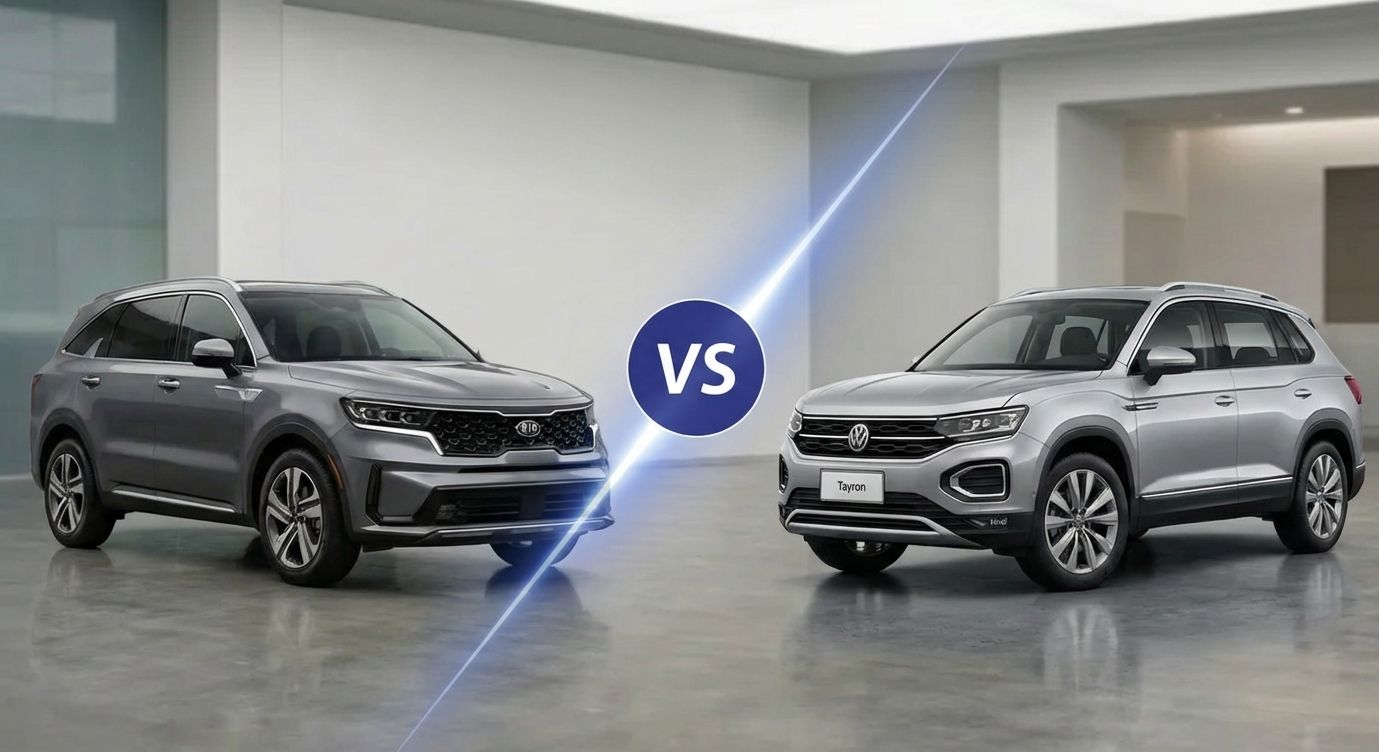
Ford Edge vs. Nissan X-Trail: Complete comparison 2026
Detailed comparison of Ford Edge vs. Nissan X-Trail (Rogue). Discover the differences in spaciousness, equipment, and reliability. Read our verdict and make the right choice!
Apr 15, 2026
Articles
Car battle
Detailed comparison of the Nissan X-Trail and Toyota Highlander. Find out which family SUV offers better space, equipment, and fuel consumption. Read our final verdict!
April 18, 2026


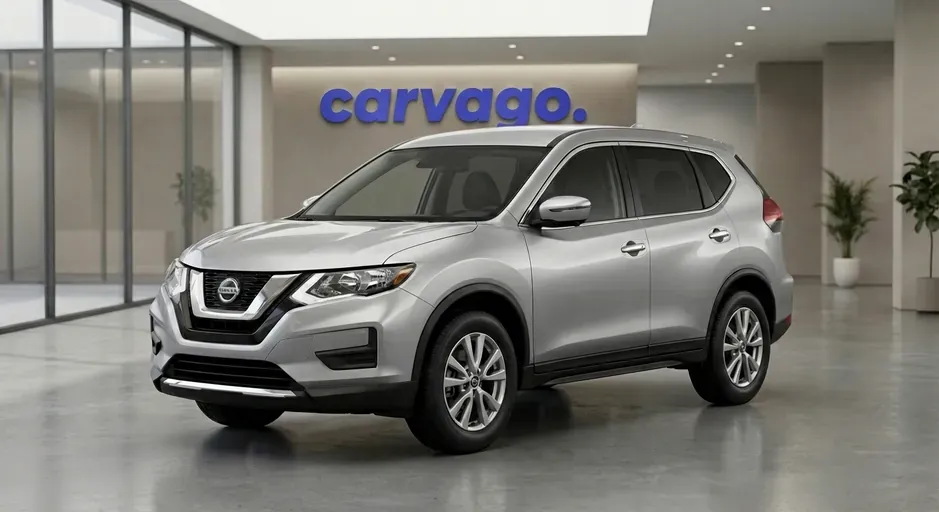
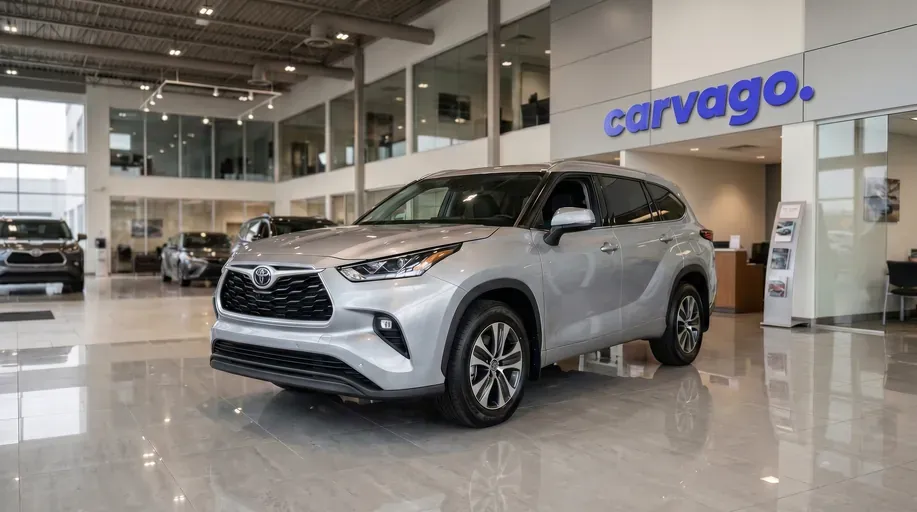
Nissan X-Trail, also known as the Nissan Rogue in the North American market, is a versatile and popular family SUV that appeals with its great value for money and emphasis on everyday practicality. Standing against it is the Toyota Highlander, sold under the name Toyota Kluger in the Japanese and Australian markets, which is a more spacious vehicle with up to seven seats and a renowned reliable hybrid powertrain. In this detailed comparison, we will look at all the important parameters, differences, and strengths of both models to help you make an informed decision when choosing your next car.
Looking at the exterior dimensions, it is immediately clear that both models target a slightly different group of drivers, even though both belong to the popular family SUV category. The Toyota Highlander was historically designed with the North American market in mind, which is still significantly reflected in its generous proportions today. In contrast, the Nissan X-Trail (especially in the most sought-after T33 and late T32 generations from around 2022) sticks to traditional European dimensions, which carefully balance spaciousness and everyday practicality. From the perspective of a used car buyer, you are faced with a fundamental choice between maximizing interior space and easier maneuvering.
Length and Width: The Battle for Parking Spaces vs. Interior Space
The Toyota Highlander reaches an impressive overall length of 4966 mm, which means it is a significant 286 mm longer than a four-year-old Nissan X-Trail (which measures 4680 mm). This significant difference clearly plays in favor of the Toyota if you plan to regularly use the third row of seats or need to transport bulky cargo. On the other hand, the Highlander's width is 1930 mm, which is 90 mm more than the modern X-Trail. This very fact makes the Nissan a much more user-friendly car for navigating narrow European city streets and parking in standardized underground garages, where the noticeably wider and longer Toyota can feel somewhat cumbersome. From a practical standpoint, the Nissan is the clear choice for city dwellers, while the Toyota will better serve those for whom interior volume is the limiting factor.
Wheelbase and Height: Highway Stability vs. Backroad Agility
The wheelbase is a key physical factor that determines the longitudinal spaciousness of the cabin as well as overall driving comfort. The Highlander clearly dominates here with a value of 2850 mm, surpassing the Nissan X-Trail and its 2705 mm wheelbase by a substantial 145 mm. This longer distance between the axles guarantees the Toyota a smoother and more stable ride at high speeds on highways, while also providing noticeably more legroom for second-row passengers. The X-Trail, with a slightly lower overall height (1720 mm compared to 1755 mm for the Toyota), boasts a slightly more aerodynamic profile. Thanks to its smaller dimensions, it offers the driver a sense of better agility and less body roll on winding roads. For larger families traveling mainly long distances, the more expansive Toyota will clearly be more advantageous, while for mixed suburban traffic with frequent parking, the more compact and agile Nissan makes more sense.
| Parameter | Nissan X-Trail SUV | Toyota Highlander SUV |
|---|---|---|
| Length (mm) | 4680 - 4690 | 4966 |
| Width (mm) | 1820 - 1840 | 1930 |
| Height (mm) | 1700 - 1720 | 1755 |
| Wheelbase (mm) | 2705 | 2850 |
Toyota Highlander and Nissan X-Trail are popular family SUVs that, however, target slightly different size categories, which is fundamentally reflected in their trunk capacity. For those interested in an approximately four-year-old used car (manufactured around 2022), trunk size is often a key criterion for daily use. While the X-Trail represents an ideal compromise for easy parking and suburban driving, the Highlander is a typically majestic American-style SUV, designed for uncompromising family utility on long trips and frequent transport of bulkier items.
Looking at the exact numbers, the Nissan X-Trail T33 generation (on the market since 2022) offers a very respectable 585 liters of trunk space in the standard five-seat configuration. This volume is perfectly sufficient for weekend shopping and longer vacations for an average family. However, it is important to note that hybrid versions with e-Power drive and seven-seat variants have a slightly reduced capacity of 485 to 575 liters due to the need to store batteries and additional seats under the trunk floor. On the other hand, the Toyota Highlander (XU70 generation from 2021–2024) provides a massive 658 liters of space in the five-seat configuration. The 73-liter difference in standard volume means space for several extra suitcases in practice. Even with the third row unfolded and fully occupied by seven passengers, the Highlander still has 241 liters available, which is a huge advantage compared to the very modest remainder in a fully occupied X-Trail.
The real difference in transport capacity, however, is fully revealed when the rear seats are folded down completely. The Nissan X-Trail can conjure up a solid loading area with a volume of 1424 liters (or 1298 liters for the seven-seat hybrid version), which reliably accommodates, for example, a folded stroller or sports equipment. However, after folding the second and third rows, the Toyota Highlander turns into an exceptionally practical hauler with a maximum capacity of an impressive 1909 liters with a flat floor. This enormous difference, reaching almost 500 liters at its maximum, makes it clear that for buyers who require unlimited possibilities for family trips, moving, or transporting truly bulky loads, the more robust Toyota will be a much more convincing choice.
| Parameter | Nissan X-Trail SUV | Toyota Highlander SUV |
|---|---|---|
| Base volume (liters) | 585 | 658 |
| Max volume with seats folded down (liters) | 1424 | 1909 |
While the Nissan X-Trail offers a cleverly usable trunk ideal for an average family, the Toyota Highlander, with its up to 1909 liters of space, will appeal to anyone looking for unrivaled transport capacity for long trips and moving.
Towing capacity is a key parameter for anyone planning to regularly tow a caravan, boat, or heavier utility trailer behind their vehicle. In this regard, the compared Japanese SUVs differ quite fundamentally and clearly demonstrate a different approach to the practical utility of their powertrains.
For approximately four-year-old vehicles on the used car market, the Toyota Highlander (XU70 generation, from 2021) offers a completely stable and reliable towing capacity. The model equipped with the 2.5 Hybrid powertrain can easily tow a braked trailer weighing up to 2,000 kg. This value is more than sufficient for a family holiday with a medium-sized caravan or transporting a sailboat to the sea, making the Highlander an exceptionally practical all-rounder.
On the other hand, the Nissan X-Trail requires much more careful consideration, as its capacities vary significantly depending on the chosen engine and generation. For the older T32 generation, typically with the 1.3 DIG-T petrol engine, expect a standard towing weight of 1,500 kg. However, far greater differences await you with the newer T33 generation (from 2022). The 1.5 VC-T Mild-Hybrid version boasts an excellent maximum capacity ranging from 1,800 to 2,000 kg. A major limitation, however, comes with the popular full-hybrid e-Power system. Here, the maximum weight of a braked trailer decreases rapidly, ranging only from 670 kg to 1,650 kg, depending on the presence of all-wheel drive.
In terms of everyday practicality, this means a clear distribution of power. While the Toyota Highlander will always serve as a confident and capable workhorse for more demanding use, the X-Trail reveals its specifics. If you choose the basic e-Power engine with front-wheel drive for the Nissan, the 670 kg capacity is more suitable for a light weekend shopping trip to a DIY store, transporting garden waste, or carrying heavier e-bike racks.
Conclusion Summary: From the perspective of towing heavier loads, the Toyota Highlander wins, representing a safe bet regardless of the trim level. While the Nissan X-Trail can hold its own in certain versions, its advanced e-Power hybrid brings significant limitations that you must pay particularly close attention to when choosing a four-year-old used car.
| Model and motorization | Braked weight of trailer (kg) | Unbraked weight of trailer (kg) |
|---|---|---|
| Toyota Highlander 2.5 Hybrid (XU70) | 2000 | 700 |
| Nissan X-Trail 1.3 DIG-T (T32) | 1500 | 750 |
| Nissan X-Trail 1.5 VC-T Mild-Hybrid (T33) | 1800 - 2000 | 750 |
| Nissan X-Trail 1.5 VC-T e-Power (T33) | 670 - 1650 | 670 - 750 |
The engine range for these two SUVs shows completely different philosophies, which has a fundamental impact on fuel consumption, dynamics, and long-term reliability. The Toyota Highlander follows the path of a single proven full hybrid system (HEV), which is an ideal choice for drivers looking for maximum reliability and low operating costs even when the vehicle is fully loaded. The Nissan X-Trail, on the other hand, offers a much more diverse range. On the four-year-old used car market, Nissan's popular older generation (T32) with its exclusively internal combustion engines overlaps exactly with the modern incoming generation (T33), which brought innovative electrified powertrains. For buyers, this means a wide range of choices – from a traditional petrol engine to a modern mild-hybrid to a unique system where the internal combustion engine acts only as an onboard power plant driving the electric motors.
When looking for a roughly four-year-old used car, you may come across representatives of two different generations of the X-Trail. From the outgoing T32 generation (whose sales ended in 2022), the 1.3 DIG-T turbocharged four-cylinder petrol engine is primarily offered. This was the standard for drivers looking for a traditional powertrain with a DCT dual-clutch transmission without complex electrification and is a sought-after choice on the used car market for drivers with a more limited budget.
With the arrival of the T33 generation in 2022, however, the range changed radically and switched exclusively to the advanced 1.5 VC-T three-cylinder with a variable compression ratio. The base of the range now consists of a mild-hybrid (MHEV) with front-wheel drive. But the true technological highlight is the e-Power system. In this setup, the car's wheels are driven exclusively by an electric motor, while the petrol unit serves purely to generate electricity. The advantage of this solution is immediate torque and quiet operation reminiscent of pure electric vehicles. The e-Power system is available with both front-wheel drive and in an all-wheel-drive variant (e-4ORCE), which adds a second electric motor to the rear axle and pushes the output to a top 157 kW. The only disadvantage of the modern generation is the higher technical complexity of the powertrain compared to its predecessor. While traditional purely internal combustion versions (like the aforementioned 1.3 DIG-T) can no longer be bought as new cars, they are well represented in used car dealerships within the four-year age range.
| Engine type | Fuel | Power (kW) | Torque (Nm) | Transmission |
|---|---|---|---|---|
| 1.5 VC-T Mild-Hybrid | Petrol / MHEV | 120 | 300 | CVT (Xtronic) |
| 1.5 VC-T e-Power | Petrol / HEV | 150 | 330 | 1-speed automatic |
| 1.5 VC-T e-Power e-4ORCE | Petrol / HEV | 157 | 525 | 1-speed automatic |
| 1.3 DIG-T (T32 generation until 2022) | Petrol | 117 | 270 | 7-speed DCT |
The Toyota Highlander in its European XU70 generation (sold since 2021) relies on a single, yet exceptionally sophisticated engine. The heart of the car is a naturally aspirated 2.5-liter four-cylinder working in the efficient Atkinson cycle, complemented by two powerful electric motors. Together they provide intelligent all-wheel drive AWD-i. In conjunction with an e-CVT planetary gearbox, this giant SUV achieves a total system output of 182 kW (248 hp).
Although customers here do not have a choice of different power variants and the typical e-CVT transmission can cause monotonous engine noise during sharp highway acceleration, the advantages clearly outweigh the disadvantages. This full hybrid system excels in phenomenal reliability. The absence of a traditional mechanical gearbox, starter, and drive shaft to the rear axle significantly reduces the risk of expensive service interventions. Given the car's dimensions, the Highlander can also drive with surprisingly low fuel consumption thanks to advanced recuperation and system efficiency. For families and drivers with high annual mileage, it is an exceptionally sensible and "bulletproof" choice.
| Engine type | Fuel | Power (kW) | Torque (Nm) | Transmission |
|---|---|---|---|---|
| 2.5 Hybrid AWD-i | Petrol / HEV | 182 | 270 (combustion engine) | e-CVT |
While the Toyota Highlander attracts with its legendary reliability and provides the giant SUV with an exceptionally efficient full-hybrid, the Nissan X-Trail scores with its revolutionary e-Power system, which provides a quiet driving feel close to a premium electric vehicle.
Choosing the right engine is crucial for long-term satisfaction with the car, which is why our recommendations are based on performance, real-world fuel consumption, owner feedback, and mechanical reliability. While Nissan relies on the innovative e-Power series hybrid with smooth acceleration evoking electric vehicles for roughly four-year-old used cars (current T33 generation), Toyota offers a single, yet proven and extremely reliable full-hybrid classic for the Highlander model.
This engine (available since September 2022 in the T33 generation) represents the best of the modern X-Trail range and makes the most sense on the young used car market. It is a unique series hybrid where the wheels are driven exclusively by electric motors, while the innovative 1.5 VC-Turbo three-cylinder petrol engine serves as an electricity generator. Why it's the best choice: It offers exceptionally smooth, quiet, and instant acceleration comparable to pure electric vehicles. From a daily practicality perspective, it is an excellent vehicle for suburban and urban traffic, where real-world fuel consumption stays around a great 5.5 to 6 l/100 km. Risks and solutions: Since this is a more complex technology, minor software errors in battery and energy consumption management may appear in early used models. Therefore, when buying, check the software update history at an authorized dealer and monitor during the test drive whether the acceleration is smooth without jerking. Additionally, on the highway, one must expect increased consumption towards 8 liters per 100 km. Tip: If you are looking for a more affordable used car from the end of the previous T32 generation's production (sold until August 2022) and want to avoid hybrid complexity, the 1.3 DIG-T four-cylinder is a great and highly reliable choice.
For the XU70 generation (sold between 2021 and 2024), the choice on the European market is clear, as Toyota offered this model exclusively with a hybrid powertrain. The system combines a massive and reliable naturally aspirated 2.5-liter petrol four-cylinder with electric motors and an e-CVT continuously variable planetary transmission. Why it's the best choice: Toyota has brought this system to the absolute top and offers unrivaled operating efficiency for a giant two-ton seven-seater SUV – real combined consumption commonly ranges between 6.5 and 7.5 l/100 km. The system is designed for hundreds of thousands of kilometers, is low-maintenance, and thanks to its linear operation, perfectly fits the swaying comfort of a family car for long distances. Risks and solutions: The powertrain itself is practically indestructible from a mechanical standpoint. A certain negative for dynamic drivers might only be the monotonous noise of the revved engine during sharp acceleration due to the e-CVT transmission. When inspecting a used car, focus primarily on the brakes – due to strong recuperation and low utilization of conventional mechanical brakes, the discs can corrode prematurely and the brake calipers can seize. A visual inspection of the discs and a few harder brakings from higher speeds during a test drive will reveal this problem very reliably.
Official fuel consumption figures often differ significantly from reality in real-world operation, which is why it is essential to base an objective assessment of running costs on real-world data. In this comparison, we rely on data from the independent community portal Spritmonitor.de, where drivers themselves enter refueling information from long-term use. To offer a relevant overview for the used car market, we focus on models approximately four years old (2021 and 2022 model years). In the case of the Nissan X-Trail, this is the intersection of the outgoing popular T32 generation and the technologically advanced incoming T33 generation. For the Toyota Highlander, the choice is clear – the focus is on the proven XU70 generation with a full-hybrid powertrain.
The following table clearly categorises the vehicles by powertrain type:
| Model and engine | Average consumption (l/100 km) | Source |
|---|---|---|
| Conventional petrol engines | ||
| Nissan X-Trail 1.3 DIG-T (T32) | 8.5 | Spritmonitor.de |
| Mild-hybrid powertrains | ||
| Nissan X-Trail 1.5 VC-T Mild-Hybrid (T33) | 7.1 | Spritmonitor.de |
| Full-hybrid powertrains (Full-hybrid / e-Power) | ||
| Nissan X-Trail 1.5 VC-T e-Power (T33) | 6.4 | Spritmonitor.de |
| Toyota Highlander 2.5 Hybrid (XU70) | 7.7 | Spritmonitor.de |
When interpreting this data, clear trends emerge that confirm the benefits of electrification. In the case of the Toyota Highlander, which is a significantly larger and heavier seven-seater SUV, the automaker's decades of experience with hybrid systems are fully evident. Maintaining a real-world average of 7.7 l/100 km is an excellent result for a vehicle weighing two tonnes. In comparison, the relatively high consumption of the older 1.3 DIG-T petrol four-cylinder in the Nissan X-Trail might be a surprise; its real-world consumption of around 8.5 litres clearly debunks the myth that a small turbocharged engine automatically guarantees low fuel consumption. Conversely, the modern and innovative e-Power (T33) powertrain, where the internal combustion engine serves exclusively as a generator, shows a massive generational leap. In this case, consumption drops below the six-and-a-half-litre mark.
For typical users and family budgets, these figures lead to clear recommendations based on the most common type of use. If you are looking for an agile vehicle primarily for city driving and frequent short trips (where the hybrid system benefits most from smooth recuperation), the Nissan X-Trail e-Power offers unrivalled operational efficiency reminiscent of pure electric vehicles. Drivers buying with a lower purchase price in mind, who do not plan to cover tens of thousands of kilometres a year, are more likely to opt for the older 1.3 DIG-T engine. The Toyota Highlander then proves to be the king of the highway and long distances, which, despite significant aerodynamic drag and size, certainly won't ruin the family budget on the way to a summer holiday.
Overall, average fuel consumption is a compelling argument, but in this specific duel, it may not be the only determining factor. The slightly higher consumption of the Toyota Highlander is a perfectly adequate trade-off for the incomparably more generous interior space and truly full-fledged use of the third row of seats. However, if you prefer modern technology for urban mobility and are not looking for absolute maximum space, the sophisticated Nissan X-Trail e-Power can reduce your daily fuel expenses to an absolute minimum.
When looking at the market for roughly four-year-old used cars (production years 2021–2022), we encounter completely different price levels for both models. While the Nissan X-Trail can serve as an affordable family SUV, the Toyota Highlander moves in more premium waters, due to its size, standard seven-seat layout, and advanced hybrid powertrain.
| Model | Typical production year | Common price range | Most common engines |
|---|---|---|---|
| Nissan X-Trail (T32) | 2021 | €18,000 – €23,000 | 1.3 DIG-T, 1.7 dCi |
| Nissan X-Trail (T33) | 2022 – 2023 | €29,000 – €37,000 | e-Power, 1.5 VC-T MHEV |
| Toyota Highlander (XU70) | 2021 – 2022 | €41,000 – €56,000 | 2.5 Hybrid AWD |
For used Nissan X-Trails around four years of age, the market splits exactly between two generations, which has a fundamental impact on the purchase price:
The current, fourth-generation Highlander (XU70) entered the European market in 2021. Since it is sold here exclusively as a generously equipped vehicle with a full hybrid system and all-wheel drive, used car prices are correspondingly firm, and the model holds its value excellently:
The market comparison clearly shows a vast difference in financial demand. For the amount needed to acquire the cheapest used Toyota Highlander, a buyer can easily choose a nearly new, latest-generation X-Trail in full specification on the secondary market, or even purchase two well-maintained older X-Trails from the end of the previous generation's production.
While the Nissan X-Trail represents a flexible and affordable choice with the option to hunt in both older and newer generations, the used Toyota Highlander safely holds its high value above €41,000 thanks to its massive space and reliable hybrid technology.
Both compared models, the Nissan X-Trail and Toyota Highlander, are representatives of large family SUVs for which a five-star safety rating is taken almost for granted. However, it is extremely important to view this result in the context of the testing period. The methodology and test protocols of the independent organization Euro NCAP are constantly tightening and evolving over time. While previously a sufficiently rigid and durable body was enough for a full star count, today's standards require advanced frontal collision simulations with partial overlap, the ability to detect cyclists and pedestrians, and precise intervention of assistants at confusing intersections. Percentage scores from different years cannot be directly compared.
The current generation Nissan X-Trail (T33) was subjected to crash tests using the strict 2021 protocols. The car excelled particularly in occupant protection. Test examiners highlighted the body stability and the presence of an innovative center airbag, which effectively prevents the heads of front-seat passengers from colliding during a side impact. It also achieved a respectable result in the safety assistance systems category, where the Nissan ProPILOT package demonstrated confident reactions during autonomous emergency braking (AEB) against vehicles, pedestrians, and cyclists.
In the case of the Toyota Highlander (XU70 generation), we must point out a specific situation. Although it is a massive and exceptionally safe vehicle sold globally, Euro NCAP has not officially tested it for the European market. Consequently, we intentionally do not list any European laboratory data in the table below. However, its safety standards are demonstrated by the five-star results of the structurally identical model (Toyota Kluger) from tests by the Australian partner organization ANCAP, which uses an almost identical methodology from 2021. European used car buyers can thus rely on an exceptionally rigid body structure and the standard comprehensive Toyota Safety Sense electronic package, which guarantees the presence of advanced evasive maneuver assistants, adaptive cruise control, and pre-collision systems.
| Parameter | Nissan X-Trail | Toyota Highlander |
|---|---|---|
| Year of testing | 2021 | Not tested |
| Adult occupant protection | 91 % | - |
| Child occupant protection | 90 % | - |
| Vulnerable road users protection | 70 % | - |
| Safety assistance systems | 95 % | - |
In conclusion, both family SUVs offer top-tier occupant protection among roughly four-year-old used cars, meeting the most modern standards. The Nissan X-Trail can rely on demonstrably measured, exceptionally strong data directly from Euro NCAP, where the sophistication of active collision-avoidance assistants (95%) stands out. While the Toyota Highlander lacks an official European certificate with exact percentages, it compensates with a superior physical build and a proven factory set of sensors. From the perspective of overall modern safety, you won't go wrong with either of them.
Both vehicles represent the absolute pinnacle of family protection on the road. Nissan scores with certified European certainty and technologically advanced assistants, while Toyota relies on massive physical protection and a very generous standard Toyota Safety Sense package.
In addition to standard equipment, each model offers several unique features and a specific approach to technology that can be absolutely decisive for customers in everyday use. While Nissan bets on an innovative driving feel similar to an electric vehicle and thoughtful family details, Toyota dominates with proven efficiency on long journeys and a massive interior space.
More favorable purchase price on the used car market compared to the larger Highlander
Innovative e-Power hybrid system (in the newer generation) offering exceptionally smooth operation similar to an electric vehicle
High ride comfort and very good damping of road imperfections
Practical second row of seats with longitudinal sliding and adjustable backrest angle
Decent off-road capabilities in versions with intelligent all-wheel drive
Significantly cramped space in the optional third row of seats, suitable only for small children
Limited luggage capacity when fully occupied by seven passengers
Slower and graphically outdated infotainment system in older models
Specific acoustic behavior of the CVT continuously variable transmission in conventional engines during sharp acceleration
Nissan X-Trail represents a more affordable alternative for families looking for a comfortable and practical SUV with occasional use of the third row of seats. It is an ideal choice for those who appreciate an exceptionally comfortable chassis for daily travel and a very favorable price-to-value ratio on the used car market.
Renowned reliability, durability, and longevity of Toyota's hybrid powertrain
More spacious and usable seven-seat interior with a larger trunk
Surprisingly low real-world fuel consumption for such a massive and heavy SUV
Excellent highway cruiser with perfect soundproofing of both wind noise and the chassis
Traditionally very slow depreciation, ensuring a favorable future resale
Significantly higher initial investment when purchasing a used car
Large exterior dimensions make maneuvering and parking in narrow city streets difficult
The multimedia system lags behind modern standards in terms of interface and speed
Some plastic parts in the interior do not feel premium enough given the car's high price
Toyota Highlander is the ultimate highway cruiser for larger families who need to maximize interior space and require absolute operational reliability. Although it demands a significantly higher initial investment on the used car market, it rewards the owner with low fuel costs, trouble-free servicing, and excellent residual value retention.
Based on data from our certified CarAudit inspection, which involves a detailed independent check of a car's technical condition, and according to information from long-term breakdown statistics, we have compiled an overview of the most common problems that used car buyers should watch out for.
For used Nissan X-Trails around four years old (the transition between the T32 generation and the newer T33), quality and reliability depend heavily on how diligently the prescribed servicing was carried out. If you are buying an older generation, caution is especially advised for versions with an automatic transmission and diesel engines.
The Nissan X-Trail is a spacious family car whose reliability fundamentally depends on the care of the previous owner. For peace of mind, it is essential to look for units with a perfectly documented service history, especially regarding oil changes in the more delicate CVT automatic transmission.
The fourth generation of the Toyota Highlander (XU70), which you will encounter on the used market almost exclusively with a robust 2.5-liter hybrid powertrain, excels in the staggering reliability of its drivetrain. This makes the minor missteps in comfort and unexpected chassis issues all the more disappointing.
The Toyota Highlander offers one of the mechanically most durable cars in its class, troubled only by weaker sound insulation, occasional shock absorber leaks, and less modern displays. From the perspective of lifelong operating costs, it is a very solid and safe investment in the field of used SUVs.
When buying a used car, a thorough inspection is key, and both SUVs have their specifics that are worth paying attention to during testing.
Toyota Highlander is overall longer and wider, which is reflected in significantly more space for the occupants, especially in the third row of seats. While the Nissan X-Trail offers a seven-seater variant, the rear seats are more suitable for children or short distances. For frequent and full use of all seven seats, the Toyota is a much more comfortable choice.
The Highlander uses Toyota's traditional full-hybrid system, where the wheels are driven by both the internal combustion engine and the electric motor together, complementing each other seamlessly. The X-Trail with e-Power technology works as a series hybrid, where the internal combustion engine serves only as an electricity generator and the wheels are driven exclusively by electric motors. Thanks to this, the Nissan offers a driving experience similar to a pure electric vehicle, while Toyota relies on proven mechanical durability and efficiency.
In a five-seat configuration, the Toyota Highlander offers a massive 658 liters of luggage space, which can be expanded to nearly two thousand liters by folding the seats. The Nissan X-Trail in the e-Power version with all-wheel drive has a smaller but still very practical volume of 575 liters. Toyota is therefore significantly more practical for transporting a large amount of luggage, for example for a large family.
Despite its overall size and higher weight, Toyota achieves a real average consumption of around 6.6 to 7.2 l/100 km thanks to its advanced hybrid. The Nissan X-Trail with e-Power technology moves in similar values around 6.5 l/100 km, performing best in urban and suburban traffic. In absolute numbers, both models are similar, but given the substantially larger dimensions, Toyota's consumption is more impressive.
Both cars rely on intelligent all-wheel drive without a mechanical connection between the axles, which primarily ensures stability on snow and wet surfaces. Neither SUV is built for heavy off-road use; however, Nissan's e-4ORCE system reacts to loss of traction slightly faster and more precisely. In contrast, the Toyota is tuned more for maximum smoothness and driving comfort during highway travel.
Sources: ADAC, aktualne.cz, mdcr.cz, autozive.cz, autoweb.cz, autosvet.cz
This article was prepared using artificial intelligence tools. The section guarantor is Petr Dušek.

Detailed comparison of Ford Edge vs. Nissan X-Trail (Rogue). Discover the differences in spaciousness, equipment, and reliability. Read our verdict and make the right choice!
Apr 15, 2026

Alfa Romeo Stelvio vs. Lexus NX Comparison: Which used premium SUV to choose? We bring you a detailed look at reliability, equipment and a clear final verdict.
Apr 17, 2026

Kia Sorento vs. Volkswagen Tayron. Which large SUV is better? A detailed comparison of price, features, and driving performance to help you decide.
Apr 13, 2026