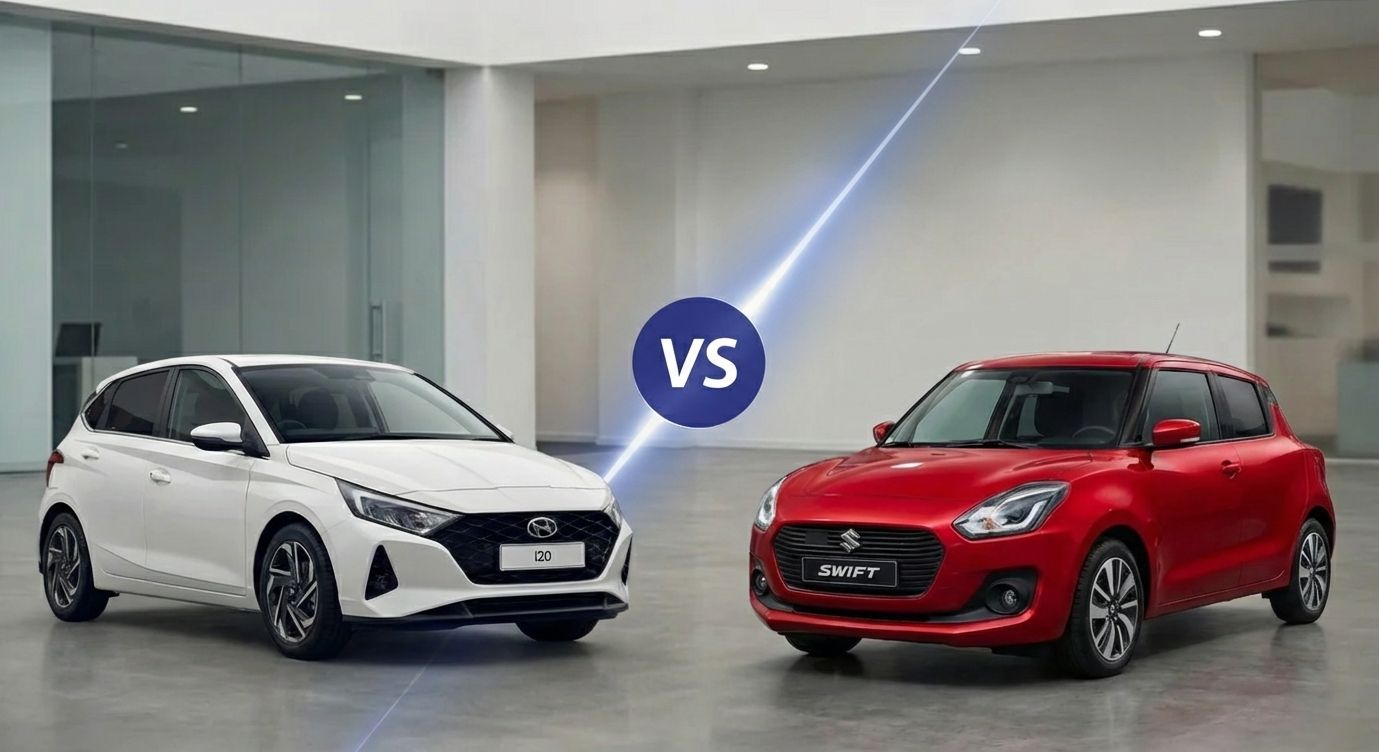
Car battle
Hyundai i20 vs. Suzuki Swift: Complete Comparison 2025
Hyundai i20 vs Suzuki Swift: Which hatchback is better? Our detailed comparison of equipment, ride, and price will help you choose. Read the verdict.
Apr 13, 2026
Articles
Car battle
Detailed comparison of Peugeot 208 vs Renault Clio. Find out which French hatchback has better equipment, fuel consumption, and reliability. Read our verdict!
April 8, 2026
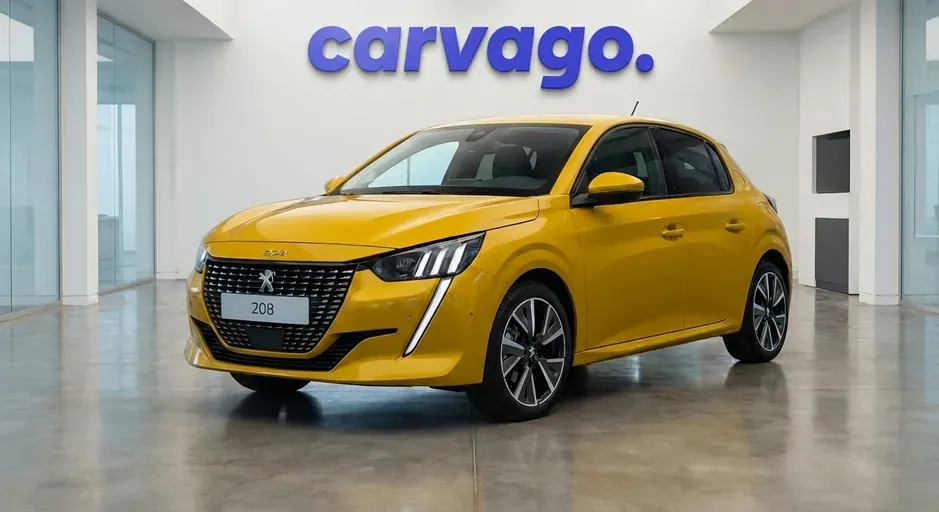
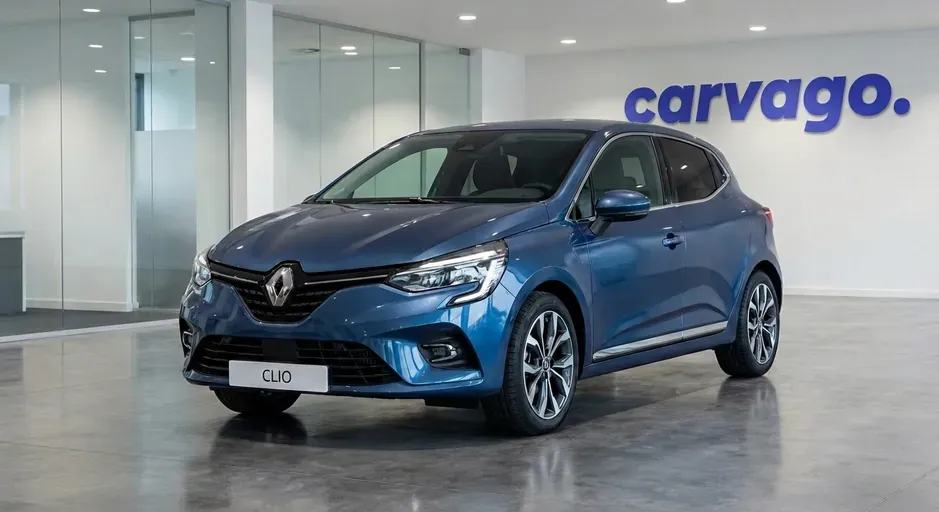
The Peugeot 208 is an exceptionally stylish city hatchback that catches the eye on the used car market primarily with its bold design and innovative interior concept. Its direct French rival is the popular Renault Clio, also sold on the Japanese market under the alternative name Renault Lutecia, which has long scored points for its excellent purchase price-to-value ratio, mature ride comfort, and everyday practicality. Let's take a detailed look at which of these two popular models fares better in our head-to-head comparison and represents the best choice for you on the market of approximately four-year-old used cars.
Looking at the exterior proportions of both rivals, it is clear that both cars respect the traditional boundaries of the B-segment, yet each approaches them slightly differently. In terms of length, the two representatives hardly differ – the second-generation Peugeot 208 measures exactly 4055 mm, while the fifth-generation Renault Clio ranges from 4050 to 4053 mm depending on the specific version. However, we discover a fundamental difference when looking at the body width. With its 1798 mm, the Renault is a significant 53 mm wider than its competitor with the lion logo, which takes up 1745 mm in width. This fact has a direct impact on everyday life with the car, whether you are navigating parking garages or driving on the highway. The wider build of the Clio provides the crew with significantly more shoulder room, but with the narrower Peugeot, you will conversely fit into tight city parking spots a bit more comfortably.
Another important parameter is the wheelbase, which often determines how much real space is left for passengers in the rear seats. In this discipline, the Renault Clio has the upper hand, with its axles spaced 2583 mm apart, which is 43 mm more than the Peugeot 208 (2540 mm). The Peugeot, on the other hand, counters with a 10 mm lower roofline (1430 mm compared to 1440 mm for the Clio), giving the lion model a visually sportier, more crouched stance. In practice, the Clio's longer wheelbase translates into a calmer and smoother ride over bumps on the highway and gives adults in the rear seats valuable extra centimeters of legroom. However, the Peugeot's lower silhouette will please drivers looking for more athletic proportions with a slightly better center of gravity for agile driving on twisty country roads.
| Parameter | Peugeot 208 Hatchback | Renault Clio Hatchback |
|---|---|---|
| Width (mm) | 1745 | 1798 |
| Length (mm) | 4055 | 4050 - 4053 |
| Height (mm) | 1430 | 1440 |
| Wheelbase (mm) | 2540 | 2583 |
When choosing a practical city car that often has to handle the role of the only family car, trunk volume plays a crucial role. The difference between the Peugeot 208 and Renault Clio models is quite noticeable in this discipline and shows the different approaches of the two French brands to family usability. While Peugeot relies primarily on unmistakable style and a premium interior feel, Renault focused on maximum everyday practicality and top-notch interior packaging with the current fifth generation of the Clio (the ideal and most common choice on the market of four-year-old used cars).
Looking at the raw numbers, the Renault Clio is the clear winner in a direct comparison of the hatchbacks. Its fifth generation offers an excellent 391 liters as standard in combustion versions and up to 1,176 liters with the rear seats folded down. The second-generation Peugeot 208 counters with a standard volume of 309 to 352 liters and a maximum capacity of 1,106 liters for conventional motorizations. With modern used cars, however, we must also take into account economical alternatives, where batteries or gas tanks cut into valuable liters. For the hybrid Clio E-Tech, the standard volume shrinks to roughly 301 liters, and the LPG variant has 318 liters. The purely electric Peugeot e-208, on the other hand, maintains a very similar value of 309 liters to some combustion models. If you were looking for even more space and wouldn't mind reaching for a slightly older car (around six years old), the previous fourth generation of the Clio was also sold as a practical Grandtour estate, which offered 443 liters as standard and a generous 1,380 liters with the seats folded down (Peugeot has completely abandoned estate versions in this segment).
In practice, these differences mean that the standard Renault Clio will provide valuable space for a few extra suitcases. Its trunk is deeper and generally better shaped, making it a car that is easily sufficient for weekend shopping as well as a longer vacation for two or with a small child. The trunk of the Peugeot 208 will easily accommodate a normal city routine or the transport of sports bags, but you will have to make compromises when packing for a family trip. In the overall assessment, the Renault Clio is the clear winner for pragmatically minded buyers looking for above-average transport capacity in the small car segment. The Peugeot 208, on the other hand, will appeal to those who are satisfied with a solid standard volume and prefer an attractive design.
| Parameter | Peugeot 208 Hatchback | Renault Clio Hatchback | Renault Clio Estate |
|---|---|---|---|
| Standard volume (liters) | 309 - 352 l | 301 - 391 l | 443 l |
| Maximum volume with folded seats (liters) | 1 106 l | 1 069 - 1 176 l | 1 380 l |
The ability to tow a trailer is not always a top priority for small city hatchbacks, but for many buyers, it can be a crucial factor. Differences in towing capacity often determine the overall practicality of the car and dictate whether it will serve only for commuting to work or if it can also handle more demanding weekend tasks. Looking at models that are approximately four years old (the current generation of both cars), we encounter interesting differences in maximum permitted weights on the used car market.
For most engine variants of the second-generation Peugeot 208 (from 2019), the standard and maximum braked towing capacity is an impressive 1200 kg. This applies to the popular 1.2 PureTech petrol engines (both 100 and 130 hp) as well as the 1.5 BlueHDi diesel versions. The fifth-generation Renault Clio, on the other hand, is much more conservative and maintains a uniform maximum braked towing capacity of 900 kg across almost its entire engine range.
When choosing a Peugeot, however, it is necessary to pay attention to the base versions. The weakest engine, the 208 1.2 PureTech 75 (55 kW), has a significantly reduced towing capacity of just 500 kg. In contrast, the Renault Clio is much more consistent – even the base SCe 65 engine or the LPG version (Eco-G 100) can tow the standard 900 kg. In the case of electrified variants, Peugeot confidently maintains the 1200 kg capacity for its 1.2 Hybrid models, while Renault keeps the 900 kg limit for its popular fully hybrid Clio E-Tech powertrain. (Note: Unbraked towing capacities are not available in the official data for these generations. However, for cars in this size class, they typically range between 500 and 600 kg, depending on the vehicle's curb weight.)
In practice, these values mean a significant difference in how you can use the car. The 1200 kg capacity of the Peugeot 208 is very generous – it is perfectly sufficient for a weekend purchase of building materials on a heavier trailer or even for a longer holiday with a smaller caravan. On the other hand, the 900 kg value for the Clio, or the limited 500 kg for the weaker Peugeot, represents more of a capacity for a few extra suitcases, a light utility trailer for hauling garden waste, or transporting standard recreational equipment.
In conclusion, if you require the capabilities of a towing workhorse from a small hatchback, the Peugeot 208 (excluding the weakest engine) will serve you better with its 1200 kg limit. The Renault Clio, conversely, is a safer bet for those who do not need to tow caravans and instead appreciate the predictable standard of 900 kg across the vast majority of sold engine variants.
| Model and engine | Braked trailer (kg) | Unbraked trailer (kg) |
|---|---|---|
| Peugeot 208 1.2 PureTech 75 (55 kW) | 500 | - |
| Peugeot 208 1.2 PureTech 100/130 (74-96 kW) | 1200 | - |
| Peugeot 208 1.5 BlueHDi 100 (75 kW) | 1200 | - |
| Peugeot 208 1.2 Hybrid 100/136 | 1200 | - |
| Renault Clio SCe 65 (48-49 kW) | 900 | - |
| Renault Clio TCe 90/100/130/140 | 900 | - |
| Renault Clio Eco-G 100 (LPG) | 900 | - |
| Renault Clio E-Tech Hybrid 140/145 | 900 | - |
| Renault Clio BLUE dCi 85/100/115 | 900 | - |
Both French models, the Peugeot 208 and the Renault Clio, offer a very different, yet all the more interesting, approach to engines from the perspective of roughly four-year-old used cars. This difference is absolutely crucial because while both cars handle city traffic and highway journeys excellently, their technical solutions target slightly different types of drivers. In its second generation, Peugeot relies primarily on the proven 1.2 PureTech three-cylinder petrol engines and, as one of the few in its class, also adds the purely electric e-208 version, which appeals to those interested in locally emission-free driving with instant throttle response. The fifth-generation Renault Clio, on the other hand, attracts buyers with an incredibly comprehensive and wide range, which includes traditional four-cylinder petrol engines, diesel engines, a unique factory LPG version, and the highly innovative fully hybrid E-Tech system. The choice ultimately depends on whether you prefer a quiet and elegant transition to full electricity with Peugeot, or you bet on the brilliant compromise of range and economy in the form of a hybrid or LPG with Renault.
The engine lineup for the second-generation Peugeot 208 is logically structured and easy to read for the average buyer. The base is formed by a naturally aspirated 1.2 PureTech three-cylinder engine with an output of 55 kW, which is suited almost exclusively for the city and quieter suburban areas. The golden middle way and by far the most common choice in used car dealerships is the turbocharged 1.2 PureTech version with 74 kW, which is available with a pleasant eight-speed EAT8 automatic transmission, or a six-speed manual. For more dynamically minded drivers, a more powerful variant with 96 kW was also available, always paired with an automatic transmission. Diesel engines play a rather marginal role in today's small cars, yet Peugeot has not forgotten the reliable 1.5 BlueHDi unit, which will please highway mile-munchers with its exceptionally low fuel consumption. The brand's real sales draw is the purely electric e-208 model, which provides a brisk 100 kW. It should be noted that the newer mild-hybrid units (designated as Hybrid 100 and 136) only arrived at the turn of 2023 and 2024, so you will not encounter them on the market of roughly four-year-old used cars yet.
| Engine type | Fuel | Power (kW) | Torque (Nm) | Transmission |
|---|---|---|---|---|
| 1.2 PureTech 75 | Petrol | 55 | 118 | 5-speed manual |
| 1.2 PureTech 100 | Petrol | 74 | 205 | 6-speed manual / 8-speed automatic (EAT8) |
| 1.2 PureTech 130 | Petrol | 96 | 230 | 8-speed automatic (EAT8) |
| 1.5 BlueHDi 100 | Diesel | 74 | 250 | 6-speed manual |
| e-208 136 | Electricity | 100 | 260 | 1-speed automatic |
The fifth generation of the Renault Clio scores in the field of engines with its amazing variety. The range starts with the undemanding naturally aspirated SCe 65 engine, but for everyday use, the turbocharged one-liter three-cylinder TCe 90 makes much more sense. A great ace up Renault's sleeve is the TCe 100 engine, which left the factory with, among other things, a modification for LPG combustion. It thus offers not only slightly higher power and torque (thanks to the higher octane number of the gas), but above all unbeatably low operating costs without sacrificing much trunk space. The top dynamic petrol engines are represented by the highly refined four-cylinder TCe 130 and TCe 140. However, an exceptionally popular technological pearl is the E-Tech Hybrid model (with outputs of 103 or 105 kW), which cleverly combines a naturally aspirated four-cylinder with two electric motors and a clutchless multi-mode transmission. Thanks to this, the Clio can drive purely on electricity for a significant part of the time in urban and suburban traffic. It is worth noting that, unlike Peugeot, Renault initially kept a wide range of economical Blue dCi diesel engines (outputs from 63 to 85 kW) for the Clio, but these gradually disappeared from the offer around 2022.
| Engine type | Fuel | Power (kW) | Torque (Nm) | Transmission |
|---|---|---|---|---|
| 1.0 SCe 65 | Petrol | 48 | 95 | 5-speed manual |
| 1.0 TCe 90 | Petrol | 66 | 160 | 6-speed manual / automatic CVT (X-tronic) |
| 1.0 TCe 100 LPG | Petrol / LPG | 74 | 160 / 170 | 5-speed / 6-speed manual |
| 1.3 TCe 130 | Petrol | 96 | 240 | 7-speed automatic (EDC) |
| 1.3 TCe 140 | Petrol | 103 | 260 | 6-speed manual |
| 1.5 Blue dCi 85 / 100 / 115 | Diesel | 63 / 74 / 85 | 220 / 260 / 260 | 6-speed manual |
| E-Tech Hybrid 140 / 145 | Petrol + HEV | 103 / 105 | 144 (engine) + 205 (electric) | Multi-mode automatic |
Choosing the right engine is absolutely crucial for your long-term satisfaction, because it is the power unit that determines real fuel consumption, everyday dynamics, and future service costs. Both car manufacturers approached their second (Peugeot 208) and fifth (Renault Clio) generation models with a slightly different philosophy. While Peugeot relies on lightweight construction and the dense torque of turbocharged three-cylinders, Renault scores with exceptionally durable one-liter engines featuring technologies that the used car market absolutely loves. Our recommendations for roughly four-year-old used cars take into account owner feedback, real fuel consumption, and resistance to normal wear and tear.
This turbocharged three-cylinder petrol engine represents an absolutely ideal compromise between purchase price, operating costs, and performance in the second-generation model range (available from 2019–2023). While the basic naturally aspirated version (75 hp) struggles on the highway and the more powerful variants (130 hp) unnecessarily increase the price of the used car, the 100-horsepower version provides the lightweight car with very pleasant dynamics. The engine benefits from a strong pull from low revs (205 Nm of torque), making it effortless and smooth to drive. Real combined fuel consumption remains around 5.5 l/100 km in the long term. Moreover, it works perfectly with both the precise manual and the excellent eight-speed EAT8 automatic transmission.
What to watch out for:
The weakest link of this engine is the timing belt bathed in engine oil. With irregular servicing, or if the car is only used for short trips when cold (when unburned petrol gets into the oil), the belt degrades and crumbles. The peeled-off pieces of rubber subsequently clog the oil pump strainer, which can lead to fatal engine seizure.
This engine is most suitable for drivers with a varied route profile, who combine the city with country roads and highways. For those who exclusively drive 2 km routes to the store and back, the risk of oil dilution with petrol represents an unnecessary concern.
For the fifth generation of the Clio (available from 2019), the clear favorite is the turbocharged three-cylinder 1.0 TCe. Although the paper output of 90 horsepower does not sound dazzling, in the real world it offers unexpectedly confident dynamics and perfect flexibility. Its biggest trump card, however, is its reliability and durability, thanks to which it is considered one of the best small engines on the used car market. The engine excels with quiet operation at lower revs and real fuel consumption safely below the 6 liters per 100 kilometers mark. If you come across the TCe 100 LPG version (with a factory gas installation), you will also get the unrivaled cheapest operation in its class.
What to watch out for:
The 1.0 TCe engine uses indirect fuel injection into the intake manifold. From a mechanic's point of view, this is more of an advantage than a weakness – thanks to this, the engine does not suffer from carbon build-up on the intake valves at all. A weakness in the first model years could be occasional squeaking from the clutch pedal or slightly rougher running when cold, but these are more cosmetic flaws than expensive faults. Since the engine lacks a gasoline particulate filter (GPF), another potentially expensive future service task is eliminated.
We recommend this engine to absolutely all types of users, but it especially shines for drivers with a high proportion of short city trips. Thanks to indirect injection, hopping in traffic jams with a cold engine does not harm it, and you do not need to deal with any valve cleaning or complex burning off of particulate filters.
The paper fuel consumption figures provided by manufacturers are often very optimistic, and you will rarely see them on your trip computer in real-world driving. A car's actual appetite is influenced by a wide range of factors, from your driving style to your daily route profile. For the most accurate comparison, we therefore rely on real-world data obtained directly from drivers themselves on the community portal Spritmonitor. Given the market supply of roughly four-year-old used cars, we focus on the second-generation Peugeot 208 and the fifth-generation Renault Clio, where real-world consumption is typically half a liter to a liter higher than laboratory promises.
| Model and engine | Average consumption (l/100 km) |
|---|---|
| Peugeot 208 1.2 PureTech 75 (Petrol) | 5.5 |
| Peugeot 208 1.2 PureTech 100 (Petrol) | 5.8 |
| Renault Clio SCe 65 (Petrol) | 5.4 |
| Renault Clio TCe 90 (Petrol) | 5.7 |
| Peugeot 208 1.5 BlueHDi 100 (Diesel) | 4.4 |
| Renault Clio Blue dCi 100 (Diesel) | 4.2 |
| Renault Clio E-Tech Hybrid 140 (Hybrid) | 4.8 |
Taking a closer look at the measured data, we come across several interesting trends. Small turbocharged three-cylinder petrol engines (PureTech in Peugeot and TCe in Renault) may look exceptionally efficient on paper, but their real-world consumption is highly sensitive to how they are driven. While they can run well under six liters on quiet country roads, in the city or at highway speeds, these small turbo engines do not save much fuel, and their consumption rises quickly. Diesel engines, on the other hand, clearly prove why they still make sense on longer journeys, even in small cars. Both diesel engines effortlessly stay slightly above the four-liter mark and are also less susceptible to load. Special attention should be paid to the Clio with the fully hybrid E-Tech system, which works excellently, especially in city traffic, and can rival diesel in consumption, although its electric advantage gradually fades on the highway.
For typical buyers of these cars, this leads to a clear recommendation. If you spend most of your time in the city and on shorter suburban routes, go for the petrol versions—their consumption won't ruin your wallet, and you will avoid the technical risks associated with an under-revved diesel. City drivers and budget-oriented motorists who commute daily in traffic jams should definitely try the hybrid Clio. For die-hard highway travelers and people with long commutes, on the other hand, it still pays off handsomely to opt for the 1.5 BlueHDi or Blue dCi diesel variants. In the final reckoning, however, fuel consumption will probably not be the main deciding factor. Both models are very evenly matched rivals in terms of overall fuel costs, so design preferences, interior ergonomics, or the current condition and equipment of a specific used car will play a bigger role in the final decision.
When looking for the ideal roughly four-year-old used car (model years 2020 to 2022), the current generations of both models meet on the secondary market. For Peugeot, this is the second generation with the codename P21, while Renault offers the fifth generation of the popular Clio. Both cars form the backbone of the small used car market in Europe, but their price tags differ noticeably. The Renault Clio traditionally attracts with an overall more affordable price, while the Peugeot 208 holds its residual value slightly better thanks to its very bold design and a more premium feel.
The Peugeot 208 is a highly sought-after commodity on the used car market, which is directly reflected in its higher average selling price. In the vast majority of cases, you will come across cars equipped with the popular 1.2 PureTech three-cylinder petrol engine.
The fifth generation of the Clio has made a huge leap forward compared to its predecessor, especially in terms of workmanship and interior quality. Nevertheless, as a used car, it remains much friendlier to the buyer's wallet. The most typical reliable engine here is the turbocharged 1.0 TCe three-cylinder.
| Category | Peugeot 208 (2020–2022) | Renault Clio (2020–2022) |
|---|---|---|
| Starting price (higher mileage) | from €9,000 | from €7,000 |
| Ideal used car (the golden mean) | €11,000 – €14,000 | €10,000 – €12,000 |
| Top trims and alternative drives | from €16,000 (e-208) | from €13,000 (E-Tech Hybrid) |
Price verdict:
From the perspective of pure price-to-utility ratio, a used Renault Clio represents a highly pragmatic and advantageous choice. It can be purchased significantly cheaper, yet it offers unexpectedly mature driving characteristics and a high-quality interior. The Peugeot 208, on the other hand, requires a higher initial investment. However, it can justify this, especially for drivers looking for a significantly more emotional and premium design, a futuristic interior layout (i-Cockpit), and for whom the fact that the car will depreciate at a slightly slower pace in the coming years plays a role.
Although a five-star Euro NCAP rating often appears for modern cars in this class (which the Renault Clio achieved as standard and the Peugeot 208 with an optional package, although it has four stars as standard), it is always necessary to consider the context and the year of testing. Euro NCAP protocols are constantly evolving and becoming stricter over time, which means that percentage scores from different years cannot be fairly and directly compared. The current generation of the Peugeot 208 underwent crash tests in 2019. While this testing year included newer rules for cyclist detection, it did not yet include crisis scenarios at intersections or simulations of a frontal impact with a moving barrier, which only became standard in 2020. The Peugeot 208 recorded a very good level of passive safety with standard equipment, scoring 91% in adult occupant protection and 86% for child occupants. A more significant weakness, however, was 56% for the protection of vulnerable road users and 71% for safety assist systems. The car's basic camera system failed to react in time and effectively to faster-moving cyclists, which required an optional radar system. It is also important to know that from the perspective of today's strict rules and after the expiration of the relevant validity period, the official certification from this year has already expired.
The Renault Clio completed the same Euro NCAP test protocol in the same year (2019), but with a more convincing result, thanks to which it received a full five stars right in the absolute base model. Its advanced body structure provided adult occupants with excellent protection rated at 96%, while it achieved 89% for children. A major advantage of the Clio over its French rival was the presence of more modern active safety features right in the standard equipment. The car was able to detect not only pedestrians but also cyclists much more reliably, leading to an excellent 72% in the protection of vulnerable road users and an overall score of 75% in the safety assist category. Although the original Euro NCAP certification has also expired in this case due to the time limit, historical data clearly proves that the Clio was at the absolute top of the segment in its time. For those interested in a roughly four-year-old used car, this vehicle thus brings an exceptionally robust construction enriched with carefully and reliably functioning assistance systems.
In conclusion, it can be stated that both models represent a very safe choice in the field of used cars, but the Renault Clio offers a more comprehensive and overall more modern safety package. Its more sophisticated standard equipment, significantly better results in pedestrian and cyclist protection, and excellent adult occupant protection make it the clear winner of this comparison. While the Peugeot 208 is objectively a very safe car with a rigid body, for a comparable level of assistance and safety for its surroundings, it is necessary to search more carefully in classifieds for better-equipped units with optional radars.
| Parameter | Peugeot 208 | Renault Clio |
|---|---|---|
| Year of testing | 2019 | 2019 |
| Adult occupant protection | 91% | 96% |
| Child occupant protection | 86% | 89% |
| Vulnerable road users protection | 56% | 72% |
| Safety assist systems | 71% | 75% |
In addition to standard equipment, each model offers several unique features and technological solutions that show the different approaches of the two French brands to added value and the overall driving experience.
Advantages:
Disadvantages:
Advantages:
Disadvantages:
Based on our own inspection data, failure statistics, and long-term user experiences, we have compiled an overview of the most common problems that buyers of used cars should watch out for. When buying a roughly four-year-old car, it is always crucial not to rely solely on the service book but to verify the actual technical condition of the specific piece, for which an independent comprehensive car inspection is ideal.
The second generation of the Peugeot 208 is exceptionally attractive in design, but technically it requires increased caution when buying a used car. This is especially true for the most popular petrol engines, which have their very specific pitfalls.
Summary for the Peugeot 208: This model can be a pleasant companion, but it requires absolutely pedantic maintenance and careful selection. The 1.2 PureTech petrol versions are not at all suitable for people who drive exclusively very short city routes. Increased attention to the condition of the timing belt and oil is essential before signing the purchase contract.
The fifth generation of the Renault Clio profiles itself as an honestly crafted and, in terms of engines, very reliable car. However, it has not completely avoided minor quirks, which are mainly related to modern electronics and software.
Summary for the Renault Clio: In terms of basic mechanics and powertrains, the fifth-generation Clio is a highly above-average and reliable car that does not demand exorbitant service costs in the long run. Any potential worries are usually limited to software tuning of the infotainment or replacing a tired car battery due to variable charging.
When buying a used car, a thorough inspection is crucial, and a professional comprehensive car audit can save you a lot of future worries. Here are a few specific points you should focus on during the inspection and test drive of roughly four-year-old representatives of these two popular city models.
The Renault Clio offers an above-average luggage space in its class, into which you can load an excellent 391 liters of cargo. The Peugeot has a more modest trunk with a volume of 311 liters, which is sufficient for regular daily shopping, but loses significantly when packing for a family. In terms of overall practicality and usability of the luggage compartment, the Renault is thus a much better choice.
The 208 model impresses with the extravagant layout of the i-Cockpit with a small steering wheel and elevated 3D dials, which looks very futuristic and modern. In contrast, the Clio relies on more traditional ergonomics and brings unexpectedly luxurious, soft-touch materials on the dashboard and door panels to the small car segment. The choice thus depends primarily on whether you prefer an original design experiment or rather classic clarity with a more mature build quality.
The Renault offers a much more balanced compromise between comfort and confidence in corners, thanks to which it excellently and quietly absorbs bumps even on broken city roads. Thanks to the specific small steering wheel, the Peugeot feels more agile and sportier, however, its chassis is noticeably stiffer and can bounce slightly on larger potholes. For regular daily commuting, the Clio is therefore a more mature and refined car.
The fundamental difference lies in the different approach to modern technologies in these used cars. The Peugeot can be purchased in a fully electric version e-208 with a real range of slightly over 300 km, while Renault opted for the advanced fully hybrid powertrain E-Tech, which combines a gasoline engine with electricity without the need for charging from the grid. If you are looking for a pure electric car for the city, you will succeed with the 208 model, but for carefree long journeys with low fuel consumption, the Clio's hybrid system makes more sense.
The reliable basic three-cylinder gasoline engines in both cars (1.2 PureTech and 1.0 TCe) are very economical and their real average consumption is identically around 5 to 5.5 liters per 100 kilometers. The mentioned hybrid version from Renault can even push the appetite below the 4.5 liters of gasoline mark in exclusively urban traffic. Regular costs for routine service, maintenance, and spare parts are very similar and pleasantly low for both rivals.
Sources: ADAC, svetmotoru.cz, aktualne.cz, smartmania.cz, autohome.cz, autobox.cz
This article was prepared using artificial intelligence tools. The section guarantor is Petr Dušek.
Hyundai i20 vs Suzuki Swift: Which hatchback is better? Our detailed comparison of equipment, ride, and price will help you choose. Read the verdict.
Apr 13, 2026
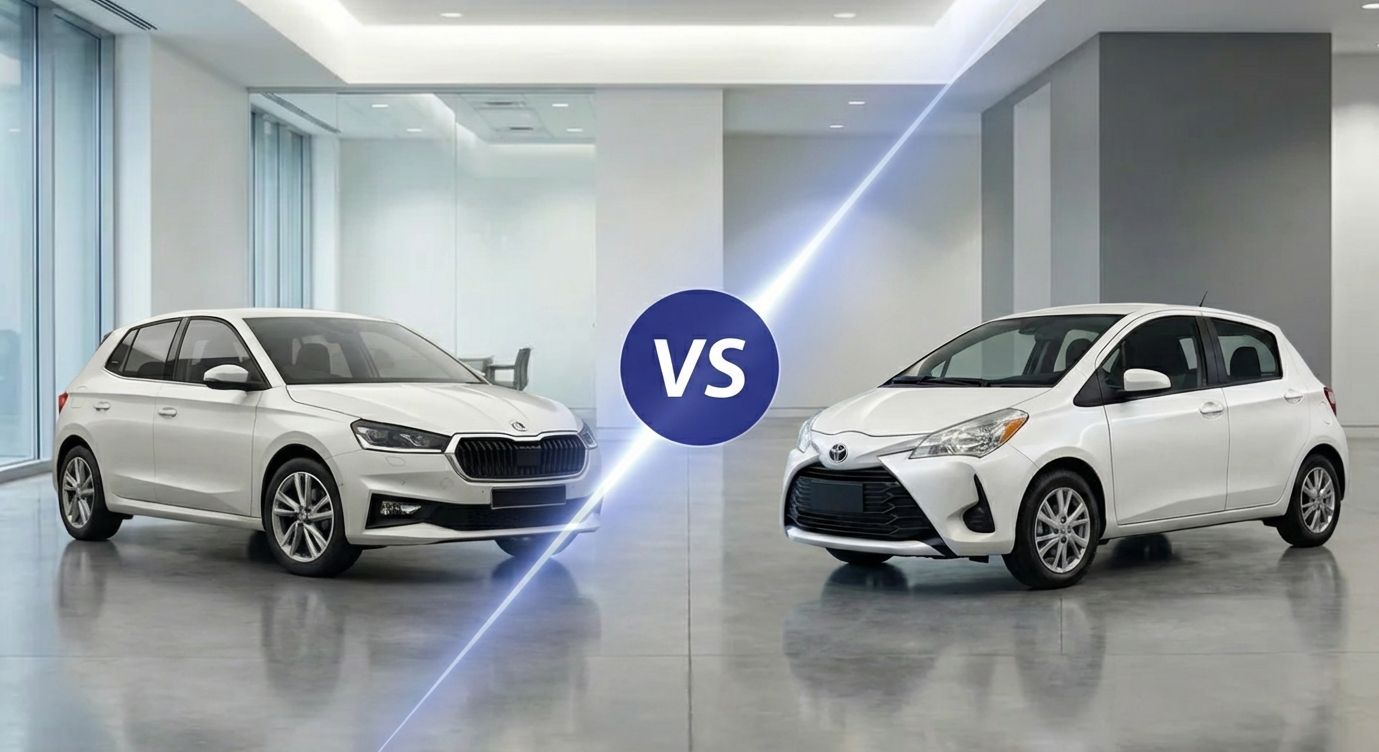
Škoda Fabia vs. Toyota Yaris. A detailed comparison of engines, features, and prices. Find out which of these popular small cars is the right one for you.
Apr 13, 2026
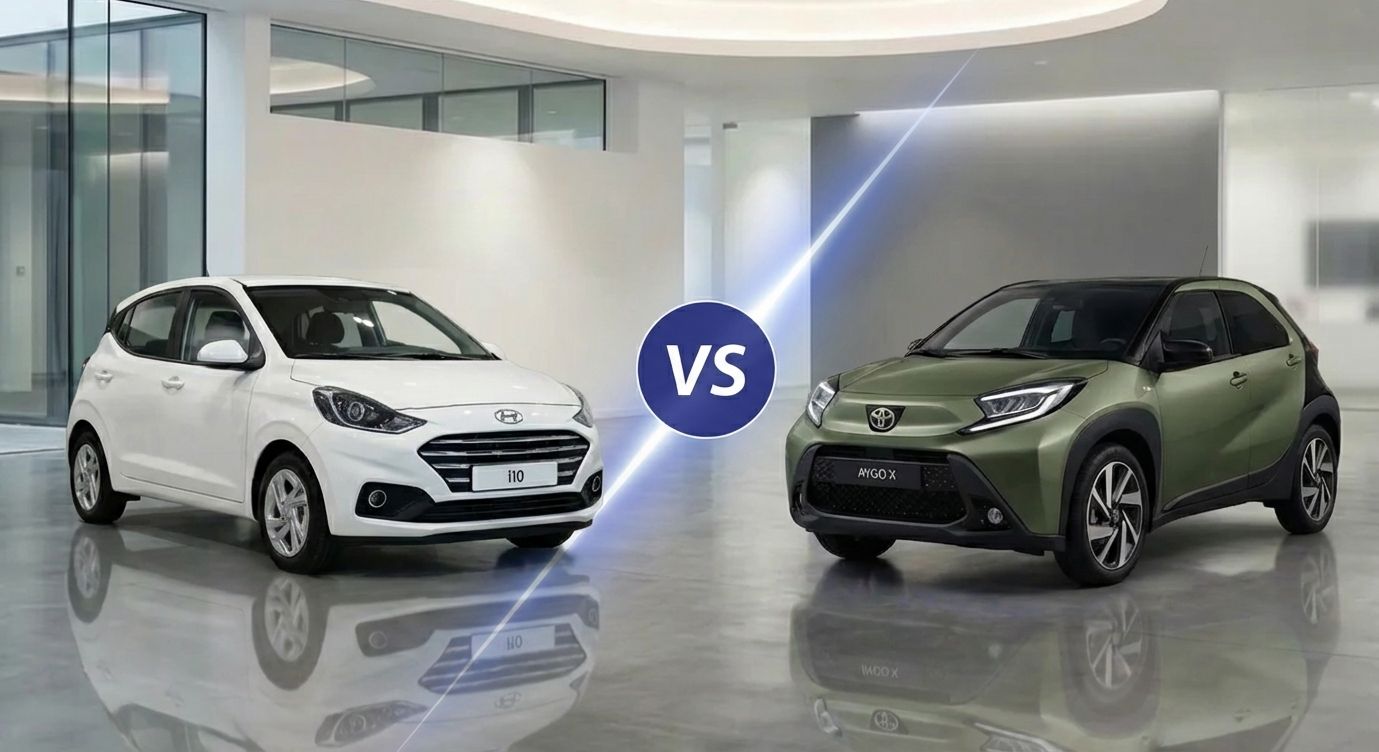
Hyundai i10 vs. Toyota Aygo X: A detailed comparison, real-world insights, and a verdict to help you choose the right small city car.
Apr 2, 2026