Car battle
Audi Q3 vs. BMW X1: A Complete 2025 Comparison
Audi Q3 vs BMW X1: Detailed comparison of design, performance, and practicality. Find out which premium SUV is the right choice for you in our verdict.
Apr 14, 2026
Articles
Car battle
Opel Mokka vs. VW T-Cross. A detailed comparison of engines, equipment, and price. Find out which compact SUV is right for you in our big test.
April 14, 2026
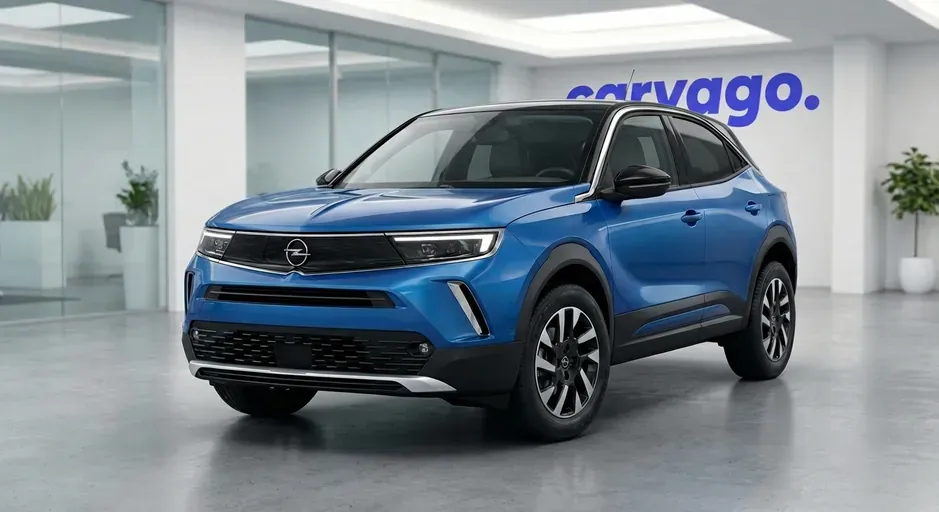
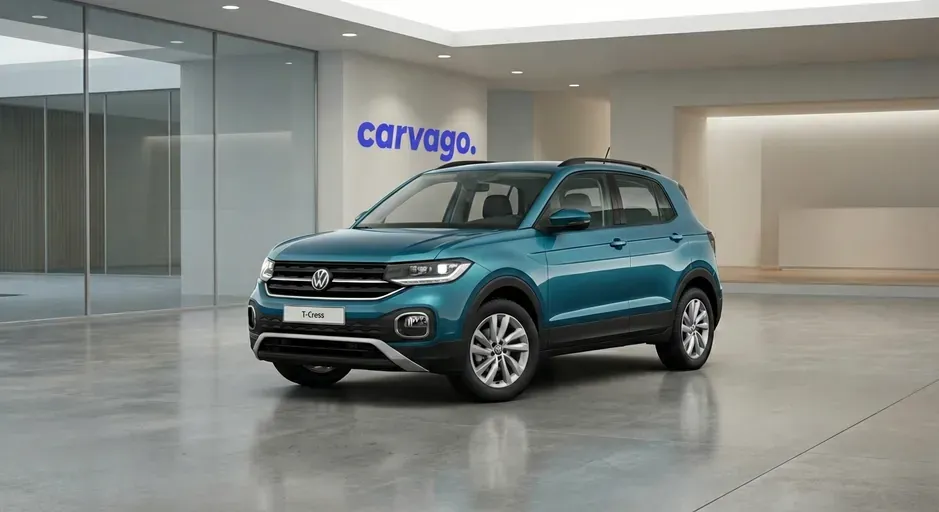
The Opel Mokka, also known as the Vauxhall Mokka in the UK, enters the small SUV arena with a bold and unmistakable design that promises both style and modern technology. Against it stands the practical and versatile Volkswagen T-Cross, which builds on a robust foundation and the brand's reputation, offering spaciousness and flexibility for everyday adventures. In this comparison, we will look at the key differences and strengths of both cars to help you decide which of these German rivals is right for you.
Although both cars fall into the same category of small urban SUVs, their exterior dimensions reveal different philosophies. The Opel Mokka, with a length of 4,151 mm, is a noticeable 4.3 cm longer than the Volkswagen T-Cross, which measures 4,108 mm. This gives the Mokka a visually more elongated and dynamic profile, while the T-Cross, with its shorter body, appears more agile, which can be an advantage in narrow city streets.
The most significant difference between the two models is in their height. The T-Cross, at 1,584 mm, is a full 5 centimetres taller than the Mokka (1,534 mm). This difference is reflected not only in the appearance but also in the seating position behind the wheel. The T-Cross driver sits higher and has a feeling of greater command of the road, which corresponds to the traditional concept of an SUV. The Mokka, on the other hand, offers a lower, sportier position more reminiscent of a classic hatchback. In terms of width, the cars are almost identical with a difference of just 3 mm, which means comparable interior space at shoulder level.
The wheelbase, crucial for stability and interior space, is very similar in both cars. The Mokka, with a value of 2,557 mm, offers only 6 millimetres more than the T-Cross (2,551 mm). Although a longer wheelbase theoretically promises a smoother ride on the motorway and more legroom for rear passengers, such a minimal difference is practically unnoticeable in practice. The choice should therefore not be based on this parameter, but rather on the overall character and feel of the car, which are primarily defined by the differences in height and length.
| Parameter | Opel Mokka (B generation) | Volkswagen T-Cross (1st generation) |
|---|---|---|
| Length (mm) | 4151 | 4108 |
| Width (mm) | 1785 | 1782 |
| Height (mm) | 1534 | 1584 |
| Wheelbase (mm) | 2557 | 2551 |
When choosing a compact SUV, boot space plays a key role, especially for families or active individuals. It is in this area that the Opel Mokka and the Volkswagen T-Cross differ significantly. While the T-Cross focuses on maximum practicality and versatility, the Mokka prioritises design, which results in a smaller boot volume. For the buyer, this is a crucial difference that can determine the choice of car according to their lifestyle.
The Volkswagen T-Cross clearly dominates this battle. Thanks to a clever solution in the form of a sliding rear bench seat, it offers a volume of 385 to 455 litres in its basic configuration. This is significantly more than the 350 litres provided by the Opel Mokka with combustion engines. A difference of 105 litres in practice means space for several shopping bags or one extra small suitcase. In the electric Mokka-e version, the boot shrinks to just 310 litres due to the batteries, a figure more comparable to small city hatchbacks.
The T-Cross's advantage continues even after folding down the rear seats. The Volkswagen's maximum transport capacity is an impressive 1281 litres, making it one of the most spacious cars in its class. In contrast, the Opel Mokka offers a maximum of 1105 litres (for combustion versions) and 1060 litres (for the electric variant), respectively. This difference of almost 170 litres is noticeable when moving larger items or transporting sports equipment.
| Parameter | Opel Mokka SUV/Off-road | Volkswagen T-Cross SUV/Off-road |
|---|---|---|
| Basic volume (litres) | 350 (310 for Electric) | 385 - 455 |
| Max. volume with seats folded (litres) | 1105 (1060 for Electric) | 1281 |
Although small SUVs are not primarily workhorses, the ability to attach a trailer is a practical bonus for many owners. In this discipline, a fairly clear difference emerges between the two competitors. The Opel Mokka takes a more straightforward approach to towing capacity, whereas with the Volkswagen T-Cross, it depends on the chosen engine.
The second-generation Opel Mokka (from 2020) offers a consistent maximum braked trailer weight of 1200 kg for most of its combustion engines, whether it's the 1.2 Turbo petrol or the 1.5 Diesel. This is a solid figure that is easily sufficient for a small caravan, a trailer with building materials, or a boat for a weekend adventure. The only exception is the mild-hybrid version, whose capacity is slightly reduced to 1100 kg. As expected, the electric Mokka-e cannot be fitted with a tow hitch.
The Volkswagen T-Cross, on the other hand, has a towing capacity that varies with engine power. The base 1.0 TSI engine with 70 kW can handle a trailer weighing 1000 kg. More powerful variants, such as the 1.0 TSI with 81 or 85 kW and the older 1.6 TDI diesel, can manage 1100 kg. If you want to match the Mokka's capabilities, you need to opt for the top-of-the-line 1.5 TSI engine, which is the only one to offer a maximum braked trailer weight of 1200 kg.
For the buyer, this means that if they plan to use a tow hitch frequently, the Opel Mokka is a safer bet across almost its entire range. With the T-Cross, you need to choose the engine more carefully to ensure its capabilities meet the requirements for towing heavier trailers.
| Model and engine | Braked trailer weight (kg) | Unbraked trailer weight (kg) |
|---|---|---|
| Opel Mokka 1.2 DI Turbo (74/96 kW) | 1200 | 620-640 |
| Opel Mokka 1.5 Diesel (81 kW) | 1200 | 640 |
| Volkswagen T-Cross 1.0 TSI (70 kW) | 1000 | 660 |
|---|---|---|
| Volkswagen T-Cross 1.0 TSI (81/85 kW) | 1100-1200 | 660 |
| Volkswagen T-Cross 1.5 TSI (110 kW) | 1200 | 660 |
When it comes to engine selection, the Opel Mokka and Volkswagen T-Cross take different paths. The Mokka bets on diversity, offering not only petrol and diesel engines but also a purely electric version, which is a significant competitive advantage in this segment. In contrast, the T-Cross sticks to a proven and straightforward strategy focused exclusively on efficient and reliable TSI petrol engines. The choice, therefore, depends on the buyer's preferences – whether they are looking for broader options, including alternative powertrains, or prefer simple and proven classics.
The engine range for the second-generation Opel Mokka (from 2021) is truly diverse. The foundation is the turbocharged three-cylinder 1.2 Turbo, available in two power versions, which is ideal for regular driving in and out of the city. For drivers with high annual mileage, there was an efficient four-cylinder 1.5 Diesel engine, but its production was discontinued in 2023. The biggest draw for environmentally conscious drivers is the Mokka Electric, which offers quiet, emission-free operation. A mild-hybrid version also appeared in the range later on.
| Engine Type | Fuel | Power (kW) | Torque (Nm) | Gearbox |
|---|---|---|---|---|
| 1.2 Turbo | Petrol | 74 | 205 | 6-speed manual |
| 1.2 Turbo | Petrol | 96 | 230 | 6-speed manual / 8-speed automatic |
| 1.5 Diesel | Diesel | 81 | 250 | 6-speed manual |
| Electric | Electric | 100 | 260 | Automatic |
Note: The 1.5 Diesel version was only offered until 2023 and is therefore less common on the used car market.
The Volkswagen T-Cross simplifies the decision-making process and focuses on what it does best – turbocharged petrol engines. The base is the reliable and refined three-cylinder 1.0 TSI, which is perfectly adequate for a car of this size and is available in two power variants. For more demanding drivers who require more dynamism, there is the four-cylinder 1.5 TSI with cylinder deactivation technology (ACT), which is always paired with a DSG automatic gearbox. In the first years of production (2019–2020), a 1.6 TDI diesel engine was also briefly available, but today it is a rarity on the used car market.
| Engine Type | Fuel | Power (kW) | Torque (Nm) | Gearbox |
|---|---|---|---|---|
| 1.0 TSI | Petrol | 70 | 175 | 5-speed manual |
| 1.0 TSI | Petrol | 81/85 | 200 | 6-speed manual / 7-speed DSG |
| 1.5 TSI ACT | Petrol | 110 | 250 | 7-speed DSG |
| 1.6 TDI | Diesel | 70 | 250 | 5-speed manual / 7-speed DSG |
Note: The 1.6 TDI engine was only available until 2020 and is no longer relevant for newer used cars.
Choosing the right engine is key to long-term satisfaction with a car. In our recommendations, we consider not only the specification data but also real-world fuel consumption, owner experiences, and mechanical reliability. While the Volkswagen T-Cross relies on its proven and refined TSI engines, the Opel Mokka uses agile but more service-intensive turbocharged three-cylinder engines originating from the French PSA group. The range of diesel engines for both models has narrowed over time, with the T-Cross losing its diesel earlier than the Mokka.
The 96 kW turbocharged three-cylinder petrol engine is the ideal choice for the Mokka. It offers an excellent compromise between performance and running costs, making the car feel confident in the city and on the motorway. The engine has a pleasantly linear power delivery and enough torque (230 Nm) for safe overtaking. Real-world fuel consumption is around 6 litres per 100 km with calm driving, which is a solid figure for the given power output.
This engine is suitable for drivers looking for an all-purpose powertrain for daily driving and longer journeys. Its performance is noticeably better than the basic 74 kW version, without a dramatic increase in fuel consumption. However, close attention must be paid to the service history. These engines are known for their problematic timing belt design, which runs in an oil bath. If maintenance is neglected or the wrong oil is used, there is a risk of it disintegrating and causing fatal engine damage. For a used car, it is therefore crucial to verify that the oil change interval has been followed (ideally shortened to 15,000 km) and that the correct specification of oil has been used. The 1.5 Diesel (81 kW) engine is a reliable alternative for drivers with high annual mileage, but it is gradually disappearing from the used car market.
The more powerful version of the turbocharged 1.0 TSI three-cylinder engine (power varied slightly depending on the model year) is the most sensible and widespread choice for the T-Cross. Despite its displacement, it provides the car with sufficient dynamics for the vast majority of situations and is characterized by exceptional refinement and low vibrations for a three-cylinder concept. Real-world fuel consumption is easily kept below 6.5 liters per 100 km.
The engine is ideal for those who drive mainly in the city, on country roads, and occasionally take longer trips on the motorway. Compared to the weaker version (70 kW), it offers a six-speed gearbox (instead of a five-speed) and noticeably better flexibility, which is useful when overtaking. The EA211 series engines are generally considered very reliable. A more powerful 1.5 TSI four-cylinder (110 kW) is also occasionally found on the used car market, which will please more demanding drivers, but for normal use, the 1.0 TSI is perfectly adequate and more economical. The 1.6 TDI diesel engine was only offered until 2020, and is therefore already a rarity in cars around four years old.
When choosing a crossover, fuel consumption plays a significant role, and the official manufacturer figures can sometimes be overly optimistic. The reality of everyday driving often shows different numbers. That's why we looked at real-world consumption data from drivers themselves, for example from the German portal Spritmonitor.de, to get the most accurate picture of the appetite of the Opel Mokka and Volkswagen T-Cross.
A direct comparison of the relevant engines for the used car market (Opel Mokka B from 2021 and VW T-Cross from 2019) reveals interesting trends. Both models offer economical small-displacement petrol engines as well as diesel alternatives for high-mileage drivers.
| Model and Engine | Average Real-World Consumption (l/100 km) |
|---|---|
| Opel Mokka 1.2 Turbo (74 kW/100 hp) | 6.3 |
| Opel Mokka 1.2 Turbo (96 kW/130 hp) | 6.8 |
| Opel Mokka 1.5 Diesel (81 kW/110 hp) | 5.0 |
| Volkswagen T-Cross 1.0 TSI (70 kW/95 hp) | 6.1 |
| Volkswagen T-Cross 1.0 TSI (81 kW/110 hp) | 6.4 |
| Volkswagen T-Cross 1.5 TSI (110 kW/150 hp) | 6.6 |
| Volkswagen T-Cross 1.6 TDI (70 kW/95 hp) | 5.2 |
As the table suggests, in the basic petrol engine category, the Volkswagen T-Cross has a slight edge with its one-liter 1.0 TSI three-cylinder, which averages between 6.1 and 6.4 liters in real-world driving. Opel's 1.2 Turbo three-cylinder is only a few tenths thirstier. Interestingly, the more powerful 1.5 TSI four-cylinder in the T-Cross is not much hungrier than the one-liter engine, making it an attractive option for those who want performance without a major compromise in consumption.
For drivers with high annual mileage who often drive outside the city and on motorways, diesel engines remain the clear choice. Here, the Opel Mokka reigns supreme with its 1.5 Diesel engine, whose owners report an average consumption of around 5.0 liters per 100 km, and with a calm driving style outside the city, it's not a problem to get down to four liters. The diesel T-Cross 1.6 TDI, which was available mainly in the first years of production, is a very close competitor with an appetite of around 5.2 liters.
As a result, both cars are very similar in terms of fuel running costs. The differences of a few tenths of a liter are unlikely to be a deciding factor for most buyers. The choice will therefore depend more on the preference for a particular engine – whether you prefer the economy and torque of a diesel, the refinement of the 1.5 TSI four-cylinder, or the simplicity of the basic three-cylinders.
When deciding between two attractive compact SUVs like the Opel Mokka and the Volkswagen T-Cross, the price of the used car plays a key role. Although both models fall into the same segment, their prices on the used car market can vary depending on the year of manufacture, equipment, engine, and mileage. We looked at models that are approximately four years old to give you a realistic overview.
The second-generation Opel Mokka, introduced in 2020, impressed with its bold design and modern technology. On the used car market, the prices of these models are in a very interesting range.
Older units from 2020 and 2021 with higher mileage can be purchased from as little as €15,000. More often, however, you will find prices around €16,000 to €19,000 for well-equipped versions (e.g., Elegance or GS Line) with a reasonable number of kilometers. Nearly new cars from 2022 with low mileage and rich equipment can even exceed €21,000.
The Volkswagen T-Cross, which has been on the market a little longer (since 2019), traditionally holds its value very well. This is also reflected in the prices of used cars.
Basic versions from 2019 and 2020 with the 1.0 TSI engine and higher mileage can be found from €14,000. However, the average prices for well-maintained and better-equipped models (Life, Style) are more in the range of €16,000 to €21,000. For cars with the more powerful 1.5 TSI engine, automatic DSG gearbox, or in the sporty R-Line trim, be prepared to pay an amount approaching or even exceeding €23,000, even for models from 2021 and 2022.
| Model | Year | Typical Price (€) | Note |
|---|---|---|---|
| Opel Mokka | 2020-2022 | 15,000 - 20,000 | Price strongly depends on equipment and mileage |
| Volkswagen T-Cross | 2019-2022 | 16,000 - 23,000+ | Higher versions (Style, R-Line) hold a high price |
Looking at the price levels, it is clear that the Opel Mokka offers a slightly lower entry price on the used car market. For similar money, you often get a younger or better-equipped car than in the case of the T-Cross.
On the other hand, the Volkswagen T-Cross holds its value better, which can be an advantage when it comes to resale. Its prices are generally slightly higher, reflecting strong demand and the brand's reputation. So, if you're looking for the best possible value for money in terms of price, age, and equipment, the Mokka has a slight edge. If long-term value retention is your priority and you're willing to pay a bit more, the T-Cross is a safe bet.
When comparing safety, it's crucial to look not only at the number of stars from Euro NCAP but also at the year the tests were conducted. The methodology is constantly becoming stricter, and five stars from 2019 may not correspond to the same rating in newer, more demanding tests. This is precisely the case with the Volkswagen T-Cross, which was tested twice with different results.
The Volkswagen T-Cross was first tested by Euro NCAP in 2019 and received a full five-star rating. It excelled particularly in adult occupant protection, where it scored an excellent 97%, and also performed very well in child protection with 86%. Its safety assist systems were rated at 80% at the time, and vulnerable road user protection at 81%. However, the validity of this rating expired, and the T-Cross was re-tested in 2025 under significantly stricter criteria. The result was disappointing – just three stars. The main reason was a drop in the safety assist systems category to 57% and a weaker result in vulnerable road user protection (60%). Adult (74%) and child (81%) protection remained at a solid level, but it wasn't enough for more than three stars.
The second-generation Opel Mokka underwent Euro NCAP testing in 2021 and earned four stars. Although it didn't achieve the top rating, its results are solid and consistent in the context of the stricter rules. It scored 73% for adult occupant protection and 75% for child protection. Where it lags slightly is in the vulnerable road user protection category, with 58%. The rating for its safety assist systems stood at 64%. The Mokka was missing some features that are becoming standard to get the fifth star, such as an autonomous emergency braking system with cyclist detection or a centre airbag.
Although the T-Cross had five stars in 2019, its safety equipment and construction no longer meet the latest and strictest Euro NCAP standards, as confirmed by the 2025 re-test. The Opel Mokka, although "only" a four-star car, was tested according to the newer and more demanding 2021 methodology. Its results, therefore, better reflect the current requirements for vehicle safety. For a used car buyer, this means the Mokka offers a more balanced and modern safety package, while with the T-Cross, one must consider that its original five-star rating no longer fully reflects current standards.
| Parameter | Opel Mokka | Volkswagen T-Cross |
|---|---|---|
| Year of Testing | 2021 | 2019 (re-tested 2025) |
| Overall Rating | ★★★★☆ | ★★★★★ (2019) / ★★★☆☆ (2025) |
| Adult Occupant Protection | 73 % | 97 % (2019) / 74 % (2025) |
| Child Occupant Protection | 75 % | 86 % (2019) / 81 % (2025) |
| Vulnerable Road Users | 58 % | 81 % (2019) / 60 % (2025) |
| Safety Assist | 64 % | 80 % (2019) / 57 % (2025) |
In addition to the standard equipment, each model offers several unique features that can be a deciding factor for the customer, and each takes its own approach. While the Mokka bets on a bold design and a digital experience, the T-Cross counters with clever practicality.
With the Mokka, Opel has focused on modern technology and a design that stands out. It targets drivers who want a stylish car with a clean and digital interior.
The Volkswagen T-Cross builds on the brand's traditional values – maximum utility, spaciousness, and smart solutions that make everyday life easier.
Advantages:
Disadvantages:
Advantages:
Disadvantages:
Based on our own CarAudit inspections, breakdown statistics, and service reports, we have compiled an overview of the most common problems that buyers of used Opel Mokka and Volkswagen T-Cross cars should look out for. Although both models are among the reliable ones in their segment, no car is completely flawless.
The second-generation Opel Mokka, built on the PSA (now Stellantis) platform, brings modern technology, but also a few specific issues typical for this engineering.
Summary for the Opel Mokka: Potentially the most serious risk is the 1.2 PureTech engine, where a verified service history is key. Other problems are of a more minor and solvable nature. A thorough inspection of the used car is an absolute must here.
The Volkswagen T-Cross benefits from proven VW Group technology, which is known for its solidity. Nevertheless, it is not immune to some typical problems.
Summary for the Volkswagen T-Cross: The T-Cross is generally considered a very reliable car. The condition of the automatic DSG gearbox deserves the most attention, and with the 1.0 TSI engine, listening for cold starts because of the timing gear. A comprehensive pre-purchase inspection of the car will help to uncover any hidden defects.
When buying a used car, a thorough inspection is key, and you shouldn't underestimate it even with these popular crossovers. Here are a few specific points to focus on with these two models to avoid potential problems.
The second generation Opel Mokka is a modern car, but even it can have specific defects. A careful physical inspection of the used car is absolutely essential.
Volkswagen T-Cross is built on proven technology, yet it has a few weak spots that are worth checking out as part of a comprehensive vehicle inspection.
Volkswagen T-Cross offers a significantly larger and more variable luggage compartment. Its volume is 455 litres, while the Opel Mokka provides 350 litres. The T-Cross is therefore better suited to the needs of families or users who often carry bulkier loads.
The Opel Mokka has a wider range of powertrains, including a fully electric version, which you won't find in the T-Cross. In a direct comparison of petrol engines, the Mokka often offers better acceleration. The Volkswagen T-Cross focuses exclusively on proven TSI petrol engines.
For families, the Volkswagen T-Cross is the more practical choice thanks to its more spacious interior and larger boot. Rear-seat passengers have more space in the T-Cross. The Opel Mokka is cosier inside, but less spacious overall.
Both cars are economical in their petrol versions, but the Opel Mokka often has slightly lower stated fuel consumption. However, the differences are small, and real-world consumption will depend on the specific engine and driving style. Additionally, the Mokka offers an electric variant with zero local emissions.
The Volkswagen T-Cross is focused on a more comfortable and quieter ride, which is especially noticeable on motorways. The Opel Mokka feels more agile and sporty, especially in the city, but it can have slightly stiffer suspension. The choice depends on the preference between comfort and a more lively performance.
Sources: ADAC, pistonheads.com, autoexpress.co.uk, thetruthaboutcars.com, automobilemag.com, evobsession.com
This article was prepared using artificial intelligence tools. The section guarantor is Petr Dušek.
Audi Q3 vs BMW X1: Detailed comparison of design, performance, and practicality. Find out which premium SUV is the right choice for you in our verdict.
Apr 14, 2026
BMW X1 vs. Volvo XC40: Which premium SUV is better for you? Our detailed comparison and verdict will help you make the final decision.
Apr 14, 2026

Detailed comparison of used SUVs Citroën C3 Aircross and Suzuki Vitara. Find out the differences in engines, equipment, or reliability and read our final verdict.
Apr 13, 2026