Car battle
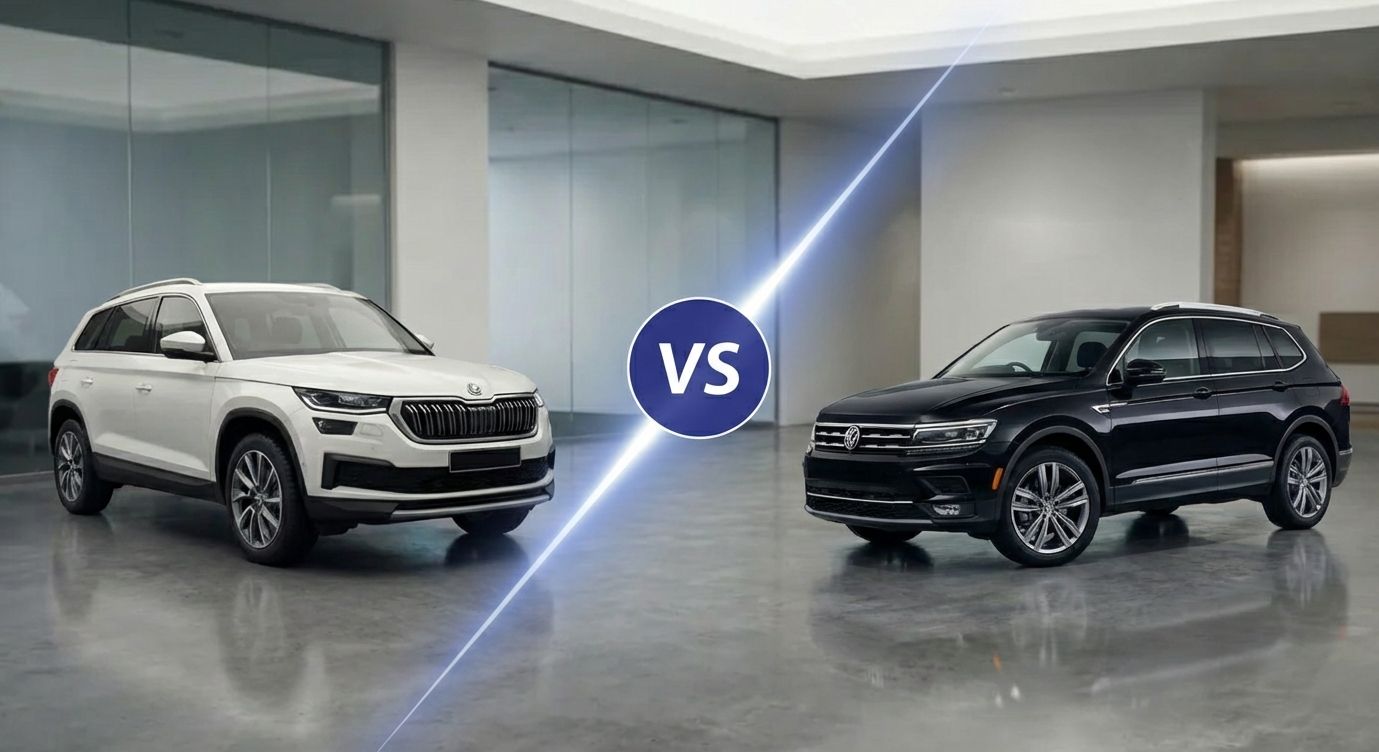
Škoda Kodiaq vs. Volkswagen Tiguan Allspace: Complete Comparison 2026
Škoda Kodiaq vs. VW Tiguan Allspace: Which 7-seater SUV is better? Our detailed comparison, real-world insights, and verdict will help you choose.
Oct 23, 2026
Detailed comparison of the Nissan X-Trail and Renault Espace. Discover the differences in space, fuel consumption, and equipment, and read our verdict. Which family SUV is better?
October 16, 2026
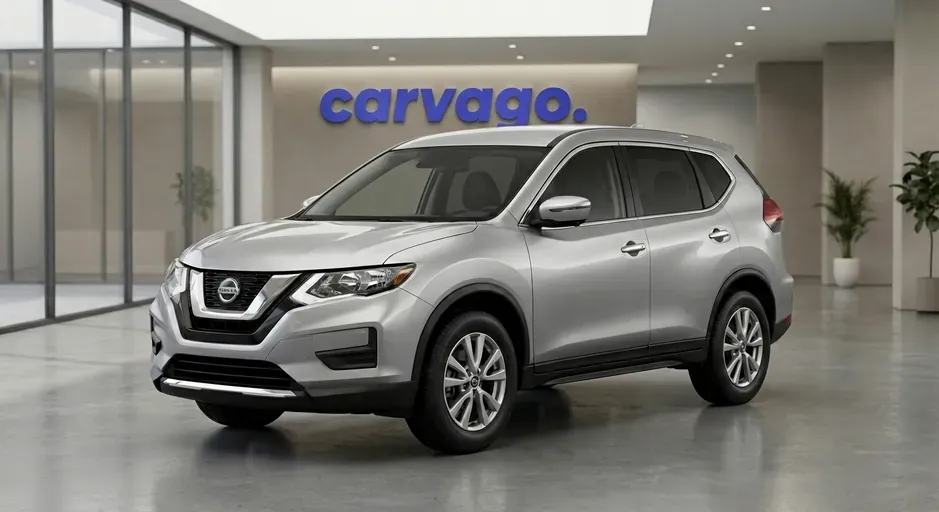
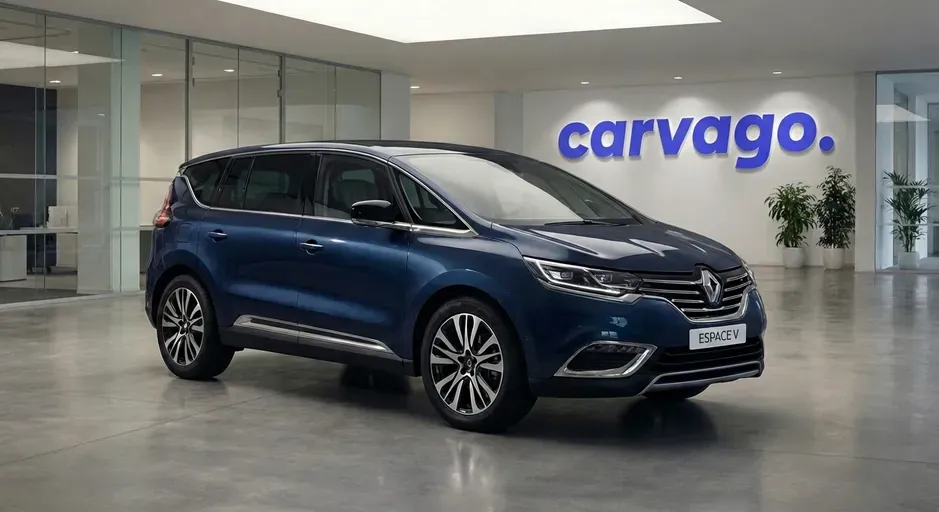
Nissan X-Trail, also sold under the name Nissan Rogue in some global markets, is a popular and reliable family SUV that has built a solid position thanks to a harmonious combination of everyday practicality, modern technology, and the ability to handle light off-road terrain. Standing against it is the Renault Espace, a vehicle historically famous even in its extended versions as the Grand Espace, which in its modern era has successfully transitioned from the role of a traditional large MPV into the attractive guise of a stylish family crossover. In the following comparison, we will analyze in detail the key features, driving comfort, and overall utility value of both these models from the perspective of the market for roughly four-year-old used cars, so you can find out which one better suits your personal needs.
Looking at the exterior dimensions, it is immediately apparent that both cars approach family travel slightly differently. Especially if we focus on models available on the market for nearly new and used cars (roughly four-year-old cars), where the Nissan X-Trail on the boundary of generations T32 and T33 stands against the 5th generation Renault Espace. In its fifth generation, the Renault retained the typical proportions of a multi-purpose vehicle (MPV), albeit enriched with some crossover features. The Japanese representative, on the other hand, is a classically styled SUV. This generational and conceptual difference largely determines which of these models will better suit your family's daily needs.
Spatiousness and interior width
The 5th generation Renault Espace, with a length approaching 4,858 mm, is a significant 178 mm longer than the modern Nissan X-Trail (4,680 mm in the T33 generation). This physical lead is also evident in the overall width, where the French car occupies a luxurious 1,914 mm compared to 1,840 mm for its Japanese rival. In practice, this means that the Renault provides a significantly more generous shoulder width and it is incomparably easier to place three child car seats side by side in it. However, the wide and long footprint also brings a negative in the form of reduced maneuverability. So, if you are looking for a compromise between transport capacity and the ability to park in tight urban underground garages without much stress, the more compact Nissan X-Trail represents a more rational and manageable choice.
Seating height and directional stability
An interesting twist comes from comparing the height. Although the Espace is overall more massive, the Nissan X-Trail offers a slightly taller body structure (1,720 mm compared to 1,681 mm for the Espace). The Japanese SUV thus provides a more traditional, upright seating position and a better overview of what is happening immediately in front of the car. However, an absolutely key parameter for driving comfort is the wheelbase. Renault boasts a massive value of 2,884 mm, outclassing the X-Trail (2,705 mm) by nearly 180 mm. This superiority guarantees the French model not only unrivaled longitudinal legroom for rear passengers but also gives it unwavering directional stability on highways. It can therefore be stated that while the X-Trail excels in agility and better visibility on short routes, the Espace, thanks to its long wheelbase, fits the role of a confident highway express.
The influence of dimensions on the final decision
When choosing, you will have to clearly consider your typical driving territory. The latest 6th generation of the Espace model, which recently transitioned purely into the SUV category, is closer to the X-Trail with its reduced dimensions, but the massive 5th generation will dominate the four-year-old used car market for a long time. The expansive Espace is an almost flawless companion for swallowing thousands of kilometers with a fully loaded family, where you will fully utilize its longer wheelbase. The shorter and narrower Nissan X-Trail, on the other hand, represents a more universal tool with which you can easily weave through suburban and urban traffic without worrying about constantly monitoring the edges of the bodywork.
| Parameter | Nissan X-Trail SUV | Renault Espace Van | Renault Espace SUV |
|---|---|---|---|
| Length (mm) | 4640 - 4690 | 4857 - 4858 | 4722 - 4746 |
| Width (mm) | 1820 - 1840 | 1888 - 1914 | 1830 - 1843 |
| Height (mm) | 1700 - 1720 | 1675 - 1681 | 1645 |
| Wheelbase (mm) | 2705 | 2884 | 2738 |
When choosing a family car on the used car market that is roughly four years old, luggage capacity is often one of the most important criteria. When comparing the Nissan X-Trail and the Renault Espace, we are looking at conceptually different cars – a classic Japanese SUV and a French representative which, in its fifth generation (sold until 2023), balances on the edge between a large MPV and a crossover. This difference in concept fundamentally affects the usability of the interior space. While both cars are perfectly adequate for a weekend grocery run, for a longer family holiday, one of them offers significantly more generous conditions for luggage.
The fifth-generation Renault Espace dominates thanks to its overall length and primary focus on maximum spaciousness. In a five-seat configuration, it provides a basic boot with a generous volume of 680 litres, and thanks to sliding rear seats, this value can be variably increased up to 785 litres without the need to fold down the backrests. If you fold down the second row of seats completely, you get a massive 2 101 litres of space, providing transport capabilities comparable to a small van. In the optional seven-seat version, expect a reduction to 247 litres behind the third row, which is common practice for vehicles with this layout.
The Nissan X-Trail, in the generations found on the nearly-new used car market (the transition between the older T32 and the newer T33 around 2022), sticks to more traditional SUV figures, which are somewhat more modest but fully sufficient. The newer T33 generation offers a solid 585 litres in the five-seat version – the total difference in base capacity is thus a noticeable 95 litres to the Nissan's disadvantage. With modern e-Power hybrid powertrains, the basic capacity is further slightly reduced to 575 litres due to the battery installation. After folding the seats, you get a load volume of 1 424 litres (although the older T32 generation offered up to 1 982 litres in this regard). In a direct comparison of the five-door variants, the Nissan lacks that valuable space for a few extra suitcases that the Espace boasts. The X-Trail will easily satisfy average families, but when looking for the absolute maximum, it comes up short.
| Parameter | Nissan X-Trail SUV | Renault Espace MPV |
|---|---|---|
| Basic volume (litres) | 585 | 680 |
| Maximum volume with seats folded (litres) | 1 424 | 2 101 |
While the Nissan X-Trail easily meets standard family requirements, the fifth-generation Renault Espace, thanks to its MPV concept, is the clear choice for those seeking maximum transport capacity and uncompromising luggage space.
When choosing a family SUV or MPV on the used car market, the trailer weight plays a crucial role, as it directly determines the overall practicality of the vehicle and its maximum towing capacity. The fifth generation of the Renault Espace (2015–2023), which ideally covers the segment of roughly four-year-old cars, is completely uncompromising in this regard. Regardless of whether you choose the BLUE dCi diesel engines or the powerful TCe petrol units, the Espace offers a confident maximum braked trailer weight of 2000 kg. Such a value is more than sufficient for weekend shopping of bulky materials with a heavy trailer as well as longer holidays with a large caravan. Thanks to the huge towing power, you save the vehicle's own payload and gain valuable space for several extra suitcases. The competing Nissan X-Trail of the third (T32) and fourth generation (T33) offers a similarly strong towing capacity of up to 2000 kg for diesel or newer mild-hybrid variants, but its smaller petrol engines (e.g., 1.3 DIG-T) have a standard limit reduced to 1500 kg.
However, modern full-hybrid technologies bring significant limitations and differences for both manufacturers. If you are considering switching to the latest sixth generation of the Renault Espace (from 2023) with the E-Tech Full Hybrid engine, the maximum braked trailer weight drops significantly to 1500–1600 kg. For the Nissan X-Trail (T33), the situation with the e-Power full-hybrid drive is even more specific – while the front-wheel-drive version's permitted trailer weight drops to a borderline 670 kg, the all-wheel-drive model can handle 1650 kg. Conversely, the unbraked trailer weight for both cars across most engines remains at the legislative maximum of 750 kg (the exception being the weakest X-Trail e-Power with a limit of 670 kg). In conclusion, if towing a heavy caravan or trailer is your priority, the most reliable choices are the conventional internal combustion or mild-hybrid variants of both cars, while the latest full-hybrid versions will require significant compromises.
| Model and engine | Braked trailer weight (kg) | Unbraked trailer weight (kg) |
|---|---|---|
| Renault Espace V BLUE dCi / TCe | 2000 | 750 |
| Renault Espace VI E-Tech Full Hybrid 200 | 1500 - 1600 | 750 |
| Nissan X-Trail T32 1.3 DIG-T (116 - 117 kW) | 1500 | 750 |
| Nissan X-Trail T32 1.6 dCi / 1.7 dCi | 1500 - 2000 | 750 |
| Nissan X-Trail T33 1.5 VC-T Mild-Hybrid | 1800 - 2000 | 750 |
| Nissan X-Trail T33 1.5 VC-T e-Power | 670 - 1650 | 670 - 750 |
While the Nissan X-Trail and Renault Espace have historically targeted families with a desire for space, their approach to powertrains in the four-year-old used car market (around 2022) shows two completely different philosophies. In its latest T33 generation, the Nissan X-Trail transitions to innovative e-Power hybrid technology, where the petrol engine functions exclusively as an electricity generator and the wheels are driven solely by an electric motor with instant response. This sophisticated system is complemented by a classic petrol mild-hybrid, which suits drivers looking for refinement and lower fuel consumption in city and suburban traffic. In contrast, during its fifth generation, the Renault Espace relied primarily on the ideal characteristics of a highway cruiser. Its range is dominated by powerful 2.0 Blue dCi diesel engines with high torque and the dynamic 1.8 TCe petrol engine, which has its roots in Alpine sports models. The all-new sixth generation of the Renault Espace has then transformed into a hybrid SUV with E-Tech drive. If you are primarily looking for urban and suburban efficiency combined with smooth electric drive, the Nissan has the upper hand. However, for regular highway mile-munchers with a fully loaded family car, Renault's diesel and powerful petrol offerings are a much more sensible choice.
The engine range for the Nissan X-Trail from the years most relevant to the nearly-new used car market is divided between the end of production of the T32 generation and the advanced T33 generation. In the outgoing T32 generation, the traditional 1.3 DIG-T four-cylinder petrol engine with a DCT dual-clutch transmission or the popular 1.7 dCi diesel appeared under the hood. However, with the modern T33 generation, Nissan fully focused on electrification. Its foundation consists of a mild-hybrid 1.5 VC-T three-cylinder petrol engine with variable compression (120 kW) complemented by an Xtronic CVT transmission. The pinnacle of technological innovation is the unique e-Power system. This uses the aforementioned 1.5-liter engine only as a small power plant to charge the batteries, while the car itself is driven by a 150 kW electric motor (in the front-wheel-drive version). In the case of the e-4ORCE all-wheel drive, a second electric motor is added to the rear axle, raising the system output to an impressive 157 kW (213 hp). All variants of the T33 generation thus eliminate the classic manual transmission in favor of a continuously variable automatic or a direct reduction gear for the electric motors. In just a few years of recent history, the X-Trail has completely removed diesel from its repertoire.
| Engine type | Fuel type | Power (kW) | Torque (Nm) | Transmission |
|---|---|---|---|---|
| 1.3 DIG-T (T32) | Petrol | 116 | 270 | 7DCT |
| 1.7 dCi (T32) | Diesel | 110 | 340 | 6MT / CVT |
| 1.5 VC-T Mild-Hybrid | Petrol (MHEV) | 120 | 300 | Xtronic (CVT) |
| 1.5 VC-T e-Power | Petrol / Electricity | 150 | 330 | Automatic |
| 1.5 VC-T e-Power e-4ORCE | Petrol / Electricity | 157 | 330 + 195 | Automatic |
For approximately four-year-old Renault Espace vehicles, which corresponds to the elegant, crossover-like fifth generation before its radical transformation into a full-fledged SUV in the sixth generation, reliable power units built for long distances play the main role. Most of the range in this period is covered by the very popular 2.0 Blue dCi diesel units offered in three power levels – 160 (118 kW), 190 (139 kW), and 200 (147 kW). Especially the more powerful variants provide substantial torque of up to 400 Nm, which easily overcomes aerodynamic drag and the weight of a family van even on highway inclines. An exceptional petrol alternative, intended more for sportier-minded parents, was the turbocharged 1.8 TCe 225 unit providing 165 kW and smooth acceleration, unfortunately at the cost of slightly higher fuel consumption. These fifth-generation engines were paired exclusively with fast and smooth EDC dual-clutch automatics (six-speed for diesels, seven-speed for TCe). The more modern sixth generation, on the market since 2023, brought a change in the form of the complex E-Tech Full Hybrid 200 petrol hybrid, which completely replaced the diesel engines in the range.
| Engine type | Fuel type | Power (kW) | Torque (Nm) | Transmission |
|---|---|---|---|---|
| 1.8 TCe 225 GPF | Petrol | 165 | 300 | 7EDC |
| 2.0 Blue dCi 160 | Diesel | 118 | 360 | 6EDC |
| 2.0 Blue dCi 190 | Diesel | 139 | 400 | 6EDC |
| 2.0 Blue dCi 200 | Diesel | 147 | 400 | 6EDC |
| E-Tech Full Hybrid 200 | Petrol (HEV) | 146 | 410 (system) | Multi-Mode |
Thanks to its sophisticated e-Power system, the Nissan X-Trail is perfect for city traffic jams and quiet daily commuting, while the powerful Renault Espace Blue dCi diesels remain the unsurpassed ideal for comfortable holiday trips across all of Europe.
Choosing the right engine is absolutely crucial for long-term satisfaction with the car, as a suitable power unit affects not only dynamics and real-world fuel consumption but, above all, mechanical reliability and future service costs. While the third-generation Nissan X-Trail offers well-tuned and efficient petrol engines ideal for universal suburban use, the significantly heavier and aerodynamically more robust fifth-generation Renault Espace makes the most sense with a powerful two-liter diesel. The following recommendations are based on reliability ratings of approximately four-year-old used cars, real-world experiences of service technicians, and typical user profiles.
This modern turbocharged petrol four-cylinder, developed in cooperation with Mercedes-Benz, is the most rational and reliable choice on the market for a four-year-old X-Trail. This engine appeared in the lineup primarily between 2019 and 2022, which perfectly matches the ideal age on the used car market.
For the fifth generation of the Espace crossover, a powerful two-liter diesel is an absolute necessity, which between 2018 and 2023 very successfully repaired the tarnished reputation of the older, over-engineered 1.6 dCi units. In the market for four-year-old used cars (2020–2022 models), this engine represents the absolute top of the range.
Every experienced motorist knows that there is often a vast difference between the paper fuel consumption figures provided by the manufacturer and the reality of daily operation. While laboratory cycles promise miraculous efficiency for large family cars, physics simply cannot be cheated. To get a truly objective picture of how much fuel these roughly four-year-old vehicles (the transition between the T32 and T33 generations for Nissan and the 5th generation for Renault) actually consume, we rely on data from the independent community portal Spritmonitor.de, where thousands of regular drivers record their daily refueling.
| Model and engine | Average consumption (l/100 km) |
|---|---|
| Renault Espace BLUE dCi 160 | 6.8 |
| Renault Espace BLUE dCi 190 | 7.8 |
| Nissan X-Trail 1.5 VC-T e-Power | 7.4 |
| Nissan X-Trail 1.5 VC-T Mild-Hybrid | 7.9 |
| Nissan X-Trail 1.3 DIG-T | 8.5 |
| Renault Espace TCe 225 GPF | 8.8 |
When looking closely at real-world values across different engines, several clear trends are apparent. Diesel engines remain the most logical choice for large and heavy cars in this category in terms of operational efficiency. The Renault Espace, with its BLUE dCi two-liter diesel engines, offers solid consumption between 6.8 and 7.8 liters per 100 km. For an MPV of this size with excellent space and weight, these are very favorable values.
On the other hand, Nissan's innovative approach with e-Power technology, where the internal combustion engine functions primarily as an electric generator, brings interesting results. In the real world, this advanced hybrid powertrain consumes an average of 7.4 l/100 km. The classic mild-hybrid 1.5 VC-T variant of the X-Trail then hovers just below the eight-liter mark.
Probably the biggest surprise might be the consumption of smaller turbocharged petrol engines. Despite the lower stated displacement, the 1.3 DIG-T petrol unit in the previous generation Nissan X-Trail has to work quite hard with the heavy body, which pushes the average consumption to 8.5 liters. Similarly, the powerful TCe 225 petrol engine in the Renault Espace requires an average of 8.8 l/100 km.
Overall, fuel consumption undoubtedly plays a crucial role when deciding between these two vehicles, but its impact depends primarily on your driving profile. The Renault Espace clearly dominates on long journeys thanks to its proven diesel engines, while the Nissan X-Trail scores with its modern hybrid technology, which makes the most sense in the city and in mixed traffic. Real-world consumption itself should thus guide you not just to a more economical number in a table, but primarily to choosing the right type of drive for your specific daily needs.
When looking at the used car market for vehicles around 4 years old (2021 to 2022 models), you will encounter very interesting but diametrically different price levels for both models. For the buyer, this means a choice between reliable Japanese utility and French design luxury.
While the Nissan X-Trail was transitioning between the proven third generation (T32) and the incoming fourth generation (T33) during this period, the Renault Espace was successfully finishing its iconic fifth generation (Espace V) as a luxury-oriented crossover, just before transforming into a classic SUV in 2023.
| Model and specification | Approximate price (€) | Who it makes the most sense for |
|---|---|---|
| Nissan X-Trail 1.3 DIG-T (T32) | 19,000 – 23,000 | Budget-conscious drivers looking for proven and affordable technology |
| Nissan X-Trail 1.7 dCi 4x4 (T32) | 23,000 – 27,000 | Families living in mountainous areas who will utilize all-wheel drive |
| Renault Espace 2.0 Blue dCi (V) | 25,000 – 31,000 | Lovers of comfort and quiet highway cruising |
| Renault Espace Initiale Paris (V) | 29,000 – 35,000 | Customers demanding the maximum possible luxury and full equipment |
While the Nissan X-Trail represents a more affordable and rational used car with slower depreciation, the Renault Espace attracts with immense luxury at an attractive price, from which the original steep depreciation curve has wiped off thousands.
Both compared models boast a maximum five-star rating in Euro NCAP crash tests. However, when assessing the safety of used vehicles, it is necessary to take into account the context and the year the tests were conducted. The Euro NCAP methodology is constantly evolving and becoming more stringent – new frontal impact simulations, advanced cyclist detection, or complex emergency scenarios at intersections are regularly integrated into the process. For this reason, percentage results from different years cannot always be directly compared. In the case of these two cars, which appear on the used car market as roughly four-year-olds, we have very fresh and relevant data available that falls under modern strict standards.
Nissan X-Trail underwent Euro NCAP testing in 2021 with excellent results. This model clearly demonstrates how strong a weapon active safety is for the modern vehicles of this Japanese brand. In the safety assist category, it achieved an impressive result of 95%, primarily due to a package of advanced systems that reliably detect pedestrians and cyclists and can autonomously react to an impending collision. The vehicle's platform also offers significant assurance in the area of passive safety, where the X-Trail scored an outstanding 91% for adult protection and 90% for child protection.
Renault Espace was last certified in 2022 (results from the Austral model tests were transferred to the 6th generation Espace due to the identical body structure). The car thus comfortably defended the five-star standard achieved by its previous fifth generation from 2015, but under significantly tougher and more modern rules. The Espace earned a very good 85% for adult occupant protection and 83% for child protection in the rear seats. Active safety systems and driver assistance were rated at an above-standard 82%. Although this figure confirms the reliable functionality of Renault's modern assistants, it falls slightly short of Nissan's record values.
When we place these models side by side in terms of safety, both represent a highly reliable and modern choice for families. However, the Nissan X-Trail emerges from this duel as an even more sophisticated and safer package, thanks to an overall stiffer body for the protection of both passenger age groups and more precise functionality of assistance systems taking into account the latest standards.
| Parameter | Nissan X-Trail | Renault Espace |
|---|---|---|
| Year of testing | 2021 | 2022 |
| Adult protection | 91 % | 85 % |
| Child protection | 90 % | 83 % |
| Vulnerable road users protection | 70 % | 69 % |
| Safety assist systems | 95 % | 82 % |
Both cars offer top-notch modern protection, but the Nissan X-Trail represents an even more secure choice for used car buyers thanks to its excellent safety assist score.
In addition to standard equipment, each of the models offers several unique features that can be decisive for the customer, and both manufacturers approach added value from a completely different angle. While the Japanese representative bets on a unique approach to electrification and practical details, the French one scores with advanced handling and premium comfort inspired by airline first class.
Innovative e-Power hybrid drive with smooth and quiet operation (the car runs primarily on electricity)
Very good cabin soundproofing and a highly comfortable suspension setup
Intuitive driver's cockpit ergonomics with physical buttons for climate control preserved
Advanced e-4ORCE all-wheel drive with lightning-fast reactions and great traction on snow or mud
Rear passenger doors open to an angle of nearly 90 degrees, making it easier to handle child car seats
The third row of seats is very cramped and realistically usable only for smaller children
The e-Power system shows higher fuel consumption at highway speeds above 120 km/h
Slightly smaller base trunk volume compared to key competitors in the segment
Slightly outdated infotainment graphics and slower onboard system response
The Nissan X-Trail is an ideal choice for families looking for a robust and exceptionally comfortable SUV with a smooth driving experience close to an electric vehicle, but without the need for charging. Thanks to its excellent all-wheel drive and higher ground clearance, it will particularly appeal to drivers who regularly head to the mountains or often venture off paved roads.
Unique and elegant design combining the advantages of a multi-purpose vehicle (MPV) and an SUV
Advanced four-wheel steering system (4Control) ensuring unrivaled agility in the city and stability in corners
Excellent travel comfort, luxuriously crafted interior, and exceptionally comfortable seats (especially in the Initiale Paris trim)
Huge luggage space and great modularity thanks to electronic seat folding from the trunk
Great cabin lighting thanks to large glass surfaces and an optional panoramic roof
More complex control of functions via the vertical touchscreen, which distracts from driving
Less headroom in the third row due to the stylishly sloping roofline
Faster depreciation of residual value on the used car market compared to Japanese competitors
With 20-inch wheels, the suspension can be unexpectedly stiff on significant sharp bumps
The Renault Espace is primarily created for long-distance travelers who prefer maximum comfort, a premium interior feel, and generous interior space. Thanks to the rear-axle steering, it masks its real dimensions and performs surprisingly agilely even in heavy city traffic, making it an excellent and stylish all-rounder for larger families.
Based on our own CarAudit inspections, failure statistics, and expert databases, we have compiled an overview of the most common problems that used car buyers should watch out for. A thorough physical inspection of a used car is simply the key to a trouble-free purchase for modern, tech-heavy vehicles.
The third-generation Nissan X-Trail (T32) is generally considered a robust family workhorse; however, diesel versions and cars equipped with an automatic transmission hide several potential risks that are worth focusing on before buying.
In the final years of the T32 generation's production, the Nissan X-Trail is considered a solid vehicle, but it requires careful selection. When buying, pay the most attention to the CVT transmission maintenance history and verify the actual condition of the diesel particulate filter on diesel versions.
The fifth-generation Renault Espace brought a huge leap in design and technology. Although the early model years suffered from teething problems, the reliability situation is significantly more favorable for roughly four-year-old used cars after the facelift (from 2020 onwards), as the automaker has resolved most of the shortcomings.
The reliability of the fifth-generation Renault Espace surprisingly increases with age, as the manufacturer continuously eliminated the most pressing software and mechanical problems of the early years. If you choose a roughly four-year-old post-facelift used car with a 2.0 Blue dCi engine and a verifiable service history, you will get a very comfortable and reliable car.
When buying a used car, a thorough inspection is key, and with such complex family cars, it pays to be especially cautious. Both cars have their specifics and weak points that you should focus on during the inspection and test drive. To be absolutely sure you're not buying a pig in a poke, it's always recommended to undergo a detailed and independent used car inspection.
Renault Espace offers a noticeably larger boot, with a basic volume of over 700 litres in the five-seater version depending on the position of the rear seats. Nissan X-Trail has a volume of around 580 litres in the five-seater configuration, which is still a very good value for family needs. For both models, using the optional third row of seats significantly reduces the available luggage space.
Yes, both cars can be purchased in a practical seven-seater configuration. However, the third row of seats in both the Nissan and Renault is primarily designed for children or smaller adults for shorter distances. Nevertheless, the Renault Espace provides slightly more legroom in the rear thanks to its overall longer wheelbase.
Nissan relies primarily on the unique e-Power system, where the wheels are driven exclusively by an electric motor and the petrol engine acts only as a generator of electrical energy. In newer models, Renault uses the E-Tech full hybrid system, while in older model years, you can often find the popular and economical dCi diesel engines. Both modern hybrid solutions focus primarily on low fuel consumption in the city and maximum driving smoothness.
The Renault Espace is traditionally tuned with maximum emphasis on comfort, and its smoother ride is often complemented by the 4Control rear-wheel steering system for easier maneuvering. The Nissan X-Trail feels slightly stiffer and more confident behind the wheel, giving it an advantage when driving on winding country roads or off-road. However, both cars excel in top-notch cabin soundproofing and offer exceptionally comfortable seats for long-distance travel.
Both brands share a number of common technologies within the alliance, which significantly facilitates routine servicing and diagnostics. In the early production of the fifth-generation Renault Espace, minor infotainment software bugs appeared, but these were stabilized by post-facelift updates. Nissan's Japanese technology is generally rated as very robust and durable, although original spare parts can sometimes be slightly more expensive.
Sources: ADAC, mdcr.cz, e15.cz, elektromobil.cz, autoexpress.cz, finmag.cz
This article was prepared using artificial intelligence tools. The section guarantor is Petr Dušek.
Škoda Kodiaq vs. VW Tiguan Allspace: Which 7-seater SUV is better? Our detailed comparison, real-world insights, and verdict will help you choose.
Oct 23, 2026
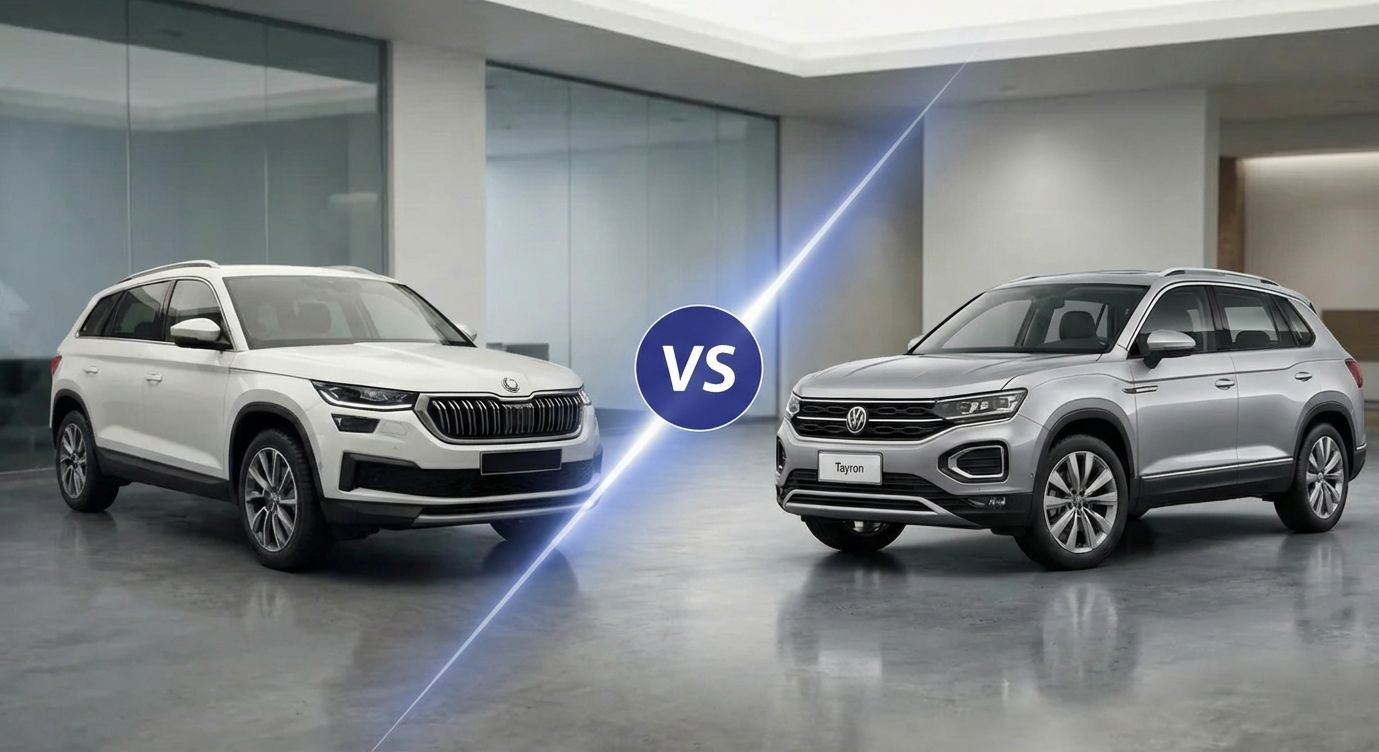
Hesitating between the Škoda Kodiaq and the Volkswagen Tayron? Our detailed comparison of engines, design, and prices will help you choose the right spacious SUV for your family.
Nov 12, 2026
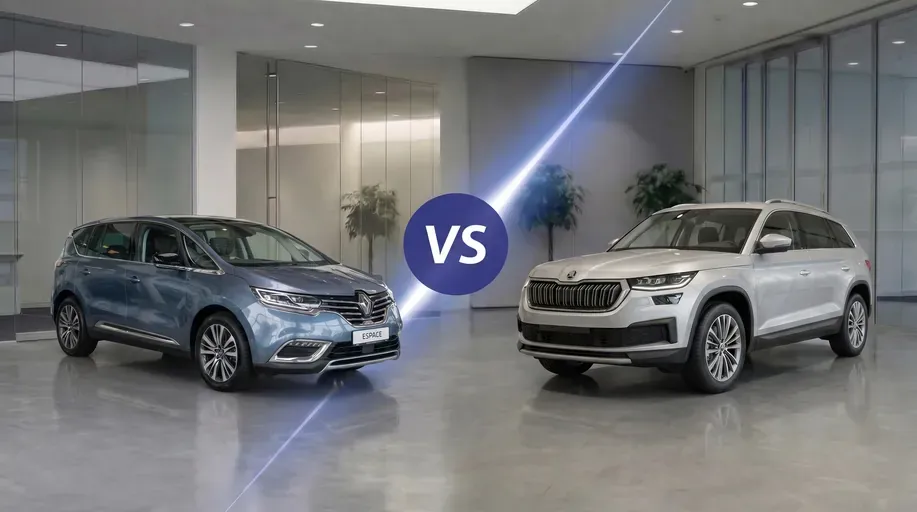
Detailed comparison of Renault Espace vs. Škoda Kodiaq. Find out how these family cars perform in real-world driving, space, and reliability. Read our verdict!
Oct 16, 2026