Articles

Car battle

Mercedes-AMG C 63 Coupé vs. Toyota Supra: Complete comparison 2026

Mercedes-AMG C 63 Coupé vs. Toyota GR Supra comparison. Which used sports coupé offers better performance and equipment? Read our clear verdict before buying!

April 25, 2026

VS
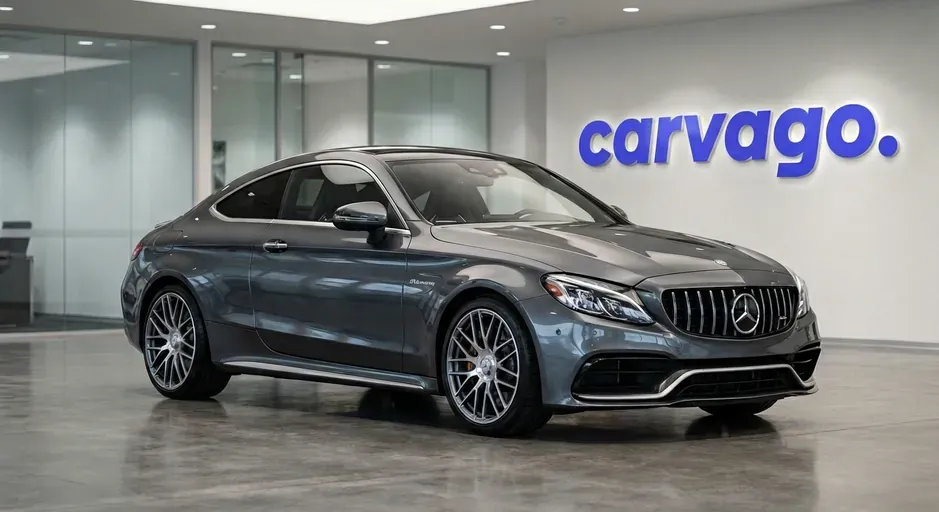
Mercedes-AMG C 63 Coupé

Mercedes-AMG C 63 Coupé

Toyota Supra

Toyota Supra

Introduction

Mercedes-AMG C 63 Coupé, often also known among car enthusiasts by its classic designation C 63 AMG, is the embodiment of an uncompromising German muscle car that hides the brutal power of a V8 engine beneath its elegant bodywork. Standing against it is the reborn Japanese legend Toyota Supra, currently sold under the official name Toyota GR Supra or the code name A90, which relies on precise balance, agile handling, and a straight-six engine. Get ready for a thrilling duel in which we will compare in detail how these two completely different philosophies of building high-performance sports coupes fare in a head-to-head comparison.

Comparison of External Dimensions

When comparing the external dimensions of these two sports-oriented cars from around 2021, we encounter completely different development philosophies. The Mercedes-AMG C 63 Coupe is, at 4,751 mm, a significant 372 mm longer than the compact Toyota GR Supra, which measures just 4,379 mm in length. An interesting difference can also be found in width, where the German muscle car, at 1,877 mm, surpasses its Japanese competitor by 23 mm. In terms of everyday use, this means the Supra weaves through narrow city streets much more willingly and is undoubtedly easier to park. The Mercedes, on the other hand, makes a much more majestic and dominant impression on the road, which however brings the disadvantage of poorer maneuverability in tight spaces.

Even more profound differences are revealed by looking at the wheelbase and overall height. The Mercedes-AMG C 63 features a wheelbase of 2,840 mm across all its body styles, which is a massive 370 mm more than the Supra (2,470 mm). Furthermore, the Toyota sits extremely low to the ground with a height of just 1,292 mm, while the German coupe is 109 mm taller at 1,401 mm. For the occupants, this has clear consequences: the significantly longer wheelbase and taller build of the Mercedes guarantee much more interior space and the ability to comfortably carry four passengers, in stark contrast to the strictly two-seater and puristically cramped cabin of the Toyota.

External dimensions thus play a key role when deciding between these two cars. If you are looking for an agile, low-slung sports car for weekend drives, whose compact proportions guarantee fantastic cornering agility and a sense of perfect connection with the road, the Toyota Supra will be the right choice. However, if you require everyday usability, an aggressive yet still elegant look, and do not intend to compromise on space or practicality for more passengers, the elongated and overall bulkier proportions of the Mercedes-AMG C 63 will make it the clear favorite for you.

ParameterMercedes-AMG C 63 CoupeMercedes-AMG C 63 CabrioletMercedes-AMG C 63 SedanMercedes-AMG C 63 EstateToyota Supra Coupe
Length (mm)4750-47514750-47514756-47574771-47724379
Width (mm)18771877183918391854
Height (mm)1400-14011400-1404142614411292
Wheelbase (mm)28402840284028402470

Trunk Volume

Luggage capacity and overall practicality are often not the top priority for sports cars, but for many used car buyers, they still play a key role in deciding on everyday usability. The fundamental difference in spatial design between these models is already given by their very concept. While the Mercedes-AMG C 63 Coupé is designed as a full-fledged luxury grand tourer coupe with a 2+2 seating arrangement, the Japanese Toyota Supra is a strictly two-seater purebred sports car. This different philosophy is naturally reflected in how much luggage you can actually fit into these approximately four-year-old used cars.

The Mercedes-AMG C 63 Coupé of the popular 205 generation (produced until 2023) offers a luggage capacity of 355 liters in its standard configuration. Although this value is slightly smaller compared to standard C-Class engines due to a more massive exhaust system and a specific rear differential, it is still a perfectly sufficient space for weekend shopping or a longer holiday for two. A huge advantage for buyers looking for maximum flexibility is the fact that the 40:20:40 split rear seats can be easily folded down. This increases the total transport capacity to a generous 1280 liters, making this muscular V8 a surprisingly practical car capable of carrying even longer and bulkier items.

On the other hand, the Toyota Supra (A90 generation, produced since 2019) approaches storage space quite differently. Under the large liftback-style lid lies a more compact 290-liter trunk. Since the Supra is a two-seater and does not offer a second row of seats, you cannot increase this value – 290 liters is the fixed maximum value. Although you won't be carrying skis or a cabinet from a furniture chain here, for a sports car, this volume is sufficient for storing a few extra suitcases or two travel bags for a weekend escape to the backroads. However, you have to account for a slightly shallower trunk shape and an overall higher loading sill, which can make handling heavier luggage slightly more complicated. The choice between these two cars from a trunk perspective thus represents a choice between unexpected travel flexibility and a pure two-seater compromise.

ParameterMercedes-AMG C 63 CoupéToyota Supra Coupé
Base volume (liters)355290
Max. volume with seats folded (liters)1280290

Everyday usability is the deciding factor 🎒

If you plan to use the car as a universal vehicle for longer trips for two, the Mercedes clearly dominates thanks to its larger dimensions and folding seats, while the Supra serves more as a car for weekend fun in terms of space.

Discover the true condition of the car thanks to an independent inspection

Order CarAudit™

Trailer Weights

Towing capacity is not typically a priority for sports cars and high-performance coupes, yet it can be a deciding factor for some buyers. This is especially true if you plan to transport additional track equipment, a jet ski, or are considering towing a small camper for longer vacations. However, in the category of uncompromising high-performance cars, we often encounter the limits of the design itself and the absence of factory homologation.

If we focus on cars on the used market approximately four years old, namely the popular Mercedes-AMG C 63 Coupé (generation 205, 2015–2023) and the current Toyota GR Supra (generation A90, from 2019), we run into a fundamental limitation. Neither of these models in their purely sporty coupe body style has homologation for a towing device. In their technical data, there is no permitted weight for either a braked or unbraked trailer. In practice, this means you cannot legally install a "tow ball" on these vehicles, which makes it impossible not only to tow a utility trailer but also to mount practical rear-mounted bike racks.

However, an interesting twist comes with the latest plug-in hybrid version of the next-generation Mercedes-AMG C 63 S E PERFORMANCE (generation 206, from 2023). While the older V8 coupes from AMG did not support a towing device, the new hybrid generation offers a standard and maximum braked trailer weight of up to 1800 kg. This shift represents a huge practical advantage – 1800 kg provides a vast amount of extra utility and is a value perfectly sufficient for safely transporting a heavier trailer with motorcycles, a larger boat, or even a decently sized caravan for a family holiday.

In contrast, the Toyota GR Supra does not offer such an option in any of its current versions with either the 2.0-liter or 3.0-liter engine. Although historical data shows that classic generations from the 80s and 90s (e.g., Supra A60 and A70) could tow between 1500 and 1700 kg, in the context of today's market for nearly new used cars, this is purely a historical curiosity that does not apply to modern vehicles.

Final Evaluation
In terms of utility for towing a trailer, neither car emerges as a winner from the battle of traditional four-year-old coupes, as models in this category simply cannot be used for towing. If the ability to attach a trailer is an absolute necessity for you and you insist on extreme performance, the only rational path is to move away from the classic coupe shape and opt for the newer plug-in hybrid Mercedes-AMG C 63 S E PERFORMANCE.

(Note: The table below only includes the generation with officially homologated trailer weight, as these values are not established for the 4-year-old versions of the C 63 Coupé and Toyota GR Supra due to the lack of manufacturer homologation.)
Model and EngineBraked trailer weight (kg)Unbraked trailer weight (kg)
Mercedes-Benz C 63 AMG S E PERFORMANCE (gen. 206)1800Not specified

Overview of Most Common Motorizations

When comparing the engines of these two sports cars, we encounter two distinct approaches that appeal to completely different types of drivers. Mercedes-AMG embodies the raw power and uncompromising performance typical of large-displacement V-engines, offering massive torque and an aggressive sound, though the trade-off is naturally significantly higher fuel consumption. In contrast, the Toyota Supra relies on modern, technically refined, and highly efficient turbocharged inline engines with BMW roots. These excel with much better fuel efficiency, a lighter construction that ideally balances the car's weight distribution, and the option of a purist manual transmission. While the Mercedes is a dominant straight-line highway missile, the Supra focuses on maximum agility and a pure driving experience on twisty backroads.

Mercedes-AMG C 63 Coupé

For the market of roughly four-year-old used cars, the pivotal generation for Mercedes is the one designated C 205. Under its hood beats a heart in the form of a twin-turbocharged 4.0-liter V8 (M177), created according to the traditional "one man, one engine" philosophy. Customers could choose from two versions: the standard C 63 features 350 kW (476 hp), and the more powerful C 63 S variant generates a massive 375 kW (510 hp) with a maximum torque of 700 Nm. Power in both variants is sent exclusively to the rear wheels via a lightning-fast nine-speed AMG SPEEDSHIFT automatic transmission (9AT). Looking at vehicle availability data, a key fact must be emphasized – production of this V8 coupe was definitively ended in the spring of 2023. The AMG brand is gradually transitioning to hybrid four-cylinder engines in new generations, making the now-discontinued full-blooded V8 a highly prized and sought-after item on the used car market.

Engine typeFuelPower (kW)Torque (Nm)Transmission
4.0 V8 Biturbo (C 63)Petrol3506509AT
4.0 V8 Biturbo (C 63 S)Petrol3757009AT

Toyota Supra

The current fifth generation of the Toyota GR Supra (code-named A90) offers buyers two different engine options combining performance and daily efficiency. The entry point is a turbocharged 2.0-liter four-cylinder with 190 kW (258 hp). Although it has less power, its 100 kg lower weight shifts the car's center of gravity closer to the middle, offering nearly perfect 50:50 weight distribution. However, the pinnacle and most popular choice is the 3.0-liter inline-six with 250 kW (340 hp) and a powerful 500 Nm of torque. Production data shows that while the model initially relied exclusively on the excellent eight-speed automatic (8AT) from ZF, during 2022 Toyota enriched the 3.0-liter specifications (such as the Legend version) with the long-requested six-speed manual transmission (6MT). This addition makes the used Supra one of the last classic driver's sports cars on the market.

Engine typeFuelPower (kW)Torque (Nm)Transmission
2.0 Twin-Scroll TurboPetrol1904008AT
3.0 Twin-Scroll TurboPetrol2505008AT / 6MT

🥊 Muscle vs. Agility

While the Mercedes-AMG charms with the raw power and unmistakable sound of its now-discontinued V8, the Toyota Supra counters with precise balance, high efficiency, and the option of a manual transmission for true driving purists.

Choosing the right engine is key to long-term satisfaction with a car, which is why our recommendations are based on real-world experience, actual fuel consumption, owner feedback, and mechanical reliability. While Mercedes-AMG offers the brutal power of a hand-assembled V8 with one of the best soundtracks in the brand's history on the market for roughly four-year-old used cars, the Toyota Supra relies on a legendary straight-six with huge potential for modifications, albeit supported by Munich technology. Both models represent peak driving experiences, but each approaches it with a completely different technical philosophy within its pedigree.

For the Mercedes-AMG C 63 Coupé, we recommend: 4.0 V8 BiTurbo (C 63 S), 375 kW (510 hp)

This hand-assembled engine (internally designated M177) from the 205 generation is an absolute gem and one of the last proper V8s in its class. Given that its production ended in 2023 and the successor generation switched to a four-cylinder plug-in hybrid, it is becoming a highly sought-after item. The "S" version offers not only higher performance but also active engine mounts and an electronically controlled limited-slip differential, which significantly helps transfer the monumental 700 Nm of torque to the rear wheels. The engine excels with explosive pull and surprisingly good mechanical reliability, provided it receives proper care. The main risk with used cars is extreme wear on consumables – due to the massive amount of torque, rear tires disappear quickly, and the brakes also bear an enormous load. When choosing a four-year-old car, focus on the maintenance history and visually check the condition of the radiators located low in the front bumper. They easily catch stones from the highway, and their replacement is very expensive. This engine choice is the clear pick for experienced drivers looking for uncompromising dynamics and an unmistakable sound at the cost of higher operating expenses.

For the Toyota Supra, we recommend: 3.0 Twin-Scroll Turbo (Legend), 250 kW (340 hp)

For the current A90 generation (on the market from 2019 to the present), the three-liter turbocharged straight-six, developed in cooperation with BMW (code B58), is the absolute and most desirable choice. Although a lighter and less powerful two-liter is also available for the Supra, this model has historically always belonged to the six-cylinder category. The three-liter offers a perfect mix of everyday usability, extraordinary reliability, and real-world fuel consumption, which can easily be brought down to 8 liters per 100 km during calm cruising. The B58 unit itself does not suffer from serious design flaws, but when buying on the used market, carefully check if the car has been unprofessionally modified. Software power increases are a massive trend for this engine – potential chip tuning can be detected via diagnostics or non-original parts (intake, exhaust) in the engine bay. These modifications can lead to excessive and premature wear of the turbocharger and the eight-speed automatic transmission. Always look for cars with documented shortened oil change intervals, ideally every 10,000 to 15,000 kilometers. It is the ideal engine for enthusiastic drivers and lovers of brisk GT cars who want top-tier dynamics with reasonable service bills.

Real Fuel Consumption

When choosing a sports car, fuel consumption is usually not the most critical parameter, but for used cars around four years old (such as the W205 generation for Mercedes and A90 for Toyota), long-term operating costs play a significant role. Official paper figures often differ from reality on the road, so we focused on real-world data for our evaluation. To get the most accurate picture possible, we used an independent community portal where hundreds of thousands of drivers from all over Europe record their actual refueling over the long term.

Model and EngineAverage Consumption (l/100 km)
Toyota GR Supra 2.0 (190 kW)8.2
Toyota GR Supra 3.0 (250/285 kW)9.5
Mercedes-AMG C 63 (350 kW)10.8
Mercedes-AMG C 63 S (375 kW)11.3

Very interesting trends emerge from the collected data. The Toyota Supra benefits from its collaboration with BMW and fully utilizes its power units, which are renowned in the automotive world for their exceptional efficiency. The smaller 2.0-liter turbocharged four-cylinder stays just above the eight-liter mark in real-world driving, making it a sensible, rational choice. However, the popular three-liter six-cylinder is much more surprising. Despite power approaching the 400 hp mark, this agile engine can average 9.5 l/100 km, showing that even a large displacement in a sports car does not automatically mean extreme fuel bills.

On the opposite side of the spectrum stands the Mercedes-AMG C 63 (in the four-year-old generation with the code name W205), which proudly hides a massive 4.0 V8 twin-turbocharged engine under the hood. By its nature, it requires more fuel – the more powerful "S" version averages over 11 liters per 100 kilometers. But it is fair to add that for an engine with massive torque and over 500 hp, this is still a relatively acceptable value. However, unlike the Toyota, an aggressive driving style can easily push the V8's average towards the 15-liter mark and beyond.

For the average user, these numbers represent a fairly significant difference in daily usability. If you are looking for a sports car that you can commute to work in or regularly cover long highway distances without much regret, the Toyota Supra is an ideal compromise thanks to its efficiency. The C 63 AMG, on the other hand, represents a thirstier choice, especially in city traffic, where the V8 cannot effectively curb its consumption. AMG owners simply have to expect a more generous fuel budget.

As a result, fuel consumption can be one of the deciding factors for the final purchase. While the Toyota Supra proves that even a powerful six-cylinder from Munich can be shockingly economical, the Mercedes-AMG C 63 makes you pay accordingly at the gas station for its brutal performance and unmistakable sound character.

Price Range and Used Car Offerings

When searching for a sports car on the market for approximately four-year-old used vehicles (models with production years 2021 to 2022), you will find that both cars operate in different price ranges. The difference directly reflects their different original purchase values, performance categories, and technological equipment.

Mercedes-AMG C 63 Coupé (C205 generation)

The end of production for the legendary eight-cylinder engine has made this generation of AMG coupé a highly sought-after commodity on the used car market, which has slowed its natural depreciation.

  • Price range: Typically ranges from €62,000 to €103,000.
  • "S" version: The more powerful C 63 S variant holds its value best of all. For carefully maintained units with a clear service history and low mileage, expect a price tag consistently above the €82,000 mark.
  • Residual value: From an investment perspective, the C205 appears to be a very stable used car, as automotive enthusiasts specifically seek out one of the last models with a full-fat V8 engine without hybrid assistance.

Toyota GR Supra (A90 generation)

The Japanese coupé is significantly more affordable on the used car market. However, its exact price primarily depends on what is under the hood.

  • Price range: Usually starts at €41,000 and reaches €66,000.
  • Four-cylinder (2.0): If a two-liter engine is enough for you, you can purchase a used Supra for prices slightly above €41,000.
  • Six-cylinder (3.0): For petrolheads, the iconic inline three-liter six-cylinder (originally from BMW) is much more interesting. These models from 2021/2022 start at approximately €53,000, while units with premium equipment (e.g., Premium version) approach €66,000.

Indicative price table (models approx. 4 years old)

Model and versionEngineUsed car price range
Toyota Supra 2.02.0 I4 Turbo€41,000 – €49,000
Toyota Supra 3.03.0 I6 Turbo€53,000 – €66,000
Mercedes-AMG C 634.0 V8 BiTurbo€62,000 – €78,000
Mercedes-AMG C 63 S4.0 V8 BiTurbo€74,000 – €103,000

Note: The prices above represent a realistic average on the market for nearly new used cars; the final amount always depends on the specific mileage, documented service care, and the condition of the paint or interior.

The price of emotions and reason 💰

While the Toyota Supra offers an excellent price-to-performance ratio for daily sporty driving, the eight-cylinder Mercedes-AMG C 63 Coupé represents a more expensive, but in the long run potentially more valuable purchase of a disappearing automotive classic.

Safety and Euro NCAP Rating

Both models come from manufacturers for whom top-tier safety is an absolute priority, and they share a pedigree associated with a maximum five-star rating. When comparing used cars that are roughly four years old, however, it is necessary to take into account important context and, above all, the year of testing. The Euro NCAP methodology is constantly evolving and becomes significantly stricter every year. Modern protocols include completely new frontal impact simulations, more demanding testing of cyclist detection, and detailed assessment of the behavior of assistance systems at intersections. For this reason, percentage results from different years cannot be directly compared, as older ratings simply do not correspond to the rigor of today's strict standards.

The Mercedes-AMG C 63 Coupé (C205 generation) is based on the C-Class structural platform, which underwent Euro NCAP safety tests in 2014 and earned a full five-star rating at the time. Passive cabin safety remains at an excellent level, as confirmed by the great protection of adults (92%) and children (84%). However, the percentage result for safety assistants (70%) clearly reflects the methodology of that time. Although the manufacturer has continuously improved active prevention systems over the years, the Euro NCAP certification itself for this base platform was created under more lenient rules and, from the perspective of today's strictest standards, its validity has formally expired.

The Toyota Supra, on the other hand, has never been officially tested by Euro NCAP as a standalone model. Despite the absence of its own data, a crucial fact must be mentioned: the car shares its complete platform and safety architecture with the BMW Z4. This sister model underwent testing in 2019 according to significantly more modern and stricter rules, earning the maximum five stars (with an excellent score of 97% for adult protection and 91% for the protection of vulnerable road users). Given that the Toyota Supra does not have its own official certificate for the model, no data is intentionally listed for it in the comparison table, although buyers can confidently expect the same level of highly modern anti-collision systems.

In terms of overall occupant protection, both cars offer an exceptionally strong construction and plenty of airbags. However, thanks to the newer development of the platform, the Toyota Supra benefits from standards tuned to the end of the last decade, which gives it a slight advantage in terms of the complexity of active safety features. Mercedes-AMG C 63 Coupé on the other hand, represents a robust and sturdy premium car, whose original certification engineering is, however, several years older in direct comparison.

ParameterMercedes-AMG C 63 CoupéToyota Supra
Year of testing2014-
Adult occupant protection92 %-
Child protection84 %-
Vulnerable road user protection77 %-
Safety assistance systems70 %-

Newer architecture wins 🛡️

Although both cars are structurally very safe, the Toyota Supra benefits from a significantly newer foundation that meets the stricter crash standards of the modern era.

Comparison of Interesting Equipment Features

In addition to standard equipment, each of the models offers several unique features that form their true character and bring specific added value, which can be decisive for an enthusiastic driver.

Mercedes-AMG C 63 Coupé: Raw Power and Uncompromising Luxury

The representative from Stuttgart combines uncompromising power with the luxury typical of the Mercedes-Benz brand. In models from 2019 to 2022 after the facelift, we find technologies that make this coupé a very capable track and daily car.

  • Engine Philosophy and Drivetrain: The twin-turbocharged V8 (4.0 V8 BiTurbo) is created according to the "One Man, One Engine" rule. Each engine is hand-assembled by a single engineer in Affalterbach, which is confirmed by their signature on the plaque. The result is an unmistakable, deep sound and immense charisma.
  • Advanced Electronics and Traction: The top-of-the-line C 63 S variant received an innovative nine-stage traction control (AMG Traction Control) after the facelift. This system, derived directly from the AMG GT R supercar, allows the driver to precisely adjust rear-wheel slip via a rotary dial on the steering wheel.
  • Active Engine Mounts: To maximize both comfort and sporting performance, the S version uses dynamic engine mounts. These can continuously vary their stiffness – during relaxed driving, they isolate vibrations and increase comfort, while during sporty driving, they stiffen for better response and chassis precision.
  • Premium Interior and Comfort: The cockpit impresses with AMG Performance bucket seats with adjustable side bolsters. The luxurious feel is underlined by details such as the optional IWC Schaffhausen analogue clock on the center console and the top-tier Burmester surround sound system.
  • Telematics for Enthusiasts: The digital cockpit includes the AMG Track Pace app. This virtual racing engineer can record precise lap times and analyze dozens of telemetry data points (acceleration, braking forces, steering angles), helping the driver improve their skills on the track.

Toyota Supra: A Purist Sports Car with Iconic Details

The fifth generation of the Supra (A90) revives the legendary name using modern technology. Thanks to the collaboration with BMW, the car gained top-tier Bavarian engineering, which the Gazoo Racing (GR) division tuned exactly to its own requirements.

  • Body and Aerodynamics: The characteristic shaped roof with "double-bubble" profiling (two longitudinal bulges) is not just an aesthetic tribute to the historic Toyota 2000GT model. It is a clever engineering solution that reduces the car's aerodynamic drag while increasing headroom for drivers wearing a protective helmet.
  • Golden Ratio Chassis: Toyota engineers designed the car around the so-called golden ratio (the ratio between the wheelbase and track width is exactly 1.55). Combined with an ideal 50:50 weight distribution and a low center of gravity, this ensures top-tier agility and predictability in corners.
  • Transmission and Drivetrain: In addition to the reliable ZF eight-speed automatic, Toyota also added a six-speed manual transmission (iMT) to the lineup for six-cylinder models. It features a smart automatic rev-matching function for downshifts, which orthodox drivers will appreciate.
  • Active Differential: The standard electronically controlled rear differential can lock from 0 to 100% within milliseconds. This significantly helps stabilize the car during hard braking and maximizes traction when exiting a corner.
  • Infotainment and Daily Usability: The presence of BMW technology in the interior is a huge plus for daily use. The infotainment, based on the iDrive system, is extremely intuitive, retains a physical rotary controller, and offers seamless wireless Apple CarPlay connectivity, which is still not entirely a given in this category of sports cars.

Key Advantages and Disadvantages

Mercedes-AMG C 63 Coupé

Pros

Fascinating sound and brutal pull of the twin-turbocharged V8 engine (in the C205 generation)

Top-notch craftsmanship and luxurious interior with premium materials

Higher level of daily practicality thanks to the 2+2 seating arrangement and a usable trunk

Excellent comfort on long journeys thanks to the superbly tuned adaptive suspension

Cons

Very high operating and maintenance costs (high fuel consumption, expensive tires and brakes)

Higher curb weight impairs agility on more technical and narrower roads

The infotainment system and overall cabin architecture feel dated in four-year-old used cars

Significant depreciation in the first years of operation

Mercedes-AMG C 63 Coupé is the perfect choice for drivers who crave a charismatic V8 and uncompromising performance in an exceptionally luxurious package. The car works fantastically as an opulent grand tourer for fast cross-continental travel, but it requires a generous budget for fuel and subsequent maintenance.

Toyota Supra

Pros

Great agility and surgically precise handling thanks to lower weight and ideal weight distribution

Reliable and punchy inline-six (or more affordable four-cylinder) with great tuning potential

Exotic and aggressive design of a purebred sports car with a long hood

Significantly lower purchase price and more acceptable operating costs compared to the AMG

Fast and intuitive infotainment system (borrowed iDrive from BMW)

Cons

Strictly two-seater configuration without any possibility of emergency transport for additional passengers

Very limited rearward and side visibility due to massive pillars and narrow windows

The interior, including controls, is borrowed from BMW, which slightly detracts from the car's identity

Significant wind noise and turbulence in the cabin when driving with the windows down

Toyota Supra will appeal to enthusiastic drivers looking for a compact, purist, and genuine sports car focused on the ultimate driving experience. It is a car built for twisty backroads and weekend drives, where you can easily sacrifice limited space and the absence of rear seats in exchange for a brilliant chassis and agility.

Common Problems and Owner Complaints

Based on our long-term experience, service statistics, user feedback, and results from independent car audits, we have compiled a detailed overview of the most common problems of both models that used car buyers should watch out for.

For the Mercedes-AMG C 63 Coupé (C205 generation), most service specifics are associated with the car's extreme performance and the tuning of the sports transmission, while the engine itself is rated by experts as relatively robust.

  • Engine (V8 4.0 BiTurbo - M177): The unit is overall reliable, however, it suffers from faster wear of ignition coils and spark plugs, which need to be replaced at shorter intervals. Occasionally, rattling of the turbocharger wastegate can be encountered.
  • Transmission: The AMG SPEEDSHIFT MCT sports transmission (9-speed in the facelift, 7-speed in older versions) uses a wet clutch instead of a hydrodynamic torque converter. When cold and when crawling in traffic jams, the transmission can jerk noticeably. A software update or transmission adaptation at a service center often helps.
  • Chassis and brakes: A typical ailment is extremely fast wear of the rear tires due to massive torque. High-performance brakes tend to squeal unpleasantly during normal (light) braking. Especially with the optional carbon-ceramic brakes, a thorough physical inspection of the used car is essential, as their replacement represents an astronomical cost.
  • Interior and electronics: Cars built on the W205/C205 platform quite often suffer from creaking interior plastics, especially in the area of the center console and door panels. Older versions of the infotainment system may have slower response times or occasionally freeze.

Mercedes-AMG C 63 Coupé: Robust V8 with higher operating costs

The turbocharged V8 is mechanically very reliable, but the car requires more expensive consumables and can suffer from minor transmission software issues and interior creaking.

The fifth generation of the Toyota Supra (A90), developed in cooperation with BMW, benefits from reliable Munich-sourced power units, but it also brings several specific and well-known imperfections.

  • Engine (especially the B58 inline-six): The BMW engine is among the most durable power units today. However, on higher-mileage units from the first years of production, a minor coolant leak or slight oil sweating around the oil filter housing may appear.
  • Aerodynamics and comfort: The most famous and criticized problem of the Supra is "wind buffeting" (low-frequency thumping and turbulence in the cabin when driving with windows down above 80 km/h). The vast majority of owners solve this design flaw by purchasing and installing aftermarket aerodynamic deflectors for the exterior mirrors.
  • Body and steering: Especially in the first model years, owners occasionally complain about creaking and resonance of plastics from the rear luggage area, which is connected to the cabin. Rarely, minor noises from the rack-and-pinion steering appear when maneuvering in place.
  • Electronics: The infotainment (which is taken from BMW's iDrive system) is stable, but there are occasional dropouts of the wireless Apple CarPlay connection, which usually require a restart of the paired phone or the vehicle system.

Toyota Supra: Reliable BMW technology with minor aerodynamic flaws

The powertrains are among the most reliable on the market, so the main shortcomings remain uncomfortable turbulence with open windows and minor acoustic creaking in the rear of the interior.

Tips for Buying a Used Car

When buying a used car, a thorough inspection is key, and for high-performance sports models, this is doubly true. Here are some specific points to focus on for these two models. Extreme performance puts enormous demands on all mechanics, which is why an independent car technical inspection should take place before every purchase.

When choosing a Mercedes-AMG C 63 Coupé:

  • AMG SPEEDSHIFT (MCT) gearbox behavior: On the 9-speed (or older 7-speed) gearbox, focus on shifting smoothness at low speeds, parking, and slow starts during the test drive. Jerking or rough kicking can mean a need for software updates, clutch recalibration, or in worse cases, excessive wear of the friction plates, which is a costly defect.
  • Ignition coils and engine smoothness: The four-liter biturbo V8 (M177) is mechanically very robust but suffers from a shorter lifespan of ignition coils. During the test drive, try full acceleration – the engine must not misfire and the idle after warming up must be perfectly smooth without noticeable vibrations.
  • Brake system wear: The C 63 Coupé is a heavy car with enormous power, which puts extreme strain on the brakes. Check the thickness and condition of the brake discs. If the car is equipped with optional carbon-ceramic brakes, their inspection is an absolute necessity – replacing damaged discs costs hundreds of thousands of crowns.
  • Sport exhaust flap functionality: When switching driving modes (from Comfort to Sport+), listen carefully to the sound from the rear of the car. Stuck, non-functioning, or rattling exhaust flaps are a relatively common problem with this model, often requiring expensive replacement of the entire rear exhaust section.
  • Knocking from the front axle: The AMG suspension is very stiff and suffers on poor-quality roads. During the test drive, drive onto a rougher surface or over a speed bump and listen for any dull thuds from the front wheels, which indicate worn control arms or bushings.

When choosing a Toyota Supra:

  • Coolant leaks: Although the BMW-sourced engines (3.0 R6 B58 and 2.0 R4 B48) are above-averagely reliable, their weak point is the cooling circuit. Check the coolant level in the reservoir and look for traces of white dried spots around the water pump and the main radiator hose.
  • ZF eight-speed gearbox performance: During testing, try manual shifting with the paddles behind the steering wheel as well as the automatic sport mode. The gearbox should shift lightning-fast and without hesitation. Delayed reactions or rough jolts when downshifting usually mean neglected transmission oil changes, which should ideally be changed every 60,000 to 80,000 kilometers.
  • Wind Buffeting: This is a known design feature of the current generation Supra. During the test drive, roll down the windows and accelerate above 80 km/h – extreme aerodynamic noise and buffeting may appear in the cabin. Check if the previous owner installed small aerodynamic deflectors on the A-pillars (mirrors), which solve this ailment cheaply and elegantly.
  • Steering noise on uneven surfaces: When driving slowly over cobblestones or turning the steering wheel while stationary, listen for mechanical knocking coming from the front of the car. In some units, play in the rack-and-pinion steering or worn ball joints appeared after relatively low mileage.
  • Hidden ECU modifications (Chiptuning): The Supra has huge potential for increasing power and is very popular among tuners. A thorough check of a used car using diagnostics should reveal whether the ECU maps have been rewritten. Unprofessional chiptuning puts excessive strain on the turbocharger and shortens the life of the entire powertrain.

FAQ: Most Frequently Asked Questions

Mercedes-AMG dominates thanks to its twin-turbocharged 4.0-liter V8, which provides up to 510 hp in the S version. Toyota, on the other hand, relies on a lighter and high-revving 3.0-liter inline-six with 340 hp. Acceleration from 0 to 100 km/h is therefore about half a second faster in the German coupé than in its Japanese rival.

The Supra benefits significantly from its lower weight and short wheelbase, making it an exceptionally agile and playful car for tight corners. The C 63 Coupé is more of a muscular gran turismo that excels in high-speed stability, drifting, and raw power on longer straights. For pure track driving and precise cornering, the lighter Toyota offers sharper and more predictable responses.

Mercedes offers a more spacious premium interior with a 2+2 seating arrangement, luxury equipment, and a larger trunk, making it a great car even for longer trips. Toyota, on the other hand, is strictly a two-seater with a more cramped cabin focused purely on driver engagement. For daily driving, higher comfort, and carrying more people or things, the AMG is a significantly more practical choice.

The Mercedes-AMG is undoubtedly significantly more expensive to operate, as the massive V8 engine requires more fuel, more expensive service procedures, and premium consumables. While the Supra shares a large part of its advanced technology with BMW cars, which makes its maintenance slightly more expensive than standard models of the brand, its overall operating costs, including insurance and tires, are noticeably more affordable than those of the top-tier V8.

The sound of the V8 in the C 63 is legendary among car fans thanks to its deep, aggressive, and burbling sound that enhances every kilometer of the drive. The Supra has a very pleasant, technical, and sporty sound typical of Bavarian inline-sixes, but it does not reach the thunderousness and brutality of the German engine. For lovers of classic loud roar and exhaust pops, the AMG is the clear winner.

Conclusion: Which Model to Choose?

Our Verdict

The final decision between these two exceptional cars depends primarily on what kind of driving experience you primarily expect from a sports coupe. If you are looking for a charismatic V8 with brutal power, an unmistakable sound, and the everyday practicality of a 2+2 layout for longer trips, the Mercedes-AMG C 63 Coupé is a fantastic choice with the potential of a valued classic, despite significantly higher running costs. Conversely, the Toyota GR Supra represents a more affordable to run, purist-oriented two-seater sports car that excels primarily on twisty backroads thanks to its lower weight, perfect balance, and agile straight-six with a manual option. While the Stuttgart muscle car works perfectly as an opulent highway grand tourer, the revived Japanese legend clearly appeals to enthusiastic drivers longing for genuine and maximally agile weekend driving joy.

Find your ideal car

Sources: ADAC, novinky.cz, denik.cz, chytreauto.cz, autoservis.cz, autosystem.cz

This article was prepared using artificial intelligence tools. The section guarantor is Petr Dušek.

Related articles

Car battle

Renault Mégane vs. Toyota Corolla: Complete comparison 2026

Detailed comparison: Renault Mégane vs Toyota Corolla. Discover the differences in engines, equipment, and reliability, and find out which used car is the best for you.

Apr 13, 2026

Car battle

Audi R8 vs. McLaren Artura: Complete comparison 2026

Audi R8 vs McLaren Artura: A detailed comparison of supercars. Discover the real differences in performance, equipment, and reliability, and read our verdict before you buy.

Apr 17, 2026

Car battle

Cupra Leon vs. Hyundai i30 N: Complete comparison 2026

Cupra Leon vs Hyundai i30 N: Which hot hatch is better? A detailed comparison of performance, equipment, and reliability of used cars. Find out our verdict and make the right choice!

Apr 18, 2026

We accept online card payments as well as wire transfers.

visa payment provider logovisa-electron payment provider logomastercard payment provider logomaestro payment provider logodiners-club payment provider logodiscover payment provider logo