Car battle
BMW iX1 vs. Mercedes-Benz EQB: Complete comparison 2026
BMW iX1 vs. Mercedes-Benz EQB: Which electric SUV to choose? Read a detailed comparison of range, space, and equipment and find out our final verdict.
Oct 16, 2026
Articles
Car battle
Kia EV6 vs Volkswagen ID.5: Detailed comparison. Discover the real-world range, equipment, and a clear verdict to help you choose the best electric SUV.
April 21, 2026
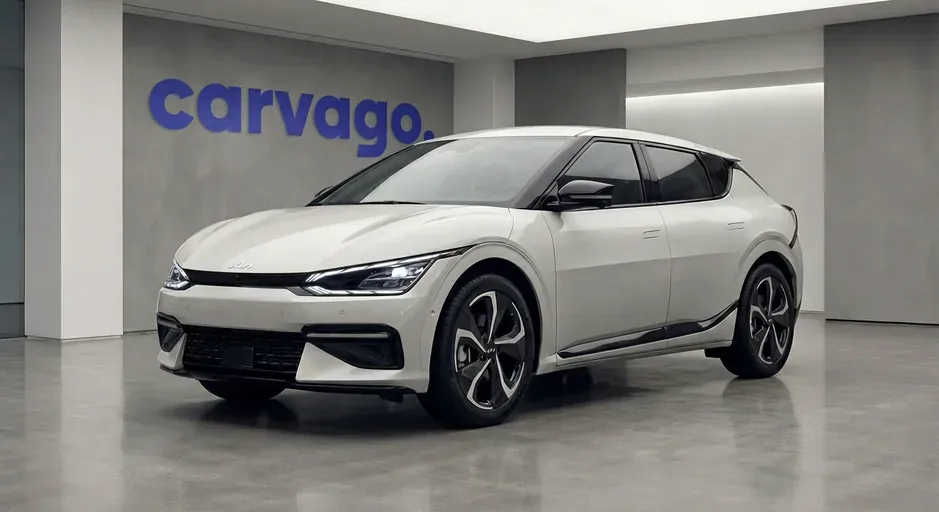
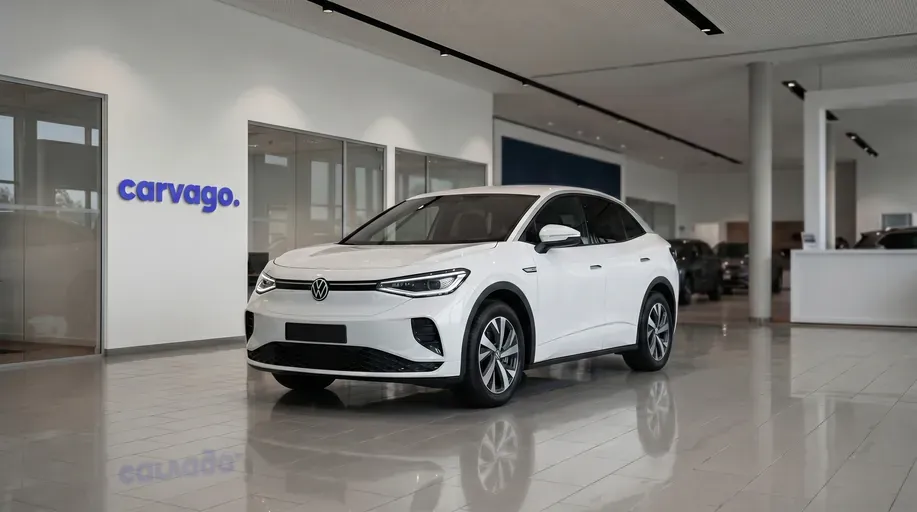
Kia EV6, an innovative electric crossover with an unmistakable design and lightning-fast 800V charging, represents one of the most technologically interesting cars in its category. Standing against it is the Volkswagen ID.5, an elegant SUV-coupe closely derived from its sister and more conventional model, the ID.4, which attracts primarily with its extraordinary driving comfort, balanced characteristics, and spacious interior. Let's take a detailed look at a direct comparison of these two advanced competitors and find out which one makes more sense when choosing a roughly four-year-old used car from the current selection.
Although both the Kia EV6 and the Volkswagen ID.5 fall into the popular category of electric crossovers and SUVs with a sloping rear, their exterior dimensions and overall proportions differ quite significantly. The Kia EV6 bets on a sportier, more low-slung stance. With a length of up to 4695 mm, it is nearly 10 centimeters longer than its German competitor, giving it a visually very confident appearance on the road. In contrast, the Volkswagen ID.5 adopts a more classic SUV-coupe silhouette. It is shorter overall (measuring at most 4599 mm), but conversely, it stands about 68 mm taller than its Korean rival. This results in a slightly more upright driving position and a more conventional SUV driving feel in the case of the Volkswagen.
The most significant difference you'll feel in everyday life is found in the wheelbase. The Kia EV6 boasts a value of exactly 2900 mm, surpassing the Volkswagen ID.5 and its maximum of 2773 mm by a substantial 127 millimeters. This generous wheelbase in favor of the Kia means significantly more longitudinal legroom for rear-seat passengers and contributes to excellent directional stability on the highway. On the other hand, the shorter body and smaller distance between the axles of the Volkswagen clearly play into its hands when maneuvering in narrow city streets and make parallel parking easier.
Regarding body width, the EV6 measures up to 1890 mm, which is about 38 mm more than the ID.5 (1852 mm). The wider track of the Kia aids in more confident handling in corners and better stability, although in cramped parking spaces or older garages, this may represent a slight disadvantage. Height is a discipline where the ID.5 dominates. The taller build of the Volkswagen (up to 1618 mm compared to 1550 mm for the EV6) not only makes getting in easier but also compensates for headroom that would otherwise be restricted by the sloping roof. When choosing a used car from these relevant model years, it primarily depends on whether you prefer an aerodynamic highway cruiser with maximum legroom (EV6) or, conversely, a more agile and taller SUV better suited for suburban traffic (ID.5).
| Parameter | Kia EV6 SUV | Volkswagen ID.5 SUV |
|---|---|---|
| Width (mm) | 1880 - 1890 | 1852 |
| Length (mm) | 4680 - 4695 | 4582 - 4599 |
| Height (mm) | 1545 - 1550 | 1601 - 1618 |
| Wheelbase (mm) | 2900 | 2770 - 2773 |
Luggage capacity is a crucial parameter for family-oriented electric vehicles, largely defining the car's daily practicality and usability for longer trips. When considering the purchase of a roughly four-year-old used electric car, you will encounter interesting compromises in both these models due to their body shapes. Although both cars are classified as stylish SUV models in our taxonomy and on the market, they approach their interior spaciousness with minor variations that can play an important role in your lifestyle during the final decision-making process.
The German Volkswagen ID.5 offers a generous 549-liter rear trunk in its standard configuration. Surprisingly, despite its more sportily sloping roofline, it offers a slightly larger rear trunk than its more conventional sibling, the ID.4. Furthermore, if you fold down the rear seats, the maximum storage space grows to an excellent 1,561 liters. In contrast, the Kia EV6 is somewhat more modest in the rear – the standard rear volume is 520 liters, increasing to 1,300 liters after folding the rear backrests. In absolute rear trunk figures, the German representative clearly dominates and represents a much better choice for situations where you frequently need to transport long or bulky items.
However, the Kia EV6 pulls a major ace out of its sleeve thanks to its dedicated E-GMP electric platform – a significant advantage in the form of a front trunk, or "frunk." This provides an additional volume of 52 liters for rear-wheel drive (RWD) versions, or 20 liters for the more powerful all-wheel drive (AWD) models. This separate space is invaluable in terms of practicality; it's the ideal place to store dirty charging cables, which leaves the main rear area clean for several extra suitcases. Unfortunately, the Volkswagen ID.5 offers no storage space under the front hood. As a result, the ID.5 wins in total rear capacity, sufficient even for moving small furniture, while the EV6 excels in clever organization that prevents mixing clean and dirty items, and its trunk is easily sufficient for weekend shopping or a longer family vacation.
| Parameter | Kia EV6 SUV | Volkswagen ID.5 SUV |
|---|---|---|
| Base volume (liters) | 520 | 549 |
| Maximum volume with seats folded (liters) | 1,300 | 1,561 |
While the Volkswagen ID.5 provides more total rear space for family luggage, the Kia EV6 scores with its highly practical front trunk, where you can easily hide muddy charging cables.
Towing capacity for electric vehicles is a key parameter for drivers who plan not only to drive normally but also to head out on family holidays with a caravan or occasionally transport heavier loads. Although neither of these electric vehicles is a typical workhorse, their capabilities differ quite significantly and can be a deciding factor when choosing on the used car market.
Kia EV6 (CV generation from 2021–2024) offers very solid values by the standards of common electric vehicles. If you choose the version with the larger 77.4 kWh battery or the sporty GT variant, you can count on a maximum braked trailer weight of up to 1600 kg. Such a value is perfectly sufficient for towing a medium-sized caravan on a long holiday or for attaching a heavier trailer with materials. However, interested buyers should watch out for the base version with the 58 kWh battery, where the towing capacity drops to a modest 750 kg.
The competing Volkswagen ID.5 (1st generation from 2022–2024) lags behind its Korean rival in this discipline. Standard variants such as Pro or Pro Performance can tow a braked trailer weighing a maximum of 1000 kg. The most powerful dual-motor GTX version from 2022–2024 offers a slightly better value of 1200 kg, which, however, may still not be enough for a full-sized family caravan.
When it comes to smaller loads, such as a large household shop, transporting garden waste, or carrying several bicycles, both cars perform excellently. The maximum weight of an unbraked trailer is identically limited to the legally standard 750 kg for all examined versions of both models.
In conclusion, if a tow bar is more to you than just a bike rack and you plan to actually tow heavier trailers or caravans, the more powerful variants of the Kia EV6 with the larger battery represent a much more practical and versatile choice. The Volkswagen ID.5, on the other hand, will suffice for those who are comfortable with a smaller trailer and do not plan to move heavy loads.
| Model and powertrain | Braked trailer weight (kg) | Unbraked trailer weight (kg) |
|---|---|---|
| Kia EV6 (58 kWh) | 750 | 750 |
| Kia EV6 (77.4 kWh) | 1600 | 750 |
| Kia EV6 GT | 1600 | 750 |
| Volkswagen ID.5 Pro / Pro Performance | 1000 | 750 |
| Volkswagen ID.5 GTX | 1200 | 750 |
When comparing the powertrains of the Kia EV6 and Volkswagen ID.5, the different technological approaches of the two manufacturers are immediately apparent, fundamentally influencing driving dynamics, overall efficiency, and charging speed. While Volkswagen focused on smooth daily usability and more conservative performance derived from the unified group MEB platform (400V network, charging power up to 135 kW) for approximately four-year-old used ID.5 models, Kia infused the EV6 with a significantly sportier spirit. A major advantage of the Korean representative is its advanced 800V electrical architecture, which can handle a peak power of up to 240 kW at fast-charging stations. For both regular and long trips, the Kia thus offers slightly more flexibility. In the used car market, you will encounter both more economical versions with a single electric motor and rear-wheel drive (RWD) for calm and efficient drivers, as well as dual-motor variants with all-wheel drive (AWD) designed for those who demand uncompromising traction and instant power.
The Kia EV6 (CV generation) in its original form offers a much wider range of options for fans of sportier driving and efficient travel. The base version, which is relatively rare on the market, relied on a smaller 58kWh battery with an output of 125 kW. However, most available used cars from the first years of production are equipped with a larger 77.4 kWh battery, where the first owners could choose between a highly efficient RWD version with 168 kW (an ideal choice for highway drivers seeking maximum range) and a more dynamic AWD version with 239 kW and a massive torque of 605 Nm. For true enthusiasts, the extreme GT version was produced, which delivered a crushing 430 kW to all wheels and could accelerate to 100 km/h in just 3.5 seconds. As available data confirms, all these original powertrains with 58kWh and 77.4kWh batteries were produced only until autumn 2024. They were then replaced by a newer generation with capacities of 63 kWh and 84 kWh. In the market for approximately four-year-old used cars, you will primarily be choosing from the versions listed below, which are no longer available as new.
| Motor Type | Fuel Type | Power (kW) | Torque (Nm) | Transmission |
|---|---|---|---|---|
| 58 kWh RWD | Electric | 125 | 350 | 1-speed automatic |
| 77.4 kWh RWD | Electric | 168 | 350 | 1-speed automatic |
| 77.4 kWh AWD | Electric | 239 | 605 | 1-speed automatic |
| 77.4 kWh GT AWD | Electric | 430 | 740 | 1-speed automatic |
In the case of the Volkswagen ID.5 (1st generation), the offering in the first years of production (2022–2023) relied exclusively on one shared battery with a usable capacity of 77 kWh across the price list. Used car buyers will most often encounter one of the three original power levels. The entry point into the world of the ID.5 was the Pro version with an output of just 128 kW. A popular compromise on the used market is the Pro Performance model, which, with its 150 kW and 310 Nm, provided the two-ton SUV with substantially better flexibility. Customers desiring all-wheel drive opted for the top-of-the-line GTX version, combining two electric motors for a total output of 220 kW. Similar to the Kia, it is crucial to mention that these three original specifications were offered only until autumn 2023, when their production ended. Subsequently, Volkswagen updated the ID.5 range (the Pro Performance version was completely discontinued, the base model increased to 210 kW, and the GTX to 250 kW). When buying a used car from the early years, however, you will be deciding exclusively between these original parameters.
| Motor Type | Fuel Type | Power (kW) | Torque (Nm) | Transmission |
|---|---|---|---|---|
| Pro 77 kWh RWD | Electric | 128 | 235 | 1-speed automatic |
| Pro Performance 77 kWh RWD | Electric | 150 | 310 | 1-speed automatic |
| GTX 77 kWh AWD | Electric | 220 | 460 | 1-speed automatic |
For pragmatic and calm drivers looking for a balanced ratio of range and price, the older version of the VW ID.5 Pro Performance is ideal. However, if you require a more spirited drive, more modern technology, and lightning-fast charging, the Kia EV6 clearly leads thanks to its powerful 800V architecture.
Choosing the right electric powertrain and battery capacity is absolutely key for long-term satisfaction, real-world range, and overall reliability when it comes to used electric vehicles. The following recommendations are based on real owners' experiences, measured consumption, and the typical market offering of roughly four-year-old used cars, where different technological approaches stand in interesting contrast – Kia's advanced, performance and ultra-fast charging-oriented 800V architecture versus Volkswagen's more conservative, family-comfort-focused 400V concept.
The version with the larger 77.4 kWh battery and rear-wheel drive (168 kW / 228 hp), available mainly between 2021 and 2024, is clearly the most rational choice in the entire model range. It offers the best balance between dynamics and maximum range, which in real combined operation reaches an impressive 420 to 500 km on a single charge. Furthermore, the absence of a front electric motor means slightly lower average consumption and a more spacious front trunk (frunk), while the 800V architecture, allowing ultra-fast charging from 10 to 80% in just 18 minutes, is an absolutely fundamental technological advantage. When buying a roughly four-year-old used car, however, thoroughly check the service history regarding the ICCU (Integrated Charging Control Unit). A fault in this component is one of the best-known and most common weaknesses – in the event of an internal short circuit, the car stops charging the 12V battery, which inevitably leads to the vehicle becoming completely immobilized on the road. Therefore, always ask the dealer whether the selected unit already has the latest repair software from official recalls (e.g., SC327Y) or whether the faulty hardware unit has already been preventively replaced under the long factory warranty. Thanks to its efficient rear-axle drive, this motorization is absolutely ideal for drivers who cover long distances and appreciate swift highway cruising and lightning-fast stops at fast chargers.
From the first-generation Volkswagen range from 2022 to 2023, the "golden middle way" in the form of the Pro Performance specification (which was subsequently withdrawn from the market at the end of 2023 and replaced by a newer system) makes the most sense. The base Pro model with 128 kW is somewhat borderline in terms of dynamics for a relatively heavy SUV-coupe, while the top-of-the-line GTX sports version with all-wheel drive offers an attractive 220 kW, but at the cost of a significantly shorter range and unnecessarily higher consumption. Conversely, the usable battery capacity of 77 kWh paired with 150 kW (204 hp) of power on the rear axle guarantees a smooth, sufficiently flexible ride and a solid real-world range between 380 and 420 km. For older ID.5 models, pay maximum attention to the infotainment software version before purchasing – check in the vehicle settings whether an update to more stable newer versions (at least 3.2 and above) has been performed, as the original systems often struggled with unpleasantly slow responses, screen freezing, and errors in charging optimization. A mechanical peculiarity of this model is the drum brakes on the rear axle, which may sound outdated, but from the perspective of the used EV market, it is a huge advantage. Unlike classic brake discs, drums do not suffer from massive corrosion due to the fact that the electric car mostly uses recuperation; during a test drive, just check whether they make any inappropriate squeaking sounds when mechanically braking. In this configuration, the ID.5 is an absolutely ideal partner for calmer family drivers who prefer silence, a soft chassis, and space over overly aggressive sporty driving for daily city and suburban commutes.
The difference between official consumption figures provided by manufacturers according to the WLTP methodology and real-world energy demands on the road is a very frequently discussed topic for electric vehicles. Real-world values, which can be found in independent databases and on platforms collecting data directly from drivers themselves, such as the popular community site Spritmonitor.de, provide buyers with a much more accurate picture. In the case of the purely electric Kia EV6 and Volkswagen ID.5 models – with an emphasis on older generations from the first years of production (2021–2023), which are currently highly relevant for the used car market at around four years of age – it turns out that consumption depends primarily on the chosen battery capacity and the overall power of both EVs.
| Model and powertrain | Average consumption (kWh/100 km) |
|---|---|
| Volkswagen ID.5 Pro | 16.4 |
| Volkswagen ID.5 Pro Performance | 16.4 |
| Kia EV6 (58 kWh) | 16.6 |
| Kia EV6 (77.4 kWh) | 16.9 |
| Volkswagen ID.5 GTX | 17.1 |
| Kia EV6 GT | 20.6 |
When interpreting real-world data, it is clear that the standard versions of both cars show very solid and comparable efficiency. The Volkswagen ID.5 in Pro and Pro Performance versions manages to benefit greatly from its aerodynamic silhouette and keeps average consumption at 16.4 kWh/100 km, making it a slightly more economical choice compared to the base Kia EV6 variant with the smaller battery (16.6 kWh/100 km). As power increases and all-wheel drive is added, energy demands naturally rise – the sportier Volkswagen ID.5 GTX requires an average of 17.1 kWh/100 km. At the very top and opposite end of the efficiency spectrum stands the extremely powerful Kia EV6 GT, whose consumption reaching 20.6 kWh/100 km clearly proves that power approaching the 600 hp mark takes its toll even in the world of electromobility. An interesting finding is also that popular long-range variants (e.g., EV6 with 77.4 kWh) have only slightly higher consumption compared to the base versions, primarily due to the greater weight of the battery itself.
For the average user, these values lead to fairly clear recommendations. Drivers moving mainly in the city and on shorter suburban routes will clearly appreciate models like the Volkswagen ID.5 Pro or the base Kia EV6, which guarantee low operating costs and an ideal ratio of total price per kilometer. Conversely, those who spend a lot of time on highways or prefer immense dynamics with the top-tier Kia EV6 GT must prepare for more frequent and financially more demanding charging. For the ideal compromise between range and electricity bills, the standard powertrains of the Volkswagen ID.5 or the Kia EV6 with a battery capacity of 77.4 kWh make the most sense.
In conclusion, it can be summarized that energy consumption will likely not be the only or main deciding factor between the two cars when buying on the used market. The Volkswagen ID.5 comes out slightly more efficient in its standard specifications based on real-world data. However, the Kia EV6 makes up for this minor handicap in the consumption tables with its advanced 800V architecture. While this does not save electricity, its ability for ultra-fast charging at highway stations can shorten travel time much more effectively than just a few tenths lower consumption in its German competitor.
When choosing roughly four-year-old used cars (2021–2022 models), both models fall into similar price ranges; however, their depreciation dynamics differ. For four-year-old electric vehicles, the initial, steepest loss in value is already a thing of the past, making both cars a very attractive choice compared to the purchase price of new cars.
| Model (2021–2022 models) | Estimated starting price | Average used car price | Prices of top versions (GT / GTX) |
|---|---|---|---|
| Kia EV6 | ~ €23,000 | €29,000 – €35,000 | €39,000 – €62,000 |
| Volkswagen ID.5 | ~ €27,000 | €31,000 – €37,000 | €39,000 – €45,000 |
While the Kia EV6 offers a slightly lower starting price and attracts with its technologically superior architecture, the Volkswagen ID.5, on the other hand, excels in long-term value retention, making it a safer investment for potential resale.
Both of these modern electric vehicles boast a maximum five-star safety rating from the independent organization Euro NCAP. When comparing used cars, however, it is always important to take into account the context and the year the tests were conducted. Euro NCAP's methodology and protocols are constantly evolving and becoming stricter, with new frontal impact simulations, more advanced cyclist detection, or intersection crisis scenarios gradually being added to the tests. Percentage results from different years are thus not always 100% comparable, yet they provide us with excellent insight into how safe and robust these cars actually are.
The Kia EV6 underwent crash tests in 2022. It stood out particularly for the stability of the passenger compartment and good protection of adult passengers, for which it earned a high rating of 90%. Its active safety assistants also received great praise, specifically the autonomous emergency braking (AEB) system, which reacted very reliably to other vehicles and managed to prevent accidents in most tested scenarios. There is also a multi-collision brake to prevent secondary impacts. The only weaker point of the car proved to be the protection of vulnerable road users, i.e., pedestrians and cyclists, where the car achieved a result of 64%.
The Volkswagen ID.5 was tested a year earlier, in 2021. Test results show that this model offers excellent passive safety, both for adults (93%) and for child passengers (89%), where its percentage results slightly surpass its Korean competitor. The ID.5 also performed significantly better in the assessment of vulnerable road user protection with a score of 76%. In terms of assistance systems, the car is equipped with advanced technology that can very effectively recognize crisis situations using a combination of radar and camera. Furthermore, the systems can intervene in time and safely, thanks to which the comprehensive passenger protection was rated above average.
In conclusion, both models represent the absolute top in terms of safety and will be a safe haven for those interested in a used car roughly four years old. The Volkswagen ID.5 seems like a slightly more balanced choice, especially regarding child and pedestrian protection, while the Kia EV6 builds on the exceptionally rigid E-GMP platform and boasts very well-tuned electronic assistants that actively prevent accidents.
| Parameter | Kia EV6 | Volkswagen ID.5 |
|---|---|---|
| Year of testing | 2022 | 2021 |
| Adult occupant protection | 90 % | 93 % |
| Child occupant protection | 86 % | 89 % |
| Vulnerable road user protection | 64 % | 76 % |
| Safety assist systems | 87 % | 85 % |
Both electric vehicles offer maximum five-star safety and top-tier assistance systems. The Volkswagen ID.5 provides slightly better passive protection for occupants and pedestrians, while the Kia EV6 scores with its modern and rigid platform featuring highly effective accident prevention systems.
In addition to standard equipment, each model offers several unique features that take the user experience to a new level and showcase both manufacturers' distinct approach to modern electromobility.
Extremely fast charging thanks to 800V architecture (from 10 to 80% in about 18 minutes)
Practical V2L (Vehicle-to-Load) function, which allows powering external electrical devices
Long 7-year factory warranty, which is a huge advantage when buying a used car
Very airy interior with a flat floor and plenty of legroom
Sportier and more agile driving characteristics that will please active drivers
Sloping roofline limits headroom for taller rear passengers
Poorer rear visibility due to massive rear pillars and the absence of a rear window wiper
Stiffer suspension tuning, which transmits bumps into the cabin on larger wheels
Shallower luggage compartment compared to some direct competitors
The Kia EV6 is a technologically advanced electric car that, thanks to its fast charging, will thrill drivers who spend a lot of time on highways and long routes. Its sporty performance and bold design will suit those who demand not only efficiency from a car, but also a bit of emotion and the security of a long warranty on the used car market.
Excellent suspension comfort and premium acoustic insulation of the cabin
Surprisingly practical and spacious luggage compartment despite the SUV-coupe body style
Very small turning radius on rear-wheel-drive versions, making parking easier
Smooth, refined, and predictable driving performance ideal for calm travel
Slower and less stable infotainment system, a typical ailment of cars from the first years of production (before 2024)
Impractical and unbacklit touch sliders for volume and temperature control at night
Standard 400V architecture means significantly longer stops at charging stations compared to the EV6
Higher proportion of hard and cheaper-feeling plastics in the interior relative to the purchase price
The Volkswagen ID.5 represents a very comfortable and refined choice for families who prefer a smooth ride and silence over sporting ambitions. Although the control experience is slightly marred by the more complex infotainment of early model years, the overall focus on a trouble-free and quiet ride makes it a great companion for everyday use.
Based on service reports, recall actions, owner experiences, and findings from comprehensive vehicle inspections, we have compiled an overview of the most common problems that buyers of both used electric vehicles should watch out for.
Kia EV6 is a mechanically very robust and reliable electric car. However, models from the first years of production experienced one relatively significant and well-publicised problem with the charging architecture, which often required a service intervention.
When buying a used Kia EV6, it is crucial to verify in the service book whether the car has undergone the recall for the ICCU unit. If this main ailment is resolved, it is an above-average reliable electric car with a durable powertrain.
Although the Volkswagen ID.5 already benefited from improvements following the initial teething troubles of its sibling model, the ID.4, and arrived directly with newer software, frustrating shortcomings still appear, primarily related to the onboard electronics and the vehicle's high weight.
The ID.5 does not suffer from fatal failures of the electric drive or traction battery, but it requires patience with slower software and, for cars with higher mileage, an early investment in front axle parts that cannot handle the vehicle's high weight.
When buying a used car, a thorough inspection is key. Both of these electric vehicles have their own specifics and teething troubles that are worth focusing on before purchase, which is why a detailed Comprehensive Car Audit is always an absolutely essential step.
The Volkswagen ID.5 has a slightly larger rear trunk with a volume of 549 liters compared to 490 liters for its Korean competitor. However, the Kia EV6 offers an additional practical front storage space (frunk) with a volume of up to 52 liters in rear-wheel-drive versions, which is completely absent in the Volkswagen.
The Kia EV6 has a significant advantage thanks to its advanced 800V architecture, which allows for extremely fast charging at up to 240 kW. It can charge from 10 to 80% capacity in just 18 minutes. The Volkswagen ID.5, with its 400V system and a maximum power of 135 kW, needs about half an hour for the same charge.
Both models in versions with the largest batteries (77.4 kWh for the EV6 and 77 kWh for the ID.5) can cover roughly 400 to 450 kilometers in real-world mixed conditions. The Volkswagen has a slight advantage in the city due to slightly lower consumption, while the Kia EV6 benefits from excellent drive efficiency during highway travel.
The Kia EV6 offers a noticeably sportier and stiffer chassis with more precise steering, which will be appreciated by drivers looking for a more dynamic ride. The Volkswagen ID.5, on the other hand, is tuned more for comfort and filters out bumps excellently, making it a more comfortable choice for family travel.
Kia scores with a clearer and snappier interface that cleverly combines a touchscreen with physical controls for climate and media. Early production Volkswagen ID.5s (around 2022) may suffer from slower system response and lack backlighting for the touch bar, although later over-the-air updates have significantly improved software stability.
Sources: ADAC, garaz.cz, lidovky.cz, smartmania.cz, autojournal.cz, autickari.cz
This article was prepared using artificial intelligence tools. The section guarantor is Petr Dušek.
BMW iX1 vs. Mercedes-Benz EQB: Which electric SUV to choose? Read a detailed comparison of range, space, and equipment and find out our final verdict.
Oct 16, 2026
They share the same platform, but which one is better? A detailed comparison of the Audi Q8 and Volkswagen Touareg. We have evaluated the features and prices, and we provide a clear final verdict.
Oct 16, 2026
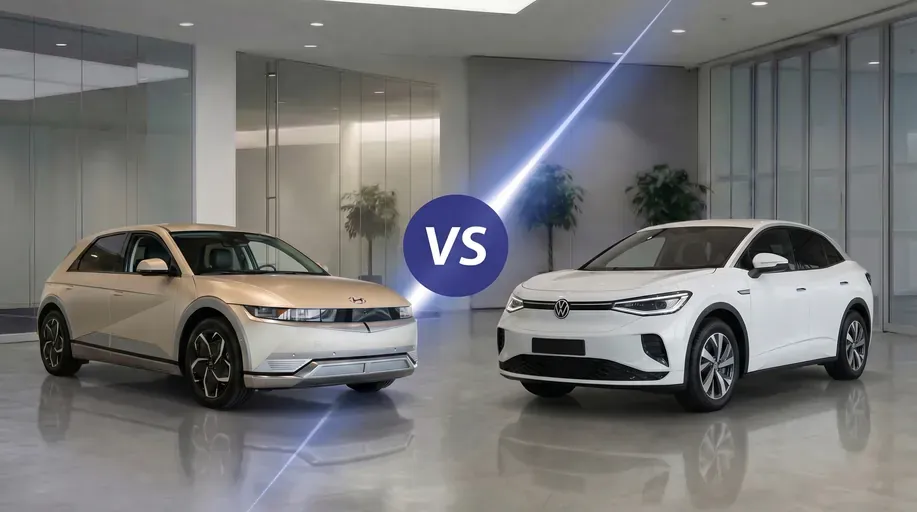
Detailed comparison of Hyundai Ioniq 5 vs. Volkswagen ID.5. Discover the real differences in range, practicality, and equipment. Read our verdict and make the right choice!
Apr 19, 2026