Car battle
Mazda 3 vs. Peugeot 308: Complete comparison 2026
Mazda 3 vs. Peugeot 308: A detailed comparison of engines, interior, and reliability. Find out which stylish hatchback is the best choice for you.
Oct 16, 2026
Articles
Car battle
Detailed comparison of Hyundai i30 vs Kia Ceed. Explore real-world experiences, engine reliability, and a detailed verdict to help you choose the better car.
April 25, 2026
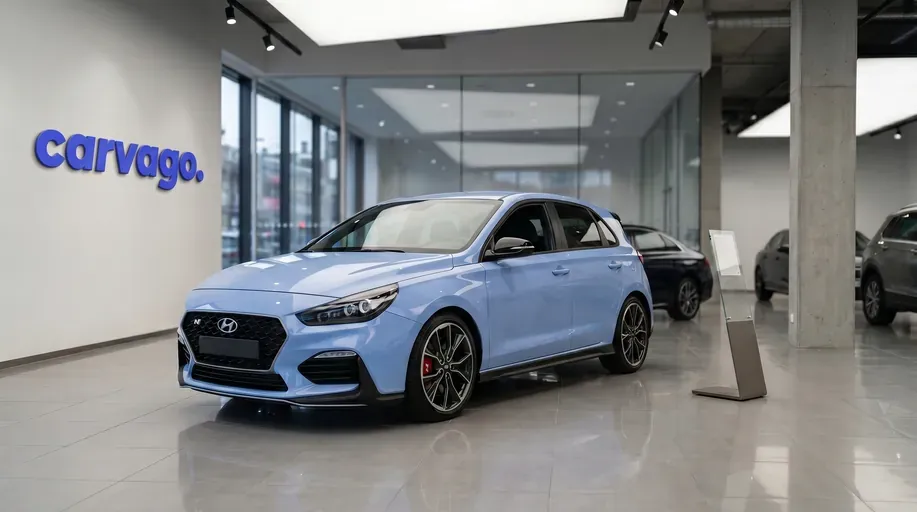
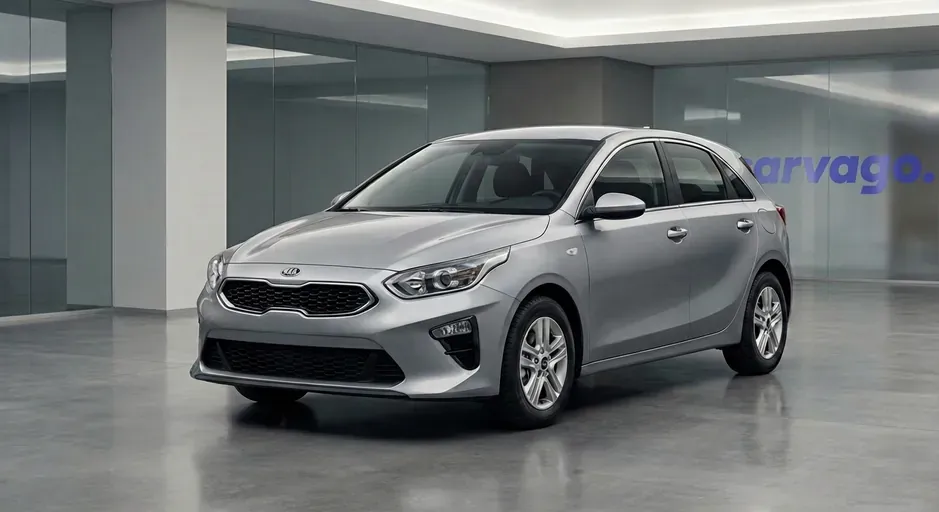
The South Korean Hyundai i30 hatchback, which was also available in selected markets under the Hyundai Elantra GT designation, has long represented a rational and practical choice for everyday travel. Its direct technological sibling and also its biggest rival is the Kia Ceed (known as the cee'd in older generations and sold on other continents under the names Kia K3 or Cerato), which attracts with a more dynamic look designed specifically for European customers. Let's take a detailed look at which of these two popular compacts offers a better ratio of price, utility value, and driving characteristics in a direct comparison for your next purchase.
Hyundai i30 and Kia Ceed share the same chassis platform, which is clearly reflected in their identical wheelbase of 2,650 mm. This key parameter ensures very similar and generous longitudinal space for passengers in both models. Focusing on models roughly four years old (i.e., the 3rd generation for Hyundai and the CD generation for Kia), we find that in terms of width, the Kia Ceed, at 1,800 mm, is a negligible 5 mm wider than the Hyundai i30 (1,795 mm). In practice, you won't notice this difference at all when parking in tight spaces or driving through the city. Consequently, both cars offer a comparable sense of confidence behind the wheel and shoulder-room comfort.
When focusing on classic five-door hatchbacks, we find minor differences in overall length and height. The Hyundai i30 measures 4,340 mm in length, while the Kia Ceed is slightly more compact with a length of 4,310 to 4,325 mm (depending on the specific version or GT trim). The Hyundai is also slightly taller (1,455 mm compared to 1,447 mm). For everyday use, this means the Kia may appear slightly sportier due to its slightly lower stance, while the Hyundai opts for sleek elegance. In terms of maneuverability in cramped garages or when searching for a parking spot, however, they are perfectly equal rivals for a used car buyer.
More significant differences, though still only in the range of tens of millimeters, are found in the popular estate body styles. The Kia Ceed Sportswagon boasts a length of up to 4,605 mm, surpassing the Hyundai i30 Estate (4,585 mm) by 20 mm. The longer rear overhang on the Kia often provides slightly better trunk utility and maximized space, which is primarily what families with children look for in four-year-old used cars. Conversely, Hyundai has a huge advantage in offering the elegant Fastback variant with a length of 4,455 mm, which stylishly fills the gap between the shorter hatchback and the family estate (Kia does not offer a direct equivalent under the standard Ceed designation). Choosing between these cars on the used market will therefore not be driven by millimeters on paper, but rather by your preference for a specific body shape and daily family needs.
| Parameter | Hyundai i30 Hatchback | Kia Ceed Hatchback | Hyundai i30 Fastback | Kia Ceed Fastback | Hyundai i30 Estate | Kia Ceed Estate |
|---|---|---|---|---|---|---|
| Width (mm) | 1795 | 1800 | 1795 | - | 1795 | 1800 |
| Length (mm) | 4335 - 4340 | 4310 - 4325 | 4455 | - | 4585 | 4600 - 4605 |
| Height (mm) | 1439 - 1455 | 1442 - 1447 | 1417 - 1425 | - | 1465 - 1475 | 1460 - 1465 |
| Wheelbase (mm) | 2650 | 2650 | 2650 | - | 2650 | 2650 |
Trunk capacity is one of the most important criteria for many buyers when choosing a compact car, especially if the vehicle is to serve as the main family car. Although the Hyundai i30 (3rd generation) and Kia Ceed (CD generation) share a common technical platform, they differ slightly in terms of interior space and practicality. These differences can play a key role in deciding whether you can comfortably pack for a weekend shopping trip or if the trunk will be sufficient for a longer summer holiday with the whole family.
For the basic five-door versions, there is a rare consensus between the two models. Both the Hyundai i30 and Kia Ceed offer an identical 395 liters of base capacity, which is an above-average and very solid value in the compact segment. A minor difference only appears after folding the rear seats, where the Hyundai offers a maximum of 1,301 liters, while the Kia lags slightly behind with 1,291 liters. However, the Hyundai brand has one more trump card up its sleeve – the stylish Fastback (liftback) body version. This extends the rear of the car and pushes the base capacity to a superior 450 liters (up to 1,351 liters when folded), making it an ideal compromise for those for whom a hatchback is not enough and a classic estate seems unnecessarily large.
The biggest battle for the family customer, however, traditionally takes place in the spacious estate category. Here, the Kia Ceed Sportswagon has the upper hand, boasting a massive trunk with a capacity of 625 liters. Compared to the Hyundai i30 Estate, whose trunk holds 602 liters, the Kia offers space for several extra bags and suitcases. After folding the seats, this gap widens slightly (1,694 liters for the Kia compared to 1,650 liters for the Hyundai). However, it is important to remember that if you choose electrified versions from the used car market, the capacity will decrease significantly. For example, in the plug-in hybrid (PHEV) variant of the Kia Ceed SW, the base capacity drops to 437 liters due to the high-voltage batteries stored under the floor. A reduction in space by several dozen liters (mostly in hidden compartments under the double floor) should also be expected in the popular mild-hybrid (MHEV) variants of both brands. In terms of overall trunk utility, the interpretation is clear: while both cars are completely equal in their short versions, for families looking for maximum transport capacity, it makes more sense to go for the estate body from the Kia brand.
| Parameter | Hyundai i30 Hatchback | Kia Ceed Hatchback | Hyundai i30 Fastback | Hyundai i30 Estate | Kia Ceed Sportswagon |
|---|---|---|---|---|---|
| Base capacity (liters) | 395 | 395 | 450 | 602 | 625 |
| Max. capacity with seats folded (liters) | 1301 | 1291 | 1351 | 1650 | 1694 |
While the short hatchbacks have identical and very generous space, in the more practical estate version, the Kia Ceed offers a slightly larger and deeper trunk that easily swallows everything needed for a comfortable family holiday.
In terms of towing capacity, both sister cars from the Hyundai and Kia stable offer surprisingly similar, yet slightly different values at the extremes. Trailer weight is an absolutely key parameter for drivers who regularly transport bulkier loads and require maximum practicality, whether they are attaching a smaller utility trailer or a larger caravan for travel. Focusing on models roughly four years old (third generation of both cars), standard petrol versions with the popular 1.0 T-GDI (88 kW) three-cylinder can tow a braked trailer weighing 1,000 to 1,200 kg in both cars. The popular more powerful 1.5 T-GDI (118 kW) versions then increase the limits and can handle weights up to 1,410 kg (up to 1,420 kg for the Hyundai i30). However, the best workhorse for long trips with a heavy trailer is clearly the 1.6 CRDi diesel engine, which can handle a load of 1,500 kg in both competitors. Unexpectedly, the absolute maximum for towing heavy loads is reached by the sporty Hyundai i30 N (up to 1,600 kg), while the related Kia Ceed GT (150 kW) stops at a more modest limit of 1,410 kg. Great care must be taken when choosing mild-hybrid variants with a 48V system. Here, manufacturers have significantly limited the towing capacity for both brands to protect the technology. For example, in the 1.0 T-GDI 48V version, the weight dropped to as low as 700 kg, which is a load sufficient for weekend shopping or taking branches to the recycling center, but completely insufficient for a heavy caravan. For a standard unbraked trailer, the values have settled at an identical 600 kg, which easily provides space for a few extra suitcases and a comfortable journey for a longer holiday. In conclusion, it turns out that for the average motorist, both cars are completely equivalent in terms of towing; however, if you plan to occasionally tow a truly heavy trailer over 1,500 kg, the sporty Hyundai variants offer a larger structural reserve.
| Model and engine | Braked trailer (kg) | Unbraked trailer (kg) |
|---|---|---|
| Hyundai i30 1.0 T-GDI (88 kW) | 1000 - 1200 | 600 |
| Hyundai i30 1.0 T-GDI 48V (88 kW) | 700 - 1000 | 600 |
| Hyundai i30 1.5 T-GDI 48V (118 kW) | 1410 - 1420 | 600 |
| Hyundai i30 1.6 CRDi (85 - 100 kW) | 1500 | 600 |
| Hyundai i30 N (184 - 206 kW) | 1600 | 600 |
| Kia Ceed 1.0 T-GDI (88 kW) | 1000 - 1200 | 600 |
| Kia Ceed 1.0 T-GDI 48V (88 kW) | 700 | 600 |
| Kia Ceed 1.5 T-GDI (118 kW) | 1410 | 600 |
| Kia Ceed 1.6 CRDi (85 - 100 kW) | 1500 | 600 |
| Kia Ceed GT (150 kW) | 1410 | 600 |
Since the Hyundai i30 and Kia Ceed share the South Korean group's chassis and engine platform, their powertrain offerings are largely technologically identical, yet both brands differ in their focus. For buyers of used cars roughly 4 years old (predominantly model years around 2022), this means access to a modern and highly efficient engine family that relies heavily on advanced 48V mild-hybrid systems (MHEV). Both cars share basic and more powerful engines, but the range of niche versions diverges dramatically. While Kia caters to fleets and families with its economical plug-in hybrid exclusively for the Sportswagon body style, Hyundai targets the emotions of purists with a full-blooded two-liter in the renowned i30 N version.
The third-generation Hyundai i30 has maintained a broad range where reliability and modern technology play a leading role. In the 2021 and 2022 used car market, the entry-level choice is the turbocharged 1.0 T-GDI three-cylinder, often found paired with mild-hybrid technology to reduce fuel consumption. However, the "sweet spot" of the entire range is the excellent 1.5 T-GDI mild-hybrid four-cylinder (118 kW), which scores points for its flexibility and refined operation. A crucial and highly sought-after specialty of the i30 is the naturally aspirated 1.5 DPi four-cylinder (also referred to as 1.5 Pure in some listings). This was only on sale until May 2022, so you can still find it in four-year-old used cars – for conservative drivers looking for maximum mechanical durability and simplicity, it is an absolute gem. The diesel representation relies on the economical 1.6 CRDi, though its market availability is gradually declining. At the top of the ladder is, of course, the high-performance i30 N sports model with a powerful 2.0 T-GDI engine producing 206 kW.
| Engine type | Fuel | Power (kW) | Torque (Nm) | Transmission |
|---|---|---|---|---|
| 1.0 T-GDI (incl. 48V) | Petrol / Mild-hybrid | 88 | 172 | 6MT / 7DCT |
| 1.5 DPi | Petrol | 81 | 144 | 6MT |
| 1.5 T-GDI 48V | Petrol / Mild-hybrid | 118 | 253 | 6iMT / 7DCT |
| 1.6 CRDi (incl. 48V) | Diesel / Mild-hybrid | 85 / 100 | 280 / 320 | 6MT / 6iMT / 7DCT |
| 2.0 T-GDI (i30 N) | Petrol | 206 | 392 | 6MT / 8DCT |
For the Kia Ceed (CD generation), the main offering mirrors its sister hatchback, but with several interesting deviations. Key information for those interested in a 4-year-old car is the "changing of the guard" – if you come across models from early 2021 and older, you're more likely to find the 1.4 T-GDI unit under the hood. However, this quickly gave way to the significantly more efficient and powerful 1.5 T-GDI (118 kW), which is now the most recommended choice on the used Ceed market. In addition to the standard 88 kW, Kia previously offered the 1.0 T-GDI three-cylinder base in a weaker 74 kW fleet version. A difference compared to the i30 is the availability of the Ceed GT performance touring version powered by a 1.6 T-GDI (150 kW) engine, which represents a very pleasant middle ground for drivers desiring performance without the stiffness of a pure-bred "hot hatch." Completely unique is the economical 1.6 GDI Plug-in Hybrid (104 kW) powertrain, which Kia offered exclusively for the spacious Sportswagon estate, promising a pure electric range useful especially for suburban commuting.
| Engine type | Fuel | Power (kW) | Torque (Nm) | Transmission |
|---|---|---|---|---|
| 1.0 T-GDI (incl. 48V) | Petrol / Mild-hybrid | 74 / 88 | 172 | 6MT / 7DCT |
| 1.5 T-GDI (incl. 48V) | Petrol / Mild-hybrid | 118 | 253 | 6MT / 7DCT |
| 1.6 CRDi 48V | Diesel / Mild-hybrid | 100 | 280 / 320 | 6iMT / 7DCT |
| 1.6 T-GDI (GT) | Petrol | 150 | 265 | 7DCT |
| 1.6 GDI PHEV | Plug-in Hybrid | 104 | 265 | 6DCT |
Although both cars offer identical basic technology and the excellent all-rounder 1.5 T-GDI engine, sport-oriented drivers should look straight for the emotive Hyundai i30 N, while those hunting for low fuel consumption in the city will likely appreciate the practical Kia Ceed Sportswagon with its unique plug-in hybrid powertrain.
Choosing the right engine is absolutely crucial for long-term satisfaction with a car, its residual value, and your operating costs. The following recommendations for roughly four-year-old used cars are based on a combination of real-world dynamics, actual fuel consumption, owner feedback, and documented mechanical reliability. Since the Hyundai i30 (3rd generation) and Kia Ceed (CD generation) share group technology, the star of both models from 2020 to 2022 is the modern turbocharged 1.5 T-GDI four-cylinder. However, you will encounter a different technological approach from each brand in the used car market.
This modern four-cylinder, which replaced the older and also reliable 1.4 T-GDI as part of the 3rd generation facelift (available from late 2020), represents the absolute ideal in the current used car market. In Hyundai models, it is very often paired with mild-hybrid (48V) technology.
While Hyundai heavily promoted this engine with mild-hybrid technology, in the Kia Ceed (CD generation, from 2021), this engine can commonly be found in a purely internal combustion version without the 48V system. From a long-term maintenance perspective for a used car, this is a huge plus.
When choosing a used car, it is important to keep in mind that the standardized fuel consumption figures provided by the manufacturer often differ significantly from everyday reality. While some engine options may look particularly tempting on paper, a whole range of variables comes into play in normal traffic, from aerodynamics and driving style to vehicle load. To get the most accurate picture of the fuel consumption of the generations that are most relevant on the market as roughly four-year-old used cars (the third-generation Hyundai i30 and the CD generation of the Kia Ceed from 2018–2022), we relied on data from the independent community portal Spritmonitor.de. There, hundreds of thousands of drivers from all over Europe meticulously record their actual real-world refueling.
| Model and engine | Average consumption (l/100 km) | Source |
|---|---|---|
| Hyundai i30 1.0 T-GDI (88 kW) | 6.4 | Spritmonitor.de |
| Kia Ceed 1.0 T-GDI (88 kW) | 6.4 | Spritmonitor.de |
| Kia Ceed 1.4 T-GDI (103 kW) | 6.7 | Spritmonitor.de |
| Hyundai i30 1.5 T-GDI 48V (118 kW) | 6.3 | Spritmonitor.de |
| Kia Ceed 1.5 T-GDI (118 kW) | 6.3 | Spritmonitor.de |
| Hyundai i30 1.6 CRDi (100 kW) | 5.2 | Spritmonitor.de |
| Kia Ceed 1.6 CRDi (100 kW) | 5.2 | Spritmonitor.de |
A look at the real numbers reveals several extremely interesting trends. The most prominent is the finding that the downsized 1.0 T-GDI three-cylinder engines do not bring as much fuel savings in practice as a buyer might expect. The driver simply has to rev the small-displacement engine more to keep up with the pace of surrounding traffic, which is uncompromisingly reflected in the fuel bills. A surprising conclusion, therefore, is that the significantly more powerful 1.5 T-GDI four-cylinder (often supplemented by clever 48V mild-hybrid technology) can achieve lower real-world average consumption, despite its noticeably higher power and dynamics. The older 1.4 T-GDI petrol version, which the 1.5-liter gradually replaced in the lineup after 2020, is one of the slightly thirstier choices with an average of 6.7 l/100 km. As expected, the 1.6 CRDi diesel engines demonstrate absolute efficiency and stability on longer routes, with the real-world average long-term staying just above the five-liter mark.
What does this mean for the typical user? If you are looking for a car for daily city commuting and weekend family trips, it makes perfect sense to focus on the 1.5 T-GDI petrol engine. You get an excellent power reserve and smoother performance without any consumption "penalty". For drivers covering long highway distances and those with high annual mileage, the robust and economical 1.6 CRDi diesel remains a huge draw on the market. And although the entry-level 1.0 T-GDI three-cylinder may attract budget-oriented buyers with its more friendly purchase price on the used market, owners should not expect to save large amounts at the gas station compared to its more powerful siblings.
The overall comparison reveals one fundamental fact. Since the Hyundai i30 and Kia Ceed are full-blooded technical siblings built on an identical platform with an absolutely identical range of power units developed by the Hyundai Motor Group, fuel consumption is an absolute tie. The appetite of the engines themselves is therefore certainly not, and cannot be, a parameter that should favor one of these cars. A prospective buyer of a used hatchback or estate should therefore base their final purchase decision more on the exterior design, subtle nuances in chassis tuning, interior layout, or differing factory warranty conditions.
When looking at the used car market for vehicles around 4 years old (specifically the popular third generations of both models, often following the 2020 and 2021 facelifts), both the Hyundai i30 and Kia Ceed are among the most sought-after representatives of the lower-middle class. Since both cars share the same technical foundation and power units, their price depreciation behaves very similarly. Nevertheless, you will encounter interesting differences on the secondary market that could significantly influence your final choice.
The Hyundai i30 scores on the used market with its massive supply and very favorable starting price. This model was extremely popular among Czech customers, which means you can choose from hundreds of used cars, mostly of domestic origin.
As a used car, the Kia Ceed holds its value slightly higher. This is due to a different pricing policy for new cars and the absence of purely budget-oriented base engines to the same extent as its Hyundai sibling.
A key factor that clearly influences the price of roughly four-year-old cars is the remaining factory warranty. This is where the approach of the two Korean automakers differs:
| Used Car Category (approx. 4 years old) | Hyundai i30 | Kia Ceed |
|---|---|---|
| Base trim and engine | €10,000 – €12,000 | €12,000 – €14,000 |
| The "Golden Mean" (1.5 T-GDi) | €13,000 – €15,000 | €14,000 – €15,000 |
| Top trim (N-Line / GT-Line) | €15,000 – €16,000 | €15,000 – €17,000 |
While you can get a Hyundai i30 slightly cheaper thanks to the wide range of available naturally aspirated engines, the Kia Ceed holds its price a bit higher due to the seven-year warranty, which promises you another three years of sound sleep even with a four-year-old used car.
Both South Korean siblings, the Hyundai i30 and Kia Ceed, received a prestigious five-star safety rating from the independent organization Euro NCAP. However, when choosing a used car, it is crucial to put these results into the correct context and take into account the year the tests were conducted. Euro NCAP's methodology and requirements are constantly evolving and becoming stricter. For this reason, percentage scores from different years cannot be directly compared – what was sufficient for five stars in the past would fall far short in today's more rigorous tests, which account for complex intersection scenarios or improved cyclist detection.
The Hyundai i30 underwent crash testing in 2017, coinciding with the market launch of its third generation. The car demonstrated a very solid level of passive protection for both adults and children, and its standard equipment included autonomous emergency braking, which was advanced for its time. However, due to regular revisions and strict Euro NCAP rules, the validity of this specific certificate officially expired at the beginning of 2024. This does not, of course, make it an unsafe car; it simply means that the original rating no longer fully aligns with the most modern active safety standards.
The Kia Ceed was tested two years later, in 2019, and thus had to contend with a newer and more demanding testing methodology. In its base trim, the model earned a strong four-star rating. To achieve the maximum five-star rating, it was necessary to opt for the optional Advanced Driving Assistance Pack, which added improved pedestrian and cyclist detection. If you are buying a used Kia Ceed with this pack, you are getting a vehicle that has proven itself in a more recent testing cycle and features more modern assistance systems.
Overall, it can be said that both cars offer a very good and comparable level of passive safety on the used car market, protecting occupants during an actual impact. However, thanks to its later development and more sophisticated active assistants, the Kia Ceed has a slight edge in accident prevention, especially if you choose a unit equipped with the optional safety pack.
| Parameter | Hyundai i30 | Kia Ceed |
|---|---|---|
| Year of testing | 2017 | 2019 |
| Adult occupant protection | 88% | 88% |
| Child occupant protection | 84% | 85% |
| Vulnerable road users protection | 64% | 68% (with safety pack) |
| Safety assist systems | 68% | 73% (with safety pack) |
Although both cars are very safe and robust, the Kia Ceed benefits from a more recent testing date and, thanks to more advanced assistants, offers a slightly more modern level of protection in the area of active safety.
In addition to standard equipment, each model offers several unique features and brings its own approach to added value, making daily use and the driving experience itself more enjoyable. Although both cars share a technical foundation, they differ in interesting ways through their focus on specific technologies and comfort details.
Very comfortably tuned chassis that filters bumps excellently during daily driving
Unique range of body styles, including the exceptionally stylish and aerodynamic Fastback
Intuitive infotainment with a clear menu and fast response
Excellent price-to-value ratio and rich standard equipment on the used car market
Smooth and fuel-efficient mild-hybrid engines reducing consumption in the city
Less engaging and rather detached driving experience in base and mid-range trims
Occasional jerking of the seven-speed dual-clutch DCT transmission during slow crawling in traffic jams
Higher proportion of hard and more vulnerable plastics in the interior of lower trim levels
Slightly smaller luggage compartment volume in the hatchback version compared to direct competitors
Hyundai i30 is an ideal choice for drivers looking for maximum driving comfort, an excellent price-to-value ratio, and a reliable car for a calm daily commute. Thanks to the elegant Fastback body, it can also appeal to customers who require a more dynamic design but do not want to make major compromises in practicality.
Sportier and more agile chassis tuning providing greater confidence in corners
Great dashboard ergonomics with traditional physical buttons for air conditioning
Huge and excellently usable luggage space in the practical SW (estate) variant
Subjectively higher-quality workmanship and a larger proportion of soft-touch materials in the cabin
Availability of the attractive ProCeed design variant in the "shooting brake" style
Stiffer shock absorber tuning means worse impact damping on poor-quality roads and potholes
Higher level of rolling and aerodynamic noise penetrating the cabin at highway speeds
Unnecessarily aggressive lane-keeping assistant interventions, which often need to be turned off
Just like its sister model, poorer smoothness of the DCT automatic transmission at low speeds
Kia Ceed will primarily appeal to motorists who value more confident driving characteristics, a traditional control concept with physical buttons, and require maximum transport capacity in the estate version. It represents a more engaging alternative for drivers within the compact class, although the price for better handling is a slightly stiffer chassis on broken roads.
Based on breakdown statistics, expert databases, and our own experience, which includes independent physical inspection of a used car through the certified CarAudit service, we have compiled an overview of the most common problems that buyers of used cars of both brands should watch out for. We focused on roughly four-year-old third-generation vehicles, which currently make the most sense on the used car market.
The third-generation Hyundai i30 is an above-average car in terms of long-term reliability, but for roughly four-year-old used cars, specific ailments associated primarily with neglected service or urban driving styles may begin to appear.
The third-generation i30 is a mechanically solid and durable car. The biggest risk with used cars is a worn dual-clutch transmission from heavy city traffic and carbon buildup in direct-injection engines. With a manual and honest servicing, you won't go wrong.
The third generation of the Kia Ceed benefits from the same technical foundation as its sibling, so the range of common faults is similar. However, the model also adds a few of its own specifics that you should watch out for when choosing.
The Kia Ceed offers long-term durability with a minimum of critical failures. When choosing a four-year-old used car, however, pay extra attention to the operation of the dual-clutch automatic and the correct functioning of the front LED daytime running lights.
When buying a used car, a thorough inspection is key, and an independent comprehensive car audit is always recommended. For roughly four-year-old used cars of these two popular Korean siblings, focus on several specific points that will tell you a lot about their true condition.
For the hatchback versions, both models offer an identical trunk capacity of 395 liters, which is fully sufficient for everyday needs. However, if you are looking for the more practical estate version, Kia wins with a volume of 625 liters compared to 602 liters for the Hyundai model. This minor difference is due to slightly different rear shaping and internal layout.
Since both cars share the same chassis platform and engines, their reliability is at a very similar and overall above-average level. Mechanically, there are no serious systemic faults, and the engines are considered very durable. Occasionally, both may experience minor infotainment software glitches or clutch wear on manual transmissions with rougher handling.
Although they are technical siblings, Kia has a slightly stiffer suspension setup, which suits a more dynamic and sportier driving style. Hyundai, on the other hand, focuses more on absorbing bumps and offers an overall more comfortable and smoother ride on broken roads. The steering is very precise in both cars, but in the Ceed model, you get a bit more feedback from the front wheels.
Kia traditionally offers a seven-year warranty limited to 150,000 kilometers, which is a huge advantage when buying a roughly four-year-old used car. Hyundai, by contrast, provides a five-year warranty with no mileage limit. The choice therefore depends primarily on whether you prefer longer time protection for a used car or plan to drive huge amounts of kilometers annually.
Fuel consumption is completely comparable for both cars because they use identical engines, transmissions, and aerodynamic foundations. The popular four-cylinder 1.5 T-GDi gasoline engines most often run at around 6 to 6.5 l/100 km in real-world combined driving. The economical 1.6 CRDi diesel variants, on the other hand, easily stay below the 5 liters per hundred kilometers mark.
Sources: ADAC, svetmotoru.cz, garaz.cz, emobility.cz, autoexpress.cz, autoguru.cz
This article was prepared using artificial intelligence tools. The section guarantor is Petr Dušek.
Mazda 3 vs. Peugeot 308: A detailed comparison of engines, interior, and reliability. Find out which stylish hatchback is the best choice for you.
Oct 16, 2026
Mazda 3 vs. Toyota Corolla: Which bestseller is better? Our detailed comparison of engines, features, and handling will help you make your final choice.
Oct 23, 2026
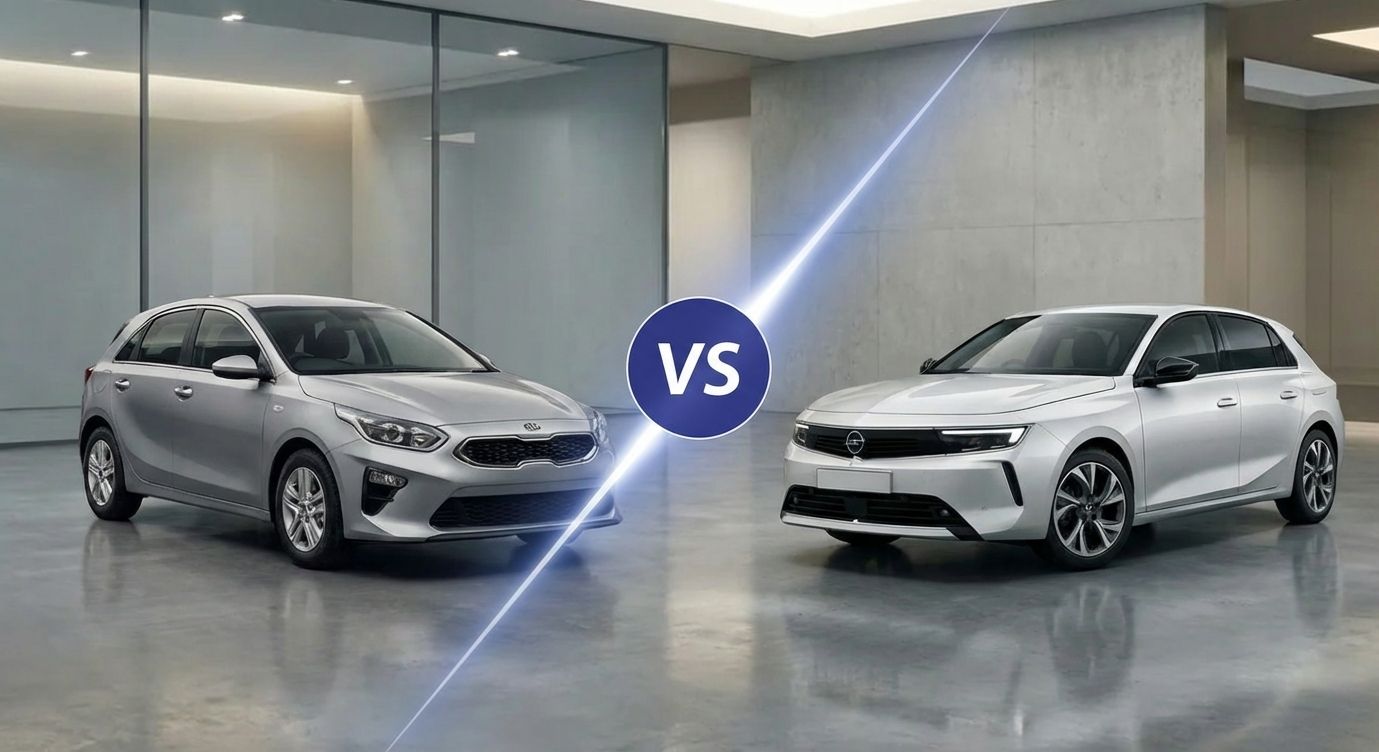
Detailed comparison of the Kia Ceed and Opel Astra. We compared real-world fuel consumption, reliability, and equipment. Find out which popular hatchback is worth buying.
Oct 16, 2026