Car battle
Hyundai Tucson vs. Peugeot 3008: A Complete 2026 Comparison
Hyundai Tucson vs Peugeot 3008: A detailed comparison of design, engines, and features. Find out which SUV is the better choice for you in our big test.
Oct 23, 2026
Detailed comparison of the Ford Puma and Suzuki Vitara. Find out which crossover is the right one for you. We bring real-world experience, equipment comparisons, and a clear verdict.
October 16, 2026
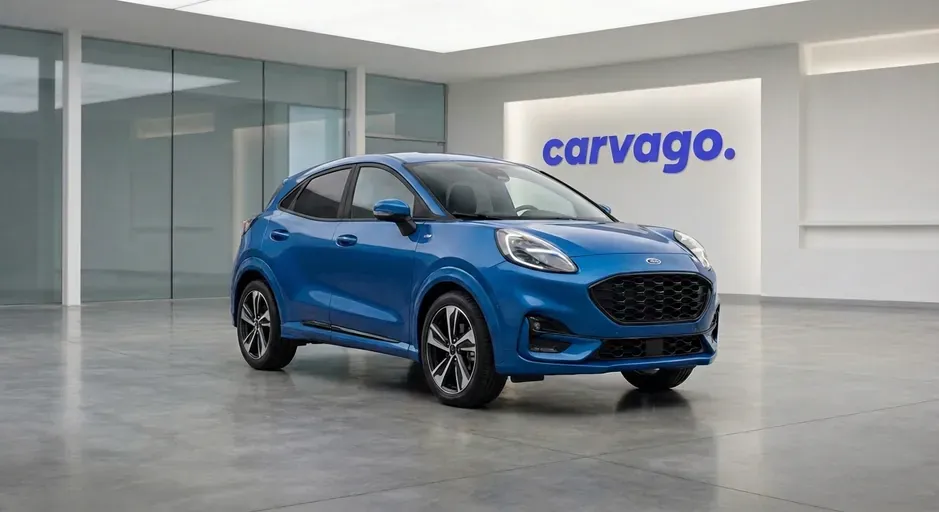
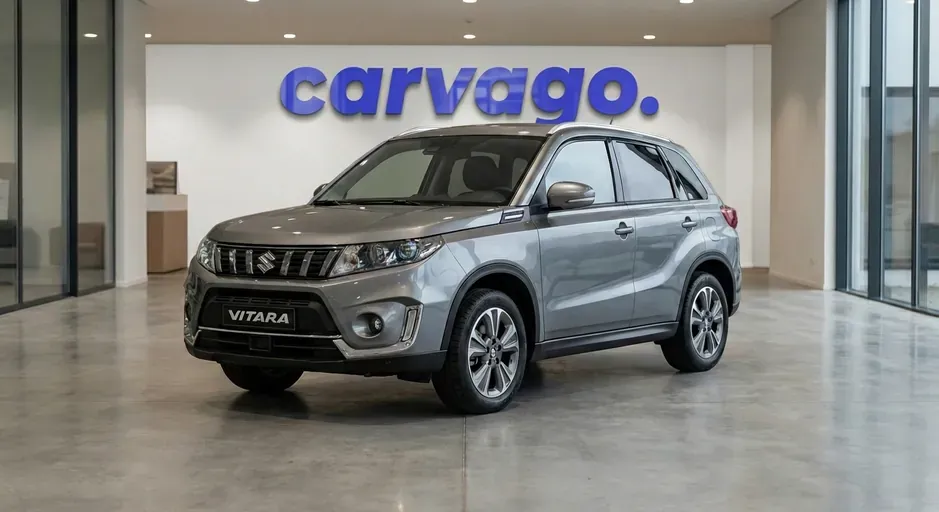
Ford Puma is a stylish and agile urban crossover that has gained great popularity on the used car market, primarily thanks to its dynamic driving characteristics and surprisingly practical luggage space. Its rival today is the Suzuki Vitara, a reliable and more robust compact SUV with optional all-wheel drive, which is also known under the alternative name Suzuki Escudo in some global markets (such as Japan). Let's take a detailed look at how these popular approximately four-year-old competitors stand in a direct comparison to make your final decision easier when choosing your next car.
Both models fall into the popular category of small city crossovers (B-SUV), yet they approach external dimensions quite differently. Looking at the cars currently on the used car market (roughly four-year-old second-generation vehicles for both brands), it is clear that each manufacturer chose a different body construction philosophy.
In terms of length, both cars are very similar, with the Ford Puma being a few centimeters longer in standard versions and, with a width of 1805 mm (compared to 1775 mm for the Vitara), it gives a more muscular and planted impression on the road. A significant difference, on the other hand, can be found in height. The Suzuki Vitara at roughly 1600 mm towers over the Puma by approximately 50 to 80 millimeters, depending on the specific version. As a result, the Suzuki has a more classic, boxier shape typical of traditional off-roaders and SUVs.
The wheelbase has a fundamental influence on interior space and driving stability. Here, the Ford Puma has the upper hand with a value of 2588 mm, which is a full 88 mm more than in the case of the Suzuki Vitara (2500 mm). The longer wheelbase helps the Puma filter out bumps better and theoretically provides more legroom for rear passengers, although Suzuki successfully compensates for this paper handicap with a more upright seating position for the occupants.
| Parameter | Ford Puma SUV | Suzuki Vitara SUV |
|---|---|---|
| Length (mm) | 4186 - 4266 | 4170 - 4185 |
| Width (mm) | 1805 | 1775 |
| Height (mm) | 1520 - 1555 | 1595 - 1610 |
| Wheelbase (mm) | 2588 | 2500 |
In terms of external dimensions, it primarily depends on which style of car you prefer. If you are looking for a crossover with sportier proportions, a dynamic wider stance, and a longer wheelbase for more confident handling in corners, the Ford Puma is the better choice. Conversely, the Suzuki Vitara will appeal to drivers who prefer the traditional advantages of a taller SUV build. Its taller body provides significantly more comfortable entry and exit and a better overall view from the car, which you will appreciate especially when maneuvering in cluttered city parking lots.
Luggage space is a key factor for many buyers, whether for everyday family use, weekend shopping, or transporting sports equipment. When comparing the Ford Puma and the Suzuki Vitara, two very popular compact SUVs on the used car market (especially among roughly four-year-old models), we encounter quite significant differences. The Ford Puma scores points here from the start with its cleverly designed rear, which provides noticeably more space than its Japanese competitor, which can be decisive for users who often travel with a larger load of suitcases.
In terms of concrete numbers, the second-generation Ford Puma offers a generous base volume of 456 liters, which is a highly above-average value in this class and is perfectly sufficient for weekend shopping or a longer vacation. After folding down the rear backrests, the space increases to as much as 1216 liters. In contrast, the second-generation Suzuki Vitara offers 375 liters in its standard configuration. Although this space is usually enough for a family, it may mean having to make compromises when packing for longer trips. The maximum volume after folding the seats in the Vitara is 1120 liters.
Special attention should be paid to the popular hybrid powertrains. While common mild-hybrid systems (such as the 1.0 EcoBoost Hybrid in the Ford) do not restrict the luggage compartment in any way, be very careful with the full hybrid 1.5 Dualjet Hybrid version of the Suzuki Vitara, which has been on the used car market since the 2022 model year. Here, due to the battery placement, the base trunk volume is reduced to just 289 liters (and 1046 liters after folding). Therefore, if you plan to purchase this specific Japanese hybrid, you must expect a very significant impact on practicality, as you will lack space for several extra suitcases. The Ford Puma emerges from this comparison as the clearly more practical choice.
| Parameter | Ford Puma SUV | Suzuki Vitara SUV |
|---|---|---|
| Base volume (liters) | 456 | 375 |
| Maximum volume after folding seats (liters) | 1216 | 1120 |
While the Suzuki Vitara is sufficient for everyday needs, the Ford Puma offers much greater versatility for families thanks to its voluminous trunk and is a safer choice if you want to avoid spatial compromises.
When choosing a compact SUV, trailer weight and overall towing capacity often play a decisive role. This will be of particular interest if you plan to tow a caravan, transport heavier materials, or simply want to ensure space for a few extra suitcases using a small trailer. When comparing models on the market of roughly four-year-old used cars, the Ford Puma and Suzuki Vitara differ quite significantly in this regard, both in basic and maximum values.
Ford Puma and its limits
In the second generation of the Ford Puma, the standard 1.0 EcoBoost petrol engines and their popular mild-hybrid variants (92 kW to 114 kW) provide a maximum braked trailer weight in the range of 900 to 1100 kg. An unbraked trailer can be attached up to a weight of 640 to 665 kg, which fully meets common needs. However, those interested in sports versions must be careful. For example, the powerful Ford Puma 1.5 EcoBoost ST (147 kW) has its maximum braked trailer capacity reduced to only 750 kg for structural reasons.
Suzuki Vitara as a reliable workhorse
The Suzuki Vitara (in its 2nd generation) is a much more robust choice in terms of towing power and targets drivers with higher demands. The standard braked trailer weight for the older 1.4 Boosterjet (103 kW) version or the newer 1.5 Dualjet Hybrid (75 kW) is a solid 1200 kg. The real top performer is the sought-after 1.4 Boosterjet Hybrid (95 kW) variant, which offers a maximum braked trailer weight of up to 1500 kg. For these more powerful hybrid versions, the Vitara can handle an unbraked trailer up to 600 kg (for some older non-hybrid models, the unbraked trailer limit was 400 kg).
Practical use and verdict
In real life, both cars can handle attaching a smaller trailer without the slightest problem. Such a solution is perfectly sufficient for weekend shopping or a longer family holiday when you need to transport bulkier sports equipment. However, if you know in advance when choosing that you will be regularly towing heavier loads, a boat trailer, or a medium-sized caravan, the Suzuki Vitara is clearly a more versatile and certain choice thanks to its more generous limits.
| Model and engine | Braked trailer weight (kg) | Unbraked trailer weight (kg) |
|---|---|---|
| Ford Puma 1.0 EcoBoost / Hybrid (70–114 kW) | 900–1100 | 640–665 |
| Ford Puma 1.5 EcoBlue (88 kW) | 1100 | 640–665 |
| Ford Puma 1.5 EcoBoost ST (147 kW) | 750 | 640 |
| Suzuki Vitara 1.4 Boosterjet (103 kW) | 1200 | 400 |
| Suzuki Vitara 1.5 Dualjet Hybrid (75 kW) | 1200 | 400–600 |
| Suzuki Vitara 1.4 Boosterjet Hybrid (95 kW) | 1500 | 600 |
Both of these popular city crossovers approach their engine offerings from a slightly different angle, which plays a key role when choosing a roughly four-year-old used car. The Ford Puma relies primarily on its award-winning 1.0 EcoBoost three-cylinder (92 kW and 114 kW), which, thanks to mild-hybrid assistance (mHEV), cleverly masks turbo lag and offers unexpectedly lively dynamics along with very favorable fuel consumption. The Suzuki Vitara, on the other hand, bets on proven four-cylinder engines – in younger used cars, these are most often the mild-hybrid 1.4 Boosterjet Hybrid (95 kW) or the efficient full-hybrid 1.5 Dualjet Hybrid system (85 kW). Its greatest competitive advantage, however, is the availability of the sophisticated AllGrip all-wheel drive, which you won't find on the strictly front-wheel-drive Puma. While Ford can satisfy even very demanding and sport-oriented drivers with the sharp top-of-the-line ST version featuring the 1.5 EcoBoost engine (147 kW), Suzuki targets calmer drivers and cottage owners who require maximum reliability and traction. For driving enthusiasts and city drivers, the more agile Puma will be the better choice, while pragmatists and people from mountainous areas will clearly appreciate the Vitara.
The engine range for the Ford Puma (current 2nd generation) is built mainly around the popular 1.0 EcoBoost petrol three-cylinder. If you are choosing a car from roughly 2021 and 2022, you will most often encounter its mild-hybrid variant (mHEV), which was available in two power versions: 92 kW and 114 kW. An electric motor in the form of a 48V starter-generator helps with smoother take-offs and significantly improves overall fuel consumption. These engines could be paired with a precise six-speed manual or a seven-speed dual-clutch automatic transmission (DCT). For highway travelers, Ford briefly offered a very reliable 1.5 EcoBlue diesel four-cylinder with a massive 285 Nm of torque, but its production ended in late 2021, so it represents a minority on the used car market. A separate chapter for enthusiastic drivers is the top-tier Puma ST sports version powered by a 1.5 EcoBoost petrol three-cylinder, which, thanks to its excellent 147 kW output and stiff manual gearbox, is considered one of the most fun small SUVs on the market.
| Engine | Fuel | Power (kW) | Torque (Nm) | Transmission |
|---|---|---|---|---|
| 1.0 EcoBoost | Petrol | 92 | 170 | 6MT / 7DCT |
| 1.0 EcoBoost Hybrid | Petrol / mHEV | 92 / 114 | 210 / 240 | 6MT / 7DCT |
| 1.5 EcoBlue | Diesel | 88 | 285 | 6MT |
| 1.5 EcoBoost ST | Petrol | 147 | 320 | 6MT |
The second generation of the Suzuki Vitara has undergone gradual electrification during its long life cycle. In roughly four-year-old used cars, you will encounter hybrid four-cylinders almost exclusively. The most sought-after and common choice is the mild-hybrid 1.4 Boosterjet Hybrid with 95 kW, which offers very solid pull thanks to 235 Nm of torque, exceptionally refined operation, and availability with an automatic transmission. In 2022, the range was supplemented by the 1.5 Dualjet Hybrid full-hybrid powertrain with 85 kW. This is always paired with an AGS automated manual transmission, and its main advantage is excellent efficiency in city traffic. A major draw of the Vitara remains the option to combine both of these hybrid engines with the smart AllGrip all-wheel drive, which is a rarity in this category. If you come across older production years, you might also find purely internal combustion engines like the 1.4 Boosterjet (103 kW) and the 1.0 Boosterjet three-cylinder (82 kW), or even the 1.6 DDiS diesel unit. However, all these non-hybrid powerplants gradually disappeared completely from the European market after 2020.
| Engine | Fuel | Power (kW) | Torque (Nm) | Transmission |
|---|---|---|---|---|
| 1.4 Boosterjet Hybrid | Petrol / mHEV | 95 | 235 | 6MT / 6AT |
| 1.5 Dualjet Hybrid | Petrol / HEV | 85 | 138 | 6AGS |
| 1.4 Boosterjet | Petrol | 103 | 220 | 6MT / 6AT |
| 1.0 Boosterjet | Petrol | 82 | 170 | 5MT / 6AT |
| 1.6 DDiS | Diesel | 88 | 320 | 6MT / 6TCSS |
While the Ford Puma will please drivers looking for dynamics and great handling combined with efficient mild-hybrid three-cylinders, the Suzuki Vitara makes clear sense for those who strictly need a reliable 4x4 and prefer classic four-cylinders.
Choosing the right power unit is key to long-term satisfaction with a used car, and our recommendations are based on real-world experience, mechanical reliability, and everyday user-friendliness. When comparing these roughly four-year-old crossovers, we encounter a very interesting technical contrast. While the Ford Puma relies exclusively on turbocharged three-cylinder engines in its standard versions, heavily assisted by a mild-hybrid system to mask turbo lag, the Suzuki Vitara (in the generation available after 2020) has remained one of the few cars in this class to retain a proven gasoline four-cylinder engine. Both cars thus have a completely different character and approach to efficiency, although they target a similar customer looking for a practical and economical car.
This mild-hybrid one-liter three-cylinder represents the most balanced choice in the entire Puma range. It perfectly combines brisk dynamics with a very acceptable real-world fuel consumption of around 5.5 to 6 liters per 100 km. The auxiliary electric motor (starter-generator) adds torque at low revs, making city driving very smooth and successfully suppressing the typical shortcomings of small turbo engines. In terms of reliability, there is one very good piece of news for this generation: on mild-hybrid versions, Ford replaced the previously problematic oil-bathed timing belt with a much more reliable timing chain.
In the range of roughly four-year-old used cars, you will find two main hybrid versions of the Vitara, but our clear and unambiguous choice is the 1.4 Boosterjet mild-hybrid four-cylinder. The reason is simple: unlike the newer 1.5 Dualjet full-hybrid, which is often paired with a frequently criticized and not very smooth automated manual transmission (AGS), the older 1.4 Boosterjet (supplied with a precise manual) offers an incomparably more pleasant and brisk drive. This engine excels in excellent mechanical reliability, refined operation, and strong pull. Real-world consumption easily stays around 6 liters, even for versions equipped with the popular AllGrip all-wheel drive.
The difference between official laboratory fuel consumption figures and reality on the road is often a source of disappointment. Especially with modern city crossovers, the real appetite of engines varies greatly depending on driving style and route profile. To get the most accurate picture of operating costs for models roughly four years old (corresponding to the current second-generation Ford Puma and the post-facelift version of the Suzuki Vitara), we focused on real-world data from daily operation. The average consumption values in the following overview are based on statistics from the user portal Spritmonitor.de, where thousands of ordinary drivers record their actual refueling.
| Model and engine | Average consumption (l/100 km) |
|---|---|
| Ford Puma 1.5 EcoBlue (88 kW) | 4.5 |
| Suzuki Vitara 1.5 Dualjet Hybrid (85 kW) | 5.4 |
| Ford Puma 1.0 EcoBoost Hybrid (92/114 kW) | 6.0 |
| Suzuki Vitara 1.4 Boosterjet Hybrid (95 kW) | 6.3 |
| Ford Puma 1.5 EcoBoost ST (147 kW) | 7.4 |
A closer look at the real-world data reveals some very interesting trends. The most fuel-efficient choice remains the 1.5 EcoBlue diesel engine under the hood of the Ford Puma, which averages an excellent 4.5 liters per 100 km. However, in the small SUV segment, this is something of a dying breed, so most attention is focused on petrol alternatives. Here, the real benefit of advanced electrification is clearly shown: the full-hybrid Suzuki Vitara 1.5 Dualjet manages fuel significantly better, maintaining consumption around 5.4 l/100 km. Conversely, a surprising finding may be the behavior of small turbocharged engines with mild-hybrid technology. The tiny three-cylinder 1.0 EcoBoost in the Ford and the larger four-cylinder 1.4 Boosterjet in the Suzuki do not achieve the savings in real-world traffic that might be expected, requiring roughly 6.0 to 6.3 l/100 km.
For the average user and those interested in a used car, these figures lead to clear recommendations:
Fuel consumption can therefore be a decisive factor when choosing between these two cars, but it depends entirely on your driving profile. While Ford scores with the absolute lowest consumption for those who spend a lot of time outside the city (thanks to the diesel unit) among roughly four-year-old used cars, Suzuki counters with a more efficient full-hybrid powertrain that makes the most sense for calmer daily trips across the city and its immediate surroundings.
When looking for a used crossover around four years old (ideally 2020 to 2022 models), both the Ford Puma and Suzuki Vitara are very strong contenders. Both vehicles hold their value exceptionally well on the market; however, what you pay extra for as a buyer differs slightly for each model.
The Ford Puma entered the market at the turn of 2019 and 2020. Today, four-year-old models form a very diverse core of the used car market. In terms of engines, the 1.0-liter three-cylinder EcoBoost clearly dominates, very often paired with mild-hybrid technology (mHEV).
With the Suzuki Vitara from 2020 to 2022, you will most often encounter the renowned 1.4 BoosterJet petrol four-cylinder, which switched entirely to a mild-hybrid system in 2020. The main draw when buying a used Vitara is the availability of the reliable AllGrip all-wheel-drive system, which has a significant impact on the price.
In terms of current purchase costs, used examples of both cars are in rare agreement. However, the financial difference lies in priorities. While the market values the Ford Puma most for its modern equipment, sophisticated interior, and popular ST-Line visual packages, with the Suzuki Vitara, you are primarily paying for functional technology. Used Vitaras equipped with the AllGrip system experience the slowest depreciation on the market – small, affordable crossovers with genuine all-wheel drive are few and far between in used car lots. But if you don't require all-wheel drive, both cars represent an almost identical choice for your wallet on the 4-year-old used car market.
Both models can be purchased as roughly 4-year-old used cars in a similar price range around €16,000, with the Vitara attracting buyers with its affordable and desirable all-wheel drive, while the Puma appeals with its sportier look and better technological equipment.
Safety ratings from the independent Euro NCAP institute play a key role when choosing a used car. Although both models can boast of achieving the prestigious five-star rating upon their market launch, it is essential to put these results into the correct temporal context. Euro NCAP testing protocols are constantly evolving and becoming radically stricter, meaning that percentage scores from different years cannot be directly compared. The newer methodology includes significantly more demanding frontal impact simulations, stricter requirements for cyclist detection, and assessments of crisis scenarios at intersections, which earlier years did not evaluate at all.
Ford Puma took home a five-star award in 2019; however, in 2022, it underwent a rigorous retest according to updated standards. In response to these much more modern and demanding requirements (on which a number of proven models lost points), the commission adjusted the Puma's overall rating to four stars. This result fully reflects current standards – the car achieved a stable 75 % for adult protection and 84 % for child protection. The 69 % score in the safety assist category confirms that the car relies on a relatively modern suite of active safety features (e.g., improved collision avoidance and lane keeping), which effectively reflect current hazards in urban and extra-urban traffic.
Suzuki Vitara, on the other hand, underwent Euro NCAP crash tests back in 2015, when it received the maximum five stars and was considered one of the safest compact SUVs on the market. This earlier success is evidenced by excellent results: 89 % for adult protection and 85 % for child protection. However, it is extremely important to know that testing procedures in 2015 were diametrically different and substantially more lenient. The validity of the Vitara's certificate from that year would have formally expired by today's standards. Logically, the older assistance architecture does not have such sophisticated sensors for precise cyclist detection or advanced intersection monitoring, although the car's structural foundation remains high-quality from a passive safety perspective.
| Parameter | Ford Puma | Suzuki Vitara |
|---|---|---|
| Year of testing | 2022 | 2015 |
| Adult occupant protection | 75 % | 89 % |
| Child occupant protection | 84 % | 85 % |
| Vulnerable road user protection | 70 % | 76 % |
| Safety assist systems | 69 % | 75 % |
When evaluating overall safety with regard to today's requirements, the Ford Puma is the more modern and comprehensive choice. Even though the Suzuki Vitara has slightly higher percentages on paper from an earlier time, the seven-year gap in testing dates clearly favors the Ford model. The generational shift means that in real-world traffic, the Puma offers significantly more sophisticated electronic assistants and an overall level of safety that much more closely matches the standards for a modern family crossover.
Although the Suzuki Vitara builds on strong results from period tests, the Ford Puma, thanks to being tested according to the more modern and much stricter 2022 methodologies, offers safer and more technologically advanced protection for your family.
In addition to standard equipment, each of the models offers several unique features and characteristics that go beyond common specifications and can be completely decisive for the customer. Each car manufacturer approaches added value in its own distinctive way.
The Ford Puma profiles itself as a stylish urban crossover, which, however, hides several highly innovative and clever solutions aimed at everyday usability and driving pleasure.
While the Puma targets urban style, the Suzuki Vitara sticks to its roots. It represents one of the last truly universal small SUVs that isn't afraid of rougher terrain and relies on proven technical solutions.
Great driving characteristics and class-leading handling
Innovative MegaBox storage space under the trunk floor (80-liter volume with a drain plug)
Efficient and dynamic EcoBoost engines with well-functioning mild-hybrid technology
Attractive and sporty exterior design
Wide range of modern safety and assistance systems
Limited passenger space in the rear seats, especially in terms of headroom and legroom
Stiffer suspension setup reduces overall comfort on rough roads
Interior architecture and dashboard materials are carried over from the older Fiesta model
Complete absence of an all-wheel-drive option
The Ford Puma is an ideal choice for drivers who primarily demand a fun driving experience and a stylish look from their compact crossover. Thanks to the clever luggage compartment with the MegaBox, it surprises with everyday practicality, but due to the cramped rear seats, it will suit couples or families with smaller children better.
Availability of the excellent and reliable AllGrip all-wheel-drive system
Higher ground clearance and incomparably better off-road capability in light terrain
Renowned mechanical reliability, low-maintenance service, and long lifespan
Great visibility from the car thanks to a higher driving position and a boxier body
Excellent price-to-value ratio on the used car market
Outdated interior design with a high proportion of cheaper hard plastics
Slow and graphically outdated infotainment system
Smaller base trunk volume (which decreases even further in the full-hybrid version)
Noticeably worse cabin soundproofing at highway speeds
The Suzuki Vitara will appeal to practical-minded buyers, cottage owners, and residents of mountainous areas who will fully utilize the capable all-wheel drive and overall more robust construction. It is an honest and reliable everyday car that may lack the latest technological gadgets, but it easily makes up for this shortcoming with trouble-free operation and low running costs.
Based on long-term user experience, service reports, and data from our comprehensive car inspections, we have compiled an overview of the most common problems you should watch out for when buying these approximately four-year-old models.
Ford Puma is generally a reliable and modern crossover; however, due to advanced electronics and the implementation of mild-hybrid technologies, certain specific faults do occur.
The Ford Puma performs very well in terms of reliability, but for trouble-free operation, it requires pedantic adherence to prescribed oil services and timely software updates for the mild-hybrid system.
The Suzuki Vitara is considered one of the most durable options on the used car market, especially mechanically, but buyers must accept compromises in terms of overall build quality and modern equipment.
The Vitara scores with the top-tier mechanical reliability of the 1.4 BoosterJet engine, but the price for its affordability is reflected in the lower quality of the thin paint, slow infotainment, and susceptibility to surface corrosion on the underbody.
When buying a used car, a thorough inspection is key. Here are several specific points to focus on for these two models. Before making a final decision, it is always worth getting a detailed independent technical inspection of the car, which will reveal any hidden defects.
Ford Puma offers a significantly larger luggage compartment with a volume of 456 liters, while the Suzuki Vitara has only 375 liters. Additionally, the Puma stands out with its unique deep MegaBox storage compartment under the trunk floor, which can be easily washed with water thanks to a drain plug. On the other hand, the Vitara has a more regular trunk shape, making it easier to load bulkier items.
The Suzuki Vitara is the clear choice for poor grip conditions, as it is one of the few in its class to offer the proven AllGrip all-wheel drive. The Ford Puma is sold exclusively with front-wheel drive and is tuned primarily for paved roads. While the ground clearance is similar for both cars, the 4x4 system gives the Japanese model a significant advantage in mud and snow.
Thanks to its excellently tuned chassis and very precise steering, the Ford Puma is among the best-driving small SUVs on the used car market. The rival Suzuki Vitara has a softer suspension, is occasionally somewhat bouncy, and focuses more on a calm ride. For drivers who want to enjoy dynamic cornering, the Ford representative is the clear winner.
For roughly four-year-old used cars, both models are considered reliable, with both widely using modern mild-hybrid technology on the market. Suzuki relies on robust Boosterjet four-cylinder engines, which excel in mechanical durability and low maintenance. Ford uses agile EcoBoost three-cylinder engines, for which, however, it is critically important to adhere to timely engine oil change intervals for long life.
In the front seats, both crossovers offer plenty of room, but in the back, the Suzuki Vitara provides more headroom thanks to its more traditional, boxier body. The Ford Puma has a dynamically sloping roof, which reduces comfort for taller adult passengers in the rear seats. However, in terms of the overall quality of materials used and modern technology in the interior, the Ford feels more premium.
Sources: ADAC, e15.cz, denik.cz, automix.cz, auto-mania.cz, autosystem.cz
This article was prepared using artificial intelligence tools. The section guarantor is Petr Dušek.
Hyundai Tucson vs Peugeot 3008: A detailed comparison of design, engines, and features. Find out which SUV is the better choice for you in our big test.
Oct 23, 2026
Suzuki Vitara or Škoda Kamiq? A detailed comparison of engines, equipment, and prices. Find out which of these popular small SUVs is the better choice for you.
Apr 13, 2026
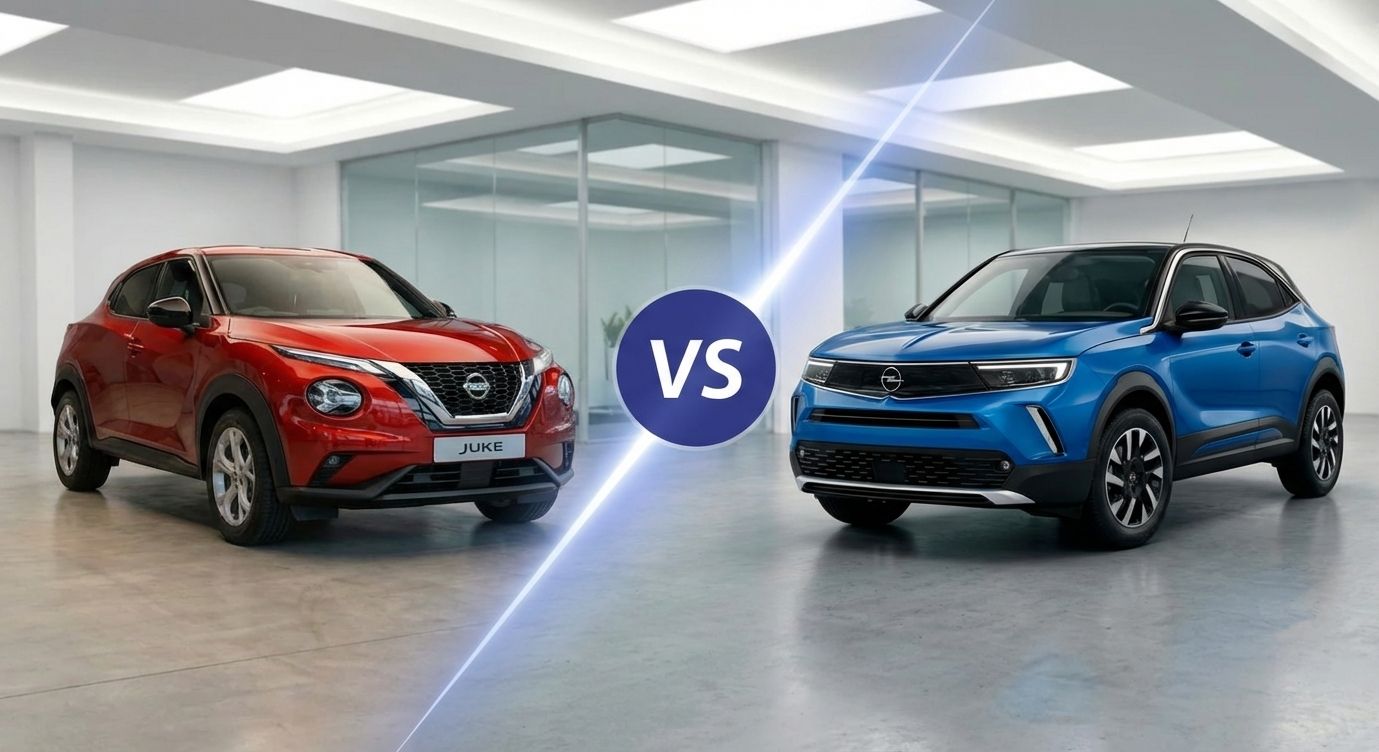
Nissan Juke vs Opel Mokka: A detailed comparison of design, ride, and features. Our verdict will help you choose the right compact crossover.
Oct 22, 2026