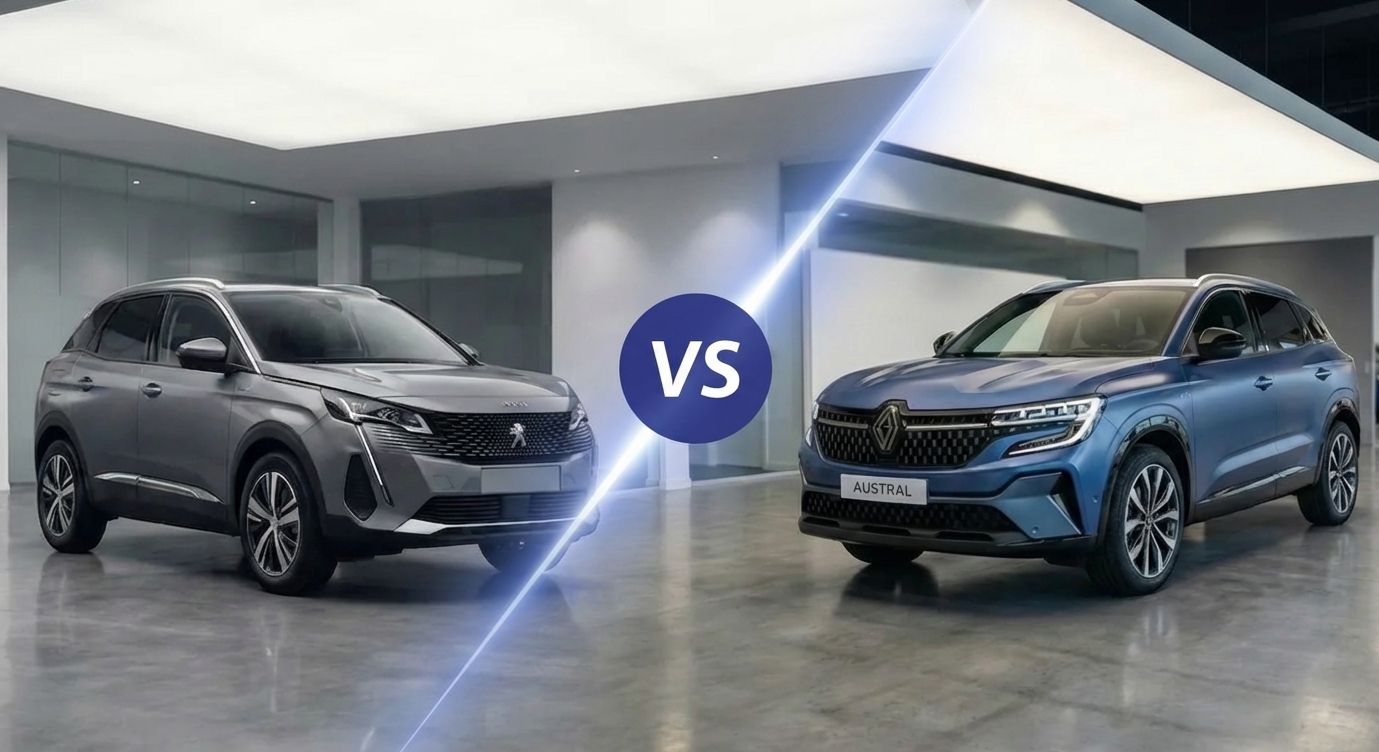
Car battle
Peugeot 3008 vs Renault Austral: Complete Comparison 2025
Peugeot 3008 vs Renault Austral. Which SUV is better? Detailed comparison, real-world data, and the final verdict will help you choose.
Apr 13, 2026
Articles
Car battle
Detailed comparison of Ford Kuga vs. Toyota RAV4. We compared the fuel consumption, reliability, and driving characteristics of both SUVs. Read our test and final verdict.
April 2, 2026
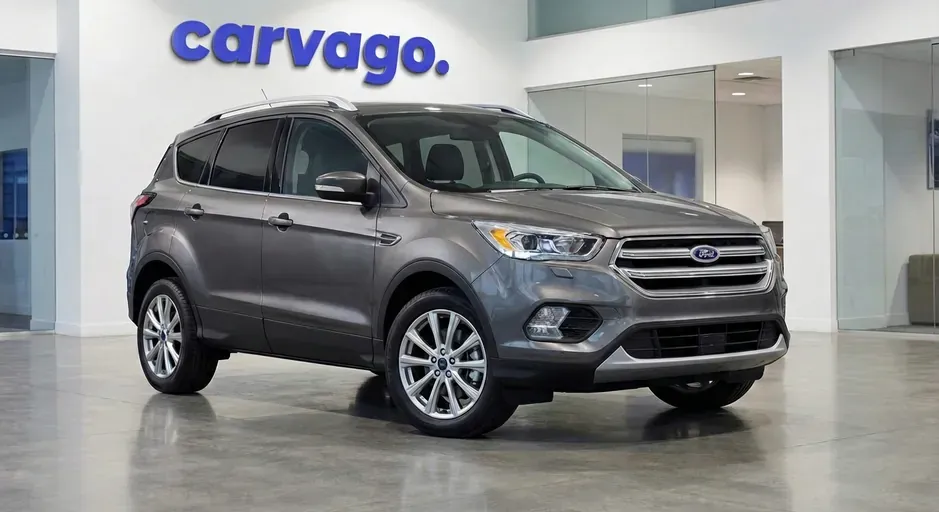
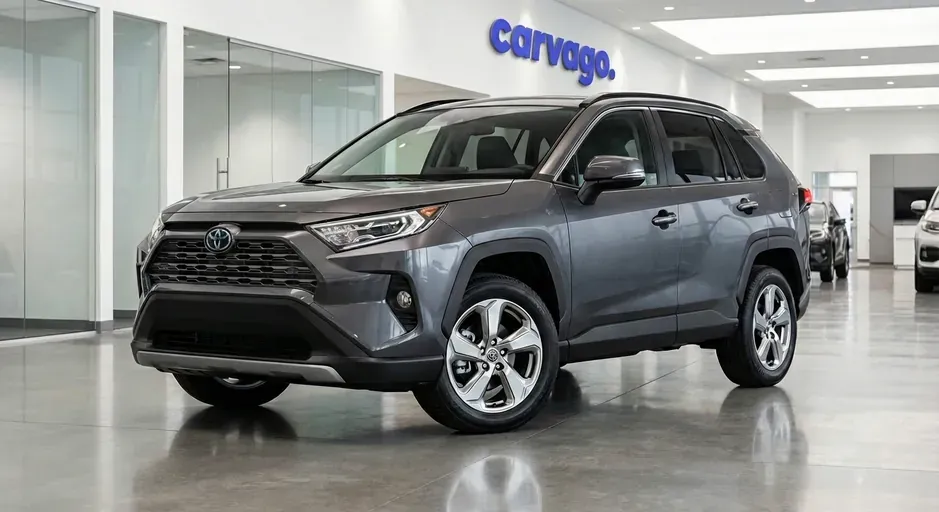
The Ford Kuga, also known as the Ford Escape in some overseas markets, is a popular family SUV that attracts buyers primarily with its dynamic driving characteristics and a wide range of fuel-efficient engines. Standing against it is a true pioneer of the entire segment, the Toyota RAV4 – a model that, depending on the specific market or partnership, also appears under the names Toyota Vanguard, Toyota Wildlander, or Suzuki Across – which has built its unwavering position thanks to legendary reliability and an exceptionally efficient hybrid powertrain. Let's now take a detailed look at which of these two attractive and practical vehicles represents the best possible choice for your daily commutes on the market for roughly four-year-old used cars.
Looking at the external dimensions of roughly four-year-old used cars, we find that the current generations of the Ford Kuga and Toyota RAV4 differ slightly in their proportions, which directly affects both interior space and daily usability. The third-generation Ford Kuga has a slightly more substantial presence on the road. With a width of 1882 to 1883 mm, it is a noticeable 28 mm wider than the Toyota RAV4 (1855 mm) and also offers a slightly greater overall length, which in some trim levels climbs from the base 4604 mm up to 4645 mm, while the RAV4 maintains a uniform 4600 mm. In practice, this means the Kuga can provide slightly more generous shoulder room for the occupants. Conversely, the slightly narrower and shorter Toyota will be a bit easier to maneuver in tight underground garages or during parallel parking in city centers.
A key parameter for longitudinal cabin space and overall driving comfort is the wheelbase. The Ford Kuga slightly surpasses the Toyota RAV4 here with a value of 2710 to 2711 mm, compared to the RAV4's 2690 mm wheelbase. This roughly two-centimeter difference gives the Ford a slight advantage in rear legroom and contributes to a smoother and more composed ride over long highway stretches. On the other hand, the slightly shorter wheelbase gives the Toyota RAV4 a bit more agility, which you'll appreciate especially on winding country roads or when turning in cramped streets.
The height and overall stance of both cars also play a crucial role in the overall feel. The Toyota RAV4, at 1685 mm, is slightly taller than most standard versions of the Ford Kuga (whose height often starts at 1650 mm, with only versions like the Active reaching 1681 mm). This slightly taller and more angular design gives the Toyota the characteristic look of a more traditional, off-road-oriented SUV, ensures an excellent view of the road, and makes getting in and out or handling child car seats easier. The Ford Kuga, by contrast, bets on a lower and wider silhouette, aiming to maintain a sportier feel closer to that of a passenger car, which is reflected in better road holding and less body roll.
| Parameter | Ford Kuga SUV | Toyota RAV4 SUV |
|---|---|---|
| Length (mm) | 4604 – 4645 | 4600 |
| Width (mm) | 1882 – 1883 | 1855 |
| Height (mm) | 1650 – 1681 | 1685 |
| Wheelbase (mm) | 2710 – 2711 | 2690 |
When choosing a family SUV, the trunk capacity often plays a decisive role, as it directly affects daily practicality and usability for longer trips. In this regard, both compared models approach space solutions slightly differently. While the Toyota RAV4 relies on an uncompromising base volume and easy access, the Ford Kuga counters with exceptional interior variability. For families with children who regularly transport strollers or bulky sports equipment, it's not just the absolute liter count that matters, but also the overall ability to actively work with the space.
The third-generation Ford Kuga (representing model years from 2020 onwards on the used market) scores with a very clever sliding rear bench. Thanks to it, you can flexibly balance between passenger legroom and trunk size. Depending on its position, the base volume ranges from a more modest 412 liters to an excellent 645 liters for purely internal combustion versions. It should be noted that the increasingly popular hybrid and plug-in hybrid (PHEV) variants take up some space due to the batteries stored under the floor, causing their base capacity to drop to a range of 411 to 581 liters. After fully folding down the rear backrests, you get a loading area of up to 1,534 liters. Such a value is perfectly sufficient for weekend shopping, transporting smaller furniture, or a longer family vacation.
The fifth-generation Toyota RAV4 (designated XA5, available since 2019) takes on the role of a more traditional family hauler and scores with a wide, regularly shaped trunk without unnecessary alcoves. In its basic configuration, the standard full-hybrid version offers a generous 580 liters of space. If you choose the plug-in hybrid variant (PHEV), the space drops slightly to 520 liters due to the larger batteries, but even this leaves plenty of room for several extra suitcases and trouble-free packing for a family trip to the mountains. With the rear seats folded down, the RAV4 can offer a total volume of an impressive 1,690 liters. This consistently large space makes the Japanese SUV a tireless and reliable workhorse.
In terms of overall assessment, the Toyota RAV4 represents the optimal choice for those who require maximum and immediately available transport capacity without complex compromises or seat manipulation. The Ford Kuga, on the other hand, will appeal more to drivers who appreciate daily variability and the ability to change the ratio of passenger to cargo space exactly as the current situation requires.
| Parameter | Ford Kuga SUV | Toyota RAV4 SUV |
|---|---|---|
| Base volume (liters) | 412 - 645 | 520 - 580 |
| Max volume with seats folded down (liters) | 1481 - 1534 | 1690 |
The ability to tow a trailer is often a key parameter for family SUVs, whether you are planning to tow a large caravan or just occasionally attach a small trailer. When transporting extra gear, a trailer easily replaces the space of several additional suitcases and is an invaluable practical helper. Both compared SUVs – the third-generation Ford Kuga and the fifth-generation Toyota RAV4 (models ideal for the four-year-old used car market) – offer a completely different approach in this regard, which depends heavily on the chosen engine.
Ford Kuga: A powerhouse for heavy loads
The Kuga stands out in the used car market primarily with its traditional engine options. If you are looking for a vehicle for heavy work, the 2.0 EcoBlue diesel version can tow a braked trailer with a maximum weight of up to 2,100 kg. The 1.5 EcoBoost petrol variants offer a solid standard, with their capacity ranging between 1,600 and 1,800 kg. For hybrids, the situation is a bit more specific: the classic full-hybrid (FHEV) can tow 1,500 to 1,600 kg. Older model years of the Plug-in Hybrid (PHEV) version have a limit of the same 1,500 kg, but in the updated versions, engineers managed to push this value up to the aforementioned 2,100 kg.
Toyota RAV4: Watch out for the hybrid choice
The Toyota RAV4 relies overwhelmingly on advanced hybrid powertrains, which has a direct impact on towing capacity. Its standard non-hybrid 2.0 petrol version can handle an excellent 2,000 kg, but this is relatively rare on the used car market. The much more common 2.5 Hybrid version has significant differences depending on the drive type. While the all-wheel-drive variant (AWD-i) can tow up to 1,650 kg, which is fully sufficient for weekend shopping or a longer holiday with a lighter caravan, the front-wheel-drive (FWD) version's limit drops to just 800 kg. The Plug-in Hybrid variant then sits in the middle ground with a maximum of 1,500 kg.
What does this mean for the buyer?
In conclusion, if towing heavy trailers is a priority for you, the Ford Kuga (especially in the powerful diesel version) will be a much more reliable and versatile workhorse. The Toyota RAV4 is a fantastic family car in every respect; however, those interested in towing anything heavier than a small trailer with leaves must carefully choose the engine and avoid the basic single-axle drive hybrid.
Note: Detailed manufacturer data primarily specifies values for braked trailers. For an unbraked trailer, however, a universal legislative standard of 750 kg applies to both brands for vehicles of this size and weight category.
| Model and motorization | Braked weight of trailer (kg) | Unbraked weight of trailer (kg) |
|---|---|---|
| Ford Kuga 1.5 EcoBoost (gen. III) | 1600 - 1800 | 750 |
| Ford Kuga 2.0 EcoBlue (gen. III) | 2100 | 750 |
| Ford Kuga 2.5 Hybrid / FHEV (gen. III) | 1500 - 1600 | 750 |
| Ford Kuga 2.5 Plug-in Hybrid (gen. III) | 1500 - 2100 | 750 |
| Toyota RAV4 2.0 (gen. XA5) | 2000 | 750 |
| Toyota RAV4 2.5 Hybrid (gen. XA5) | 800 - 1650 | 750 |
| Toyota RAV4 2.5 Plug-in Hybrid (gen. XA5) | 1500 | 750 |
The choice of engines is a decisive factor for many buyers, as it directly affects fuel consumption, dynamics, and overall operating costs. While the fifth-generation Toyota RAV4 took the path of maximum electrification and completely abandoned diesel engines in favor of its legendarily reliable hybrids, the third-generation Ford Kuga relies on a much wider range of options that will satisfy almost every customer. The standard engine for the Ford is the 1.5 EcoBoost three-cylinder petrol, while Toyota offers the 2.0 VVT-iE four-cylinder as its base. At the opposite end of the spectrum, both models feature powerful plug-in hybrid (PHEV) variants with the possibility of pure electric range. While Toyota impresses with its top-of-the-line plug-in hybrid with an impressive output of 225 kW (306 hp), Ford scores with the option of powerful and efficient EcoBlue diesel engines, which are highly sought after on the used market, especially among drivers who tow trailers.
The third-generation Ford Kuga offers one of the most comprehensive engine portfolios in its class. If you are looking for petrol, the base is the award-winning 1.5 EcoBoost turbocharged three-cylinder (110 kW), which is exclusively paired with a manual transmission and front-wheel drive. However, the real attraction on the market for roughly four-year-old used cars are the diesel engines, which you will no longer find with many Asian competitors. The smaller 1.5 EcoBlue four-cylinder (88 kW) represents an economical choice, while the more powerful 2.0 EcoBlue (available with up to 140 kW and all-wheel drive) is ideal for highway cruising and towing caravans. It should be noted, however, that most of these diesel variants (including the 2.0 EcoBlue with mild-hybrid technology) gradually disappeared from the manufacturer's range between 2022 and 2024, and today they are highly sought-after items in used car dealerships. The range is rounded off by advanced hybrids – the user-friendly 2.5 FHEV full-hybrid (140 kW) that does not require plug-in charging, and the exceptionally efficient 2.5 PHEV (165 kW), which represents the pinnacle of electrification in this model.
| Engine type | Fuel type | Power (kW) | Torque (Nm) | Transmission |
|---|---|---|---|---|
| 1.5 EcoBoost | Petrol | 110 | 240 | 6MT |
| 1.5 EcoBlue | Diesel | 88 | 300 | 6MT / 8AT |
| 2.0 EcoBlue (incl. mHEV) | Diesel / Mild-hybrid | 110 / 140 | 370 / 400 | 6MT / 8AT |
| 2.5 FHEV | Petrol / Hybrid | 140 | 200 | eCVT |
| 2.5 PHEV | Petrol / Plug-in hybrid | 165 | 200 | eCVT |
The Japanese fifth-generation Toyota RAV4 has a significantly simpler engine lineup, which is not a disadvantage at all – its main strengths are long-term reliability and efficiency. With this generation, Toyota completely ditched diesel engines and introduced the naturally aspirated 2.0 VVT-iE (129 kW) petrol four-cylinder as the base choice, available with both a manual gearbox and a CVT automatic. However, the vast majority of customers opt for the sophisticated 2.5 Hybrid (FHEV) powertrain. This offers 160 kW in the front-wheel-drive version, or 163 kW in the popular version with AWD-i intelligent all-wheel drive (utilising an additional electric motor on the rear axle). These hybrid systems excel with exemplary low fuel consumption, especially in urban and suburban traffic. The absolute technological and performance pinnacle is the 2.5 Plug-in Hybrid version, boasting a massive combined output of 225 kW, focusing on stunning acceleration and a generous electric range.
| Engine type | Fuel type | Power (kW) | Torque (Nm) | Transmission |
|---|---|---|---|---|
| 2.0 VVT-iE | Petrol | 129 | 208 | 6MT / CVT |
| 2.5 Hybrid (FWD) | Petrol / Hybrid | 160 | 221 | eCVT |
| 2.5 Hybrid (AWD-i) | Petrol / Hybrid | 163 | 221 | eCVT |
| 2.5 Plug-in Hybrid | Petrol / Plug-in hybrid | 225 | 227 | eCVT |
Summary and Recommendation: For drivers who spend most of their time on motorways, or for those who need to regularly tow heavy trailers (the Kuga 2.0 EcoBlue can tow up to 2100 kg), the diesel-powered Ford Kuga makes the most sense. Conversely, for users with a high proportion of urban and suburban driving who are looking for uncompromising operational reliability and consistently low consumption, the Toyota RAV4 with its 2.5 Hybrid system is the clear favourite. If you have a higher budget, love sporty dynamics, and have a place to charge, the stunning acceleration of the top-tier RAV4 2.5 Plug-in Hybrid will satisfy even the most demanding drivers.
Choosing the right powertrain is key to long-term satisfaction, which is why our recommendations are based on actual performance, real-world consumption, and proven mechanical reliability gathered from mechanics and owners themselves. The used car market for vehicles approximately four years old is clearly defined by electrification for both of these popular SUVs. While Toyota absolutely perfected its renowned full-hybrid system for the XA5 generation (boasting an extraordinary 41% thermal efficiency for the internal combustion engine), Ford cleverly responded with its refined plug-in hybrid technology for the third-generation Kuga. Interestingly, thanks to the successful integration of the electric motor and the combustion engine, the Ford Kuga became the undisputed best-selling plug-in hybrid on the European market across all segments.
This model, belonging to the current third generation (on sale since spring 2020), is the best and most popular choice in the brand's portfolio among roughly four-year-old used cars. The heart of the powertrain is a naturally aspirated 2.5-litre petrol four-cylinder engine operating on the efficient Atkinson cycle. This massive unit completely lacks a turbocharger, making it exceptionally durable mechanically and low-maintenance in the long run. Together with a powerful electric motor and a smooth eCVT transmission, it produces a strong 165 kW with very refined and immediate pull. A huge draw is the high-capacity battery, which allows the Kuga to realistically cover 45 to 55 km purely on electric power. If you deplete the battery, the vehicle begins to function as a standard, fully functional full-hybrid, where consumption rarely exceeds 6 l/100 km, even with such a heavy car.
For the fifth-generation Toyota RAV4 (code-named XA5, on the market since 2019), there is simply no more logical or reliable engine choice. Here, the 2.5-litre petrol four-cylinder engine called Dynamic Force takes centre stage, which in the AWD-i version is combined with two electric motors – the rear one operating completely independently and driving only the rear wheels without the need for a heavy and complex propshaft. Toyota's engine architecture lacks conventional failure-prone parts such as a starter motor, alternator, traditional clutches, or a turbocharger. For a used car buyer, this translates into unprecedented peace of mind regarding servicing. The car offers highly smooth, linear acceleration and, above all, a fascinating real-world average consumption, which even with the all-wheel-drive version can easily be kept between 5.5 and 6.5 l/100 km.
When choosing a used SUV around four years old, real-world fuel consumption often plays a key role. Official values given by manufacturers according to the WLTP methodology are often too optimistic and can differ in daily operation. To get the most accurate picture of the actual operating costs of the third-generation Ford Kuga (from 2020) and the fifth-generation Toyota RAV4 (from 2019), we looked at extensive data from hundreds of real owners. The source of this long-term and unbiased information is the popular independent portal Spritmonitor.de, which accurately reveals how both family SUVs perform in the real world.
Data source: Spritmonitor.de
| Model and engine | Average consumption (l/100 km) |
|---|---|
| Ford Kuga 1.5 EcoBlue 88 kW | 5.2 |
| Ford Kuga 1.5 EcoBoost 110 kW | 6.8 |
| Ford Kuga 2.0 EcoBlue 110 kW | 5.9 |
| Ford Kuga 2.5 FHEV 140 kW | 5.7 |
| Ford Kuga 2.5 PHEV 165 kW | 2.5 - 3.8* |
| Toyota RAV4 2.0 Valvematic 127 kW | 7.2 |
| Toyota RAV4 2.5 Hybrid FWD 160 kW | 5.9 |
| Toyota RAV4 2.5 Hybrid AWD-i 163 kW | 6.4 |
| Toyota RAV4 2.5 Plug-in Hybrid 225 kW | 2.5 - 3.3* |
\ For plug-in hybrids, real-world consumption depends heavily on the frequency of charging from the grid.*
When interpreting this data, we encounter several clear trends. Traditional diesel engines, represented in the Kuga by the reliable EcoBlue units, still maintain fantastic efficiency on long routes – the smaller 1.5-litre diesel can average slightly over five litres, which is a great result for a relatively massive SUV. In this generation of Toyota, you would look for a diesel in vain, as the Japanese automaker bet everything on hybrid drive. And user data shows that it was absolutely the right move. The full-hybrid RAV4 can safely drive with consumption below 6.5 litres even in the all-wheel-drive version, especially in the city and on country roads. However, it is ably seconded by the full-hybrid Kuga 2.5 FHEV, which boasts very similar and wallet-friendly values. Only the base petrol engines (1.5 EcoBoost in the Ford and 2.0 Valvematic in the Toyota) might be a slight disappointment – although they offer solid mechanical reliability, they simply cannot match the consumption of modern hybrids.
For a typical used family car buyer, this means a fairly clear division of roles. If you mostly drive long motorway routes or often tow a trailer, the two-litre diesel Ford Kuga will still be an unbeatable mile-muncher in terms of consumption. Conversely, for drivers who spend most of their time in suburban traffic, commuting around town, and on shorter trips, the full-hybrid (FHEV) versions of both brands make huge sense. If you also have the option to charge regularly at home or at work, plug-in hybrids (PHEV) can slash your operating costs to an absolute minimum, as they complete most daily trips purely on electricity.
In conclusion, fuel consumption certainly acts as a strong decision-making factor in this duel, but it mainly depends on choosing the right technology for your driving style. The Toyota RAV4 definitely benefits from its many years of experience with the hybrid system and offers great efficiency without any compromises or the need to plug the car into a socket. The Ford Kuga, on the other hand, scores with a more diverse range, catering to both conservative diesel proponents for long journeys and fans of modern electrified powertrains.
Looking at the used car market, specifically at models approximately four years old (2021 to 2022 models), there is a vast difference in how both cars hold their value. While one of these SUVs attracts with an excellent price-to-utility ratio, the other is considered an absolute leader in residual value.
Ford Kuga (2021–2022 models)
The third-generation Kuga is an exceptionally attractive choice on the used car market. Faster depreciation means you can get a nearly new and well-equipped car for very affordable money. Prices for four-year-old models start just above the €17,000 mark for base petrol engines (1.5 EcoBoost) or diesel versions (2.0 EcoBlue) with higher mileage. The "golden middle" ranges from around €20,000 to €22,000, for which you get the very popular sporty ST-Line trim and often even an advanced plug-in hybrid (PHEV) or a classic full-hybrid (HEV). The most expensive models in the luxury Vignale trim with minimum mileage usually do not exceed €26,000.
Toyota RAV4 (2021–2022 models)
The fifth-generation Toyota RAV4, on the other hand, is a phenomenon when it comes to holding its price. Thanks to its reputation as an indestructible car and the benchmark for hybrid drive, its value drops only very slowly. You will practically not find a four-year-old RAV4 on the market below €24,000. Prices for sensible hybrid versions (2.5 Hybrid) with reasonable mileage start at roughly €26,000. If you are looking for the popular higher trims (Selection or Executive) with intelligent all-wheel drive (AWD-i), prepare an amount between €31,000 and €33,000. Top-of-the-line plug-in hybrid variants easily maintain a price tag around €37,000 and more, even as used cars.
| Car category | Ford Kuga (2021–2022) | Toyota RAV4 (2021–2022) |
|---|---|---|
| Base version / higher mileage | from €17,000 | from €26,000 |
| The golden middle (good equipment) | €20,000 – €22,000 | €31,000 – €33,000 |
| Top versions (PHEV / top trim) | €24,000 – €26,000 | €35,000 – €39,000 |
Key takeaways for buyers:
Both models, the Ford Kuga and Toyota RAV4, achieved the maximum five-star rating in independent Euro NCAP safety tests. However, when examining the safety of used cars, it is crucial to consider the broader context and the specific year the tests took place. The Euro NCAP methodology is constantly evolving and becoming significantly stricter, so percentage scores from different time periods cannot be directly compared – what was enough for five stars years ago represents a barely sufficient average today. In the case of the most sought-after four-year-old used cars of these models, we have ideal conditions for comparison, as both SUVs underwent crash tests in the same year under identical rules. The Ford Kuga passed through the laboratories in 2019, a time when stricter requirements for autonomous emergency braking and side-impact protection began to be applied. The car earned an excellent 92% for adult occupant protection and 86% for child occupant protection. The body architecture, which extensively uses high-strength steel, worked perfectly. The Co-Pilot360 driver assistance package scored 73%, while the protection of vulnerable road users reached 82%. Ford benefited greatly from the introduction of the intersection assist function, which can effectively prevent accidents when turning. However, it is important to mention that as time passes, the 2019 rating is becoming outdated; it has lost its original five-year certification validity and does not correspond to the latest, extremely strict protocols (e.g., tests for collisions with a mobile barrier or interaction between occupants). Nevertheless, the Kuga's basic construction still represents an exceptionally safe space for a family.
The five-star Toyota RAV4 (5th generation) faced the same Euro NCAP test protocol in the same year, 2019, and even showed a slight lead over its rival. The Japanese SUV scored 93% in adult occupant protection and 87% in child occupant protection. However, the real safety argument is the second-generation Toyota Safety Sense assistance package, which was already supplied as standard equipment. With it, the car achieved an excellent 85% for the protection of vulnerable road users and 77% in the overall effectiveness of safety assistants. Toyota's sensors were able to detect cyclists and pedestrians excellently, not only during the day but also in poor lighting conditions, and in most scenarios at common city speeds, the car was able to fully prevent a collision. Although Toyota's certification is also considered expiring on today's market from the perspective of the agency's strict methodology, the functionality of its assistants was top-tier for the standards of the time.
When push comes to shove, both cars provide an extremely strong passive safety shell and will protect your crew in critical situations with complete ease. However, in an overall comparison and a detailed look at the ability to actively prevent accidents, the Toyota RAV4 emerges as the winner. Its more robust integration of safety features in the standard equipment ensured better scores in all four categories examined, currently offering a slightly more modern and comprehensive package for the protection of the occupants and their surroundings.
| Parameter | Ford Kuga | Toyota RAV4 |
|---|---|---|
| Year of testing | 2019 | 2019 |
| Adult occupant protection | 92 % | 93 % |
| Child occupant protection | 86 % | 87 % |
| Vulnerable road user protection | 82 % | 85 % |
| Safety assist systems | 73 % | 77 % |
Beyond the standard equipment, each model offers more than just basic features and shows its own distinct approach to added value, which can be decisive for the customer in the final selection.
Pros:
Cons:
Pros:
Cons:
Based on long-term user feedback, service reports, recall actions, and practical findings, we have compiled an overview of the most common problems of both cars that you should watch out for when choosing a used one. Knowledge of these weak points is key, which is why a careful Physical inspection of a used car is always recommended to reveal any hidden defects before purchase.
The third-generation Ford Kuga is generally a reliable family SUV; however, in the early stages of production, it faced several teething troubles, primarily concerning electronics and the plug-in hybrid powertrain.
Summary for Ford Kuga: Most serious problems (especially with the PHEV) were resolved under factory warranty and recall campaigns. If the car has a clear service history and up-to-date software, the Kuga is a trouble-free car. The mechanics of the engines themselves (including the 1.5 EcoBoost three-cylinder) are above-average reliable.
The Toyota RAV4 is considered a benchmark of reliability, especially thanks to its sophisticated and indestructible hybrid system. Nevertheless, even the fifth generation hides several specifics and more expensive defects that a detailed Car Audit can reveal.
Summary for the Toyota RAV4: It is an exceptionally robust and durable vehicle, where you don't have to worry about expensive engine or transmission (e-CVT) failures. The only major bogeyman for used cars is the high-voltage connector corrosion on AWD models. However, if this part has been checked (or already replaced with a newer revision), you can likely expect only reliable miles and rather minor software or comfort shortcomings.
When buying a used car, a thorough physical inspection of the used car is key. Here are some specific points to focus on for these two models to minimize the risk of expensive repairs and choose a truly well-maintained piece.
The Toyota RAV4 offers a generous 580 liters of base volume, which represents an excellent standard for family travel. The Ford Kuga, on the other hand, benefits from practical sliding rear seats, allowing the luggage space to vary from 475 to 645 liters. However, if you need maximum trunk volume without compromising rear passenger legroom, the RAV4 is a more stable and practical choice.
The Toyota RAV4 has long reigned in reliability statistics, primarily thanks to its robust and time-tested hybrid technology without complex components. The Ford Kuga is generally also a reliable car; however, with diesel engines or more complex plug-in hybrid systems, the risk of more expensive repairs after years of operation may be slightly higher. For maximum peace of mind and low service costs in a used car, the Japanese model is therefore the favorite.
While the Toyota RAV4 dominates thanks to the fifth generation of its classic full-hybrid (HEV), which excels in exemplary efficiency in the city and on country roads, Ford offers more electrified variants. The Kuga, on the other hand, scores with an excellent plug-in hybrid (PHEV) with a larger battery, which makes sense if you have the opportunity to charge the car regularly at home or at work. In pure hybrid mode with a discharged battery, however, Toyota achieves better fuel consumption and smoothness.
The Ford Kuga retains the brand's traditional dynamic DNA and is considered one of the best-driving SUVs in its class thanks to precise steering and a confident chassis. The Toyota RAV4, by contrast, is tuned with an emphasis on softer suspension and maximum acoustic and driving comfort, so it glides over bumps more smoothly. The choice thus depends on whether you prefer a more driver-focused and firmer car (Kuga) or a comfortable and quiet family cruiser (RAV4).
Toyota uses the AWD-i system for hybrid RAV4s, where the rear wheels are driven by a separate electric motor, which is easily sufficient for safe driving on snowy roads and slippery surfaces. The Ford Kuga uses traditional mechanical all-wheel drive for combustion versions and also relies on connecting the rear axle for the hybrid. Both vehicles are primarily designed for the road, but the Kuga's mechanical 4x4 can react better in slightly more demanding and muddy terrain.
Sources: ADAC, novinky.cz, e15.cz, mobilmania.cz, autozive.cz, rallylife.cz
This article was prepared using artificial intelligence tools. The section guarantor is Petr Dušek.
Peugeot 3008 vs Renault Austral. Which SUV is better? Detailed comparison, real-world data, and the final verdict will help you choose.
Apr 13, 2026
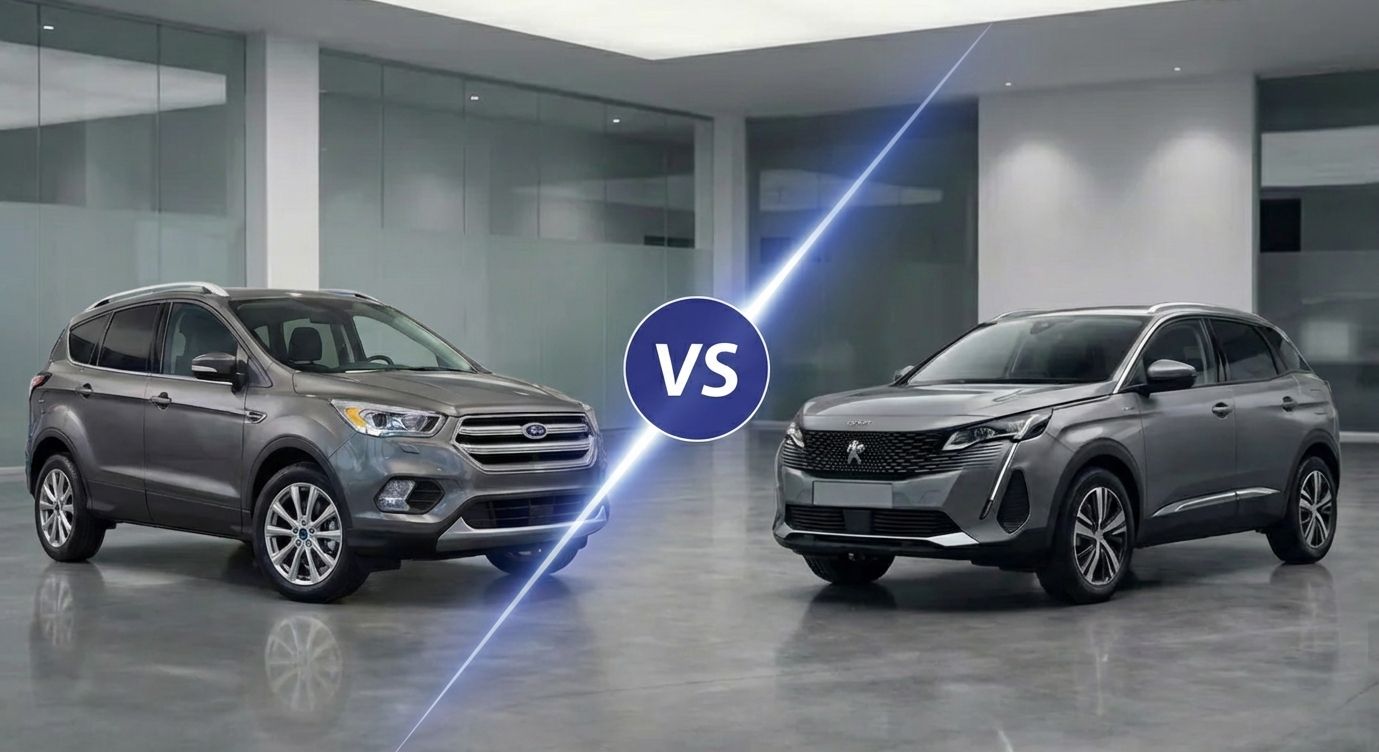
Ford Kuga vs Peugeot 3008: Which family SUV is better? A detailed comparison, real-world insights, and a clear verdict to help you choose.
Apr 13, 2026
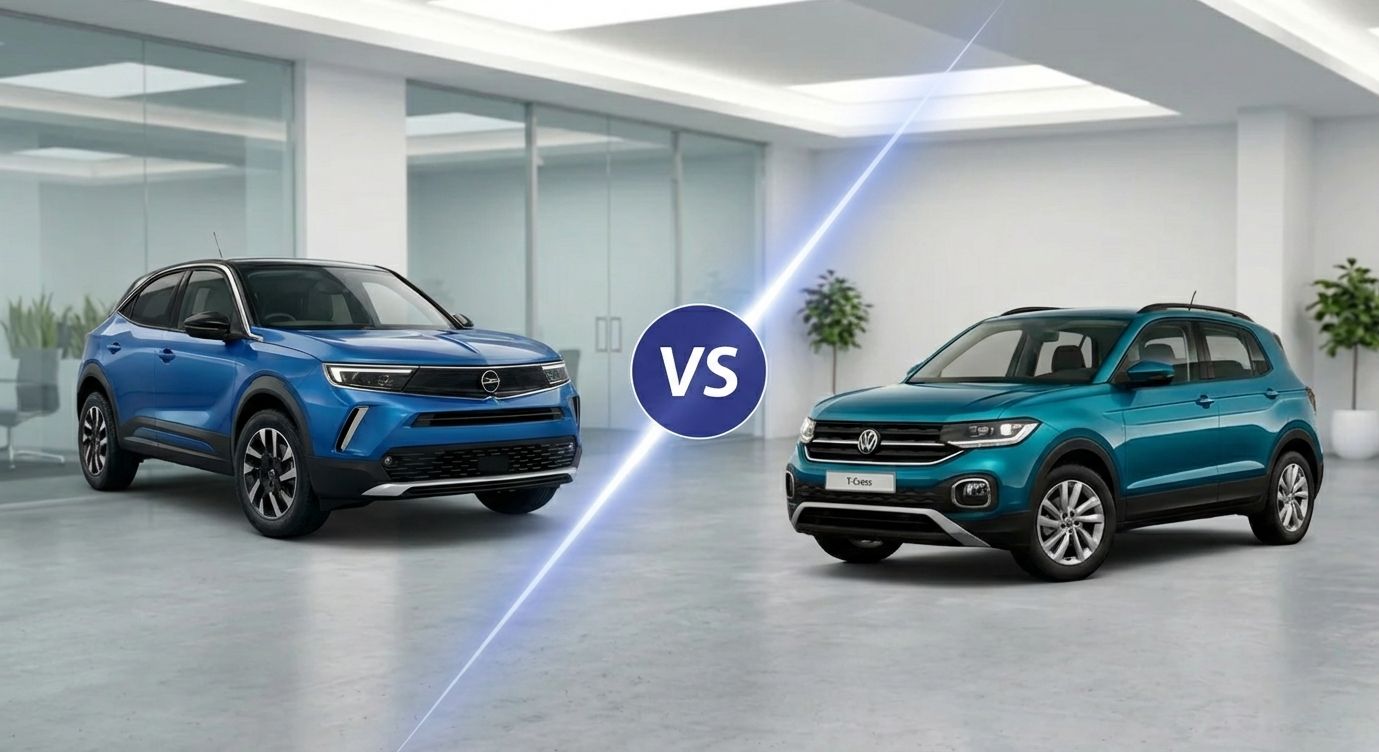
Opel Mokka vs. VW T-Cross. A detailed comparison of engines, equipment, and price. Find out which compact SUV is right for you in our big test.
Apr 14, 2026