Car battle
Dacia Sandero vs. Škoda Fabia: Complete comparison 2026
Dacia Sandero vs. Škoda Fabia: Which car is better? We compare engines, equipment, and price. Our detailed verdict will help you choose.
Apr 14, 2026
Articles
Car battle
Detailed comparison: Dacia Sandero vs. Toyota Yaris. We reveal real-world experiences, fuel consumption, and equipment. Read our verdict and choose the ideal used car.
April 18, 2026
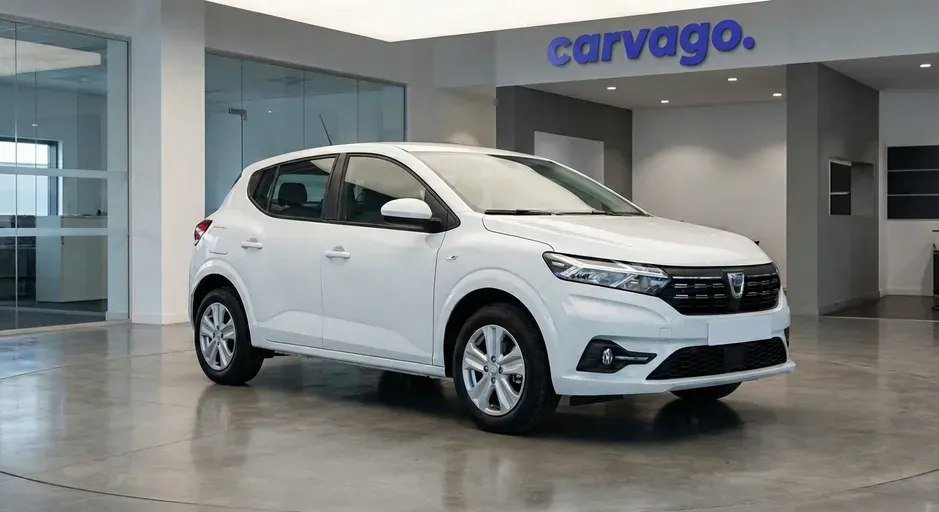
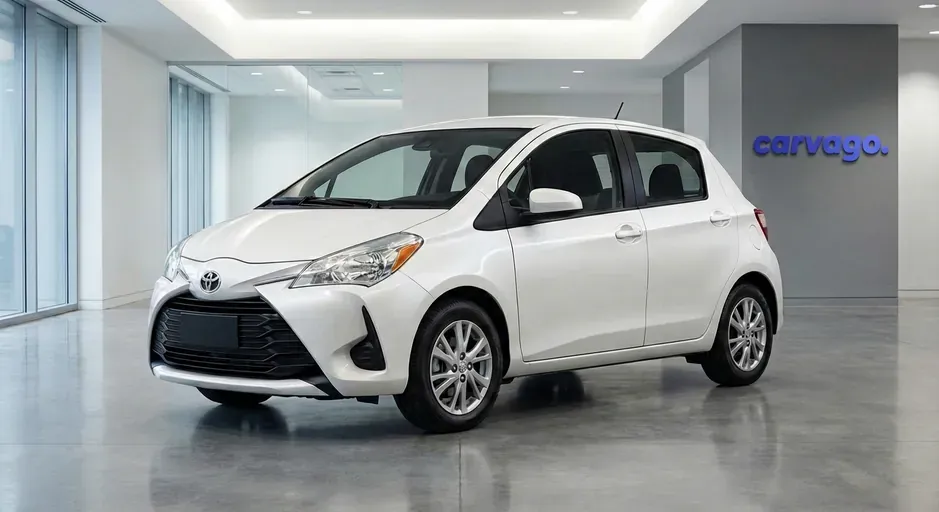
Dacia Sandero, also sold in many global markets under its sister brand as the Renault Sandero, has built a solid position as an exceptionally practical and affordable hatchback that has long been among the most sought-after cars in Europe. In this duel, its straightforward approach is challenged by the popular Toyota Yaris, a technologically advanced Japanese model with a rich history, which has carried names such as Vitz, Echo, or Vios in various markets, and whose modern hybrid technology you can also encounter on today's roads in the rebadged form of the Mazda 2 Hybrid. The following comparison will show us in detail whether, when choosing a roughly four-year-old used car, it makes more sense to bet on the unbeatable price-to-utility ratio of the Romanian bestseller, or if it is better to pay extra for the sophisticated fuel-saving systems and the legendary reliability of the Asian representative.
When looking at the external dimensions of both cars from roughly four-year-old generations, the different approaches of the manufacturers are immediately apparent. While the fourth-generation Toyota Yaris (XP21) strictly adheres to the traditional proportions of an agile city car, the third-generation Dacia Sandero focuses on maximum spaciousness and targets the very upper limits of the small car segment.
In terms of numbers, the standard Sandero, with a length of 4088 mm, is a significant 148 mm longer than the standard Yaris (3940 mm). This generous extra portion of millimeters clearly translates into more interior space and an overall more mature feel for the vehicle. As a result, the Sandero positions itself as an excellent candidate for the role of a full-fledged family car for those for whom a standard B-segment hatchback is no longer enough. Conversely, the Yaris makes the most of its more modest external dimensions in heavy city traffic, where it is significantly easier to maneuver and park even in small gaps.
Significant differences can also be found in the overall width of both cars. The Dacia Sandero boasts a width of 1848 mm, surpassing its Japanese rival (1745 mm for standard versions) by a very substantial 103 mm.
The wheelbase also speaks in favor of the Dacia, with a length of 2604 mm. The Toyota Yaris, with a wheelbase of 2560 mm, loses 44 mm on paper, which will be felt especially by rear passengers in the knee area. However, its more compact footprint grants it exceptional agility and a smaller turning radius in return, which you will fully appreciate when quickly weaving through narrow streets.
In terms of height, both models are relatively close in their standard versions, oscillating just below the 1500 mm mark. However, Dacia benefits from the strong popularity of its cladded Stepway variant, which, thanks to a redesigned chassis and massive roof rails, grows to a height of up to 1586 mm. An interesting point regarding the Toyota Yaris is the uncompromising GR sports version (listed as 1.6 Turbo in the table), which is responsible for a significant widening to 1805 mm and an aerodynamic lowering to 1455 mm.
So, how will external dimensions influence your choice of car on the used market? If easy maneuverability is your absolute priority, you spend most of your time in the city, and you are looking for a car that you can easily park in front of your house or at a shopping center, the Toyota Yaris is an exceptionally efficient choice. If, on the other hand, you are looking for "a lot of car," often travel with a fuller load, and require a more versatile vehicle with capabilities beyond urban areas, the Dacia Sandero, thanks to its generous dimensions, will serve you significantly better and easily substitutes for vehicles from the higher compact class with its external limits.
| Parameter | Dacia Sandero Hatchback | Toyota Yaris Hatchback |
|---|---|---|
| Width (mm) | 1848 - 1853 | 1745 - 1805 |
| Length (mm) | 4088 - 4102 | 3940 - 3995 |
| Height (mm) | 1496 - 1586 | 1455 - 1500 |
| Wheelbase (mm) | 2604 | 2560 |
When choosing a compact city car, the luggage compartment volume is often one of the deciding factors, especially if the car is to serve as the main household vehicle. Practicality and the ability to accommodate everything from everyday groceries to weekend bags play a crucial role for many buyers. In this regard, the Dacia Sandero and Toyota Yaris differ quite significantly. Looking at models roughly four years old—the current third-generation Sandero and the XP21 generation of the Toyota Yaris—one can clearly see the different approaches of both manufacturers to design and their target customer groups.
The third-generation Dacia Sandero is known for its excellent utility value and interior spaciousness, which won't disappoint even more demanding families. Its luggage compartment offers a generous 328 liters in the standard configuration. After fully folding down the rear seatbacks, this space increases to an impressive 1108 liters. Thanks to the regular shape of the boot and good depth, the Sandero is an ideal choice for those who appreciate space for a few extra suitcases. It is also worth noting that even in the very popular versions with factory LPG (Eco-G), there is no reduction in boot space, as the gas tank is cleverly and completely hidden under the floor in the spare wheel well.
The Toyota Yaris, on the other hand, relies primarily on compact exterior dimensions, excellent handling, and top-tier fuel-efficient hybrid technology. However, the price for a more stylish and aerodynamic design is reflected in a smaller boot. The base volume for both standard combustion and popular hybrid variants is 286 liters, and with the seatbacks folded down, it offers 768 liters of space. It's worth remembering that the extreme sports version, the GR Yaris, offers a capacity of only 174 liters, but that targets a very specific clientele. Although the standard 286 liters is fully sufficient for weekend shopping or storing backpacks for a trip, when packing for a longer holiday, you will have to plan more and pack a good dose of modesty compared to its Romanian competitor.
The difference of 42 liters in base volume and a staggering 340 liters with the seats folded down speaks clearly in favor of the Sandero. In short, the Dacia wins when you need to transport bulkier cargo or a folded stroller, making much more sense for practically-minded families. The Yaris, conversely, will appeal to drivers who use the boot primarily in the city and value lower fuel consumption or more premium craftsmanship over absolute transport capacity.
| Parameter | Dacia Sandero Hatchback | Toyota Yaris Hatchback |
|---|---|---|
| Base volume (liters) | 328 | 286 |
| Max volume with seats folded down (liters) | 1108 | 768 |
The Dacia Sandero offers a significantly larger boot and overall utility value, making it a much more reliable choice for family needs from a transport capacity perspective than the smaller but more technologically advanced Toyota Yaris.
When it comes to towing a trailer, the third-generation Dacia Sandero (from 2021) and the Toyota Yaris (XP21 generation, from 2020) represent two completely different worlds. For those planning to hitch up a utility trailer or set off with a small caravan, the total towing capacity of both cars is a key factor.
Dacia Sandero clearly dominates the market for approximately four-year-old cars in this respect. Its maximum braked trailer weight reaches up to 1,100 kg for the more powerful engines (TCe 90 or TCe 100 ECO-G), while even with the base SCe 65 unit, it safely tows a respectable 980 kg. An unbraked trailer for the Sandero can weigh between 520 and 610 kg, depending on the specific version and equipment (especially for Stepway versions). From a practical standpoint, this capacity is easily sufficient for weekend shopping for bulky items, transporting construction materials, or for a longer family holiday where the trailer provides secure space for several extra suitcases.
Conversely, the Toyota Yaris is designed primarily as an economical city car, which significantly impacts its load-towing capabilities. Its most popular hybrid variants (1.5 Hybrid with 116 or 130 hp) offer a braked and unbraked trailer capacity of only 450 kg. This is a value that is essentially only enough for a light trailer with grass clippings or for mounting a bike rack on the tow bar. If you need to tow heavier items with the Yaris, you must aim for the pure petrol 1.5 version (92 kW), which can handle a braked trailer weighing up to 850 kg, or the base one-liter engine with a towing capacity of 750 kg. The unbraked trailer limit for classic petrol versions of the Toyota Yaris is usually at the 550 kg mark.
Final evaluation: If you require flexibility from a car and regularly hitch up a heavier trailer for transporting materials or for recreation, the Dacia Sandero is an incomparably more practical and useful choice between the two. The Toyota Yaris, although phenomenal and economical in the city, is not suitable for towing loads at all in its most sought-after hybrid version and will only serve for the most essential and lightest transports.
| Model and motorization | Braked weight of trailer (kg) | Unbraked weight of trailer (kg) |
|---|---|---|
| Dacia Sandero SCe 65 (49 kW) | 980 | 520 |
| Dacia Sandero TCe 90 / TCe 100 ECO-G | 1,100 | 540 - 610 |
| Toyota Yaris 1.0 (53 kW) | 750 | 550 |
| Toyota Yaris 1.5 (92 kW) | 850 | 550 |
| Toyota Yaris 1.5 Hybrid 116 / 130 | 450 | 450 |
When comparing the engine options of the Dacia Sandero and Toyota Yaris, we encounter two completely different approaches reflecting the distinct priorities of both manufacturers. While Dacia relies on proven and affordable one-liter three-cylinder engines with a massive emphasis on factory-fitted LPG, Toyota leads the way with its exceptionally efficient full-hybrid technology. For those interested in a roughly four-year-old used car, this means a relatively clear choice: if you have a tighter budget, cover many miles on longer routes, and a manual transmission is not an obstacle, the gas-powered Dacia offers unbeatably low running costs. Conversely, for drivers who spend most of their time in stop-and-go city traffic and require a reliable automatic commute, the Toyota Yaris, thanks to its hybrid powertrain, represents the embodiment of smoothness and minimal fuel consumption.
The third generation of the Dacia Sandero (on the market since 2021) has bet exclusively on gasoline one-liter three-cylinder engines; the popular dCi diesel units from the previous generation have completely disappeared from the range. The entry-level engine is the naturally aspirated 1.0 SCe 65 with 49 kW, whose dynamics will suit less demanding drivers primarily in city and suburban traffic. The core of the range is the turbocharged 1.0 TCe 90 with 67 kW. This engine is the only one that can be combined not only with a traditional six-speed manual but also with a continuously variable CVT automatic transmission (for technical reasons, the torque is slightly reduced from 160 to 142 Nm in this version).
The absolute bestseller and most sought-after choice on the used car market is, however, the 1.0 TCe 100 ECO-G (74 kW) version. This is a factory dual-fuel system burning both gasoline and LPG. Thanks to the presence of two tanks, the car provides an enormous total range and guarantees extremely low costs per kilometer. For the more adventurous and plastic-clad Stepway version, the most powerful engine in the range is reserved – the 1.0 TCe 110 (81 kW) with direct injection, which, with 200 Nm of torque, gives the lightweight car surprisingly brisk dynamics.
| Engine Type | Fuel | Power (kW) | Torque (Nm) | Transmission |
|---|---|---|---|---|
| 1.0 SCe 65 | Gasoline | 49 | 95 | 5MT |
| 1.0 TCe 90 | Gasoline | 67 | 160 / 142 | 6MT / CVT |
| 1.0 TCe 100 ECO-G | Gasoline / LPG | 74 | 170 | 6MT |
| 1.0 TCe 110 (Stepway) | Gasoline | 81 | 200 | 6MT |
The fourth generation of the Toyota Yaris (code-named XP21, sold since 2020) takes a different approach to propulsion and fully capitalizes on Toyota's long-term experience with electrification. At the start of sales, conventional gasoline versions were represented by the naturally aspirated one-liter three-cylinder 1.0 VVT-i (53 kW) and the significantly more dynamic 1.5 Dynamic Force (92 kW). However, historical data shows that these purely internal combustion variants were gradually withdrawn from the range in many markets around 2023.
From the perspective of the four-year-old used car market, the 1.5 Hybrid 116 is by far the most important and widespread version. A combined output of 85 kW in conjunction with an electronically controlled e-CVT transmission allows the car to cover a significant portion of city routes purely on electricity (EV mode), pushing real-world consumption well below 4 liters per 100 km. Newer model years (introduced for 2024) brought a more powerful 130-hp variant, but the 116-hp version remains the gold standard. A complete rarity and the icing on the cake is the highly prized homologation special GR Yaris 1.6 Turbo (192 kW), which features all-wheel drive and will thrill purist-oriented sports drivers.
| Engine Type | Fuel | Power (kW) | Torque (Nm) | Transmission |
|---|---|---|---|---|
| 1.0 VVT-i | Gasoline | 53 | 93 | 5MT |
| 1.5 Dynamic Force | Gasoline | 92 | 153 | 6MT / CVT |
| 1.5 Hybrid 116 | Hybrid (Gasoline/Electric) | 85 | 120 (ICE) / 141 (el.) | e-CVT |
| 1.6 Turbo (GR Yaris) | Gasoline | 192 | 360 | 6MT / 8AT |
Dacia scores with a phenomenal price-to-utility ratio and a fantastic LPG variant for budget-conscious drivers, while the Yaris is the more technologically advanced choice that will save you significant money and nerves in heavy city traffic thanks to its excellent hybrid.
Choosing the right engine is absolutely crucial for long-term satisfaction with a car, which is why we have based our recommendations on real-world experience, daily performance, actual fuel consumption in traffic, and verifiable mechanical reliability.
While the current third-generation Dacia Sandero relies on proven one-litre three-cylinder engines with the option of factory LPG for maximum cost reduction, the Toyota Yaris XP21 generation crushes the competition with its sophisticated and unbeatably efficient hybrid powertrain. In the market for roughly four-year-old used cars, both of these approaches represent the best in terms of long-term operating expenses, yet each targets a slightly different driver profile. Both of these sought-after engines are widely represented on the used car market in their respective generations (produced since the turn of 2020 and 2021).
From the third-generation range (available since 2021), the turbocharged one-litre three-cylinder with factory-fitted liquefied petroleum gas (LPG) is the clear winner. It is the most rational choice in terms of financial savings and overall engine longevity. Compared to the weaker naturally aspirated SCe 65 version, the car offers much better highway dynamics, and compared to the pure petrol TCe 90 version, it brings significant financial savings on fuel. Thanks to the properties of the gas, the engine also runs more quietly and has slightly higher power.
For the latest generation Yaris XP21 (produced since 2020), there is no point in looking anywhere other than the hybrid. The combination of a naturally aspirated 1.5-litre three-cylinder, an electric motor, and a unique e-CVT planetary gearbox forms by far the best powertrain in the small car class. A combined output of 116 hp gives the light car great dynamics, and from the perspective of long-term reliability, it is a total safe bet.
| Compared parameter | Dacia Sandero 1.0 TCe 100 ECO-G | Toyota Yaris 1.5 Hybrid 116 |
|---|---|---|
| Powertrain type | Turbocharged three-cylinder + LPG | Naturally aspirated three-cylinder + electric motor |
| Availability (years) | 2021 – present (3rd generation) | 2020 – present (XP21) |
| Gearbox | Manual (6-speed) | Automatic (e-CVT) |
| Biggest operational draw | Low fuel price (LPG), low maintenance | Top efficiency and maintenance-free nature |
Official fuel consumption values stated in car manufacturers' promotional materials often differ from everyday reality. When choosing a four-year-old used car, it is therefore best to rely on real-world data from drivers themselves. To compare the fuel consumption of the 3rd generation Dacia Sandero and the Toyota Yaris XP21 generation, we used average values from the independent community portal Spritmonitor.de, which has long been collecting records of actual refueling from regular traffic.
| Model and engine | Average consumption (l/100 km) |
|---|---|
| Toyota Yaris 1.5 Hybrid 116 | 4.2 |
| Toyota Yaris 1.0 VVT-i | 5.2 |
| Toyota Yaris 1.5 VVT-i | 5.5 |
| Dacia Sandero 1.0 SCe 65 | 5.3 |
| Dacia Sandero 1.0 TCe 90 | 6.0 |
| Dacia Sandero 1.0 TCe 100 ECO-G | 7.6 (LPG) |
Looking at real-world data, interesting trends emerge. In both cases, we see that diesel engines have practically disappeared from this segment, but both manufacturers have handled this brilliantly in their own way. The gold standard of efficiency is the Toyota Yaris with its advanced full-hybrid drive, which can manage an average of 4.2 l/100 km without much trouble. Dacia, on the other hand, bets on the factory LPG version (ECO-G). Although its gas consumption is higher in volume (around 7.6 l/100 km), thanks to the roughly half price of LPG at filling stations, it is the absolute winner in terms of cost per kilometer. It also turns out that the basic naturally aspirated three-cylinder engines from both brands (Yaris 1.0 and Sandero SCe 65) work excellently in these light cars and, without a turbo, maintain a pleasant consumption slightly above five liters. Conversely, the turbocharged 1.0 TCe engine in the Dacia takes an average of 6 liters in practice, proving the well-known fact that the promised fuel savings for small turbo engines are not always so significant.
For the typical user, this means a clear division of roles. If you are a city driver or commute daily through heavy suburban traffic, the hybrid Yaris will save you the most petrol thanks to constant recuperation and frequent switching off of the internal combustion engine. If, on the other hand, you are looking for a cheap means of transport with plenty of space and often set out on longer journeys, the Dacia Sandero becomes the clear and unrivaled choice thanks to the gas variant. For occasional and very defensive drivers, the cheapest basic engines of both brands will serve perfectly, where a few deciliters higher consumption is richly compensated by technical simplicity and minimal service risk.
In conclusion, fuel consumption and operating costs play a key, albeit completely different, role in the selection of these two cars. While Dacia wins on long routes with the unbeatable operating price of LPG, Toyota confidently defends its slightly higher purchase price with the brilliant efficiency of its hybrid, which makes it the unrivaled ruler for battling city traffic jams.
When choosing a roughly four-year-old used car (focusing on 2021 and 2022 models), the third-generation Dacia Sandero and the fourth-generation Toyota Yaris are in completely different price brackets. While the Romanian hatchback aims for maximum initial savings, its Japanese competitor maintains a much higher price thanks to advanced technology and legendary reliability.
The third generation of the Sandero (produced since 2020) is sought after on the used car market as a very affordable and rational choice. Roughly four-year-old cars currently range from €8,000 to €13,000 depending on the chosen equipment, engine, and mileage.
Although the Sandero loses its value slightly faster in percentage terms in the first years than more prestigious competitors, thanks to the overall low purchase price, the drop in absolute amounts is quite negligible.
The fourth generation of the Toyota Yaris (also introduced in 2020) is considered one of the leaders in the small car class when it comes to maintaining residual value. Prices for comparably old used cars most often range from €12,000 to €19,000.
The Yaris benefits significantly from excellent reliability and the trend of economical city travel. Buying a used Yaris thus requires a higher initial investment, but the car will reward you in the following years with a minimal drop in value.
| Model and Engine | Approximate Used Car Price (€) | Value Depreciation Characteristics |
|---|---|---|
| Dacia Sandero 1.0 SCe | €8,000 – €9,000 | Higher in percentage, but lowest financial loss in absolute terms |
| Dacia Sandero Stepway / LPG | €10,000 – €13,000 | Stable price tag, high interest in versions with low running costs |
| Toyota Yaris 1.0 / 1.5 (petrol) | €12,000 – €16,000 | Gradual and very slight price decrease |
| Toyota Yaris 1.5 Hybrid | €14,000 – €19,000 | Extremely strong value retention thanks to advanced technology |
While a used Dacia Sandero represents an unbeatable price-to-value ratio for undemanding drivers looking for a very young car for minimal money, the Toyota Yaris is a significantly more expensive initial investment, but it justifies this in the long run with advanced hybrid technology and an exceptionally slow drop in residual value.
Although used car buyers often place automatic trust in the fact that all modern vehicles possess the maximum level of safety and a five-star rating, the broader context and the specific year of testing are always key when choosing. The Euro NCAP test methodology is constantly evolving and becoming stricter, which means that percentage scores from older years cannot be directly compared with newer ones. With each new iteration of the protocols, more demanding frontal crash simulations, an emphasis on cyclist detection, or assistance systems for intersections are added. In this comparison, a vast difference in the approach of both automakers to safety equipment is also evident – while the Toyota Yaris achieved a full five stars, the Dacia Sandero had to settle for just two.
The fourth-generation Toyota Yaris underwent testing in 2020 and became the very first car evaluated according to the then newly tightened Euro NCAP protocols. These introduced, for example, an innovated mobile barrier for a more detailed frontal collision simulation or a completely new assessment of protection in a side impact from the opposite side of the vehicle. The Yaris excelled in these tests, also thanks to a center airbag that prevents fatal head collisions between front passengers. Toyota is also exceptionally strong in the area of active safety, where its standard Toyota Safety Sense package reliably reacts to unexpected obstacles, including pedestrians, and can safely handle emergency braking when turning at an intersection.
The third-generation Dacia Sandero was subjected to independent testing a year later, in 2021. Its two-star rating seems alarming at first glance, but it needs to be understood correctly. The protection of adult occupants and children in the cabin during the physical impact itself is at a relatively solid level, and the body structure serves its purpose decently. However, the fatal loss of points for Dacia came in the categories of protection for vulnerable road users and safety assistants. The car pays heavily for its low-price philosophy, due to which engineers did not implement advanced camera systems. The low-cost Autonomous Emergency Braking (AEB) system thus works only on the basis of a simpler radar – while it reacts reliably to other vehicles, it cannot detect pedestrians or cyclists at all.
| Parameter | Dacia Sandero | Toyota Yaris |
|---|---|---|
| Year of testing | 2021 | 2020 |
| Adult occupant protection | 70 % | 86 % |
| Child occupant protection | 72 % | 81 % |
| Vulnerable road user protection | 41 % | 78 % |
| Safety assist systems | 42 % | 85 % |
When comparing the safety of both vehicles, the Toyota Yaris is the clear winner, which, even as a used car, offers a top-tier and fully modern safety standard taking into account the strictest industry criteria. The Dacia Sandero represents a compromise on the market – although its basic passive safety (occupant protection during the impact itself) is sufficient for normal traffic, the active assistance systems for accident prevention are heavily below average from today's perspective.
If maximum family safety and modern assistance equipment are your absolute priority, the Toyota Yaris represents a significantly safer choice than the compromise-equipped Dacia Sandero.
Beyond standard equipment, both models offer more than just basic mobility, with each approaching added value in its own way and attracting customers with different and highly specific strengths.
Unbeatable value for money on the used car market
Very spacious interior and above-average luggage space (328 liters) for its class
Low operating costs and generally cheaper maintenance
Availability of the popular Stepway version with plastic cladding and higher ground clearance
Proven and simple 1.0 TCe engine, often available in a factory LPG version
Very poor Euro NCAP safety rating (only 2 stars) due to missing assistance systems
Cheaper interior finish with a predominance of hard plastics
Poorer cabin soundproofing, which is particularly noticeable at highway speeds
Complete absence of more advanced automatic transmissions and hybrid powertrains
The Dacia Sandero is the perfect choice for pragmatic drivers looking for maximum interior space and low operating costs at the lowest possible price. It represents an ideal daily car for undemanding users who don't mind compromises in advanced safety assistants and premium materials.
Exceptionally fuel-efficient and extremely reliable full hybrid powertrain
Top-tier active and passive safety (full 5-star Euro NCAP rating)
Excellent agility, great chassis, and easy maneuvering in city traffic
Exemplary resale value retention and easy subsequent resale
Higher quality interior finish with rich safety equipment even in the base trim
Significantly higher purchase price on the used car market compared to the Dacia
More cramped rear seat space and smaller luggage compartment (286 liters)
More outdated graphics and occasionally slower response from the onboard infotainment
More pronounced engine noise when revved during hard acceleration due to the e-CVT transmission
The Toyota Yaris will appeal to those looking for a technologically advanced and exceptionally safe city car, where it excels with low fuel consumption thanks to its sophisticated hybrid system. It is an excellent long-term investment for those who are happy to pay extra for reliability and driving comfort and do not need to transport bulky cargo or adult passengers in the back.
Based on long-term user feedback, service reports, and the in-depth inspections covered by our CarAudit, we have compiled an overview of the most common problems for both vehicles from approximately the last four years.
The third-generation Dacia Sandero represents a huge leap in overall quality, but due to strict pressure on low production costs, specific shortcomings do appear.
Despite occasional software quirks and cheaper interior workmanship, the Sandero does not suffer from major mechanical failures. Most "teething problems" can be solved relatively cheaply, and service costs remain at a very low level in the long term.
The fourth-generation Toyota Yaris is considered a benchmark for reliability in the small car class, yet even this model has its weak points that a careful physical inspection of the car before purchase should focus on.
Mechanically, the Yaris is an exceptionally robust and reliable car, whose only significant headache for owners may be the more sensitive 12V battery in little-used hybrids. However, the powertrain itself is exceptionally well-proven and almost fault-free.
When buying a used car, a thorough independent technical inspection of the car is key. Here are several specific points to focus on for these two models to avoid expensive surprises.
Dacia Sandero offers a significantly larger and more practical luggage space with a volume of 328 litres. Toyota Yaris is more focused on agility in narrow city streets and its boot holds 286 litres. If you are looking for maximum interior space in the small car segment, the Dacia is clearly the better choice.
The Toyota Yaris has long been considered a benchmark for reliability, primarily thanks to its sophisticated and indestructible hybrid powertrain. While the Dacia Sandero uses simple and time-tested technology from Renault, the quality of materials used and the interior craftsmanship is lower. The Yaris is thus the more durable choice and also holds its residual value much better on the used car market.
The Toyota Yaris excels in its hybrid version, which can achieve real-world fuel consumption below 4 l/100 km in city traffic. The Dacia Sandero does not offer hybrid technology, but it scores with its factory LPG version (1.0 TCe Eco-G engine), which makes the financial cost per kilometre unbeatably low. During motorway journeys or with pure petrol variants, the differences narrow, but the Yaris has a slight advantage due to better aerodynamics.
The fourth-generation Toyota Yaris received a full five stars in the rigorous Euro NCAP tests and features a wide range of assistance systems even in the basic trim. The Dacia Sandero received only two stars in 2021, mainly due to a lack of advanced active safety assistants. Although the mechanical resistance of the Sandero's body itself is at a decent level, the Yaris is overall a much safer car.
The Dacia Sandero is an ideal car for pragmatic drivers and small families who need a spacious vehicle with the lowest possible purchase price and cheap servicing. The Toyota Yaris is perfect for individuals and couples looking for a technologically advanced, maximally safe, and reliable car primarily for heavy city traffic.
Sources: ADAC, denik.cz, forbes.cz, automix.cz, chytreauto.cz, veteran.cz
This article was prepared using artificial intelligence tools. The section guarantor is Petr Dušek.
Dacia Sandero vs. Škoda Fabia: Which car is better? We compare engines, equipment, and price. Our detailed verdict will help you choose.
Apr 14, 2026
Detailed comparison of Mazda 2 vs Suzuki Swift. Are you looking for the ideal city hatchback? Find out the differences in driving characteristics, fuel consumption, and read our verdict.
Apr 8, 2026
Citroën C3 vs. Hyundai i20 Comparison: Which hatchback is better? Read a detailed comparison of equipment, engines, and driving characteristics with a final verdict.
Apr 15, 2026