Car battle
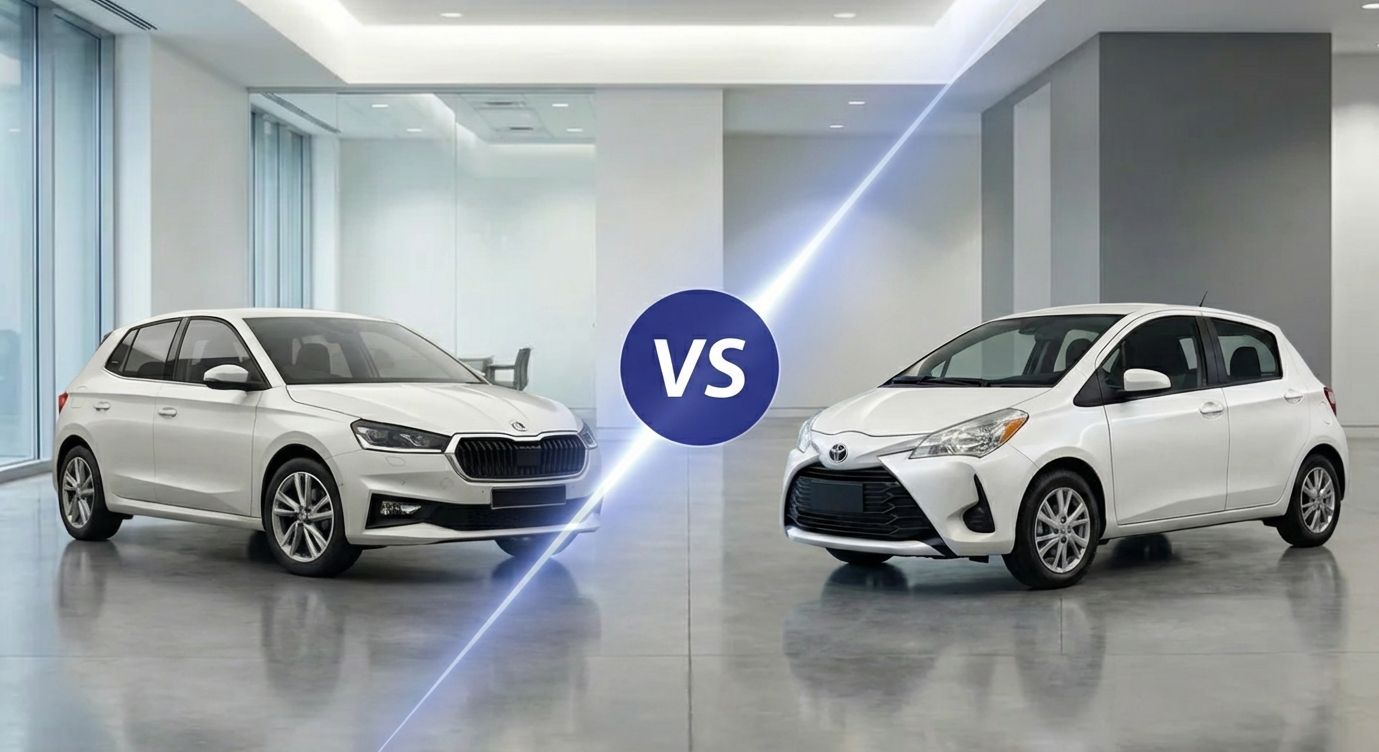
Škoda Fabia vs. Toyota Yaris: Complete Comparison 2025
Škoda Fabia vs. Toyota Yaris. A detailed comparison of engines, features, and prices. Find out which of these popular small cars is the right one for you.
Apr 13, 2026
Articles
Car battle
Citroën C3 vs. Hyundai i20 Comparison: Which hatchback is better? Read a detailed comparison of equipment, engines, and driving characteristics with a final verdict.
April 15, 2026
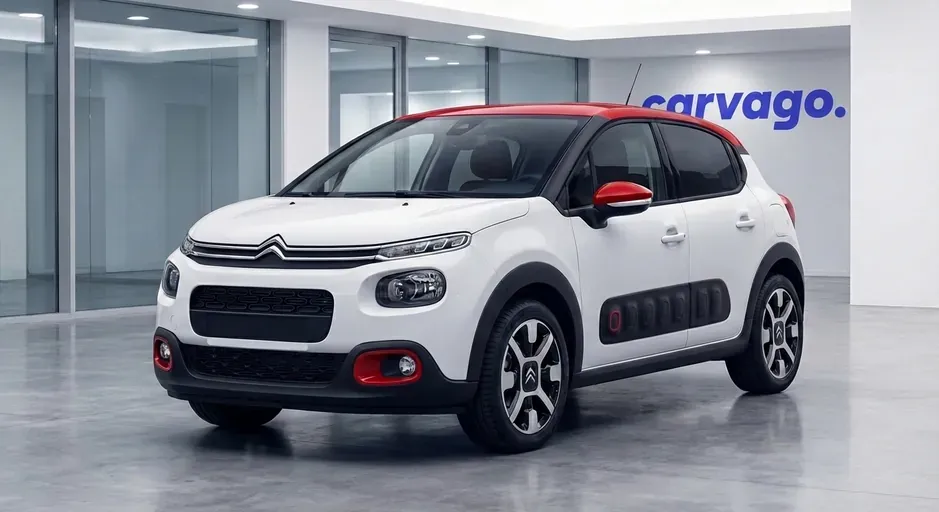
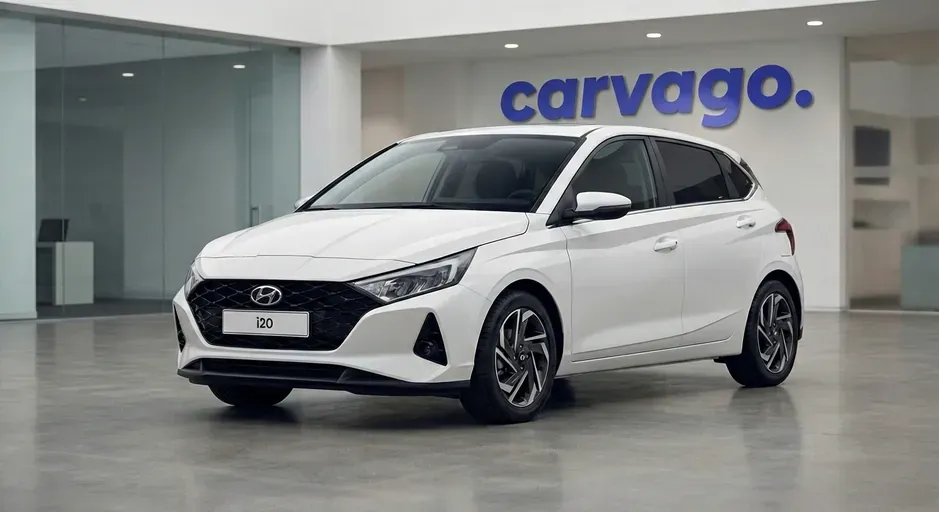
Citroën C3, whose fully electric version is designated as the ë-C3, represents an exceptionally comfortable city hatchback with unmistakable French charm, which stands out in its class primarily for its above-standard emphasis on driving comfort and personalization options. On the other side of the fence stands the Hyundai i20 (also sold in the past under the name Elite i20 in some global markets), which instead bets on more dynamic, sharp-cut lines and a very generous range of modern technologies in a surprisingly spacious interior. In the following comparison, we will therefore take a detailed look at how these two conceptually different B-segment representatives perform on the market for roughly four-year-old used cars and which of them represents a smarter choice for your daily travel.
When looking at the market for roughly four-year-old used cars, we are talking about the third generations of both models (Citroën C3 from 2017–2024 and Hyundai i20 from 2020). Although both cars fall into the highly competitive B-segment (small city hatchbacks), their approach to external dimensions differs quite fundamentally. While the French representative bets on a slightly elevated build reminiscent of crossovers, the South Korean one sticks to a more dynamic, wider, and overall sportier stance.
In terms of the overall footprint, the Hyundai i20 is slightly larger. With a length starting at 4040 mm, it surpasses the Citroën C3, which at 3996 mm just barely falls under the psychological four-meter mark. The difference of 44 millimeters is only minimally apparent in practice; both cars are very easy to park in tight city streets. However, a larger difference can be found in width, where the Hyundai offers 1775 mm compared to 1749 mm for the Citroën. The wider body of the i20 not only visually broadens the car's stance but also promises slightly more shoulder room for the occupants.
Conversely, the height advantage clearly plays in favor of the Citroën C3. With a height of 1474 mm, it is nearly 3 centimeters taller than the standard i20 (1450 mm). This parameter helps the Citroën provide a slightly more upright driving position and more comfortable entry. However, the absolutely key parameter for interior spaciousness is the wheelbase. Here, the Hyundai i20 dominates with a value of 2580 mm, surpassing its French competitor (2539 mm) by a noticeable 41 mm. For the buyer, this primarily means more generous legroom for rear-seat passengers and theoretically better directional stability at highway speeds.
| Parameter | Citroën C3 Hatchback | Hyundai i20 Hatchback |
|---|---|---|
| Length (mm) | 3996 | 4040 - 4075 |
| Width (mm) | 1749 | 1775 |
| Height (mm) | 1474 | 1440 - 1455 |
| Wheelbase (mm) | 2539 | 2580 |
How do dimensions affect the choice?
If your absolute priority is maneuverability in narrow streets, easy entry, and a slightly higher seating position, the more compact and taller Citroën C3 will be a slight favorite. However, if you plan to use the car more often for transporting adult passengers in the rear seats, the wider body and significantly longer wheelbase of the Hyundai i20 will provide welcome extra comfort.
When choosing a practical city car, the size of the luggage compartment often plays a key role, especially if the car is to serve not only for daily commuting but also for weekend family trips. In this regard, the comparison of the third generations of the Citroën C3 and Hyundai i20 models (representing ideal candidates on the used car market at around four years old) presents a battle of two quite different approaches. While the French representative sticks to more traditional values and the typical compactness of the B-segment, the South Korean competitor is among the absolute top performers in its class and strives to offer above-standard utility value reminiscent of cars from a category above.
In terms of specific figures, the standard version of the Hyundai i20 offers a generous basic trunk volume of 352 liters, which can be increased to an impressive 1165 liters after folding down the rear backrests. The Citroën C3 is somewhat more modest in this respect – its luggage compartment holds 300 liters in the basic configuration and reaches a maximum capacity of 922 liters with the seats folded down. However, an important specific feature of the third-generation Hyundai i20 is the presence of mild-hybrid (MHEV) powertrains. If you choose this more eco-friendly version, the 48V battery hidden under the trunk floor reduces the basic capacity to 262 liters and the maximum volume to 1075 liters. In the Citroën C3, the interior space remains unchanged across all offered internal combustion engine versions.
In everyday practice, these differences mean that the standard Hyundai i20 easily provides space for several extra suitcases or comfortably accommodates a folded stroller. In contrast, the Citroën C3, with its 300 liters, is fully sufficient for weekend shopping and regular city errands, but may require a bit more planning when packing for a longer vacation. However, a special situation arises with the aforementioned mild-hybrid from Hyundai – here, the advantage of the giant trunk disappears, and the French model suddenly becomes the more spacious choice in the basic configuration. Regarding body styles, it is characteristic of the models and respective model years examined that they are available exclusively as classic five-door hatchbacks.
| Parameter | Citroën C3 Hatchback | Hyundai i20 Hatchback |
|---|---|---|
| Base volume (liters) | 300 | 352 |
| Max volume with seats folded down (liters) | 922 | 1165 |
While the standard Hyundai i20 impresses with a huge trunk for its class, ideal even for smaller families, the Citroën C3 represents the gold standard that safely covers all common city needs.
Towing capacity is usually not the most important parameter for small city hatchbacks, but if you need to transport building materials, hook up a small caravan, or just head to a DIY store with a trailer, this figure plays a crucial role. When comparing roughly four-year-old used cars (mostly third generations of both models around the 2022 production year), we encounter a vast difference in utility between the Citroën C3 and Hyundai i20.
While the Hyundai i20 is a surprisingly capable hauler in this discipline, the third-generation Citroën C3 is severely limited by its capabilities. The base i20 with the 1.2 naturally aspirated engine can tow a solid 910 kg, and if you choose the turbocharged 1.0 T-GDI unit, the braked trailer capacity climbs to an excellent 1110 kg. Conversely, the Citroën C3 with its PureTech 83 petrol engines and most PureTech 110 versions can handle only 450 kg on the tow bar. The maximum for this French model is 600 kg, which you'll only find in the BlueHDi 100 diesel version and specific variants of the more powerful petrol engine.
In practice, this means a huge difference in practicality. With the Hyundai i20, you get a car that is sufficient for a weekend holiday with a lighter caravan or for a fully loaded moving trailer. Great news for those interested in the Hyundai is that the 1.0 T-GDI 48V-Hybrid version does not see a reduction in towing capacity – the full 1110 kg remains. The Citroën C3, on the other hand, serves only as space for a few extra suitcases, or reliably handles hauling leaves and branches on a light unbraked trailer, but you can forget about heavier loads with it.
If a tow bar is a necessity for you and you intend to use the car more for work, the Hyundai i20 is the clear winner that makes sense. The Citroën C3, with its very limited capacity, is rather discouraging and is suitable exclusively for the city and undemanding tasks.
| Model and engine | Braked trailer weight (kg) | Unbraked trailer weight (kg) |
|---|---|---|
| Citroën C3 PureTech 83 (61 kW) | 450 | Not specified |
| Citroën C3 PureTech 110 (81 kW) | 450 - 600 | Not specified |
| Citroën C3 BlueHDi 100 (75 kW) | 600 | Not specified |
| Hyundai i20 1.2 (62 kW) | 910 | Not specified |
| Hyundai i20 1.0 T-GDI (74-88 kW) | 1110 | Not specified |
| Hyundai i20 1.0 T-GDI 48V-Hybrid (74-88 kW) | 1110 | Not specified |
| Hyundai i20 N (150 kW) | 1110 | Not specified |
When comparing the engine lineups of these two models, which are most commonly found on the used car market at around 4 years old (i.e., within their third generations), we encounter completely different philosophies. While the Citroën C3 relies on simpler and proven technology, the Hyundai i20 offers more modern and technologically advanced units. The base engines for both cars are naturally aspirated petrol engines, ideal for city driving – for the C3, it's the 1.2 PureTech three-cylinder (61 kW), while the i20 features the 1.2 MPI four-cylinder (62 kW). A fundamental difference arises with the more powerful versions. Hyundai has fully switched to one-litre turbocharged T-GDI three-cylinder engines, extensively supplemented by 48V mild-hybrid technology to reduce consumption, while completely removing diesel engines from the lineup for this model. In contrast, Citroën offered the traditional and exceptionally efficient 1.5 BlueHDi diesel engine for these model years, designed for drivers with high annual mileage. However, if you're aiming for performance, the i20 has a huge advantage thanks to the presence of the full-fledged i20 N sports version (150 kW) at the time. The choice thus depends primarily on your daily routes: for highway travel with low operating costs, the diesel C3 is great, while for technological innovation and flexible petrol turbo engines, you should go for the i20.
The engine range for the Citroën C3 (primarily the 3rd generation from 2020–2024, which is most common on the 4-year-old used car market) is clear and fully oriented towards overall driver comfort. The standard is the naturally aspirated 1.2 PureTech three-cylinder with 61 kW, which is perfectly adequate for regular commuting. Significantly more flexibility on country roads is provided by the turbocharged 1.2 PureTech (81 kW) version, which was the only one that could be paired with a six-speed torque converter automatic (EAT6). A major advantage of the C3 on the used market is the economical 1.5 BlueHDi diesel engine (75 kW) with a very respectable 250 Nm of torque. However, it must be emphasized that with the arrival of the all-new 4th generation in 2024, production of this diesel engine for the C3 model has definitively ended. Used models from 2020–2024 thus represent essentially the last real chance to acquire a small Citroën with this sought-after diesel.
| Engine Type | Fuel | Power (kW) | Torque (Nm) | Transmission |
|---|---|---|---|---|
| 1.2 PureTech 83 | Petrol | 61 | 118 | 5MT |
| 1.2 PureTech 110 | Petrol | 81 | 205 | 6MT / 6AT |
| 1.5 BlueHDi 100 | Diesel | 75 | 250 | 5MT / 6MT |
The engine range for the Hyundai i20 (3rd generation, from 2020) is technologically much more diverse, though you would look for a diesel in vain. Fans of traditional naturally aspirated engines will certainly appreciate the base 1.2 MPI four-cylinder (62 kW), which is renowned for its high operational reliability due to its simple design. However, the core of the range consists of turbocharged 1.0 T-GDI three-cylinder engines with 74 or 88 kW. In many versions, these work with a 48V mild-hybrid system (it's even standard for the more powerful version). The system reduces overall consumption and allows for smooth "coasting" with the engine off, both with the optional dual-clutch automatic (DCT) and the interesting intelligent manual transmission (iMT) without a mechanical clutch linkage. The real icing on the cake was the i20 N sports variant equipped with a powerful 1.6 T-GDI engine (150 kW). Due to strict European emission limits, however, production of this popular "hot hatch" ended in 2024, making it a rare and highly sought-after item on the used car market.
| Engine Type | Fuel | Power (kW) | Torque (Nm) | Transmission |
|---|---|---|---|---|
| 1.2 MPI | Petrol | 62 | 118 | 5MT |
| 1.0 T-GDI | Petrol | 74 | 172 | 6MT / 7DCT |
| 1.0 T-GDI 48V | Petrol (Mild-hybrid) | 74 / 88 | 172 / 200 | 6iMT / 7DCT |
| 1.6 T-GDI (i20 N) | Petrol | 150 | 275 | 6MT |
While the Citroën C3 with its excellent BlueHDi diesel engine will undoubtedly appeal to drivers who prefer low operating costs on long journeys, the Hyundai i20 represents a more technologically advanced choice with efficient mild-hybrids and a reliable naturally aspirated petrol base.
Choosing the right engine is absolutely critical for long-term satisfaction, reliability, and keeping operating costs in check. Interestingly, while the history of the Citroën C3 is intertwined with extremely fuel-efficient diesel engines (which have gradually disappeared from the range), the Hyundai i20, even in its third generation, long remained one of the few on the market to offer a proper naturally aspirated four-cylinder. When looking for a used car around four years old (i.e., from the start of production of current or outgoing generations around 2021–2022), you will most often encounter modern 1.0 or 1.2-liter three-cylinder engines in both competitors. Our recommendation reflects a balance of performance, real-world fuel consumption, owner feedback, and mechanical durability.
This turbocharged three-cylinder (widely available for the third-generation C3 produced between 2020–2023) is the best choice for drivers who don't want to be restricted to city traffic only. Thanks to its 81 kW output and generous torque, it pulls smoothly from low revs and easily handles highway trips or safe overtaking on country roads. Real-world fuel consumption during normal driving is an excellent 5.5 l/100 km.
In the third-generation Hyundai i20 (model years 2020 and newer), the turbocharged 1.0-liter three-cylinder with 74 kW (100 hp) represents the absolutely ideal middle ground. Unlike the base 1.2 MPI naturally aspirated four-cylinder, it offers much more flexible acceleration with a noticeable power peak and pleases in real-world traffic with a combined consumption between 5.2 and 5.8 l/100 km. In advertisements, you will also come across more complex versions labeled as 48V-Hybrid (often with the iMT electronic clutch), but we recommend looking primarily for the purely internal combustion 1.0 T-GDI variant, which promises lower service costs in the long run due to the absence of an expensive traction battery.
When choosing a nearly new car on the secondary market, such as a typically four-year-old Citroën C3 or Hyundai i20 (both 3rd generation representatives), it is important to remember that official laboratory fuel consumption figures often differ significantly from real-world driving. For the most objective comparison of operating costs, we focused on actual data obtained directly from drivers themselves. The figures below are based on the renowned independent portal Spritmonitor.de, which collects real refueling records and thus reflects the actual daily appetite of these popular city hatchbacks.
| Model and engine | Average consumption (l/100 km) | news_site |
|---|---|---|
| Citroën C3 PureTech 83 (Naturally aspirated petrol) | 6.0 | Spritmonitor.de |
| Hyundai i20 1.2 (Naturally aspirated petrol) | 6.1 | Spritmonitor.de |
| Hyundai i20 1.0 T-GDI (Turbocharged petrol) | 5.9 | Spritmonitor.de |
| Citroën C3 PureTech 110 (Turbocharged petrol) | 6.4 | Spritmonitor.de |
| Hyundai i20 1.0 T-GDI 48V-Hybrid (Mild-hybrid) | 5.6 | Spritmonitor.de |
| Citroën C3 BlueHDi 100 (Diesel engine) | 4.6 | Spritmonitor.de |
Several surprising trends clearly emerge from the collected data. For the basic naturally aspirated engines, the average consumption of both competitors is remarkably similar, safely balancing around the six-liter mark. More interesting, however, is the look at the small turbocharged three-cylinder engines, where one might expect automatic fuel savings. While in the case of the Hyundai, the turbo works efficiently and the 1.0 T-GDI version consumes less fuel than the "naturally aspirated" one, the more powerful Citroën C3 with the PureTech 110 unit is surprisingly the thirstiest of the entire selection in real-world driving, partly due to more frequent use of its dynamics by drivers. A completely different discipline is the BlueHDi diesel engine in the Citroën, which easily takes the overall lead and effortlessly pushes values below five liters. The mild-hybrid Hyundai i20 also does a great job for the Korean brand, pushing petrol consumption down to a fantastic 5.6 l/100 km.
For typical buyers of a used city hatchback, these data lead to fairly clear recommendations. If you are looking for a car primarily for short city trips and taking children to school, the simple and robust naturally aspirated versions (PureTech 83 or i20 1.2) will serve you best, where consumption is not dramatic and they do not suffer as much from cold-start wear. If you commute longer distances daily on regional roads or suburban motorways, the modern and economical mild-hybrid Hyundai i20 is worth it from a budget perspective. And for the handful of drivers with a very tight budget who spend hours on long motorway routes even in a B-segment car, the diesel Citroën C3 represents an unbeatable choice.
Overall, real-world fuel consumption is a very strong deciding factor between these two cars. In terms of modern petrol technologies, the Hyundai i20 profiles as more economical, with its advanced turbocharged and mild-hybrid units effectively cutting operating costs. However, if your only goal is the lowest possible consumption at any cost and you cover a high mileage, the Citroën C3 deals its rival a crushing blow by offering a full-fledged diesel, which Hyundai no longer offers in its third-generation i20.
In the used car market, typically for cars around 4 years old (model years 2021–2022), both the Citroën C3 and Hyundai i20 represent very attractive choices for those interested in an affordable and practical city car. In both cases, we are talking about mature generations – for the Citroën C3, it is the third generation after a significant facelift (introduced in 2020), while for the Hyundai i20, it is the completely new third generation (code name BC3), which entered the market at the end of 2020.
These generational differences are directly reflected in the market value and residual price of both models. While the French representative attracts with significantly lower acquisition costs, the South Korean competitor maintains a slightly higher price thanks to more advanced technology and a long warranty.
Prices for approximately four-year-old used C3 models are at exceptionally affordable levels.
The third generation of the i20 model brought a significantly more aggressive design and a huge range of modern assistance systems to the small car segment, which is reflected in more confident used car prices. Another crucial factor is the transferable five-year factory warranty with no mileage limit, which usually still applies to models from 2021 and 2022.
| Criterion | Citroën C3 | Hyundai i20 |
|---|---|---|
| Starting price | from approx. €8,000 | from approx. €10,000 |
| Average market price | €10,000 | €12,000 |
| Top / Automatic versions | rarely over €12,000 | commonly over €13,000 |
| Main used car draw | Low purchase price and comfort | Still valid factory warranty and equipment |
From a financial perspective, the Citroën C3 profiles itself as an ideal solution for drivers with a tighter budget looking for a comfortable, undemanding car with French charm. The Hyundai i20, on the other hand, is the choice for those who don't mind paying slightly more for a technologically more advanced car with the added security of a remaining factory warranty.
If your main goal is maximum savings when buying a used car, the Citroën C3 offers an unbeatable price-to-comfort ratio, but the Hyundai i20 holds its market value more stably thanks to its transferable five-year warranty and more modern technologies.
When choosing a used car, the level of safety often plays a decisive role. To begin with, it should be noted that although we often automatically look for five-star ratings in modern cars, both of these competitors earned a solid four-star score from independent Euro NCAP tests. However, it is extremely important to view this result in the strict context of the year the vehicles were tested. This is because Euro NCAP test methodologies and protocols are constantly evolving and becoming more stringent over time. While older tests focused primarily on passive safety and the structural integrity of the bodywork during deformation, newer years place a fundamental emphasis on active prevention. They require advanced assistance systems, improved simulations of frontal collisions with a mobile barrier, cyclist detection, or assessment of vehicle behavior at complex intersections. For this reason, percentage results from different years cannot be directly and fairly compared.
Citroën C3 of the third generation passed through Euro NCAP laboratories in 2017. At the time of its testing, the car demonstrated very good structural protection, which was reflected in high percentage scores for adult and child occupant protection. The commissioners awarded it the fourth star – and thus the loss of the maximum rating – primarily because the advanced autonomous emergency braking (AEB) system was not part of the standard equipment at the time, and due to weaker results in the area of vulnerable road user protection. For those interested in a used car, it is also essential to know that the validity of the Citroën's 2017 certification has formally expired, precisely because of the ever-increasing Euro NCAP requirements.
Conversely, the Hyundai i20 received its four-star rating in 2021, based on diametrically different, significantly stricter criteria (the result was formally carried over from the test of its sister and technically identical model, the Bayon). Although it has a lower score for adult protection in the table at first glance than its French rival, it actually faced substantially more modern and tougher crash tests. Hyundai shone in active safety support and protection of pedestrians or cyclists, where it fully benefits from more advanced sensors, modern lane-keeping assistants, and more sophisticated autonomous braking.
A clear conclusion emerges from the overall comparison. While the Citroën C3 offers solid mechanical and passive protection with functional crumple zones, its assistance systems correspond to the technological standard of its inception and represent an average for today's complicated traffic. The Hyundai i20, on the other hand, provides a more modern architecture and a much more advanced level of active safety, which can prevent accidents much more effectively.
| Parameter | Citroën C3 | Hyundai i20 |
|---|---|---|
| Year of testing | 2017 | 2021 |
| Adult occupant protection | 88 % | 76 % |
| Child protection | 83 % | 82 % |
| Vulnerable road user protection | 59 % | 76 % |
| Safety assistance systems | 58 % | 67 % |
While the Citroën C3 relies on solid passive protection tested according to older standards, the Hyundai i20 benefits from a much newer architecture and advanced safety assistants, thanks to which it offers a higher standard of accident prevention in today's traffic.
In addition to standard equipment, each model offers several unique features and innovations that add daily value and can be decisive for the customer during the final selection. While the French representative bets primarily on distinctive design and uncompromising comfort, the Korean model counters with advanced digitalization and modern technologies.
Extraordinary driving comfort thanks to a softer chassis and Advanced Comfort seats
Extravagant and original design with practical Airbump protective elements
Economical PureTech petrol engines with low real-world fuel consumption
Decent luggage compartment volume (300 liters) considering the exterior dimensions
Outdated and slower infotainment with impractical climate control via the touchscreen
More pronounced body roll in corners and less confident handling during more spirited driving
Rubberier manual transmission feel and more cramped knee room in the rear seats
The Citroën C3 is an ideal choice for drivers who prioritize maximum comfort, original French style, and a calm drive in the city or on country roads. With its soft approach and cozy interior, it will appeal to those who do not care about sporty performance but are looking for a design-interesting and economical car for every day.
Excellent cabin spaciousness, especially for rear passengers, and a larger trunk (352 liters)
Top-notch, fast infotainment and the retention of physical buttons for climate control
Confident and agile handling supported by precise steering and high-quality gear shifting
Rich equipment of safety and assistance systems (SmartSense) even in lower trim levels
Stiffer chassis tuning, which transmits more shocks into the cabin on broken roads
Visibly higher proportion of hard and cheaper-looking plastics on the dashboard and door panels
Slightly higher noise from the chassis and wheel arches at highway speeds
The Hyundai i20 represents a rational, technologically advanced choice and will please drivers looking for confident handling combined with one of the most spacious interiors in the small car class. It is a great car for active individuals or small families who appreciate modern digital equipment and do not mind the sportier, stiffer character of the chassis.
Based on our own statistics, independent technical inspection of the car through the CarAudit service, and data from service and recall reports, we have compiled an overview of the most common problems that buyers of roughly four-year-old used examples of these models should watch out for.
The Citroën C3 is generally a very comfortable and affordable car, but it requires great caution, especially regarding petrol engines and onboard electronics.
A comfortable and stylish used car, but one that requires uncompromising care regarding the service of PureTech engines and a slight tolerance for the occasional quirks of the onboard electronics.
The third-generation Hyundai i20 is considered a reliable and modern car, yet it suffers from specific "teething troubles" from the first years of production and issues related to more complex types of transmissions or hybrid powertrains.
A technologically advanced car with exemplary driving characteristics. When buying a used one, pay particular attention to the behavior of the automatic transmission and the condition of the system in mild-hybrid variants.
When buying a used car, a thorough inspection is key. Here are some specific points to focus on for these two models to avoid unpleasant and expensive surprises after purchase.
The Hyundai i20 offers a larger luggage compartment, boasting a very generous volume of 352 liters. Citroën C3 has a slightly smaller boot with a capacity of 300 liters. So, if you regularly transport more items or family groceries, the i20 will be the more practical choice for you.
The Citroën C3 is the absolute king of comfort in the small car class, thanks to its softer suspension tuning and special Advanced Comfort seats. In contrast, the Hyundai i20 has stiffer suspension, which provides sportier and more confident handling in corners. However, on broken city roads, the i20 cannot absorb bumps as smoothly as its French rival.
The Hyundai i20 benefits from a newer design concept and offers significantly more advanced technology, including an optional digital instrument cluster and a fast central display. While the Citroën C3's interior feels very stylish and cozy thanks to various decors, its infotainment is slower and graphically more outdated. For drivers requiring modern connectivity and assistance systems, the i20 is the clear winner.
The Hyundai i20 comes with a five-year factory warranty with unlimited mileage, which can mean that with a roughly four-year-old used car, you still get a valid factory guarantee. For the Citroën C3 (especially with the 1.2 PureTech engines), it is crucial to ensure regular and timely oil changes to protect the timing belt. Overall, however, both models are rated as very reliable when service intervals are followed.
Both cars are primarily powered by small-displacement gasoline engines, with average real-world fuel consumption ranging between 5 and 6 liters per 100 kilometers. However, the Hyundai i20 has a slight advantage due to the availability of mild-hybrid technology, which helps reduce consumption during frequent stop-and-go driving. In terms of overall operating costs, both models are evenly matched, but the i20 can be slightly more efficient in heavy traffic.
Sources: ADAC, forbes.cz, novinky.cz, emobility.cz, autotechnik.cz, autickari.cz
This article was prepared using artificial intelligence tools. The section guarantor is Petr Dušek.
Škoda Fabia vs. Toyota Yaris. A detailed comparison of engines, features, and prices. Find out which of these popular small cars is the right one for you.
Apr 13, 2026
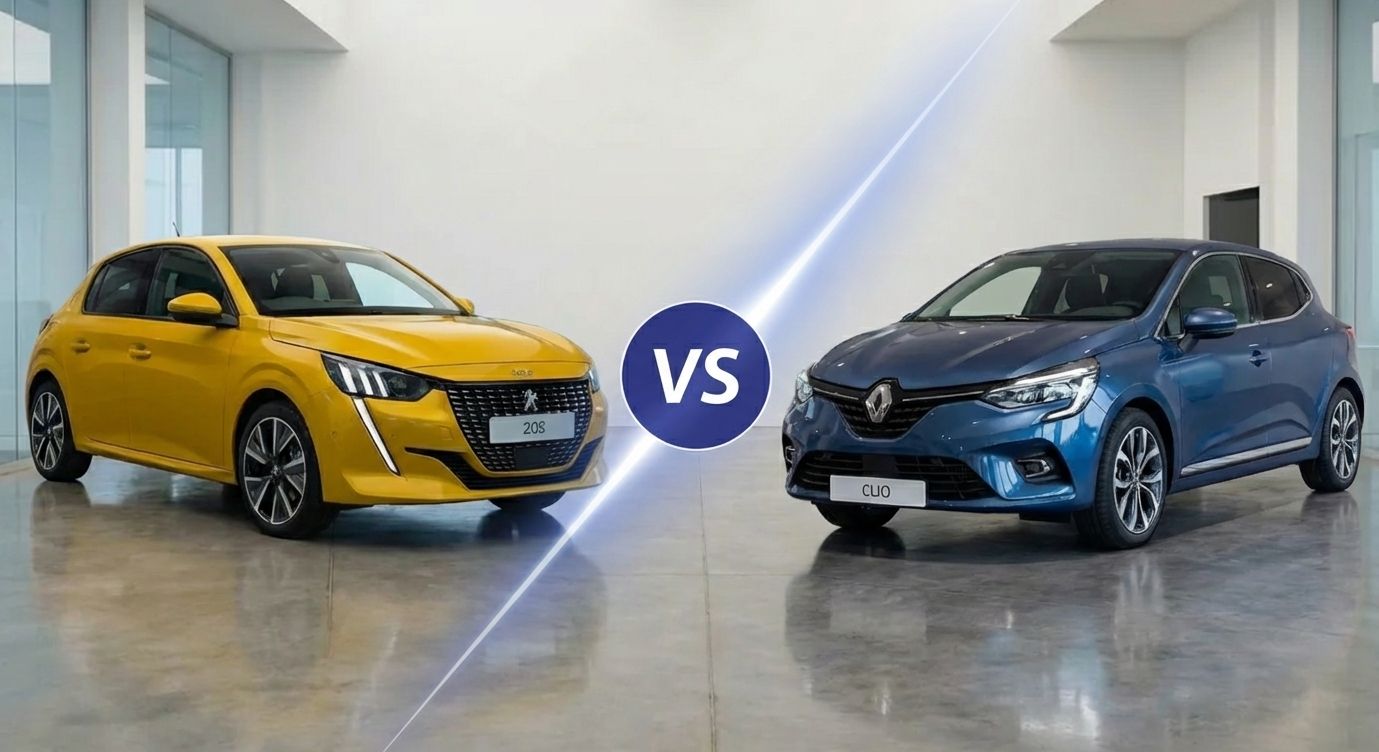
Detailed comparison of Peugeot 208 vs Renault Clio. Find out which French hatchback has better equipment, fuel consumption, and reliability. Read our verdict!
Apr 8, 2026
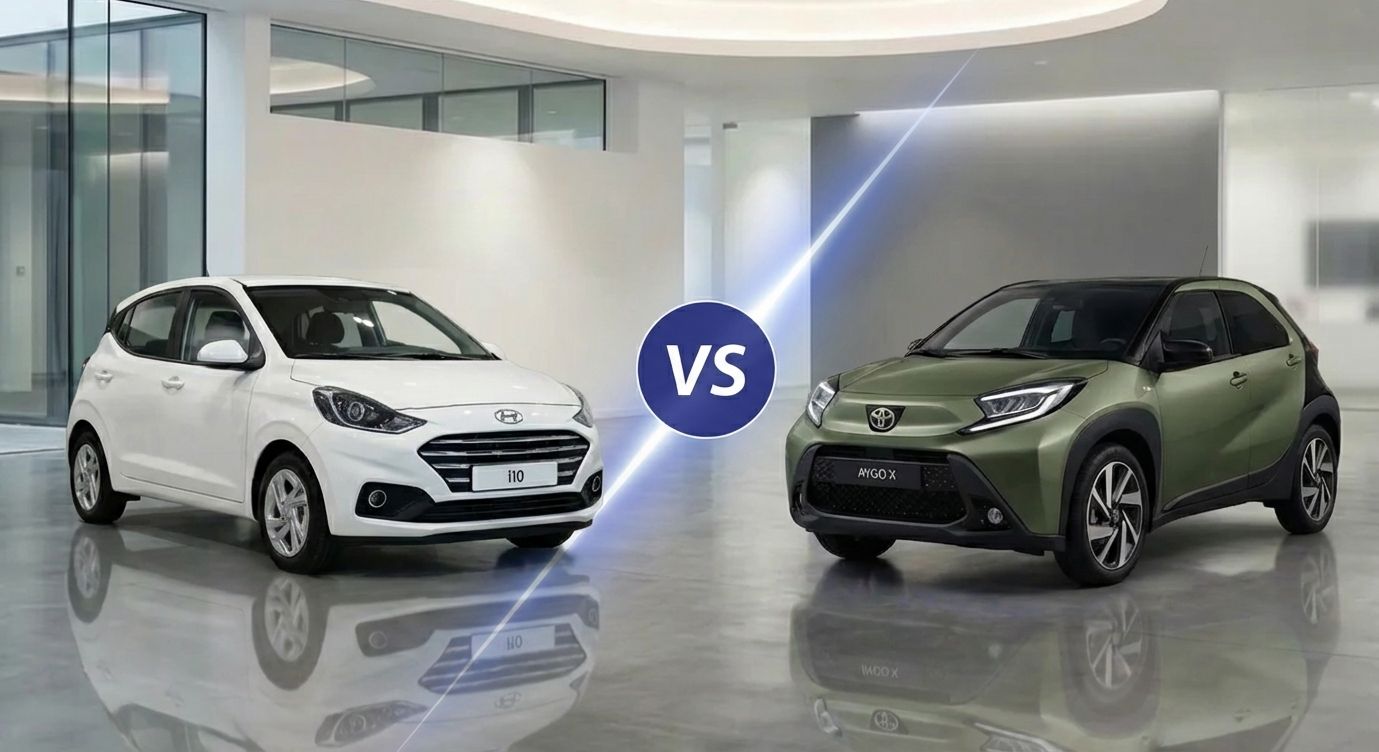
Hyundai i10 vs. Toyota Aygo X: A detailed comparison, real-world insights, and a verdict to help you choose the right small city car.
Apr 2, 2026