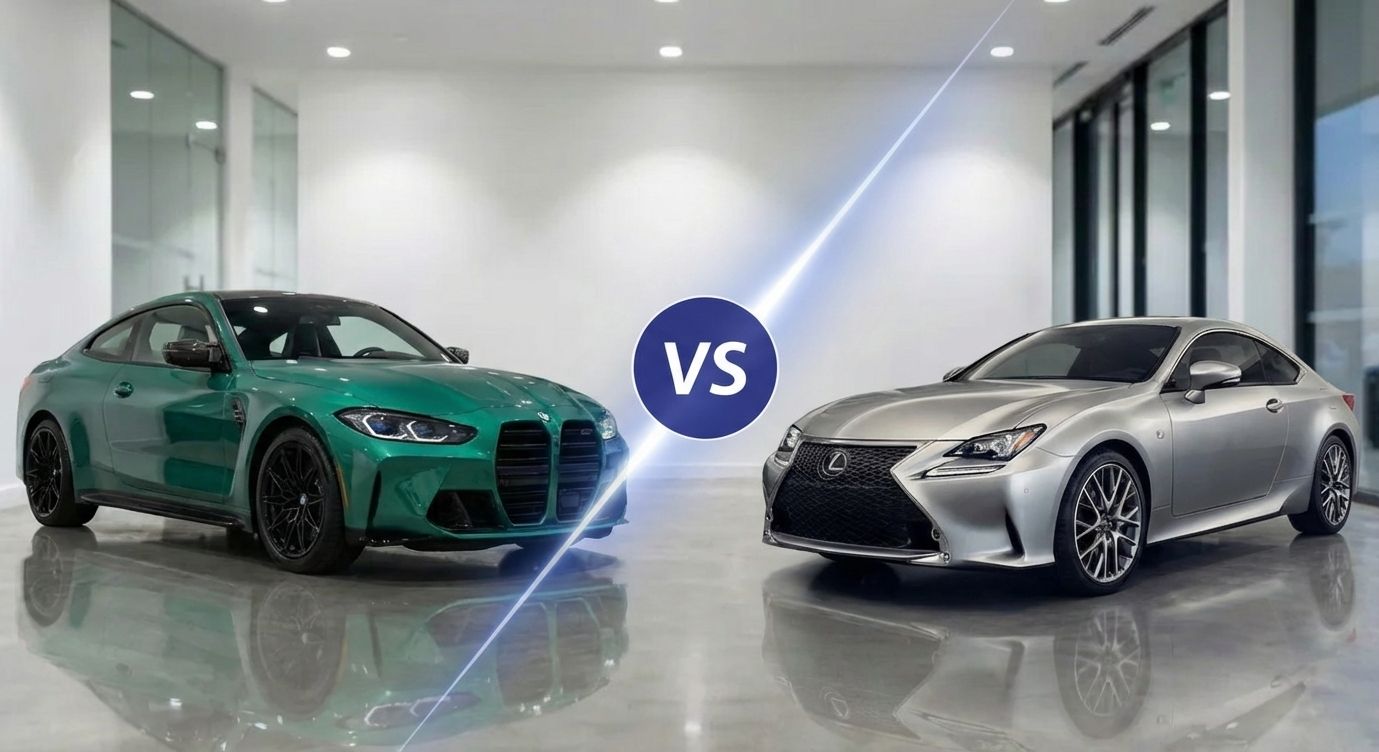
Car battle
BMW M4 vs. Lexus RC F: Complete comparison 2026
Detailed comparison of the BMW M4 and Lexus RC F. Discover the key differences in engines, driving characteristics, and reliability. Read our verdict before you buy.
Apr 14, 2026
Articles
Car battle
Detailed comparison of BMW M2 vs Jaguar F-Type. Discover real-world experiences, differences in performance and reliability of used cars, and read our detailed verdict.
April 29, 2026
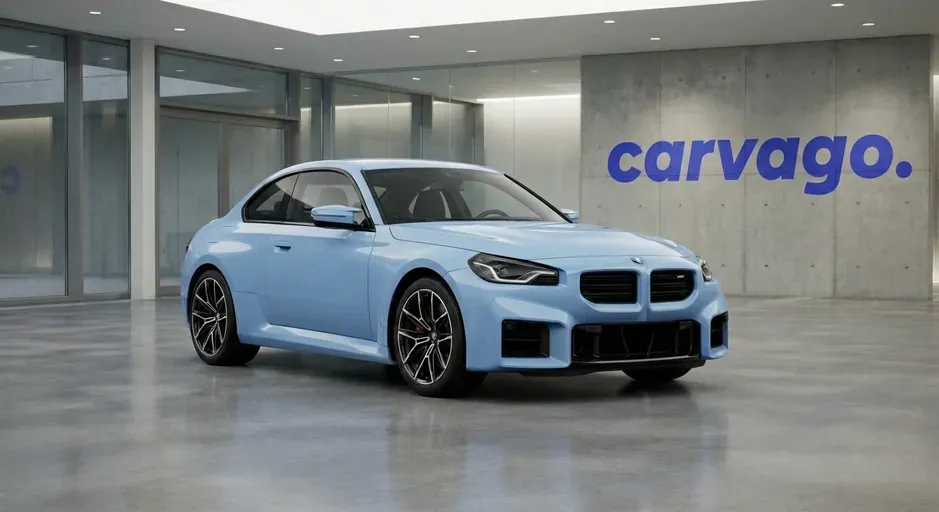
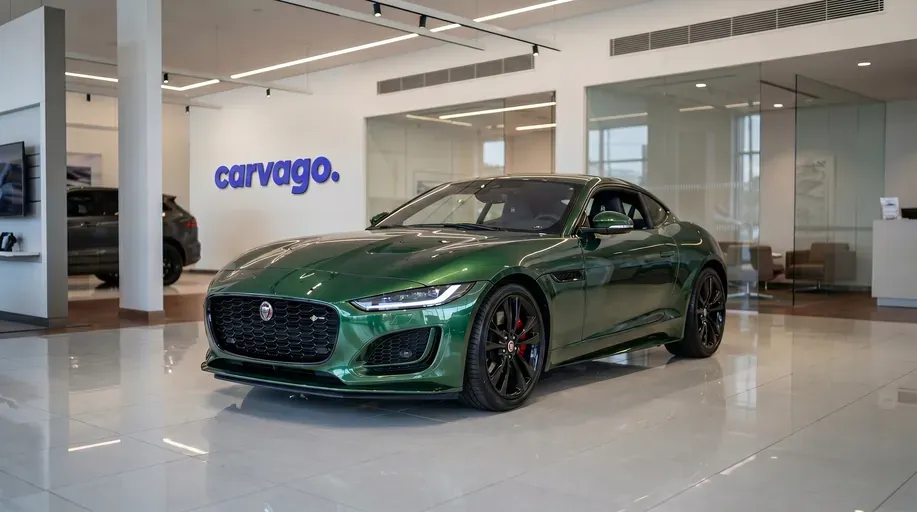
The BMW M2, which often appears on the market under the distinct names of its enhanced versions, the M2 Competition or M2 CS, represents an uncompromising compact coupe that aims for the purest driving experience with German precision. Standing against it is the Jaguar F-Type, a charismatic British sports car and the proud spiritual successor to the legendary E-Type, which can captivate with its elegant curves and vibrant sound. The following comparison will reveal in detail the strengths and weaknesses of both these exceptional machines and help you decide which one will become the right choice for your garage.
In a direct comparison between the BMW M2 and the Jaguar F-Type (focusing on models around the 2022 production year and the newer G87 generation of the M2), you will quickly find that although both are sports cars, their philosophies are reflected in their bodywork. The Jaguar F-Type represents the classic British sports ideal – it is strictly a two-seater, very low, and wide-stanced. In contrast, the BMW M2 honors the shape of a muscular coupe, which must offer a 2+2 seating configuration on a relatively compact footprint while maintaining at least basic everyday practicality.
The most significant difference is felt in the overall height and width. With a width of 1923 mm, the Jaguar F-Type is a substantial 36 mm wider than the BMW M2 (1887 mm). At the same time, the British beast sits much closer to the road – with a height of just 1311 mm (for the coupe version), it is 92 mm lower than its Bavarian competitor. In practice, this means the F-Type offers an uncompromisingly low center of gravity and an exceptionally aggressive road stance, although the wider body may require more caution when parking near curbs or in narrow underground garages.
In terms of length, however, the BMW dominates. At 4580 mm, it is 110 mm longer than the Jaguar (4470 mm). But the most crucial factor is the wheelbase. The BMW M2 boasts a wheelbase of 2747 mm, which is a full 125 mm more than the F-Type (2622 mm). This difference has a direct impact not only on the BMW's directional stability at high speeds but, more importantly, on interior space. While you can only fit a passenger in the Jaguar, the M2's longer wheelbase allows for the installation of a second row of seats, making it a much more versatile car.
Practical Summary of Dimensions:
| Parameter | BMW M2 Coupe | Jaguar F-Type Coupe | Jaguar F-Type Cabriolet |
|---|---|---|---|
| Length (mm) | 4580 | 4470 | 4470 |
| Width (mm) | 1887 | 1923 | 1923 |
| Height (mm) | 1403 | 1311 | 1307 |
| Wheelbase (mm) | 2747 | 2622 | 2622 |
When it comes to choosing a sports car, practicality often takes a back seat. However, if you are considering buying a used model roughly four years old as a daily driver or for weekend escapes, the differences in luggage capacity between the BMW M2 and the Jaguar F-Type start to play a very crucial role. While BMW bets on the traditional 2+2 concept, which offers couples a high level of variability, the British Jaguar sticks to a purist two-seater approach.
The BMW M2 Coupé scores in this regard with excellent usability. Whether you look on the used car market for units from the end of the previous F87 generation production (manufactured until 2020) or pay a bit extra for early examples of the succeeding G87 generation (from 2023), you always get a trunk with very solid parameters.
The M2's trunk is fully sufficient for weekend shopping and longer holidays. After quickly folding the rear seat backrests, the car can even swallow very long items, such as skis or a full set of golf equipment. You thus gain space for several extra suitcases, and although the manufacturer does not officially state the maximum volume in liters for the space created this way in the 2 Series, the possibility of easily connecting the trunk with the cabin makes it one of the most practical sports cars in its class.
The Jaguar F-Type in its facelifted version (X152 generation, available without interruption even for the sought-after four-year-old car) holds a diametrically different philosophy. This car does not have any rear seats, so the possibility of folding them is completely out of the question. Specific parameters then vary significantly depending on which body style you choose:
In neither body variant of the F-Type can you count on the possibility of transporting oversized items – the base volume is also the absolute maximum here.
| Parameter | BMW M2 Coupé | Jaguar F-Type Coupé | Jaguar F-Type Cabriolet |
|---|---|---|---|
| Base volume (liters) | 390 | 408 | 207 |
| Max volume with seats folded down (liters) | Not specified | 408 | 207 |
While the BMW M2 Coupé provides significantly better flexibility for daily use thanks to its more spacious rear layout and cleverly folding seats, the Jaguar F-Type requires more careful packing planning in both its versions, even though the Coupé variant pleasantly surprises with its base volume.
When comparing sports cars on the market for roughly four-year-old used vehicles, such as the BMW M2 (the transition between the F87 and the newer G87 generations) and the Jaguar F-Type (X152 generation), customers are not primarily looking for a towing workhorse. Nevertheless, it may be important for some to know if the car can pull at least a light trailer to increase overall practicality.
Regarding specific towing capacity figures, the situation is very clear for both cars. Neither the BMW M2 nor the Jaguar F-Type has any official towing capacity. These purebred sports models completely lack manufacturer homologation for the installation of a conventional tow bar. Both the standard and maximum permitted weight for braked and unbraked trailers is exactly 0 kg. There are no different versions or potential hybrid variants with reduced capacity – this zero value applies absolutely to all available engine options, including more powerful models like the Jaguar F-Type R or the limited BMW M2 CS.
From a practical standpoint, this brings clear limitations. With these cars, you simply won't get extra space for a few more suitcases by attaching a small trailer, and their towing capacity is certainly not sufficient for a weekend shopping trip for bulky materials or a longer holiday where you would like to go with a caravan. All your luggage must fit purely into the cramped spaces of the trunk itself. However, this absence is a logical design step that preserves uncompromising sports aerodynamics, weight distribution, and space for massive exhaust systems.
In conclusion, if the ability to tow a trailer is an important parameter for you in any way, neither of these cars will meet your needs. Both models are created purely for the driving experience, while any utilitarian practicality takes a back seat. Due to the complete absence of towing capacity in both models, no data is included in the comparison table.
| Model and motorization | Braked weight of trailer (kg) | Unbraked weight of trailer (kg) |
|---|
The basic philosophy of the powertrains in these two sports cars differs diametrically, which directly defines their character on the road and in the eyes of buyers. The BMW M2 sticks to an uncompromising recipe from the M division, relying exclusively on a precise straight-six engine boosted by two turbochargers. This engine sends all its power strictly to the rear wheels and delights true purists by still offering a choice of a purely mechanical manual transmission. The Jaguar F-Type, on the other hand, offers a much wider range under the hood and a completely different approach to traction. Over the years, it has featured lightweight turbocharged four-cylinders, supercharged six-cylinders, and at the top stands the legendary five-litre supercharged V8, which can be combined with all-wheel drive (AWD) in more powerful versions. While the German car is primarily built as a surgically precise tool for track enthusiasts seeking perfect balance and rear-axle playfulness, the British beast functions more as an exceptionally emotional gran turismo that dazzles with an old-school theatrical sound profile.
When looking for a slightly used BMW M2 on the market for roughly four-year-old cars, you will encounter a specific situation in the form of an intergenerational production gap. You will thus be choosing between extremely prized models from the very end of the previous F87 generation (Competition and CS versions produced until 2020), or slightly more expensive but technically more advanced early units of the brand-new G87 generation, which arrived in 2023. The heart of these cars is always the fantastic three-litre M TwinPower Turbo straight-six – in the older F87 generation, it is the S55 unit, while the newer G87 hides the modernised S58 engine known from the M3 and M4 models. The Competition version produces a great 302 kW, while the sharper and rare CS edition was tuned to 331 kW. The new G87 generation from 2023 pushed the power bar straight to 338 kW (later even to 353 kW). A major triumph of the M2 for driving enthusiasts is the retention of the classic six-speed manual transmission. Those who prefer uncompromising speed will reach for the seven-speed dual-clutch gearbox (M DCT) in the F87, or the eight-speed M Steptronic torque-converter automatic in the G87 generation.
| Engine type | Fuel | Power (kW) | Torque (Nm) | Transmission |
|---|---|---|---|---|
| 3.0 Twin-Turbo R6 (F87 Competition) | Petrol | 302 | 550 | 6-speed manual / 7-speed M DCT |
| 3.0 Twin-Turbo R6 (F87 CS) | Petrol | 331 | 550 | 6-speed manual / 7-speed M DCT |
| 3.0 Twin-Turbo R6 (G87) | Petrol | 338 - 353 | 550 - 600 | 6-speed manual / 8-speed automatic |
While BMW's offering relies on a single conceptual basis, the Jaguar F-Type has undergone several radical transformations during its life cycle. If you are looking for roughly four-year-old used cars from the period after the major facelift (X152 generation from 2020 onwards), you will encounter a clearer but all the more extreme range of powertrains. The role of the entry-level model was taken over by the lightweight two-litre turbocharged four-cylinder P300. This engine, with 221 kW, lacks the auditory drama of the V8, but thanks to the weight reduction over the front axle, it guarantees excellent agility in corners. The former golden mean of the range in the form of the characterful 3.0 V6 Supercharged (P340 and P380 versions) disappeared from the price lists at the end of 2019, so you will no longer find it among four-year-old used cars. Instead, most of the demand was satisfied by the fantastic 5.0 supercharged V8. In the more standard P450 version, it pampers the driver with 331 kW and a massive 580 Nm of torque, accompanied by the burbling sound of a genuine V8. The absolute pinnacle is the R version (also known as P575) boasting a brutal 423 kW and 700 Nm of torque. Unlike the BMW, all Jaguars are strictly tied to the eight-speed Quickshift automatic. However, Jaguar scores with traction – while the P300 and P450 can be had with rear-wheel drive, optional all-wheel drive (AWD) is available for the P450, which comes as standard on the powerful R version and allows the car's power to be used in all weather conditions.
| Engine type | Fuel | Power (kW) | Torque (Nm) | Transmission |
|---|---|---|---|---|
| 2.0 Turbo I4 (P300) | Petrol | 221 | 400 | 8-speed automatic |
| 3.0 Supercharged V6 (P340 / P380)* | Petrol | 250 / 280 | 450 / 460 | 8-speed automatic |
| 5.0 Supercharged V8 (P450) | Petrol | 331 | 580 | 8-speed automatic |
| 5.0 Supercharged V8 (R / P575) | Petrol | 423 | 700 | 8-speed automatic |
*Note: The popular supercharged V6 engines were permanently discontinued from the range at the end of 2019, so they represent an interesting collector's rarity or are completely absent in the market for roughly four-year-old used cars.
While the BMW M2, with its precise straight-six engines and the choice of a manual transmission, will reliably thrill purist track-day enthusiasts, the Jaguar F-Type appeals as an emotional gran turismo, given unique charm in everyday driving by its massive supercharged V8 and AWD support.
Choosing the right engine is crucial for long-term satisfaction – this is doubly true for sports cars, as the engine dictates the car's entire character. Our recommendation is based on real-world experience, service reliability, and user-friendliness. The BMW M2 and Jaguar F-Type represent two completely different worlds. While BMW relies on technically refined, high-revving M TwinPower Turbo inline-six engines designed for maximum efficiency and precise power delivery, Jaguar bets on an aristocratic and theatrical character. An interesting feature is its legendary five-liter V8, which uses a Roots-type mechanical supercharger. This ensures immediate, almost naturally aspirated throttle response and an unmistakable sound that has become a cult classic in the automotive world. The choice between these two cars is thus primarily a choice between a surgically precise track tool and an emotional, muscular grand tourer.
In the market for roughly four-year-old used cars, the M2 Competition (F87 generation) makes the most sense in terms of driving dynamics and reliability. From available production data, we know that this engine was produced between 2018 and 2020, followed by a several-year hiatus until the arrival of the all-new G87 generation. Naturally, you won't find it on the new car market anymore, but in the used market, it represents the absolute "sweet spot" for petrolheads. The S55 engine, originally developed for the larger M3/M4 models, replaced the older N55 unit here and brought a truly uncompromising M character.
In the context of approximately four-year-old vehicles, the P450 version with the five-liter V8 is the ideal choice for the Jaguar F-Type. Databases show that this engine was added to the range in 2020 as part of a significant facelift and remained on sale until the end of the model's production (August 2024). If you're looking for a lightly used model, the P450 is a rational choice that offers all the drama the F-Type is famous for without paying astronomical prices for the top-of-the-line (and unnecessarily brutal for public roads) R version with 575 hp.
There is often a vast gap between manufacturers' official fuel consumption figures and real-world driver experiences, which is doubly true for high-performance sports cars. For an objective comparison, we have therefore avoided theoretical laboratory figures and focused on data from real drivers on crowdsourcing platforms, such as the German portal Spritmonitor.de. For the comparison, we selected generations and engine variants that currently form a sought-after group of approximately four-year-old vehicles on the used car market – in the case of BMW, these are the top versions of the acclaimed F87 generation (produced until 2020), and for Jaguar, the attractive facelifted variants of the X152 platform (2020–2022).
| Model and engine | Average consumption (l/100 km) |
|---|---|
| Jaguar F-Type P300 (2.0 l) | 9,6 |
| BMW M2 Competition (3.0 l) | 9,8 |
| Jaguar F-Type R (5.0 l V8) | 10,7 |
| Jaguar F-Type P450 (5.0 l V8) | 10,9 |
When interpreting the real-world values, several outright surprising findings emerge. The most fundamental is the fact that downsizing under the hood of a sports car does not guarantee economical operation at all. In practice, the base four-cylinder Jaguar F-Type P300 has to struggle much more with its heavier body, and the small turbo is constantly active, pushing average consumption to 9,6 l/100 km. In contrast, the brilliantly tuned straight-six in the BMW M2 Competition offers vastly better dynamics, while its real-world appetite, at 9,8 l/100 km, is only a negligible two-tenths of a liter higher. In the case of the British beast, a minor paradox among the V8s is also noteworthy – the massively more powerful top-tier R version (423 kW) can, thanks to its different software and hardware tuning and the different driving styles of its owners, run at 10,7 liters, which is even slightly more economical than the "weaker" P450 version (331 kW), which requires an average of 10,9 l/100 km.
For the average user and enthusiast looking for a used sports car, clear conclusions follow. If you are considering the base Jaguar purely for lower running costs or daily city commuting, you won't save much. The three-liter BMW is a much better compromise because, for an almost identical fuel allowance, you get a purebred, driver-oriented M car. Fuel costs naturally increase with the V8s, but in the segment of four-year-old luxury coupes with a price tag exceeding €41,000, fuel consumption should not be the deciding factor. Customers choose the supercharged V8 in the Jaguar primarily for its unmistakable, aggressive sound and constant supply of torque – and they are simply happy to sacrifice more frequent visits to gas stations for this extraordinary experience.
In the market for used cars approximately 4 years old (i.e., with a production year around 2021 to 2022), both cars reach a very interesting position. While for the BMW M2, this period represents the very peak and end of one of the most revered generations (F87), the Jaguar F-Type offers an exceptionally attractive face just after its radical facelift. The different philosophies of both manufacturers are naturally reflected in the price tags on the secondary market.
The table below shows estimated price ranges for roughly four-year-old used cars depending on the chosen engine, overall condition, and mileage:
| Model | Base version (higher mileage) | The golden mean (good condition) | Collector and top-tier versions |
|---|---|---|---|
| BMW M2 (F87) | from €43,000 | €49,000 – €57,000 | €78,000 – €94,000 |
| Jaguar F-Type | from €41,000 | €53,000 – €66,000 | €74,000 – €90,000 |
For roughly four-year-old BMW M2 cars, we are talking almost exclusively about the sharpened M2 Competition version or the extremely rare M2 CS. The original standard M2 disappeared from the European market due to emission limits as early as the end of 2018.
Around 2021, the F-Type underwent a major facelift, which brought the car more aggressive, narrow headlights. In Europe, the manufacturer also said goodbye to the supercharged six-cylinder at that time and simplified the range.
If residual value and money protection are your main criteria, the BMW M2 F87 is the clear winner. Its position as a "driver's hooligan" and consistently huge demand among enthusiasts keeps the depreciation curve very low. Conversely, the Jaguar F-Type suffers from steeper depreciation in the first few years. For used car buyers, however, this is actually great news – you get British exoticism with a wonderful sound for a fraction of the original purchase price.
While the BMW M2 guarantees minimal loss of value and represents a safer investment for enthusiastic drivers, a used Jaguar F-Type will offer you stunning British design and a rumbling V8 on the secondary market for much better money than it would cost new.
When evaluating the safety of premium cars, buyers often automatically assume a five-star rating in Euro NCAP tests; however, it is crucial to understand the context and the year of testing. The protocols of this independent organization are constantly evolving and becoming stricter over the years – new frontal impact simulations, more precise cyclist detection, or assistance scenarios at intersections are added to the evaluation. This means that percentage results from different years cannot be directly compared. Furthermore, for specific sports models with lower production volumes, official safety data may be completely missing, a situation you will also encounter when choosing used cars on today's market.
The BMW M2 (G87 generation) shares its safety structure with the standard BMW 2 Series Coupe, which underwent Euro NCAP tests in March 2022. According to very strict modern protocols, the car did not achieve the full number of stars and received an overall four-star rating. While mechanical protection for adults (82%) and children (81%) on board remains at an excellent level, the model lost valuable points in the area of vulnerable road user protection (67%) and safety assistance systems (64%). The reason was primarily the average response of the autonomous emergency braking (AEB) system to crossing cyclists and weaker functionality of active lane keeping. Despite this, the car features modern architecture and a current set of active safety features.
The Jaguar F-Type, on the other hand, perfectly illustrates the reality of exclusive sports cars with low sales. Since its market launch, and even after a significant facelift in 2020, this model has never been officially tested by Euro NCAP. Thus, no official percentage data or star ratings exist for this car. However, the absence of a test does not automatically mean the car is unsafe. As part of ongoing updates, the Jaguar has been equipped with a number of important technologies, such as autonomous emergency braking, lane keep assist, or driver fatigue monitoring. Its overall safety architecture, however, is noticeably older than that of its Bavarian competitor.
In terms of overall safety and provability of results, the BMW M2 offers a significantly more modern and comprehensive package. Although the Munich coupe lost one star in the demanding 2022 tests due to stricter requirements for electronic assistants, it provides transparent crash test data and a top level of passive safety. The Jaguar F-Type remains a classic British sports car, where the driver must rely on an older, albeit robust, construction without being able to lean on independent crash test data.
| Parameter | BMW M2 | Jaguar F-Type |
|---|---|---|
| Year of testing | 2022 | N/A |
| Adult occupant protection | 82 % | N/A |
| Child occupant protection | 81 % | N/A |
| Vulnerable road user protection | 67 % | N/A |
| Safety assistance systems | 64 % | N/A |
Although the BMW M2 did not receive the full number of stars, unlike the untested Jaguar F-Type, it offers provable data from demanding tests and an overall more advanced active safety architecture.
In addition to standard equipment, each of these models offers several unique features that make them much more than just ordinary sports cars, with both manufacturers taking their own distinct approach to added value and the driving experience.
Top-tier driving dynamics and surgically precise steering
Powerful and high-revving inline-six with immense dynamic potential
Greater practicality thanks to the 2+2 layout and usable trunk space
Excellent and fast iDrive multimedia system
Significantly better residual value and huge interest on the used car market
Very stiff suspension, which can be uncomfortable on broken roads
Higher curb weight (especially in the G87 generation)
The interior is based on the standard 2 Series and doesn't feel as exotic as the exterior design
The more controversial and aggressive look of newer model years may not suit everyone
The BMW M2 is an uncompromising driving machine that will be appreciated by enthusiastic petrolheads looking for maximum handling and performance on backroads and tracks alike. Thanks to the presence of rear seats and a decently sized trunk, it also offers surprising daily usability, making it a highly versatile sports coupe.
Gorgeous and timeless exterior design that attracts attention everywhere
Phenomenal and charismatic sound, especially in V8-powered versions
Available as both a coupe and an open-top convertible
Low seating position and an authentic driving feel of a classic sports car
Strictly two-seater interior with an absolute minimum of storage space in the cabin
Very small and awkwardly shaped trunk
Outdated and slower infotainment compared to German premium rivals
Higher running and service costs and a steeper depreciation
The Jaguar F-Type is the embodiment of automotive emotion, created for drivers who prefer stunning style, a roaring sound, and the majestic character of a British car. While it may not be as sharp on the limit or as practical as its German rival, it represents a fantastic choice as a charismatic weekend car for two.
Based on long-term user experience, failure statistics, service reports, and data provided by an independent car technical inspection (also known as CarAudit), we have compiled a detailed overview of the most common problems of both cars. The following list shows what you should pay the most attention to when choosing a roughly four-year-old used car.
BMW M2 is considered a surprisingly reliable car among high-performance sports cars, but its technical condition and longevity directly depend on the way it is used and the care of maintenance.
BMW M2 is a robust and mechanically durable sports car. The main risk with used units is usually not design flaws, but rather hidden wear from hard handling on tracks, which requires maximum vigilance during selection.
Jaguar F-Type brings undeniable British charm and the captivating sound of supercharged engines (especially V6 and V8 after the facelift), but mechanically it requires much more preventive attention.
Jaguar F-Type is a beautiful and charismatic car, but it needs a very careful owner. The risk of cooling circuit and supercharger failures is relatively high, so prioritize exclusively cars with an above-standard service history.
When buying a used car, a thorough inspection is key. Here are a few specific points to focus on for these two models, where a detailed independent technical inspection of the car is always worth it.
The BMW M2 is much more practical because it offers a 2+2 seating arrangement and a more usable trunk with a capacity of 390 liters. The Jaguar F-Type is strictly a two-seater and its luggage space is flatter and harder to access. If you plan to travel with more luggage or occasionally need rear seats, the German coupe is the clear choice.
The German model excels in steering precision and is the ideal tool for aggressive driving on a race track thanks to the top-tier chassis tuning of the M division. The Jaguar functions more as a charismatic grand tourer, offering a slightly more compliant ride and unmistakable style for brisk backroad travel. It depends on whether you prefer sharp response and playfulness or elegant and muscular touring.
The British representative is famous for its theatrical and loud exhaust system, especially if you go for the top versions with a supercharged V8. The Bavarian car, on the other hand, relies exclusively on powerful twin-turbocharged inline-six engines, which offer exceptionally linear pull and technical precision. The F-Type thus more often wins in pure auditory emotion, while the M2 dominates in overall powertrain efficiency.
More powerful versions of the F-Type are available with all-wheel drive (AWD), making the car a very capable and safe machine for year-round use even in poor traction conditions. The M2, conversely, stays true to the purist concept with rear-wheel drive only, which can require a much more experienced driver on snow or wet surfaces. For more confident travel in bad weather, the British beast with all-wheel drive provides a significant advantage.
BMW sports models with the M badge historically hold their value excellently, primarily due to high and sustained demand among car enthusiasts. With the British coupe, on the other hand, there is a slightly more significant loss of value in the first few years, which paradoxically makes it a very tempting second-hand purchase. From the perspective of long-term investment and minimizing loss, the Bavarian car is a safer harbor.
Sources: ADAC, lidovky.cz, aktualne.cz, autorevue.cz, elektromobil.cz, roadblog.cz
This article was prepared using artificial intelligence tools. The section guarantor is Petr Dušek.
Detailed comparison of the BMW M4 and Lexus RC F. Discover the key differences in engines, driving characteristics, and reliability. Read our verdict before you buy.
Apr 14, 2026
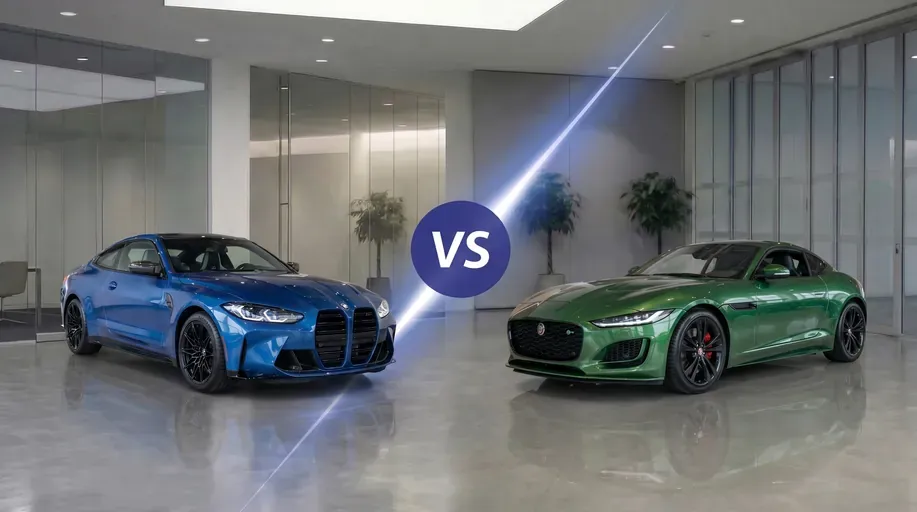
Detailed comparison of the BMW M4 vs. Jaguar F-Type. Discover real-world experiences, performance and equipment comparisons, and our verdict to help you choose your sports car.
Apr 24, 2026
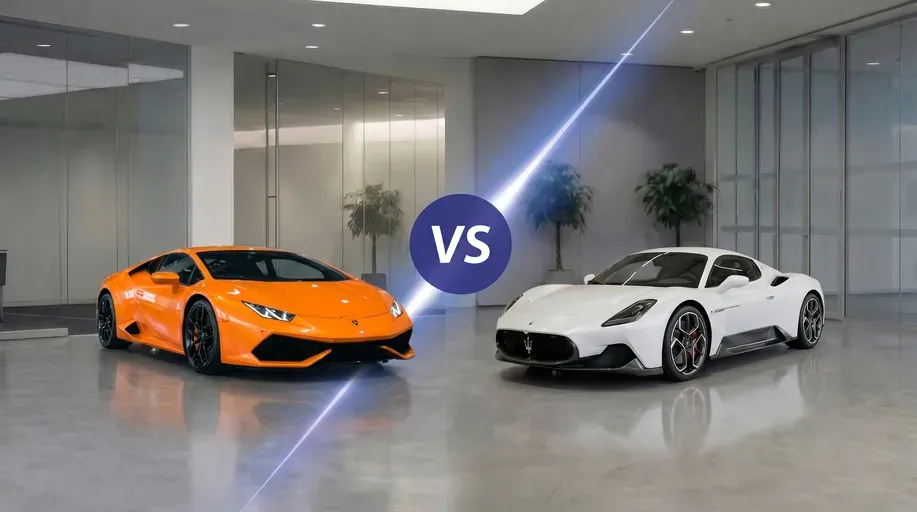
Detailed comparison of the Lamborghini Huracán and Maserati MC20. We compared real-world performance, driving characteristics, and reliability. Read our verdict before you buy!
Oct 16, 2026