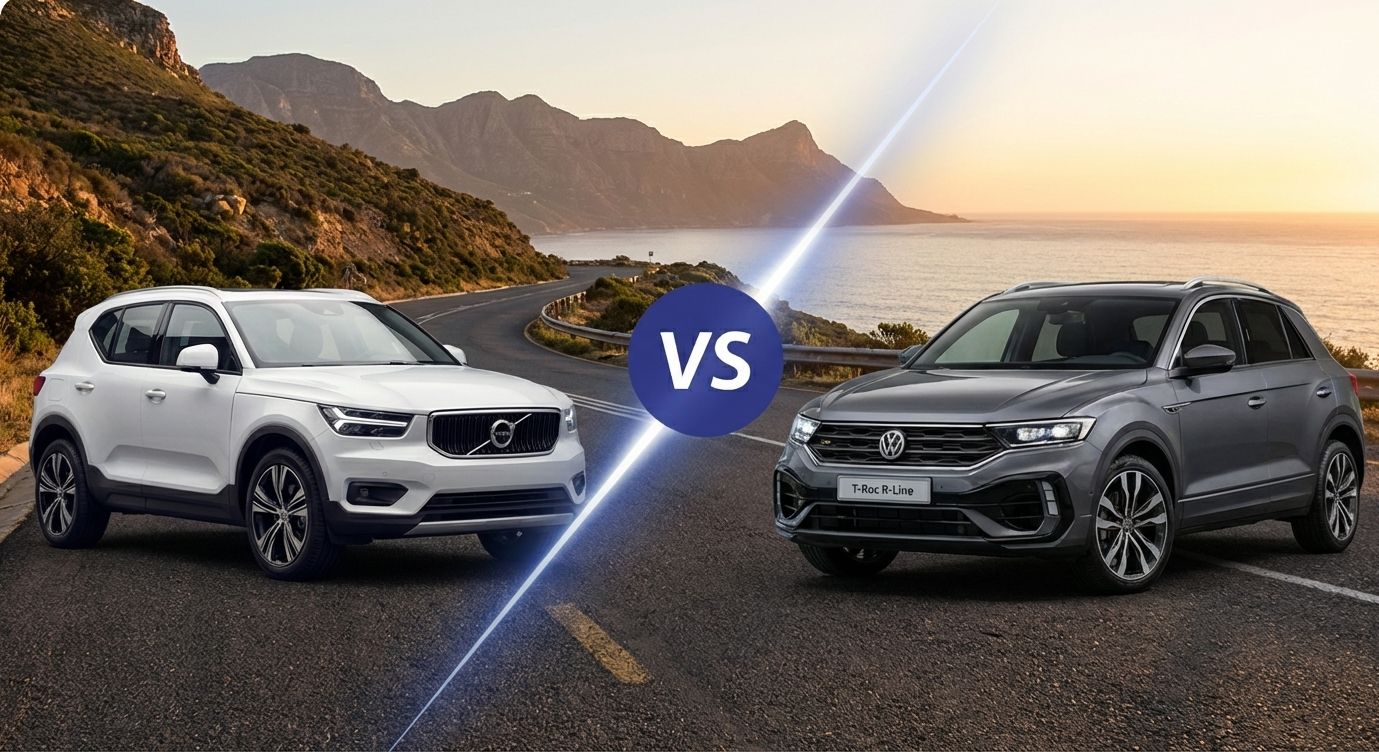
Car battle
Volvo XC40 vs. Volkswagen T-Roc: Complete comparison 2026
Undecided between a Volvo XC40 and a VW T-Roc? Our comparison will help you choose. Discover the main differences, real-world impressions, and a clear verdict.
Apr 14, 2026
Articles
Car battle
Detailed comparison of BMW iX1 vs Mercedes-Benz EQA. Find out which premium electric SUV offers better range, equipment, and real-world performance. Read our verdict!
April 16, 2026
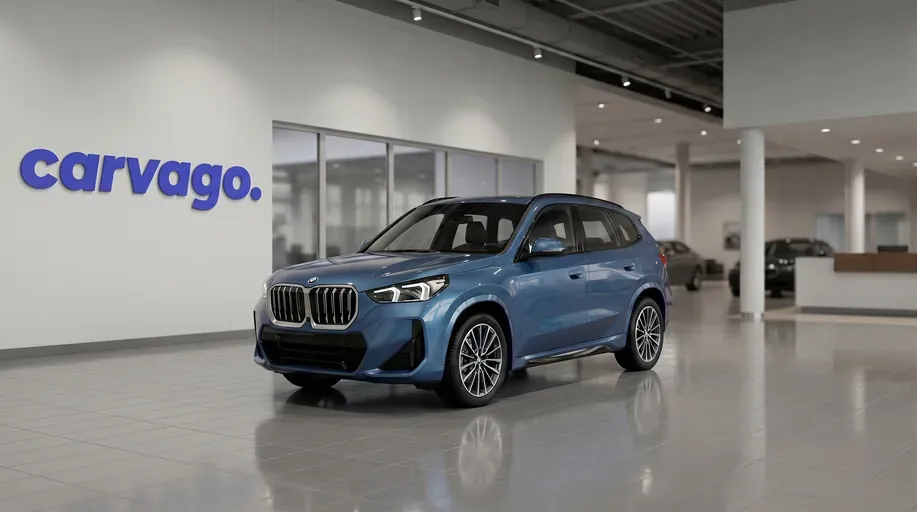
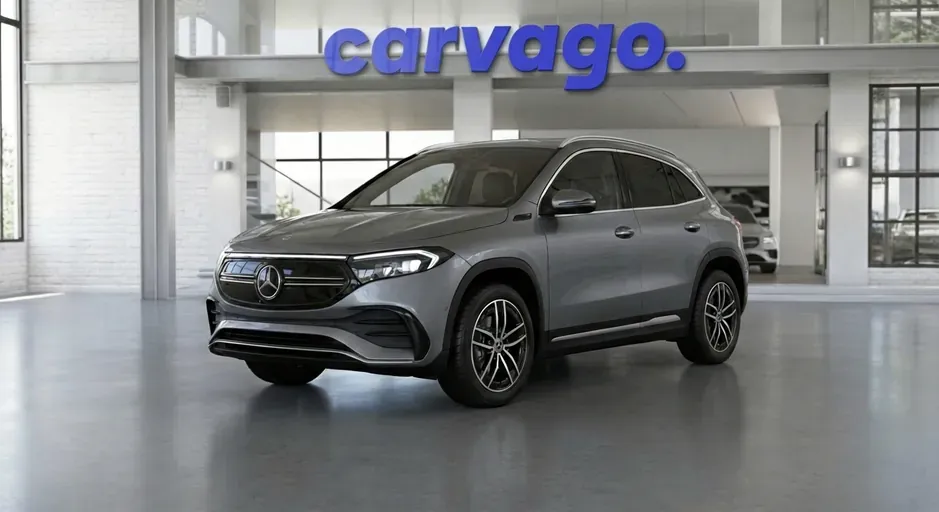
BMW iX1, the fully electric version of the popular X1 compact SUV, brings the Bavarian brand's sporty dynamics and cutting-edge technology to the premium electric vehicle segment. Standing against it is the Mercedes-Benz EQA, known as the electric alternative to the conventional GLA model, which attracts with its elegant design, excellent comfort, and the smooth ride typical of the Stuttgart-based automaker. In the following comparison, we will take a detailed look at which of these two premium German rivals offers a better combination of range, practicality, driving characteristics, and overall value for your daily life.
When it comes to exterior dimensions, both of these representatives of the premium compact electric SUV segment offer a very balanced competition, albeit with a different philosophy. While the BMW iX1 bets on a slightly more massive overall body structure, the Mercedes-Benz EQA, on the other hand, cleverly uses its proportions to maximize interior space thanks to an above-standard wheelbase. From the perspective of everyday urban usability and family use, each model brings specific advantages.
Bavarian engineers designed the BMW iX1 with a total length of 4500 mm and a width of 1845 mm. In contrast, the Mercedes-Benz EQA, if we focus on models from the first years of production (2021–2023), which are the most common on the four-year-old used car market, measures 4463 mm in length and 1834 mm in width. BMW is therefore 37 mm longer and 11 mm wider. While this difference doesn't look dramatic on paper, in practice it gives the BMW iX1 a slightly more muscular and robust stance on the road. The EQA, on the other hand, with its slightly more compact exterior dimensions, offers a minor advantage when parallel parking and maneuvering in narrow city streets.
However, the most interesting comparison is offered by a look at the wheelbase. Although the Mercedes-Benz is shorter overall, its wheelbase reaches 2729 mm, which is 37 mm more than the competing BMW iX1 (2692 mm). In practice, this means that the Mercedes' wheels are pushed further into the corners of the body. This usually brings more legroom for rear-seat passengers and slightly calmer vehicle behavior at higher highway speeds. In terms of height, both models are almost identical – the EQA, with a height of 1620 mm, is only 4 millimeters taller than the iX1 (1616 mm). Ultimately, the choice of car depends on whether you prefer a more aggressive and overall larger exterior appearance (BMW) or appreciate a more efficient use of the footprint in favor of the cabin (Mercedes-Benz).
| Parameter | BMW iX1 SUV | Mercedes-Benz EQA SUV |
|---|---|---|
| Width (mm) | 1845 | 1834 |
| Length (mm) | 4500 | 4463 |
| Height (mm) | 1616 | 1620 |
| Wheelbase (mm) | 2692 | 2729 |
When choosing a compact electric SUV, luggage capacity often plays a key role, especially if the vehicle is to serve as the primary family car. Although both the BMW iX1 and Mercedes-Benz EQA belong to the same class of premium crossovers, their approach to interior space utilization differs quite fundamentally. This difference is primarily due to how engineers handled the installation of batteries and the electric drivetrain into platforms originally designed for internal combustion engines. The resulting values can be a pleasant surprise for one model, while for the other, they represent more of a necessary compromise.
Family-oriented drivers will clearly be happier with the Bavarian representative. The current BMW iX1 (U11 generation) offers a very solid base trunk volume of 490 liters, a value that is fully sufficient for weekend shopping or a longer vacation. After folding the rear backrests, which are practically split in a 40:20:40 ratio, the total cargo space increases to an impressive 1495 liters. Furthermore, the trunk pleases with its highly usable, regular shapes, the absence of a significant loading lip, and additional space under the floor where charging cables can be conveniently hidden. Thanks to this, the purely electric iX1 maintains almost identical practicality to its sibling with a conventional engine.
Conversely, the Mercedes-Benz EQA (H243 generation) lags significantly behind its Munich competitor in terms of volume. The installation of a large battery module and electrical components has taken its toll here in the form of a noticeably shallower trunk, whose base volume is a relatively modest 340 liters. For context – this is, by the way, about 100 liters less than what the sister combustion model GLA offers. If you fold the rear seats, the car's maximum transport capacity increases to 1320 liters. Although the shape of the trunk is well-suited for everyday needs and city driving, the lack of space for several extra suitcases can be quite limiting when trying to pack a family of four for a trip.
The significant difference of a full 150 liters in base volume speaks clearly. If you often transport bulkier cargo or a baby stroller, the BMW iX1 will be an incomparably more rational and versatile choice. The Mercedes-Benz EQA, on the other hand, targets individuals or couples with its figures, for whom absolute trunk volume is not a priority and who prefer elegant travel with less luggage.
| Parameter | BMW iX1 SUV | Mercedes-Benz EQA SUV |
|---|---|---|
| Base volume (liters) | 490 | 340 |
| Maximum volume with seats folded (liters) | 1495 | 1320 |
The BMW iX1 decisively beats the Mercedes-Benz EQA thanks to a 150-liter larger trunk, making it a much better choice for everyday family use. With only 340 liters of volume, the EQA is more suitable for couples or as a stylish city car.
Trailer weight and total towing capacity play a crucial role in vehicle selection for customers seeking maximum practicality and flexibility – whether it's for mounting a bike rack, hauling materials, or traveling with a family caravan. Looking at the market for roughly four-year-old used cars (2021–2023 model years), we find significant differences between the compact electric SUVs BMW iX1 and Mercedes-Benz EQA, which depend directly on the chosen powertrain version.
This difference has immense practical significance. While the basic single-axle models are truly only for the essentials, the all-wheel-drive EQA has sufficient capacity for weekend shopping of larger items as well as longer holidays with a full-sized family caravan. For those interested in towing heavier trailers, Mercedes-Benz emerges as the clear winner in this comparison, exceeding the limits of its Munich competitor by a substantial 600 kg.
| Model and engine | Braked trailer weight (kg) | Unbraked trailer weight (kg) |
|---|---|---|
| BMW iX1 eDrive20 | 750 | 750 |
| BMW iX1 xDrive30 | 1200 | 750 |
| Mercedes-Benz EQA 250 / 250+ (2021-2023) | 750 | 750 |
| Mercedes-Benz EQA 300 / 350 4MATIC | 1800 | 750 |
When comparing the powertrains of the BMW iX1 and Mercedes-Benz EQA models, we focus on purely electric compact SUVs from the premium segment, which represent a very attractive offering in the market for used cars approximately four years old. The approach of both automakers to powertrains differs slightly. While BMW relies on a simplified but very impactful range consisting of two performance levels, Mercedes-Benz provides a wider palette of versions, allowing customers a more detailed choice based on their priorities. Both manufacturers offer entry-level versions with single-axle drive (front-wheel drive in both cases) and more powerful models with advanced all-wheel drive. The BMW iX1 offers higher performance in both the entry-level and top-tier versions, while the greatest strength of the Mercedes EQA is a special variant focused on maximum range, which will appeal to high-mileage drivers. Both vehicles naturally use a single-speed automatic transmission for propulsion.
The Bavarian automaker launched the U11 generation in 2022, starting directly with the top-of-the-line dual-motor xDrive30 powertrain. It features advanced all-wheel drive and provides an impressive total output of 230 kW (313 hp) combined with a substantial torque of 494 Nm. This makes it an ideal choice for drivers seeking excellent traction and sportier dynamics. At the end of 2023, the range expanded with the more affordable single-motor eDrive20 variant. This model powers only the front wheels with 150 kW (204 hp) and, with 250 Nm of torque, represents a great choice for users who drive mainly in urban and suburban environments, where they will appreciate higher overall operating efficiency. From the perspective of the slightly used car market, the xDrive30 version is represented in significantly larger numbers due to its earlier production date.
| Powertrain type | Fuel type | Power (kW) | Torque (Nm) | Transmission |
|---|---|---|---|---|
| eDrive20 | Electric | 150 | 250 | 1-speed automatic |
| xDrive30 | Electric | 230 | 494 | 1-speed automatic |
The Mercedes-Benz EQA covers the spectrum of electric powertrains somewhat more broadly with four distinct variants. The entry-level EQA 250 model with front-wheel drive and 140 kW (190 hp) formed the backbone of sales since the car's initial market launch in 2021. During 2022, however, it was joined by the highly sought-after EQA 250+ specification, which maintains the same power base but offers a slightly higher torque of 385 Nm and, above all, a larger battery adapted for the longest possible range. As production data shows, the standard EQA 250 version gradually phased out in early 2025, while the range-oriented 250+ firmly holds its place. For customers requiring the safety of all-wheel drive, dual-motor 4MATIC versions are available: the rational middle ground EQA 300 4MATIC with 168 kW (228 hp) and the agile top-of-the-line EQA 350 4MATIC, which, thanks to 215 kW (292 hp) and a massive 520 Nm of torque, offers confident acceleration and a truly premium driving experience.
| Powertrain type | Fuel type | Power (kW) | Torque (Nm) | Transmission |
|---|---|---|---|---|
| EQA 250 | Electric | 140 | 375 | 1-speed automatic |
| EQA 250+ | Electric | 140 | 385 | 1-speed automatic |
| EQA 300 4MATIC | Electric | 168 | 390 | 1-speed automatic |
| EQA 350 4MATIC | Electric | 215 | 520 | 1-speed automatic |
While the BMW iX1 attracts with overall higher performance and sharper dynamics, the Mercedes EQA wins with a more detailed selection of powertrains, led by the 250+ variant, which is an absolute hit on the used car market thanks to its excellent range.
Choosing the right powertrain is critical for long-term satisfaction with electric vehicles, as it directly affects not only dynamics but, above all, real-world range, charging efficiency, and overall reliability. While the BMW iX1 relies on modern architecture with an emphasis on excellent driving dynamics and lightning-fast acceleration, the Mercedes-Benz EQA (based on the GLA platform) focuses more on smoothness, acoustic comfort, and maximum efficiency on longer journeys. Furthermore, in the market for roughly four-year-old used cars, the range of engines for both models varies significantly depending on which variants manufacturers launched first. Some early trim levels and smaller batteries are gradually being phased out of the new car market today, but in used car dealerships, they represent a proven and affordable foundation.
| Model | Recommended engine | Power | Driven axle |
|---|---|---|---|
| BMW iX1 | xDrive30 | 230 kW | Both (4x4) |
| Mercedes-Benz EQA | EQA 250 / 250+ | 140 kW | Front (4x2) |
Given that the more economical eDrive20 version only reached the market at the end of 2023, the most logical and most represented choice on the market for those interested in a roughly four-year-old used car is the dual-motor xDrive30 version (available since late 2022).
For the EQA model on the used car market (especially in the 2021 to 2023 model years), the basic, front-wheel-drive EQA 250 variant, or its improved EQA 250+ version offered since 2022, makes the most sense.
For electric vehicles, the difference between official WLTP laboratory values and real-world operation is often a more discussed topic than for internal combustion engine cars. While manufacturers promise consumption in ideal conditions of around 15 to 17 kWh/100 km for both compact electric SUVs, the reality on the road tends to be different, especially in colder months or on the highway. To get the most accurate picture of the actual requirements of these approximately three to four-year-old used cars, we draw on real-world data from long-term users from the independent portal Spritmonitor.de.
Data source: and Spritmonitor.de
| Model and powertrain | Average consumption (kWh/100 km) |
|---|---|
| BMW iX1 eDrive20 (150 kW) | 18.6 |
| BMW iX1 xDrive30 (230 kW) | 20.8 |
| Mercedes-Benz EQA 250 / 250+ (140 kW) | 18.8 |
| Mercedes-Benz EQA 350 4MATIC (215 kW) | 21.2 |
| Mercedes-Benz EQA 300 4MATIC (168 kW) | 21.8 |
Looking at the data, it is clearly visible that the choice of all-wheel drive takes its toll on both brands. While the basic versions with single-axle drive (iX1 eDrive20 and EQA 250/250+) can easily stay below the 19 kWh/100 km mark in real combined operation, for the more powerful all-wheel drive models (xDrive30 and 4MATIC versions), consumption exceeds 20 to 21 kWh on average. An interesting finding for Mercedes is the fact that the weaker EQA 300 version paradoxically shows slightly higher consumption in practice than the more powerful EQA 350. This is because both powertrains share identical hardware, and the more powerful variant does not have to "strain" as much during normal highway acceleration. The basic BMW iX1 then proves to be slightly more efficient than the equivalent Mercedes, helped by somewhat better-tuned thermal management and the efficiency of the electric motors.
For a typical user looking for a vehicle primarily for suburban commuting and navigating through the city, the front-wheel drive models (in the case of BMW, the future eDrive20) make the most sense. In the summer months, you can easily achieve values well below 16 kWh/100 km in the city. However, if you regularly swallow highway kilometers or often travel to the mountains, be prepared for the fact that the poorer aerodynamics of the more robust compact SUVs will reliably push consumption above 22 kWh/100 km. Given the batteries with a usable capacity of around 65–66 kWh in both models, this means a significant drop in real-world highway range to below 300 kilometers in winter.
The overall comparison shows that electricity consumption itself is unlikely to be the main deciding factor in the final selection. Both the BMW iX1 and Mercedes-Benz EQA are very evenly matched competitors in terms of energy demand, and in practice, the difference in efficiency is minimal, often in the range of just a few tenths of a kilowatt-hour. Your choice should therefore be guided more by whether you prefer the stiffer and sportier driving characteristics of the BMW, or conversely, appreciate the maximum comfort and softer suspension setup offered by the Mercedes.
When searching for a roughly four-year-old premium compact electric SUV, depreciation clearly plays into the customers' hands. Both vehicles can now be purchased on the secondary market for much more favorable amounts than at new car dealerships; however, due to different market launch dates, the depreciation curves of the two models differ significantly.
While the Mercedes-Benz EQA (H243 generation) has been on the market since 2021, the BMW iX1 (U11 generation) only arrived on the roads at the end of 2022. It logically follows that the Bavarian model is, on average, slightly younger, which is directly reflected in its higher residual value.
| Model | Initial Model Years | Lowest Market Price | Typical Price (Better Equipment) |
|---|---|---|---|
| Mercedes-Benz EQA (H243) | 2021–2022 | from approx. €29,000 | €35,000 – €43,000 |
| BMW iX1 (U11) | 2022–2023 | from approx. €34,000 | €39,000 – €47,000 |
Electric vehicles generally depreciate by a significant portion of their value in the first three years, and this trend is fully evident with premium brands. The Mercedes-Benz EQA has a relatively steep price drop after four years of operation, making it an extremely attractive used car from the perspective of pure acquisition costs. The BMW iX1 is currently holding its price a bit more bravely – it benefits from being a newer model built on a fresher generation of the chassis platform and initially offering mainly more powerful dual-motor variants.
When choosing either of these SUVs, it is definitely worth looking for vehicles with a clear and documented service history. Attention should be paid to any reports and certificates regarding the state of the traction battery (SOH – State of Health), although for three- to four-year-old used cars, degradation is usually still minimal in most cases, and for both brands, high-voltage batteries are safely covered by an extensive factory warranty (typically 8 years or 160,000 km).
Mercedes-Benz EQA, thanks to its earlier market arrival, comes out as a significantly more affordable choice, while the overall younger BMW iX1 holds its value better and requires a higher initial investment.
Both premium models boast a maximum five-star rating in independent Euro NCAP safety tests. When choosing a used car, however, it is absolutely crucial to take into account the context and the specific year these tests took place. Euro NCAP methodology and testing protocols are constantly evolving and becoming stricter. For this reason, percentage results achieved in different years cannot be directly compared. A test that secured five stars several years ago differs significantly in many respects from today's, which places much greater emphasis on advanced active safety, collision anticipation, and protection of vulnerable road users.
The Mercedes-Benz EQA received its official rating in 2019 (primarily inherited and extended from tests of sister models from the same platform). From the perspective of that time, it achieved an absolutely phenomenal result in adult occupant protection, but 2019 standards did not yet include today's more demanding frontal impact simulations with a mobile deformable barrier or more complex detection of cyclists and pedestrians at intersections. Conversely, the BMW iX1 underwent evaluation as part of the testing of the entirely new generation in 2022. The tests thus took place according to significantly stricter and more modern testing protocols reflecting the latest traffic threats.
| Parameter | BMW iX1 | Mercedes-Benz EQA |
|---|---|---|
| Year of testing | 2022 | 2019 |
| Adult occupant protection | 86 % | 97 % |
| Child occupant protection | 89 % | 90 % |
| Vulnerable road user protection | 76 % | 81 % |
| Safety assist systems | 92 % | 75 % |
Looking closer at the results, it is very clear what the generational difference in testing methodology means in practice. Although the Mercedes-Benz EQA shows seemingly higher percentages in passive safety categories (occupant protection), this is largely due to the older and less stringent methodology. The true picture of current technological maturity is provided by the safety assist category. Here, the BMW iX1 achieved an excellent 92% compared to 75% for the EQA model, which clearly demonstrates the presence of more advanced radar and camera systems capable of predicting collisions much more accurately. Furthermore, the safety certification of older models naturally becomes outdated with the arrival of new protocols.
Although both cars are very safe for their occupants, the BMW iX1 clearly offers a more modern and overall more comprehensive safety package. It is tested according to tougher and more modern standards, thereby providing owners with greater confidence stemming from more up-to-date assistance technologies.
Although both cars are five-star rated, the BMW iX1 tested in 2022 offers a significantly more modern set of safety assistants than the older 2019 Mercedes EQA platform, thanks to newer and stricter standards.
In addition to standard equipment, each model offers several unique features that can be decisive for customers when choosing a premium compact electric vehicle and demonstrate the different approaches of both brands to added value.
Excellent driving dynamics and precise steering typical of the brand
Spacious interior with a superior luggage compartment of 490 liters
Modern iDrive 8 infotainment with fast response and great graphics
Higher overall powertrain efficiency and a very good fast-charging curve
More sophisticated interior packaging compared to the competition
Stiffer suspension tuning, which slightly reduces comfort on broken roads
Absence of the physical iDrive rotary controller and climate control buttons
Higher purchase price on the used car market compared to older models
BMW iX1 is an excellent choice for drivers looking for a practical and engaging electric SUV with state-of-the-art technology. It offers a great compromise between family utility and a premium driving feel, albeit at the cost of a slightly stiffer suspension and the need to get used to touch controls.
First-class suspension comfort and excellent acoustic insulation of the cabin
Luxurious interior materials complemented by iconic ambient lighting
Intuitive MBUX system with retained physical buttons for important functions
More traditional and elegant appearance that doesn't look unnecessarily aggressive
Significantly smaller luggage compartment with a volume of only 340 liters
Batteries in the floor raise the floor level, which worsens the leg position for rear passengers
Higher electricity consumption and slightly slower real-world fast charging
Less convincing driving characteristics during more dynamic cornering
Mercedes-Benz EQA targets those interested in maximum travel comfort, cabin quietness, and a sense of traditional luxury with the three-pointed star. It is an ideal representative car for the city and its surroundings for couples or individuals who won't mind the obvious compromises in luggage space and rear-seat roominess.
Based on long-term user feedback, service reports, recall campaigns, and insights provided by a comprehensive car inspection before sale, we have compiled an overview of the most common problems that buyers of both used electric models should watch out for.
Although the BMW iX1 (U11 generation, on the market since late 2022) is a slightly newer car, several recurring issues have emerged, primarily concerning software and on-board systems.
Most of the problems with the iX1 model so far stem from initial bugs in the new software, which the manufacturer is continuously fixing with over-the-air updates. Mechanically and in terms of the electric drive, the car appears to be very reliable.
The Mercedes-Benz EQA (H243 generation, on the market since 2021) shares its architecture with the internal combustion GLA model, and after several years in operation, specific problems related to electronics and the electric nature of the car itself are appearing.
The EQA model suffers from slightly more frequent faults in the comfort on-board electronics and typical problems of heavy electric vehicles, such as rapid tire wear and corroding underused brakes. When buying a used car from the first years of production, also pay attention to the presence of a heat pump.
When buying a used car, a thorough inspection is key, and for electric vehicles, this is doubly true because the battery and onboard systems require a specific approach. Here are several specific points to focus on for these two premium models.
BMW iX1 offers a significantly larger and more practical luggage compartment with a basic volume of 490 litres. The Mercedes-Benz EQA provides only 340 litres as standard, which is partly due to the different placement of electrical components under the boot floor. Even after folding the rear seats, the total transport capacity remains clearly on the side of the Munich SUV.
The Mercedes-Benz EQA in the 250+ version boasts a longer official range exceeding the 500 km mark, while most versions of the BMW iX1 range between 440 and 475 km. On the other hand, BMW excels in charging speed thanks to support for up to 130 kW on DC fast chargers. In the first generation of the EQA model, Mercedes supports a maximum charging power of up to 100 kW.
For drivers looking for more dynamic driving characteristics, the BMW iX1 is clearly more suitable. Its chassis is tuned significantly stiffer and provides much more confidence and precision in corners. The Mercedes-Benz EQA, on the other hand, is a typical representative of its brand, placing maximum emphasis on a smooth ride and comfortable damping of bumps at the expense of a sporty experience.
Both premium carmakers offer the absolute technological peak, but with very different approaches to ergonomics. The BMW iX1 relies on a visually impressive curved display with the modern iDrive system, which in its latest generation relies mainly on touch control. The Mercedes-Benz EQA uses the excellent and proven MBUX system, which has retained a classic touchpad on the centre console for easier operation while driving.
In terms of daily family usability, the BMW iX1 makes more sense thanks to its overall better-packaged interior space and airier cabin. In the EQA model, the floor is slightly raised due to the additional battery placement, which unnaturally raises the knees of adult passengers in the rear and reduces comfort. Furthermore, the BMW offers a more mature seating position and more longitudinal space for all passengers.
Choosing between these premium electric vehicles from the used car market depends primarily on your priorities, as each excels in different disciplines. Thanks to its significantly larger trunk, more aggressive driving dynamics, and more modern safety and onboard technology, the BMW iX1 represents an ideal practical choice for family use or more demanding drivers. Conversely, the Mercedes-Benz EQA attracts with a significantly more affordable purchase price and represents the perfect companion for individuals or couples looking for top-tier acoustic and travel comfort, and in the 250+ variant, also an above-standard real-world range. While the Bavarian model clearly wins in overall interior versatility, the Stuttgart representative makes the most sense as an exceptionally comfortable and price-rational entry into the world of quiet electromobility.
Sources: ADAC, denik.cz, idnes.cz, chytreauto.cz, autotechnik.cz, autorskola.cz
This article was prepared using artificial intelligence tools. The section guarantor is Petr Dušek.
Undecided between a Volvo XC40 and a VW T-Roc? Our comparison will help you choose. Discover the main differences, real-world impressions, and a clear verdict.
Apr 14, 2026
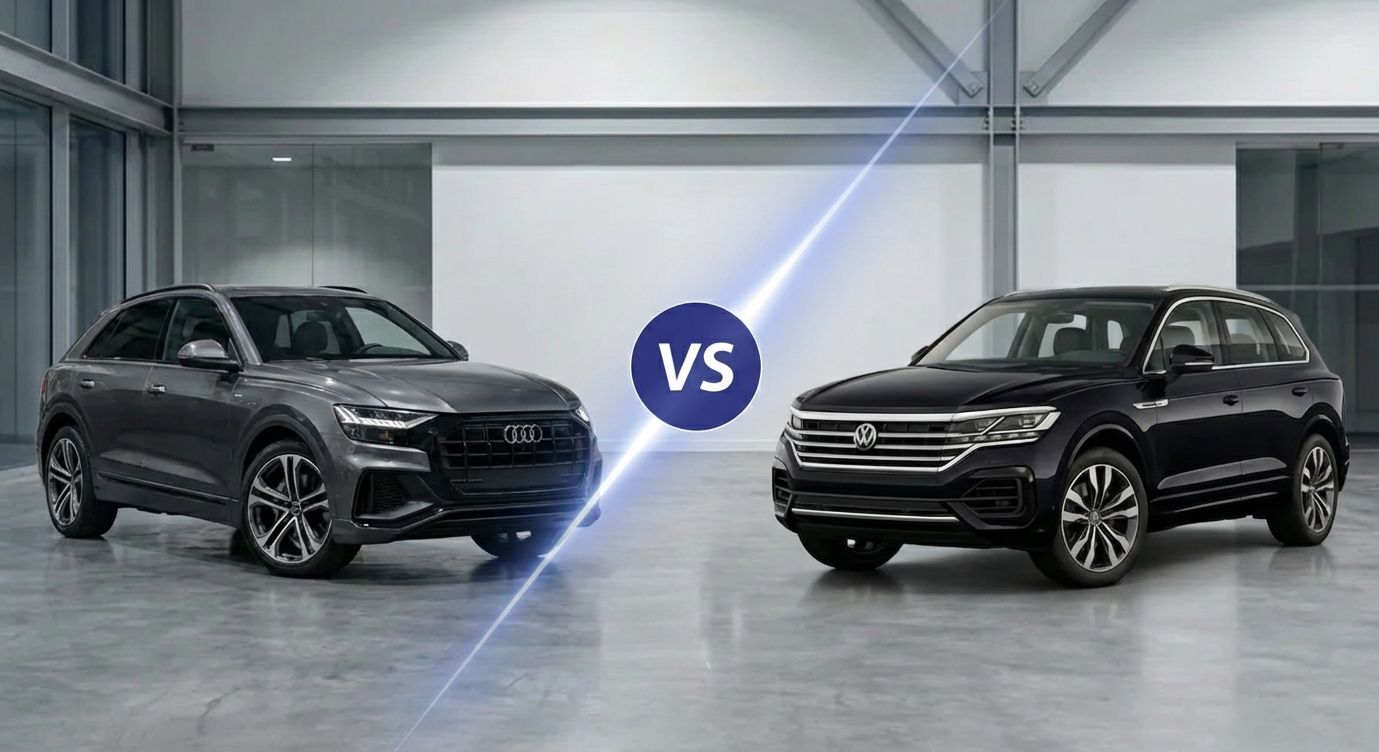
They share the same platform, but which one is better? A detailed comparison of the Audi Q8 and Volkswagen Touareg. We have evaluated the features and prices, and we provide a clear final verdict.
Apr 2, 2026
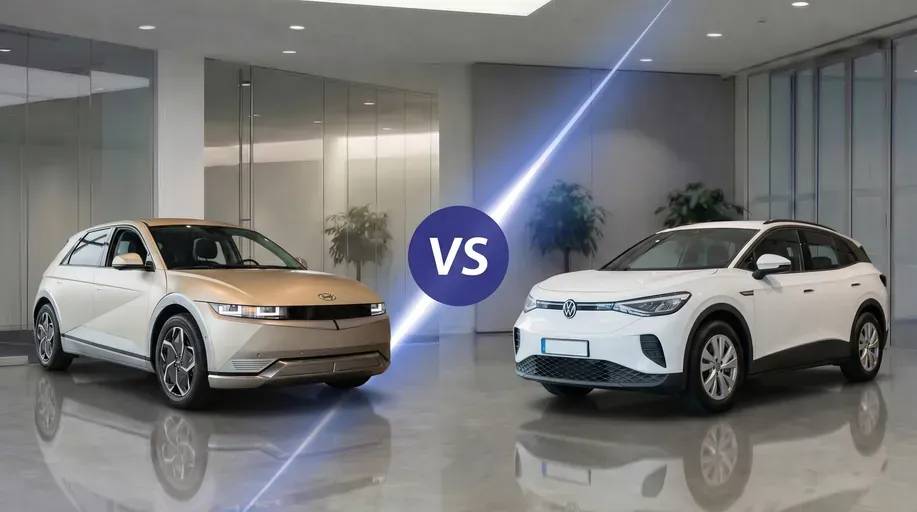
Detailed comparison of the Hyundai Ioniq 5 and Volkswagen ID.4 electric cars. Find out the real range, equipment details, and our verdict to help you make your choice.
Apr 13, 2026