Car battle
BMW M2 vs. Mercedes-AMG C 63: Complete comparison 2026
BMW M2 vs Mercedes-AMG C 63: A detailed comparison of performance, driving, and price. Find out which sports coupé is the right choice for you in our test.
Apr 14, 2026
Articles
Car battle
Detailed comparison of the Audi R8 and Porsche 911. We reveal the real differences in performance, reliability, and equipment. Find out which sports car is the best used buy.
April 30, 2026
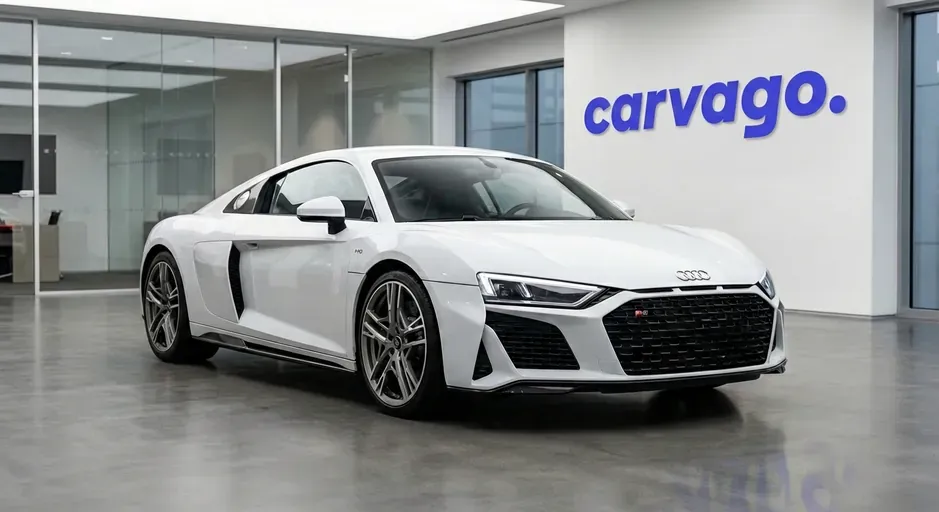
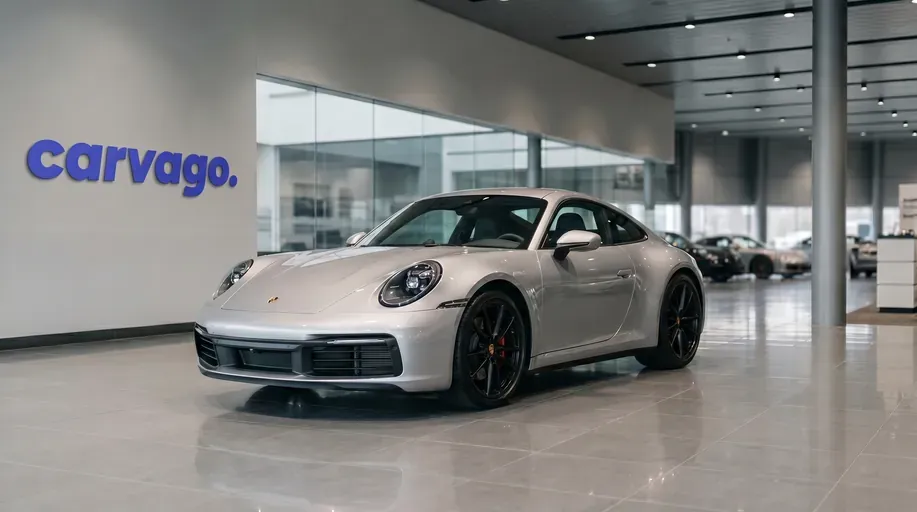
The Audi R8 is a thoroughbred mid-engine supercar that shares its technical DNA with Lamborghini models and entices with the unmistakable character of a naturally aspirated V10 engine. In contrast, the legendary Porsche 911, often referred to by automotive enthusiasts by its internal generation codes such as 991 or 992, represents the absolute benchmark for an everyday usable sports car, relying on its iconic rear-engine layout and surgically precise handling. In this comparison, let's take a detailed look at which of these two German icons will better suit your vision of the perfect driving experience on the used car market.
When you place the Audi R8 and Porsche 911 side by side, you immediately notice the differing philosophies both manufacturers chose for their body designs. Focusing on models relevant to the nearly new used car market—roughly four years old, meaning the Audi R8 (4S) and Porsche 911 (992) generations—the exterior dimensions perfectly reflect their unique technical layouts. The mid-engined Audi opts for the dramatic proportions of a classic supercar, appearing very low-slung and wide-stanced. In contrast, the Porsche 911, with its signature rear-engine layout, maintains a slightly more civilised and upright silhouette, which has historically made it one of the most usable everyday sports cars.
A surprising fact might be the overall length of both vehicles. Despite its more compact appearance, the Porsche 911, with a length of up to 4542 mm, is roughly 113 mm longer than the Audi R8, which measures a maximum of 4429 mm. However, the situation completely reverses when we look at the wheelbase. The Audi offers a massive 2650 mm, which is a full 200 mm more than its Zuffenhausen rival, whose wheelbase stands at 2450 mm. This long distance between the wheels in the Audi ensures phenomenal directional stability at high speeds and helps ideally distribute weight within the strictly two-seater cabin. Conversely, the Porsche's extremely short wheelbase has a huge advantage in incredible agility and eagerness to turn on winding backroads, even though it still allows for the iconic 2+2 interior configuration.
In terms of everyday usability and manoeuvrability in normal traffic, however, the most critical parameters are width and height. At 1940 mm across, the Audi R8 is a significant 88 mm wider than the standard Porsche 911, which measures 1852 mm. This extra width gives the Audi an unmistakable aggressive stance and excellent mechanical grip in corners, but it also makes it a somewhat cumbersome companion in narrow city streets or cramped underground garages. Regarding height, the Audi R8 sits below the magic 1245 mm mark, while the Porsche 911 stands approximately 1300 mm tall. The lower centre of gravity in the Audi clearly favours maximum dynamic capabilities on the track. However, if you are looking for a car for regular driving with incomparably easier entry and better visibility when parking, the Porsche's narrower and taller body construction will be a clear advantage for you.
| Parameter | Audi R8 Coupé | Porsche 911 Coupé | Audi R8 Cabriolet | Porsche 911 Cabriolet |
|---|---|---|---|---|
| Length (mm) | 4426–4429 | 4519–4542 | 4426–4429 | 4519–4542 |
| Width (mm) | 1940 | 1852 | 1940 | 1852 |
| Height (mm) | 1236–1240 | 1298–1303 | 1242–1244 | 1298–1300 |
| Wheelbase (mm) | 2650 | 2450 | 2650 | 2450 |
When choosing a super sports car approximately four years old, luggage capacity is usually not the main argument, but for daily usability and weekend trips, it plays a surprisingly important role. Customers often look for a compromise between a pure adrenaline experience and the ability to pack for an extended holiday for two. However, the approach of both manufacturers to storage space is quite different. In our comparison, we focus on the 4S generation of the Audi R8 and the 992 generation of the Porsche 911, which are currently the most relevant in this age category on the used car market.
The primary storage space in both cars, due to the engine placement, is the so-called "frunk" – a luggage compartment located at the front under the hood. The Porsche 911 (992) offers a volume of 132 liters here, which is perfectly sufficient for a typical weekend grocery run or two small carry-on suitcases. The Audi R8 (4S) fares slightly worse, accommodating 112 liters in its front trunk. This 20-liter difference may seem negligible, but in practice, with such small dimensions, every extra liter is welcome. Both values apply equally to both the hardtop and convertible versions.
However, the real difference in overall practicality becomes apparent when utilizing the interior space behind the occupants. Porsche 911 Coupé offers rear seats which, when folded down, provide an additional 264 liters, bringing the total maximum volume to an excellent 396 liters – enough space for several extra suitcases. In the Cabriolet version, this additional space is reduced to 163 liters due to the folding roof mechanism (totaling 295 liters). Audi R8 Coupé is strictly a two-seater, but it hides a practical storage shelf behind the seats with a volume of 226 liters. In total, you can carry up to 338 liters of cargo in the car. A major disadvantage for those who love driving with the wind in their hair is the R8 Spyder (Cabriolet) model, which completely loses this rear space due to the complex roof-folding mechanism, leaving owners strictly limited to the 112 liters in the front.
| Parameter | Audi R8 Coupé | Porsche 911 Coupé | Audi R8 Cabriolet | Porsche 911 Cabriolet |
|---|---|---|---|---|
| Base volume (liters) | 112 | 132 | 112 | 132 |
| Maximum volume with seats folded (liters) | 338 | 396 | 112 | 295 |
If you plan on frequent travel for two in your super sports car, the Porsche 911 offers significantly better luggage space variability, especially compared to the open-top version of the Audi R8, which provides no space behind the seats.
When evaluating the practicality and towing capacity of roughly four-year-old used Audi R8 (4S generation) and Porsche 911 (992 generation) models, we come to a fact that is common to both cars. Although the possibility of attaching a trailer would theoretically mean space for several extra suitcases, sufficient for a weekend shopping trip or a longer holiday, it is technically and legally unrealistic for these supercars. Both the standard and maximum trailer weight for the Audi R8 and Porsche 911 is exactly 0 kg.
The reason is that neither of these high-performance models is homologated by the manufacturer for the installation of a tow bar or for towing any trailer. This zero limit applies across the board. It does not differ for any specific engine options, lightweight variants (such as RS, GT, or Touring models), or any other versions – you will find absolutely no exceptions with limited or reduced capacity.
Since the models are not homologated for towing and there is no data regarding trailer weight for them in the database, the table does not contain any specific values or records.
| Model and engine | Braked trailer weight (kg) | Unbraked trailer weight (kg) |
|---|
When comparing the engine options of these two supercars, we encounter two completely different approaches, which is absolutely crucial for those interested in a car roughly four years old (models around 2022). The Audi R8 relies on a naturally aspirated 5.2-liter V10, which offers immediate throttle response, linear power delivery, and one of the best soundtracks in automotive history. In contrast, the Porsche 911 (in the relevant modern 992.1 generation) uses twin-turbocharged flat-six (boxer) engines of 3.0 and 3.8 liters in its main models, which excel with massive torque from the lowest RPMs and surprising daily efficiency. While the Audi R8 represents an exclusive and emotional farewell to large-displacement engines, Porsche covers a huge spectrum of driving preferences, from the daily-usable base Carrera models to the brutally fast Turbo S versions and the track-focused, naturally aspirated GT3 models.
For its final generation (designated 4S), the Audi R8 maintained a very purist range of power units. Buyers of nearly new used cars on the market will find exclusively the legendary 5.2 FSI V10 under the hood. As part of a modernization and simplification of the range around 2021, Audi introduced the "performance" designation for its models. Rear-wheel drive models (V10 performance RWD) provide 419 kW and 550 Nm of torque, guaranteeing exceptionally playful handling. The top-tier all-wheel drive version (V10 performance quattro) then offers an impressive 456 kW and 580 Nm for maximum traction. A notable point is that all these newer Audi R8 variants are paired exclusively with a seven-speed dual-clutch S tronic automatic transmission; manual shifting is no longer available on the market for this generation.
| Engine Type | Fuel Type | Power (kW) | Torque (Nm) | Transmission |
|---|---|---|---|---|
| 5.2 FSI V10 performance RWD | Petrol | 419 | 550 | 7-speed S tronic |
| 5.2 FSI V10 performance quattro | Petrol | 456 | 580 | 7-speed S tronic |
The Porsche 911 in its modern 992.1 generation (produced roughly from 2019 to 2024, which is the most relevant period for the 4-year-old used car market – historical models are not included in this comparison) offers an incomparably wider range of engines. The foundation is a 3.0-liter twin-turbocharged six-cylinder with 283 kW for the Carrera models, which rises to 331 kW for the S versions and 353 kW for the popular GTS models. Extreme straight-line dynamics are provided by the 3.8-liter turbocharged engine in the Turbo (427 kW) and Turbo S versions, with the flagship Turbo S producing a breathtaking 478 kW and 800 Nm. For pure purists, Porsche continues to offer the GT3 and GT3 RS models with a fantastic high-revving naturally aspirated four-liter engine. Another huge advantage of the 911 for car enthusiasts is the variety of transmissions – in many versions, in addition to the lightning-fast eight-speed PDK automatic (seven-speed in GT models), a traditional manual transmission can also be chosen.
| Engine Type | Fuel Type | Power (kW) | Torque (Nm) | Transmission |
|---|---|---|---|---|
| 3.0 Bi-Turbo (Carrera / T) | Petrol | 283 | 450 | 7-speed manual / 8-speed PDK |
| 3.0 Bi-Turbo (Carrera S / 4S) | Petrol | 331 | 530 | 7-speed manual / 8-speed PDK |
| 3.0 Bi-Turbo (Carrera GTS / 4 GTS) | Petrol | 353 | 570 | 7-speed manual / 8-speed PDK |
| 3.8 Bi-Turbo (Turbo) | Petrol | 427 | 750 | 8-speed PDK |
| 3.8 Bi-Turbo (Turbo S) | Petrol | 478 | 800 | 8-speed PDK |
| 4.0 Naturally Aspirated (GT3 / Touring) | Petrol | 375 | 470 | 6-speed manual / 7-speed PDK |
| 4.0 Naturally Aspirated (GT3 RS) | Petrol | 386 | 465 | 7-speed PDK |
The Audi R8 will undoubtedly win you over with the inimitable scream of its naturally aspirated V10, while the Porsche 911 crushes the competition with its immense model variability and the crushing torque delivery of its top-tier turbo engines.
Choosing the right engine is absolutely crucial for long-term satisfaction with the car, with the following recommendations based on real owners' experiences, mechanical reliability ratings, and overall dynamics.
The battle of power units between the Audi R8 and Porsche 911 represents a fascinating clash of two completely different engineering worlds. While the Audi R8 relies on a massive, naturally aspirated 5.2-liter V10 shared with the Lamborghini Huracán, which revs up to 8,700 rpm with a deafening roar, Porsche bets on a compact, twin-turbocharged flat-six mounted behind the rear axle, which scores with crushing pull from low revs. (Note: Although the provided database of historical Porsche 911 models contains specifications only for classic cars available until 1993, to maintain relevance in the market for roughly four-year-old used cars, the recommendation specifically focuses on the modern 992 generation. For the Audi R8, we rely fully on the 4S generation, which was produced until 2023 and is absolutely ideal for this market).
The "performance" version of the 4S generation (produced for four-year-old used cars roughly between 2020–2023) represents the absolute pinnacle of what the R8 platform offers and is the best choice in the long run. Its main advantage is an absolutely linear power curve without any turbo lag and the fantastic sound of the naturally aspirated V10, which is one of the last of its kind. From a technical standpoint, the engine block itself is extremely robust after many years of refinement and does not suffer from major design flaws, complemented by the highly reliable seven-speed S tronic dual-clutch transmission. The main drawback of this direct-injection engine is the gradual carbon buildup on the intake valves, which eventually manifests as a slight drop in power and a rough idle. This weakness can be easily addressed through prevention – using premium fuel and scheduled intake cleaning (so-called walnut blasting) roughly every 60,000 to 80,000 kilometers. When buying a used car, we also recommend checking the chassis; the performance version often relies on more durable fixed sport dampers, but if the car is equipped with the Magnetic Ride adaptive suspension, it is necessary to look for fluid leaks from the dampers, as their replacement is astronomically expensive. This engine is perfect for purist enthusiasts and weekend drivers looking for an uncompromising supercar experience with a Lamborghini aura, but wrapped in solid Audi quality.
Within the 992 generation, the Carrera GTS engine is generally considered the so-called "sweet spot" of the entire model range, perfectly combining everyday usability with performance approaching the wild Turbo variant. The 480 hp turbocharged three-liter boxer excels with a huge wave of torque available already in the mid-rev range, giving the car incredible dynamics when overtaking, all while maintaining surprisingly reasonable real-world fuel consumption on longer trips. The reliability of this unit is exemplary; however, for a sports car of this type, it is absolutely crucial to request an engine control unit readout (DME report) before purchase. This report will clearly show whether the previous owner excessively over-revved the engine (so-called over-revs), which is important to determine to avoid hidden damage to internal engine parts. It is also a good idea to visually check the water pump on a lift, where minor coolant leaks can occasionally occur. The excellently tuned eight-speed PDK transmission is practically maintenance-free, provided the car has not been constantly punished on a race track without proper cooling down. The Carrera GTS is the ideal machine for drivers who want to use the car regularly as a fast grand tourer for long distances or even for commuting to work, but at the same time require absolute driving precision and explosiveness on twisty backroads.
For high-performance sports cars such as the Audi R8 and Porsche 911, the difference between the stated laboratory fuel consumption and harsh reality is often very significant. While official brochures contain relatively optimistic figures from test cycles, in everyday driving, physics and the emotions behind the wheel cannot be cheated. To get a more accurate picture of the appetite these cars have in the hands of regular drivers, we looked at real-world data. We based our findings on the community portal Spritmonitor.de, where owners record every refueling over the long term. We focused on generations corresponding to today's market for approximately four-year-old used cars, specifically the Audi R8 generation 4S (models from 2019 onwards) and the Porsche 911 generation 992 (also from 2019).
| Model and engine | Average consumption (l/100 km) | news_site |
|---|---|---|
| Porsche 911 (992) 3.0 Carrera S 331 kW | 11.2 | Spritmonitor.de |
| Porsche 911 (992) 3.0 Carrera 4S 331 kW | 11.5 | Spritmonitor.de |
| Porsche 911 (992) 3.8 Turbo S 478 kW | 13.8 | Spritmonitor.de |
| Audi R8 (4S) 5.2 FSI V10 397 kW | 14.2 | Spritmonitor.de |
| Audi R8 (4S) 5.2 FSI V10 performance 456 kW | 15.1 | Spritmonitor.de |
When looking closely at the real-world data, the trends are quite clear and point to the differing philosophies of the two brands. Naturally, fuel-efficient diesel engines are missing in this category, so the battle takes place purely between petrol units: the massive naturally aspirated ten-cylinder in the Audi and the twin-turbocharged flat-six (boxer) in the Porsche. It is clear from the figures that the Porsche 911 models benefit significantly from more efficient operation under partial load thanks to turbocharging. The three-litre engines of the Carrera and Carrera S versions can keep consumption very low during normal driving – a value around 11 litres is excellent for a car with such dynamics. On the other hand, the naturally aspirated 5.2-litre V10 unit under the hood of the Audi R8 requires a constant supply of fuel proportional to its mammoth displacement, which is reflected in an average consumption safely exceeding the 14-litre mark. It is also worth noting the interesting fact that even the extremely powerful Porsche 911 Turbo S can be driven slightly more economically than the "base" Audi R8 engine, which clearly demonstrates the benefits of modern downsizing.
For typical users and those interested in used supercars, this means quite fundamental differences in everyday life with the car. Although fuel consumption usually won't financially ruin the owners of these cars, it directly affects the real-world range. With its efficiency, the Porsche 911 fits the role of a so-called daily driver much better, allowing for comfortable long highway journeys or commutes to work without the need for constant stops at the petrol station. In contrast, the Audi R8 is more of an adrenaline tool for shorter and all the more intense drives, where you will empty the large tank significantly faster despite its size.
So, while overall fuel consumption is unlikely to be the sole and primary deciding factor when choosing a car in this price category, the difference in real-world operating efficiency is definitely something you should consider before buying. If you are looking for a versatile yet blisteringly fast car for everyday use with a reasonable range, the Porsche 911 is the more logical and less demanding choice. However, if you prefer raw power, old-school sound, and the unadulterated character of a high-revving naturally aspirated V10 for weekend drives, you will happily turn a blind eye to the significantly higher appetite of the Audi R8.
When looking at the market for approximately four-year-old used cars (model years 2021–2022), both of these iconic sports cars occupy very high price brackets. Nevertheless, there are significant differences in the composition of their offerings. The Porsche 911 (992 generation) benefits from a vast range of variants, while the Audi R8 (4S generation, post-facelift) relies exclusively on a full-blooded naturally aspirated V10.
The supply of used Audi R8s on the European market is significantly more exclusive and limited in volume. Given that this car represents the swan song of naturally aspirated V10 engines, used models hold their residual value exceptionally well.
The Porsche 911, on the other hand, offers a much more diverse range of body styles and performance levels. Its advantage is that, thanks to "more accessible" base versions, the entry ticket to the prestigious world of the 911 is slightly cheaper on the used market. However, top-tier turbocharged models can be significantly more expensive than even the priciest R8.
Both models are perfect examples of premium sports cars whose depreciation is minimal due to strong demand and prestige. The Audi R8 already shows strong collector potential, and its initial investment is higher in the "entry-level" used car segment. The Porsche 911, on the other hand, is incomparably more liquid as a used car – it is much easier and faster to buy and sell due to its wider market presence.
| Model (2021–2022 years) | Approximate price from (€) | Approximate price to (€) |
|---|---|---|
| Porsche 911 (Carrera / 4S) | €107,000 | €131,000 |
| Audi R8 (V10 RWD) | €127,000 | €148,000 |
| Porsche 911 (GTS / Targa) | €144,000 | €172,000 |
| Audi R8 (Performance quattro) | €152,000 | €185,000 |
| Porsche 911 (Turbo / Turbo S) | €189,000 | €226,000+ |
If you are looking for the most affordable path to a pure modern supercar, base four-year-old Porsche 911 models are cheaper; conversely, the Audi R8 requires a higher initial investment but offers the unique exclusivity of the disappearing naturally aspirated V10.
Although it is customary in similar comparisons to start by noting that both vehicles usually achieve a full five-star Euro NCAP rating, and to emphasize the importance of context and the year of testing, a different reality applies to the supercar category. Euro NCAP protocols are constantly evolving and becoming more stringent over time – introducing new frontal impact simulations, cyclist detection, or junction crisis scenarios – meaning percentage results from different years cannot be directly compared. In the case of the Audi R8 and Porsche 911 models, however, we encounter a specific feature of the exclusive market. Due to the high purchase price and low sales volumes, neither of these cars has ever been officially crash-tested by Euro NCAP. All percentage data for the evaluation of individual protection categories is therefore completely missing for both cars.
Audi R8 (4S generation after facelift)
The Audi R8, representing the market for roughly four-year-old used cars mostly from the post-facelift generation (since 2019), is characterized by uncompromising structural safety despite the absence of official Euro NCAP tests. The car's foundation is the exceptionally rigid Audi Space Frame (ASF), which cleverly combines aluminum and carbon-fiber-reinforced composite materials. This ensures top-tier passive protection for the occupants in the event of an impact. The car is equipped with a comprehensive set of airbags and an extremely powerful braking system; however, in the area of active assistance systems, it relies more on the "old school." Many of the most modern features that are common today even in family cars (e.g., adaptive cruise control or advanced lane-keeping assist) are missing here, and safety is thus largely tied to excellent mechanical grip and the legendary quattro all-wheel drive.
Porsche 911 (992 generation)
The 992 generation of the Porsche 911 is in the same position from a Euro NCAP perspective – official results do not exist and certification has not taken place. Compared to the Audi R8, however, the Porsche brings a much more modern approach to active safety to the used car market. The body uses a sophisticated mix of high-strength steel and aluminum for maximum strength, but the fundamental difference lies in the electronic equipment. The Porsche 911 can be equipped (often as part of the first owner's optional equipment) with a wide range of modern assistance systems. These include automatic emergency braking with obstacle detection, adaptive cruise control, lane-keeping assist, and even a night vision system with a thermal camera. The advanced Porsche Stability Management (PSM) system then safely tames the power even on slippery surfaces.
Final Summary
Ultimately, both supercars provide a top-tier level of passive safety thanks to their unyielding structures designed for extreme speeds. However, the Porsche 911 emerges as the winner of this comparison in terms of everyday protection, as it offers a significantly more comprehensive and modern package of active assistance systems. While the Audi R8 remains more of an uncompromising purist machine without significant intervention from modern electronics, the Porsche 911 keeps pace with current standards and protects the occupants before an accident even occurs.
| Parameter | Audi R8 | Porsche 911 |
|---|---|---|
| Year of testing | - (Not tested) | - (Not tested) |
| Adult occupant protection | - | - |
| Child occupant protection | - | - |
| Vulnerable road user protection | - | - |
| Safety assistance systems | - | - |
Although neither of these cars has official Euro NCAP tests due to their exclusivity, the Porsche 911 offers a significantly wider range of modern safety assistants, while the more purist Audi R8 relies primarily on mechanical grip and an unyielding carbon-aluminum frame.
Both models offer much more than just basic sports equipment, and each approaches added value in a completely different way, highlighting its own unmistakable character.
Stunning naturally aspirated 5.2 V10 engine with fantastic sound and instant response
Looks and proportions of a true exotic mid-engine supercar
Surprising comfort for daily use thanks to the Magnetic Ride adaptive suspension
Shared technology with the Lamborghini Huracán at a significantly more affordable price
The security of quattro all-wheel drive, or driver purism in RWD versions
Outdated multimedia system without a central display (everything is controlled only via the Virtual Cockpit)
Extremely limited storage space and a very small front trunk
Noticeably higher fuel consumption and running costs even during calmer driving
Slightly higher depreciation in the first years of operation compared to Porsche
The Audi R8 is the perfect choice for enthusiasts who crave the unmistakable character of a naturally aspirated V10 and the design of a true supercar. It is an exceptionally emotional car that surprises with its compliance during daily commuting, although its practicality and interior technology already show the age of this generation.
Perfect driving characteristics, flawless balance, and unrivaled steering feedback
A wide range of versions covering everything from the daily Carrera to track-focused GT3 models
Significantly higher practicality thanks to the 2+2 seating arrangement and a reasonably usable trunk
Modern and fast infotainment system with excellent connectivity
Legendary reliability and exceptionally stable residual value on the used car market
The sound of the turbocharged flat-six engines doesn't reach the natural drama of the Audi's V10
Extremely expensive optional equipment, which pushes the prices of better-equipped used cars very high
Due to its evolutionary design and higher sales, it doesn't look as exotic and exclusive on the road
In sportier versions and on larger wheels, the suspension can be too stiff on broken roads
The Porsche 911 (992 generation) represents the absolute benchmark for sports cars, phenomenally combining track dynamics with everyday usability. It will primarily appeal to drivers focused on surgically precise driving characteristics, modern technology, and excellent investment protection.
Based on our own statistics, service reports, long-term user experience, and a detailed physical inspection of a used car, we have compiled an overview of the most common problems that buyers of both these supercars should watch out for.
The second generation of the Audi R8 (Type 4S) is considered one of the most reliable supercars for daily use; however, its uncompromising technology requires specific care.
The Audi R8 is overall a very robust and exceptionally reliable car, whose main potential risks in used models lie in the expensive Magnetic Ride dampers and the need for consistent care of the ten-cylinder engine.
The current 992 generation of the Porsche 911 (since 2019) brings cutting-edge technology and stunning performance, but like any modern sports car, it has some teething troubles and specific faults.
The 992 generation offers uncompromising driving characteristics and excellent powertrain reliability, but when buying a used car, pay particular attention to the condition of the water pump and warning messages from the active engine mounts.
When buying a used car, a thorough inspection is key, and for high-performance supercars, where any neglected maintenance can mean astronomical expenses, this is doubly true. Here are some specific points to focus on for these two models. For absolute peace of mind before purchasing, a thorough independent technical inspection of the car should always take place.
The Porsche 911 is generally considered a much better car for daily use thanks to better visibility, emergency rear seats, and a more practical front trunk. While the Audi R8 is relatively comfortable by supercar standards, it is significantly wider and offers very limited storage space. If you plan to drive the car regularly to work or for shopping, the Porsche is a significantly more user-friendly choice.
The Audi R8 relies on a mid-mounted naturally aspirated 5.2-liter ten-cylinder (V10) engine, which offers instant response and a fantastic sound approaching the 8,500 rpm limit. The Porsche 911 uses a rear-mounted flat-six engine, which in most modern 992 generation versions is twin-turbocharged for massive torque at lower revs. Thus, the R8 provides a more traditional emotive supercar experience, while the 911 excels in efficiency and crushing pull across a wide rev range.
In straight-line acceleration, the base models are very evenly matched, but top-tier versions of the Porsche 911 (such as the Turbo S) can easily outperform the Audi R8 thanks to sophisticated all-wheel drive and the fast PDK transmission. On the track, the Porsche is usually more precise and agile, making it a sharper driver's tool for achieving the best lap times. However, the Audi R8 offers slightly more playful and balanced behavior at the limit due to its mid-engine layout, which drivers looking for pure fun behind the wheel will appreciate.
Historically, the Porsche 911 holds its value on the used market better than most competitors, thanks to huge global demand and the model's iconic status. The Audi R8 has also performed excellently in recent years, especially because it is one of the last cars with a naturally aspirated V10 engine, which is slowly making it a sought-after classic. Generally, however, buying a slightly used Porsche is a safer bet in terms of slower depreciation.
Both models are among the most reliable for long-term operation in the sports car segment. However, maintenance for the Audi R8 can be more expensive due to the more complex and larger engine and poorer mechanical access to some components. The Porsche 911 benefits from a more extensive service network and simpler daily maintenance, although for both cars, one must expect high prices for consumables such as special tires and high-performance brakes.
Sources: ADAC, auto.cz, lidovky.cz, dopravniinfo.cz, elektromobil.cz, rallylife.cz
This article was prepared using artificial intelligence tools. The section guarantor is Petr Dušek.
BMW M2 vs Mercedes-AMG C 63: A detailed comparison of performance, driving, and price. Find out which sports coupé is the right choice for you in our test.
Apr 14, 2026
Audi RS 5 vs. BMW M2. A detailed comparison of performance, driving dynamics, and practicality. Find out which sports coupe is the right choice for you.
Apr 14, 2026
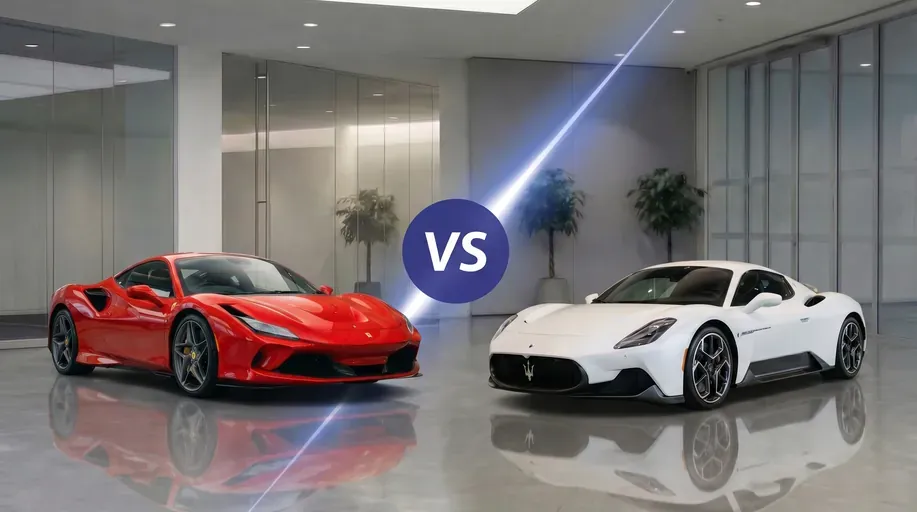
Detailed comparison of Ferrari F8 Tributo vs Maserati MC20. Performance, driving impressions, and a clear verdict that will help you choose the best Italian supercar.
Apr 24, 2026