Car battle
BMW X7 vs. Volkswagen Touareg: Complete comparison 2026
BMW X7 vs. Volkswagen Touareg. Our detailed comparison of design, performance, and practicality will help you choose the right luxury SUV.
Oct 16, 2026
Articles
Car battle
Detailed comparison of Audi Q7 vs BMW X5. We compare engines, spaciousness, and used car prices. Read our verdict and find out which luxury SUV is the better choice.
October 16, 2026
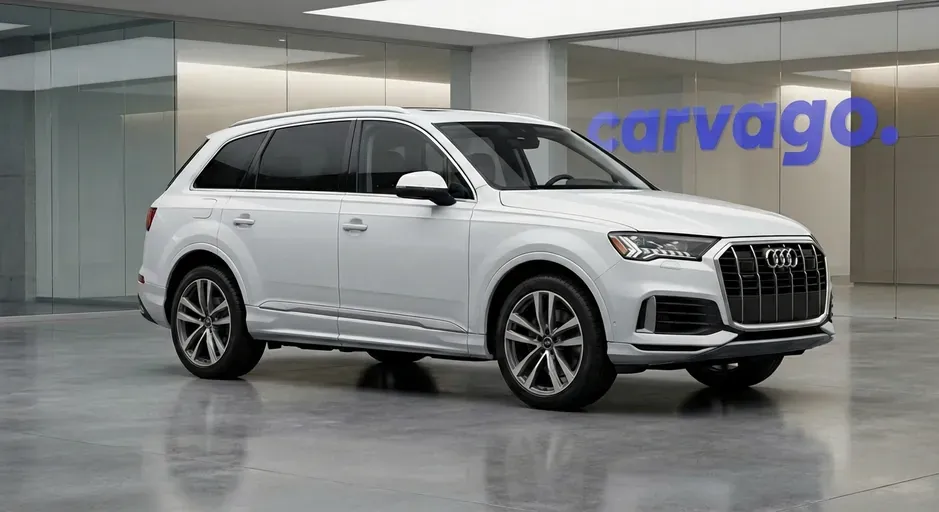
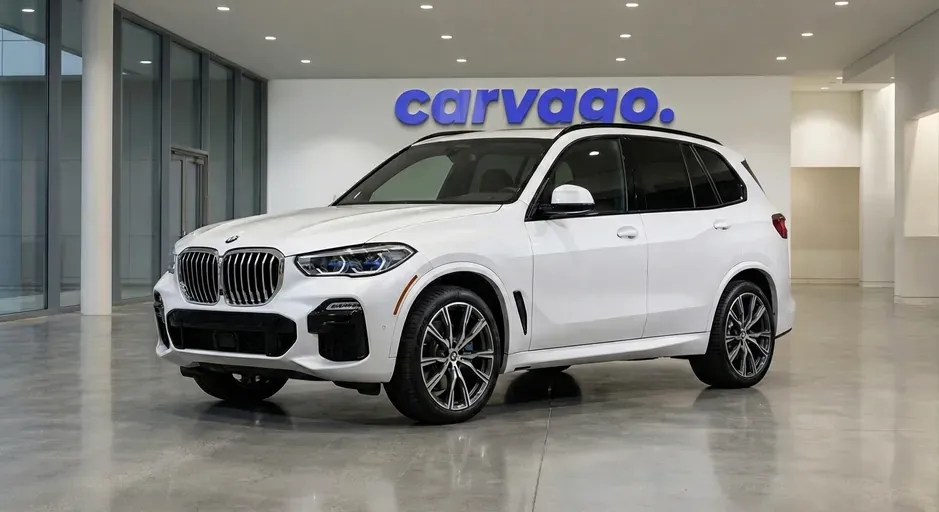
Audi Q7 represents the benchmark for a spacious and luxurious family SUV, placing maximum emphasis on innovative technology and extraordinary travel comfort. In contrast, the BMW X5, a historical pioneer of the entire premium SUV segment, attracts drivers primarily with its sharper dynamic handling and unmistakable sporty character. In the following detailed comparison of these two advanced German giants, we will analyze in detail which model represents an overall better and more rational choice on the used car market.
When comparing the exterior dimensions of these two premium SUVs – focusing on used models roughly four years old (Audi Q7 4M and BMW X5 G05 generations) – we encounter several key differences that can directly affect your daily life with the vehicle. While both cars belong to the large luxury SUV category, each manufacturer has approached the overall proportions and body construction slightly differently.
Audi Q7 is, at first glance, the larger vehicle, primarily in terms of overall length. At 5,063 mm, it is a significant 141 mm longer than the BMW X5, which measures 4,922 mm. This difference in length means that the Audi can offer a somewhat more generous interior space, which you will appreciate especially if you plan to use the third-row seats or need to transport long items in the boot. A 20 mm longer wheelbase also contributes slightly to better directional stability on motorways and more legroom for rear passengers.
On the other hand, the BMW X5 clearly scores points in width. At a massive 2,004 mm, it surpasses the Audi by 34 mm. This wider stance gives the Munich-based SUV not only a more aggressive and stable appearance on the road but also offers a bit more shoulder room inside the cabin. As for the overall height, both models are almost identical, with the BMW being only a barely noticeable 4 millimetres taller at 1,745 mm.
| Parameter | Audi Q7 SUV | BMW X5 SUV |
|---|---|---|
| Width (mm) | 1970 | 2004 |
| Length (mm) | 5063 | 4922 |
| Height (mm) | 1741 | 1745 |
| Wheelbase (mm) | 2995 | 2975 |
When making a final decision based on dimensions, it primarily depends on your preferences and the environment in which you will most often be driving. The longer body of the Audi Q7 brings undeniable advantages in total interior volume, but it requires more space and maneuvering room when parallel parking in narrow city streets. The BMW X5, by contrast, benefits from its slightly shorter but overall wider build. Thanks to its shorter length, it is somewhat easier to park, although in modern underground garages and narrow parking spaces, its two-metre width can be a slightly limiting factor for the driver.
When choosing a large luxury SUV roughly four years old, one of the main decision criteria is usually everyday practicality and trunk volume. For cars like the Audi Q7 and BMW X5, it is often assumed they will serve as primary family cars. Prospective buyers logically look for enough space for strollers, bulky sports equipment, or a pile of luggage for long trips. It is in this discipline that the two premium German models differ quite significantly.
The Audi Q7 (4M generation) is the absolute champion of space in its class. In the standard five-seat configuration, it offers a massive basic volume of 865 liters, meaning plenty of room for several extra suitcases without any compromises. The rival BMW X5 (G05 generation) provides 650 liters as standard. Although this difference may seem vast on paper, the BMW's trunk is excellently shaped, and its capacity will still be perfectly sufficient for the vast majority of users for weekend shopping or longer vacations. With the rear seats folded down, the space in the Audi Q7 increases to a staggering 2,050 liters, while the BMW X5 offers a maximum of 1,870 liters.
An important factor for used car buyers from this period is the presence of popular plug-in hybrid powertrains, which take away valuable liters of total volume due to the battery placement under the floor. In the case of the Audi Q7 TFSI e, the basic capacity drops to 650 liters and to 1,835 liters with the seats folded. For its Bavarian rival, the sought-after BMW X5 xDrive45e, the basic trunk space shrinks to exactly 500 liters and the maximum to 1,720 liters. In the plug-in hybrid version, the Q7 thus offers exactly as much basic space as the conventional internal combustion version of the X5.
In terms of overall trunk spaciousness, the Audi Q7 is the clear and uncompromising winner. If you regularly transport bulky loads or need to serve a large family, the representative from Ingolstadt will provide a noticeable reserve and total peace of mind. While the BMW X5 falls slightly short in terms of liters, for average users, its capacity represents an ideal and easily usable standard.
| Parameter | Audi Q7 SUV | BMW X5 SUV |
|---|---|---|
| Basic volume (l) | 865 | 650 |
| Maximum volume after folding (l) | 2050 | 1870 |
While the BMW X5 offers fully sufficient and excellently usable space for an average family, the Audi Q7, with its gigantic parameters, is the absolute king of haulers in the world of luxury SUVs.
When choosing a large premium SUV, towing capacity is often one of the deciding factors. Whether you plan to tow a heavy caravan for a family holiday or need to transport a boat for the weekend, both the Audi Q7 and BMW X5 are at the absolute top of their class. Both vehicles can tow the maximum legally permitted weight in an ideal configuration; however, when choosing a specific engine on the used car market for vehicles roughly four years old, you will encounter several important differences.
For the Audi Q7 (4M generation, approx. 2020–2023), the standard braked trailer weight for common diesel engines, such as the popular 45 TDI (170 kW) or the more powerful 50 TDI (210 kW), ranges from 2,700 kg to a maximum of 3,500 kg. The lower value usually applies to the base version without the optional towing package, while cars equipped from the factory with an upgraded system can handle the full 3.5 tonnes without a problem. A big advantage of the Audi is that it performs excellently even with plug-in hybrids – the top-of-the-line 60 TFSI e version maintains a maximum towing capacity of 3,500 kg despite the heavy batteries.
The BMW X5 (G05 generation, approx. 2020–2023) offers fantastic and very clear values for most of its traditional internal combustion engines. Six-cylinder mainstays like the diesel xDrive30d (210 kW) or the petrol xDrive40i (245 kW) provide a maximum towing capacity of 3,500 kg straight from the factory. However, a significant difference arises if you prefer alternative powertrains. For the highly sought-after xDrive45e plug-in hybrid variant and the base four-cylinder diesel xDrive25d, the towing capacity is reduced to 2,700 kg.
In practice, this means that the 2,700 kg value for base or hybrid versions is still perfectly sufficient for a large family caravan, transporting several motorcycles on a trailer, or weekend DIY activities. But if you are looking for certainty and need to transport the heaviest trailers, large yachts, or bulky horse trailers, the reduced capacity could limit you.
Conclusion
From a purely towing capability perspective, both cars do an absolutely flawless job at the 3.5-tonne limit with classic six-cylinder engines. However, if you desire a modern plug-in hybrid and simultaneously need to tow the maximum possible weight, the Audi Q7 is the better candidate, as unlike the hybrid BMW X5, it doesn't have to make compromises.
| Model and engine | Braked trailer (kg) | Unbraked trailer (kg) |
|---|---|---|
| Audi Q7 45 TDI (170 kW) | 2700 - 3500 | 750 |
| Audi Q7 50 TDI (210 kW) | 2700 - 3500 | 750 |
| Audi Q7 60 TFSI e (250 kW) | 3500 | 750 |
| BMW X5 xDrive25d (170 kW) | 2700 | 750 |
| BMW X5 xDrive30d (210 kW) | 3500 | 750 |
| BMW X5 xDrive45e (210 kW) | 2700 | 750 |
When choosing a luxury SUV from the used car market – typically looking at roughly four-year-old vehicles – engine options are one of the key factors that determine the character of the entire car. Both the Audi Q7 and BMW X5 rely primarily on refined six-cylinder power units, which best suit their massive size and weight. While the Audi Q7 bets on its traditional V6 engines, BMW remains faithful to its legendary inline-six engines. Both brands offer a wide range from economical diesels (such as the extremely popular 50 TDI or xDrive30d models) to extremely powerful petrol engines and plug-in hybrids with the possibility of locally emission-free city driving. In terms of overall reliability and residual value, the used car market is dominated by strong diesel versions, which represent the most logical choice for the vast majority of drivers of heavy family SUVs in terms of long highway journeys and favourable fuel consumption.
Under the hood of nearly new and slightly used Audi Q7 cars from the 4M generation, proven 3.0-litre diesel and petrol V6 engines dominate. These are always paired with quattro permanent all-wheel drive and a smooth eight-speed Tiptronic automatic transmission. The base of the diesel range is the 45 TDI version with 170 kW, however, for a fully loaded vehicle or towing a heavy trailer, the more powerful 50 TDI version with 210 kW and a massive 600 Nm of torque is much more sought after. Both diesel engines use 48V mild-hybrid technology to smooth out operation and reduce consumption. Petrol units from this period are represented by the powerful 55 TFSI version providing 250 kW. For those interested in electrification, the 55 TFSI e and the flagship 60 TFSI e plug-in hybrid models are available, combining a three-litre petrol engine with an electric motor. The result is not only breathtaking system output reaching up to 335 kW but also the ability to cover shorter distances purely on electricity.
| Engine Type | Fuel Type | Power (kW) | Torque (Nm) | Transmission |
|---|---|---|---|---|
| 45 TDI | Diesel (Mild-hybrid) | 170 | 500 | 8-speed Tiptronic |
| 50 TDI | Diesel (Mild-hybrid) | 210 | 600 | 8-speed Tiptronic |
| 55 TFSI | Petrol (Mild-hybrid) | 250 | 500 | 8-speed Tiptronic |
| 55 TFSI e | Plug-in Hybrid (Petrol) | 280 (system) | 600 (system) | 8-speed Tiptronic |
| 60 TFSI e | Plug-in Hybrid (Petrol) | 335 (system) | 700 (system) | 8-speed Tiptronic |
The range of engines for the Munich-based BMW X5 (G05 generation) from 2019 to 2023 is slightly more diverse, offering representatives with four, six, and eight cylinders. Power is sent to the road primarily through the smart xDrive all-wheel drive and a lightning-fast eight-speed Steptronic automatic transmission. The heart of the range and also the most recommended choice on the used car market is the xDrive30d (210 kW) inline-six diesel, which excels with exemplary pull and unrivalled efficiency. For more demanding travellers desiring greater dynamics, the more powerful, twin-turbocharged xDrive40d (250 kW) variant will serve well. Petrol inline-sixes are represented by the excellent xDrive40i (250 kW) model and the extremely popular xDrive45e plug-in hybrid, which, thanks to an unusually large battery, achieved an exceptionally long real-world electric range for its time. Fans of absolute dynamics will find their match with the M50i V8 engine with a roaring 390 kW of power and 750 Nm of torque.
| Engine Type | Fuel Type | Power (kW) | Torque (Nm) | Transmission |
|---|---|---|---|---|
| xDrive25d | Diesel | 170 | 450 | 8-speed Steptronic |
| xDrive30d | Diesel (Mild-hybrid) | 210 | 650 | 8-speed Steptronic |
| xDrive40d | Diesel (Mild-hybrid) | 250 | 700 | 8-speed Steptronic |
| xDrive40i | Petrol (Mild-hybrid) | 250 | 450 | 8-speed Steptronic |
| xDrive45e | Plug-in Hybrid (Petrol) | 290 (system) | 600 (system) | 8-speed Steptronic |
| M50i | Petrol (V8) | 390 | 750 | 8-speed Steptronic |
| M50d* | Diesel (Quad-turbo) | 294 | 760 | 8-speed Steptronic |
*Interesting fact from the used car market: The special and incredibly potent M50d diesel engine with four turbochargers was only available for the BMW X5 at the beginning of the production cycle of the G05 generation. Its production was prematurely ended in the autumn of 2020, so you will unfortunately no longer come across it in vehicles significantly younger than four years.
Although both luxury SUVs offer exceptionally reliable and refined three-litre diesels as the ideal choice for everyday driving and highway trips, the BMW X5 scores with a slightly more diverse range of characterful engines and a more sophisticated plug-in hybrid with better electric range.
Choosing the right engine is key to long-term satisfaction with a premium SUV, and our assessment is based on real-world user experience, dynamics, fuel consumption, and mechanical reliability. Historically, both brands rely primarily on their three-liter diesel six-cylinder engines, which form the absolute backbone of European sales. Interestingly, in the category of roughly four-year-old used cars, both manufacturers fully integrated 48V mild-hybrid systems as part of tightening emission standards. For heavy SUVs, these systems not only slightly reduce real-world fuel consumption but, more importantly, help fill the "turbo lag" at the lowest RPMs and ensure lightning-fast, almost imperceptible operation of the start-stop system. While Audi continues to bet on the traditional V-configuration (V6), BMW sticks to its legendary inline concept (I6) for its engines, which guarantees smoother operation.
For a roughly four-year-old used car (focusing on models primarily available between production dates 10/2020 and 07/2023), the 50 TDI engine is the ideal and most versatile choice. This diesel six-cylinder with 210 kW (286 hp) and a massive 600 Nm of torque represents the absolute "golden mean." The weaker 45 TDI version can feel somewhat underpowered in an often fully loaded seven-seater SUV, while gasoline variants or plug-in hybrids (TFSI e) suffer from significantly higher highway fuel consumption and faster depreciation in the real world.
The 50 TDI engine excels in exemplary refinement and the ability to move this mass of steel with real-world consumption between 8 and 9 liters per 100 kilometers. In terms of risks, it is absolutely crucial to pay attention to oil servicing. We strongly recommend shortening the factory oil change interval from the "long-life" 30,000 km to a more conservative 15,000 km. This step will significantly extend the life of the complex and expensive timing chains, which are located at the rear of the engine. During the test drive, focus on the operation of the eight-speed Tiptronic transmission. A certain micro-hesitation during sharp acceleration from a standstill is unfortunately more a matter of emission software settings in this generation, but if the transmission jerks or shifts roughly during normal driving, it indicates neglected transmission oil changes (ideally, it should be changed every 60,000 km). The car is particularly suitable for calmer long-distance drivers and families who appreciate unwavering stability and comfort over sporting ambitions.
For the BMW X5 (G05 generation), we clearly recommend the xDrive30d diesel inline-six. For the market of roughly four-year-old used cars, we are talking about the mild-hybrid version with 210 kW (286 hp), which was available from 08/2020 to 02/2023. The B57 engine family is currently considered one of the best diesels in the world. It has managed to resolve the chronic timing chain issues from previous generations and, in conjunction with the phenomenal and lightning-fast eight-speed ZF transmission, offers a noticeably better and sharper throttle response than the rival Audi Q7.
In real-world traffic, this BMW will reward you with great dynamics and, for such a large car, absurdly low fuel consumption, which can be maintained around 7.5 to 8 liters per 100 km without much restriction. The four-cylinder xDrive25d version cannot be recommended for such a heavy car, and the more powerful xDrive40d already brings higher service risks associated with a more complex turbocharging system. If you are considering a used X5 with this engine, pay close attention to two specific aspects. The first is the EGR cooler – always check the VIN code at an authorized service center to see if the vehicle has passed a recall (there is a risk of coolant leaks and, in extreme cases, a fire hazard). The second point is the xDrive all-wheel-drive system itself (transfer case). During the vehicle inspection, find a safe place and try to accelerate with the wheels at full lock. If the car vibrates or slightly "hops" from the chassis, it indicates degraded oil in the transfer case, or possibly damaged clutches. This engine is the perfect choice for more dynamic drivers who clock up hundreds of highway kilometers a week but, despite the car's family focus, still want to enjoy the legendary joy of driving.
In the automotive world, it is an open secret that official fuel consumption figures provided by manufacturers can differ significantly from drivers' real-world experiences. For large and heavy premium SUVs, such as roughly four-year-old used Audi Q7 (4M generation facelift) and BMW X5 (G05 generation), this is doubly true. While manufacturers' laboratory tables promise figures below seven liters for diesel versions and unrealistically low numbers dropping to one liter for plug-in hybrids, real-world driving brings more sober results. To get a more objective picture, we have therefore looked at real-world data obtained directly from drivers on the popular user platform Spritmonitor.de.
Below you will find a comparison of the average real-world fuel consumption for the most common engine versions of these two rivals from 2020–2023, which are among the most sought-after on the used car market.
| Model and engine | Average consumption (l/100 km) |
|---|---|
| BMW X5 xDrive30d G05 (Diesel) | 8.3 |
| Audi Q7 45 TDI 4M (Diesel) | 8.6 |
| BMW X5 xDrive40d G05 (Diesel) | 8.6 |
| Audi Q7 50 TDI 4M (Diesel) | 8.9 |
| BMW X5 M50d G05 (Diesel) | 9.4 |
| BMW X5 xDrive40i G05 (Petrol) | 10.7 |
| Audi Q7 55 TFSI 4M (Petrol) | 11.4 |
| BMW X5 xDrive45e G05 (PHEV) | 4.2 |
| Audi Q7 55 TFSI e 4M (PHEV) | 4.8 |
Looking at the data in detail, several interesting trends can be observed:
What does this mean for the average used car buyer?
If you spend most of your time on highways, drive long distances, and appreciate a range approaching the 1,000-kilometer mark on a single tank, the diesel variants of both cars (especially the X5 xDrive30d or Q7 45 TDI) are a total safe bet. On the other hand, buyers who commute shorter distances to work, move mostly in the city, and have secured home or company charging will fully exploit the economic sense of plug-in hybrids. Here, the X5 xDrive45e has a slight edge, offering a longer pure electric range than its Audi equivalent thanks to a larger usable battery capacity.
In conclusion, fuel consumption alone should not be the main deciding factor in the battle between the Audi Q7 and BMW X5. Both SUVs feature excellently tuned power units, with the Munich-based manufacturer traditionally being about half a liter to a liter more economical. Much more important for future satisfaction with a used car will be the choice of the appropriate drive technology tailored exactly to your lifestyle and daily routes.
Buying a premium second-hand SUV is a smart way to avoid the initial steep depreciation. For our comparison, we focused on cars approximately 4 years old (model years 2020–2022), which corresponds to the fourth-generation BMW X5 (G05) before its later facelift and the second-generation Audi Q7 (4M) after the extensive 2019 update. Both models hold their value relatively well as used cars; however, there are certain price differences due to supply and demand for specific engines.
| Model | Starting price (approx. 150k km) | Average price (approx. 70k km) | Price of nearly new cars (up to 30k km) |
|---|---|---|---|
| Audi Q7 (4M Facelift) | from €45,000 | €56,000 | €66,000 and more |
| BMW X5 (G05) | from €43,000 | €54,000 | €64,000 and more |
Prices are indicative and vary depending on the chosen engine, verifiable service history, and specific equipment level.
Used Audi Q7 models from 2020 to 2022 benefit from a very successful facelift, which brought a modern interior with two touchscreens and improved mild-hybrid engines.
The fourth-generation BMW X5 (G05) is among the most popular luxury SUVs in Europe, which means a significantly wider selection of used cars in dealerships.
Both vehicles represent an excellent choice on the used market; the BMW X5 offers a slightly wider selection and slightly more accessible starting prices for older model years, while the Audi Q7 scores primarily with the stable value of its diesel versions for drivers looking for maximum interior space.
Both models, the Audi Q7 and BMW X5, achieved the maximum five-star rating in independent Euro NCAP tests, clearly confirming their status as highly safe premium SUVs. However, when comparing them, it is essential to take into account the context and year of testing. The Euro NCAP methodology is constantly evolving and becoming stricter over the years; new and more demanding frontal impact simulations, stricter tests focused on cyclist detection, or completely new junction crisis scenarios are regularly introduced. Percentage results from different years cannot always be compared directly, as newer certifications place significantly higher demands on active assistance systems and the structural integrity of the vehicle itself.
The Audi Q7 last underwent crash tests in 2019 and, despite the tightening of the methodology at that time, confirmed its top-tier safety level. The 92% result for adult occupant protection testifies to an exceptionally strong body structure that keeps the cabin stable even in a severe impact. Child protection reached an excellent 86%, while the protection of vulnerable road users (pedestrians and cyclists) was rated at 71%. Safety assistance systems received 72%, significantly aided by the standard automatic emergency braking system, which reliably reacts to other vehicles and pedestrians. Given the year of testing, these results reflect the modern level of safety features very well, which are fully sufficient even for current used car market standards.
The BMW X5 (current G05 generation) underwent tests a year earlier, in 2018. Despite the slightly older methodology, the car demonstrated excellent passive and active safety and comfortably defended its five stars. Adult occupant protection was rated at 89%, with the car losing minor points mainly due to the non-optimal deployment of the driver's knee airbag in one of the tests. Child occupant protection, with a score of 86%, is perfectly comparable to the Audi. In the area of vulnerable road user protection (75%) and in the evaluation of assistance systems (75%), BMW achieved a slightly higher percentage score than its competitor, aided, among other things, by a sophisticated active bonnet that reduces the risk of serious head injuries for pedestrians in the event of a collision.
In conclusion, it can be stated that both cars provide families with top-tier protection and, in terms of safety, represent the best that the luxury SUV segment of the roughly four-year-old used car market offers. Although the Audi Q7 benefits from a slightly newer certification from 2019, where it excelled primarily in uncompromising adult protection, the 2018 BMW X5 offers a very balanced safety package with highly rated assistance systems and pedestrian protection. The choice between these two models in terms of safety brings no compromises for the buyer – both models offer very modern and highly comprehensive safety equipment that meets the highest requirements of today.
| Parameter | Audi Q7 | BMW X5 |
|---|---|---|
| Year of testing | 2019 | 2018 |
| Adult occupant protection | 92 % | 89 % |
| Child protection | 86 % | 86 % |
| Vulnerable road user protection | 71 % | 75 % |
| Safety assistance systems | 72 % | 75 % |
Whether you choose the Audi Q7 or the BMW X5, you get a top-built SUV with a five-star rating and very advanced assistants that you can 100% rely on to protect your family.
In addition to standard equipment, each of the models offers much more than just basic functions, and each approaches added value in its own unmistakable way. Here are the most interesting features and technologies that can be decisive when choosing the ideal premium SUV.
Exceptionally comfortable and smooth ride thanks to the top-tier air suspension
Often available in a seven-seater version with a genuinely usable third row
Perfect cabin soundproofing and premium interior materials
Huge and easily accessible luggage space with the seats folded down
Standard-fit, highly reliable quattro all-wheel-drive system
More detached steering and overall less agile handling in corners
Two large touchscreens require more attention and get dirty quickly
Known hesitation of the automatic transmission under hard acceleration (typical for older 50 TDI models)
More conservative design, which from some angles looks more like a raised estate car
Audi Q7 represents the perfect highway cruiser that will win over buyers seeking uncompromising comfort, silence, and maximum space for the whole family. Its focus suits drivers who prefer calm long-distance travel over sporty cornering and often make use of the generous cargo space.
Top-tier driving characteristics and precise steering that successfully masks the car's weight
One of the best infotainment systems on the market (iDrive) with an intuitive rotary controller
Refined and efficient straight-six engines, including the exceptionally well-executed 45e plug-in hybrid version
Attractive, muscular design of a classic luxury SUV
Excellent ergonomics and a slightly sportier driving position
The third row of seats is very cramped and relatively rare on the used car market
The base luggage capacity is smaller, especially in plug-in hybrid variants
The split tailgate can make it difficult for shorter people to reach deep into the trunk
Stiffer suspension tuning (especially in M Sport versions) at the expense of maximum smooth comfort
BMW X5 successfully combines premium luxury with impressive driving dynamics, making even a two-ton SUV fun to drive. It is the clear choice for active drivers who appreciate advanced technology, top-tier powertrains, and a sporty feel, even at the cost of slightly less everyday practicality compared to the Q7.
Based on our own CarAudit inspections, breakdown statistics from service networks, and reports from long-term users, we have compiled an overview of the most common problems that buyers of roughly four-year-old used vehicles of these premium models should watch out for.
The Audi Q7 (4M generation after the facelift) is a luxury technological cruiser, but due to its complexity, it can trouble owners with several typical faults. Before buying such a complex SUV, a thorough independent inspection of the vehicle's technical condition is an absolute necessity.
The Audi Q7 is mainly troubled by expensive faults in the 48V onboard network of the popular diesel six-cylinders and occasional software glitches in the dual-display infotainment. From a purely mechanical standpoint, however, the vehicle is highly robust if it has a clearly verifiable service history.
The BMW X5 (G05 generation from 2019–2023) is considered a driver-attractive and overall sturdy SUV. However, even here there are design weaknesses, especially in the area of diesel engine emission systems and the sensitive all-wheel-drive system.
When buying a used BMW X5 of the G05 generation, it is absolutely crucial to verify the history of recalls due to the EGR valve and check the smoothness of the xDrive drive, which does not forgive neglected tire service. If you pay attention to these elements, you will get one of the most reliable luxury SUVs on the market.
When buying a used car, a thorough inspection is key. Both models represent technologically very complex and heavy premium SUVs, where neglected maintenance can become significantly expensive. Therefore, a thorough Comprehensive car audit should take place before every purchase. Here are several specific points to focus on during a test drive and inspection of roughly four-year-old examples.
Audi Q7 is overall longer and offers a noticeably larger and more practical trunk with a basic volume of 865 liters in a five-seat configuration. The BMW X5 has a luggage compartment with a volume of 650 liters, which is still fully sufficient for family purposes, but it lags slightly behind the competition. Both used SUVs can also be found on the market in a seven-seat configuration, where the slightly more spacious Audi again benefits in terms of passenger space in the third row.
The BMW X5 is traditionally more driver-oriented and, despite its dimensions, offers top-tier driving characteristics with very agile cornering. In contrast, the Audi Q7 focuses maximally on first-class comfort, perfect cabin soundproofing, and a smooth ride on long highway routes. If you are looking for a sportier driving experience, the X5 is the clear choice, while the Q7 excels as an uncompromisingly comfortable and quiet family cruiser.
The BMW X5 uses the proven iDrive system, which is often rated by experts as the best on the market thanks to safe operation via a physical rotary controller and a fast touchscreen. After the facelift, the Audi Q7 relies on the MMI system with two touchscreens and haptic feedback. Although Audi's solution looks very modern, adjusting the climate control on the lower display can unnecessarily distract attention from driving.
Both German SUVs show solid reliability with proper and regular maintenance, with the most sought-after three-liter diesel six-cylinders from 2019–2022 considered mechanically very robust. With a used BMW X5 (G05 generation), watch out for occasional software glitches or creaking interior plastics, while with the Audi Q7, always thoroughly check the condition of the more sensitive and expensive air suspension. For trouble-free operation with both brands, it is absolutely crucial to choose units with a clear and verifiable service history.
Popular three-liter diesel engines, such as the Audi Q7 50 TDI and BMW X5 xDrive30d, surprise with very reasonable fuel consumption for their size. Real-world combined consumption for both vehicles in normal traffic usually ranges between 7.5 and 8.5 liters per 100 kilometers. In practice, the BMW is often a few tenths of a liter more economical thanks to top-tier engine efficiency and the excellent gearing of the eight-speed ZF transmission.
Sources: ADAC, mdcr.cz, garaz.cz, smartmania.cz, autorevue.cz, autickaruvblog.cz
This article was prepared using artificial intelligence tools. The section guarantor is Petr Dušek.
BMW X7 vs. Volkswagen Touareg. Our detailed comparison of design, performance, and practicality will help you choose the right luxury SUV.
Oct 16, 2026
Audi Q7 vs. Audi Q8: Which luxury SUV is better for you? A detailed comparison of design, practicality, and driving performance to help you decide.
Oct 23, 2026
Volvo XC90 vs. Volkswagen Touareg: Which premium SUV is better? A detailed comparison, tests, and a clear verdict will help you choose.
Apr 14, 2026