Audi A4 vs. Volkswagen Arteon: Complete comparison 2026

Audi A4 vs Volkswagen Arteon (VW Arteon): A detailed comparison of equipment, space, and driving characteristics. Read our verdict for an easy used car choice.

October 16, 2026

VS
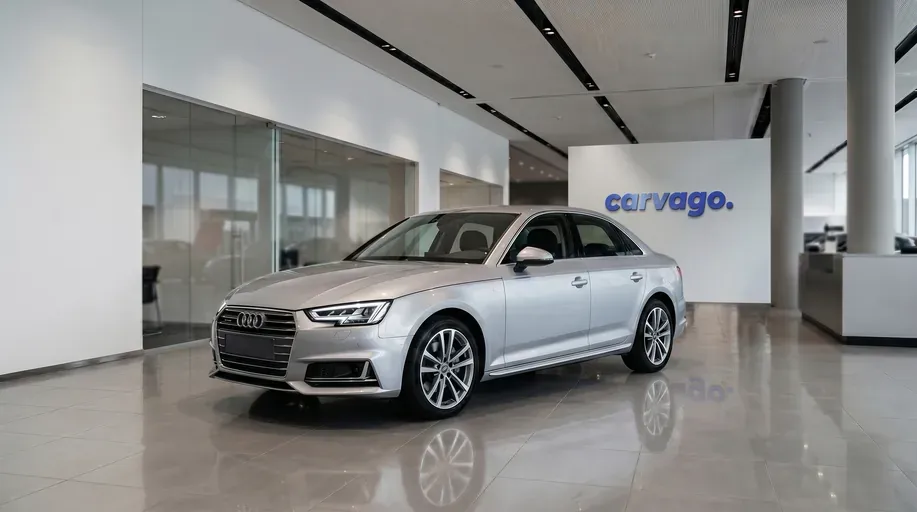
Audi A4

Audi A4

Volkswagen Arteon

Volkswagen Arteon

Introduction

Audi A4, often referred to by its internal generation code B9 or known in Asian markets in its extended version as the A4L, represents one of the main pillars of the premium mid-size class, attracting primarily with its precise craftsmanship and top-tier ergonomics. Its attractive challenger is the Volkswagen Arteon, a stylish fastback and shooting brake that arrived as the more luxurious successor to the CC model (in the Chinese market, the name Volkswagen CC is still used for this model today). Although both cars fall under the umbrella of the same group and share a wide range of technologies, their overall design concept and driving characteristics differ significantly, which brings us to a detailed comparison of these two attractive choices on the market for roughly four-year-old used cars.

Comparison of External Dimensions

External dimensions often play a key role when choosing a car for a family or for long executive trips. When comparing the current generations from around 2022, namely the Audi A4 (outgoing B9 generation) and the Volkswagen Arteon (1st generation), the difference in the overall format and concept of the two cars is apparent at first glance. While the Audi A4 sticks to the classic and proven proportions of the premium mid-size class with its shapes, the Volkswagen Arteon is designed with the ambition to approach cars a category larger and fulfills the role of an elegant "grand tourer."

In terms of the overall footprint on the road, the representative from Wolfsburg clearly has the upper hand. With a length of 4862 to 4866 mm, the Volkswagen Arteon is roughly more than 100 mm longer than the Audi A4, which measures 4725 to 4762 mm in length depending on the body variant and bumpers. This increase is also reflected in the width, where the Arteon, at 1871 mm, surpasses the Audi by a full 24 to 29 mm. For practical use, this means that the Arteon offers a noticeably airier and more robust feel both from the outside and inside, but at the same time requires more caution when parking in the narrow spaces of city garages. If easier maneuverability and hassle-free parking are your priorities, the more compact dimensions of the Audi A4 will clearly work in your favor.

Another important parameter is the wheelbase, which directly affects driving stability and legroom for rear passengers. The Volkswagen Arteon has a wheelbase of 2835 to 2838 mm, surpassing the Audi A4 with its fixed wheelbase of 2820 mm (up to 2818 mm for the Allroad version) by less than two centimeters. The longer distance between the axles in the Volkswagen brings a slightly more stable ride on long highway journeys and more generous knee room for passengers in the back. In contrast, the Audi A4 benefits from a slightly shorter wheelbase and a specific chassis construction that guarantees more agile cornering and more immediate steering response. Choosing the Audi is therefore worthwhile for drivers who expect sportier behavior from the car, especially on winding backroads.

Regarding body height, both cars follow very different approaches, although they strive for an aerodynamic profile. The traditional body of the Audi A4 Sedan keeps the height very low to the ground at 1427 to 1428 mm, effectively lowering the center of gravity. The Arteon, although it has a dynamically sloping "coupe" roofline in the hatchback version, is ultimately taller (1450 to 1460 mm). In more practical body styles, the models are closer – the Audi A4 Estate (Avant and Allroad) ranges from 1434 to 1493 mm, while the Arteon Estate (Shooting Brake) has a height of 1434 to 1451 mm. The lower-slung Audi thus places greater emphasis on a perfect connection with the road, while the overall taller and broader build of the Arteon adds valuable millimeters for easier entry into the cabin for the crew.

ParameterAudi A4 SedanVolkswagen Arteon HatchbackAudi A4 EstateVolkswagen Arteon Estate
Length (mm)4726 - 47624862 - 48664725 - 47624866
Width (mm)1842 - 184718711842 - 18471871
Height (mm)1427 - 14281450 - 14601434 - 14931434 - 1451
Wheelbase (mm)28202835 - 28382818 - 28202836 - 2838

Trunk Volume

When choosing a family car or a vehicle for long-distance travel, luggage capacity plays one of the key roles. The Volkswagen Arteon and Audi A4 approach practicality differently, which is primarily due to their body styles and overall dimensions. While the Arteon relies on more majestic proportions and a more generous interior space, the Audi A4 focuses on a more compact premium approach with an emphasis on a perfectly shaped and easily usable trunk. In practice, these differences in liters mean space for several extra suitcases, which keeps the passengers at ease even when packing for a longer vacation.

The Volkswagen Arteon in its standard version (Liftback) offers an excellent base volume of 563 liters. After folding the rear seats, this space increases to an impressive 1557 liters, featuring a massive loading opening thanks to the hatchback tailgate. In contrast, the classic Audi A4 Sedan has a volume of 480 liters, which grows to 965 liters after folding the seats. While this value is quite common in the premium mid-size class and perfectly sufficient for a weekend shopping trip, the smaller trunk lid of the sedan logically limits the loading of bulkier items.

This difference is also clearly evident in the more sought-after family Estate variants. The stylish Volkswagen Arteon Shooting Brake swallows 565 liters in its base configuration and up to 1632 liters with the rear backrests folded. The competing Audi A4 Avant, on the other hand, provides 495 liters in the base and 1510 liters at maximum utilization. However, with the Arteon, it is necessary to pay attention to the engine choice on the used car market – the popular plug-in hybrid version (eHybrid) has its trunk volume reduced to 455 liters due to the integrated batteries. Overall, it can be said that if absolute capacity and easy transport of oversized items are key factors for you, the Arteon will provide a noticeable advantage, while the Audi A4 will appeal to buyers looking for premium standards and top-tier material fit and finish in the interior.

ParameterAudi A4 SedanVolkswagen Arteon LiftbackAudi A4 AvantVolkswagen Arteon Shooting Brake
Base volume (liters)480563495565
Max. volume after folding seats (liters)965155715101632

Practicality or Premium? 🧳

While the Audi A4 offers a perfectly crafted space meeting the standards of the premium class, the Volkswagen Arteon clearly wins with its superior transport capacity and more practical trunk access. For families with children or passionate athletes, the Arteon will be a significantly more useful companion on the used car market.

Trailer Weights

In terms of towing capacity and overall practicality when towing trailers, the two cars differ slightly, which can play a key role for caravan owners or those who frequently transport heavier loads. Both carmakers show relatively solid figures in the generations currently relevant for the used car market (roughly four-year-old cars), although Volkswagen has a slight edge in the heavier weight categories.

The first-generation Volkswagen Arteon, even in the Shooting Brake version, serves as a robust workhorse. Its maximum braked trailer weight reaches up to an impressive 2,200 kg for the 2.0 TDI and more powerful 2.0 TSI engines (or 2,000 kg for the weaker diesel base). The Audi A4 B9 generation lags only slightly behind – its limits end at 1,900 kg, achieved by the powerful six-cylinder engines labeled 50 TDI or the cladded Allroad versions.

Large differences then exist among the basic and environmentally friendly versions. While the more economical and basic Audi A4 models (e.g., 30 TDI or 35 TFSI) offer a braked trailer capacity ranging from 1,300 to 1,500 kg, the basic Arteon 1.5 TSI easily handles 1,600 kg. The same value – i.e., 1,600 kg – is also offered by the plug-in hybrid version Arteon eHybrid, where the slightly reduced capacity is a logical compromise given the presence of batteries and electrical components.

In practice, these differences mean that while the Audi A4 is perfectly sufficient with its values for a family holiday with a standard medium caravan or a weekend transport of materials to a cottage, the Arteon represents a much more versatile choice with room for heavier challenges. Its capacity of over 2 tons is also suitable for transporting heavy twin-axle trailers, horse trailers, or large boats.

If regular towing of heavy loads is one of your main selection criteria, the Volkswagen Arteon in a more powerful diesel or petrol specification will provide a larger reserve. The Audi A4, on the other hand, is ideal for occasional and rather recreational towing.

Comparison of trailer weights for selected versions
Model and engineBraked trailer (kg)Unbraked trailer (kg)
Audi A4 (B9) 35 TFSI (110 kW)1400 - 1500750
Audi A4 (B9) 40 TDI (140 - 150 kW)1700 - 1800750
Audi A4 (B9) 50 TDI (210 kW)1900750
VW Arteon (1st gen) 1.4 eHybrid (115 kW)1600750
VW Arteon (1st gen) 2.0 TSI (140 kW)1800750
VW Arteon (1st gen) 2.0 TDI (110 - 147 kW)2000 - 2200750

Overview of Most Common Motorizations

When comparing the engine lineups of the Audi A4 and the Volkswagen Arteon, we encounter two distinct philosophies that reflect the different chassis platforms of the two cars. This difference is key for buyers in terms of driving comfort and available technologies. The Audi A4 (B9 generation) utilizes a more premium concept with longitudinally mounted engines. This allows the car, among other things, to accommodate powerful, incredibly refined six-cylinder diesels and the more advanced quattro all-wheel-drive system. Furthermore, most engines in roughly four-year-old used cars rely on efficient mild-hybrid assistance. In contrast, the Volkswagen Arteon stands on the more universal MQB platform with transversely mounted units and offers exclusively four-cylinder engines. However, its weapon is extraordinary overall efficiency and a variety of alternatives – unlike the Audi, here you will find both an economical plug-in hybrid for emission-free city hopping and a brutal R sports version. For the driver, this means a choice between the prestigious smoothness of the six-cylinders from Ingolstadt and the modern, low-emission versatility from Wolfsburg.

Engine range: Audi A4

In used Audi A4 models around four years old (facelifted versions after 2019), you will encounter a new two-digit power designation on the rear. The range covers almost every conceivable need. The standard for relaxed highway travel is the proven and reliable two-litre four-cylinder diesel engines labeled as 35 TDI and 40 TDI, where power is predominantly transmitted through a seven-speed S tronic dual-clutch transmission. The petrol side of the coin is covered by very quiet 35 TFSI, 40 TFSI units and the powerful 45 TFSI with all-wheel drive. The pinnacle, for which many buyers specifically seek out an Audi, is the massive 50 TDI diesel six-cylinder, whose velvety operation and mammoth torque are tamed by a premium eight-speed Tiptronic torque converter automatic. Older models before 2019 (e.g., 1.4 TFSI engines) are now almost non-existent among newer used cars. An interesting option for drivers seeking minimal operating costs was the factory 40 g-tron version burning compressed natural gas (CNG).

Engine typeFuel typePower (kW)Torque (Nm)Transmission
35 TFSI (2.0)Petrol1102707-speed S tronic
40 TFSI (2.0)Petrol1503207-speed S tronic
35 TDI (2.0)Diesel1203807-speed S tronic
40 TDI (2.0)Diesel1504007-speed S tronic
50 TDI (3.0 V6)Diesel2106208-speed Tiptronic

Engine range: Volkswagen Arteon

Volkswagen sticks to more rational boundaries with the Arteon model, offering highly optimized inline four-cylinder engines that fit perfectly into the current generation of the MQB platform. Used cars with production dates around 2020 and 2021 boast a fully modernized range (Evo engine generation). The base for rather calm driving is the 1.5 TSI unit with cylinder deactivation technology (ACT). For those interested in high highway mileage, the popular 2.0 TDI SCR is the holy grail, whether in the basic version (110 kW) or in its most powerful form (147 kW) available with 4MOTION all-wheel drive. However, the Arteon scores significantly with two specifics. The first is the modern 1.4 eHybrid (available roughly from late 2020), or plug-in hybrid, whose battery can easily cover daily commutes to work without a drop of petrol. The second attraction is the thoroughbred sports derivative, the Arteon R, with a turbocharged two-litre petrol engine, an amazing 235 kW of power, and clever torque vectoring. Manual transmissions are an extreme rarity in the Arteon, with the fast DSG automatic almost absolutely dominating the market.

Engine typeFuel typePower (kW)Torque (Nm)Transmission
1.5 TSI OPFPetrol1102506-speed manual / 7-speed DSG
2.0 TSI OPFPetrol1403207-speed DSG
2.0 TDI SCRDiesel110 / 147360 / 4007-speed DSG
1.4 eHybridPlug-in Hybrid160 (system)400 (system)6-speed DSG
Arteon R (2.0 TSI)Petrol2354207-speed DSG

Six-cylinder versus electricity ⚡

The Audi A4 will appeal to connoisseurs who are happy to pay extra for the robust pull of a premium diesel six-cylinder, while the Arteon represents a modern family cruiser additionally offering an attractive plug-in hybrid for those looking for a compromise between city fuel consumption and long trips.

Choosing the right engine is absolutely crucial for long-term satisfaction with a car, its reliability, and maintaining reasonable service costs. Our recommendations for four-year-old used cars are based on the real-world experience of mechanics, actual fuel consumption, and long-term feedback from owners. While the Audi A4 (B9 generation) benefits from a premium platform with longitudinally mounted engines for better weight distribution, the Volkswagen Arteon (1st generation) relies on the MQB group architecture with transversely mounted engines, which in turn provides it with royal interior space.

Historical data for both models clearly shows that the range has narrowed significantly with stricter emission standards. If you were to look for the previously basic 1.4 TFSI four-cylinder in the current used Audi A4 market, you would not succeed – its production ended back in 2018, and it was completely replaced by detuned versions of the more powerful 2.0-litre. A similar fate befell the weaker 1.5 TSI ACT engine in the Volkswagen Arteon, which disappeared from most listings around 2019, although it wasn't particularly well-suited for such a heavy car anyway.

SpecificationAudi A4Volkswagen Arteon
Recommended engine40 TDI (2.0 TDI, 140–150 kW)2.0 TSI OPF (140 kW)
Acceleration and characterStrong pull, massive torqueSilky smooth, linear power
Real-world consumption5.5 – 6.0 l/100 km7.0 – 8.0 l/100 km
Key maintenanceS tronic oil every 60,000 kmDSG oil every 60,000 km
Ideal driver profileHighway traveler, high mileageMixed driving, lover of quiet

For the Audi A4, we recommend: 40 TDI (2.0 TDI, 140 - 150 kW)

This 2.0-litre diesel from the EA288 evo family represents the absolute ideal for the premium character of a mid-size sedan or estate. In the version designated as 40 TDI (which in newer model years features 150 kW and a 12V mild-hybrid system for smoother coasting and starts), you get an engine that combines confident dynamics with excellent efficiency. Even during brisk highway journeys, fuel consumption rarely exceeds 6 litres per 100 kilometres, making it a fantastic and economical workhorse. Technically, it is a very well-refined and reliable unit with a huge reserve of torque (up to 400 Nm), which makes overtaking effortless.

When buying a four-year-old used car, you need to pay attention to two main mechanical components. The first is the condition of the diesel particulate filter (DPF) and the EGR valve. If the car is driven primarily on short city routes, the system clogs quickly and proper regeneration does not occur. These issues can only be avoided by regularly "stretching the car's legs" at a steady speed on the highway. The second factor is the 7-speed S tronic dual-clutch transmission. For trouble-free operation, it requires an unconditional oil change every 60,000 km. The Audi A4 40 TDI is therefore clearly the best choice for long-distance travelers with an annual mileage of over 20,000 kilometres who demand confidence and comfort for long highway hauls.

For the Volkswagen Arteon, we recommend: 2.0 TSI OPF (140 kW / 190 hp)

Even though diesel automatically wins in many used car markets, for a stylish and emotionally shaped "gran tourer" like the Volkswagen Arteon, it makes a lot of sense to go for a petrol unit. The 2.0 TSI version (EA888 series) with 140 kW (190 hp) is an excellent compromise. While the top-tier R versions can be more expensive to maintain, this mid-range level is extremely refined, quieter than any diesel counterpart, and accelerates beautifully and smoothly. Furthermore, the light petrol block at the front means the Arteon doesn't suffer from unnecessary clumsiness in corners; it is more agile and filters bumps much better. Long-term consumption oscillates around a reasonable 7 to 8 litres.

In terms of long-term reliability, this is now a well-sorted engine. Engineers have managed to eliminate historical problems with oil consumption and carbon buildup on the valves. Additionally, the petrol model completely frees the owner from the need to refill urea (AdBlue) and concerns about expensive repairs to complex SCR catalysts, which plague diesel TDIs during city use. The only significant weakness to check on used cars with mileage approaching 100,000 km is the water pump – an occasional and hard-to-detect coolant leak in its vicinity can mean the thermostat module needs replacement. As with the Audi, ensure timely oil changes in the DSG. In short, the 2.0-litre petrol is a bullseye for drivers who drive dynamically, do part of their mileage in and around the city, and desire maximum acoustic comfort on board.

Real Fuel Consumption

Paper consumption values provided by manufacturers almost always differ from what the trip computer shows in daily operation. Although the modern WLTP homologation methodology has come much closer to reality in recent years, you simply cannot cheat physics or driving style. To get an objective picture, we didn't just follow the manufacturers' advertising brochures but used data from real drivers, primarily from the popular independent portal Spritmonitor.de. Based on the logic of current demand for used cars, we focused on vehicles roughly four years old (model years 2020–2023), which brings the updated Audi A4 (B9 generation) and the first-generation Volkswagen Arteon into the comparison.

Source: Spritmonitor.de /

Model and engineAverage consumption (l/100 km)
Audi A4 35 TFSI 110 kW (Petrol)6.5
Audi A4 40 TFSI 150 kW (Petrol)7.0
Volkswagen Arteon 2.0 TSI 140 kW (Petrol)7.6
Volkswagen Arteon 2.0 TSI 206 kW (Petrol)8.8
Audi A4 35 TDI 120 kW (Diesel)5.3
Volkswagen Arteon 2.0 TDI 110 kW (Diesel)5.7
Audi A4 40 TDI 150 kW (Diesel)5.9
Volkswagen Arteon 2.0 TDI 147 kW (Diesel)6.3

Looking at the real-world figures, a clear trend emerges: body shape and weight play a huge role. The Audi A4 benefits from its slightly more subtle build and the better aerodynamics of a classic sedan (or Avant estate), which is reflected in its overall lower appetite. The Arteon, on the other hand, gives a more robust impression, and its beautiful but relatively wide stance demands a small penalty at the filling station. An interesting and somewhat surprising finding is that even base petrol engines do not automatically mean salvation for the wallet. In the Audi A4, the base two-liter (labeled 35 TFSI) saves only about half a liter of fuel per hundred kilometers compared to the more powerful 40 TFSI version, because it has to work a bit harder with the car's mass on the highway. Diesel engines, on the other hand, clearly confirm their historical reputation as frugal workhorses – the TDI units in both cars reach the sub-six-liter territory without much trouble.

For typical used car buyers, these data lead to fairly obvious recommendations. If you are a typical highway driver covering tens of thousands of kilometers a year, the diesel versions (35/40 TDI for Audi and 2.0 TDI for VW) represent the most financially sensible choice for you. However, if your journeys are limited to shorter suburban commuting, it makes more sense to opt for the TSI and TFSI petrol engines. While you will pay a bit more for fuel with these, in the long run, you will avoid potential service complications with DPF filter clogging during frequent cold starts. Especially with the petrol versions of the more luxuriously styled Arteon, be prepared for the fact that this elegant "gran turismo" simply demands more fuel for its higher weight and dynamics.

Can consumption therefore be considered the main parameter that should decide this duel? Not quite. The differences in total operating costs for both siblings from the German group are, with comparable engines, at most in the range of tenths of a liter. Although the Audi A4 is slightly more economical thanks to a smarter implementation of mild-hybrid systems and better body proportions, in the end, your choice of a used car should depend on other priorities – typically the requirement for interior space, design preferences, and the overall technical condition of the specific vehicle.

Current offers Volkswagen Arteon

View full offer

Price Range and Used Car Offerings

When looking at the market for roughly four-year-old used cars (mainly 2021 and 2022 models), we encounter an interesting paradox. Although the Audi A4 belongs to the classic premium segment, as a used car it often has a slightly lower entry price than the Volkswagen Arteon. The reason lies in the completely different target groups and the specification mix with which both cars left the dealerships as new.

Audi A4 (B9 generation, facelift)

The Audi A4 is an extremely popular company car across Europe. As a result, a huge number of cars with base engines and very sparse equipment accumulate on the secondary market. This oversupply pushes the prices of entry-level used cars downwards.

  • Entry-level models: Prices for four-year-old vehicles (most often with 35 TFSI or 35 TDI engines) and with higher mileage over 150,000 kilometres start at roughly €18,000 to €20,000.
  • The golden middle ground: For around €23,000 to €27,000, you can reliably purchase popular versions with the 2.0-litre 40 TDI diesel engine, Quattro all-wheel drive, and solid equipment.
  • Higher specifications: Variants in the popular S line visual package, or conversely, rarer cars with powerful V6 TDI engines, gradually approach €31,000 and above. The S4 and RS4 sports derivatives naturally move in a completely different financial sphere.

Volkswagen Arteon (1st generation, facelift)

The Arteon figures in Volkswagen's lineup as a design flagship, which was almost never sold in a "poor" specification with steel wheels and manual air conditioning. Most of the market offer consists of used cars in rich Elegance or R-Line trims, which artificially increases the average value of the car.

  • Entry-level models: The gateway to used Arteons from 2021 or 2022 usually opens at €21,000 to €23,000 for the more economical 2.0 TDI (110 kW) version with a DSG automatic transmission.
  • Sought-after R-Line variants: The most aesthetically attractive cars in the sporty R-Line trim, especially in the extremely popular and practical Shooting Brake body style, easily surpass €29,000.
  • Top-tier engines: For powerful versions (such as the 2.0 TSI with 200 kW or 206 kW, or the high-performance Arteon R model with 235 kW), you will pay up to €35,000 or more on the used car market, depending on the current mileage.

Overview of indicative prices (~4-year-old vehicles)

Model (2021–2022 models)Typical starting priceAverage price of better-equipped unitsPrice peak (standard versions)
Audi A4 (B9)~ €18,000€25,000€31,000
VW Arteon~ €22,000€30,000€35,000

Note: Prices are indicative and depend on the current offer of car dealerships, documented mileage, chosen engine, and the actual condition of the specific vehicle.

If you are looking for a more affordable entry into the well-crafted world of the mid-size class and don't mind lower equipment levels, a used Audi A4 from the lower end of the range can be a surprisingly pragmatic choice. In contrast, the Volkswagen Arteon functions almost as a "luxury item" for an otherwise mainstream brand – it is generally slightly more expensive on the used market, but it almost always rewards you with full-fledged family space, distinctive style, and high standard equipment.

Premium logo vs. exclusive equipment 💰

While you can often get a basic used Audi A4 at a surprisingly good price thanks to its grand fleet past, a used Volkswagen Arteon confidently maintains a higher entry price, primarily due to its substantially richer equipment and exceptional design.

Safety and Euro NCAP Rating

Both models, the Audi A4 and the Volkswagen Arteon, earned a full five-star rating in their Euro NCAP crash tests. However, when evaluating the safety of used cars approximately four years old, it is necessary to consider the context and the exact year the specific generation was tested. Euro NCAP protocols are constantly evolving and becoming more stringent over time, meaning that percentage ratings from different years cannot always be directly compared. Rules for cyclist detection, intersection scenarios, and requirements for active assistance systems are becoming particularly strict. Nevertheless, the initial tests remain the best indicator of a car's structural safety, even if the original five-star certificate has methodologically expired for older test dates (over 6 years).

Audi A4 (in the current B9 generation) underwent its Euro NCAP tests in 2015. The car demonstrated an exceptional level of passive safety, as evidenced by a score of 89% for adult occupant protection and 87% for child occupant protection. In the categories of vulnerable road user protection and safety assistance, the Audi achieved identical results of 75%. These results were excellent for their time; however, buyers on the used car market should ensure that their chosen vehicle includes sufficient optional active assistance equipment, which was not always as comprehensive in the standard trim.

Volkswagen Arteon was tested two years later, in 2017, when slightly stricter methodology was already in place. Despite this, it achieved a phenomenal result of 96% in adult occupant protection, which was among the absolute best in its segment. Child protection earned a solid 85%. The Arteon significantly excelled in pedestrian protection (85%) and in the overall rating of safety assistance systems (82%). This was greatly aided by the standard active hood and the advanced automatic emergency braking system (Front Assist), which was praised for its quick response.

Euro NCAP Results Overview

ParameterAudi A4Volkswagen Arteon
Year of testing20152017
Adult occupant protection89 %96 %
Child occupant protection87 %85 %
Vulnerable road user protection75 %85 %
Safety assistance systems75 %82 %

In conclusion, both vehicles represent a structurally highly safe choice for both family and executive purposes. However, the Volkswagen Arteon benefits from a slightly more modern initial concept and standardization of safety features, thanks to which it offered a wider range of reliably reacting assistance systems and a significantly softer impact for pedestrians from the factory. While first owners of the Audi A4 often had to pay extra for a full safety shield, with a four-year-old Arteon, you are assured of a comprehensive modern standard even in the base model.

Safe choices with a slight lead for the Arteon 🛡️

Both cars provide top-tier five-star safety, but the Volkswagen Arteon feels slightly more modern thanks to its newer 2017 test and more extensive standard assistance systems.

Comparison of Interesting Equipment Features

In addition to standard equipment, each of the models offers several unique features and technological highlights that can be decisive for the customer and clearly define their different approach to added value.

Audi A4: Technological Precision and Premium Details

  • Infotainment and connectivity: The interior is dominated by the MMI Navigation plus system with a 10.1-inch touchscreen, which after the facelift (from 2019) offers very fast response and acoustic feedback. In front of the driver is the fully digital Audi virtual cockpit plus, which stands out with its crisp graphics and the ability to switch between three different display styles.
  • Assistance systems and lighting technology: Top-tier Matrix LED headlights with dynamic indicators can precisely mask out oncoming vehicles. Also unique is the predictive efficiency assistant, which, in cooperation with adaptive cruise control, automatically adjusts speed before curves, roundabouts, or speed limit signs based on navigation data.
  • Drivetrain and chassis: Audi relies on the famous quattro all-wheel drive. In modern four-cylinder engines, this is often the quattro ultra variant, which can completely disconnect the rear axle to reduce fuel consumption. Most engines are also equipped with mild-hybrid (MHEV) technology for smoother start-stop system operation and efficient coasting with the engine off.
  • Comfort and acoustics: A typical high-end feature offered by the A4 is optional acoustic glass for the front side windows. This significantly suppresses wind noise and ambient sounds, ensuring premium silence on board even at highway speeds.
  • Sport versions: Dynamically minded drivers can choose the popular S line packages, which change not only the exterior and interior design but also include a stiffer sports suspension. In roughly four-year-old used cars, you can also find the full-fledged S4 model, which hides a very potent TDI diesel V6 with an electric compressor under the hood.

Volkswagen Arteon: Emotional Design and Spacious Luxury

  • Design and body: The Arteon attracts with exceptionally stylish frameless doors, which give the car the character of a true gran turismo. A huge advantage is the range of body versions – alongside the elegant fastback with a giant tailgate, the iconic Shooting Brake variant has been available since the facelift (2020), combining a sporty silhouette with extraordinary practicality and a large trunk.
  • Chassis and driving characteristics: The optional DCC adaptive chassis control is perfected in the Arteon. In addition to standard driving profiles, it allows for continuous adjustment of damper stiffness on a sliding scale. The driver can thus soften the suspension below the Comfort mode level or, conversely, stiffen it beyond the Sport mode.
  • Infotainment and electronics: In used cars from recent years, you will find the modernized MIB3 infotainment with wireless Apple CarPlay and Android Auto. Music lovers will also appreciate the premium Harman Kardon audio system with 700 W output, which replaced the previous Dynaudio system in the lineup.
  • Advanced assistants: The Travel Assist system, which allows for partially autonomous driving up to 210 km/h, perfectly suits the car's highway character. A great feature is the capacitive steering wheel – it recognizes palm touch, so when using the lane-keeping assistant, you only need to hold it lightly and don't have to actively "move" it.
  • Specific engines: Unlike the Audi A4, the Arteon relies on a transverse engine layout. However, it offers an innovative eHybrid plug-in hybrid version for emission-free urban commuting and the top-tier Arteon R (320 hp) variant, which is equipped with a sophisticated all-wheel-drive system with R-Performance Torque Vectoring for active torque distribution between the rear wheels.

Key Advantages and Disadvantages

Audi A4

Pros

Top-notch build quality and premium interior materials

Excellent cabin soundproofing and a very comfortable chassis

Intuitive and fast MMI multimedia system

Prestigious brand image and slower depreciation on the used car market

Advanced quattro all-wheel drive for more powerful engine options

Cons

More conservative exterior design that doesn't stand out as much on the road

More cramped legroom for rear-seat passengers

Smaller base luggage capacity compared to competitors

Higher regular service costs and more expensive spare parts

Audi A4 represents a traditional safe bet in the premium segment, scoring points mainly with its precise craftsmanship, quiet cabin, and exceptionally refined driving characteristics. It is an ideal choice for drivers who appreciate perfect ergonomics and a representative appearance, and who don't mind paying extra for a higher level of travel comfort at the expense of absolute spaciousness.

Volkswagen Arteon

Pros

Highly attractive and dynamic design (especially in the Shooting Brake version)

Regal interior space with excellent rear legroom

Huge and easily accessible luggage compartment thanks to the liftback body style

Richer equipment for a comparable price on the used car market

More affordable maintenance costs due to technical kinship with the Passat model

Cons

The dashboard design is based on the Passat and doesn't match the exclusivity of the exterior

Noticeably stiffer and harsher suspension setup on large wheels (19" or 20")

Ergonomically unfortunate touch buttons on the steering wheel (a common post-facelift ailment)

Slightly weaker insulation of wind noise at high highway speeds

Volkswagen Arteon will appeal to customers who desire an unmistakable design and require maximum transport capacity for family and luggage, but with more reasonable service costs. It represents an exceptionally stylish alternative to classic executive cars and offers an excellent balance of price, equipment, and everyday utility.

Common Problems and Owner Complaints

Based on data from long-term use, service statistics, and reports from CarAudit, our service for independent used car inspection, we have compiled an overview of the most common problems that buyers of both used cars should watch out for.

Audi A4

The updated Audi A4 (generation B9.5) is considered a reliable car on the market; however, advanced technology and emission systems can bring specific challenges as mileage increases.

  • AdBlue system and emissions: An almost notorious problem with TDI diesel engines is the delicate AdBlue urea injection system. NOx sensor failures, clogged lines, or pump failures often occur, which can result in the engine being blocked from starting if error messages are ignored. Frequent short trips also accelerate the clogging of the particulate filter (DPF).
  • Engine and cooling: In the otherwise excellent 2.0 TFSI petrol engines, coolant leaks appear quite frequently. The culprit is usually a leaking thermostat and water pump module.
  • S tronic transmission: The seven-speed dual-clutch transmission requires strict adherence to the oil change interval every 60,000 km. Neglected service leads to jerking when starting, excessive clutch wear, and in extreme cases, an unnecessarily expensive replacement of the entire mechatronics unit.
  • Chassis: Although the trapezoidal front suspension is comfortable, as the mileage approaches 100,000 km, worn silent blocks and control arm pins may appear on the heavier front end (especially in six-cylinder versions), manifesting as squeaking or knocking when driving over bumps.
  • Electronics: An occasional nuisance is the freezing or spontaneous restarting of the MMI infotainment, or error reports from the mild-hybrid 12V battery circuit. These are mostly software bugs that can be resolved with an update.

Audi A4: Reliable foundation, more expensive maintenance

Audi A4 is a premium car with very good material durability, but advanced technology requires precise and slightly more expensive maintenance. A documented service history is an absolute necessity for it.

Volkswagen Arteon

The Volkswagen Arteon attracts with its attractive dynamic stance; however, under the elegant shell, it shares many technical solutions with other VW Group cars, which is reflected in its potential weaknesses.

  • Electronics and Travel Assist: In the facelifted versions (from 2020), Volkswagen equipped the car with a steering wheel with capacitive sensors and MIB3 infotainment. The steering wheel itself is a frequent source of frustration, as it causes constant false Travel Assist error messages, which is often resolved by a complete steering wheel replacement under warranty. MIB3 then suffers from occasional Apple CarPlay outages and slower responses.
  • Chassis and wheels: The optional 20-inch wheels look fantastic on the Arteon, but they are a nightmare for rough roads. The low tire profile is very easily damaged by driving through a pothole; owners thus often deal with damaged rims or bulging tire sidewalls. Also, the ride stiffness on such large wheels is not optimal.
  • Body and frameless windows: The attractive frameless door windows can strike and fail to close properly in winter months when frozen. On older units with worn seals, unpleasant aerodynamic noise can penetrate through the windows at higher highway speeds. If the car has a panoramic roof, it is essential to regularly clean the drain channels to prevent leaks into the interior.
  • Powertrain: 2.0 TDI engines struggle with the same AdBlue system ailments and clogged EGR valves as in the Audi. The dual-clutch DSG transmission (DQ381) works reliably only if the oil is changed on time. One must not forget to change the oil in the 4Motion (Haldex) all-wheel drive and its transfer case.

Volkswagen Arteon: Style with minor compromises

Arteon is an exceptionally practical and well-designed car, whose main pains stem from software missteps with the capacitive steering wheel and impractically large wheels.

Tips for Buying a Used Car

When buying a used car, a thorough inspection is key. Here are several specific points to focus on for these two models, which is why an independent technical inspection by an experienced professional is always recommended.

When choosing an Audi A4:

  • S tronic dual-clutch transmission behavior: Smooth starts and gear changes are essential for this automatic. Jerking or hesitation when driving slowly in traffic can indicate worn clutches or an emerging problem with the mechatronics. Check the service book to see if the oil has been changed regularly, which should happen every 60,000 km at the latest.
  • Condition of the front multi-link suspension: Audi A4 uses a more complex aluminum suspension, which ensures top-notch driving characteristics but suffers on poor-quality roads. During a test drive over bumps, listen for any dull thumping or squeaking. This usually reveals worn bushings or control arm joints, the replacement of which is more financially demanding.
  • Functionality of the MMI system and onboard electronics: The infotainment can freeze, respond slowly, or restart spontaneously in some versions. During the test drive, try pairing a phone and the navigation response to detect outdated software or the need to reflash the control unit.
  • Coolant leaks (water pump): Especially with the popular 2.0 TFSI and 2.0 TDI engines, leaks can occur in the area of the thermostat housing and water pump. Check the fluid level in the expansion tank and look around the engine compartment for dried white or pinkish traces of a leak.
  • AdBlue system in diesel engines: Pump or heater failures in the AdBlue tank often occur in diesel versions. Carefully monitor the dashboard for warnings regarding range or emission system faults – repairing or replacing the tank is usually very expensive.

When choosing a Volkswagen Arteon:

  • Frameless windows and aerodynamic noise: Arteon has stylish doors without upper window frames, which places much higher demands on the quality of the seals. While driving at highway speeds, listen carefully for excessive wind noise entering the cabin. Also, check if the windows drop slightly and smoothly from the seal when opening and closing the doors.
  • DCC adaptive dampers: Most well-equipped Arteons have a DCC adjustable chassis. Replacing electronically controlled dampers costs a significant amount of money, so visually check them for oil leaks. During the test drive, switch between Comfort and Sport modes – the difference in stiffness should be noticeable, and the chassis must not knock over bumps.
  • Assistance systems and capacitive steering wheel: Models with advanced Travel Assist often suffer from a capacitive sensor failure in the steering wheel. This problem manifests as constant annoying chiming and error messages like "Travel Assist is currently unavailable". Test the activation of assistants and lane keeping during a smooth drive.
  • DSG transmission behavior (DQ381): Similar to the Audi, the dual-clutch gearbox here also requires attention. Focus on downshifting from second to first gear when approaching an intersection. If the car jerks or you hear a metallic click, it could be due to neglected service (oil change is recommended earlier than the prescribed 120,000 km) or an approaching expensive repair.
  • MIB3 infotainment issues: In updated versions (from approximately late 2020), the onboard system is more prone to freezing and slow starts after ignition. Immediately after starting the car, try switching menus to see if the system responds briskly and does not report errors related to the emergency call module (SOS button).

FAQ: Most Frequently Asked Questions

Volkswagen Arteon is significantly more spacious thanks to its liftback body concept and longer wheelbase, which ensures more rear legroom and better access to the trunk. The luggage compartment of this model offers a volume of 563 liters, while the Audi A4 in the sedan version provides only 460 liters. Furthermore, if you opt for the more practical Arteon Shooting Brake version, you get substantially more usable space than with the Audi A4 Avant estate.

The fundamental difference lies in the architecture used, as the representative of the premium brand utilizes longitudinally mounted engines, which ensures better weight distribution and excellent refinement. Its quattro all-wheel-drive system is also mechanically more sophisticated than the on-demand 4Motion Haldex-type drive of the other car. As a result, the Audi model offers more precise handling and an overall quieter, smoother ride at highway speeds.

Volkswagen Arteon usually provides richer standard equipment, an attractive design, and generous space for a more favorable purchase price. While the competitor from Ingolstadt requires a higher investment both at purchase and for subsequent servicing due to its premium nature and more expensive spare parts, it holds its residual value slightly better. If you are looking for maximum equipment for the money, the more affordable of the two cars will be the first choice.

Although both cars share many proven power units from the VW Group, such as the popular 2.0 TDI diesel engines and 2.0 TSI gasoline engines, their layout in the engine compartment differs structurally. The reliability of the units themselves is at a very similar and high level, with the biggest threat for four-year-old used cars being neglected maintenance of automatic transmissions. However, service operations on the more complex front axle and longitudinal engines can be more time-consuming and financially demanding for the premium representative.

Audi A4 traditionally dominates in the quality of materials used, the precision of fit and finish, and the overall sense of premiumness on board. Although the other model has undergone a significant modernization that brought better soft-touch plastics and more modern displays, it still doesn't hide its origins in shared conventional models in the details. Furthermore, the MMI infotainment system feels somewhat more intuitive and offers a more sophisticated graphical interface for the virtual cockpit in front of the driver.

Conclusion: Which Model to Choose?

Sources: ADAC, denik.cz, aktualne.cz, emobility.cz, hybrid.cz, autotrip.cz

This article was prepared using artificial intelligence tools. The section guarantor is Petr Dušek.

Related articles

Car battle

Honda Accord vs. Škoda Superb: Complete comparison 2026

Detailed comparison of Honda Accord vs. Škoda Superb. Discover real-world experiences, equipment and driving characteristics comparisons, and read the verdict for the best choice.

Oct 16, 2026

Car battle

Ford Mondeo vs. Volkswagen Passat: Complete Comparison 2026

Ford Mondeo vs. Volkswagen Passat: Detailed comparison, reviews, engines, and verdict. Find out which of these popular cars is the better choice for you.

Oct 22, 2026

Car battle

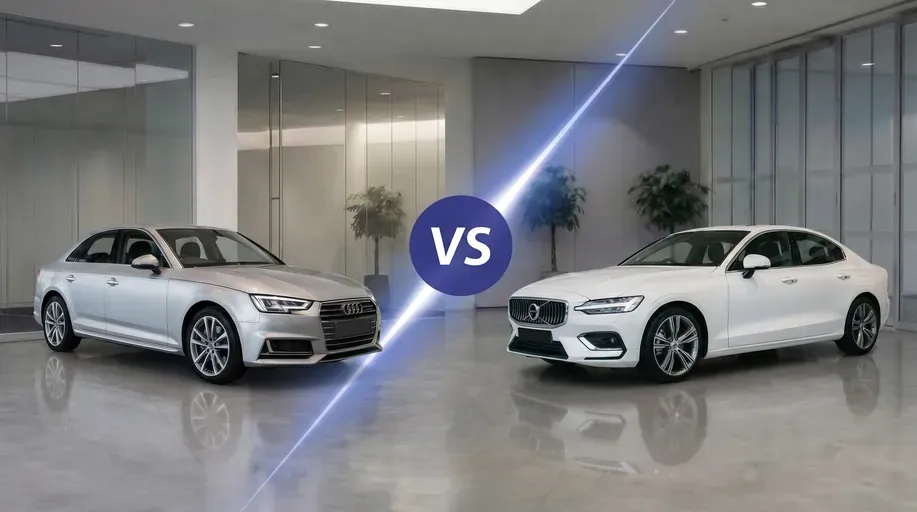
Audi A4 vs. Volvo S60: Complete comparison 2026

Detailed comparison of the Audi A4 and Volvo S60. Discover the differences in driving characteristics, equipment, and reliability of used cars. Read our verdict and make the right choice!

Nov 12, 2026

We accept online card payments as well as wire transfers.

visa payment provider logovisa-electron payment provider logomastercard payment provider logomaestro payment provider logodiners-club payment provider logodiscover payment provider logo